Time running out to comment on bike-pedestrian plan

To the community,

The Draft 2010 Lake Tahoe Region Bicycle and Pedestrian Plan is available for public review here.  The 45-day public comment period ends July 26.

Comments may be sent to:

Karen Fink, transportation planner

PO Box 5310, Stateline, NV 89449

Email: kfink@trpa.org

Phone: (775) 589.5204

Fax: (775) 588.0917

The 2010 Lake Tahoe Region Bicycle and Pedestrian Plan is an update to the 2003 Lake Tahoe Region Bicycle and Pedestrian Master Plan. The BPP is a guide for planning, constructing, and maintaining a regional bicycle and pedestrian system.

The BPP includes maps and prioritized project lists for the bicycle and pedestrian network, and lays out policies for local governing bodies and transportation agencies. The BPP serves as the Bicycle and Pedestrian element to both the Tahoe Metropolitan Planning Organization Regional Transportation Plan (Mobility 2030) and the Tahoe Regional Planning Agency Transportation Plan.

Major new elements of the 2010 BPP include updates to maps, project lists, and goals and policies. There are new sections on “Benefits of Bicycling and Walking” and “Maintenance.” All other sections have been updated to reflect current conditions.

Copies of the Draft Lake Tahoe Region Bicycle and Pedestrian Plan are available at the Tahoe Regional Planning Agency, the Placer County Public Library in Tahoe City, the Washoe County Public Library in Incline Village, the North Tahoe Conference Center, the El Dorado County Public Library in South Lake Tahoe, and the Douglas County Public Library in Zephyr Cove. The BPP is also available on the TMPO website at http://www.tahoempo.org under “Bikes and Pedestrian,” or by contacting Karen Fink at the address listed above.

Karen Fink, TRPA transportation planner


STHS open house shows off new facilities

Dear Community,

South Tahoe High School is hosting an Open House on Aug. 26 from 9am-3pm. We would be honored if you could attend. The open house will be a casual affair, with people coming and going all day.

If you can spare some time during that day, Principal Ivone Larson and staff members would love to show you around the new facilities. We are all excited about the great things that have been accomplished in just more than a year and we’re dying to show off.

In April, our new Construction Arts Transportation Academy opened and the new two-story, 15-classroom Stadium View building will be completed Aug. 1. Work is progressing nicely on the Performing Arts modernization project and the new Tahoe Arts and Design Academy. Our campus will be one of the finest in the state when work is complete.

Refreshments will be served and we really hope you can join us.

Angie Keil, Lake Tahoe Unified School District


Advice for coping with hot temperatures

To the community,

With summer in full swing, El Dorado County health officials are encouraging residents to prepare now to stay cool and healthy over the next few months.

We are asking people to take steps to ensure their air conditioner is working properly and they have a plan in place to prevent summer heat injuries.

Each summer brings the potential for heat waves. Summer heat waves can be extremely dangerous and can cause serious medical problems, especially for people who are very young, elderly, or have chronic medical conditions.

It is more difficult for these individuals to regulate their body temperatures and to adjust to extreme changes in heat. During periods of extreme heat, electric fans do not sufficiently cool a person down, especially those who are most vulnerable to the heat. Staying in an air conditioned environment and using common sense measures will help prevent heat-related illness.

The El Dorado County Department of Human Services has programs to assist low-income individuals with summer heat planning. One program is available to make homes more energy efficient and to repair or replace air conditioners or evaporative coolers. Another program provides assistance once per year to pay for high energy costs, such as a high electric bill during a summer heat wave.

For more information on these programs, or to see if you qualify, contact DHS at (530) 621.6150.

The following are tips on how to stay cool and healthy during hot weather:

* Drink plenty of fluids, such as water and low-calorie sports drinks, to replace salts and minerals lost through sweating.

* Stay indoors in an air-conditioned building. If your home does not have sufficient air conditioning, visit a friend, relative or other location in the community, including libraries, grocery stores, or shopping centers where the air conditioning is working.

* Pace yourself and avoid heavy exertion in the heat.

* Never leave a child or an animal in a parked vehicle, even for a few minutes. Temperatures can quickly rise to dangerous levels in a matter of minutes.

* Check on neighbors, relatives and friends, particularly those who may be isolated.

For more information and additional tips to stay cool and healthy during the summer, visit www.edcgov.us/publichealth.

Olivia Kasirye, county health officer


STATA promotes change to bus/trolley

To the community,

As part of an ongoing effort to bring the BlueGo system to more efficient levels, STATA hired LSC Transportation Consultants to study the entire BlueGo system and create a Short Range Transit Plan that recommends improvements to the efficiency of BlueGo and bring the system back to levels that STATA could fiscally manage.

STATA recognized that there had been many changes to the routes in the last year, STATA worked diligently to ensure that any changes made would have a minimal impact on BlueGo riders and are pleased to announce changes that positively impact both locals and visitors as it is adding service to the widely utilized route 50. The Trolley will return to service on Highway 50 on July 18 with the first Trolley leaving the South Y Station at 10:15am and will run to the Stateline Transit Center. The last Trolley will leave the Y at 6:16pm. Trolleys leaving from Stateline begin at 10:40am, with its last departure at 6:40pm from the Stateline transit Center.

In addition to seeing the trolley again, riders can now enjoy 30-minute headways on Route 50 from 7:15am until the last trolley departs the Stateline Transit Center at 6:40pm.

After 6:40pm, service on Route 50 will return to 60-minute headways as they are currently.

We are thrilled to be adding service that so many locals and tourists will benefit from.

Additionally, South Lake Tahoe met July 13 to discuss other recommendations made by LSC in the Short Range Transit Plan. Specifically, the recommendations are to eliminate the Meyers service Route 40 and the Zephyr Cove service Route 22 due to extremely low ridership and high cost of operations.

The city approved the recommendations to eliminate the service. Therefore, effective July 18, Routes 40 and 22 will no longer be offered. Persons affected by the service change can utilize the demand response service of BlueGO on call by calling (530) 541.7149 24 hours per day at least 60 minutes prior to the time you wish to be picked up. Please note that for ADA Para transit ON CALL service, reservations must be made 24 hours in advance. Additional weekday ON CALL service will be instituted between the hours of 7:45-11am and 2-5pm to augment the existing demand response service.

In addition to the service changes, a new “transfer fare” will be established. The current on call fare is $6. The transfer fare will be $4 for on call service to the following transit centers (South Y Transit Station, Lake Tahoe Visitor Center, Stateline Transit Center, Lake Tahoe Community College and the Kingsbury Transit Center).

Call (530) 541.7149 for more information about schedules and fares.

Stacy Dingman, STATA spokeswoman and board member


South Tahoe blasts county for being uncooperative

sltDear Publisher,

Many of us are working collaboratively on the development of a regional prosperity plan for the Lake Tahoe Basin that calls for good green economic planning and collaboration among government, private-sector organizations and the Lake Tahoe South Shore Chamber of Commerce. It is a remarkable planning effort that requires tools and strategies at the local level to make it all happen. Isn’t it a shame that city government now has to respond to threats of costly lawsuits from El Dorado County, when we should be meeting and discussing ways to resolve outstanding differences of opinion?

The City Council received a letter from El Dorado County Board of Supervisors signed by Board Chairman Norma Santiago threatening the city of South Lake Tahoe with a lawsuit if the City Council does not immediately revoke the ordinance adopting RDA Project Area No. 2 and make other concessions to county government. The letter is being carefully reviewed by me, the city attorney, and staff and it will be brought to the City Council shortly for review and action.

As a resident of South Lake Tahoe and city manager, I would have hoped for our district county supervisor and our county government to support our efforts to improve our community and economy. The Tahoe region and people and businesses inside South Lake Tahoe are suffering [17.8 percent unemployment in the city limits] I would hope and expect county government to be collaborative and cooperative partners who demonstrate through their actions that they care about the 24,000 residents and many business owners and operators here, and they are supportive of efforts to improve our local economy. From the beginning of my tenure here eight years ago, I have heard city residents and business owners and operators complain that county elected leaders have not always demonstrated by their actions that they share the concerns we have about the future of our community. They cite as examples the following El Dorado County actions:

1. Dropping a lawsuit on the Shingle Springs Casino [Red Hawk] and then telling our community that a new casino would have no adverse economic impact on the South Shore;

2. Denying a request of the City Council to meet with county elected leadership to discuss the transfer of the county courthouse to the state even though the agreement with the county for the use of the city property requires City Council approval before any transfer can legally occur;

3. Denying a request by the city on behalf of the city and county to accept a federal grant of $1.4 million to bring money into the city and county to forestall foreclosures and help to stabilize the housing market. The board rejected the grant and cooperative effort even though the county would have received most of the funds and county residents most of the benefits:

4. Having a prominent long-time county supervisor in another district say in both private and public that he doesn’t want the county paying for services to city and county residents in the city’s District V because our high unemployment costs the county too much money. He suggests forming a new county and ridding El Dorado County of us.

5. Being perceived to treat the South Shore officials and local trade organizations in their rhetoric as second-class citizens.

There is tremendous support in the city and Tahoe region to improve the economy, and collaborative efforts are underway both inside the city and with our regional economic prosperity partners. Residents and business owners want a strong and viable local economy. In the city, as demonstrated in the December 2008 Community Survey, town-hall meetings on Redevelopment Project Area No. 2 [RDA] and at RDA No. 2 hearings before the City Council and Planning Commission, the people want steps take to support economic growth, see capital improvements made to their community without more taxes on the people, support workforce housing, and see new private-sector investment that creates good jobs. Doing nothing is not an option. I want and I think most people who live and work here want a county supervisor and county government to support our economic improvement efforts and be real partners and supporters of economic growth using the best tool we have in South Lake Tahoe to do so in this complicated, expensive, and heavily government-regulated area known as the Tahoe Region. If we had a strong local economy and put local people back to work the County would benefits … everyone wins.

The City Council and city staff gave county government every opportunity to comment and engage in conversation with the city on the formation of RDA No. 2 beginning in 2009. The preparation of a Redevelopment Plan for RDA No. 2 has not been a secret and a matter of public discussion for several years. City staff presented the proposed RDA No. 2 plan before the Board of Supervisors earlier this year. The county sat on its proverbial hands for many months until the last minute and then demanded changes in the plan. Even then, the City Council graciously acquiesced and initially reduced the size of the proposed RDA No. 2 project area as a concession to county demands only to have the County continue to oppose the plan and want more concessions. Even after adoption of the RDA Project Area No. 2 Plan, city officials offered to continue dialogue with the county [June 7 letter to the county administrative officer, June 17 email to Supervisor Santiago] and the county was silent up until now when they demand revocation of the RDA No. 2 ordinance recently passed by the City Council.

County government officials should have followed the example of our colleagues at STPUD who originally had serious objections to RDA No. 2 but continued dialogue with City officials on ways to overcome their objections. We are very close to an agreement with STPUD as a result of our continuing dialogue and an agreement will be reached. STPUD officials have been respectful, courteous, engaged and acted responsibly and reasonably.

I believe that city officials and residents want a cooperative and collaborative elected County government leadership who cares about the 24,000 people who live here and is willing to work with and support efforts of City government to improve our economy. When we improve our economy, everyone [city and county] benefits. Sadly, the county is opposed to a new RDA Project Area No. 2 because of their abnormal fear of losing future property tax revenue. If we don’t do the right things now in the South Shore to grow the economy, we will not have new property tax revenues in the future to meet city or county needs.

Getting along with county government is fine and a noble and productive goal as long as it results in the needs of the residents of South Lake Tahoe and the South Shore being met. We need to communicate, collaborate and cooperate with county government without threats and intimidation and the city will certainly engage in meaningful dialogue.

Dave Jinkens, South Lake Tahoe city manager


Explaining Barton’s health care costs

By Dick Derby

Where do your health care dollars go? Understanding the costs behind health care begins with knowledge of the components driving those costs. The price a patient sees on a hospital bill reflects the cost of the people who care for them and who are available around the clock, not just the services provided. Statistics show the lion’s share of the higher costs in hospitals are directly linked to the high cost of medical education, the treatment of under and uninsured patients and the admission of patients through the emergency room. What hospitals charge and what hospitals get paid are two very different things. Medicare and MediCal pay less than the real cost of providing services to the patient.

Hospital employees must be compensated to care for patients 24 hours a day, seven days a week including physicians, nurses and caregivers at the bedside, pharmacists, lab staff, food service and housekeeping personnel and many other specially trained staff. In addition, nonprofit community hospitals, such as Barton provide necessary medical services and benefits for the entire population they serve, regardless of a patient’s ability to pay.
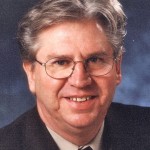
Dick Derby

Dick Derby

So what does all of this mean for patients of Barton Health? As a nonprofit health care organization, Barton will continue to perform its historical and critical role of delivering health care services to everyone regardless of their ability to pay. Barton Health is ethically and legally bound to contribute to the health of our community. Barton’s earnings are returned to the organization. This comes in the form of everything from offering health care to everyone who walks through our door, investing in the latest technology, offering innovative programs and best meeting the health care needs of our community.

A portion of the earnings are used to improve quality, service and efficiency for which we consistently strive to offer our patients. Additional investments are made in “community benefit” programs, services and products to improve the overall health of our residents.

Community benefits include education, prevention initiatives, medical screenings, support groups and special health education events. Examples of some of the investments that Barton has made are:

• Offering discounted services such as at-cost seasonal flu shots, free H1N1 flu vaccinations and Barton’s discounted Wellness Lab Draws and EKGs.

• Providing no fee or a discounted fee for health care services such as primary care, specialty care and preventive services such as those offered at our Community Clinic which treated nearly 18,000 under or uninsured patients in 2009 — up nearly 11 percent from the prior year.

• Participating in local health planning efforts to identify and rank health needs. In 2009, Barton Health and the Barton Foundation provided more than $105,000 in free medical screenings and programs for our community. In 2010, Barton continues its screenings by holding events such as Latino Family Health Day and providing free screening booths at other large community events.

• Participating in disaster planning, preparation and collaboration with community agencies and partners for the safety of our residents and visitors.

• Providing medical education or research such as Barton’s Orthopedic & Sports Medicine Fellowship program which trains other orthopedic surgeons from around the nation.

• Conducting education programs like Barton’s health lectures offered at the Lake Tahoe Community College, the Lake Tahoe Senior Center, Barton University and other locations.

• Recruiting physicians to practice in our area, sometimes offering them financial support from Barton, to better serve our community by diversifying the medical services offered.

• Making donations and sponsoring health and fitness related programs for youth in the South Lake Tahoe, Carson City and Carson Valley areas.

The largest portion of Barton Health’s community contribution comes in the form of Charity Care – health care provided for free or at reduced prices to low income patients. Although the tax law does not indicate how much charity care a nonprofit hospital is required to provide, Barton Health wrote off nearly $4.7 million for charity care in 2009. The need for charity care is on the rise based on recent statistics provided by the California Health Care Foundation showing that charity care rose by 23 percent between 2001 and 2007 and shows no signs of slowing with high unemployment and uninsured rates.

As government services and programs continue to be cut, Barton Health strives to provide the necessary health programs to our service area, regardless of the patient’s ability to pay. We continue to look at containing our costs to provide all of the above services and more to our community, while keeping our rates competitive with other hospitals in our region. We thank our residents and visitors for your continued support.

Dick Derby is vice president of finance at Barton Health.


Finding fault with Placer County Grand Jury report

Publisher’s note: This editorial is from the June 30, 2010, Auburn Journal.

If there’s one thing residents have been vocal about during the recession, it’s that state, county and local governments must rein in pay for public employees — especially top executives.

You wouldn’t know that from reading the just-released final report from the Placer County Grand Jury.

In an investigation titled “The Delicate Art of Setting Salaries,” the grand jury focused on the salaries and compensation for city and town managers. But rather than offer a set of recommendations to build better pay models, the probe simply reports facts and figures.

Report findings state the obvious. Or worse, state what’s been painfully obvious to taxpayers — top execs in some cities are paid well above the national average — without offering strong medicine for a change.

Ask anyone on Main Street whether the Rocklin City Council should be commended for paying retiring manager Carlos Urrutia $139,000 to work part time while collecting $170,000 in pension pay, and you’re likely to get an earful.

Read the whole story


Gaines expresses sadness over friend, colleague’s passing

To the community,

I am very saddened to learn of the passing of my colleague and friend, Dave Cox. Over nearly 12 years in the state Legislature and many years in local government, Dave leaves behind a tremendous legacy of public service to the people of the Sacramento region and all Californians.

On a personal level, I enjoyed working side by side with Dave during these past four years as we fought hard together for the interests of the constituents we were both privileged to represent. I learned a great deal from Dave and appreciate the counsel he gave me over the years. My thoughts and prayers go out to Maggie and the entire Cox family during this very difficult time.

Ted Gaines, state assemblyman representing Tahoe


Martin Hollay’s autobiography for sale

To the community,

As you may know, South Lake Tahoe’s Martin Hollay’s autobiography (“I was so lucky: The Life of Martin Hollay” as told to Tom McGowan) is now undergoing final layout work with the printer. We expect the book to be in our hands by late August. The book will run something in excess of 75 pages and feature dozens of photographs.

The economics of printing a small number of books is interesting. All proceeds after printing costs go to Hollay. Even if we can sell 100 books at $20 a book, he will still make less than $1 per book. Consequently, we don’t want to print any more books than we know we can sell.

Martin Hollay

Martin Hollay

So that we will know how many to have printed, we hare asking that you mail us your check for $20 for each book you want to order. To assure that you will be able to get your book(s), please be sure your check is in our hands by July 20 as we go to press late that week.

Please mail your check payable to Tom McGowan at P.O. Box 1489, Zephyr Cove, NV 89448.

Sincerely,

Friends of Martin Hollay


Opinion: Now what happens with the water bond?

By Dan Walters, Sacramento Bee

It appears certain that the $11.1 billion water bond, the centerpiece of a historic water policy agreement championed by Gov. Arnold Schwarzenegger, will be removed from the November ballot.

Concerned that the bond measure would be rejected by angry, recession-battered voters, Schwarzenegger and the Legislature’s water policy leaders agreed last week that it should be postponed at least until the 2012 election – much as an earlier high-speed rail bond issue was postponed until it could win passage.

It is, however, not quite that simple. The effect of postponement would be to take Schwarzenegger out of the equation since his stint as governor will end in six months. And the water deal’s critics are already demanding that postponement should include a rewrite, which could mean prolonged wrangling or utter collapse.

Read the whole story