Opinion: On-time-budget act moves California forward

By Marty Hittelman

California has been the birthplace of so much that is new and better for our country and the world – technology, social change, culture and political thought. But California’s budget process is holding us back. We are locked in an antiquated and deadly trap, the Legislature’s two-thirds vote requirement to pass a state budget. This is why we need Proposition 25, the On Time Budget Act.

Prop. 25 would do two simple things:

Proposition 25 would break the annual budget deadlock by allowing a majority of legislators to approve a budget. It would leave the two-thirds vote requirement to raise taxes unchanged.

Prop. 25 also would hold legislators accountable by preventing them from collecting their pay and benefits for every day the state budget is late – income they can’t recover later when they do pass the budget.

Read the whole story

Marty Hittelman is the president of the California Federation of Teachers.


Questioning why Grego won’t produce lease agreement

To the publisher,

When the City Council approved redevelopment area two and questioned whether or not Councilman [Bruce] Grego should vote on R/D area two because his law office is in the area, the city attorney said Grego wasn’t in conflict; his lease agreement was month-to-month. When I asked to see a copy of the lease, the city attorney said the lease was a verbal lease. To cloud the issue, Grego’s landlord is a client of Grego.

Bill Crawford

Bill Crawford

In my attempts to discover the term of the lease on Sept. 8, 2010, I made a public records request addressed to the city attorney. On Sept. 21, 2010, the city attorney replied saying that the bottom line is “… there is no public record that the city has access to and consequently cannot give you a copy.” In reading the reply, I conclude that Grego continues to sandbag which raises a question of his ethical conduct. Whom does he serve as a councilmember? His private interest? His landlord’s interest? Who knows? It seems not the public’s when he will not disclose the terms of the lease.

I enclose a copy of the city attorney’s letter [see below] so that the public can judge for itself the nature of Grego’s conduct.

Bill Crawford, citizen and South Lake Tahoe City Council member

The following is the Sept. 21, 2010, letter from City Attorney Patrick Enright to Councilman Bill Crawford:

I am in receipt of your letter dated September 8, 2010 requesting a copy of the agreement or other documentation of Council Member Grego’s office space lease of his law practice. Neither the City, nor myself has a copy of the lease or any other documentation. I have requested a copy from Council Member Grego on several occasions, but the only document that he has shown me is a brief statement from his landlord stating he and Mr. Grego have an oral month-to-month lease. Mr. Grego refused to give me the document or allow me to make a copy. Therefore, there is no public record that the City has access to and consequently cannot give you a copy.


Opinion: Agencies exhibit bias in Washoe Meadow-river plan

To the publisher,

The debate swirling around the Upper Truckee River Restoration and Golf Course Reconfiguration Project is not a debate about river restoration. All participants support this end. It’s not even a debate between golfers and environmentalists. Few, if any, deny the right of the golfers to play on the current Lake Tahoe Country Club.

This debate is rapidly becoming a confrontation between three state and local agencies, and concerned locals and neighborhood groups like the Washoe Meadows Community. The involved agencies are showing an undo bias toward Alternative 2, advocating golf course expansion. They appear ready to do this by ignoring preeminent laws protecting sensitive land, historical and cultural sites, diminishing animal and plant habitat, and quiet and peaceful local neighborhoods.

Aside from the obvious indifference to their own environmental standards, misleading the public about their intentions, and ignoring input from their own constituents, this is being pushed at a time of decreasing popularity in golf. The environmental impact report or EIR clearly details the declining revenues of the current state recreation area’s activities. And unless global warming overwhelms us sooner than expected, Tahoe’s fragile golf season is not going to get any longer.

It’s quite clear the State Parks, TRPA, and Bureau of Reclamation are stretching their powers here by ignoring their own history of written intentions and guidelines. The land in question is bordered roughly by Highway 50, North Upper Truckee Road, Sawmill Road and Tahoe Paradise. It was purchased by the state in 1984. The 1984 California Legislative Statute appealed for the purchase using taxpayer dollars. They called it an act of urgency “in order to acquire as state lands an environmentally sensitive parcel of approximately 777 acres of land comprising wetlands, meadows, and wildlife habitat for the purpose of protecting a unique and irreplaceable watershed.” The parcel contained an existing golf course to the east, and a fragile and diverse piece of land to the west. Separating the two was the main tributary of Lake Tahoe, the Upper Truckee River.

The side containing the golf course was designated a state recreation area, and the land across the river, bordering numerous neighborhoods along North Upper Truckee, was designated a state park, originally named Washoe Meadows Wildlife Refuge.

Here, in the words of the agencies most zealous for expansion, are the reasons Alternative 2 displays a contemptuous disregard of their own standards of stewardship. According to the states’ own Unit Purpose Statement adopted in 2000 “the purpose of the Washoe Meadows State Park is to preserve and protect a wet meadow area associated with Angora Creek and the Upper Truckee River at the southwest side of the Tahoe Basin. The unit’s associated forest sustains Jeffrey … and Lodgepole pine. The unit contains 14 Native American occupancy sites and remnants of a historic dairy, and is contiguous to other public lands important for their open space values and recreational uses.”

Consider this statement comes before the Angora Fire. It should be apparent how much more important these forests and wetland areas become as a habitat for indigenous wildlife and plants.

The Plan Area Statement of the TRPA Code of Ordinances says this about “PAS 119” (Country Club Meadow), “ the following special policies … apply to the study area:

• Areas of significant resource value or ecological importance within this Plan Area should be designated as natural areas, and they should be buffered from intensive uses.

• Creation of waterfowl habitats in association with restoration efforts of disturbed areas should be encouraged.

• Intensive uses in this Plan Area that require development of impervious coverage should be discouraged.

The agencies now argue some of these areas have been “previously disturbed,” thus implying it is acceptable to disturb them again. That’s like saying since a bank has been robbed it’s acceptable to rob it again.

What these agencies must remember is that the land in question is theirs to protect, not abuse. While they have been designated guardians of this sensitive and precious parcel of PUBLIC land, it is not theirs. The land belongs to all of us. We must let them know how we feel. Ways to comment are available here.

Steve Szekely, Meyers


Opinion: Of course students should have water at school

Publisher’s note: This editorial is from the Sept. 22, 2010, Chico Enterprise-Record.

Our view: Saying schools must have water available in the cafeteria is like saying classrooms must have roofs. Of course it should be mandatory.

There are two kinds of legislation that bother us. OK, maybe there are more than two, but these are the most annoying. The first are the so-called “nanny laws,” where legislators try to tell us how to live. Think of bans on spanking children, plastic bags, incandescent light bulbs, Oreo cookies, bad feng shui and procreating dogs and cats.

The second kind are the laws that shouldn’t be necessary. A bill like that is sitting on Gov. Arnold Schwarzenegger’s desk, waiting to be signed. It’s a bill requiring schools to provide free drinking water in cafeterias.

We’re not talking about expensive bottled water. We’re talking about faucets, or spigots, or a fountain. Why in the world would such a bill be needed? Well, it came as a shock to us, but apparently roughly 40 percent of schools in the state don’t have drinking water available for students at lunch, according to a survey.

In a state where legislators have taken steps to rid schools of sugar-laden drinks, there’s nothing requiring schools to provide the most economical and salubrious drink of all — tap water.

Read the whole story


Opinion: Keep state a leader in clean energy, no on Prop. 23

By Richard Branson

Four years ago in Long Beach, I, along with 15 business leaders, met with Gov. Arnold Schwarzenegger and British Prime Minister Tony Blair to discuss how to deploy clean energy around the world. Our message was clear: Adopt policies that put a price on carbon emissions, and investment in clean energy will follow.

Two months after the meeting, on Sept. 27, 2006, Schwarzenegger signed the Global Warming Solutions Act (AB32) into law, unleashing a wave of private-sector investment in clean energy. Last year, California’s clean-tech sector received $2.1 billion in investment, accounting for 60 percent of all clean-tech investment in North America. The clean-tech sector is now one of the fastest growing sectors in the state, creating jobs at a rate 10 times faster than the statewide average and employing more than 500,000 Californians.

As a result, California is home to seven of the top 10 clean-tech businesses in the country, earning it a reputation globally as a pre-eminent leader on climate change and a favorite to provide the technologies for the clean-energy revolution taking shape around the world.

Read the whole story

Richard Branson is founder of the Virgin Group, co-founder of the Carbon War Room and a member of the Climate Group’s International Leadership Council.


Opinion: Like having a job? You’ll love Prop. 23

By James Kellogg

My labor union supports Proposition 23 for one simple reason: It will protect the jobs of millions of hard-working California men and women.

Prop. 23 will temporarily suspend some very expensive, job-killing regulations under the state’s global warming law, AB32 – regulations that even folks advocating immediate implementation of those rules admit will cost jobs. Ironically, those same folks go out of their way to avoid talking about global warming, which the law is about in the first place. Why? Because they know that California acting alone can’t reduce global warming but that voters care about jobs. So they’re bending over backward to try to make voters believe – inaccurately – that the global warming law was a jobs bill all along.

A jobs bill for where – China? India? Certainly not for California. The facts should send every working Californian running to vote “yes” on 23.

Read the whole story

James Kellogg is the international representative of the United Association of Journeymen and Apprentices of the Plumbing and Pipe Fitting Industry.


Donation from marathon keeps BMX rolling

To the community,

Les Wright of the Lake Tahoe Marathon recently donated $1,000 to the South Lake Tahoe BMX Association. The BMX Association is a nonprofit organization designed to provide quality BMX programs that promote safety, fun, and good sportsmanship in a positive and healthy environment.

The track is open June 1 through Oct. 1 and just completed its 11th season of operation.

On behalf of the youth and families that participate in BMX, thank you to the Lake Tahoe Marathon for the generous donation.

Lauren Thomaselli, BMX organizer


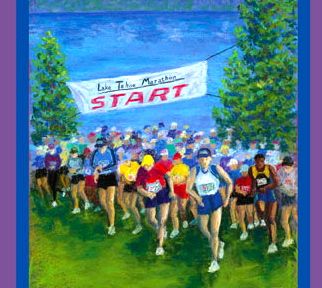
Lack of state budget impacting Tahoe marathon

Updated Sept. 22 at 8:27pm: CHP Sgt. Dan Paxton of the South Lake Tahoe office said tonight, “The marathon will go on and we will be involved.” Patrolmen can do traffic control, they just can’t bill anyone for it, Paxton said of Gov. Arnold Schwarzenegger’s mandate.marathon

To the community,

An unbelievable political event has occurred. The governor of California has canceled all Caltrans encroachment permits onto the state highways and CHP overtime affecting our event and leaving us without dedicated CHP protection.

I have no intention of canceling our events. City, county, and federal services are still available. And the common intelligence of our athletes will provide common sense safety.

Athletes are coming from all over the world for this event. We will bike and run as planned with some safety modifications. The swim, kayak, and golf events are not affected.

I will ask the city of South Lake Tahoe, and El Dorado and Placer counties to help provide for our safety issues.

We will run on the side of the road facing traffic. Bikes will obey all traffic regulations as already stated in the rules.

I will update everyone at the volunteer meeting tonight [Sept. 22] at 6pm at the Horizon casino.

The governor is trying to force the state Legislature to pass the state budget. He obviously wants the citizens, and in this case, our runners, to call and pressure their individual legislators. The first step would be to contact the governor’s office to impress upon him the unfairness of canceling this event, especially so close to the date. His office phone number is (916) 445.2841 and the fax number is (916) 558.3160.

Les Wright, Lake Tahoe Marathon director


Opinion: Schools should teach the way children learn

By Peter Halacsy

If you don’t mind a new San Franciscan’s point of view, what I see behind the faltering outcomes of American education is a failure to communicate.

American schools are using two-dimensional communication in a 3-D world. All one needs to do is view the YouTube video of a toddler quickly mastering an iPad to understand the problem, and the solution.

American education is linear, but the rest of a student’s world isn’t. Watch young people hunting knowledge at a computer, and you won’t see them moving along a straight line (as textbooks or slide presentations do). You’ll see them zooming in and out, leaping from hyperlink to hyperlink, remixing knowledge on the fly. This type of learning is brain candy to young people, and they don’t get enough in school. As one T-shirt recently seen in a New York City school says, “It’s Not ADD – I’m Just Not Listening.”

I learned the limits of linear education as a child growing up in Hungary as the Cold War waned. I came to America expecting to find a very different approach to education. Sadly, I did not.

Read the whole story

Peter Halacsy, the former lead developer at Hungary’s largest Internet company and a co-founder of Kitchen Budapest, was an assistant professor of new media at Budapest University of Technology before co-founding Prezi Inc. in 2009 and moving to San Francisco.


Opinion: Obama continues on Bush’s road of ruin

By Tom McClintock

Throughout what was supposed to be a “recovery summer,” the president has repeated a familiar theme: that Republicans ran us into a ditch and now they want the keys back.

That’s an important point, and we need to understand exactly what the Bush administration did to run us into a ditch. In fact, President George W. Bush made two major policy blunders.
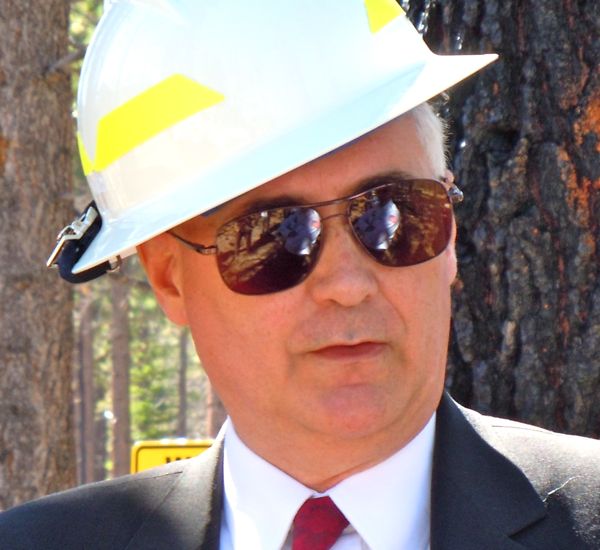
Tom McClintock

Tom McClintock

First, he presided over unprecedented regulatory intervention into the housing market that deliberately enticed people who couldn’t afford homes to buy them anyway. At the same time, these policies deliberately encouraged lenders to make irresponsible loans by promising them that Fannie Mae and Freddie Mac would cover the risk. This created a massive, artificial housing bubble that ultimately burst with catastrophic impact.

My question of President Obama is: If we know this road leads to ruin –- why does he continue down it at even higher speeds?

Failing to learn from the damage that government intervention does by creating artificial bubbles in the economy, the president has repeated and amplified Bush’s blunders not only in the housing market with mortgage subsidies and home purchase credits, but also in other markets like automobiles and home improvements. Each time, he has squandered billions of dollars merely to borrow from future demand, leaving behind economic craters each time the bubbles burst.

Bush’s second blunder was to increase federal spending at an unsustainable rate, transferring economic decisions from the productive sector to the government sector and crowding out the capital market by excessive government borrowing. We should remember the first $168 billion to stimulate consumer spending was a Bush brain-child –- that’s when we all got those $600 checks. If massive deficits and government spending created prosperity, the final Bush years should have produced a “Golden Age” for the American economy.

Has the president reversed these irresponsible Bush-era policies? On the contrary, he has amplified and expanded them.

In his first 19 months in office, Barack Obama has run up more publicly held debt than all eight years of Bush combined, with the promise this would keep unemployment under 8 percent. Yet all that he has accomplished is to crowd out trillions of dollars of capital that could otherwise have gone to employers seeking to add jobs, to homebuyers seeking to re-enter the housing market, and to consumers seeking to make consumer purchases.

Thus, instead of the sharp, V-shaped recovery that normally follows a recession, America is now entering its third year of economic distress.

The reason these policies have not worked is that they cannot work. They did not work under George W. Bush. And they have not worked when Barack Obama doubled down on them.

The core of Obamanomics is the proposition that if government can inject enough money into the economy, it can stimulate consumer spending and therefore demand for production.

Unfortunately, government cannot inject a single dollar into the economy that it has not first taken out of the same economy. It’s true that if government takes a dollar from Peter and gives it to Paul, Paul has an extra dollar to spend. But Peter now has one less dollar to spend in that same economy.

On paper, the economic effect of income transfers always nets to zero. In practice, transfers net to much less than zero, because they shift huge amounts of capital away from decisions that would have been made in the productive sector based on economic return toward decisions made in the government sector based on political return.

We see very clearly the government jobs that are created when government puts that dollar back into the economy; what we don’t see as clearly are the productive jobs that were prevented from forming as government first takes that dollar out of the economy. We see those lost jobs reflected in a chronically high unemployment rate and a stagnating economy.

It’s time we stopped wrestling for the steering wheel and recognized bad policy for what it is – whether the driver is a Republican or a Democrat. The problem is not the driver but the direction – and the direction hasn’t changed.

We know the road to prosperity – we’ve taken it before. When we have reduced the burdens on productivity, the economy has blossomed. It worked when Ronald Reagan did it. It worked when John F. Kennedy and Harry Truman did it. And it will work again – but we will need leaders with a better sense of direction than what we have today.

Tom McClintock, R-Granite Bay, represents the California side of Lake Tahoe in the House of Representatives.