TRPA’s Dennis Oliver dies after short illness

Publisher’s note: A more formal obituary is pending, in the mean time, Lake Tahoe News and TRPA want to share the following email Executive Director Joanne Marchetta sent to TRPA staff and board members.

Dear Staff, Governing Board, and APC members,

It’s with a heavy heart this morning that I’m writing to share sad news. Dennis Oliver, TRPA’s public information officer, passed away late afternoon yesterday. Dennis had been seriously ill for the last month and was hospitalized in Carson City. Those of us who were close to Dennis had the opportunity to be with him during his final days and he seemed at peace.

Dennis was a treasured employee of TRPA for just over three years. He represented the agency well and used his superlative writing talents to educate the public on environmental issues. Above all else, he loved Lake Tahoe and made no bones about sharing his passion for the lake with others.

We will keep you informed as arrangements and services are scheduled. We are planning to set up an arts and environmental education fund in his memory in lieu of flowers and we’ll share those details soon.

Thank you,

Joanne


Women’s center looking for help to make holidays special

To the community,

With the holidays just around the corner, many of us are beginning to think about warm meals with loved ones, and the joys of exchanging gifts.

Many local families with few resources are struggling to rebuild their lives after experiencing violence and they are solely focused on how they will pay rent, and provide food and winter clothing for their children. For the 10th year in a row, South Lake Tahoe Women’s Center is organizing an opportunity for community members to come together to provide happier holidays for struggling adult and child survivors of violence. Last year, the community adopted 300 individuals working closely with the Women’s Center. Each mother and child adopted expressed gratitude, and many mothers cried when they saw and wrapped the gifts donors brought for their children. We know that in these challenging times, more families than ever need your help.

There are many ways you or your business can help local families who have been working closely with South Lake Tahoe Women’s Center:

· Adopt a family and receive the Wish List completed by the family. There are families of all sizes to fit any budget.

· Donate non-perishable groceries or gift certificates for pre-cooked holiday meals at local grocery stores (such as Safeway) so that families can enjoy special holiday meals and make happy memories together.

· Make a special end-of-the-year tax deductible donation toward the Women’s Center’s Adopt-a-Family Program or to support our other comprehensive and trusted services for survivors of domestic violence, sexual assault and child abuse.

· Donate a $25 Safeway card to support our Emergency Domestic Violence Shelter’s life-skills program.

· Donate BlueGo bus passes to help our clients get to work, doctor’s appointments, counseling, and to other agencies providing support toward self-sufficiency.

· Drop off your holiday party bottles and cans at South Tahoe Refuse and let them know you’d like to donate the proceeds to South Lake Tahoe Women’s Center — they take care of mailing us a check.

· Call to learn about the many different ways we could put your energy to good work as a volunteer — one hour per week or even one per month would really help.

Please call Sarah at the Women’s Center, located at 2941 Lake Tahoe Blvd., at (530) 544.2118 or email ssanchez@sltwc.org to let us know how you would like to make a difference in the life of a family affected by violence this holiday season.

South Lake Tahoe Women’s Center’s business office was financed through a low-cost loan by the Rural Community Assistance Corporation.

Liliana E. Sanchez, outreach advocate South Lake Tahoe Women’s Center


Opinion: Alternative 2 the wrong plan for Washoe Meadow

Dear Publisher,

The public comment period for the Upper Truckee River Restoration/Golf Course Reconfiguration Project has been extended to Nov. 15. Please visit washoemeadowscommunity.org for a community perspective on the issue. I am opposed to Alternative 2, which is being “pushed” as the preferred alternative by the State Parks, TRPA and other involved agencies.

I will hereby describe my opposition to Alternative 2. Please stand in the middle of Washoe Meadow, which is the site of the proposed nine holes of the expanded golf course. Slowly circle around, in order to take in the 360-degree view. Now, please close your eyes and stand in silence for three minutes. You may be astonished by the profundity of what you just experienced. The variation of wildlife sounds, the magnificence of this special spot.

Washoe Meadow was deemed a state park in 1984 in a matter of “highest priority”. The properties and reasons for that designation have not diminished. In fact, since the 2007 Angora Fire, it is even more precious to wildlife and human visitor alike.

There are alternatives for restoring the Upper Truckee River, without expanding the footprint of the golf course, and moving nine holes into this unique and sensitive area.

I ask the State Parks and coordinating agencies to think with intelligence, as stewards of our precious environment, and with a respect for community input. Let’s wait for the new environmental impact report, and perhaps together we can then create a viable new alternative.

Please.

Sincerely,

Hillary Dembroff, South Lake Tahoe


Opinion: Why Prop. 19 went up in smoke

By Steve Kubby

Although I was an early and loyal supporter of Control & Tax Cannabis 2010, which qualified for the California ballot as Prop. 19, I continued to forecast defeat for the initiative, based upon polling numbers.

Despite plenty of theories on why polling was wrong or didn’t matter, it mattered. The fact is that Prop. 19 never polled high enough to indicate a clear shot at victory. Of course, whenever I pointed out the polling problems, I was roundly criticized for being “negative”. Hopefully, if and when we get another shot at doing an initiative, polling will be given more weight than this time around.

One huge strike against Prop. 19 was attempting to pass a marijuana initiative during a mid-term election, when we already knew the demographics are much better for us during a presidential election. Everyone wanted to wait until 2012, especially the funders. Launching this year was foolhardy and premature, but the Prop. 19 crew held to their belief that hordes of young people would flood the election and save the day. Unfortunately, that cargo cult mentality failed to yield any significant results at the ballot box.

Another problem with Prop. 19 is that it was too conservative with too many weasel words. We expunged all the weasel words from Prop. 215, California’s historic medical marijuana initiative, and I wish the same had been done before Prop. 19 qualified for the ballot.

One of the worst and most damaging aspects of the Control & Tax Cannabis 2010 initiative was that it almost seemed like certain sections had been written by the cops. Pandering to law enforcement , as it clearly did, was not any help in getting votes and seriously damaged support by our own side. The history of marijuana initiatives has repeatedly shown that boldly worded initiatives like Prop. 215, do better than watered-down initiatives like 19.

I also question the wisdom of taxing marijuana. Yes, I know, lots of folks think it will make us safer to pay taxes, but I’ve yet to see that to be the case. We didn’t need taxes to sell voters on supporting Prop. 215, why do we need it now? Frankly, any taxation of cannabis will invite the same fishing expeditions that the police already conduct based upon plant numbers. I certainly hope the next initiative will focus on real legalization and not peddling a watered down version of decriminalization with a sin tax, like we saw with Prop. 19.

One of the first things we did with the Prop. 215 campaign was appoint a full time coordinator for activists. I personally nominated Chris Conrad and Mike Norris for the job. However, when I suggested the same to Lee, he dismissed the idea. I told him at the time he was making a mistake, but Rich didn’t see it that way. That one error was indeed a very serious mistake, because it led to the formation of a No on 19 group of activists who caused as much harm as the narcs and regular foes of legalization.

Despite the problems, Richard Lee and his crew still deserve a big round of applause for a brilliant campaign that caught the attention of the whole world. The entire Prop. 19 crew can be proud of their historic and valuable effort.

Steve Kubby of South Lake Tahoe helped write Proposition 215.


Opinion: Cell phones tucked in bras causing cancer

By Devra Lee Davis

For many young women today, tucking cell phones in the bra has become a cool, hip way to have simple access to these essential devices. Most of us have no idea that cell phones are small microwave radios that should not be kept directly on the body.

The ways some people are using their phones today could increase their risk of developing breast cancer and other diseases tomorrow. A cell phone’s microwave radiation seeps directly into soft fatty tissue of the breast.

It’s too late for Andrea X, a young, active mother of three from Southern California. For more than six years, this vegetarian and runner drove her children everywhere, with her cell phone tucked snugly into her sports bra. She used her hands-free headset and was on the phone for four to five hours a day. Often her chest or ear would redden, but she thought little of it. This spring she developed a malignant tumor right where her phone had sat on her breast. No one in her family has ever had breast cancer.

Devra Lee Davis is an epidemiologist, author and public health advocate. Davis’ new book is “Disconnect: The Truth About Cell Phone Radiation, What the Industry Has Done to Hide It, and How to Protect Your Family.” To learn more, go to www.environmentalhealthtrust.org.

Read the whole story


Political candidates matter as much as the voters

What would an election season be like if the political party of the candidate were never stated? If a picture of the candidate were never seen? If the voice of the candidate never heard? If the gender, religious affiliation, sexual orientation – were never known?

voteWhat if there were no mudslinging? What if only the truth could be said? What if sound bites taken out of context could not be used?

It’s doubtful our biases will ever be overcome. We all have built-in prejudices no matter how open-minded and evolved we claim to be.

Yes, it’s a utopian idea to think there could be an election where votes are cast only for a candidate’s ideas, beliefs and record. But we all have the power, if we choose to exercise it, to eliminate all the clutter that boils down to propaganda and bias.

Many of you have already voted. Others will go to the polls throughout today to cast their vote.

This voting thing is something that makes the United States of America so unique. It’s a freedom, a right that is bestowed upon us without threat from others no matter whom we vote for.

It’s also a tremendous responsibility.

Unfortunately, in this ever polarized society we live in, we seem to have stopped listening, we’ve stopped communicating without trying to talk over the other, we call each other names instead of arguing the issue. We have become the lowest common denominator of all of our parts instead of the best of all of the parts.

How do we reverse course?

Start by casting your ballot today for the best person for each position. Look beyond the party affiliation. Look at the individual. Look at what they stand for.

Lake Tahoe is struggling, the two states surrounding her are hurting, the nation is wounded. It’s time to heal.

When we wake up tomorrow (assuming the votes are counted) there will be three new South Lake Tahoe City Council members, a new sheriff in El Dorado County, new governors in California and Nevada, and a lot of other familiar or new faces in office. It’s doubtful any one person’s ballot will have all the winners.

It’s our individual choice how we react to the results. Does the name-calling begin again? Does the mud get hurled? Does the divisiveness remain and the uncooperativeness stay intact?

We hope not.

It’s time to cooperate. It’s time to do what’s correct for the greater good and not just the person in the mirror. It’s time to play nice in the sandbox of life. If we expect change from our elected officials, then we need to change as well. One person can make a difference, one vote can make a difference, but it will take all of us to bring about change for the greater good.


Explaining what real Giants baseball torture is

By John Diaz

No matter what happens in the final World Series games of this magical season, we can retire the cute but inaccurate slogan “Giants baseball: torture.” As a Giants fan of nearly a half century, I know torture. This is not it. This season has produced moments that will be recalled by Giants fans who were not even born today, just as I get a thrill every time I hear the Russ Hodges call of Bobby Thomson’s pennant-winning 1951 home run over the Dodgers or watch newsreel footage of Willie Mays’ over-the-shoulder catch against the Cleveland Indians in the last World Series the Giants won, for New York, in 1954.

giants“Uuuuu …. rrrrrrrrriiii …beeee.”

I will never hear that chant again without thinking of it reverberating through the corridors as joyous fans left AT&T Park after Juan Uribe knocked in the winning run for the Giants over the favored Phillies in Game 4 of the National League Championship Series.

Torture?

Torture is the many seasons that came and went without a lasting memory.

John Diaz is The Chronicle’s editorial page editor. Email: jdiaz@sfchronicle.com.

Read the whole story


Opinion: Taking Tahoe, TRPA in new direction

By Joanne Marchetta

We are in the midst of extraordinary times here at Lake Tahoe and I believe the basin is at a crossroads. We can either move toward a sustainable, prosperous future for our treasured environment and communities, or we can cling to old paradigms and continue the sliding decline.

As TRPA’s executive director, I’d like to share my thoughts on some of Lake Tahoe’s significant challenges, how we can meet them and how I am transforming the TRPA into a new organization poised to tackle these pressing issues head-on. If I’ve learned one thing during my tenure at TRPA, it’s that strong leadership and even stronger partnerships are the fundamental ingredients to taking Lake Tahoe in a new direction. The playing field here has many opportunities for you to join in and strengthen our partnership to achieve a common purpose.

Joanne Marchetta

Joanne Marchetta

Simply put, Tahoe is in decline and in crisis. Our lake is not just an aesthetic and spiritual jewel. The reality is that Lake Tahoe supports nearly a $5 billion economy for the two states that share its border. That economy is grounded squarely in tourism – and that economy, like others today, is in relative crisis. Make no mistake, we are in a crisis. This is not crisis borne merely of the national and international banking meltdown, which merely exacerbated Tahoe’s problem. Tahoe’s crisis is that its historic economic foundation – gaming — is falling out from under us regardless of the larger national and international economic problems.

Living within one of the most spectacular landscapes in the world, it is hard to believe that our economy and communities are in peril. But indeed, they are. When the basinwide unemployment rate hovers between 12 and 17 percent, when schools have closed and we’ve lost more than 10,000 residents in the basin over a decade, and when a single mother living in Tahoe can’t afford to buy Tylenol for her son’s fever – our community’s foundation is in trouble.

On top of growing economic and social strains, we face the newly-acknowledged environmental threats of invasive species and catastrophic wildfire, and the continuing threat of the adverse effects of stormwater runoff, any or all of which pose lasting impacts to our fragile alpine lake ecosystem, the very ecosystem without which there would be no economic support for Tahoe.

The good news is that Tahoe’s problems can be solved, and we have a growing collective vision of actions needed to set the most meaningful solutions in motion. But this is Tahoe. These actions will take every ounce of our collective leadership to push through to decision and TRPA has already set its own course of solutions in motion. We have already committed to being part of the positive momentum that will address our environmental, economic, and communitywide challenges.

There are two parts to this positive course of action. First, the progress TRPA is making toward updating the Regional Plan for the Tahoe Region; and second, a new TRPA Strategic Plan that is remaking the internal workings and culture of TRPA to be part of the needed solution.

Restoring Lake Tahoe

First, guiding the direction and progress of TRPA’s Regional Plan Update is our drive to fulfill the original intent of the bi-state Compact that was created 40 years ago to protect this spectacular environment. The Compact remains the agency’s touchstone, but what we do today must be done with a different eye than what we did in the past because we know more now.

Three decades ago, there was a legitimate concern that Lake Tahoe could be over-developed. It was our role to put the brakes on rampant growth, and we succeeded. We saved Lake Tahoe from turning into a city the size of San Francisco, as some had envisioned. We adopted environmentally protective rules and regulations and developed an international reputation for innovation in harmonizing the natural environment with human-made development to support strong local economies.

Today we find ourselves nearly at build-out in the Tahoe basin. But let’s put the term “build-out” in perspective. Most environmental harm today is still coming from development put on the ground before TRPA had standards in place. The vast majority of continuing harm to the lake is due to already existing but dated, aging, deteriorating facilities built 30, 40, and 50 years ago including the roadway system. Recent science is showing that if we are ever to meet our lake clarity goals, we need to attack urban stormwater runoff problems – to eliminate fine sediment flowing into the lake by at least 32 percent over the next 20 years. The data indicate this runoff is coming from already developed areas, including our town centers. With this scientific information, we know how to get the greatest environmental bang for the buck — by replacing and upgrading already existing facilities that were put in place long ago.

The synergy is evident. By remaking our existing Tahoe town centers to achieve key environmental goals, there is the concurrent opportunity to also bring back or strengthen Tahoe’s economy by bringing it up to date to meet today’s tourism needs and demand.

Even if we are near Tahoe’s full development potential, our buildings and infrastructure on the ground today no longer support today’s economy much less the environment. Today we are well below the population, traffic flows, and visitorship that we experienced in the early 1990s. So, although we say we are near build-out, are we where we need to be to support either the environment or the economy? We have had only a handful of major projects – all redevelopment projects to replace dated facilities — during the last 10 years basinwide.

In fact, Tahoe missed the robust economic remake and update that many communities took advantage of during the 15 years of irrational exuberance before the national financial meltdown. What happened here in Tahoe during that period was that we eeked out projects over long delays and burdensome process obstacles, and the delay exacerbated our slip into economic decline. Our built environment is an anachronism and no longer serves the current predominant tourist demand for services, activities, or amenities.

Another important point about build-out is that the largest part of the lake’s environmental problem exists on a small percentage of the land area. Again, we know where the bulk of the environmental problem originates – already developed areas and roadways. Did you know that less than 15 percent of the land in the basin is in private ownership? And did you know that the majority of the pollutant load that causes declines in lake water quality is coming from an even smaller percentage of our developed areas and town centers?

We must allow the built environment of Tahoe to change so that we can incorporate state-of-the-art environmental improvements on the ground at the same time as we remake the economy. And since we know from the recent water quality science that we have to actually reduce the sediment flowing into Lake Tahoe, it means we have to facilitate change on the ground.

To tie these points about build-out together — environmental redevelopment may be part of the solution. What we’re proposing as part of our Regional Plan update is to fix through replacement – not growth — the existing built environment that is causing the greatest environmental harm to the lake.

But we all know change comes hard at Lake Tahoe and some would have you believe that TRPA is promoting growth or increased urbanization of the Tahoe basin. I can’t disagree with this characterization strongly enough. What we’re doing is exactly what the science tells us needs to be done — fixing the existing built environment that is causing harm to the lake, not promoting growth, not building sky scrapers, and not pushing development for the sake of development only. That would be a step backward. We are saying environmental redevelopment is a necessary environmental tool among others. We absolutely believe Lake Tahoe’s pristine environment can be protected while at the same time improving the quality of life and economy for the people who live, work, and visit here. That’s the sustainable future I’m working to deliver.

Environmental redevelopment can be coupled with the restoration projects of the Lake Tahoe Environmental Improvement Program (EIP) as main strategies of the regional plan update. But action in the form of private redevelopment is not all that is needed or all that is planned by TRPA. Indeed, we propose to address Tahoe’s environmental needs through changed land use policies that offer incentives to remove buildings from sensitive stream environment zones that can then be restored, to cluster buildings in town centers so as to create walkable spaces, to reduce land coverage in those town centers, and to develop transportation systems that reduce pollution from our roadway systems.

Lake Tahoe entered a restoration age when we realized that a regulatory approach alone to managing the basin would not be enough to reverse the environmental damage of the past. TRPA, working with other basin partners launched the Lake Tahoe EIP in the mid-90s, a program of investment in environmental restoration projects. Everyone from the county and city public works departments to private homeowners have been important partners in the EIP over the last 10 to 15 years through stormwater control project and BMP retrofitting. The projects you are helping to implement continue to be crucial to our environment and our local economy. These projects are improving the environment and creating jobs in the process.

The EIP combined with environmental redevelopment are two key tools proposed in TRPA’s Regional Plan update. So what’s the next step? After years of public input from all sectors, we are moving forward to bring a package to TRPA’s Governing Board as part of a renewed plan for the region.

A pitched battle

What you may not know but need to is that a pitched philosophical battle is looming large in the basin and the battlefield may be TRPA. Behind this relatively simple conceptual plan for Tahoe – a robust partnership of private and public sector investment that strengthens not only the environment but also the economy and social foundation of Tahoe – is an epic philosophical battle for how to get there. We’re fearful with the recent round of lawsuits that the organized environmental community has reinvigorated the litigation versus collaboration strategy as the preferred forum to set policy and negotiate environmental constraints. During the next year, TRPA’s Governing Board will debate the strategies and the best means to revitalize Tahoe – not only our environment but also by implication Tahoe’s economy. The debate has begun. I would urge you to stay informed as the process continues to evolve.

Fixing TRPA

To deliver any of this promise of renewed environmental and economic gain for Tahoe means that TRPA has to allow good projects to happen. Given today’s relative state of crisis in Tahoe, you should be aware if you’re not already that TRPA is in the midst of long-needed culture change. We are moving to a culture that includes a different ethic of efficiency, accountability, and focus in order to accelerate delivery of environmental gain on the ground.

You all know the history of TRPA and the perception that we’re a roadblock to everything. I would ask you to look again. TRPA is changing for the better. Where in the past, saying “no” in the form of stopping or long delaying action used to be the best thing to do for the lake, today’s science tells us we must proactively fix what’s on the ground to make substantial environmental gain. That means fostering problem solving and partnership building to drive good environmental results. For example, if it takes 10 years to get to project approval for town center redevelopment or if it takes five years to permit a stream restoration project, those are years of lost opportunity and lost environmental gains.

So, I have set in motion a new Strategic Plan for TRPA. I am remaking our internal structure, our culture, and our business practices. Tahoe cannot afford to do nothing. Doing nothing assures only further decline, environmentally and economically.

The new TRPA is grounded on four pillars: first environmental gain to achieve threshold attainment. The new TRPA culture I am building moves from a predominant culture of “no” to one of “yes, and here’s how to do it responsibly.” This “can-do” attitude invites collaboration with people or organizations that have constructive and viable suggestions for how to make changes that eliminate the harmful effects of bad past development and delivers positive results for the environment.

But take note, this new culture is a shift toward responsible action that allows change and puts long needed environmental gain on the ground. It is about allowing for a sustainable Tahoe – not the Tahoe of today with bankruptcies, boarded up buildings, shrinking populations, and massive job losses. Our new strategic approach is grounded in what I believe is this truth: if Tahoe loses its social and economic foundation, no one – not the federal government, not the two states, not local jurisdictions, and not the private sector — will have the financial wherewithal, the political will, or the social willingness to invest in the environmental restoration we need.

There are three other strategic pillars for success. We are growing our community engagement and improving public service. As you all know, the permitting process can be complicated at Lake Tahoe, and we have begun the work needed to streamline our permitting timelines and processes. We have rules for a very good reason, but we can and are streamlining our processes. Underpinning all we do at the agency lies our renewed commitment to community engagement. We’re now requiring community service of every staff member at TRPA plus we’re launching a new customer satisfaction program designed to improve our public service. And lastly we are improving our operational efficiency. By putting in place a new organizational structure that’s much more directly based on accountability and performance, we can make more progress on environmental threshold attainment and improve our community relations in the process.

All of these measures are geared to delivering more environmental gain in the form of water quality improvements and other resource protections around the basin. If you worry these are just words and question the commitment, understand that the TRPA Governing Board endorsed this new strategic direction in July. Our new strategic plan is on our website – please take a look for yourself.

Both TRPA and I need support from you as a member of this community and someone who has so much at stake in this. The crossroads where we find ourselves is real. The socioeconomic statistics don’t lie. And no single agency or entity can save Tahoe from economic and environmental demise if we can’t help ourselves. TRPA is taking a hard look at itself and changing to meet the times. So, I would ask, when you hear something that doesn’t seem right, or you have a suggestion on how we can better work with the community rather than against it, contact me. I am committed to the change needed to allow both the environment and the economy to thrive. I invite you to work with me through collaboration and partnership to collectively tip Tahoe’s balance in the right direction. I am putting myself on the line by leading a culture change after 30 years of entrenchment in status quo. TRPA is heading in a new direction because it’s what I believe Tahoe needs to survive.

And remember, “Life is a series of great opportunities, well disguised as impossible situations.” Please join me in working toward constructive solutions to this next impossible situation.

Joanne Marchetta is the executive director of the Tahoe Regional Planning Agency. Visit trpa.org for more information.


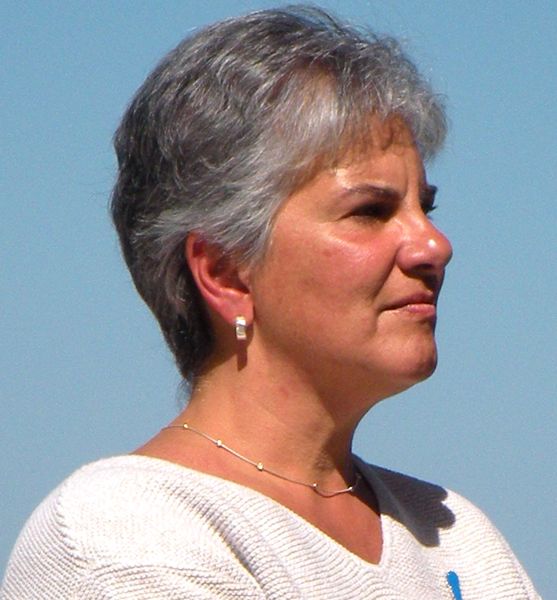

Curry believes her experience is the needed difference

Dear friends of South Lake Tahoe,

South Lake Tahoe is so full of beauty and provides so many great outdoor activities year around. These are the reasons why my family and I live in this great city. Even though we are here in a land of beauty, we are not in the land of bounty.

Our local unemployment is 16.1 percent, which is unconscionable. We need to keep our businesses alive and successful for the owners to make a living so they can, in turn, keep their employees working.

Your vote for me will bring my 25 years of experience of managing businesses to overseeing the business of the city. My experience has taught me how to live within a budget and how to work cooperatively with others. Also, it is important to have an open door policy so you can personally discuss with me the things that matter to you.

Volunteer service has always been a big part of my life beginning with the PTA to my current service as a South Lake Tahoe Planning Commissioner for the past 3½ years. As a member of this commission, I have significant advantage in knowing the complexities of land use and sustainability to build a better future and stronger economy. Serving my community is what I am committed to do and will do full time.

I want you to know that I am passionate about this city and want to provide the opportunity for all of our children and grandchildren to live and work here successfully. My goals are to keep our families safe, get our economy moving by reducing regulations that hurt our businesses and steal our jobs, and improving our roads, sidewalks, and bike paths by making them safe and accessible.

I am seasoned and ready for the next step to start moving South Lake Tahoe forward. I love this community and would be honored to have your vote. Together, we can move the city of South Lake Tahoe forward.

Thank you,

Joy Curry, South Lake Tahoe


Opinion: Davis, Curry understand what locals need

To the community,

Of the 10 people running for the South Lake Tahoe City Council, all have expressed concern for the unemployment situation. But governing takes more insight than just copying another candidate’s views. Tom Davis and Joy Curry honestly have an understanding that small business is key to the financial stability of our city, and that eventually we’ll need regional jet service to bring in more visitors to result in creating additional jobs. They also understand that employees need places to live where rent doesn’t take up all their pay.

As a major supporter and project facilitator for three successful housing projects in our city, I have worked closely with and enjoyed being able to trust the commitment of Tom Davis to local workers and businesses, and have developed an appreciation for Joy Curry.

We need more projects that put local architects, engineers, carpenters, painters, paving workers, laborers, roofers and many ancillary workers and service providers to work. I believe both Tom Davis and Joy Curry will work to support and encourage development of more projects using local labor because they have expressed a real understanding of the circular need for reasonable rents so people who work here can also live here and spend their paycheck here which puts even more people to work.

Your vote is your voice. Speak up for support of locals. Vote for Tom Davis and Joy Curry.

David Kelly, chairman Tahoe Area Coordinating Council for the Disabled