Opinion: Family farmers need livestock market reforms

By John Crabtree

I met an advertising man once who spent the better part of an hour explaining to me why the farmer and the cowboy are America’s most enduring and iconic images. Growing up on my family’s farm in Iowa made me skeptical. But I recognize that the concept of American agriculture that most of us hold in our minds is that of the owner-operated, family farm or ranch.

We imagine men and women living and working on farms and ranches that they own, determining their own destiny, making their own decisions and remaining fiercely independent and self-sufficient. Above and beyond the food they raise, family farmers and ranchers are America’s original and most quintessential entrepreneurs. They are the cornerstone of America’s economy and the wellspring of our nation’s values. And they are the stewards of vast stretches of rural America’s remotest and most beautiful landscapes, including the sprawling vistas that define rural California.

The economic survival of family farmers and ranchers in California and throughout rural America depends, however, on access to markets for their crops and livestock that are based on fair competition – a fair shot for ordinary folks who work hard and do a good job.

John Crabtree is the media director for the Center for Rural Affairs in Lyons, Neb. The center advocates for strong rural communities.

Read the whole story


Riding in a plow demonstrates the difficulty of not berming

By Kathryn Reed

I’m a complainer. And I admitted this trait to a plow driver. And then to his boss.

They are used to my type.

I hate the berm. I don’t see why they have to happen. Must be a lazy plow driver is my thinking.
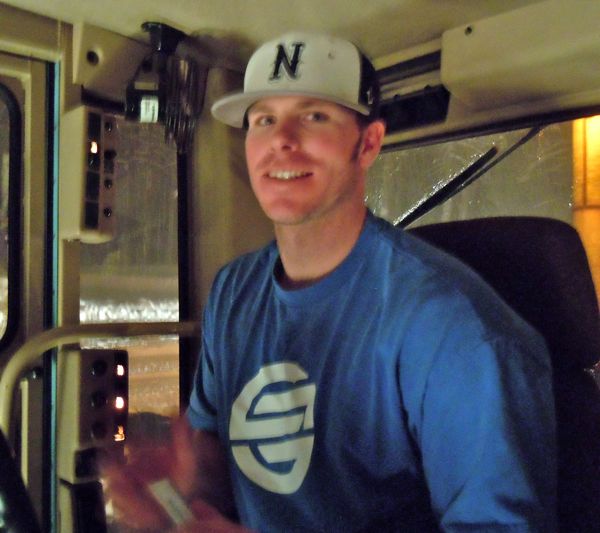
Bobby Maxwell convinces at least one South Tahoe resident berms are part of life. Photo/Kathryn Reed

Bobby Maxwell convinces one South Tahoe resident berms are part of life. Photo/Kathryn Reed

That was my philosophy before spending a couple hours in the cramped cockpit of one of those monsters.

Still hate berms, but I understand why they happen. You couldn’t be lazy and have this job.

In fact, I’m guessing most people could never do this job. I know I’m going to stick with a keyboard to show off my dexterity and a computer to show how good I am with heavy equipment.

Stepping into the big blue rig belonging to South Lake Tahoe on the night of Feb. 17 I didn’t know what I was in for. Public Works Director John Greenhut invited me for a ride-along after I complained in late December about all the side streets along Tahoe Keys Boulevard being bermed. (In years past I’ve whined about berms at the foot of my driveway. My excuse for complaining is some storms I get berms, some I don’t.)

Bobby Maxwell took me under his wing, almost literally based on how cramped the snowplow is, to educate me a bit. At 26, he has been plowing the streets of South Lake Tahoe for six years.

He, and later his boss Azril Kalik, explained the berms on Keys Boulevard had to do with a sander helping clear the road. It only has a front plow, no gate. Without a gate, a berm is definitely going to happen.

I honestly thought being a snowplow driver was no big deal. Oh, how wrong I was.

Now I want to leave them beer or cookies like I do the mail carrier and garbage guys at the holidays.

Maxwell says they aren’t allowed to take any kind of gratuity. I don’t want to get anyone in trouble, but I think I’m going to see if that’s just the company line. Good, hard work deserves something extra.

This isn’t to say I’m not going to have a potty mouth (under my breath) when a berm full of chunks of ice requiring someone of Arnold Schwarzenegger’s stature to clear them is left at the foot of my driveway.

I’m not that easily convinced it’s all about the snow conditions and quantity of it. Yes, I understand those are legitimate reasons, but I know some of the guys are just better than others.

But Maxwell repeatedly demonstrated the gate can only do so much. It’s there to reduce a berm, not eliminate it.

It’s a thankless job. It’s long hours of staring out a window for 12 hours with blinding snow.

No breaks. No bathroom. No one to shoot the breeze with.

Maxwell might spend five minutes eating something he brought with him. Even cops take dinner breaks. And those guys are often chattering on their cell phones. Plow drivers don’t have these perks, so to speak.

This South Tahoe High grad is happy to have the job and likes it on most nights. But he admits it can be a drain. But he knows he is providing a vital service and takes pride in what he is doing.

Meticulous snowplowing might be possible to define based on industry standards, but the public is not apt to buy into it. They want cleared streets no matter the condition. They don’t want berms. They want to turn left even when the left turn lane is gone.

But this is snow country. It’s about dealing with forces that are beyond all of our control.

One thing I can control, though, is patience. I need to learn to have more of it.

I have a respect for these guys in their blue contraptions that I never had before. Now I’ll wave to them with all of my fingers.


Opinion: Deficit shouldn’t preclude investment in future

By Robert Reich

The federal budget deficit will hit nearly $1.5 trillion this year, according to the Congressional Budget Office. Should you be worried? It depends on what we’re borrowing the money for.

But it’s impossible to have an intelligent discussion about this because the federal deficit is a swamp of misleading figures hiding within a cloud of confusion inside a fog of misinformation.

Which is probably why most Americans think it ought to be reduced but don’t want to make any sacrifices to do so. According to a recent CNN poll, only 1 American in 5 regards the federal deficit as such a big problem as to justify cuts in Social Security or Medicare – which, along with national defense, are the biggest spending items.

So we get House Republicans piously promising to reduce the deficit without coming up with any serious proposals to do so. And the president says he intends to reduce the deficit but then devotes his State of the Union address – presumably his campaign theme leading up to 2012 – to the importance of spending more on the key “investments” of education, infrastructure and basic research.

By the way, the president is absolutely right about those investments. But he’s not going to get anywhere if they’re competing for dollars with Social Security, Medicare and defense. And he doesn’t have a prayer of getting extra dollars to help hard-pressed states that are disinvesting like mad in education and infrastructure.

Robert Reich, former U.S. secretary of labor, is professor of public policy at UC Berkeley and the author of the new book “Aftershock: The Next Economy and America’s Future.” He blogs at www.robertreich.org.

Read the whole story


Update from Squaw’s CEO about the mountain

To the community,

After a beautiful spring-like January, we’re excited to welcome Old Man Winter back this week with a bang. Overnight Tuesday we received 14 inches of snow on the upper mountain and it was still coming down hard (Wednesday).

Through tonight, we are expecting 2 to 4 feet by Friday morning. Forecasters are saying that the storms should taper just in time for this weekend before another set of winter weather returns early next week.

Stay tuned to the snowfall tracker and the snow report for the latest snow totals and lift openings.

In addition to the recent snow, we are also excited to announce Squaw Valley has seen significant improvements in our Net Promoter Score over the course of the season. Net Promoter Scores (NPS) are the most highly regarded customer satisfaction metric used in the hospitality industry today. Since the 2009-10 winter season, Squaw Valley’s customer satisfaction scores have moved from the bottom 20 percent of North American ski resorts to the top 20 percent, based on our Net Promoter Score. Make no mistake, we still have a long way to go to meet our guest service goals, however, the improvement serves as proof that our efforts thus far are paying off.

Top among our guest service improvements this year is our award-winning lift operations team. The department’s fearless leader, Dave Pierce, received a prestigious award and recognition last evening at the North Lake Tahoe Chamber annual awards dinner. Dave’s passion for the mountain and his dedication to providing exceptional guest service have made lasting impressions on our team members and loyal guests, and for this, we thank him.

Another area of the mountain that has seen significant improvements and recognition this season is grooming. In our unyielding commitment to improving our grooming, we have invested in six new, state-of-the-art snowcats this season. The new machines have allowed us to blanket the mountain in impeccable and seamless corduroy even on traditionally ungroomed pitches such as Tower 16 and the East Gully of Olympic Lady. So far our reviews have been outstanding, and we hope you’ve been enjoying it.

Finally, I want to congratulate Squaw Valley’s Julia Mancuso on winning a silver medal in the Super-G at the Alpine World Championships in Germany last week. Way to go Julia. We know that there are many other Julia’s in the making at Squaw Valley as shown by our ski team’s great performance at Sugar Bowl last weekend.

This storm sure proves that California skiing and riding can’t be beat. I hope to see you out there.

Warm and snow-filled regards,

Andy Wirth, Squaw Valley president and CEO


Opinion: Rethink role of Reno-Sparks Convention & Visitors Bureau

Publisher’s note: This editorial is from the Feb. 9, 2011, Reno Gazette-Journal.

The “Great Recession” has forced governments throughout the country, from the federal government to counties, cities and towns, to seriously rethink the way they do things.

Because of declining revenues, they’re asking important questions: Is this something we should be doing? Are we doing it in the most cost-effective and efficient manner? Can we restructure our operations to streamline them and make them more flexible?

The Reno-Sparks Convention & Visitors Authority is among the agencies that has been going through that process. With the industries that it was established to serve, gaming and tourism, in the doldrums and another search about to begin for a new CEO, however, the time is right for a broader look at the authority’s structure.

It’s time to ask whether the hybrid public-private governance model of the RSCVA is still the best way to boost the numbers of business and leisure visitors to the Reno-Sparks area and North Lake Tahoe.

Read the whole story


Warning: Reports of coyotes being shot and skinned

To the community,

This is to warn all local residents who like to walk their dogs along Cathederal Road off the Sno-Park parking lot. Someone is shooting and skinning coyotes in that area. California Department of Fish & Game, as well as Animal

Control have been notified and are investigating it. We can all help by keeping a sharp eye out for anyone with a firearm or who is acting suspiciously and report them to Animal Control.

With all the dogs running lose in that area while in the company of their owners they are in danger of being shot as well.

This kind of activity has no place in our forests, so let’s help put and end to it now.

Peter Hussmann, South Lake Tahoe


Opinion: Does Tour de California lose clout without Armstrong?

By John Schumacher, Sacramento Bee

The Amgen Tour of California has displayed a deft touch in tweaking its route for the sixth annual pro cycling race.

Adding Lake Tahoe? A game changer. Returning to the Central Coast for a postcard ride down Highway 1? Breathtaking. Following the Solvang time trial with a Stage 7 climb up Mount Baldy? Dramatic.

But as cycling fans await the May 15-22 race – Stage 2 finishes at the state Capitol on May 16 – a bigger question hovers over the event.

Will Lance Armstrong compete?

Read the whole story


Placerville school community healing one day at a time

To the community,

When a tragedy occurs, our community steps forward and envelopes those who have been impacted with strong, caring arms. Last week we in El Dorado County experienced such an event. When Sam LaCara died in a senseless shooting on Feb. 2, we lost a wonderful husband, father, principal, and community leader. Even though we may never understand the reasons why this occurred, we are left to deal with the aftermath and its impact.

Thankfully, our community has rallied, responding with demonstrations of love, caring, and compassion. Of course one of the first concerns we have following a school tragedy is for the children. The Schnell School personnel managed to put the children on buses for a “field trip” to the county fairgrounds, following what appeared to most children to be a safety drill. When children got off the buses to meet their parents, most had no idea of the heartbreak that had occurred.

Counselors from county Mental Health, the county Office of Education, the faith community, and other community organizations have been available to help children deal with issues. School and counseling staff understand it takes time for everyone to process what has happened. Support staff will continue to be present at Placerville District schools to assist those affected in coping with their fears and apprehensions.

District staff members who have always worked so hard to help the children now are in need of, and will be provided, assistance of their own. While it is always difficult to lose a friend or colleague, this situation is much more difficult. The outpouring of support from crisis counselors, other caring providers, and the community has helped those impacted deal with the situation.

It may seem like a small gesture to attend a commemorative service, to contribute to a memorial fund, to say a kind word to a teacher or a child. However, when these and other loving gestures are added together, this incredible outpouring of support, care, and nurturing is helping heal the wounds that run so deep.

We thank the entire El Dorado County community for coming together to help all those devastated by this event. While a simple “thank you” may seem like a small token, it is shared from the heart of all those who knew and loved Sam LaCara.

Thank you.

Vicki Barber, superintendent El Dorado County Office of Education


South Tahoe chief explains traffic citations

By Brian T. Uhler

A recent concern expressed by some community members included the idea there has been an increase in the number of traffic citations issued by South Lake Tahoe police officers. Others may very well contend that our department should do more in the way of controlling unsafe drivers in our community.

This chart outlines annual citation and written warning data.

Brian T. Uhler

Brian T. Uhler

A few other important points include:

• When averaged among 30 field officers and sergeants, less than three citations per month were issued per officer/sergeant in 2010

• Speeding is the most frequent violation

• A mixture of productivity data such as the number of reports written, number of arrests, citations issued, and completed assignments are compiled to measure the work of our officers

• There are no special recognitions, incentive pays, or prizes of any type for any officer who write high numbers of traffic citations

• Enforcing traffic law oftentimes leads to significant arrests (example: Oklahoma City bomber Timothy McVey was initially stopped for a traffic violation a short time after the bombing)

• Our officers are permitted to exercise discretion in deciding to write citations or written warnings

• Scientific studies support the contention that effective traffic enforcement lowers accident rates

• A recent news article indicated that an officer wrote 310 citations in 11 months. This included warnings and citations—more than half of which were warnings. On some occasions, this officer was assigned specifically to traffic enforcement duties.

Our officers are encouraged by supervisors and managers to use their work time productively. We realize that it is a challenge to issue a citation to a person and have them pleased with police services but we endeavor to be professional and courteous when citing people for violating traffic law.

Brian T. Uhler, is the South Lake Tahoe police chief.


Opinion: Reasons for the global food crisis

By Paul Krugman, New York Times

We’re in the midst of a global food crisis — the second in three years. World food prices hit a record in January, driven by huge increases in the prices of wheat, corn, sugar and oils. These soaring prices have had only a modest effect on U.S. inflation, which is still low by historical standards, but they’re having a brutal impact on the world’s poor, who spend much if not most of their income on basic foodstuffs.

The consequences of this food crisis go far beyond economics. After all, the big question about uprisings against corrupt and oppressive regimes in the Middle East isn’t so much why they’re happening as why they’re happening now. And there’s little question that sky-high food prices have been an important trigger for popular rage.

So what’s behind the price spike? American right-wingers (and the Chinese) blame easy-money policies at the Federal Reserve, with at least one commentator declaring that there is “blood on Bernanke’s hands.” Meanwhile, President Nicolas Sarkozy of France blames speculators, accusing them of “extortion and pillaging.”

But the evidence tells a different, much more ominous story. While several factors have contributed to soaring food prices, what really stands out is the extent to which severe weather events have disrupted agricultural production. And these severe weather events are exactly the kind of thing we’d expect to see as rising concentrations of greenhouse gases change our climate — which means that the current food price surge may be just the beginning.

Read the whole story