STHS grad: Peace Corps struggling to be relevant

Publisher’s note: The Peace Corps turns 50 this month. Two 2005 South Tahoe High School grads are in the Peace Corps having different experiences. Jessica Wackenhut today weighs in with her thoughts from Paraguay. On March 11, Michelle Aguilar will share her opinions from Panama.

By Jessica Wackenhut

ENCARNACION, Paraguay — When one thinks of Peace Corps, the first thing that tends to come to mind is living in a mud hut in the middle of Africa, experiencing incredible hardships in a new culture, but overcoming such obstacles by bonding with community members and bringing in amazing infrastructure such as a new school, library, or modern bathrooms.

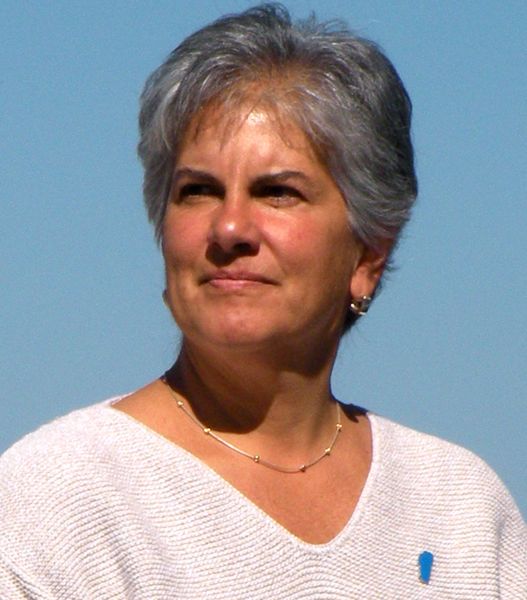
Jessica Wackenhut

Jessica Wackenhut

This, however, is far from my experience as an Environmental Education Volunteer in Peace Corps Paraguay (2009-2011), where during the last 17 months I have truly questioned whether we should be celebrating or, instead, re-evaluating Peace Corps as an institution.

Peace Corps, founded in 1961 by President John F. Kennedy, was created to encourage development and cultural exchange for recent college graduates who had little to no experience abroad. During the first two decades of Peace Corps, volunteers were able to help their communities develop through sharing the technical knowledge they acquired from their bachelor’s degrees — a level of education way beyond that of their community counterparts. Additionally, volunteers had to integrate with their communities because if they did not, they would have no one to talk to.

It was incredibly challenging to visit other volunteers because of little infrastructure, and conveniences such as cell phones and Internet were still decades away. In fact, much communication with family from the States was limited to snail mail that took more than months to arrive.

Now let’s fast forward 50 years to Peace Corps 2011: Today’s Peace Corps has changed significantly since its creation because of globalization, higher rates of education for host country nationals, and the rapid spread of technology. As a Peace Corps volunteer in Paraguay, my life is a bit easier than those volunteers who served in the first years of Peace Corps’ existence. If I am tired of traditional Paraguayan food, I can find Coca Cola, Sprite, Doritos, M&Ms, Pringles, among many other American foods, in my local supermarkets. If I am feeling homesick, all I have to do is insert the Internet device that I pay for monthly with my Peace Corps salary into the laptop I brought with me and call my parents on Skype. And if I’m not close to my computer, I can use my Peace Corps issued cell phone to call my volunteer friends and talk for free, thanks to the Peace Corps phone plan.

Now don’t get me wrong, I’m not complaining. It’s truly impressive how far technology has come. And while the rate of globalization can be a bit overwhelming at times, it’s nice to get a small reminder of home.

The problem lies in the fact that Peace Corps continues to recruit the same recent college graduates they were searching for 50 years ago, even though more host country nationals are obtaining higher education degrees from universities in big cities or abroad. In this sense, globalization has so profoundly affected Peace Corps that many volunteers no longer have a higher knowledge base than their community counterparts. Therefore, it is not hard to find agriculture volunteers whose prior experience is limited to a summer of landscape architecture or a construction job, a health volunteer who was qualified based on her undergraduate biology degree, or an environmental education volunteer who was accepted based on her minor in environmental studies.

Fortunately, upon entering their country of service, each volunteer must undergo roughly three months of mandatory training. Many volunteers, however, finish training feeling like they touched the surface of so many different themes but never truly learned about anything that will actually be of assistance in their sites. For example, one of the largest environmental problems in Paraguay is trash. However, during training, my group had only a 45-minute session dedicated to trash where we learned several different activities about how to teach trash decomposition and stories about why burning trash is bad.

We never learned that throughout all of Paraguay there is only one sanitary landfill, nor did we learn how to set up a trash management system in our own sites. The general consensus post-training is the only thing we get out of it is language training, which, I must admit, Peace Corps does an exceptional job with.

This, in essence, is the question I have been struggling with for the past year and a half while I’ve been in Paraguay: what makes it OK, then, for a recent college graduate turned Peace Corps volunteer to come into a foreign culture and try to tell their community how they should change their way of life because she thinks it will be better that way? Who am I as an environmental studies major from the U.S. to come into Paraguay and say how to plant crops and trees when I have never studied this climate and most farmers in the country will know the soil, weather, pests, and plants far better than I ever will since they have been working on the land for their entire lives.

There are college graduates who have come to Peace Corps and completed impressive projects with their counterparts. Many times all communities need is a little cheerleading and organization to make their projects come to fruition. But my project area, which is to increase environmental awareness in Paraguay, doesn’t include making modern bathrooms or libraries. And because my projects are harder to conceptualize, it’s harder to receive grants from Peace Corps Partnerships. Additionally, I’ve found very little resources at the Peace Corps Office in the capital. My bosses seem more concerned with placing new volunteers in their sites and expanding the number of volunteers in Paraguay than helping current volunteers acquire the resources and knowledge needed to have successful projects.

When I ask the workers in the office of possible projects ideas and what has been done in the past, I am almost always pointed to the same five classroom activities instead of actual community projects. Many times my community members ask me examples of what Peace Corps has done to develop their country. I have yet to respond to them because Peace Corps Paraguay has no collection of examples of their work in Paraguay over the last 45 years they’ve been here. This is especially discouraging when I hear about some of the projects more professional Japanese (JICA) and Korean (KOICA) volunteers are doing within Paraguay as they work with large institutions such as the Ministry of Agriculture and Ministry of Education — two powerful institutions that rarely work with Peace Corps Volunteers who they view as inexperienced and immature.

I want to be clear, I do thank Peace Corps for giving me an opportunity I would have never had otherwise. I have learned a great deal about myself, others, the world, and how to do projects without the support of the institution who I am supposed to be working under. I came to Peace Corps in the hopes that I would be doing some small-scale projects that would be positive development models that in turn help my community grow more sustainably. After I got here, I quickly realized Peace Corps is not a development organization as it advertises, but is more of a cultural exchange program. The projects I have done or am working on have had little to no support by Peace Corps, some of my projects were even discouraged.

In my experience, I have had many hardships thus far in my service and although some of them were a result of mere cultural differences, a majority of the stresses arose from Peace Corps as an institution and the lack of resources or even support given to myself and many volunteers. This experience will be one of a lifetime, one I will never forget. The people I have met, the relationships created, the projects I worked on with various counterparts throughout my site will never be replaced.

As Peace Corps celebrates its 50th anniversary, I hope this organization refocuses to become more meaningful if it wants to be a development organization, or be clear if its intentions truly are to be a cultural exchange program via the social responsibility department of the U.S. government. During the celebrations, Returned Peace Corps Volunteers will lobby Congress to increase the number of volunteers, is this making this organization more quality?

Peace Corps embarks on its 50th anniversary and what does it have to celebrate?


Opinion: School districts should change format for layoffs

Publisher’s note: This editorial is from the Feb. 26, 2011, Sacramento Bee.

More than 20,000 public school teachers in California have received pink slips during each of the last three years. The state’s ongoing economic and budget troubles mean that trend is likely to continue with upcoming March 15 layoff notices.

Unfortunately, the distribution of layoffs is anything but equitable because districts rely on “last-in, first-out” rules.

Few veteran teachers experience layoffs, while the newest teachers are hit hard. Sign a contract a few minutes later than your colleagues and you’re out, regardless of how effective you are as a teacher.

And because the newest teachers tend to be the lowest paid, districts have to lay off more teachers than if layoffs were balanced across the teacher corps.

The result is that many schools experience no layoffs, while high-poverty, high-minority schools often are decimated – creating a cycle of turnover and instability.

It doesn’t have to be that way. For this March 15 round of layoff notices, districts should vow to do things differently.

Read the whole story


Opinion: Pass the Marijuana Regulation and Tax Act of 2012

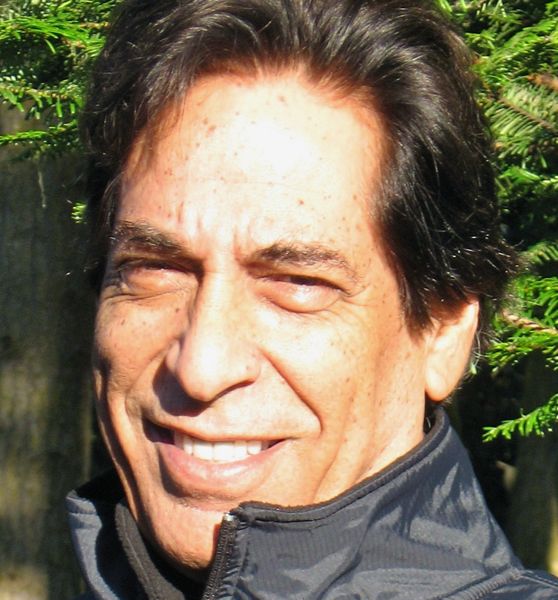
By Steve Kubby

The November 2012 presidential election affords proponents of a ballot initiative to change state law concerning the regulation of marijuana a strong opportunity for success. The most significant consideration is that the California electorate for the next presidential election will be considerably younger. Our analysis indicates that 21 percent of all voters will be under the age of 35, compared to just 16 percent in the November 2010 election.

Also, in November 2010, 27 percent of voters were 65 and older, but in November 2012 seniors are expected to comprise 20 percent of the electorate. It is worth noting that Proposition 215 was on the 1996 presidential election ballot.

Another factor in our favor is the lessons of Prop. 19 can be used to inform the development of the initiative and the campaign’s messaging, and pitfalls can be avoided. Finally, public opinion continues to evolve on the issue of drug policy, particularly in regards to marijuana. In fact, a recent Economist/YouGov nationwide poll found 58 percent agreed with the following statement, “Some people say marijuana should be treated like alcohol and tobacco. They say it should be regulated and taxed and made illegal for minors.” In addition, 62 percent of Western region respondents agreed with this statement-the highest of any region in the nation.

Steve Kubby

Steve Kubby

The Marijuana Regulation and Tax Act of 2012 is sponsored by Tax Marijuana 2012, a political committee, with James P. Gray as chief proponent. For further information about this new voter initiative, please visit the following links:

–Tax Marijuana 2012 campaign registers with the Secretary of State

http://cal-access.sos.ca.gov/Campaign/Committees/Detail.aspx?id=1336887&session=2011

–Compare our initiative with others. See for yourself why Tax Marijuana 2012 is our best path to full legalization.

http://www.facebook.com/photo.php?fbid=10150140126001955&set=a.71411121954.106184.620261954&theater

–The Marijuana Regulation and Tax Act of 2012 (Preliminary Draft)

This Act shall be known as “The Marijuana Regulation and Tax Act of 2012.”

The people of the state of California, recognizing that it is time to tax marijuana and to regulate its use, hereby repeal all California state laws that prohibit marijuana possession, sales, transportation, production, processing, and cultivation by people 21 years of age and older, and thereby remove marijuana from any other statutes pertaining to the prohibition and regulation of controlled substances, whether now existing or enacted in the future, except those related to driving a motor vehicle under the influence of marijuana; using or being under the influence of marijuana in public or in the workplace; smoking marijuana in the presence of, or providing, transferring or selling marijuana to, a person under the age of 21; the use, possession, cultivation, sales, transporting, or storing on premises of marijuana by people under the age of 21; and medical marijuana statutes as set forth in California Proposition 215 and its progeny. This act adopts the definition of marijuana as it is presently set forth in Health and Safety Code section 11018.

The people further direct and order the California state Legislature to enact reasonable regulations and establish reasonable taxes for the establishment of the farming, industry, distribution, and sales of marijuana with a THC level of 0.3 percent or higher, using the grape winery industry as a model, as long as the results support these intentions, purposes and goals; and to provide for the farming, industry, distribution, and sales of industrial hemp, which is hereby defined as marijuana with a THC level of below 0.3 percent, using the cotton and paper products industries as a model. However, the effect of this act and its direction is to be liberally construed to favor individuals, and business entities regarding the following:

(a) No taxes, fees, laws, rules, regulations, or local city and county zoning requirements can be adopted or enacted to defeat these commercial, agricultural and industrial purposes or those individual civil rights set forth in Civil Code section 54, Food and Agricultural Code sections 54033 through 54035, inclusive, and Civil Code 52.1, and all medical conditions as stated in Health and Safety Code section 11362.5. Any individual, association, or collective group not producing more than 99 plants or 50 pounds of marijuana per year shall be exempt from any winery model regulations, fees and taxes, except for income taxes and state sales taxes, if they apply, and

(b) No regulations, taxes or fees shall be enacted or imposed which are more severe or restrictive than those for comparable and reasonable usage in the commercial wine grape farming and winery industry model, including for farming, planting, cultivating, irrigating, harvesting, processing, brokering, selling, distributing, and establishing of cooperatives or collective associations.

The people further direct and order all state and local government elected, appointed and hired employees, officers and officials to refuse to cooperate with federal officials, or operate under U.S. contract or arrangement, to defeat this act directly or indirectly, or to follow or abide by any federal laws or regulations that are in conflict with this act. Further, no such person acting alone, or with any other person or legislative body, may contract or agree to cooperate with federal officials, employees, agencies or departments to obtain any money, property, gain or advantage by the arrest, prosecution, conviction or deprivation of property of anyone acting within the provisions of this act. Any such governmental or public person who knowingly and intentionally violates these provisions shall forfeit their government employment and office.

The people further direct and order that within 30 days of passage, both the state attorney general and the Department of Health Services shall inform the United States Department of Human and Health Services, attorney general, Congress, and Food and Drug Administration that in 1996 California recognized that using marijuana can have some positive medical effects, and for that reason demand that marijuana no longer be listed as a Schedule 1 drug.

The people further direct and order the attorney general of California to protect the provisions of this act from any and all attacks, whether from individuals, cities, counties, or the state or federal governments.

This act expressly enjoins the arrest and imposition of any criminal or civil penalties for people 21 years of age and older who are acting within the provisions of this act, including all California penal and nuisance marijuana laws, penalties, and zoning regulations, except for those affecting medical marijuana at Health & Safety Code sections 11362.5, and 11362.7 et seq.

This act expressly enjoins any and all commercial advertising of the sales, distribution and use of marijuana, except for medical marijuana and products made from industrial hemp, as defined herein, and this injunction shall be enforced by penalties as shall hereafter be set forth by the legislature.

This act expressly does not repeal, modify or change any present laws or regulations prohibiting the driving of a motor vehicle while under the influence of marijuana; the use or being under the influence of marijuana in public or in the workplace; the smoking of marijuana in the presence of, or providing, transferring or selling marijuana to, a person under the age of 21; the use, possession, cultivation, sales, transporting, or storing on premises of marijuana by people under the age of 21; or medical marijuana statutes as set forth in California Proposition 215 and its progeny.

The Legislature shall not modify, change, add to or subtract from, or amend any part of this act, and if any part of this act is found by any court of competent jurisdiction to be invalid or void, that finding shall not affect any of the remaining provisions.

Steve Kubby is a resident of South Lake Tahoe.


Caution urged when driving in the mountains during winter

To the community,

Lake Valley Fire Protection District would like to remind everyone that extra precautions need to be taken while driving during the winter. Along with potential hazardous road conditions, motorists can expect extreme delays due to snow conditions or accidents.

Lake Valley FPD personnel recommend following these tips to ensure a safe trip to your destination:

o Ensure that your vehicle is stocked with extra warm clothing, food, water, a shovel and other survival supplies in case you become stuck on a mountain road.

Lake Valley fire personnel at an accident on Highway 88 near Kirkwood this winter. Photo/Provided

Lake Valley fire personnel at an accident on Highway 88 near Kirkwood this winter. Photo/Provided

o Make sure that your gas tank is full before leaving on any trip.

o Always carry chains — it’s the law.

o Leave your headlights on while driving.

o Advise someone when you’re leaving and where you’re going.

o Drive carefully, even when the roads appear dry. Patches of ice tend to accumulate on curves and bridges when the rest of the roadway is clear.

o Clean the snow completely from your car. Any snow left on your roof can slide down unexpectedly and a thin glaze of ice can reflect in the sun, obstructing your view.

o Check road conditions before you leave. For California go online or call 800.427.7623. For Nevada,  go online or call 877.687.6237.

o You must stop and put on chains when highway signs indicate chains are required. You can be cited by the California Highway Patrol and fined if you don’t. You will usually have about a mile between “Chains Required” signs and the checkpoint to install your chains.

o If you are driving slower than the traffic around you, use turnouts so that others may pass.

Leona Allen, LVFPD


Opinion: Brown, labor have a chance to be a model

Publisher’s note: This editorial is from the Feb. 21, 2011, Sacramento Bee.

Gov. Jerry Brown offered a quick answer to the question of whether he would follow the incendiary lead of Wisconsin Gov. Scott Walker by moving to abolish collective bargaining rights for state workers.

“No,” Brown told reporters the other day.

Walker and other newly elected and emboldened Republican governors are using their state’s fiscal crises as an excuse to curtail or abolish public employee unions. This spectacle will embitter both sides, particularly the rank-and-file, and that’s never a good idea.

If Republican Meg Whitman had won in November, and sought to carry out her campaign promise of dismissing 40,000 state workers, California might well have been the scene of such angry protests.

Brown, by contrast, signed the original legislation during his first stint as governor granting state workers the right to collective bargaining.

Read the whole story


Opinion: Linking transportation to lake clarity

By Joanne Marchetta

Since the dawn of time, transportation has been a driver of human culture. From the onset of wheeled carts in 3,500 BC to air and high-speed rail travel today, humanity has relied on transportation to live, work, play and thrive.

It’s no different at Lake Tahoe present-day. With private automobiles the transportation mode of choice for most local residents and visitors, our roadways have come to define our communities for better or worse.

Joanne Marchetta

Joanne Marchetta

At Lake Tahoe, what happens on land, especially on our roads, affects the health and clarity of the lake. Recent scientific research has proven the main cause for the lake’s transparency loss is fine sediment runoff which is carried to the lake by roadways. During the winter, the challenge is even greater because the sand and salt we use to keep our roadways safe are entering our watershed – all you need to do is look around at the dirty snow along our streets and highways to see the problem.

What are we doing about it?

A few weeks ago, the Tahoe Regional Planning Agency’s Governing Board voted unanimously to prioritize the update of our Regional Plan on a few key areas:

• Protecting water quality and lake clarity

• Improving land use planning, air quality, and transportation

• Addressing catastrophic threats such as wildfire and invasive species

• Implementing a sustainability framework that addresses climate change issues.

Transportation issues are embedded within all of these high priorities. How and where we locate homes and businesses affects our traffic patterns which in turn affects the lake. Ozone pollution caused by traffic congestion is also harmful to human health, affecting the lungs and heart, especially in children. Our Regional Plan update is addressing these issues while at the same time work is under way with many partner agencies to tackle the transportation challenges at Lake Tahoe.

Here are some highlights:

• Using better street sweepers – TRPA is working with local governments to help fund the highest efficiency street sweepers on the market. Just this month, we’re distributing local project mitigation funds to South Lake Tahoe to purchase sweepers to keep fine sediments out of the lake. You can also see one soon in Incline Village.

• Providing continuous bike trails – there are major bike trail projects in the planning pipeline to give locals and visitors alternatives to their cars. The South Tahoe Greenway Shared-Trail Project, the Sawmill II Bike Trail project, and the El Dorado Beach to Ski Run Trail are just three of many bike trail projects in the works. Partner agencies like the California Tahoe Conservancy, South Lake Tahoe and El Dorado County are the lead agencies working diligently with us on these projects.

• Planning projects – our partner agency, the Tahoe Transportation District, is targeting five important transportation infrastructure projects:

• Nevada Stateline to Stateline Bikeway Project

• Highway 50 Stateline Corridor Project

• Lake Tahoe Waterborne Transit Service and Landside Facility Project

• Highways 431/28 Operational/Safety Improvement Project

• Highways 89/89 Realignment-Fanny Bridge Project.

These “big 5” projects would go a long way toward redefining transportation in the Tahoe Basin over the next 15 years and could curb traffic congestion and reduce auto emissions while at the same time delivering water quality benefits. Another project that’s been 10 years in the making is the Highway 50 Caltrans project from Trout Creek to Ski Run Boulevard. This project is scheduled to break ground this year and will help us create a safer, more walkable and bikeable community on the South Shore.

With approximately 3 million visitors coming to Lake Tahoe per year, most still by car, transportation choices can meaningfully influence our environment and quality-of-life. Many of our visitors arrive from the Bay Area, where drivers waste nearly 60 hours per year in congestion, according to a national 2009 Urban Mobility Report. While our traffic backups here in Tahoe are generally confined to peak holiday weekends, long lines of vehicles on clogged roadways are not what we should accept for Lake Tahoe.

The Bi-State Compact creating TRPA mandates we reduce our dependence on the private automobile. This mandate is an extraordinarily high bar to reach and can be achieved only through partnerships, perseverance and public support. And building partnerships and public support are TRPA’s two new focus areas for delivering environmental gain on the ground at Lake Tahoe. The delivery of critical transportation infrastructure projects will create a foundation to help rebuild our economy and reinvigorate our communities all while protecting Lake Tahoe.

Joanne Marchetta is executive director of the Tahoe Regional Planning Agency.


Opinion: Washington needs to learn bipartisanship

Publisher’s note: This editorial is from the Feb. 22, 2011, Las Vegas Sun.

The No. 1 domestic priority in Washington should be job creation, although one wouldn’t know it by the way House Republicans are pandering to their party’s hard-core base. By approving a draconian measure Saturday to slash more than $60 billion from the federal budget, the majority led by House Speaker John Boehner of Ohio demonstrated it is more willing to waste time on legislation that everyone knows will not pass the Democrat-led Senate than it is prepared to focus on sound economic policies.

Approving deep budget cuts simply to appease Tea Party adherents who don’t care much for federal government isn’t the magical answer that will suddenly help drive down Nevada’s double-digit unemployment rate to healthier pre-recession levels. Employers aren’t going to create jobs simply because a group of lawmakers wants to shred the budget. The formula it takes to cure the sluggish economy is far more complex than the one-dimensional solution Boehner and his adherents have proposed.

The first step that is necessary is a willingness to forge bipartisan compromise on major legislation that can have an effect on the economy. As Sen. Ron Wyden, D-Ore., told The New York Times: “The first thing you have got to realize is that real bipartisanship has to be a verb, not a noun, and it means getting people talking about specifics. I do interpret this election as one where people were saying: ‘Knock it off! We’re tired of this food fight.’ ”

Senate Majority Leader Harry Reid of Nevada senses the need for bipartisanship on the budget, noting that fellow Democrats have proposed $41 billion in cuts. That plan recognizes the need to cut wasteful spending without going overboard. A key difference is that the Democratic proposal would spare the jobs of 65,000 educators, the very resource needed to produce a better-trained workforce to help America compete with other nations in the 21st century. House Republicans want to eliminate those jobs, which is one of the worst things that can happen while this nation’s economic recovery remains fragile.

Read the whole story


Opinion: Reid’s prostitution stance is all about bitter politics

By David Colborne

At 14.6 percent, nearly 5 percent higher than the national average, Nevada has the highest unemployment rate in the nation. Consequently, when Harry Reid, Nevada’s senior politician in Washington and the current Senate majority leader, came to address the Nevada Legislature on Tuesday, his focus was, logically enough, on jobs. He discussed how many jobs his support for the stimulus package from two years ago had saved, noting especially how much money went directly to Nevada’s teachers from the stimulus. He highlighted his efforts at bringing clean energy companies to the state and how many jobs that would bring in.

Then he suggested that Nevada, the state with the highest unemployment rate in the nation, should abolish an industry.

Thirty years ago this year, Storey County became the first county in Nevada to officially license and regulate a brothel, starting with the infamous Mustang Ranch. Now, Nevada’s safe, well regulated brothels employ hundreds of women, providing a substantial boost to the local and regional economies and tax bases that they serve. Every year, for example, each brothel in Storey County is required to furnish at least $75,000 a year in licensing fees – each brothel effectively pays the entire salary, including health and retirement benefits, of one school teacher, and that doesn’t even include property or sales taxes. Brothels also exhibit a salutary effect to the tourism industry, providing yet another unique attraction to advertise that’s only available in Nevada. They do all this while maintaining the safest working conditions for prostitutes and their customers in the country, if not the world, with regular screenings for sexually transmitted diseases and a consistent application of the same labor and safety laws followed fastidiously by every other legitimate business in the country. Consequently, drugs, diseases, and pimps might all be common ailments of illegal streetwalkers, but they’re unheard of among the employees of Nevada’s legal brothels.

How would abolishing this industry bring jobs to Nevada? It wouldn’t, unless you relied upon the anecdotal evidence of one senator, who quoted a single, unnamed businessman that was mortified that brothels were legal in Nevada. According to Sen. Reid, there are legions of parents and businessmen who fear that their children will see a brothel on their way to school; this is curious since less than 10 percent of Nevada’s 2.7 million people live in a county with a licensed brothel present. Surely the longest serving senator for the state of Nevada could point these parents and businessmen toward any of Nevada’s brothel-free urban school districts, including the ones serving Carson City, Reno, or Las Vegas?

Of course, Nevadans know the real reason why Senator Reid wishes to end legal prostitution in Nevada – it’s politics, pure and simple. Nevada’s rural counties failed to support Sen. Reid, so he wants to cut their economies off at the knees. Even when Nevada’s unemployment rate is the worst in the nation, Sen. Reid can’t help but put petty, partisan politics above the needs of his constituents.

David Colborne is the chair of the Nevada Capital Libertarian Party. He may be reached at chair@nvclp.org.


Opinion: Allard should represent Tahoe in Assembly

Publisher’s note: This editorial is from the Feb. 14, 2011, Sacramento Bee.

People living in the Assembly district that stretches from Roseville to Lake Tahoe have an opportunity to trade up. They should seize the moment by electing John Allard.

Allard is one of seven Republicans and a Democrat running in a March 8 special election to fill the seat left vacant when Ted Gaines won the Senate seat that opened when Dave Cox died.

Allard would arrive with a firm grasp of how the Capitol works. He is a Roseville city councilman and operates a house cleaning service with his wife.

Importantly, Allard worked for 11 years as chief of staff to Tim Leslie, a former assemblyman and senator who represented the area ably. Leslie understood the virtue of treating people with civility despite policy disagreements. Allard’s demeanor is similarly old school.

Read the whole story


Opinion: Tips for tax season

By Rick Rodgers

For most people, tax time is for worrying about getting audited and hoping for a refund that will help make ends meet.

There are more ways to save for retirement than just taking advantage of your company’s 401(k), which today is almost the equivalent of stuffing your savings in a mason jar and burying it under your porch. People need to get creative and really take advantage of all the different ways the law allows to save money now, earn more money tomorrow and have more to retire on later.

My advice for tax time this year includes:

* The average tax refund for 2009 was $3,035. If this were saved each year for 30 years, it could provide a significant part of your retirement income. Better yet, reduce your tax withholding at work by $253 per month and save the same amount monthly. Monthly compounding instead of annual compounding grows even faster.

* Do not defer your income in a 401(k) plan if you are in a 15 percent tax bracket unless your employer matches the amount you save. Save the money in a Roth IRA instead. Tax brackets will probably never be lower than they are now and there’s a good chance they will be higher. Distributions from a Roth IRA will be tax free in retirement.

* Money saved outside of a retirement account should be invested in stock mutual funds. Most of the earnings on stock funds are either in the form of qualified dividends or long term capital gains. Both types of income are taxed at zero percent in a 15 percent tax bracket and a maximum of 15 percent in higher tax brackets.

* Tax-free funds currently offer returns comparable to taxable funds. The average yield on intermediate tax-free fund was 3.6 percent in December versus an intermediate taxable fund at 3.9 percent.

* Say no to higher health insurance premiums. Start a Health Savings Account with a high deductible policy. The maximum deductible contribution is $6,150 for 2011 for families and $3,050 for single coverage. Distributions are tax free if used for medical expenses and balances can be carried over from year to year. Premiums on a high deductible health insurance policy are typically half the cost of a traditional policy.

* Taxpayers who are age 70½ with IRAs can give money directly to a charity from their IRA this year. Making charitable gifts this way keeps the taxable income off your tax return. This could lower the amount of your Social Security benefits that are subject to tax.

* If you took money out of a retirement account before age 59½, you will owe tax on the distribution but you may be able to avoid the penalty. There are six exceptions to the penalty. Find out if you qualify for any of them.

The law allows people many ways to save money, so while those filing the quick and dirty tax forms may get a quick refund, they may be shortchanging themselves in the future. There are so many more opportunities out there to stretch your retirement savings. A little research today could mean a lot less worrying about retirement later.

Rick Rodgers is a CFP, author, keynote speaker, wealth manager and president of Rodgers & Associates.