Opinion: Education might be issue where compromise is found

Publisher’s note: This editorial is from the April 22, 2011, Reno Gazette-Journal.

Make no mistake about it: President Barack Obama’s two-hour stop in Reno on Thursday was more of a campaign stump speech than a town-hall meeting.

Any pretense of the latter went out the window when Jill Derby, the former state regent and Democratic challenger to U.S. Rep. Dean Heller in 2008, stood up and lobbed a softball to the president on health care. Her planted question was as subtle as the Obama’s motorcade cruising down Terminal Way.

Billed as a town-hall meeting on the federal budget, the Reno visit was the last of a three-stop tour that also hit Virginia and the headquarters of Facebook in Palo Alto, Calif. Obama, before an invitation-only crowd of about 400, spoke in generalities about his plan to reduce the federal deficit. He also said he’s forming a team to “root out any cases of fraud or manipulation” that might be contributing to rising prices at the fuel pumps.

But what should Nevadans take away from the speech? The answer came toward the end of his prepared remarks, when he spoke about priorities to keep the nation’s economy from backsliding.

Read the whole story


Opinion: Important to teach stories about life

By Gene Kahane

While the well-meaning grown-ups in Sacramento discuss and debate the merits of creating an LGBT curriculum for our state’s schools, it should be noted that on the local level, where I teach, it has been happening for a while. And the way it worked at our school was fairly simple: We gave kids a chance to read great stories.

The first step took place several years ago when I received a grant to buy a class set of “The Laramie Project.” I had read the play, seen the HBO film version and was deeply moved by the story of Matthew Shepard, his murder and the town of Laramie, Wyo. As it turns out, so were my students, and so have they been every year since then.

More than any other text we study, this piece of dramatic literature compels more kids to raise their hands and offer to read aloud. They want to participate, to know this story about homosexuality and intolerance. The play is honest, balanced and real, and about how we should treat each other. The play is now part of our core curriculum.

My “agenda” in bringing “The Laramie Project” to my students was this: It’s not OK to hurt people. Kids get that.

Gene Kahane is an English teacher at Encinal High School in Alameda.

Read the whole story


Opinion: Indifference to wrongheadedness

By Garry Bowen

An earlier column, “Indifference a Threat to Our Existence”, written several years ago, describes the difference between environmentalism and sustainability, both as a refrain and review of our current world situation, and as a beacon to a more contemporary look at the local situation, in light of the global.

It is now no longer indifference that’s our main threat – it is wrongheadedness. At least due to movements like LOHAS (Lifestyles of Health and Sustainability), 70 million strong, there is growing awareness across a number of levels of the necessity for fundamental changes in the way we produce and consume things that are no longer beneficial to anything other than corporate bottom lines. Sustainability is at essence a top-line issue, to which major corporate entities (WalMart, McDonald’s, Dow Chemical, Fairmont Hotels, on and on) are now tuning in, to the increasing betterment of communities they serve, although by no means overnight.
Garry Bowen

Garry Bowen

Great top-line awareness results in great bottom lines as well, enjoyed by all. Tahoe can thus benefit greatly.

Locally, on both sides of the issue, we have awareness like Ray Nutting of the El Dorado County Board of Supervisors, on a recent presentation on the Lake Tahoe Basin Prosperity Plan: “You guys have nothing but beauty. Everything else has been taken away. There’s no logging, no grazing, and no mining. And without government money, you’d be gone.” And, along with the introduction of SB271 in the Nevada Legislature, sponsoring the demise of Nevada from the TRPA Compact, one of the local sponsors, James Settlemeyer, says, he “believes the Compact should be changed completely” to one with a “focus on those areas where you can make the most environmental gains.”.

There is only one answer.

That brings the circle back around to the difference between environmentalism and sustainability. Even the League to Save Lake Tahoe has, at various times, thought of their work as “getting the lake ready for sustainability”. From all these perspectives dancing around the issue of sustainability, isn’t it about time for an appropriate mid-course correction in light of where the globe is heading? As Mark Hertsgard, author of “Hot: Living through the Next 50 Years on Earth” says, “At this point, all that’s clear is that our civilization is entering a storm. There is no way around it.” And, “As a journalist, you are supposed to be a watchdog. Now I’m a father. I know how dire the outlook is.”

Denial is no longer an option, and denial is but a form of wrongheadedness – another is our current politics.

At each end, we have Mr. Settlemeyer and others calling once again for dropping out of the TRPA Compact (purportedly the seventh time), and at the other, county supervisors with their own opinion still out of touch with the realities of the Lake Tahoe Basin, whether calling back the representative who doesn’t toe their line, to those who think that the macho industries will somehow save the day. They won’t.

In the middle of this, we have Norma Santiago, with dual functions as both a county supervisor and board chair of TRPA, saying in defense, “It’s more of a planning entity … that recognizes the importance of economic development to reverse degradation.”

Joanne Marchetta, TRPA executive director, thinks her agency is “caught in the middle” of two opposing state philosophies. Think instead about the opposing views of the TRPA and the League, and a third issue exists very much in the middle, yet is still not acknowledged by those mainly preoccupied with the co-dependent need to counteract each others’ work.

Marchetta described the agency change since she took over as “redefin(ing) the intent of the agency from lake police to regional planner.” Problem is, this may be too little, too late, as there appears to be a disconnection among parties as to how to accommodate today’s realities, moving as fast as they are.

The key to a quicker fix is the third, structural, issue.

In 1995, when Steve Wynn was on the board, he commissioned his aide Monique Laxalt (yes, of that family) to do a needed review of the societal issues that justified the creation of an agency like the TRPA. The title of her white paper, “The Need for A Core Statement of Policy at the TRPA,” alludes to the famous Alice B. Toklas quote, “There is no there, there” with regards to the existing TRPA structure under which they are not functioning. An infrastructure that essentially allows each entity within to operate with the weakness of thresholds, however strong they think they were at the outset, will be eaten alive in today’s realities. The League and others are easily given the ammunition they use to counter or confront, in the earlier definition, the structured confusion.

I now apologize for not seeing earlier that when sustainability is sometimes mentioned in the company of those who still think of it as some sort of buzzword, even though I work with a strong global framework, I recently realized that it is a positioning problem for Tahoe, given their ongoing distraction.

Sustainability is not on the outer fringe of environmentalism, making it much more daunting to absorb; it is actually the correct purifying filter between confrontational efforts and needed global realignment.

Confrontation is actually a last resort, when not enough attention is paid to important environmental issues.

Sustainability is in fact very simple, elegant, and scientifically profound enough to answer most of man’s need to realign himself with the world around him; Tahoe is certainly no exception.

Tahoe’s main problem at this time is that most of the TRPA solutions presented are hubristic in nature that automatically places them in defensive positions, when a lot of what they do is not defensible, especially if it alienates the very people and region they are charged to serve.

This is not only wrong-headed it is unsustainable. Sustainability can correct the course, easily – now.

Garry Bowen has a 50-year connection to the South Shore, with an immediate past devoted to global sustainability, on most of its current fronts: green building, energy and water efficiencies, and public health. He’s also in the process of planning with his classmates their 50-year South Tahoe High reunion. He may be reached at tahoefuture@gmail.com or (775) 690.6900.


Opinion: Marijuana cultivation ordinance goes up in smoke

By Steve Kubby

The City Council rejected a proposed new medical marijuana cultivation ordinance with reduced penalties and improved security for patients from ripoffs and raids. Instead, the fine for noncompliance, which was reduced by the city manager and attorney to $100, was increased back to $1,000 per day.

Even more disturbing, the City Council opted to add a clause that would make public the names of patient growers who are alleged to not be in compliance with the city ordinance, a terrible policy that will be abused by burglars and rogue federal drug agents to harm sick people.

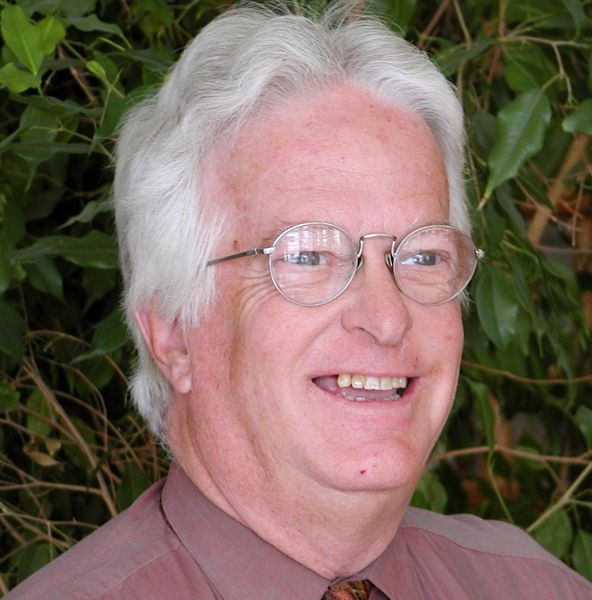
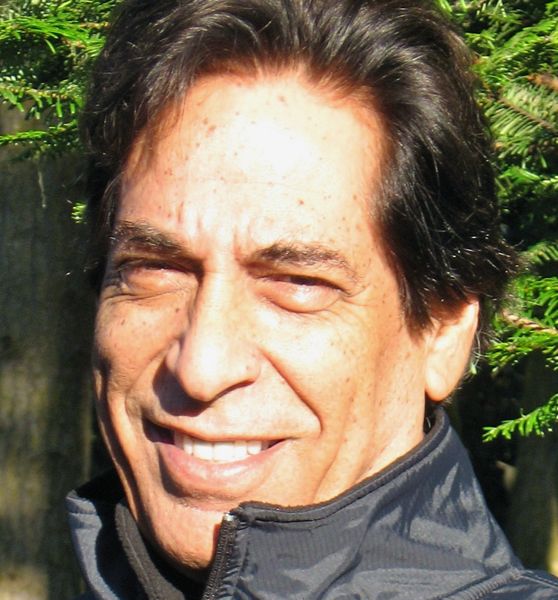
Steve Kubby

Steve Kubby

The version of the ordinance that was sent to the City Council was a model of tolerance and safety, thanks to efforts by local dispensary operators Gino DiMatteo, Cody Bass and Matt Triglia, as well as the extraordinary cooperation of the city manager and attorney. However, the City Council chose to reject a marijuana cultivation ordinance that could have set an example for cities and counties across the country.

City Council members apparently refuse to recognize that many patients who grow are struggling just to get through each day. Instead, the City Council wants to force sick, disabled and dying patients to jump through hoops that carry severe financial penalties for anyone who messes up. It’s a misguided and dangerous effort to micromanage sick people who they suspect of breaking laws, when those who deliberately or criminally abuse the law or trash homes can still be charged for serious crimes, based upon illegal activities and/or property damage.

The City Council is trying to fix something that isn’t broken, based upon an obsolete legal view of cannabis. Considering that California physicians have safely supervised hundreds of thousands of medical marijuana patients, since the passage of Proposition 215 nearly 15 years ago, it should be clear that marijuana no longer qualifies as an illegal, schedule 1 substance and should be treated just like any other medicinal herb.

Despite threats and fraudulent assertions by the DEA and U.S. attorney, the courts have determined that “currently accepted medical use” does not require FDA approval or more than one state to recognize the medical use of cannabis. Once California passed Prop. 215, cannabis should have been immediately rescheduled. Instead, government at every level perpetuated this fraud and continued to arrest, prosecute and incarcerate citizens based upon a classification that was obsolete and kept in place to target and punish a particular group within society.

The South Lake Tahoe City Council has refused to make a serious commitment to protect the health and safety of our patients, opting to create a Big Brother approach instead. That raises an even bigger question: Why does the City Council seem overly preoccupied with smokescreen issues like pot, instead of real issues like the explosion of pot holes in this town?

Frankly, these and other misdirected actions by the City Council looks suspiciously like a hidden agenda to attack medical marijuana, TRPA, League to Save Lake Tahoe, Gov. (Jerry) Brown and anything, but the real problems facing the city.

What are the priorities of the new City Council? Does the City Council believe it is their job to micromanage everyone, but themselves? What good is a City Council that just adds another layer of bureaucracy and expensive fines, instead of actually doing stuff to make our lives easier or better?

We haven’t heard a word about The Crater (I refuse to call anything that big a Hole), or how to deal with the $300 million repair bill for our streets, or how to pay the $200 million redevelopment debt, or how to overcome the structural deficit of $1 million per year in the budget.

No, instead the City Council is busily adding a $1,000 a day fine to some poor patient who is struggling to make it through each day. Instead of inspecting pot holes and broken streets, the City Council is marshaling our severely limited resources to inspect every cannabis garden in the city.

Getting tough with sick people who grow their own medicine may play well with constituents, but it is a cruel fraud and shameful disservice to the people and businesses of South Lake Tahoe. At this point, the only credible path for the City Council is to suspend any further discussion of pot, until something has been done about real problems like pot holes and broken streets.

Steve Kubby played a key role in the drafting and passage of Proposition 215. He has written two books on drug policy reform and serves as executive director of the American Medical Marijuana Association.


Choices for Children reaches out to care providers

To the community,

In honor of the Month of the Young Child, Choices for Children organized the annual Provider Breakfast honoring our community’s childcare providers for the services they provide to families and children throughout the year. The Early Care & Education field came together on April 16 at the Lake Tahoe Golf Course. This year’s topic, “Understanding Behavior and Discipline in the World of Young Children” presented by Cheryl Erwin, attracted 76 childcare providers from Alpine and El Dorado counties. The highlight of the event was the opportunity to connect with adults working in the same fields, encountering the same joy and challenges and hearing the importance of attachment in the early years.

The Positive Discipline basics steps include knowing what children need:

• A sense of belonging and significance

• Appropriate personal power

• Discipline that teaches (is kind and firm at the same time)

• Social and life skills to develop character and competence

Knowing that the Latin origin of the word “discipline” mean to “teach”, the following Positive Discipline tools might become handy when working with children:

• Connection before correction

• Be firm and kind

• Decide what you will do

• Follow through

• Encourage effort and progress, not just results

• Positive time out

• Take time for training

• Use 10 words or less

• Spend special time

• Take care of yourself

• Hugs, hugs, hugs

As you teach discipline to children ask yourself the following questions:

• Does it create connection and belonging?

• Is it respectful and encouraging?

• Is it effective long-term?

• Does it teach valuable social, character, and life skills?

• Does it help children believe “I am capable?”

The event ended with a green art activity promoting relaxation and creativity. Raffle prizes donated by our community made the CFC Annual Child Care Professionals Appreciation Breakfast very special. CFC would like to THANK: Thran’s Flowers, Mont Bleu, Harvey’s/Harrah’s, Lake Tahoe Golf Course, Sorensen’s, Ernie’s Coffee Shop, Passaretti’s Italian Restaurant, Chevy’s Fresh Mex, Sessions, City of SLT Parks & Recreation and Ice Arena, Lake Tahoe Cruises, Embassy Suites, Round Table Pizza, Side Street Boutique, Kirkwood, Freshies, Orchid’s Thai Cuisine, Mandarin Garden, 4 Seasons Café, Blue Dog Pizza, Fasta Pasta, Sprouts, Applebee’s, Sessions, Sierra@Tahoe/North Star@Tahoe, Bio-Spirit Day Spa, The Ski Renter & Snowboards, Paradise Beauty Supply/Salon, and Heavenly Village Cinema for their generous donations, especially in light of the current economy. Your support to professionals who provide child care for our community’s children and the children of families visiting Lake Tahoe is greatly appreciated!

Nadine T-Davis, resource coordinator Choices for Children


Opinion: Nevada pulling out of TRPA would hurt transit at Tahoe

By Carl Hasty

The Tahoe Transportation District is on the brink of becoming an unfortunate casualty of legislation proposed to withdraw Nevada from the bi-state Tahoe Regional Planning Agency Compact with California. The unintended consequence of Nevada Senate Bill 271 will be a direct threat to over $400 million programmed over the next five years for vital transportation improvements that will connect communities within the Tahoe Basin and further protect the clarity of Lake Tahoe.

SB271 was introduced by Nevada state Sens. John Lee, D-North Las Vegas, and James Settelmeyer, R-Capital Senatorial District. The bill is co-sponsored by Assemblymembers Kelly Kite, R-Minden, Pat Hickey, R-Reno, and Randy Kirner, R-Reno.

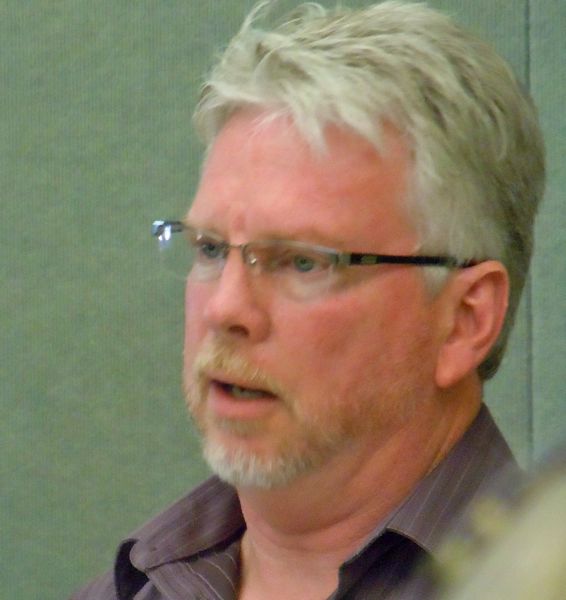
Carl Hasty

Carl Hasty

I attended the recent hearing on the bill and understand the frustration with the state of California and the Tahoe Regional Planning Agency expressed by the committee. When such frustration leads to hurried action, more problems can be created than solved. There are clearly problems to be resolved, some sooner than others. We welcome the spotlight that the bill shines on these problems, but we are concerned it may cause more uncertainty and confusion and eliminate worthwhile projects. Rational discussion involving all parties, and a timeline for resolving major issues, may be a more constructive way to proceed.

In 1980, Public Law 96-551 passed by Congress amended the 1969 Compact between Nevada and California which established the TRPA. Article IX of this law created the TTD as an independent agency within the Compact. TTD is charged with facilitating and implementing safe, environmentally beneficial, multi-modal transportation programs and projects for the entire Tahoe basin in Nevada and California.

A primary funding source for TTD projects comes from the Federal Highways Administration through the Tahoe Metropolitan Planning Organization, a federal transportation planning authority tied to the Compact in 1997. Should Nevada withdraw from the Compact, the flow of these funds would cease because the TTD and TMPO would no longer exist.

The 2010 Maximum Daily Load Report published by the Nevada Division of Environmental Protection and the California Water Quality Control Board, Lahontan Region, documents that 70 percent of fine sediment and particulates clouding Lake Tahoe are a direct result of the region’s 20th century transportation system.

TTD’s outlook is to the future. The projects proposed and developed by the agency and its many partners are vital to protect and enhance Lake Tahoe while improving mobility in the 21st century and beyond. Those living and working in the basin and visitors from all over the world will be losers in the long run if projects are put on hold or never completed.

The TTD currently operates BlueGo, a bi-state transit service and has several projects in the planning and development stage. Those projects include a bikeway on the Nevada side of Tahoe, anchored by a roundabout and related improvements at the intersection of Highway 28 and the Mount Rose Highway; Highway 50 Stateline Community Revitalization project, a centerpiece for the transformation of Stateline South Shore in Nevada and California; and the Highway 89/Fanny Bridge Community Revitalization project in Tahoe City. TTD is currently evaluating feasibility for a Lake Tahoe aquabus, a trans-lake passenger ferry service between the north and south shores, and potentially connected to smaller water taxis for shorter trips.

These projects will benefit all Nevada and California residents and visitors. However, without a fully functioning TTD and TMPO, there is very little likelihood that any of them will be accomplished.

Carl Hasty is executive director of the Tahoe Transportation Department.


Opinion: Obama blowing smoke about medical marijuana

By Chris Roberts, SF Weekly

That familiar odor wafting from San Francisco street corners, storefronts, and the neighborhood growhouse? It’s the smell of legality. Medical cannabis is the law of the land in California, 14 other states, and the District of Columbia. Yet, as many marijuana users will tell you, protection under state law hasn’t guaranteed protection under federal law at all.

It was more obvious under the George W. Bush administration, which pledged to “ignore” state medical marijuana laws and go after marijuana users. For eight years, the federal government “subverted” the will of the states, according to the ACLU, and in the process ignored the Constitution’s guarantees of state sovereignty, as many a pot user has tried to argue in court.

So when Barack Obama’s new administration delivered a message on medical marijuana in February 2009, it was heard loud and clear: The federal government was getting out of the business of busting pot in California and other states where voters had approved medicinal application of the plant. Obama the candidate promised as much during the campaign, and now the new attorney general, Eric Holder, had made it so by issuing guidelines protecting those following state law. Federal policy on medical marijuana had changed.

For that campaign promise — and for pledges to end the Iraq war and reform health care — Obama won many votes from San Franciscans, including people like the 30 medical cannabis users gathered at a former brothel on Mission Street on a recent evening. The low- and no-income folk who constitute the patient advocacy and activist network Axis of Love cannot use their Medicare and Medi-Cal benefits to buy their preferred tonic — federal law makes it thus — and so they must rely on the charity of a few San Francisco cannabis dispensaries for their medicine. Pot and meals are dispensed daily, free of charge, under the supervision of activist Shona Gochenaur. “Obama got a ton of votes from our community,” she says, “for the many campaign promises he made that things would change.”

That the man in the White House was even willing to put “medical” and “marijuana” together in the same sentence was a step forward for California’s cannabis advocates. They had endured such spectacles as the sentencing to five years in federal prison of a pair of El Dorado County providers — Mollie Fry, a breast cancer survivor, and Dale Schafer, a hemophiliac — and the DEA seizing six plants belonging to Angel Raich, who had an inoperable brain tumor. Legal outdoor growers were living in fear after an unprecedented string of DEA raids in the state’s pot-producing counties in 2007. In the Bay Area, the U.S. Attorney’s Office, headed in the last years of Bush’s presidency by Reagan appointee Joseph Russoniello, sought stiff sentences against two brothers for running a dispensary in Hayward.

Read the whole story


Opinion: Revised S. Tahoe cultivation ordinance works

Publisher’s note: South Lake Tahoe’s cultivation ordinance is on the April 19 City Council agenda. The meeting starts at 9am at Lake Tahoe Airport.

By Steve Kubby

South Lake Tahoe City Manager Tony O’Rourke and City Attorney Patrick Enright have proposed a new medical marijuana cultivation ordinance with reduced penalties and improved security for patients from ripoffs and raids. The new version will lower the penalty from a misdemeanor with jail time to an infraction and reduce fines from $1,000 per day to $100 for the first violation. Also, building permits will not have growers’ names or addresses, to protect against disclosing information publicly that could be abused by burglars and rogue federal drug agents.

City officials recognize that many patients who grow are struggling just to get through each day and lowering the penalties and fines will make these patient’s lives a bit easier for them. Those who only grow small amounts will be pleased to learn that gardens which consume under 20 amps will not need to register. Of course, those who abuse the law and trash homes can still be charged for serious crimes, based upon illegal activities and/or property damage.

Steve Kubby

Steve Kubby

This new ordinance is now a model of tolerance and safety, thanks to efforts by local dispensary operators Gino DiMatteo, Cody Bass and Matt Triglia as well as the extraordinary cooperation of the city manager and attorney. As a result, the city of South Lake Tahoe has created a marijuana cultivation ordinance that will be setting an example for cities and counties across the country.

Of course, there are those who will argue that marijuana is still against federal law and that the city has no business protecting patients or issuing permits. However, the city of South Lake Tahoe has every right to regulate and protect marijuana cultivation, because the voters of our state have said so and because the DEA continues to ignore the will of the voters and continues to fraudulently and illegally list marijuana as a Schedule 1 controlled substance.

The fact is the U.S. Controlled Substances Act lists very specific conditions for a substance to be designated as Schedule 1. In order to remain on this list, all of the following conditions must exist:

(A) The drug or other substance has a high potential for abuse.

(B) The drug or other substance has no currently accepted medical use in treatment in the United States.

(C) There is a lack of accepted safety for use of the drug or other substance under medical supervision.

Considering that California physicians have safely supervised hundreds of thousands of medical marijuana patients, since the passage of Proposition 215 nearly 15 years ago, it should be clear that marijuana no longer qualifies as a schedule 1 substance.

On Feb. 1, 2011, U.S. Attorney Melinda Haag (Northern District of California) wrote a letter to John A. Russo, Oakland city attorney, in response to an Oakland City Council request for guidance regarding medical marijuana and federal law. The memo was written with consultation and approval from U.S. Attorney General Eric Holder. In that memo, Haag repudiated President Obama’s campaign promise to respect state medical marijuana laws: “We will enforce the CSA vigorously against individuals and organizations that participate in unlawful manufacturing and distribution activity involving marijuana, even if such activities are permitted under state law.”

Despite these threats and fraudulent assertions by the DEA and U.S. attorney, the courts have determined that “currently accepted medical use” does not require FDA approval or more than one state to recognize the medical use of cannabis. Once California passed Proposition 215, cannabis should have been immediately rescheduled. Instead, government at every level perpetuated this fraud and continued to arrest, prosecute and incarcerate citizens based upon a classification that was obsolete and kept in place to target and punish a particular group within society.

Here are the facts:

— Federal regulation, 21 C.F.R. § 1308.11(d)(22), says marijuana has no accepted medical use in treatment in the United States. However, not one state has asked the federal government to remove it from that classification.

— We have a United States Supreme Court ruling that tells us these federal regulations do not trump state laws on accepted medical treatments, Gonzales v. Oregon, 546 U.S. 243 (2006).

— We have a very solid federal court ruling that says accepted medical use in treatment in the United States does not mean everywhere in the United States or FDA approval, Grinspoon v. DEA, 828 F.2d 881 (1st Cir. 1987).

Fortunately, the South Lake Tahoe City Council will have an opportunity to do the right thing and protect the health and safety of our patients, as well as our homes, with an ordinance that we can all be proud of.

Steve Kubby played a key role in the drafting and passage of Proposition 215. He has written two books on drug policy reform and serves as executive director of the American Medical Marijuana Association.


Successful crime free housing program in South Tahoe

To the community,

Lake Tahoe Crime Free Programs had its Crime Free Multi-Housing Program conference on April 11 at Aston Lakeland Village Beach & Mountain Resort. Thank you to Jerry Bindel and his staff for providing exceptional guest service and to Grandpa Manny of Taqueria Jalisco for a delicious lunch.

We now have certified over 60 participants and have the support of South Lake Tahoe Police Department and Douglas County Sheriff’s Office. This program is in over 2,000 cities, 12 countries, 44 states, including California and Nevada.

Tim Zehring, executive director of the International Crime Free Association, gave a “borderline riveting” presentation as one evaluation stated. Guest speakers included members from South Lake El Dorado Narcotics Enforcement Team (SLEDNET) and Tri-County Gang Task Force.

Contact laketahoecrimefreeprograms@msn.com or go online for further information.

Come join us in taking an active stand against illegal activity.

Melanie Raulston-Arnold


Tahoe bike group takes wait-and-see approach to Measure S revision

By Ty Polastri

In 2000, the residents of South Lake Tahoe approved a bond to raise monies for recreational facilities and bicycle path maintenance. In 2009, an effort by the Joint Powers Authority, who administers the bond monies, advanced a Measure B to reallocate the accruing bicycle path maintenance funds for recreational facilities beyond the scope of the original Measure S. That measure was narrowly defeated – requiring a two-thirds vote for passage.

bikeThe JPA is presently taking steps to revisit the possibility of advancing another measure in which to allocate as much as $500,000 bike path maintenance funds to ball fields and broaden the scope of bike path maintenance to include paths built prior to the 2000 Measure stipulations.

The reason there is nearly $470,000 currently accruing for bike paths is because expenditures are earmarked for trails built after 2000, which there are few and not needing attention, and to insure that sufficient funds be available for future bike trails. Bike path maintenance funds are a condition for new paths being built and there are several in various planning stages.

Now, that the Bike Coalition is a 501(c)3 tax exempt educational corporation, it is restricted in what it can and cannot do with regards to advocating a political or legislative position. However, it is unclear about advocating for or against a ballot measure. Therefore, the coalition is seeking a legal opinion. Until then, the board of directors reached a consensus that it would remain neutral about the proposed measure until such time that it receives a legal opinion. The coalition will be providing information and analysis of details regarding bike path maintenance and the essential elements of being a bicycle-friendly community should the JPA decide to place this measure on the ballot.

Ty Polastri is president of the Lake Tahoe Bicycle Coalition.