Opinion: No one else should pay price for parole system’s failure

Publisher’s note: This editorial is from the April 29, 2011, Reno Gazette-Journal.

We should all hope that Thursday’s plea deal in Placerville, that will put Phillip Garrido and his wife, Nancy, behind bars for the rest of their lives finally will allow Jaycee Dugard and her family to begin healing from their decades-long ordeal.

In a crime that gained nationwide attention, the Garridos kidnapped Dugard, then just 11 years old, from a South Lake Tahoe street and held her captive in a backyard shanty for nearly 20 years. Phillip Garrido, 60 now, fathered two children by the kidnapped girl.

His surprise guilty plea to 14 charges of kidnapping and sexual assault can send him to prison for a maximum 431 years. Nancy Garrido, who pleaded guilty to one count of kidnapping and one of rape, faces 36 years to life. Neither should ever be released back into society.

The guilty pleas are welcome because it means that Dugard and her children will not have to testify against her captors and can try to heal from the long trauma.

But the case should serve as a warning to law enforcement and, equally important, those who create budgets for police, corrections facilities, and parole and probation departments.

Read the whole story


Opinion: Detailing importance of S. Tahoe’s General Plan

By Tony O’Rourke

On May 3, the South Lake Tahoe City Council will host a public hearing and work session on the city’s General Plan update. On May 17, the City Council is scheduled to consider adopting the General Plan update and final environmental impact report. This is an exciting time for the city as it nears completion of adopting the community’s vision following a three-year process of gathering community input, developing ideas, evaluating environmental impacts and concerns and considering alternatives.
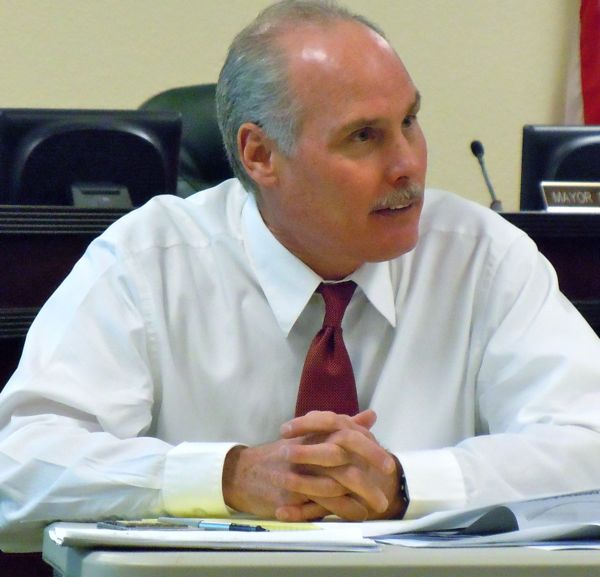
Tony O'Rourke

Tony O'Rourke

The city of South Lake Tahoe’s 2030 General Plan update sets a new direction for how the community plans, manages, and implements change. The development of the General Plan update is based on the smart growth principles adopted by the City Council in 2005, the Sustainability Plan adopted by the City Council in 2008, as well as the community’s vision as expressed in the draft Tahoe Valley Community Plan, Pathway 2007, many General Plan public workshops and community input during the process through comments and meetings.

In addition, the drafted General Plan and final environmental impact report includes environmental mitigation measures and an analysis of consistency with standards set by the Tahoe Regional Planning Agency.

Why do we need a General Plan when we have the Tahoe Regional Planning Agency and its Regional Plan?

Every city and county in California is legally required to adopt a General Plan, which serves as a community’s constitution for land use and development. The TRPA sets land use policy on a regional scale, but doesn’t include specific needs of a community and South Lake Tahoe is our community. While a Regional Plan is important, its mission is to focus on lake clarity, regional developments and environmental thresholds. The city’s General Plan goes a step further and focuses on South Lake Tahoe residents’ vision, local needs and neighborhoods.

For example, in December 2010, local residents rated the appearance of South Lake Tahoe among the lowest in a national survey of 270 cities. The majority of the commercial corridor in South Lake Tahoe is deemed a protected “view corridor” to Lake Tahoe; yet the result of the regulations have left the visual appearance of the community below standard and in need of significant upgrade. While a billion dollars has been invested in lake clarity, which is still declining, the infrastructure and appearance of the city have been neglected.

What is and is not in the General Plan update?

Recently, special interest groups and individuals have written articles summarizing as purported “facts” things in the General Plan that are false and misleading. While the General Plan can be long and arduous reading, it is a public record so one need not argue about what is or is not contained in the plan. For the purpose of fact-setting the following is offered.

What is not in the General Plan:

• The General Plan does not contain a plan for 100 acres of six-story high-density development as asserted by uninformed sources.

• The city’s General Plan does not envision thousands of new condominiums. Given the state of the housing market, it will be many years before the proposed 940 market rate residential housing unit allocations and 222 affordable housing residential allocations would be absorbed into the currently depressed housing market. Any new residential unit (which includes condominiums) requires an allocation of a residential unit of rse (RUU) from the TRPA. The exception to the rule is for affordable housing units, which are restricted to low and moderate income households and do not require an RUU. If you read or hear otherwise, you are being given false or misleading information.

• The General Plan does not utilize eminent domain. The City Council adopted Resolution 2008-16 eliminating eminent domain authority from its purview.

What is in the General Plan:

• The plan focuses on sustainability and contains all policies included in the 2008 City Sustainability Plan. With adoption of the General Plan, the city will continue to be the leader in sustainable policy and practices within the Tahoe basin.

• The plan requires the city to promote “Complete Neighborhoods” that provide resident amenities, such as walking and biking trails and enhance neighborhood identity. These amenities have been suggested by special interest environmental groups as projects that would result in a better place to live and visit, which will provide great opportunities for collaboration.

• The plan requires incorporation of policies into community plans and an allowance of up to 70 percent land coverage on specifically-designated properties within areas that are already developed as higher density commercial hubs.

• The plan promotes removing worn and dilapidated buildings from existing commercial corridor into centralized hubs, which provides opportunity to improve the visual appearance of the city and reduce coverage in sensitive areas by centralizing it into non-sensitive areas. The General Plan requests up to an additional 386,000 square feet of commercial floor area to accomplish this goal.

The city is poised to take this opportunity to complete the process of developing a 20-year vision for the future through adoption of a comprehensive General Plan. The City thanks the community for their input into the Plan. The City’s General Plan Update and recently adopted Strategic Plan will help to ensure the beauty of our natural environment is not undermined by our built environment.

Tony O’Rourke is city manager of South Lake Tahoe.


Opinion: Obituaries should be treated with reverence

By Kathryn Reed

Obituaries are big business. A year ago, my mom spent more than $2,000 to place my dad’s obit in three publications.

It was free on Lake Tahoe News. It’s free to everyone, not just to my relatives.

The last picture taken of Kae Reed and her dad, Don Reed -- with Sue Wood and Cleo Reed in between.

The last picture taken of Kae Reed and her dad, Don Reed -- with Sue Wood and Cleo Reed in between. (November 2009)

I say this on the one-year anniversary of my dad’s death to make the point that I find it shameful newspapers charge for obituaries – in print or online. It’s almost inhumane.

Yes, I understand as well as anyone that a publication is a business. But I also understand that every life is a story.

No one charges a public agency for coverage of its meetings. No one pays to get a feature story written. A community announcement doesn’t cost money.

Why, then, charge for an obituary? Does it really take up space that is better used for some other editorial space?

My answer is an emphatic no.

And why treat it like an ad? That really is treating the deceased with disrespect.

Nancy Hayden Oliver, who I worked with at the Tahoe Daily Tribune twice, taught me a few things when I was her boss. I learned the importance of letting people tell the story of the deceased person through the obituary. She convinced me it’s OK in that circumstance to use first names on second reference – instead of last name, as is customary in news stories.

She taught me that if there is a typo, you run it again. You fix it until it’s correct. You only die once. It’s imperative the accuracy of the obit live on factually.

I can’t count the times I’ve spoken to the families left behind. It’s amazing how the simplest of facts escape their memory. It’s amazing how the person’s life story flows like a novel.

I laugh. I cry. But mostly I listen.

I don’t like writing obituaries. I feel guilty I have waited to know this person after I’m unable to speak to them. I feel a much different loss than the family – the loss of never knowing that person.

But those are actually the easier obits to write. It’s when I know the person or the family that I have the hardest time holding it together. It’s been even harder this last year. We’re in this club together of having lost someone so incredibly important to us. Each death brings up my own sadness.

Death isn’t easy. No one teaches us how to deal with it. We aren’t supposed to talk about it. But it’s real.

And it is so incredibly important how what could be the last (as well as first) thing published about that person be treated. The words about someone who has died deserve to be treated with respect and published in a manner that shows dignity.

When I worked for papers like the San Francisco Chronicle and Las Vegas Sun, obits about well-known people were written ahead of time. This means all that has to be inserted are the date of death, services, and a quote from someone. It may sound morbid, but it speeds up the process of getting the news out to the public.

I’ve thought about doing that for some people in the Lake Tahoe Basin and beyond – because, really, you could get that person’s input. Yes, morbid, but let me tell you, I would rather write my obit than leave it to my grieving family. I know how hard it was for my three sisters, my mom, my aunt and I to massage my dad’s obit. As an engineer, he probably would have it whittled to five paragraphs that cost a fraction of what mom paid.

Still, though, one point of this is to have you think about what you would want said about you. And then, if you think you will be the provider of information for an obit for someone, get the information out of him or her now. One day it may be too late.


Opinion: Casino giants’ problem gambling efforts are shoddy

By Steve Friess, Las Vegas Sun

A few years ago during Responsible Gaming Education Week, every MGM Resorts employee was required to wear an orange wristband that read: “Keep It Fun.” At lunch with an MGM executive that week, I needled him about how ridiculous the gesture was, only to have him scold my skepticism. Plastic jewelry, he insisted, was important to raising awareness of problem gambling, and the company seriously wants to help problem gamblers.

That encounter sprang to mind this month after I strayed accidentally into the “responsible gaming” section of the Monte Carlo website, was quite appalled, and then took an extensive and damning inventory of how major casinos handle this matter online. Then, I watched with sadness as some of the Strip’s mouthpieces went into damage-control mode rather than soul-searching mode upon the April 14 release of a credible $3 million study that found gambling addiction is twice as common as alcoholism.

This is an era in which gambling — casino or otherwise — has never been easier. The shutdown in recent days in the U.S. of the world’s biggest poker websites amid a federal indictment will make playing online temporarily more challenging, but there’s also legislation in Carson City to allow mobile gaming devices to be taken to private places such as hotel rooms. So I find the industry’s sincerity questionable.

Read the whole story


Appreciation for successful Earth Day celebration

To the publisher,

The South Lake Tahoe Earth Day Committee would like to thank you for your contribution to this year’s South Tahoe Day Festival held on April 16 at the Bijou Community Park.

Earth Day was a great success this year with an excellent turnout from our Lake Tahoe community, great variety of local booth vendors, and gorgeous day. Our local event attracted thousands of people from the Tahoe basin and beyond who came out to celebrate our beautiful environment and learn about ways to sustain it now and for future generations.

The success of Earth Day each and every year would not be possible without the support of our local community. Since this year’s event in particular, we have been receiving an overwhelming amount of positive feedback.

As a nonprofit formed to educate the general public about the Lake Tahoe and Truckee region’s unique beauty and how to preserve and protect it, the Tahoe Earth Day Foundation focuses our Earth Day Festivals on watershed and forest health, water conservation, pollution prevention, alternative energy and waste management.

We truly value the exposure we received on your website, as it is one of the best local outlets for what’s happening in our community. If you have ideas or suggestions to improve our event and outreach, please let us know.

Sarah Ford, chair, South Lake Tahoe Earth Day Planning Committee

Jeanne Lear, Human Resources manager South Tahoe Refuse Co.


Opinion: Solving the medical pot cultivation issue in S. Tahoe

Dear City Council members,

What can be done to solve the medical marijuana garden “crisis”? Do we threaten sick people with home invasions and huge fines, or do we place the responsibility where it legally belongs?

It is not the job of the City Council to serve as property managers. That is the legal responsibility of property owners and rental property managers. It is their responsibility to clearly spell out the terms of their lease, to screen their potential tenants and perform whatever inspections are required to maintain their property. Absentee owners should take responsibility and hire a local property manager. If tenants are in violation of their lease, then owners and managers have ample legal remedies ranging from eviction to civil and even criminal actions in court.

Steve Kubby

Steve Kubby

It is also not the job of the City Council to thwart state law and the will of the voters. If the council thinks their cultivation ordinance is so great, then stop threatening patients with fines, public exposure to burglars and make the entire program voluntary.

Medical marijuana patients have legal rights. They are your neighbors and friends. They are sick even though it may not be apparent to you. They are not the problem. In fact they could be your solution.

Most patients I know would be happy to pay an additional 20 percent in rent to have the permission and peace of mind that comes from renting from a “215 friendly” property owner. A voluntary “215 friendly” program that provides patients with city guidelines and permits to grow would be popular and help all involved.

Let freedom grow,

Steve Kubby, South Lake Tahoe


Recognition for school bus drivers

To the community,

The state of California recognizes the fourth Tuesday of April as “School Bus Driver Day.” The California Highway Patrol joins with the Legislature and Gov. Jerry Brown in publicly expressing great appreciation to the state’s school bus drivers for safely transporting our most cherished cargo to and from school and school activities; escorting them safely across busy streets and highways, helping them board school buses via wheelchair lifts and ramps; buckling seat belts, and finally delivering them safely to parents and guardians at the end of the school day.

“These are some of the most professional drivers in the state, and they’re passionate about what they do,” said CHP Commissioner Joe Farrow. “I applaud them for their extraordinary safety record, and the pride they take every day in the safe transportation of California’s children.”

School bus drivers will tell you their primary goal is pupil safety. They are extensively trained and rigorously tested to ensure this goal remains first and foremost in their thinking and actions when transporting children. While crashes may occur, school bus drivers have traveled millions of collision-free miles over the years.

Despite the number of school buses being operated throughout the state, school buses remain one of the safest modes of school transportation. In fact, California has not experienced a pupil-passenger fatality in 15 years. This is can be attributed to the school bus drivers’ commitment to safety, their excellent driving skills and attention to detail.

Though school bus drivers do their part to safely transport school children to and from their destinations, the motoring public has an obligation to do their part as well. Most school bus-related injuries and fatalities occur around or near the school bus during the loading and unloading process. Therefore, it is essential the motoring public be reminded to exercise due caution when driving near schools and school buses. Slow to 25 mph in school zones unless a lower speed is posted and stop behind a school bus when the flashing red lights and stop arm are activated.

Please join the CHP on School Bus Drivers’ Day as we extend our gratitude to school bus drivers throughout the state for their valued service and safe transportation of the children of California.

Officer Jeff Gartner, South Lake Tahoe office


Opinion: Rape of women in military ‘a national disgrace’

By Jackie Speier

Women in the U.S. military are more likely to be raped by fellow soldiers than killed by enemy fire. I know what you’re thinking – it sounds too unbelievable to be true. But it’s not.

The Department of Defense estimates that more than 19,000 service members were raped or sexually assaulted in 2010. Due to a military culture heavy on retaliation and light on prosecution, only 13.5 percent of the victims report the rape.

The system of justice designed to adjudicate cases of rape in the military is in complete shambles. Victims are blamed. Assailants are promoted. Unit commanders – whose promotions are dependent on the conduct and performance of the soldiers they supervise – have an incentive to see that allegations are few and convictions are fewer. As a result, the overwhelming majority of cases get swept under the rug.

This abomination is not new. The Pentagon has largely ignored the recommendations of 18 reports on sexual assault and rape in the military over the past 16 years. As a result, the problem is now worse than ever. So I have pledged to speak about this issue every week on the floor of the House of Representatives until this Congress and this administration do something more than offer lip service.

While the incidence of rapes and sexual assaults is shockingly high, the personal accounts of victims add even more horror to the picture of a military at war with itself.

Technical Sgt. Mary Gallagher, an Air National Guardsman, was allegedly sexually assaulted by a fellow sergeant in 2009. He pushed her up against a wall, took his right hand and pulled her pants and underwear down, and then used his hand to rub her private parts. He simultaneously ground his genitals against her, and talked about how much he was enjoying the assault. Command’s only response was to reassign the assailant and order him to refrain from any contact with her. She was then lectured by the base chaplain, who claimed that 96 percent of sexual assaults on women occur when drinking is involved. Technical Sgt. Gallagher had not been drinking.

Jackie Speier represents San Mateo County and part of San Francisco in the U.S. House of Representatives.

Read the whole story


Opinion: Education reform key to solving California’s budget crisis

By George P. Shultz and Eric Hanushek

Do we really need someone in Sacramento writing three paragraphs in the California Education Code containing 1,132 words that lay out the rules for school field trips? How about state approval of lesson plans for farm labor vehicle training? Of course not. And from these, we see an opportunity to break the gridlock in our state capital.

Sacramento is awash with discussions of deals about the budget (though apparently, despite the talk, there is no deal). The proposals generally involve pain from cuts in resources for many programs and services that is “balanced” by pain from increased tax rates. Not surprisingly, many legislators have been reluctant to sign on to such “deals.” The negotiators, and the public, do not see how their lives are improved through the proposals. So we are left with the unwelcome choice between an unsustainable fiscal condition for the state that leaves our future in doubt or further cuts that seem unacceptably draconian.

We offer a real deal: Our children are our future, so Part One of the deal must be improving the quality of K-12 education, because California rates 47th in student achievement out of the 50 states.

We also have a stubborn state budget deficit, and the main word being used in addressing it is “cut.” A better term for Part Two of the deal is “reform.” When one makes that change, the money will be there.

George P. Shultz and Eric Hanushek are senior fellows at Stanford University’s Hoover Institution. Shultz was U.S. secretary of state from 1982 to 1989. In 2010, he was a co-chair of the No on 23 campaign. Hanushek is a member of Hoover Institution’s Koret Task Force on K-12 Education.

Read the whole story


Opinion: Suggestions for the financial sector

By Rex Ghosh

As the world closes in on the three-year mark of the beginning of the global financial crisis, I believe it’s not enough to rely on new regulations to prevent future disasters – a fundamental change in mindset is required.

The global financial crisis, marked by the bankruptcy of Lehman Brothers in September 2008, has taken an enormous economic, financial, and social toll.

In the United States and abroad, regulations, laws, and practices are being changed to help ensure that such crises do not recur. But these regulations – running to the thousands of pages – are enormously complex. It may be years before they are all adopted and absorbed into the daily lives of those in the financial sector. The real prevention rests in the notion that leaders need to work toward changing the very culture of the sector to rely on more fundamental and basic practices based in prudence and responsibility.

I would like to see the financial sector learn the following lessons:

· For the Federal Reserve – Central banks such as the Fed should not only look at goods price inflation, but also at important asset prices, such as the stock market and housing sectors. It also needs to be more mindful of lending and credit booms, especially in the face of weakening credit standards. That’s what paved the road to hell three years ago. We do not want to repeat that option again. Traditional monetary policy tools (like the Fed’s interest rate) may need to be bolstered by counter-cyclical capital requirements (requiring banks to hold more capital in “boom” times).

· For Banks – Boring is good. Banks should get used to being a much smaller proportion of the economy, like it was before the 1990s. Bankers should also be aware of credit and counterparty risks. They need to know who they’re doing business with, know to whom they are lending and not rely solely on credit ratings.

· For Regulators – They need to watch the kids and the cookie jar. They should not count on banks to manage their risks prudently. They should think seriously about “tail risks” – just because something has not happened before, such as a nation-wide decline in house prices, doesn’t mean it cannot happen in the future.

These are not incredibly difficult precepts. The short answer is that the Fed needs to broaden its view of what constitutes inflation, banks need to look past the paperwork and avoid risk, and regulators need to realize their jobs don’t end with the passage of new rules. For every regulation created, there are 50 new ways created to get around it. We need to realize that the practices of the past won’t go away until we match the letter of the regulations with the culture of the financial sector.

Rex Ghosh received his A.B. in economics from Harvard University, MSc. in development economics from Oxford University, and his M.A. and Ph.D. in economics from Harvard University. He has taught at Princeton University and Georgetown University. He is the author of several books on international economics and numerous articles in professional journals.