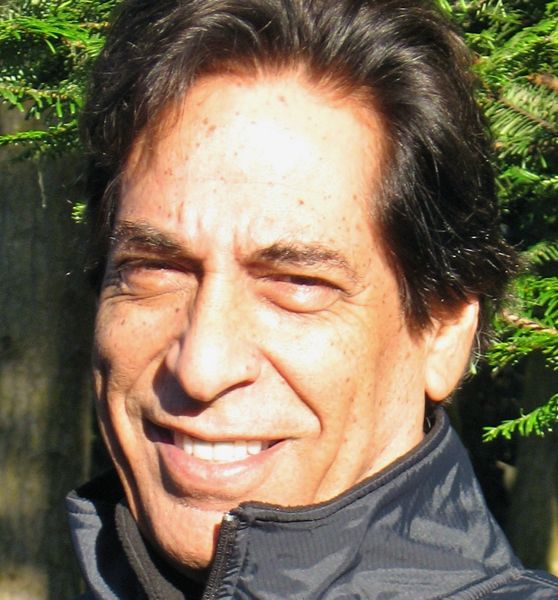
Opinion: Art to negotiating your salary

By Bill Humbert

As the job market recovers, a unique phenomenon is beginning to happen, and one expert warns it could cost you money.

As people who have been looking for work a long time start to get back into the workforce, many of them are so happy just to get a job that they sometimes accept a lower salary than they have to. Some employers feel that they can probably get away with a lowball offer, and many job hunters will grab it just so they can have a job. The truth is there are ways to get the job and still get what you want.

Advice for job hunters includes:

· Don’t Offer Salary Requirements – When you are asked to include salary requirements with your resume, that is typically a company’s first screen, and it can be used against you. I’ve seen people agonize over what to reveal, because they are afraid of pricing themselves out of a good job. My advice is to simply put “Open” in that spot. If your qualifications are on target, they’ll call you. If in the interview you’re asked what you made at your last job, reply by asking about the range for the one you are applying. You’d be surprised how managers or human resource representatives will tell you.

· Don’t Give Away Too Much – In many job applications, an employer will ask for your salary history. It is perfectly acceptable to write “Willing to discuss at appropriate time during interview process” and leave those numbers blank. Writing down those numbers pigeonholes you, and reduces your negotiation power.

· Don’t Negotiate Salary – That’s right. Don’t negotiate salary in the interviews. Instead, negotiate when you’ll give them your salary requirements. When they ask you for that figure, tell them you don’t know what you’d require until you have a clear picture of the job requirements and potential for advancement over the next five years. After you have that information, and you’re asked again for that number, respond by asking to go through what I call your “impacts” – areas of your job that directly impact the company’s bottom line. This discussion will allow you to demonstrate what you bring to the table. At the end of that discussion, simply tell them that you are very interested in the position, and that you’d seriously consider any offer they’d like to make.

· Keep Networking – Once you have a job offer, it’s not a done deal until you accept it. Until that happens, keep networking and looking for jobs. It may give you valuable market-worth data about the position you’ve been offered. It may also be a safety net in case something goes awry between the time you receive an offer and the time you accept it.

· Accepting the Offer – Once an offer is given, you have the right to ask for a clarification on it. Asking “Is there any flexibility in this offer?” may help to open a discussion of increasing the offer. If it does, don’t expect a large boost in base pay, but rather, an extra week of paid vacation, a signing bonus or other such perks.

Keep in mind that salary negotiation is more art than science, so these tips may not always apply. Many hourly workers don’t have as much flexibility on pay, and some companies have policies that would require you to adjust the script a little to fit those situations. The key thing to remember is that you don’t have to give them a salary range that would jeopardize your earning potential, and that you don’t have to accept their first offer most of the time.

Remember that they are interviewing you because they need to fill that position. It’s important to the company to have someone in that job, and while they are considering you, they aren’t doing you a favor. They need what you have to offer, so you should get the best offer out of them that is possible.

Bill Humbert, also known as RecruiterGuy, is a Washington, D.C., native and a graduate of Assumption College in Worcester, Mass. He has been a professional recruiter since 1981.


Opinion: Parents need to be No. 1 teacher in child’s life

By Vicki Barber

This week I was talking with a parent of two children, ages 2 and 2. Both she and her husband work full time outside of the home. Busy as they are, they have made it a normal, natural part of their routine to build in time to work in their children’s preschool classrooms. Whether it is washing the tables, cutting out letters to put on the bulletin board, playing games, singing songs or telling stories, they have decided this is an important contribution they are able to make to their children’s preschool experience.

By elementary school, we often see the engagement dwindle. Parents begin to see their role more as coach for T-ball, and less as teachers. Although the schoolwork becomes increasingly challenging, it continues to be important for parents to stay connected with the school, continuing to build the important partnership that is developing.

Vicki Barber

Vicki Barber

Our schools definitely see the value of keeping parents engaged. With class sizes rising, it’s becoming more and more difficult to provide the one-on-one learning opportunity that is so important for so many of our students. Students need the practice of reading aloud or memorizing the multiplication tables. Who better to support the practice of learning than a parent at home or a parent volunteer in the classroom?

The current budget situation has definitely given us lemons. It isn’t what we expected or what we wanted, but it is what we have for right now. How can we make the

best of what is?

My suggestion is to continue to stay connected with your children while at home and make every possible effort to partner with their school, offering your time and talent in whatever way you feel most comfortable. Together, we absolutely can make the very best lemonade ever created.

Vicki Barber is superintendent of El Dorado County Office of Education.


Opinion: Sometimes the public doesn’t need to know

Publisher’s note: This editorial is from the June 4, 2011, Sacramento Bee.

As a general proposition, we’re all for transparency and making information available to the public.

But some things we just don’t need to know.

El Dorado Superior Court Judge Douglas Phimister was absolutely right to keep under wraps the unspeakable details of Jaycee Lee Dugard’s 18 years of captivity.

On Thursday, he released much of the transcript of the grand jury testimony Dugard gave last September. But the judge appropriately sealed parts that were, in his words, “absolutely disgusting” and “just plain pornographic.”

There’s no compelling reason that such information should be part of the public domain – certainly not enough to outweigh Dugard’s right to privacy.

It’s enough to know that her ordeal, which began when she was snatched off the street at age 11, was truly horrific – and that the life sentences given Thursday to Phillip and Nancy Garrido for kidnapping, raping and holding her hostage are the least punishment they deserve.

Wanting to know all the sordid details would be only prurient curiosity. And, unfortunately, our culture already satisfies that appetite well enough.

The Bee and other media organizations properly went to court seeking the transcript, which is typically unsealed after a case is over.

Read the whole story


Opinion: Governor all wrong to raise taxes

By Ted Gaines

Every May the governor releases an updated version of his January budget proposal. This year’s “May Revise” shows that Gov. Jerry Brown is dead set on growing government and raising taxes.

The new budget proposal has bits of good news. California’s economy is so massive that even our weak economic recovery is generating an unexpected $6.6 billion in additional tax revenue this year. Gov. Brown has wisely chosen to use some of the money to pay down debt. He is also proposing to eliminate some deadweight state boards and 5,500 government employee positions.

Ted Gaines

Ted Gaines

The good news ends there. Remarkably, when the state is buckling under massive deficits year after year, Gov. Brown’s detached-from-reality plan proposes increasing government spending 27 percent over the next three years.

To pay for his plan the governor wants to take an extra $58 billion in new taxes from families and businesses through a five-year extension of the historic 2009 “temporary” tax increase that is set to expire this month. He has embraced these higher taxes and will not let them go, even though the voters overwhelmingly rejected even a three-year extension just two years ago.

I do not support higher taxes on Californians. I want businesses to be able to keep their money and invest it, to expand and create jobs. I want families to keep more of their money to pay their bills, buy school clothes, take vacations and determine their own spending priorities.

The nation is struggling through the slowest economic recovery from any recession since World War II. California’s recovery is slower still, and our unemployment rate is around 12 percent. Only a wildly out-of-touch political class could think about forcing families to break out their wallets and pay another $1,000 a year to support an oversized state government.

Now is the time to be questioning why it costs California nearly $50,000 a year to house a prisoner. Why does California have around 12 percent of the nation’s population but a third of its welfare cases? Why did a survey of business leaders just rank California the worst state to do business – for the seventh year in a row?

California needs a government that provides basic public services at a price that taxpayers can afford. To suggest growing the public sector and raising taxes now, Brown’s May Revise shows he is ignoring any meaningful reform and is intent on implementing the same tax-and-spend agenda that created our permanent budget crisis.

Ted Gaines represents Lake Tahoe in the California Senate.


Opinion: Cycling efforts paying off for Lake Tahoe

To the community,

Wow, what a May – still sliding and riding during this Tahoe-style spring.

bikeI want to take this opportunity to acknowledge and express appreciation for the tireless effort by so many that helped bring and prepare for America’s most important pro cycling event – the Tour of California. It was the first time since the 1960 Squaw Valley Olympic Games that the region and its agencies, businesses, organizations and residents came together with a unified purpose – to welcome a global audience and showcase Tahoe’s natural beauty, hospitality, and important role cycling plans in our community.

While the blizzard conditions made it unsafe for racing and the event had to be canceled, and moved off the hill, what still remains is the experience of excitement and regional collaboration with the anticipation for a more promising future for our community.

For me, and for others, those positive experiences of excitement and anticipation continue to live in us and through our daily actions as we pedal forward by participating in the Tahoe Bike Challenge, Bucks 4 Bikes, daily rides and events, and by the unglamorous tasks of planning, asking for dollars, navigating through small town politics, taking a stand for the right action and challenging actions that don’t serve the highest and best use of community resources, and continually building new and maintaining existing strategic alliances with the regions’ stakeholders, and you – our Tahoe Bike Buddies.

Are we disappointed the big race didn’t happen? Yes, of course. However, our community did produce a race that day with the passionate effort by people and organizations that are accustomed to racing everyday with no crowds, no media, no big budgets, no promises of rewards or congratulatory pats on the back. For them, and us, the reward is in knowing that their, and our, efforts are driven by a vision of Tahoe being a healthy place where residents and visitors can enter a new context of: livability, beauty and wonder, rejuvenation and reconnection with their innate affinity to nature; learning and accomplishing new activities they may never have experienced before; and to more intimately bond with family and friends.

This is the Tahoe we know and the fuel for transformative actions that has inspired generations – it is Tahoe’s legacy and brand. We shall continue our selfless mission to fostering and remembering our role to help humans and nature be balanced, regenerative, resilient and adaptive, and able to anticipate and manage variability and risk in order to sustain this unique bio-region — where angels breath, nature thrives, and humans must be reminded of their stewardship responsibility to this sacred place.

Keepin it real and rollin,

Ty Polastri, president Lake Tahoe Bicycle Coalition


Opinion: South Lake Tahoe justifies reallocation of $7 million

To the community,

The following is a response to recent allegations of misappropriation of city/Redevelopment Agency funds in regards to actions that occurred approximately 10 years ago. The information presented comes from the public record, auditor’s reports, evaluations conducted and discussions with staff that are currently or formerly employed by the city/Redevelopment Agency. The information is supplied to the best of our ability as most of the staff are no longer employed at the city or Redevelopment Agency.

sltAt issue is the question of how the South Tahoe Redevelopment Agency developed a deficit of $7,007,000 between the years 1999 and 2003. There is no evidence to suggest anyone “stole” the funds as recently alleged by Mr. Steve Kubby who has not presented any evidence to support such accusations.

Where did the deficit come from?

The accumulative deficit that occurred between the years of 1999-2003 were determined and found to be in the following line items:

Revenue reductions:

• $500,000 late start at Park Avenue (less revenue than budgeted)

• $371,076 in reduced property values of the Embassy Suites

• $1,200,000 administrative costs advanced by the City

Excess expenditures:

• $1,184,053 overhead charges the city “charged” the agency as described below (charging the agency was not anticipated at the time the budget was prepared and

resulted in the budgets showing a deficit).

• $1,800,000 excess expenses to acquire the Transit Center which were not known at the time the grant funds were received

• $1,100,000 legal expenses related to acquiring property

• $476,000 road construction costs higher than budgeted

• $333,000 relocation costs higher than budgeted

• $42,871 miscellaneous costs higher than budgeted

What caused the deficit?

As has been said in the past in the public record, the amount and causes of the deficit are not uncommon when projects are in the midst of getting built, when revenues come in less than anticipated and when project expenses are higher than budgeted. In this case, the developer was also going through bankruptcy, which contributed to the outcome. How the deficit occurred has been reviewed by a multitude of professionals and citizens, from the grand jury to lawyers, CPAs, auditors and councilmembers. No evidence of criminal or illegal conduct has been determined by appropriate authorities who reviewed the situation. The oversights or errors that were made can be debated and judged in retrospect, but the most important action is to reflect on them and make the necessary corrections to avoid similar situations in the future. Under new procedures in place today, the City Council would have been presented with a decision whether or not to continue to support and fund the projects before the actions taken to do so were implemented, which did not occur in every instance between 1999 and 2003.

The grand jury looked into the financial matter of the deficit for two years, independent auditors have reviewed the records, contracts and expenditures and the $7,007,000 deficit is accounted for as described above. The issue was discussed with the City Council at a public meeting in 2003 and a detailed accounting was presented to the City Council in a staff report for the March 16, 2004, meeting. At that same meeting a loan agreement between the city and agency was approved to create the process for repaying the city from Redevelopment Agency proceeds. To date, the agency has repaid $4,000,000 to the city’s general fund. The deficit issue, discussion of the oversights that occurred, along with proposed corrective actions have come before the City Council and the public many times in the years since the deficit was realized.

Most, if not all the errors or oversights that led to the deficit, were identified by the El Dorado Grand Jury in its review of the actions and which have been previously reported. Those of most significance include the following:

• Inadequate financial policies. In 2005, the City Council adopted a comprehensive set of financial policies to prevent the kind of errors that led to the deficit. Prior to 2005, the city did not have sufficient financial policies. While the use of the funds may not have been improper or outside the scope of the city manager’s position and decision-making authority, the City Council upon learning of the deficit realized part of the problem was a lack of strict financial controls that would keep City Council more informed and provide them the opportunity to make the financial and policy decisions on matters of importance to the community and on significant projects. The adoption of the financial policies has led to significantly improved public and City Council involvement with respect to all levels of financial management and reporting.

• Lack of transparency with City Council. Some of the deficit was first reported in the 2001 and 2002 auditor’s evaluation reports. Those auditor’s reports were provided to the City Council, but not appropriately highlighted. The growing deficit should have been more directly brought to City Council’s attention as soon as it was reported.

• Charging the Redevelopment Agency for “admin costs” when the agency didn’t have funds. The City had a practice and cost allocation recovery policy to charge the Redevelopment Agency for the city’s expenses it incurred to develop projects on behalf of the agency. This practice itself is appropriate to recover costs. However, it was known at the time that the agency didn’t have any additional funds outside of the funds it was going to need to build the project(s) yet, the city billed the agency for those costs, which contributed over a million dollars to the deficit, the portion of which is literally “on paper.” While it is proper for the city to recover costs it incurred, the process of billing the agency contributed (somewhat falsely) to the eventual total deficit.

• Poor communication. Inadequate communication between several city managers between 1999–2003, redevelopment project managers and Redevelopment Agency board of directors (City Council) appears to have contributed to the overall situation.

In retrospect, the errors or oversights that led to the deficit were not caused by a single person or single instance. The procedural issues that caused the deficit were understood upon reflection and examination after the projects were done, which provided the opportunity to improve. Looking back one can conclude, as the grand jury did when presented with all of the facts and information that the lack of financial management and policies, inadequate financial staffing at the senior management level, organizational culture and lack of transparency all contributed to the $7,007,000 deficit.

New procedures in place

What is most important is to learn from our mistakes. To date the city has completely retooled its financial practices and continues to do so. These changes include:

• Comprehensive financial policies adopted by City Council in 2005 – these policies strengthened financial and management controls. A deficit of any amount is no longer possible without prior City Council authorization. New purchasing and grant management

policies have also been put in place since 2005. All of these policies place financial management controls over the city’s finances, require multiple reviews of expenditures and provide for better accounting and public reporting.

• New budgeting and financial reporting – each year the budget process and documents have been improved resulting in recognition from the Government Finance Officers’ Association for meeting the national standards for budgeting and financial reporting.

• Re-established the position of finance director to oversee and review expenditures. The position has authority to inquire of staff regarding budget expenses and ensure appropriate tracking procedures are in place to notify senior staff and City Council if and when budget concerns are realized.

• The hiring of new auditors through a competitive process in accordance with the recommended best practices of the GFOA.

• Updated purchasing polices limiting the authority of the city manager to sign contracts over $30,000.

• Established a general fund reserve policy requirement to set aside 25 percent of the general fund operating expenses, which is currently fully funded. This is a remarkable turnaround from 2003 when the city’s reserve fund was zero! This outcome is commendable as recently reported in the Sacramento Bee, “Dry Times for Many Rainy Day funds” (May 29, 2011) the city of South Lake Tahoe has been identified as the second best among local governments in the region for the amount of reserve funds as a percentage of its general funds.

In 2010-11, the city’s trend toward improved policies continued with:

• Hiring a new city manager tasked with improving the organizational culture, developing strategic plans and developing a five-year financial plan.

• Changing the process of preparing staff reports for City Council to include a review by the Finance and Legal departments to ensure appropriate funds have been budgeted and legal requirements are met.

• Appointing of a Fiscal Sustainability Committee comprised of members of the public at-large with business and financial backgrounds and expertise to review the city’s finances and provide opportunity for unique perspectives.

• Adopting the Five-Year Financial Plan in March 2011 to reduce expenses and focus on financial priorities.

• Adopting a Strategic Plan to keep fiscal s sustainability as a top priority of the city. Letter to community.

• Establishing new communication practices and improved responsiveness to concerns and questions raised by the public or employees.

• Creating accountability between city manager and City Council through a truly open door policy at the highest level of the organization to receive information, ideas and complaints.

City employees are encouraged to directly communicate with any member of senior staff, the public or city councilmembers.

Looking toward the future

The city continues to focus on improving its efforts to provide information to the public, senior management and to City Council. Errors or oversights will still happen, they always will in any organization. An ongoing review of financial policies, input from staff, City Council and citizenry along with improved accountability to the public for the city’s performance will help to minimize errors. We appreciate the opportunity to respond about the events that occurred between 1999 and 2003 and hope this review helps to fill in any gaps that may have been missing.

We are now moving forward toward an improved, better prepared and focused city government.

We have committed to the citizenry and City Council to focus on the strategic priorities, which include improving the infrastructure and built environment, responding to public inquiries, involving the citizenry, focusing on our fiscal sustainability, bringing much needed jobs to the community and addressing issues of concern efficiently.

The citizenry can and should expect what the city has promised to deliver including:

• Performance measures for each strategic priority to allow rapid responses to changing conditions.

• Quarterly progress reports on our efforts to achieve stated goals.

• A new, improved user-friendly budget document and process involving a wide variety of input from citizens, City Council and city staff at all levels.

• Improved customer service and community relations providing opportunity for public input. debate and dialogue on the issues and routine feedback.

• A focus on improving the built environment so it will correspond to the beauty of the natural environment.

• Better partnerships and responsiveness to local agencies and special interest groups to bring more projects to completion.

• And many others.

We welcome any suggestions or comments on any item of interest and at any time.

Nancy Kerry, South Lake Tahoe public affairs and communications manager



TAP thanks supporters, Bert’s for fundraiser dinner

To the community,

Bueno and Marty Kettleson of Bert’s Café recently hosted a Spaghetti Night fundraiser for Tahoe Arts Project. It was a wonderful evening enjoyed by many.

All of us at Tahoe Arts Project would like to thank Crystal Dairy, Bonanza Produce, Sara Lee, US Foods, Sausage Factory and of course the staff at Bert’s for helping to make this fundraiser a success.

A big thank you to all of you who had dinner with us that evening and to the TAP board members and volunteers who helped serve our guests.

Tahoe Arts Project is a nonprofit organization that brings professional performing arts into the schools and community of South Lake Tahoe. Event proceeds will benefit over 5,000 K-12 students who see our programs. If you would like to know how you can support Tahoe Arts Project, call (530) 542.3632.

Thank you,

Peggy Thompson, executive director Tahoe Arts Project


Opinion: Raiding S. Tahoe’s general fund was criminal

Publisher’s note: This letter was sent by the author to South Lake Tahoe’s city attorney and is reprinted with permission.

To South Lake Tahoe City Attorney Patrick Enright,

As our city attorney, it is my duty to inform you that it appears serious crimes have taken place and no effort has been made to solve these crimes, or even acknowledge they took place.

kubby

Steve Kubby

Here are the relevant facts:

1. Sometime around 2002 someone stole $7,007,000 from the general fund, without the knowledge or consent of the City Council.

2. Those funds were deposited to the Redevelopment Agency, again without the knowledge or consent of the City Council.

3. The purpose of this theft was to cover the financial failures of the RDA and the Park Avenue development.

4. The public was kept in the dark about this serious matter, while the City Council conspired to cover up the theft with a fraudulent “loan” agreement to pay back the stolen funds with TOT revenue, which was already due to the city anyway.

5. Not one penny of the $7,007,000 stolen funds has actually been repaid.

6. No investigation or effort has been expended to find out how this theft occurred, to report this crime to the authorities, or to disclose this crime to the people of South Lake Tahoe.

7. Redevelopment has been deliberately and criminally misrepresented to the public and those responsible for this economic debacle continue to hold decision making positions on the City Council and the RDA.

8. The recommendations of the El Dorado County Grand Jury have been virtually ignored.

9. There is a pattern and practice of stealing funds from road repairs and maintenance, in order to prop up the RDA, that has resulted in an unfunded liability of somewhere between 150 to 250 million dollars, just to get our roads back up to par.

10. An honest accounting of the city will show that it is hundreds of millions of dollars in debt. Currently, the city does not calculate huge, escalating, unfunded liabilities which include: road maintenance and repairs, retirements, health benefits, and unresolved litigation over past RDA mistakes.

11. The official policy of the city is to praise redevelopment and ignore past failures and criminal efforts to cover up those failures. The city attorney and city manager can no longer ignore the theft of $7,007,000 from the General Fund, nor can anyone continue to argue that the loan agreement of March 16, 2004 is legal or anything other than a fraudulent attempt to cover up a crime by agreeing to pay back a loan with money that was already due to the general fund.

12. The city of South Lake Tahoe could face astronomical lawsuits for its past redevelopment sins, because its claim of blight, can be shown to be bogus. That is exactly what is happening now in the case of National City, a suburb of San Diego, where the City Council wanted to seize their property under eminent domain to facilitate construction of a 24-story condominium building. To make the seizure legal, the city declared the property to be blighted and needing to be cleared for new construction.

As reported by Dan Walters for the Sacramento Bee, “taking property in that way was given broad clearance by the U.S. Supreme Court in its now-famous – or infamous – Kelo decision having to do with a similar case in Connecticut. But to exercise that power, National City still had to meet the state’s requirement that it prove blight.”

One property owner, the Community Youth Athletic Center, resisted and challenged the city’s blight designation. The center, which gives boxing lessons to underprivileged youth, received support from groups opposed to the broad exercise of eminent domain. And San Diego Superior Court Judge Steven Denton sided with the gymnasium as well.

Last month, Denton issued a 50-page ruling that found National City’s claim of blight to be bogus. “Because most or all of the conditions cited as showing dilapidation or deterioration are minor maintenance issues, the court cannot determine with reasonable certainty the existence or extent of buildings rendered unsafe to dilapidation or deterioration,” he wrote.

Dana Berliner, a lawyer for the Virginia-based Institute for Justice, an anti-eminent domain organization that backed the Community Youth Athletic Center, put it this way: “Their blight designation was a total sham.”

Denton’s decision, if it survives, is important because it indirectly upholds state redevelopment reform laws that have tightened up the definition of “blight” and compelled local redevelopment agencies to prove its existence to continue their activities.

Redevelopment agencies have chafed at those reforms, fearing that they won’t be able to comply as they seek to renew redevelopment projects facing expiration. And that’s become an issue in the legislative wrangle over Brown’s proposal.

The governor wants the property tax money that redevelopment agencies skim off the top of the local tax pool. The redevelopment industry has offered, in effect, to give the state some money if the state will ease the blight requirements on project extensions. But Brown’s not biting, at least so far.

The National City decision offers a cogent example of why redevelopment should either be abolished, as Brown proposes, or redirected toward cleaning up real blight, not the imaginary kind.

The City Council has forced nearly 50 businesses to close, based upon questionable claims of blight. If those claims can be successfully challenged in court, the city, our businesses, our homeowners and our residents will all find ourselves in a world of hurt and economic ruin. Perpetuating this cover up of the theft of $7,007,000 will only make our day of reckoning more painful. This is a serious matter that demands serious attention.

I will look forward to your response and plan for addressing the theft and the coverup.

Here are the relevant, smoking gun, document.

Respectfully submitted,

Steve Kubby, South Lake Tahoe


Bread & Broth thanks Heavenly for support

To the community,

Bread & Broth would like to thank Heavenly Ski Resort for their continued support with adopting yet another Adopt-A-Day of Nourishment. Volunteers from Heavenly spent the day helping Bread & Broth volunteers serve those in need a hot, nutritious meal to over 150 people from the community.

Co-coordinator that Monday Martha Trier, was excited that Heavenly was there to offer their support for our Adopt-A- ay of Nourishment through the Bread & Broth program.

Bread & Broth is able to continue its mission of feeding the hungry of South Lake Tahoe in large part because of the generosity of the local community. A $250 sponsorship covers the cost of food and beverages for the approximately 100 people who visit each Monday evening.

To find out how your family or business can Adopt A Day of Nourishment, contact Connie Blue at midwest2tahoe@yahoo.com or (530) 544.4945.

Volunteers from Heavenly Resort are:

1. Claude Goode, executive chef

2. Michael Allen, director skier services

3. Cathie Rahbeck, area manager Heavenly Sports & SSV

4. Marsha Ticas, area merchandise manager, Heavenly Sports & SSV.

Bread & Broth staff


Touched on Memorial Day

To the publisher,

Just wanted to drop a line to you and thank you for the article about Memorial day. Whether intended or not, that was a touching thought you put in there about those that sacrificed their life not in war.

I thought of my son when reading that part. It was very much appreciated. Thanks, Kae.

Ken Curtzwiler, Meyers