Opinion: Football field donors recognized by LTUSD

By Angie Keil

The excitement at South Tahoe High School was palpable Thursday, as athletes, coaches, donors, and staff members poured in to celebrate the completion of the artificial turf field. The 44-year-old stadium has undergone major renovations since June and the South Tahoe Vikings will play the first game under the lights next Sept. 2 against Fallon.

ltusd“This renovation project will revitalize our programs and instill a renewed sense of community spirit,” Superintendent Jim Tarwater said. “We are so proud and appreciative of how members of this community have stepped up to help make this a reality”.

A Buy-a-Brick campaign began in May, with over 100 bricks purchased to date. The bricks will be installed at the new concession stand this fall.

Kiwanis of South Lake Tahoe has pledged $35,000 for the lights and Tony & Diana Gooding and the Gooding Family Foundation have contributed over $30,000.

The fundraising efforts were spurred along in July when Heavenly Mountain Resort and the South Tahoe Alliance of Resorts challenged the community to match their donations of $10,000 each.

That match came in August, when Barton Health and John Cefalu stepped up with a match of $10,000 apiece. John Cefalu is the secretary/treasurer of Barton Health board of directors and husband of school board member Judy Cefalu. Stephen Bannar, doctor with Tahoe Orthopedics & Sports Medicine, also contributed $5,000. Barton Health continues its history of supporting local schools through various health grants and now through this generous donation, which demonstrates their commitment to building a healthy community.

South Tahoe High School continues to be transformed, and the renovated stadium is a welcome addition. $1.5 million is needed to complete Phase I of the renovation. To date, $1,332,753 has been raised. The district earmarked $1.1 million of developer fee funds for this project and applied for a $92,000 tire-derived product grant from California. STHS Principal Ivone Larson is also applying for a $50,000 grant from Field Turf, the manufacturer of the artificial turf.

ADA bathrooms, concession stand, and fencing should also be completed this building season. However, additional fundraising is needed to complete Phase II, which incorporates new bleachers and a press box.

Contact Angie Keil at (530) 541,2850, ext. 225 to contribute.

Cheer coach Lia Story invites everyone to “come out and support the Vikings under the lights on Sept. 2 and be a part of history.”

Angie Keil is the spokeswoman for Lake Tahoe Unified School District.


Opinion: Budget is more like Cruise Control Act of 2011

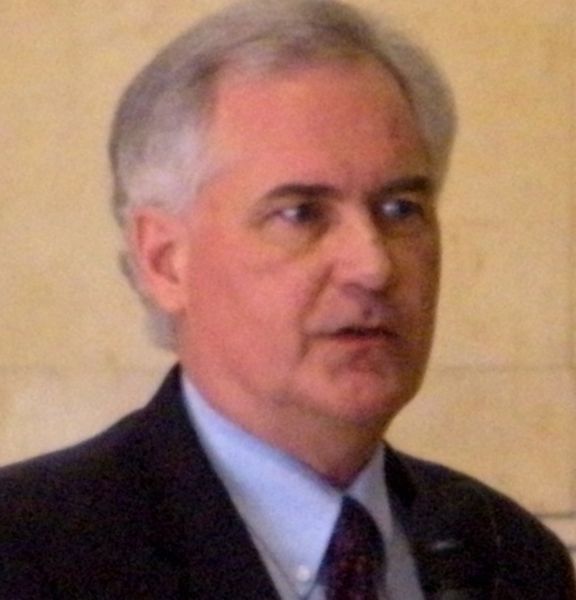
By Tom McClintock

Federal spending has ballooned 28 percent during the Obama presidency, while the government has amassed more debt than it acquired from the first day of George Washington’s administration to the last day of George H. W. Bush’s.

Our nation is racing toward a fiscal cliff. Yet, as Sen. Jim DeMint noted, instead of hitting the brakes, Congress and the president just set the cruise control.

“The Budget Control Act of 2011” offers an object lesson in exactly the sort of empty compromise that has gotten our nation into its present mess. Faced with the devastating consequences of unprecedented and unsustainable federal spending, both parties agreed on only one thing: to lock in that spending for at least the next two years.

Tom McClintock

Tom McClintock

Bypassing the normal legislative process, the deal was written behind closed doors and dumped it into the laps of both houses under the threat that failing to pay the government’s bills would jeopardize the nation’s triple-A credit.

Unfortunately, the deal didn’t just pay our current bills – it gave the most spendthrift administration in history an open credit line to continue its spending spree beyond 2012. Ironically, it ended up costing the United States its triple-A credit rating by failing to rein in spending significantly.

Indeed, Standard and Poor’s had explicitly warned for the last two months that $4 trillion had to be cut from the projected ten-year deficit to preserve the nation’s credit. Even if the plan works perfectly, it doesn’t come close.

Yet the same politicians who ignored these warnings were shocked-just-shocked when Standard and Poor’s lowered the boom four days later. Instead, they blamed the “Tea Party” that has been sounding the same alarm for more than two years.

Apologists for the debt deal claim that they “cut a dollar of spending for every dollar of debt increase.” Actually, Congress voted to “cut” annual federal spending from $3.7 trillion this year to $5.4 trillion by 2021, and to “cut” the national debt from $14.3 trillion down to $22.7 trillion. Washington defines this as a “cut” because it would rather spend that much more.

Even adjusting for such charming Beltway colloquialisms, most of the “cuts” don’t take place until after 2017 while the debt increase all happens this year. In the words of the great economist J. Wellington Wimpy, “I will gladly pay you a dollar of cuts 10 years from now for a dollar of debt today.”

At least we didn’t get any tax hikes, right? We’ll see. The so-called “super-committee” that does the heavy lifting is charged not with cutting spending but with reducing the deficit – two very different things.

In Washingtonese, “tax increase” means the same as “spending cut” when referring to deficits. Since the debt deal already assumes restoring Clinton-era tax rates, it’s a good bet that tax increases are on the way. After all, since Congress has essentially frozen spending at record levels for the next two years, we’re going to have to pay back the trillions of dollars of new borrowing somehow.

Central to the deal is the success of the bipartisan super-committee (the 18th bipartisan commission since 1982 to solve the deficit, for those keeping score).

Set aside, for a moment, the constitutionality of sidelining 523 elected representatives of the people while 12 handpicked appointees of the legislative leaders convene in their place. If a bipartisan group of current members of Congress (which we often call, ‘the Congress’) can’t summon the political will to reduce spending to sustainable levels, why would we place far greater confidence in the proposed bipartisan panel of – wait for it – current members of Congress?”

To its credit, the House adopted two plans that met Standard and Poor’s criteria for preserving the nation’s triple-A credit rating: the House Budget Resolution (also known as the Ryan Plan) passed in April, and the Cut, Cap and Balance Act passed in mid-July. Both would have eventually balanced the budget, both would have ultimately paid off the national debt and both died in the Senate.

This simple fact highlights the unfinished work remaining before the American people. Ultimately, they must decide whether they want to restore the traditional American principle of constitutionally limited government, or whether they are content to summarize this generation’s stewardship of the American Republic with the chilling epitaph of Louis XV’s reign, “After us, the flood.”

Tom McClintock represents the California side of Lake Tahoe in House of Representatives.


Opinion: A compassionate and sensible step on immigration

Publisher’s note: This editorial is from the Aug. 22, 2011, Sacramento Bee.

It’s not amnesty, back-door or otherwise. It’s just a little more sanity in our broken immigration system.

The Obama administration has announced that it will suspend deportation proceedings against thousands of illegal immigrants who aren’t a danger to public safety, including those who came to America as young children and have graduated from high school and gone on to college or into the military.

Other “low-priority” cases likely to benefit under the new policy are veterans and spouses of veterans, caregivers for a seriously ill relative or for a person with a mental or physical disability and those with family members who are citizens.

It only makes sense to target limited manpower and resources to deporting those who are violent criminals and drug smugglers, or who pose a national security threat.

This is not a blanket policy; immigration officials will review, case by case, nearly 300,000 people now in the deportation pipeline to distinguish those who may qualify for relief from those who should be expelled as soon as possible. It also doesn’t automatically grant citizenship, though many could eventually apply for legal status.

Read the whole story


Opinion: Setting the facts straight about public beach in Tahoe

By Janet McDougall

I read the recent article “Law of the Sand – Rules governing public access to Tahoe shore murky at best” that recently appeared in the Tahoe Daily Tribune and found myself deeply frustrated. I immediately sent a letter to the editor of the Tribune attempting to clear up several factual problems with the story and have not received a response, nor have they printed my letter so I am instead writing to the Lake Tahoe News, since I know Kae cares about facts and will help to set the story straight.

The beach at the Tahoe Beach and Ski Club is a public beach.

As part of the agreement to allow the developer of Tahoe Beach and Ski Club to build, he was required to convey to the city public beach rights and limited parking for beach users. Over the years the timeshare owners at the property have discouraged the public from using the area. Unfortunately, the primary access easement and parking area were eliminated in a land swap with the Redevelopment Agency that allowed Tahoe Beach and Ski to install required drainage improvements on site. Tahoe Beach and Ski management agreed to allow the public to access the area through another ingress/egress point, but over time, that understanding has apparently been eroded. The public access rights to the beach remain, so anyone accessing the beach from the Ski Run Marina area is not trespassing.

The deeds conveying ownership in the timeshare intervals include language clearly stating that the public has the right to use the beach, but owners and management at Tahoe Beach and Ski disregard this information, since it runs counter to their desire to ultimately have the beach regarded as private.

A check of the county Recorder’s Office records and the city Planning Department street file for the Tahoe Beach and Ski Club property will reveal that the public continues to have the right to use the beach. It is my hope that this issue is ultimately brought to the forefront to ensure the public is no longer ejected from beach areas it rightfully owns.

The city should erect a sign at the entrance point to the area to indicate it is public, that the public should be respectful of the boundaries of the public area, and that if the public is denied access they should immediately contact the police department, with the phone number clearly posted. The beach behind Timber Cove Lodge is also a public beach; locals and visitors should also feel free to utilize that area for their enjoyment.

If the Tahoe Beach and Ski Club continues to prevent the public from using public land, the police department should make contact and educate those who are the real offending parties — not people like Todd Snider and his family who had every right to be on the beach.

Locals, be sure to make it a point to visit the beach and assert your rights of use. And if the Tahoe Beach and Ski Club continues to eject the public from land the public has the right to enjoy, they should be made to pay the city the fair market value of the beach rights – we all know the city could use the money to help defray the costs of badly needed road repair.

Janet McDougall was a legal analyst in the city attorney’s office for 13 of the 17 years she worked for South Lake Tahoe.


Opinion: Boat inspections are an inconvenience, but a must for water quality

By Ron Penrose

Protecting our drinking water source is vital to our entire community. Truckee Meadows Water Authority has helped fund many different programs and projects designed to protect Lake Tahoe and the Truckee River. The Truckee River Fund, which was established in 2004 by TMWA’s board of directors, was created for the purpose of protecting and enhancing water quality of the Truckee River and its watershed. Through matching grants, the TRF has been able to fund projects that achieve this mission.

Mandatory boat inspections, managed by the Tahoe Regional Planning Agency and partially funded by the TRF, is one program that is aimed at protecting our drinking water by preventing the introduction of quagga mussels into our water source. If you are a boater and have been enjoying Lake Tahoe this summer, you have no doubt noticed that boat inspections are mandatory, but you may not know why.

Ron Penrose

Ron Penrose

Lake Tahoe is known for its beauty, clarity and clean water. We are fortunate to have such a pristine source for this community’s primary drinking water supply. Boat and watercraft inspections are our first line of defense against quagga mussels entering Lake Tahoe. Quagga mussels can wreak havoc on bodies of water. They are very harmful to a native ecosystem since they disrupt the natural food chain and once established, they are nearly impossible to eradicate.

The quagga mussel will clog water supply pipelines and can cause extensive damage to water system infrastructure that can cost millions to repair. They can leave formerly pristine beaches littered with dead shells. They could also disrupt our hydroelectric plants’ intakes causing higher energy and maintenance costs. Because quagga mussels are extremely efficient breeders, they take hold in a water source very quickly and thrive in very deep bodies of water creating “dead zones” in lakes they occupy.

Our community is working diligently to keep mussels from entering Lake Tahoe and other upstream reservoirs. Let’s keep it that way.

As a boater, you can help prevent quagga mussel infestation by abiding by the boat inspection regulations that are designed to protect the lake you are enjoying. We know that this invasive species hitches rides on watercraft and then spread to other bodies of water. The irreversible quagga and zebra mussel infestations of Lake Mead and the Great Lakes are thought to have been caused by this mechanism.

Some might find these mandatory boat inspections to be inconvenient, delaying their enjoyment of Lake Tahoe. However, to TMWA staff, who are dedicated to delivering to you great quality drinking water, this small delay helps preserve the pristine nature of Lake Tahoe which is so vitally important to our drinking water supply, recreational enjoyment and tourism based economy.

I hope you enjoy Lake Tahoe this summer.

Ron Penrose is project manager for the Truckee Meadows Water Authority.


Opinion: Power boat races have no business on Lake Tahoe

To the community,

For everyone who remembers summer days when being outdoors meant hearing the roar of motorboat races on Lake Tahoe, the bad old days may be on their way back. The Pacific Outdoor Powerboat Racing Association plans to bring powerboat racing back to Lake Tahoe on Sept. 10-11, 2011.

Check out the details online. They say: “Offshore race boats will compete from all over the U.S., ranging from 22 feet to over 50 feet and will hit speeds upwards of 150 MPH in some of the Pro classes. The action starts Saturday, September 10th, with the teams competing in a three and a half (3½) mile sprint to achieve speed and handling domination over the rest of the teams. Sunday September 11th the Lake Tahoe Fun Run can test the skill and equipment of the most seasoned veteran as well as the novice racer over fifty (50) miles of the most beautiful shoreline anywhere in the world with the 50 mile test of endurance that can trace it’s roots to the very start of Tahoe Powerboat racing 100 years ago.”

This type of event is utterly incompatible with sustainable recreation and the outdoor events scheduled for the 2011 Tahoe Expo that same weekend. It will also impact the outdoor experience of every other user within the entire region, including hikers, bikers, and backyard barbecues.

In the last cigarette boat race held here in the 1980s, the boats could be heard in Meiss Meadows. Apparently this event needs a marine event permit from the U.S. Coast Guard; it is unclear if it has one yet. If you think this event is a bad idea for Lake Tahoe, contact the U.S. Coast Guard, San Francisco Sector, and talk to the Marine Event Permits Coordinator, Joshua Clark, at (415) 399.7440.

Sue Rae Irelan, Homewood


Opinion: Honeymoon over, South Tahoe in shambles

To the community,

The honeymoon is over. The city manager, Mr. [Tony] O’Rourke, has been here a year and City Council has been intact for nine months. But things are the same, SNAFU. Example: The council, while employees continue to be dismissed, gave the city attorney a raise and other goodies which should cause sober people to blush. Also, the finance officer got a bump in pay.

And Councilmember [Bruce] Grego gets a gold star for being the loudest loose cannon in the basin. And Ms. [Claire] Fortier appears to be in conflict serving on the TRPA board. And [Angela] Swanson serves as a consultant for the school district. Remember the city manager was willing to give the school district $250,000 while firing employees. As for the old hands, [Hal] Cole and [Tom] Davis, who knows who pulls their strings?

crawford

Bill Crawford

Pretty soon if the city manager keeps contracting pieces of the city out, i.e. the ice rink and he wants to do so with the campground an the golf course (and what else, who knows?). Combine the frenzy to contract pieces of the city out and the shrinking city workforce, there won’t be a city to manage which may be the whole point.

The word from the underground is that much of the city operation is in chaos.

Welcome to the abyss.

Bill Crawford, South Lake Tahoe


Opinion: If freed of NCLB, schools will have a lot to prove

Publisher’s note: This editorial is from the Aug. 11, 2011, Reno Gazette-Journal.

By all means, Nevada should join the states requesting waivers from the flawed No Child Left Behind Act.

That must not be an excuse to lower Nevadans’ expectations for their schools, however. Rather, it should raise their expectations.

Ever since No Child Left Behind was approved during the administration of President George W. Bush, it has been a distraction — an easy scapegoat to be blamed by schools around the nation for their failures.

Too much time must be given over to testing, it’s said. Too much money is spent meeting requirements that do nothing to improve education in the classroom. Schools and students suffer when they’re labeled according to test scores. Even a cheating scandal in Georgia was blamed by some on the pressures of No Child Left Behind.

School officials in Nevada say they could do better without the law hanging over their heads.

Fair enough. Now, show us.

This week, Education Secretary Arne Duncan called the law an “impediment that’s getting in the way as a disincentive for the great work states are doing” and promised to develop a plan for waiving provisions of NCLB soon.

Read the whole story


Opinion: Why Measure R deserves to be defeated

Publisher’s note: The following is the rebuttal argument for Measure R that was submitted for the voter guide.

I feel the best way to decide your vote on Measure R is to simply tour the two facilities in question. At the ball fields you will find new paint, poles, bleachers and grass. All of these improvements were accomplished through the hard work of several individuals and organizations without any financial support from Measure S. Voters should reject Measure R since it will not add any new fields, it will simply destroy and rearrange a fully functioning complex.

Along the bike trail you will find large dangerous cracks that as residents we told the JPA to fix years ago with Measure S. It’s obvious the wording of Measure S needs to be changed to allow bike trails the use of its own funding, but why steal half of its money for unnecessary field renovations. Cities like Sacramento, Boise, and Bend have world renown bike trails and, in our struggle to rebrand our city, a freshly paved bike trail system would be a great start.

As residents, we deserve all of our trails to be in the same renovated condition as the Al Tahoe section recently completed.

Locals should vote no on Measure R because our trails need 100 percent of the money voters restricted for its use not just half. With 100 percent of trail funding available, improvements like public restrooms and bike parks can be envisioned and implemented. Safe bike trails benefit all and the unwarranted money grab for the ball fields in Measure R should receive your no vote.

Stephen Reinhard, former South Lake Tahoe Parks and Recreation commissioner


Opinion: A blue Tahoe means a clear shore

By Rochelle Nason

We received disturbing news last week that deepwater clarity at Lake Tahoe has dropped nearly 4 feet. Scientists also confirmed that clarity near the shore is worse than it is a mile off shore.

One of Lake Tahoe’s greatest assets is its beautiful shoreline. When we wade into its crisp water, we can often see clear down to our toes. When we swim, we may spot white sand and boulders 20 or 30 feet down. A vast majority of people enjoy the lake’s clarity from shallow areas.

Tahoe’s shoreline beauty is deteriorating rapidly. More and more, we see algae blooms, water weeds and silt along the shoreline. These are signs that the shoreline ecosystem is rapidly changing. Public concern is rising.

Rochelle Nason

Rochelle Nason

State leaders who gathered this week for the Tahoe Summit should be on alert that Tahoe’s shoreline environment is threatened. Protecting shoreline clarity is essential for a healthy ecosystem and economy. The League to Save Lake Tahoe, also known as “Keep Tahoe Blue,” is committed to working with policy makers to find and implement solutions.

What are the culprits?

Scientists are still getting a handle on what is causing shoreline deterioration. We know invasive species like Asian clams thrive on nutrients, then produce waste that causes algae blooms. Scientists are examining how boat pollution may remain more concentrated near the shore and cause nutrient spikes. Invasive plants, animal waste, fertilizer runoff and sediment are also concerns. And sadly, old drainage pipes still spew urban runoff directly onto Tahoe’s beaches.

An obvious culprit could be the thousands of tons of road sand applied during the winter season. Cars grind up sand into fine particles and, as the snow melts, this silt hitches a ride to the lake.

What is being done?

To keep that sand out of Tahoe, a simple solution is better street sweeping. Some of Tahoe’s old street sweepers stir up more dust than they collect. The League has been urging jurisdictions to use low-nutrient sand, reduce sand application, use better street sweepers, and sweep more often.

In addition, Tahoe’s boat inspection program must remain strong. Inspections are critical to preventing aquatic invasive species that could permanently disrupt Tahoe’s shoreline ecosystem. The threat is now closer than ever, as reservoirs near Reno have tested positive for destructive quagga mussels.

The League is also urging policymakers to create comprehensive shoreline protection programs. These programs should include clear standards, practicable solutions and a measured strategy for success. Finally, restoring Tahoe’s watershed is the key to protecting its water quality. Policy makers should retain strong limits on building footprints, and ensure property owners install runoff control measures. Tahoe also needs continued federal and state funding to upgrade old drainage infrastructure and restore disturbed wetlands.

Thousands of people a year are drawn to Tahoe to enjoy its shoreline beauty. Restoring deepwater clarity and protecting Tahoe’s shore must go hand in hand. A blue Tahoe means a clear shore.

Rochelle Nason is executive director of the League to Save Lake Tahoe.