9/11: Tahoe awakens to tragedy, Reno airport in chaos

Publisher’s note: This is one in a 12-part series running from Sept. 1-12 about how Lake Tahoe is tied to 9/11.

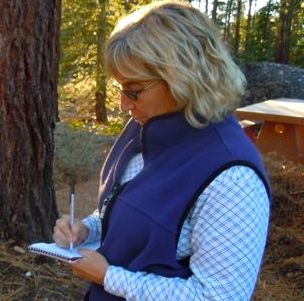
By Susan Wood

The early morning started out like any other day for me — in pursuit of coffee from the kitchen. Along the way, I turned on the television news and couldn’t believe my eyes. A jet was flying into a high-rise building later identified as one of the Twin Towers in New York City.

Like most Americans on Sept. 11, 2001, I was transfixed. How could this be? Was the pilot suicidal or asleep?

From Sept. 1-12, Lake Tahoe News is looking at 9/11.

From Sept. 1-12, Lake Tahoe News is looking at 9/11.

It didn’t take long before terrorism seeped into my cynical brain when I saw a second plane hit the next building.

Being a news reporter forced me to jump out of my workout clothes and onto the telephone, where I woke up the newspaper’s editor, Michael Green. He had no television, so I had to describe this unprecedented event on the East Coast and convince him it was bound to reverberate to the West.

The newsroom was rocking with activity that most community papers never see. It reminded me of the old days at larger newspapers. The conference room became a designated “war room.” Assignments were handed out readily to journalists who I’d never seen make it to work before 8am.

My primary assignment was clear and evident. I would drive to the Reno-Tahoe International Airport, where I certainly expected chaos.

On the way, I called the Federal Aviation Administration and got on a mass media conference call in which it was difficult to hear yourself think. Questions thrown out by journalists across the United States peppered the line. The FAA was shutting down airspace across the nation. The fear was astounding. Thirty-plus airplanes were unaccounted for, and aviation officials ran out of answers – abruptly leaving the conference call.

With another plane flying into the Pentagon and another into a Pennsylvania field by midmorning, targets all over the country became a real threat.

When I arrived at the airport, traffic was backed up. Police shuffled people away from the doors of the terminal as the airport was being evacuated. Frantic passengers crowded the rental car counters to make their destinations – the long way. They ran out of vehicles that day.

I’ve never seen such cooperative negotiation. I heard many accounts of people sharing vehicles headed to states thousands of miles away from each other. Who knew when we would be able to fly again?

Susan Wood keeps covering stories that impact Lake Tahoe.

Susan Wood keeps covering stories that impact the Lake Tahoe Basin.

The thought entered the mind of Adam Mayberry, the airport’s public information officer at that time. Now an Airport Authority trustee and spokesman for the city of Sparks, Mayberry was forced to go into overdrive 10 years ago. He established a few news conferences, kept a line open for him at all times and even spent the night at the Best Western across the street from the airport.

Sept. 11 started with a shrug by Mayberry, then disbelief turned into tragic shock and a long working day.

While law enforcement and maintenance crews were removing trash containers and shutting down roadways, Mayberry, who is a pilot, was concerned with the public safety message. With all the tools and tactics for various scenarios, nothing matched this event.

“We have all these emergency plans in place, but there’s no scenario in that red binder of a national grounding as a result of a terrorist attack,” Mayberry recently told Lake Tahoe News. And to top it all off, Airport Director Krys Bart was struggling to return from a meeting in Canada.

Mayberry characterized the closing of the region’s airport as surreal. That was a good description. I stayed long enough that day for it to become a ghost town.

The few stragglers left to fend for themselves in trying to get home stayed glued to the televisions. I understood. It took me a few days to pull myself away. It was as though if I kept watching, the outcome would change.

It dawned on me what day it was – 9-1-1, an emergency call sign. I wondered why little mention was being made to that irony.

Instead, I concentrated on my work upon my return to the office late that afternoon. It was as active as the morning. I went home late that night exhausted — mentally, physically and emotionally. Nonetheless, I summoned enough energy to watch rescue efforts in New York pan out on television.

Outside of work, people’s consciousness in the days that followed fluctuated between a general haze and willingness to share. In times of crisis, we often pull together. There was an evident return to home and hearth as loved ones appreciated each other more and strangers in the remote town of South Lake Tahoe formed a kinship.

Forget talking about the weather. Our lives appeared to become more grounded in our roots and genuine humanity.

Susan Wood was a reporter for the Tahoe Daily Tribune on Sept. 11, 2001.


Opinion: Vail’s tentacles spreading throughout Tahoe

To the community,

For folks interested in Vail, Heavenly’s parent, as a business organization and employer, I suggest reading the book “Down Hill Slide.”

Vail has a long reach in the ski world and real estate. Presently, Vail is the big toe in the Tahoe basin ski industry controlling Northstar and Heavenly. Also, recently Heavenly bought a vacation home rental business. And Heavenly is spending big money around in the community. Money opens doors and influences decision-making, which isn’t news. Heavenly attempted to get the Sports LTD building out of the hands of the present leaseholder. This time they failed.

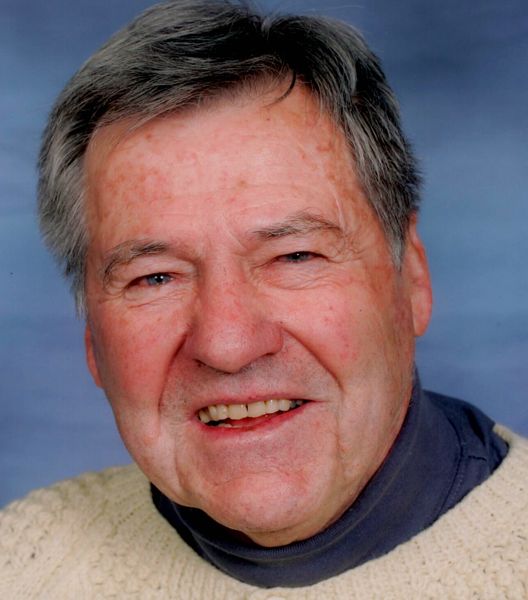
Bill Crawford

Bill Crawford

And a large number of us believe Vail has direct access to city government via the city manager’s office because of the city manager’s long association with Vail in Beaver Creek.

So what’s the point? From here it appears the city manager is attempting to grind the city into dust, to a disabled vapor. His mantra is city employees are by and large incapable bureaucrats. His downsizing is crippling public services. He is making sure of that.

So where does this lead? The city will be at the mercy of the private powers that be. They’ll be fiddling and calling the tunes. The citizens at the ballot box will be the losers, if they’re not already.

The name of the game isn’t democracy, by plutocracy.

Thus, the down hill slide is on a slippery slope. And we’re already in the hole.

Bill Crawford, South Lake Tahoe


9/11: Still coping with losing airline friends as nation grieves for others who died

Publisher’s note: This is one in a 12-part series running from Sept. 1-12 about how Lake Tahoe is tied to 9/11.

By Cindy Trigg

Sept. 11, 2001, is seared in the minds of all Americans who are old enough to remember. Often it is said that we remember where we were when it happened. Like when Kennedy was shot, when the shuttle exploded, we will never forget.

As part of the American Airline family as a flight attendant and my husband a pilot, both based in New York when it occurred, it is hard to not to forget, especially as the anniversary comes around. Just as it is hard not to forget our colleagues, although when we remember that day as a nation it’s hard not to feel like our colleagues are not remembered. There is no ill will at all toward the accolades that the first responders receive every year at this time; sometimes I just hope to hear someone say the crews’ families are also in the nations prayers.

There are interviews with passengers’ surviving relatives, with first responders’ relatives, with the relatives of the innocent victims in and around the WTC, but barely a whisper about the airline crews. My dear colleagues, flight attendants and pilots, my thoughts and prayers are with your families. I pray they have peace of mind. Always remember your family members are heroes.
From Sept. 1-12, Lake Tahoe News is looking at 9/11.

From Sept. 1-12, Lake Tahoe News is looking at 9/11.

People forget that flight attendants are the first line of defense in a hijacking, and today even more so. The pilots are now locked into the cockpit with a steel door and they tell you, you are on your own, the door cannot be opened, a crewmember will not come out.

Some of you might have heard of Betty Ong. She was one of the two flight attendants who made phone calls to the southern reservation desk who in turn reached SOC, security at American Airlines. She was able to calmly explain to the reservation supervisor what was happening. She gave them the passenger seat numbers of the men who went into the cockpit, gave them the seat number of the passenger who had had his throat slashed, and was able to let them know that one flight attendant, the purser, had been stabbed and was dying and another had been stabbed but was more stable.

Reservations wanted to know if they had called for a doctor.

The remaining flight attendants had moved the balance of first class passengers into coach because what was believed to be mace had been sprayed in the first class cabin. Then flight attendants were comforting the passengers and bringing those who needed something to drink a drink. There was no panic. They did their job and did it well even as one of their colleagues lay dying and another lay injured.

These were the flight attendants on Flight 11, the first aircraft to hit the Twin Towers. These flight attendants were able make sure the central reservation agency knew and confirmed they had been hijacked. Both flight attendants were on the phone with the ground when the aircraft hit; this after being on the phone with the ground for half an hour.

At the end, the flight attendant could be heard saying “we’re too low, we’re too low” and in the recording you can hear the people on the ground asking if they were still there after the aircraft hit the tower. This was 30 minutes prior to the second aircraft hitting the second Twin Tower. In reality it was almost one hour from the first call until the second aircraft hit. How could it be possible for anyone to remotely consider the first aircraft to be a small aircraft or an accident?

Of course there were three more aircraft that went down that day. Betty and her fellow crewmembers were the heroes who stayed calm, did their jobs and made the calls to allow the system to start working to get the rest of the aircraft out of the air. No one really knows what else was planned that morning because cockpit crews all over the United States could be told to keep their doors closed and land immediately. Other aircraft were not able to take off. These people deserve to be mentioned and thanked during every ceremony and commemorative activity that the first responders received.

Getting the call

Having been awakened by the phone ringing at 6:15am, I answered and heard the distraught voice asking, “Where’s Bill?” — all I recall is asking, “What’s wrong, what’s wrong?” while he kept asking, “Where’s Bill?” Here, I handed my husband the phone.

“Turn on the TV!” I must not have been moving quickly enough because he repeated it rather quickly and more harsh than I was used to. Together we sat there and watched with the rest of America as the second aircraft slammed into the second tower of WTC.
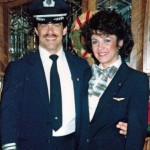
Bill and Cindy

Bill and Cindy in 1999

Our first thought was of course was it an American Airlines aircraft with our crew and colleagues aboard. Sadly, we learned in a very few minutes in fact the first of the aircraft indeed was one of our own.

It is beyond comprehension that anyone in our government, especially our president, could have mistaken the first plane as a small aircraft or a “not a very good pilot” as was later reported. As I am recalling in memory of my colleagues I will not voice my political opinions, however I cannot leave out what all of America learned later. President George W. Bush was given a briefing on Aug. 6 that Osama bin Laden determined to strike in America. Later on there was confirmation that some of the chatter had indicated a hijacking. The response by Condoleezza Rice that “we thought it was only a conventional hijacking” can lead one to think that there is no value to the lives of our crew or our passengers. Only a conventional hijacking? If that were the case, where was heightened security that was implemented prior to the eve of 2000.

Bill went back to New York the first day the flying ban was lifted. That had to be one of the most fearful days I can recall. I think of the flight attendants who had to work in those early days after 911. There were opportunities to ask for the time off, but there would be no paycheck. Most flight attendants scheduled to fly did not have much of a choice if they were supporting a family. Those were heroic crewmembers.

Actually, today is no different; they are the first line of defense. My flight attendant friends say they don’t think about it unless something big happens in the Middle East, which is all too often.

Going to New York

We went to New York together about five months after the tragedy. It seemed like it was miles long, the fence that held pictures of victims, hats, memorials. What you could see of Ground Zero was devastating as it was three years later when I took three seniors from Whittell High School to New York for the Macy’s Thanksgiving Day Parade. We stayed near Ground Zero the first day. They gathered items and notes from the community to take with them and today it is in the small museum that stands at the St. Paul Chapel of the Trinity Church. From everything they received they rotate the items from around the world to acknowledge the brave and fallen. When Bill and I were there five months after the attacks, there were still the piles of ash on the grounds of the chapel cemetery. Some piles were so high it covered the head stones.

Ground Zero a few months after 9/11. Photos/Cindy Trigg

Ground Zero– New York City. Photos/Cindy Trigg

Interestingly, as close as the chapel was to Ground Zero not one piece of glass broke in the chapel. The large oak in the back entering the cemetery split in half and was the only thing on the chapel ground that was destroyed. Going back with the cheerleaders we were given a tour with the docent of the chapel. The pews in the chapel were scratched and damaged, they were going to repair them but thought it was better to leave them be as a historical marker. This is where the first responders came in and literally collapsed for moments at a time to rest. Their equipment that they wore and did not even take off is what damaged the pews. The special area and chair that President George Washington sat in for his inaugural church service was used for the first responders to sit in to soak and relax their feet. Some of their boots were melting to their feet because of the heat from Ground Zero

Tragedy continues

As it turned out, after 25 years of working as a flight attendant I never returned to American Airlines as a crewmember. At the time of 911 I was on a leave of absence for an injury sustained on the aircraft. I was conflicted on whether I wished to work again in that capacity, not because of fear, but because of my son. His dad had passed away the year before. Two months later, practically to the day, American Airlines experienced another disaster – the crash of an American Airlines AirBus 300 over New York on Nov. 12, 2001.

This was the type of aircraft my husband was flying at the time. All aircraft have tail numbers that help identify the aircraft and it’s always on the paper work. My husband had flown the aircraft that crashed on Monday morning two days earlier, on Saturday. Now, it really hit close to home. The morning of the second crash the same friend called again, “Where’s Bill, where’s Bill?” at 6:15 in the morning. Bill was in New York and I had spoken with him the night before, but it was already after 9:15 and not being quite awake it was a bit confusing.

Again Dave was saying turn on the TV. I was able to let him know right away that Bill was spending his day off in New York and that he was OK. Unfortunately, my husband was standing outside of the terminal and was able to see the plume of black smoke that suddenly came off the horizon. Briefly he hoped it was a fuel storage tank, which if you have flown out of JFK, you can see the maze of those fuel storage tanks. He said the minute he walked back inside the terminal he knew. He went to operations and as soon as the elevator door opened he knew it was an American Aircraft from the sound of the crying and the exclamations of disbelief. And then he found out that one of the best co-pilots on the “Bus” was working the flight. He had had a chance to see them that morning before they went to the aircraft and he got ready to go to the hotel.
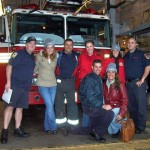
Cindy Trigg, kneeling, and Whittel cheerleaders with New York firefighters.

Cindy Trigg, kneeling, and Whittel cheerleaders with New York firefighters.

The phone rang all day. After calling Bill’s daughter, mother and my mother and father I reset my answering machine with an out going message, “Thank you for calling, Bill is safe, leave a message.”

It was so much more difficult because we were not together. We spoke often that day, but it was like we were all on hold, the speculation if it was another terrorist attack was rampant. It was the last thing the airline industry needed, the grief of so many families, families that were affected or killed on the ground that were first responders in the WTC attack, the worry of another attack, the delicate scab being ripped from the heart of so many who new what the pain was all about and another group of 11 colleagues as well as passengers.

Trying to cope

It is so hard not to be morbid at times. When you know what it feels like to be frightened by something you hear or feel the airplane do that you are not used to, you know how it feels to try and get out of that jump seat to peek out of that little bitty window and then everything is OK except when it is not. It is too easy to put yourself in the same position. There is only one place for a particular flight attendant to sit, same closet in front of you, same galley across from you, same first class or coach seat that you can see or not see. There are no variables, you always know where and what your colleagues were doing when you find out who was on the flight and what position they were working.

I thought 911 would be the worst I would ever see in the airline industry and I hope to God that it is. Over the 25 active years of working, there were probably more air disasters than I can think of. My first year there was the DC-10 on Memorial Day weekend in Chicago, Flight 191. The airlines usually retire a flight number when it has been in a disaster. There was the Delta flight in DFW, another 191, an American flight in Arkansas with a Check Airman, and who can forget the TWA incident that happened over the Atlantic just after take off from New York. These are just a few, and it is when it happens right after take-off or before landing that chills you because that is where we are always in the same positions.

In reality, when you take into consideration all those people who have died on our roads, it is a safe career. It is sensationalized and we see the pictures on TV over and over again. For that very reason, I could not see myself going back to working in the cabin until my son was older.

There are so many stories to tell about how wonderful this group of workers is. I will tell you one. There is a couple who fly international out of Chicago, they used fly out of Los Angeles. I remember flying many times with Ernie. They always flew in and out of Frankfurt to Chicago. During the early years of the Iraq war when our soldiers were being deployed and they started coming home for the first time, Ernie and his wife would bring a fresh roll of grass sod with them on their trip, haul it to the hotel. This is by no means a light item and they would bring it individually if they were flying by themselves. Haul it back to the aircraft for the return flight to Chicago. The agents would always let the military men and women board first. They would walk down the jet bridge and Ernie or his wife would have rolled out the sod from the jet bridge to the inside of the aircraft and they would welcome them back to American soil. I cannot tell you the stories we heard about those military men and women getting down to kiss that soil, the tears, the emotion. The agents always waited for the flight attendants to let them know they were now ready for the other passengers making sure the tears were dry and that roll of sod was now in the hands of the military men and women.

There was the crew I flew with that I will never forget when we were flying to London and Princess Diana died. We were there four days from that Sunday morning when the headlines broke until the day of her funeral. We were there with the ground crews and flight op people from London when Elton John sang and for the moment of silence. We stay at the Forum Hotel in London, which is literally right down the street from Kensington Palace. How do you forget the people you spent those kinds of days with?

Healing process

Such conflicting emotions. Do I write about the drama and the tears? But then we are so lucky to have been touched in such a minimal way? 9/11 was shocking, shocking to all America.

People who died and were involved in 9/11 came from far and near.

People who died and were involved in 9/11 came from far and near.

I still fly, travel, encourage my son to travel and travel with my family. I always pray that we are safe.

It is really funny a lot of times, in fact most of the time we speak about the aircraft in terms of “she”. It’s hard to explain, like when the crash in AK happened, watching the pictures on TV of the aircraft it was so personal. Maybe it would be the same if the building you worked in caught fire and all you could see was the shell. I still look at an airplane taking off and it’s hard to believe you can make a living in that skinny silver tube. Watching Air Force One taking off in Reno I just automatically think to myself, “OK girl, climb, climb, climb.” It is still so remarkable to me.

One thing I do know for sure, I would not trade my years as a flight attendant. I loved my career and colleagues; in fact I married one, my husband, who is still a captain with American Airlines.

When speaking about our crews it’s hard to give you an example of how we all treated each other as family. Charles Burlingame was the captain of American Flight 77 that went into the Pentagon. Before I had been on leave I was commuting from to New York from Reno usually through LA. Capt. Charles “Chick” Burlingame was one of the last pilots I flew with. On one occasion my husband and I both commuted home with him as captain. The last time I flew with him he allowed me to sit in the cockpit for take off and landing because there were no more seats. This was definitely not OK, but that was how things were before 9/11. The crews took care of each other.

Other crewmembers were family, and the cockpit crews were especially nice to those of us who were living with or married to a pilot. That was another thing, I refer to Bill as my husband throughout the story but we did not get married until March 2002. We decided to get married after 9/11 and the crash in New York in November. We had been together for 13 years, had accumulated some real estate and had other investments. We did not want our families to have to sort things out if anything happened. I tease and tell him I finally decided to say yes, actually he was the one who finally relented. It’s hard to explain why we finally actually got married. Of course we had loved each other for many years, but each having our own children it did not seem necessary. There was a sense of wanting to know that we were together, wanting to know there was an “ever after.”

The crash in New York was too close to home and the realization hit hard that it is quite possible that it could be our own loved ones. The odds go up when you do it for a living, but you really never think about it, at least not before 9/11 or the crash on Nov. 12.

Since 9/11, when I fly standby, which is the only way I fly, I do not get the least upset about missing a flight or getting bumped. If I belong on the flight, I will get on, if not, grab a good book and wait for the next flight. If I get home, I get home. If I have to spend the night, I spend the night even if it means sleeping in the airport, which is really not so bad with a good book and a big coat.

I was very proud of the job we did and I still miss it every day. And I was never as proud as I was of my colleagues as I was on 9/11. I always knew we were trained well and always knew they would do their best under the most extreme conditions. Unfortunately, they had an opportunity to prove me right.

Please remember these heroes when we commemorate the 10-year anniversary. If you’re traveling at that time, let your crewmembers know their friends were heroes, too.

Cindy Trigg lives with her husband, Bill, in Stateline.


A retrospect of how Lake Tahoe and 9/11 are connected

9/11 – just say the two numbers and images of the Twin Towers emerge. Emotions run the gamut from the myriad memories of that day nearly 10 years ago.

Emotional scars linger. Sadness resonates. Fear is still real.

9:11 logoThe world did change that day. Clearly, it changed for the thousands of families who lost loved ones. It changed for everyone who helped save the even greater number of people whose lives were not lost that day. It changed people on each coast of the United States and for those throughout the world.

It’s easy to argue the choices government officials made before and after the attacks. Hindsight being 20-20, perhaps other decisions may have been made.

South Lake Tahoe has lost two men fighting in the Iraq conflict. Phillip Brandon Williams, 21, who lived in Gardnerville and South Lake Tahoe, was killed by sniper fire in Iraq in 2006. Timothy M. Smith, 25, of South Lake Tahoe died in April 2008 in Baghdad of wounds sustained after his vehicle encountered an improvised explosive device.

Lake Tahoe News is taking the next 11 days to tell the stories of Lake Tahoe area residents and their connection to 9/11. Some of the articles are bound to trigger tears, some will open wounds once thought healed, others may make you see the event from an entirely different perspective.

We know this event brings out emotions. We hope as you consider making a comment on the various stories, you do so with respect. Next week’s question of the week will be about 9/11, giving everyone an opportunity to weigh-in. And if you have a story to share, please email it to info@LakeTahoeNews.net.

On Sept. 12 we will report on the event that is going at take place at Lake Tahoe Community College the day before. Also that day is the annual observance of Patriots Day at the American Legion in South Lake Tahoe at 11am.

Lake Tahoe News would like to thank everyone for sharing the stories that will unfold in the coming days.


Opinion: Welfare rules should reflect modern reality

Publisher’s note: This editorial is from the Aug. 20, 2011, Sacramento Bee.

For California legislators who want to help the unemployed get back to work and provide relief to financially strapped counties at the same time, Assembly Bill 1182 moves our state in the right direction.

The measure by Assemblyman Roger Hernandez, D-West Covina, would eliminate the $4,650 vehicle asset limit for welfare eligibility. Fifteen other states have already done so. But in California, a person is not eligible for welfare if they own a car worth $4,650 or more, a limit that has not been adjusted in 15 years. It is among the lowest in the nation. Only Texas and Idaho are stingier.

Beyond denying government assistance to needy people, the car asset test imposes a costly burden on counties whose welfare eligibility workers spend an estimated 15 to 30 minutes determining the worth of a car every time they process a CalWORKs application, and again and again at every six-month CalWORKs renewal period.

The rule also hurts people trying to get a job. The lack of reliable transportation is a major barrier to employment. Any car worth $4,650 or less is likely to be a piece of junk, unreliable, constantly in need of repairs.

It’s that reality that prompted Assemblyman Kevin Jeffries, R-Lake Elsinore, to break with the majority of his GOP colleagues and vote for the Hernandez bill. Jeffries says he would have preferred a bill that raised the cap, not eliminated it. Nonetheless he voted for it because, he said, “This is California, you need a reliable vehicle to seek work or maintain a job.”

Five other Republicans in the Asssembly joined Jeffries to support the bill. Assemblywoman Beth Gaines of Roseville was not one of them.

Read the whole story


Opinion: Garden tour committee thankful for successful event

To the community,

The Lake Tahoe Historical Society’s 8th annual garden tour was a success despite a very late spring and a long, cold winter.

We lost one large and lovely garden due to storm damage, and we thank our homeowners who persevered and worked hard to present their gardens.

Thanks you also to our many garden attendants and to our garden centers who supported us once again.

LTCC generously allowed us to show their demonstration garden and patio, and many thanks to Harrah’s/Harveys for refreshments.

Thank you to Dirk Yuricich who gave us the beautiful photo for our flyers and a framed photo “won” by a local USFS employee.

Finally, our gratitude to all the people who bought tickets, which keeps our museum alive.

If you would like to “nominate” a garden for next year, call us at (530) 541.8526.

Thank you,

Catherine Whelan, Lynne Bajuk and committee


Opinion: Paddlers have a role in keeping lakes clean

By Ted Thayer and Kimberly Boyd

Paddlers at Lake Tahoe, Fallen Leaf, and Echo Lakes get to enjoy the peace and solitude of skimming over some of the world’s clearest water while being surrounded by awe-inspiring mountain scenery. There is a spirit of rugged individualism that kayakers, canoeists and paddle boarders can share in as an experience at Tahoe. Little equipment is needed to enjoy a trip on the lake, and there are many secluded coves to explore and low-key spots from which to effortlessly launch.

tahoe keepersHowever, when it comes to aquatic invasive species and their march between many western lakes and waterways, paddle craft are part of the risk. The risk is not only to native species and systems, but also to the pure, carefree experience that paddlers seek. Now there is something every paddler can do to help protect our pristine waters and to further reduce the threat of aquatic invasive species to Lake Tahoe as well as between Tahoe and neighboring lakes.

Tahoe Keepers is a stewardship initiative and a free training program designed to help non-motorized watercraft operators guard against aquatic invasive species by self-inspecting and decontaminating their boats and gear after each use. Non-native species, such as zebra and quagga mussels, and the New Zealand mudsnail could irreparably damage the Lake Tahoe watershed and their transport is illegal. These invasive species are spread through the transport of water and debris that can collect in cockpits and hatches, cling to outer hulls, rudders, and paddles, and even hide out on your gear long after an outing.

The Tahoe Keepers initiative is voluntary and free. Since 2007, efforts to prevent an introduction of new invasive species to the Lake Tahoe Basin have focused on the high risk from motorized watercraft and trailers. The mandatory inspection program for motorized boats is one of the most comprehensive in the nation and is a leading example of what communities can do to manage the threat posed by aquatic invasive species. The Tahoe Keepers program has the potential to be just as successful.

As part of the stewardship initiative, paddlers learn how to be a Tahoe Keeper online. The website offers instructions on how to properly Clean, Drain, and Dry watercraft and gear after each use, and properly dispose of any plants or debris away from lakes and streams. Taking these few minutes before and after paddling will help protect the Tahoe basin, your gear, and your freedom to launch at undeveloped sites.

You will also learn how to help isolate and control aquatic invasive species already present within the Tahoe Basin. Currently, there is no Eurasian watermilfoil, curly leaf pondweed, or Asian clams in Fallen Leaf Lake, Echo Lake, and Spooner Lake and unaware paddlers can inadvertently transport harmful invasive species to any other body of water if they don’t take the proper precautions.

Paddlers who successfully complete the 10-minute online training program will become members of the Tahoe Keepers stewardship community, and will receive “Proof of Training” credentials. Again, the self-inspection training program for kayaks, canoes, and paddle boards is free and voluntary in 2011 thanks to funding from the U.S. Fish and Wildlife Service. Widespread participation in this program can help to protect recreational opportunities and privileges in the Lake Tahoe Basin. Aquatic invasive species inspectors will be providing education and may request to inspect your watercraft. Identifying yourself with Tahoe Keeper credentials will help to demonstrate that your watercraft is not high risk.

Free kayak, canoe, paddle board, and non-motorized watercraft inspections and decontaminations are available at each roadside watercraft inspection station located at Meyers, Spooner Summit, Homewood Mountain, Northstar-at-Tahoe, and Alpine Meadows.

We encourage and challenge every kayaker, canoeist, and paddle boarder who cares for our Tahoe Basin lakes to spread the word to other paddlers about the Clean, Drain, and Dry method and to join the Tahoe Keepers stewardship community.

Ted Thayer is Aquatic Invasive Species Program coordinator for TRPA and Kimberly Boyd is Invasive Species Program manager for Tahoe RCD.


Opinion: Fire is not a toy to play with

Publisher’s note: This editorial is from the Aug. 25, 2011, Reno Gazette-Journal.

As the fire that raged through the wildlands south of Gardnerville clearly demonstrated, this can be a very dangerous time of year for Northern Nevada.

That fire reached more than 3,800 acres before firefighters were able to get it under control, burning an unoccupied home, a guesthouse and a handful of outbuildings in the tinder-dry pinion-juniper forest in rural Douglas County.

One resident mourned the loss: “All those trees are gone. They won’t ever look again like they did in my lifetime.”

As bad as the damage to the landscape was, however, of even more concern was the injury of two firefighters fighting the blaze.

Yet, longtime residents of this area who have seen the kind of devastation that a wildfire can cause know that it could have been much worse. In 2007, the Angora Fire in South Lake Tahoe burned 3,100 acres but destroyed 254 homes.

The two 15-year-old Gardnerville boys who were accused of starting the Ray May Fire by leaving a smoldering campfire at a makeshift fort can take some solace that the consequences of their foolish actions weren’t significantly more damaging. It will be costly for them and their parents, but not as costly as it could have been.

Read the whole story


Opinion: California education bill gets an A

Publisher’s note: This editorial is from the Aug. 24, 2011, Los Angeles Times.

California’s system for measuring improvement in schools was always better than the federal government’s, and a bill by state Senate leader Darrell Steinberg (D-Sacramento) would enhance it in some long-overdue ways, perhaps providing a national model for school accountability.

SB547, which has passed the Senate and deserves to become law, would still use test scores as one of the major yardsticks for improving schools, but it would add other important factors: graduation rates and the readying of students for college or careers. If implemented correctly, the bill also could encourage schools to shift away from what has become an overemphasis on test-oriented “drill and kill” in basic subjects.

The lack of emphasis on dropout rates has been the shame of school accountability systems. The single-minded focus on testing actually gives schools an incentive to encourage their lowest-achieving students to leave so they won’t drag down schoolwide results. This bill would fix the problem; schools could not get high ratings for raising test scores while dropout numbers were increasing.

Read the whole story


Opinion: Innovations in green lodging keep industry progressive

By David Hansen

I had the privilege of hosting, as well as speaking at the West Coast Green Lodging Conference this week at the Embassy Suites Lake Tahoe. This was the second annual conference here on the South Shore and I must say it was very inspirational to hear leaders in the industry speak about their accomplishments as well as hearing from the EPA, local advocates of sustainability and other great speakers.

The conference kicked off Aug. 21 with a reception and a welcoming by Bill Cottrill, director of sales and marketing for Embassy Suites. On Monday morning we begin the conference with a welcoming speech from Dominic Acolino who is the general manager of the Embassy Suites and turned it over to our keynote speaker Douglas Rath, director of energy and environment for Marriott International. Doug talked about energy reduction, the consumers demand for a green product and the fact that Marriott currently has 67 LEED certified hotels in the U.S. and their goal is to have 300 LEED certified properties by 2015. I found Doug to be very informative and I was quite amazed at what Marriott International is doing for our planet.

David Hansen

David Hansen

We then heard Wendi Shafir, LEED AP from the U.S. Environmental Protection Agency, who is in charge of the EPA’s Western Region Green Hotels and EPA Programs. Wendi spoke about why hotels need to go green and all of the many programs out there the EPA has to assist lodging properties with their sustainability programs. Wendi is very passionate about what she does and I would encourage every Lodging property to go to the EPA Energy Star website and sign up for Portfolio Manager which is a tool to benchmark your properties sustainability efforts and learn what other properties are doing.

I was next and had two tough acts follow. I spoke about the success the Embassy Suites Lake Tahoe has had with our sustainability program and where we need to go next in our efforts. I also spoke briefly about the importance of greening the lodging industry and partnering with other properties and people in the community. I gave a tour of our property’s green efforts that was filmed by Donna Walden from UNR’s Business Environmental Program. This film will be used in several areas including programs at UNR to show what one property can do and why it is important.

Next up, we had the privilege of hearing about two major hotels in San Francisco that have obtained LEED certification. Harry Hobbs, director of engineering for the InterContinental Hotel of San Francisco spoke about what it takes to be gold – LEED gold. Harry taught us about the process of getting LEED certified and the extensive efforts that were made in order to achieve gold. The InterContinental in San Francisco is 100 percent carbon neutral, which is an amazing feat.

The hotel partnered with the Department of Energy, Pacific Gas & Electric, as well as IHG to achieve its success. But having met Harry I can assure you that he was the driving force that made it all happen.

We then heard from Michael Pace, general manager for W Hotel San Francisco that has obtained LEED silver certification. Michael talked about a “passion driven” approach to sustainability and how to create a hotel with a green conscience, not a green hotel. Michael is an amazing speaker and has added some fun, and what he calls “sexy” things to do with you sustainability program. The W is a lifestyle hotel that has amazing design features and embraces lifestyle, arts, music and entertainment. Michael taught us to not just be eco-friendly, but be “eco-fabulous”.

The W in San Francisco hosts what he calls an “ecoliscious” cocktail hour each evening and 10 percent of the proceeds go to Save the Bay in San Francisco. I was very inspired by Michael and received some great ideas about making green fun. Michael also spoke about the importance of keeping the brand identity of the hotel, but still pushing the boundaries of brand standards in order to be more environmentally friendly.

Our final speaker on Monday was Roxanna Lopez, operations manager- U.S. Region for Green Key Global. Green Key is the largest third party green certification program in the world for the lodging industry. We learned about how a hotel can get started in going green. According to Roxanna, each property’s success can be more easily obtained if it is a collaborative effort amongst the staff. This is why it is so important for properties to have a “Green Team” made up of management and employees. She also spoke of the importance of recognizing team members who are “caught in the act” of doing sustainable things in their daily work.

The first day was so amazing I couldn’t wait for Day 2 of the conference as we had more great speakers lined up. We started Tuesday with Jack Eichhorn, director of global meeting services for Oracle Corporation. Oracle is a huge corporation that annually hosts 8,000 meetings worldwide. Jack spoke about how Oracle is influencing and partnering with meeting venues worldwide to have green meetings. Oracle has created green guidelines for all of its events. They have a Global Green Team that focuses on 4 R’s – Rethink, Reduce, Reuse and Recycle. They are also creating sustainable purchasing criteria for use in guest rooms, meeting space and catering.

I found his speech to be very exciting in the fact that this huge corporation is on board with sustainability and is building it into their events. Way to go Oracle.

Our next speaker has an incredible story to tell. Dean Parker, executive facilities director for the Peppermill Spa Resort & Casino in Reno, showed us how the Peppermill became the largest and maybe the only resort in the world operating its entire 2.2 million square foot facilities’ heating systems, mechanical hydronic HVAC systems, domestic hot water, swimming pools and hot tubs solely off of geothermal energy. This is so cool to have a super large casino in our backyard showing the world how things should be done.

Dean worked on this project for a year and a half and the shared with us the many challenges and risks the Peppermill took to make this project work. At one point during the project Dean had to go to the owners to let them know they had drilled down 4,000 feet and had a dry well. The ownership decided to “roll the dice” and put a few more million dollars into the project that eventually brought up 174-degree water from the Earth at a depth of 4,421 feet. The Peppermill has also removed most of the natural grass on the campus and installed turf, saving thousands of gallons of water. They plan to remove the additional natural grass in the near future.

I instantly had visions of doing geothermal here in the Tahoe casino corridor and am looking forward to touring the Peppermill soon.

Next we had a local legend Craig Witt, owner of Full Circle Compost, speak alongside Jeff Tillman of South Tahoe Refuse. Craig and Jeff spoke about the partnership between the community, STR and Full Circle Compost. Jeff gave us a video tour of the recycling programs South Tahoe Refuse has. If you ever get a chance to tour the STR facilities, I would highly encourage it as it is amazing what they are doing to help the environment. Craig spoke about commercial composting and how it works. Craig put on quite the comedy show for us as well by explaining it all to us with his hilarious sense of humor. This was a great part of the conference as we all laughed and relaxed and enjoyed hearing about the world of composting. Craig had some great quotes, none which had the appropriate language to be shared with all of you in this article.

Deanna Meredith was our next speaker. Deanna is a program specialist and eco-concierge for the LodgingSavers Program. She spoke about PG&E’s LodgingSavers program which is designed to provide no cost full scale integrated and comprehensive energy audits with the industry’s highest caliber mechanical engineers and LEEP AP’s to assist properties with improving their Energy Star score with a road map to LEED certification with emphasis on existing buildings steps to achieve their long term sustainability goals. I found Deanna to be a wealth of knowledge and could have talked to her for hours.

Our final speaker is someone who has spent more than 20 years in the Lake Tahoe Basin working on sustainability in many areas. Nicoletta Florio, owner of Green with NV, spoke about sustainable lodging and finish green. Nicoletta was the perfect speaker to wrap up the conference as she not only showed us what the lodging and travel industries can do to be more sustainable, she encompassed into her presentation how humans have affected the forests, the oceans, marine life and pollution and how since we created the problem, it is our responsibility to clean it up.

We wrapped up the conference with a fantastic dinner prepared by our own chef Sal Delgado and closing words by Tiffany Zabaglo, director of catering services for the Embassy Suites and our General Manager Dominic Acolino.

This year’s conference was sponsored by General Electric, Leviton Manufacturing, Advanced LED Products, ClearWater Tech Ozone Systems, EnLink geoenergy, and California Meetings and Events.

The conference was very successful and it was great to see the enthusiasm of each attendee, speaker and sponsor. We all learned something that we can take back to our prospective places of business and expand on our sustainability efforts. We will be making plans soon for the third annual conference.

David Hansen is the director of engineering for the Embassy Suites Lake Tahoe Hotel as well as the chair of the Lake Tahoe South Shore Chamber of Commerce Green Business Co-op.