Opinion: Tips for college students to avoid debt

By Gabe Albarian

As hundreds of thousands of parents send their kids off to college in the coming months, many of them will be wondering if it marks the last time their children will be living under their roofs.

According to a study conducted by Twentysomething Inc., a consultant firm specializing in young adults, 85 percent of the class of 2011 will wind up moving back in with mom and dad once they get their degrees. The cause? A combination of a shrinking entry level job market and crushing college loan debt.

The average student accumulates more than $23,000 in student loan debt and $4,000 in credit card debt during their years as an undergraduate student.

All these stats basically tell the same story: our next generation of college graduates will enter the next phases of their lives in a personal finance hell composed of a combination of crushing debt and poor credit.

But it doesn’t have to be that way. I’ve composed a few tips aimed specifically at helping those who are just entering college or about to graduate establish and keep a good credit rating.

They include:

· New Credit Cards – Credit card companies love to hammer new students and new graduates with seemingly generous offers of unsecured credit cards. Don’t take the bait. There are other ways to establish credit without opening yourself up to the slippery slope of introductory interest rates that change after six months or the temptation to use that credit to live above your means.

· Authorized Users – If your parents are financially responsible (not always the case sometimes) and pay their bills on time every month, I suggest that you be added as an authorized user on their credit card. Make sure to provide your personal information and social security number to the credit card company so that your credit history report will reflect transactions performed on this account. In about six months, after you’ve learned with the authorized user training wheels how to manage your credit reliably and maintained a responsible payment history, you will receive your own credit card offers.

· Secured Credit Card – The temptation will be to apply for an unsecured credit card, but that’s still not wise or necessary to establish good credit and good habits. Instead, apply for a secured credit card at your local bank. With a secured credit card, you place a nominal amount of money in a savings account that cannot be withdrawn as it is used as recourse to pay back your debts in case you do not pay them yourself. In essence, your spending limit on your secured card is exactly the amount you place in the linked savings account – hence, your debt is secured by the money in your account. Just like a normal credit card, you will receive a monthly statement to pay off a portion or all of your debts but meanwhile your payment history will be reported to the credit bureaus. Within months you will receive offers for other unsecured credit cards. It’s not necessary to have more credit cards than you need, because not only will it present temptation, but it may also lower your credit rating.

The bottom line here is that once you have use of a credit card, you want to pay your bills on time, keep your balances low, don’t take on more credit than you need and if you’ve missed a payment you should get current and stay current. Good credit can be your best financial friend as you go through life and bad credit can be the ball and chain that drags you down.

Gabe Albarian has worked in real estate sales, finance, and investment for nearly 10 years and has done extensive consulting work in personal finance for individuals and groups.

Opinion: Government is failing the people

To the community,

I was taught that citizens can be governed by one, or by the few, or by many. A monarchy, an aristocracy, or a democracy. When the forms are legitimate, the governor acknowledges that they have a social contract with the governed. That they will not be capricious or arbitrary. That there is a moral base to politics.

All forms are subject to becoming corrupt. When corrupt, the one becomes a tyrant. The few become an oligarchy. The many become a mob. When corrupt the government loses its legitimacy and governs de facto, by illegitimate force.

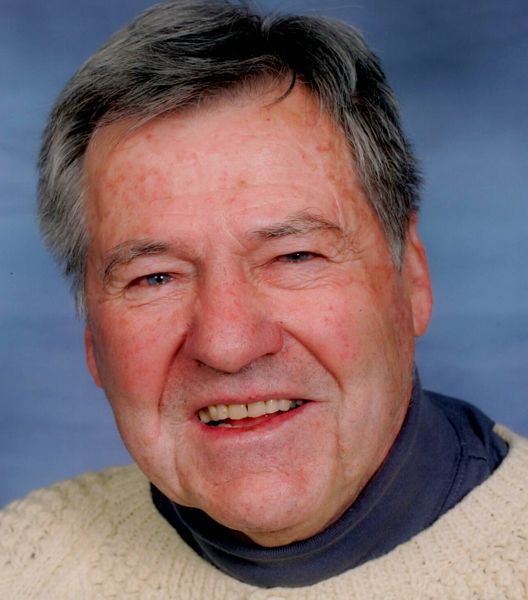
Bill Crawford

Bill Crawford

In our community, we have a mix of the three forms. It is reasonable to compare the city manager to a monarch. He is contracted to execute the law legitimately. But is appears that he in reorganizing city government has been capricious and arbitrary in firing and hiring and re-assignments. Morally he has lost legitimacy. He has breached the social contract with city employees and citizens.

In the Tahoe basin, the TRPA can be compared to government by the few, a select group that is corrupt because they have not made the rules and law clear. Thus, they are capricious and arbitrary. Things are in a muddle. And it seems the TRPA plays favorites. Fairness is a lost cause. The law is what the TRPA says it is on a daily basis; whatever the whim of the day is is the law.

In the city, we have a City Council that in supposition represents the democracy, the people. But the council is the pawn of the city manager. There is no check, there is no balance on the executive by the council. Thus, there is not even the shadow of a democracy.

When all is said and done, the form of government doesn’t matter as long as the social contract is alive and well in good hands.

Bill Crawford, South Lake Tahoe


Opinion: Embracing art as the medium that heals

By Robert Schimmel

Do we always need tragedy or an odious event like 9/11 to make us appreciate art and what it brings to the very heart of the matter? Doesn’t art often speak louder than words or certainly more eloquently when many have no words?

Please don’t misunderstand, I believe human suffering and pain come well ahead of any art, but we are blessed when the arts aid in healing, understanding and forgiveness. Look at the amazing murals in NYC that tell endless stories and express myriad emotions about this horrific day. Each image on a vacant wall, a borough’s firehouse, or in a city park tells of emotions no one can utter because there are no words for the deep grief or the tragic memories that grow a spirit and create personal inner resolve not subject to linguistic skills.

Robert Schimmel

Robert Schimmel

Our families were robbed, our souls scarred, and our fears realized that lamentable day in September 2001. No one will forget where (s)he was that moment of the Twin Towers imminent demise to rubble and ash, and most do not want to forget for reasons of patriotism or simple, anguished loss and a desire to remember a last hug or kiss.

We must pray, accept and understand that all suffered loss of some kind if we get honest and go deep. Then, in the midst, what is it that touches us most, expresses what we cannot say, and does it without confusing words? Art. Why? Simple, you get to “read” the art and feel or relive the emotions of a moment, an event, an experience, an honor, a tradition, or whatever. And no one can say you’re wrong because there is nothing wrong with personal experience and its truth; it just is, and the doubters be damned. Art does not need to be translated; it is spoken once and heard by all. It goes to the heart of the matter and is truly “worth a thousand words,” if not more.

My sincere point and purpose are to passionately illustrate how art makes a difference we often don’t feel or even recognize until a 9/11 hits. Two and 3-D art, for example, can capture your attention at 500 yards or 5 inches and tell you more in a glance than 50 pages of the finest prose on the planet. From sculpture to architecture, murals to painted eggs, dance to gymnastic rhythms, poetry to music to choirs, et al, we must embrace the elements and artists of what keep us tuned-in and turned-on to life in all its fascinating developments and foundational building blocks we require for personal growth, not to mention our national character.

The expressive quality and talents of our artists need to be recognized and encouraged beyond the commercial scenes and not just for what they can contribute to fundraisers, etc. As a community seeking an identity, Lake Tahoe has an abundance of artists and talent waiting to be creative in ways only they can imagine. Public art and the artists’ giving hands and hearts get the presumptive nods and occasional financial grants but not nearly often enough to make them thrive and able to continue their mission of self-expression (which really turns out to be yours and mine, especially during trying times) and beautification which leads to personal healing, community identity and, ultimately, national recognition.

Should my comments bring concern that this revolves around money, I’ll just have to say you may be right because almost every activity or accomplishment has its sustenance there. Please don’t throw the baby out with the bath water, but preferably get a grip on what can make us spiritually strong, emotionally healthy, and visually pleasing as a community that will naturally attract just what we want: a sustainable future with heart, a memory, and an appreciation of God’s gifts and talents among us at all times, not just when a deplorable event occurs.

Robert Schimmel is a professional artist and teacher in South Lake Tahoe as well as host of “Lake Tahoe Art Scene” on KTHO radio on Thursdays at 5:15pm.


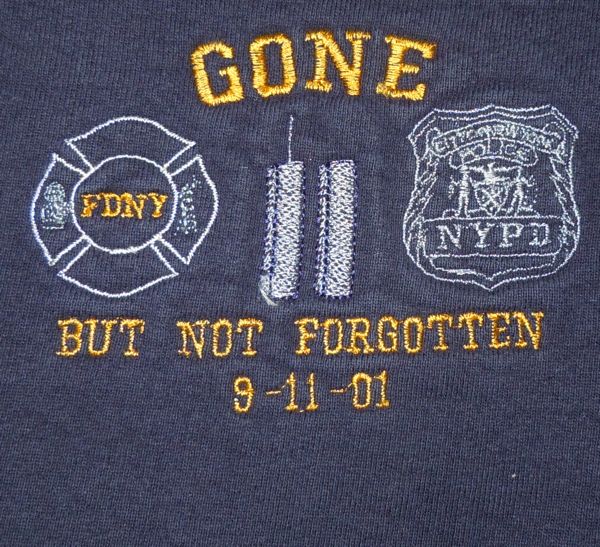
9/11: A generation loses its innocence in a N.Y. minute

Publisher’s note: This is one in a 12-part series running from Sept. 1-12 about how Lake Tahoe is tied to 9/11.

By Stephen Ward

When you’re young, you have a peculiar way of gauging things. Some children worry about a new school because of the size or shape of a fence, or from the look of their teacher. Others might sense alarm if their dinner is overcooked or negated altogether.

Although these signals are dubious, they grant closure. They help you reduce dimensions, to understand the world around you and momentarily fend off its opacity.

9:11 logoFor me, I always judged how the day would unfold by who woke me up in the morning.

My mother was the norm; she would sit beside me and rub my back, speaking softly until I woke up. This meant today would be the new yesterday — everything is as it should be.

Being woken up by my father was a different story. He favored yanking the sheets off quickly and shouting “Morning!” relying on the startle to wake me up. This occurred less often and indicated that I had an appointment or errand to run before school. The day would be slightly different, more unpredictable.

On the morning of Sept. 11, 2001, both parents were in my room. But, unlike the other days, neither one made an effort to disrupt my sleep. I awoke to find their backs facing me on the foot of my bed, my bedroom light still off. They were just sitting there, motionless, with their eyes glued to the burning building framed within the 12-inch TV screen.

I couldn’t ask what was happening before a second plane answered my question.

I wish I could say time stood still at that point, but the opposite happened. The TV was turned off and I was told to go downstairs for breakfast. My mom, with her nurturing disposition, consoled me throughout my bowl of cereal. She told me she’d take me to school and that everything would be all right. Don’t worry, she repeated. Everything is fine.

But I already knew that wasn’t the case. I woke up myself, with both of my well-being signifiers entranced in front of me.

Stephen Ward -- 2001

Stephen Ward — 2001

Ask any teenager what it’s been like since 9/11, and you’ll probably get a descriptive before/after binary. Before, schooldays seemed shorter. Lunch tasted better and the air was less stagnant. Teachers would watch their students from afar, reclined against the school wall and talking among themselves.

Sept. 11 was a lost day. No one wanted to do anything, so everyone sat together and watched the TV or listened to the radio. Every 50 minutes, a bell rang — a signal for everyone to get up and go somewhere else to do more of the same.

The most memorable class that day was physical science. My teacher had a close friend who worked in the World Trade Center. She stopped class repeatedly to answer her phone, exchanging calls with her friend’s wife. She cried uncontrollably in front of us when her friend called and said he was alive.

Stephen Ward has lived with the aftermath of 9/11 most of his life.

Stephen Ward has lived with the aftermath of 9/11 most of his life.

From Sept. 12 onward, teachers were falconine. They stayed on the field with students during every break from class, constantly surveying the grounds. They were sentient guard towers, armed with whistles and neurosis.

I was 13 years old living in Las Vegas when the terrorist attacks transpired. According to the major news channels, my region was a potential target. Some of the hijackers met in strip clubs and casinos in Las Vegas before carrying out the attacks. Security cameras showed the perpetrators sauntering through casino floors, detached from reality with the blue, grainy haze of the recording. Like the world they left behind, they were a shadow of themselves.

I wish I could say social profiling didn’t seep into the schoolyard, but it did. Among the many topics discussed back then were sleeper cells, especially in our area. Teachers kept close watch of the Muslim students. Children with darker skin were supervised by multiple hall guards. We stopped getting the occasional hug from our teachers when we left class.

The “us versus them” mentality the nation’s leader adopted divided what was once a unified generation. By reducing dimensions, by trying to better understand the world around us, and our place in it, my peers adopted a new breed of hostility.

It carried into high school. By my sophomore year, the war against terrorism was in full motion. Many students were bloated with chauvinism. The common resolution in history and government classes was to turn the Middle East into a parking lot. This was met with overwhelming approval.

Not every teacher promoted xenophobia. My sophomore English teacher showed us documentaries about war, social unrest and the conspiracy theories surrounding the attacks. His mantra was on expanding our perspective, not polarizing our paranoia.

During the last 10 years, I’ve had quite a bit of time to reflect on what happened and, consequentially, what it means. The world I live in now is a product of an unpredictable event, one that lasted for a few hours and shifted the social axis of everyone around me. To grow up during the post-9/11 era is to grow up with a broken perception of safety, trust and acceptance.

Still, I’m convinced my English teacher had it right. Resilience is tangible, so long as my generation seeks information and awareness rather than rhetoric and scare tactics.

Nowadays, I spend more energy gauging my reaction rather than the events themselves.

Stephen Ward is a student at UNR interning for Lake Tahoe News.


Opinion: Financial problems in El Dorado County Department of Transportation

Publisher’s note: The following is a letter El Dorado County Auditor-Controller Joe Harn wrote to the Board of Supervisors.

Dear Board Members:

The purpose of this letter is to document my concerns about our County Department of Transportation’s culture and financial management.

The current DOT Director inherited a bloated administrative staff and a culture where cost control was not a priority period. I have attempted to work quietly and patiently with the current DOT Director and the CAO with the hope that cost cutting and efficiency would become part of the philosophy at DOT. Unfortunately the culture has not improved. There is a severe performance problem at DOT.

edcDOT’s lack of professionalism in dealing with a utility bill from the City of Placerville illustrates the depth of the problem.

On May 2, 2011, the DOT Director signed and submitted an unusually large ($208,759.57) claim for water and sewer services. Utility Bills from the City of Placerville and a memo signed by DOT’s Chief Financial Officer supported the claim. The memo stated, “We have worked with EID and the City to carefully check the consumption for each account. Meter readings were manually verified and found to be accurate…” On May 5, 2011, my staff e-mailed DOT and its CFO as follows, “The water consumption for Building A appears to have increased 800% from the previous year.” On May 9, 2011, DOT responded to my staff, “I would suspect water usage variations could be, in part, due to outside temperature changes…” DOT’s May 9th e-mail was concluded with the statement, “I hope this will answer your question…” In response to DOT’s vague inadequate response my staff asked DOT for meter readings. We received the meter readings on May 19th.

On May 31st my staff e-mailed the DOT Director and CFO the following, “Based on information provided with the claim, Building A water consumption appears to have increased by approximately 800%…Please provide justification to support the increase.” My records indicate there were no communications between the two departments between May 31st and June 13th. On June 13th I e-mailed the DOT Director and asked for his guidance on this matter. Despite the fact that my office had been asking DOT a totally legitimate question that DOT was unable to answer, during the period between May 2nd and June 15th DOT did retract its $208,759 payment request.

On June 15th, the DOT Director left me a voice mail message stating that he would be sending me data that supports the City’s Utility Billings. Later in the day on June 15th the DOT Director, via e-mail, asked me to retract his payment request and asked me to return the claim unpaid to DOT.

As part of the fiscal year end accounting process, I am required to accurately record all unpaid amounts due to vendors, other agencies, etc. in the County’s books. Accordingly, on August 16th my staff asked DOT for any additional support for this $208,759 payment request and all correspondence between DOT and the City about this matter.

On August 18th DOT responded. DOT’s CFO has indicated that there has been NO WRITTEN communication between DOT management and the City regarding this matter. This is ridiculous and clearly indicates the lack of care, concern, and responsibility by DOT’s management when it comes to the public’s money. If our water bill increases 800%, DOT management has a responsibility to write the City to document our concerns and to explain that the Utility Bill will remain unpaid until our concerns have been resolved.

The August 18th communication also indicates that DOT has reached the preliminary conclusion that the City has over billed us for 1,000,000 cubic feet of water or by $131,200. DOT reached this preliminary conclusion three and one half months after the DOT Director and CFO approved this grossly overstated claim. DOT almost cost the County $130,000. My staff’s diligence saved the County $130,000.

I have drafted this letter on Sunday afternoon at my home. I do not have the benefit of all my files and my staff to bring additional details about this matter or other matters to your attention. Regardless, I implore your Board to work with the CAO and other County staff to change the culture and improve the performance at DOT.

If you have any questions, feel free to call me.

Sincerely,

Joe Harn, Auditor-Controller


Opinion: We may never know what spurred Carson City rampage

Publisher’s note: This editorial is from the Sept. 8, 2011, Reno Gazette-Journal.

In the face of unthinkable tragedy, it is the nature of humans to want answers.

Surely, there must be a reason why a man would walk into a restaurant and start shooting, eventually killing four people he apparently had never met before taking his own life.

How could a coffee shop in a strip mall turn so quickly into a killing zone?

How could a such a typical, simple, everyday decision as the one made by members of the National Guard in Carson City to “get away from the tyranny of the inbox” (as Brig. Gen. William R. Burks explained it on Wednesday) and meet over breakfast at the nearby IHOP end in their deaths?

How could this happen in small-town Nevada?

Is it really possible that there is no explanation, that there was nothing anyone could have done to foresee — and to prevent — the tragedy that occurred on Tuesday morning in Carson City?

Yes, it is possible.

On Thanksgiving Day in 1980, Priscilla Ford suddenly swerved her Lincoln Continental from North Virginia Street into a crowd in front of the Club Cal Neva in Reno, killing six people and injuring 23. Two years later, she was convicted of murder. She died in prison in January 2005.

Ford had been diagnosed with schizophrenia with violent tendencies, but no one could have imagined that she would one day go on the rampage that would stun Truckee Meadows residents and visitors that day.

Similarly, family members of Eduardo Sencion said the man accused of opening fire on patrons in the restaurant Tuesday was “mentally troubled.” In 2009, he’d filed for bankruptcy protection. None of that explains what happened in Carson City, however.

Read the whole story


9/11: A world-changing event experienced outside the U.S.

Publisher’s note: This is one in a 12-part series running from Sept. 1-12 about how Lake Tahoe is tied to 9/11.

By Kathryn Reed

Machu Picchu. It’s what I think of when I hear 9/11.

Throughout the day on Sept. 11, 2001, I kept being drawn to the most sacred temple at these historic Inca ruins in Peru. Pages of my journal talk about the experience.

Later that night and still today, I am compelled to believe that stone brought me a source of spiritual energy that resonates calmness when I think of her and of 9/11.

From Sept. 1-12, Lake Tahoe News is looking at 9/11.

From Sept. 1-12, Lake Tahoe News is looking at 9/11.

I had taken a six-month sabbatical from my job as an editor of the San Francisco Chronicle, with four months of it spent in South America. I was finishing week one of the trek when the cowards leveled the Twin Towers.

Being out of the country during this momentous time has left me not sharing the intense feelings of those who were on U.S. soil that morning. In reflecting back on my memories – aided by my journal and emails to my parents – I can honestly (and selfishly) say I’m glad I was where I was, doing what I was doing.

Getting back to Cuzco that night was a bit harrowing because of the transportation strike, not speaking Spanish, and fires burning in the road. I thought I had a great story to write home about.

Somewhere along the way word came that a plane had hit the towers. We thought it a Cessna or something small, no surprise there would be deaths associated with it. But somehow I knew it was bigger than that by the time I got back to my hotel. I just didn’t know how big.

I asked a hotel employee to put CNN on in English. He looked at me with an expression that said, “Oh, god, she doesn’t know.”

Kathryn Reed at Machu Picchu Sept. 11, 2001.

Kathryn Reed at Machu Picchu Sept. 11, 2001.

It didn’t take long to see what I hadn’t known until that moment. The videotape of the planes hitting the World Trade Center kept playing. It was surreal. It was like a bad B movie that wouldn’t end.

The next day was spent watching CNN and emailing family and friends. People filled the Internet café. Wallpaper on one computer was of four panel photos of the WTC collapse.

My journal on Sept. 12, 2001, says, “I’m not thrilled to have in my possession a ticket on American to JFK in December. I really want to be at home to see-hug all my family [and] friends – but at the same time staying on track may be best – and for now that’s what I’ll do. Last night was restless because of this news – today I was a bit numb – I just wanted to be around English speaking people – ah – how we migrate to people like ourselves.”

A few days later I’m at Lake Titicaca where I meet a couple from Philadelphia traveling with their adult daughter. They have black armbands as a symbol to those who died in New York City, Washington, D.C., and Pennsylvania. We cut one in half and I wear mine with honor.

Eventually I tie it to my backpack – where it stayed for the entire trip.

I’m getting word from friends in Vegas about lines for gasoline. I read about people in the United States being fearful. I don’t comprehend these feelings.

I feel a sense of loss and loneliness – but not of fear.

On Sept. 17 I write to my parents, “It is so weird being out of the US … it is [as] though nothing really has changed. I do not have any constant reminders of all of the East Coast tragedies and the domino effect.”

It’s Sept. 18, I’m outside the U.S. Embassy in La Paz, Bolivia. I can’t stop staring at our flag at half-staff. I’m told not to hold onto the fence. I’m told I have to get permission to a take picture of the flag. Now I’m angry. It’s my flag.

On Sept. 18 I write a group email saying, “People down here do care. Though it was a bit weird the other day crossing form Peru into Bolivia and waiting in the line at the Bolivian immigration office and having a young shoeshine boy come up and ask me where I was from. The United States I responded. Oh, and then he makes a gesture with his hands of a plane going through a building. I had nothing more to say. A woman with a Netherlands passport in front of me said what a way to greet you. I smiled. She said the tragedy has affected the whole world.”

Mom writes back about the continual pit in her stomach.

To this day it’s something I don’t relate to.

It’s Jan. 2, 2002, and in my journal I write, “On Sunday [Dec. 30] we went to Ground Zero. They opened a viewing platform that day. It was hard to believe that the World Trade Center once stood there. It looked like a construction site. Had there not been other buildings boarded up [and] w/canvas hanging down it would not have been so dramatic. What got me the most were the views from the Empire State Building [and] Statue of Liberty ferry. And on the city map it just has a white space for the WTC – with no written designation. It is still hard for me to comprehend all that the Untied States [and] its people have [and] are going through and perhaps having been in S. America on Sept. 11, 2001, will make it impossible for me to ever grasp the magnitude of the loss [and] fear.”


Opinion: Barton Foundation fundraiser all about helping the community

To the community,

I would like to thank everyone who attended and supported the Barton Foundation’s Wine Tasting Auction on Aug. 17 at Edgewood Tahoe. We had nearly 100 people join us for this lively event which raised more than $16,000 in support of the Barton Foundation’s Community Health Endowment.

As the executive director of the Barton Foundation, I am always overwhelmed by the generosity of this community and our propensity to give. A fund-raising event is an absolute collaboration from the volunteers who work that night, to the local businesses who donate dinners and goods to our auction, to Edgewood Tahoe who gave us a prime summer date, to my wonderful all-volunteer committee who worked tirelessly to get the right people in the room and the right items in our auctions, it takes a lot of energy to “pull it off”.

The real winner, of course, is our community. The money raised benefits us all – through your support we are able to provide health care to everyone in our community rich or poor; purchase best-in-class equipment, and provide training for our local physicians and nurses on the latest medical advances, therapies and techniques.

Together, we are making a difference.

Kindle Craig, Barton Foundation executive director


Lake Tahoe News says thanks for a great 2 years

Lake Tahoe News would like to thank all of our readers, advertisers, subscribers, financial backers, morale boosters, commenters, sources and tipsters for an incredible two years.

Life in the Lake Tahoe Basin is never dull. That is reflected in the stories we have brought you about the issues and people who make this region what it is.

We would not be celebrating the completion of year two without all of you. It is with much gratitude we say thank you for being there and here’s to another interesting year of news.

The following people are sporting Lake Tahoe News T-shirts because the contest we had going on: Virginia Matus-Glenn, Janill Gilbert, Liz Norman, Carri Galt, Billie Jo McAfee, Ernie Claudio, David Dewitt, Cat Kope, Tom Dutart, Nadine Aurelio, Christina Shell, Lisa Sinizer, Jennifer Poore, Kerry Boykin, Cathy Vogelgesang, Paula Peterson, Julia Nold, Susan Swift, and Lindsay Bryant. Thank you all for your comments.

If your name is not listed above, there are other ways to get a T-shirt. The older shirts are for sale at the Tuesday farmers’ market in South Lake Tahoe for $15. They will also be available at Bijou Bash on Sept. 10.

The other way to get one of the new T-shirts like the ones that were given away as part of LTN’s birthday celebration is for subscribers to send in a check of $40 or more. For each check received, in addition to the T-shirt, you will be added to our special NEWS list. People on this list will qualify for special benefits like the ticket give-away to the American Century Celebrity Golf Tournament.

(Subscribe by putting your email address in at the bottom right of the home page. Then you will receive the morning digest.)

Send checks to Lake Tahoe News, P.O. Box 13406, South Lake Tahoe, CA 96151 or pay via credit card through PayPal on the website at the bottom right of the home page.

Please include your email address so we can ensure you are subscribed to receive the daily digest. To receive the daily email, which lists what has been posted in the last 24 hours, enter your email address at the bottom right of the home page.

Please don’t forget to include your mailing address and shirt size – S, M, L, XL or 2X.

Thank you again for making Lake Tahoe News the success that it is with nearly 60,000 readers a month in more than 100 countries, and more than 3,500 cities.


9/11: South Tahoe residents fend for themselves in D.C.

Publisher’s note: This is one in a 12-part series running from Sept. 1-12 about how Lake Tahoe is tied to 9/11.

By Dennis Cocking

Those of us who are old enough to remember Nov. 22, 1963, have indelibly etched into their memory exactly what they were doing at the precise moment they heard the news of President John F. Kennedy’s assassination. For me, it was just as a classroom movie had finished when I was in the sixth grade. As one grows older, other events are added to that list; wedding days, the birth of children, and the passing of loved ones. On Sept. 11, 2001, another memory was added to the list, as it was to all Americans but, a little too close for comfort for me.

Tuesday, Sept. 11, 2001, I was in Washington, D.C., with South Tahoe Public Utility District Director Duane Wallace seeking congressional support and funding for district infrastructure-related projects. We had a 9am meeting with Rep. John Doolittle in the Rayburn House Office Building not far the Capitol building and I had ducked into the Starbuck’s in the hotel lobby to grab a cup of coffee for the taxi ride. I glanced up at the television and heard that “a plane had crashed into the World Trade Center,” however the news commentator was speculating that it was likely a private aircraft, as there had been several near misses over the years.

From Sept. 1-12, Lake Tahoe News is looking at 9/11.

From Sept. 1-12, Lake Tahoe News is looking at 9/11.

As I met Duane in front of the hotel to catch a cab, I mentioned the news report and Duane said he heard the same report as he was leaving his hotel room. Since it sounded like it might well have been a private plane, we began to go over the points we wanted to make with Congressman Doolittle in our upcoming meeting. I also confirmed that I had been able to locate a couple of tickets to the Baltimore Orioles game Wednesday night to see Cal Ripkin play in one of his last home games before he retired, and what a stroke of luck that was. We were scheduled to fly out of Baltimore-Washington International on Sept. 13 and a ball game would be a great way to spend the last evening in the Washington, D.C., area. I had no idea how my plans would change.

As we entered the congressman’s office, all eyes were on CNN as at approximately 8:46am Flight 11 had crashed into the North Tower and, at 9:02am, Flight 175 plowed into the South Tower. It soon became obvious that this was not accidental and America was under attack. Very quickly things became chaotic in the office with alarms beginning to sound throughout the building. Within minutes, U.S. marshals and Capitol police armed with automatic weapons entered the office and took Congressman Doolittle to a secure location. We were left standing in the office entry with a bunch of staffers all trying to figure out what the next move should be. As the marshals were leaving, we asked, “What about us?” They responded, “You’re on your own, but I would suggest getting out of the building.”

Running down the well-worn granite stairs to the street we heard others talk of one, maybe more, airplanes that were inbound to either the Capitol or the White House. We ran out onto the Capitol Mall and looked back fully expecting a plane to fly into the rotunda of the Capitol. We later learned that the brave folks on Flight 93 gave their lives and prevented that from happening. As we were moving away from the Capitol we heard a large explosion followed by several smaller ones. We would later find out the large explosion was Flight 77 slamming into the Pentagon and the smaller explosions were fighter aircraft from Langley Field in Virginia breaking the sound barrier as they began to patrol the skies over Washington, D.C., for any additional inbound aircraft.

Dennis Cocking

Dennis Cocking

Amid a chaotic gridlock of everyone that could leave the town and those who were trying to make their way back to their hotel rooms, we joined the exodus and made our way back to our hotel. As we walked to the hotel, sharpshooters began to emerge on the rooftops of the federal buildings – pretty spooky. Cell phones were useless on the walk back, but I was able to reach my wife, Kathy, when I got back to the hotel on a landline and let her know that I was all right. It was hard to believe all this had transpired within about 45 minutes.

Like many other Americans, we spent the next six days watching the news and trying to make some sense out of a senseless act. We took a cab to as close as we could get to the Pentagon, and walked the rest of the way to see the damage. It was a sad and depressing sight knowing how many lives had been lost.

We tried a number of different avenues to return home as airline flights were out of the question. We called car rental agencies and Amtrak, all to no avail. We even contemplated renting an RV and heading west. Finally, on Sept. 16, since we had our original return reservations, we were given priority when commercial airline flights finally resumed. Our return flight included more than seven different legs crisscrossing the nation and ultimately taking nearly 18 hours. Seeing the lights of Tahoe when returning from Reno at night is always a welcome sight, but never any better than the return home from this trip.

Dennis Cocking is the public information officer for South Tahoe Public Utility District.