Opinion: California’s rich soak up solar subsidies

By Dan Morain, Sacramento Bee

The sun shines on the beachfront mansions of Malibu and La Jolla, just as it does on Compton and Barrio Logan in San Diego.

It beams down on the most upscale part of Clovis and its golf course development of Brighton Crest, and on the gritty flats of south and west Fresno.

But based on how California policymakers dole out valuable subsidies for solar panels placed on the residential roofs, the poorest parts of our sunny state might as well be on the dark side of the moon.

California is in the midst of by far the nation’s most ambitious program to convert to solar energy, one that began in 2006 when then Gov. Arnold Schwarzenegger declared that during the next decade, the state would place solar panels on a million rooftops.

To pay for it, the California Public Utilities Commission earmarked $3.3 billion, spread over 10 years, taken in small slices from utility customers’ monthly bills.

It was high concept, bold and visionary, and not the least bit efficient. There is no more costly solar power than that which is placed on residential roofs.

“Socially, it is a complete money loser,” said professor Severin Borenstein of the UC Energy Institute at UC Berkeley.

The Public Utilities Commission reported earlier this year that California Solar Initiative subsidies have amounted to $885 million so far. They’ve created 924 megawatts of power spread across 94,900 locations owned by large and small commercial users, and residential customers.

Read the whole story


Caltrans: How to stay safe on the roads in the winter

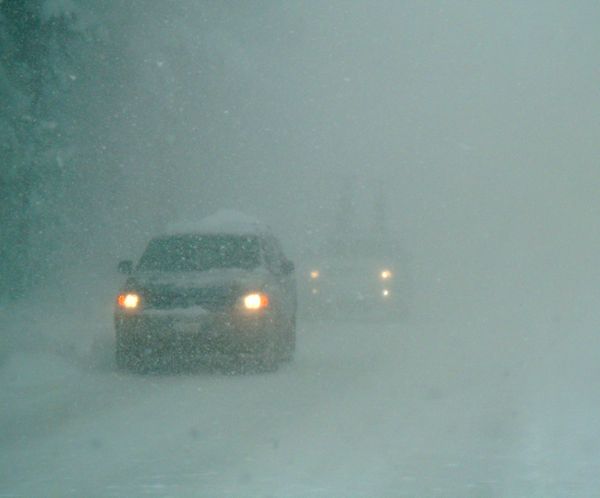
Caltrans crews are taking the necessary measures to prepare for major rain and snowstorms throughout the season, including winterizing construction projects, and mobilizing the necessary equipment and personnel. Caltrans is also encouraging motorists to be fully prepared for winter driving conditions, particularly in snowy conditions in the Sierra.

winter driving“Winter driving on roads and highways can present some hazards for motorists,” said Jody Jones, Caltrans District 3 director. “Our goal is to help motorists be safe on the roadways and provide them with as much information as possible to ensure a wonderful winter driving experience.”

Caltrans is offering motorists the following winter driving tips:

Winterize your vehicle

This means:

• Checking antifreeze and making sure it is properly filled and formulated for winter conditions.

• Checking tires for proper tire pressure and tread.

• Replacing wiper blades and filling the windshield wiper reservoir; a wiper reservoir winter formula is available to help de-ice windshields.

• Checking tire chains to ensure they are the proper size for your tires and in good working order.

Carry a travel kit

This means:

• Expecting the worst possible weather conditions and having an emergency kit for your car that includes warm blankets, extra clothing, water and snacks, extra towels, a shovel, a flashlight with extra batteries, an ice scraper, sand, and other pertinent items.

Understand chain controls

This means:

• Recognizing R1, R2 or R3 chain control requirements.

• R1 means chains or snow tires are required; R2 means chains are required on all vehicles except four-wheel drive or all-wheel drive vehicles equipped with snow tires; R3 is a mandatory chain requirement for all vehicles. R-1 and R-2 are the most common chain controls. The highway will usually be closed before an R-3 control is imposed (whiteout condition).

• Knowing that failure to abide by the chain requirement can lead to a fine from the California Highway Patrol.

• Recognize that speed limits range between 25 – 35 MPH when chains are required.

Check conditions frequently

This means:

• Being aware of inclement weather and potential snowstorms

• Tune in to Caltrans radio to receive brief and informative updates: changeable message boards (CMS) will list the radio frequency.

Anticipate delays and closures

This means:

• Understanding that winter weather and road conditions can change rapidly and allowing for extra time.

— Caltrans


Opinion: Humble start for a decorated sailor

Publisher’s note: After the annual Memorial Day ceremony in South Lake Tahoe this year, Mayor Hal Cole was criticized by members of the public for not attending. When Lake Tahoe News learned he spends every Memorial Day with his World War II veteran father, Hal Cole Sr., we asked Cole to write a tribute to and about his father for Veterans Day.

By Hal Cole Jr.

He was born July 24, 1922, in St. Louis, Mo. His young mother died five years later and he spent the rest of his childhood shuffled between orphanages, aunts and a stepfather. He had just turned 18, fresh out of high school, and was on his own in the midst of the Great Depression. He witnessed long lines for a single job opening or for a free bowl of soup.

As he boarded a trolley in the summer 1940 with no particular destination in mind, he spotted a billboard. On it a sailor in a clean, starched uniform was pointing directly at him with the words: “We Want You!” underneath. It was the first time in his young life that he felt there was a place for him.
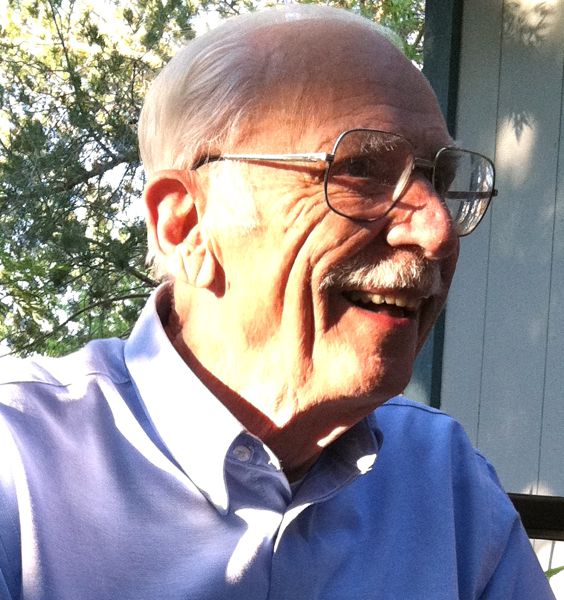
Hal Cole Sr.

Hal Cole Sr.

The next day he donned his best outfit, combed his hair, and with high hopes entered the local recruiter’s office. He was met by a pot-bellied, grumpy officer who had him fill out endless forms before putting him on a scale. At 5-foot-11 he weighed in at just 118 pounds, 2 pounds shy of the Navy’s minimum. To which the recruiter responded, “Go home son and come back when you grow up.” As tears welled up in the young man’s eyes, the grizzled old chief was visibly shaken. He dug in his pockets and pulled out 15 cents and told the boy to buy some bananas, drink as much water as he could and come back in an hour. Sure enough, upon his return the scale barely touched 120; to which the officer replied, “Congratulations, son, you’re in the Navy!”

So began my father’s journey that would take him to places he never dreamed of and horrors he could have never imagined.

As he exited the train in San Diego, my dad saw the ocean for the first time and a harbor full of warships dwarfing any Mississippi river boat he had ever seen. He was assigned to the USS Nashville, a Navy cruiser. After answering yes to three questions: “Can anyone here type?” (he had taken a class in high school) , “Anyone know Morse code?” (he was a Boy Scout) , and “Can anyone make coffee?” (how difficult could that be?), he was now a radioman.

With the bombing of Pearl Harbor one year later on Dec. 7, 1941, the fate of my father and our country would never be the same.

I offer this commentary not so much as a recounting of my father’s military career, but rather recognition of a generation that is rapidly disappearing. I’m sure, however, my dad would never forgive me if I didn’t at least highlight some of his exploits. He received two battle stars, was aboard the USS Nashville when it participated in the Battle of Guadalcanal, escorted Jimmy Doolittle for his raid on Japan, carried Gen. Douglas MacArthur for his return to the Philippines in 1944, was hit by a kamikaze in December of that year that killed 133 of his fellow sailors, and not to be forgotten, he rescued actor Jason Robards from the sea after his ship sank.

My father’s story is not unique. Thousands of young men have gone off to war defending our country, witnessing life-altering events. My dad was lucky; he came back alive. Now, at 89, he lives in Reno.

As I pause and reflect on this Veterans Day, I have much to be thankful for. I am blessed to be living in such a beautiful place, seemingly safe while war and bloodshed still plagues our world. I can only hope that the suffering our men and women in uniform have endured and continue to face will not be forgotten or taken for granted.

I am also thankful for what the military gave to my father. In addition to giving him three square meals a day for the first time in his life, the U.S. Navy taught him a trade and paid for his college education, which enable him to start a small business and support his family.

Thank you veterans everywhere and thank you, dad. Although you gave me your name, I will never be your equal.

Opinion: Learn to live with bears to keep them alive

By Jennifer Fearing

The controversy swirling around one Placer County bear family is, sadly, nothing new to the many communities that are seeing a resurgence in black bear populations. Like so many other wildlife species, bear populations are experiencing a slow crawl back to normal after being decimated by human exploitation.

Part of that return has them crossing paths with people who build homes deep in bear country – or in the suburbs through which bears occasionally pass but do not stay.

Given their size and potential to do harm, bears create remarkably few conflicts for people. Normally shy and inoffensive, they are, however, famously known to be formidable in protecting their young, and unfortunately endowed with a sweet tooth that finds them attracted to everything from pies cooling on the porch railing to yesterday’s trash left out at the curb.

For such offenses it is not uncommon to see bears killed. But isn’t there a better way?

The short answer to this is “yes,” and a slightly longer one would be “absolutely.” The really long-winded version reads: We have to teach bears how to live with us at the same time that we learn how to live with them. For our part, we can’t be cavalier about managing trash when bears are around. Even bird feeders can lure a passing bear into a yard and in range of potential conflicts.

There are two keys to learning how to live with bears. Don’t put temptation in their way, and teach them that humans are to be avoided. And this is in fact what many communities in bear-rich areas have already begun to do.

Jennifer Fearing is California senior state director for the Humane Society of the United States.

Read the whole story


Opinion: Finding a cure for pains of medicinal marijuana

Publisher’s note: The following editorial is from the Nov. 4, 2011, Sacramento Bee.

There is no ideal solution to get California out of its medical marijuana quagmire. But two steps would be a huge improvement and help fix much of what is broken with Proposition 215, approved by voters 15 years ago Saturday.

If we’re going to have medical marijuana, more research is needed on what diseases and conditions can be treated, what doses work best and how the drug can be most safely ingested.

And that means getting marijuana off the federal government’s Schedule 1 list of drugs. What’s already known shows that marijuana does not belong in the same category as cocaine and heroin – drugs with high potential for abuse but without any medical benefit whatsoever.

This reasonable reform was recommended by the California Medical Association, which took the bold step last month in passing a resolution calling for legalization, strict regulation and, above all, more research.

Reclassifying marijuana would lessen the conflict between federal law and California and the 15 other states that have since allowed medical marijuana. A bill introduced in Congress this year would go even further, removing marijuana entirely from the list of controlled substances. While not legalizing marijuana, HR 2306 would limit federal enforcement to international and interstate smuggling and would let the states regulate pot.

Read the whole story


Opinion: Stop drinking the renewable energy Kool-Aid

By Tyrus W. Cobb

Proponents of “green energy” continue to hype the potential of solar, wind, biomass and other renewable resources as cheap, abundant engines that can efficiently propel economic growth in the state.

But these cheerleaders ignore the soaring costs associated with producing electricity from these sources, a differential that will only be magnified as vast new reserves of traditional fossil fuels become available.

These adherents seem unaware of the shale gas revolution that has occurred in the past few years and the coming explosion of oil production in North America. Hydraulic fracturing (“fracking”) has unearthed vast natural gas reserves previously buried in inaccessible shale rock.

There is a historic shift occurring in global oil and gas production. American expert Dan Yergen predicts an amazing “new rebalancing,” with the Western Hemisphere moving back to self-sufficiency and an end to our reliance on long-distance energy shipments from areas of conflict. Venezuela is now considered to have bigger oil reserves than Saudi Arabia, new finds in the Arctic area are very promising and recent oil exploits in Canada and the U.S. suggest that technology might be trumping geology.

Offshore oil will be tapped, but the most significant development is the exploitation of extensive rock formations ranging from Texas to North Dakota, believed previously to be too costly and technologically impossible to extract the fuels.

Tyrus W. Cobb of Reno served as special assistant to President Ronald Reagan for national security affairs 1983-89.

Read the whole story


Opinion: Knowing when burn conditions are ideal

To the community,

A couple things to note here, and I want to make sure I address them since operations in Angora will be ongoing.

usfsFirst, we completely understand that people get nervous when they see us conducting prescribed fire operations when it’s windy. When we get the right mix of conditions, like last week, wind is good for two reasons: it helps to disperse smoke and it also helps the piles burn more completely. We also had significant precipitation on the way, which we knew would help extinguish the piles.

Besides getting rid of the piles, another goal of the prescribed fire operations in the Angora area is to reduce the brush that has regrown since the fire and allow native seedlings to grow. Conditions that allow fire to move between piles within the unit boundaries help to accomplish that.

Finally, before we begin prescribed fire operations, our protocols require us to make sure that sufficient resources are available to address contingencies. Unlike when a wildfire starts in windy conditions, our crews are already in place and monitoring the operation during a prescribed fire, rather than responding after the fact.

Cheva Heck, USFS LTBMU spokeswoman


Opinion: Community support makes the difference

To the community,

Thank you Ed Cook Tree Service, Zephyr Point Presbyterian Center, and Bijou Parents who helped create a wonderful log border (and balance beam) around Bijou’s playground. We could not have created this wonderful play space without the generous donation of logs from Ed Cook, the equipment and tractors from the Zephyr Point Presbyterian Center, and the time and effort of our Bijou Parents (and Rotoract student) who came in 19-degree weather to help out.

I am continuously amazed at the constant community support and dedication to the well-being and education of our children. Thank you all so much. You truly make a difference in the lives of children.

Kathy Haven, Bijou PTA member


Opinion: Caucus fumble makes Nevada look amateurish

Publisher’s note: This editorial is from the Nov. 6, 2011, Reno Gazette-Journal.

When Nevada first became an early caucus state four years ago, it wasn’t one of our finer moments.

Organizers, particularly on the Republican side, were not prepared for the higher-than expected turnout, which awarded victories to Hillary Clinton for the Democrats and Mitt Romney for the Republicans. Ballots were in short supply, and some caucus goers, waiting in long lines outside on that cold January day, gave up and went home without taking part.

It was so chaotic in some caucus locations that then State Senate Minority Leader Dina Titus, D-Las Vegas, considered legislative action to restore Nevada’s primary election.

“This notion of neighbors getting together with neighbors to talk about politics, that’s just not Nevada,” she said at the time. “What I found in my caucus is that the meeting didn’t lead to collaboration, cooperation and a good discussion. It led to hostility.”

But when tempers cooled, most observers chalked up the chaos to inexperience. Organizers promised to be better prepared next time.

So much for that notion.

At the moment when our state needed to convince the nation we have our act together and are deserving of political relevance, we took chaos to a new level. Reacting to Florida’s move to hold its primary on Jan. 31, Nevada Republicans announced they would hold their caucus on Jan. 14. What followed was an embarrassing game of chicken. New Hampshire cried foul. Our GOP leadership said the date was firm. Then it wasn’t so firm. Responding to boycott threats from several GOP candidates and the risk of losing delegates at the national Republican convention in Tampa next year, they moved the date to Feb. 4.

The date, in and of itself, isn’t terrible. Nevada will be the first western state to cast its votes. But by then it might not matter. Just look at how the candidates have responded to the final early state schedule, which puts Nevada fifth after Iowa (Jan. 3), New Hampshire (Jan. 10), South Carolina (Jan. 21) and Florida (Jan. 31).

Read the whole story


Opinion: Saying thank you to veterans

By Ted Gaines

In 1943, an 18-year-old Bob Gaines left California and months later found himself a world away, flying as a tail-gunner on a B-17 bomber on 35 sorties across Europe. The combat was consistently terrible and terrifying, with white-hot anti-aircraft fire and clouds of heavy flak clogging the sky.

He lost many comrades and had one close call where flak grazed so close under his chin that it severed the communications wire of his headset, leaving him unable to communicate with the cockpit, who assumed he was dead until they touched ground for a happy reunion.

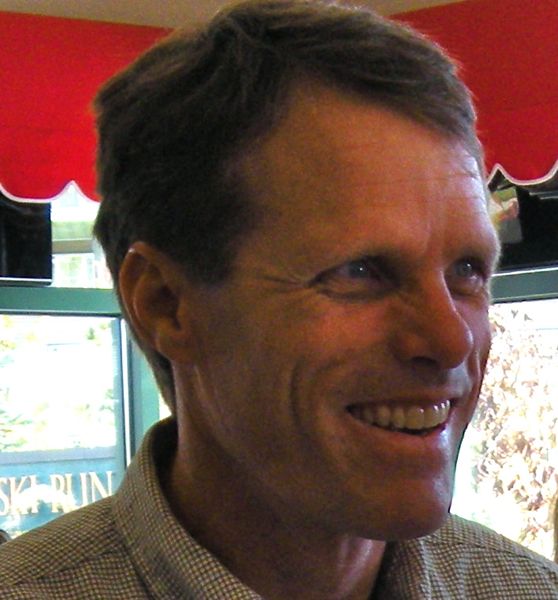
Ted Gaines

Ted Gaines

Bob Gaines, World War II tail-gunner, is my father, and on this Veterans Day I want to thank him and all the other brave men and women who have similar stories of risking their lives to keep America safe and free.

My dad fought in Europe, but the legacy of the American soldier is stretched across time and across the globe, from the frigid winter camp at Valley Forge to the blazing deserts of Iraq, to the steaming jungles of Vietnam and the arid mountains of Afghanistan. Wherever threats to American security arise, the warriors of freedom answer the call.

But regardless of when or where they served, our veterans are united in their commitment to their country. Theirs is not a shallow, fair-weather patriotism. It is expressed by their willingness to fight and sacrifice so we can all enjoy the liberty that is promised in our Constitution but guaranteed by our military.

They all deserve our profound respect and gratitude. On Veterans Day, I encourage you to offer your thanks to any and all veterans. They have earned it. If you have a chance, take the extra time to do something — anything — to show them that you understand the depth of sacrifice they were prepared to make on your behalf.

And don’t forget about the families of active duty military, who serve right along with their loved ones as they spend many lonely, nervous hours waiting for them to come home from outposts around the world. Helping these families, however you can do it, is another way of letting our veterans know that they are not forgotten.

I am hosting my 3rd annual Salute to Veterans Pancake Breakfast, free for veterans and their families on Nov. 11 from 8:30-10am at the Veterans Memorial Hall in Roseville. I hope to see hundreds of people there enjoying a little hospitality from me and my staff. It is my small way of recognizing their service.

To the men and women of the greatest military the world has ever seen, I say once again, thank you.

Ted Gaines represents the 1st Senate District, which includes all or parts of Alpine, Amador, Calaveras, El Dorado, Lassen, Modoc, Mono, Nevada, Placer, Plumas, Sacramento and Sierra counties.