Letter: City thanks Barton volunteers

To the community,

The city of South Lake Tahoe would like to thank Barton Health’s leadership development team for its volunteer community clean-up throughout the residential neighborhoods surrounding Barton Hospital on Aug. 30.

Your volunteer efforts are truly appreciated.

Tracy Franklin, South Lake Tahoe public information officer


Letter: Time to rethink fire policy

To the community,

At the time of this letter, 41 wildfires are burning in the West. Controlled burns have become big business for the Forest Service, spending millions of our tax dollars. There could never be enough controlled burns performed in the whole West that would stop fires created by random lightning strikes. Controlled burns/wildfires create massive air pollution. Unfortunately environmental groups busy fighting coal fired power plants have turned a blind eye to control burns and wildfires, our the biggest source of pollution. It is a scientific fact that smoke reduces the quality and length of many peoples lives. It also puts firefighters lives at stake unnecessarily.

Firefighters know the three rules to controlling a fire. No. 1 is remove the oxygen source. In the case of wildfires this is not usually possible unless the fire can be smothered easily.

No. 2 is to remove the fuel. Logging for fire breaks is the key to stopping wildfires in the Southwest. Also thinning, and grazing are essential. Unfortunately, environmental groups are micromanaging the Forest Service’s attempts to log.

No. 3 is to remove the heat from the fire or surround and drown. Air tankers are desperately needed to put out wildfires immediately. Yes, air tankers are expensive, but after the initial cost they will save lives, provide clean air and generate peace of mind. Ask yourselves how expensive repeated useless control burns are and how much it costs to battle these huge wildfires?

The Forest Service says wildfires are a natural event. The bubonic plague was a natural event, but we don’t want to experience it in our lifetimes. It’s time for our government to do something that makes sense. Invest in air tankers and log/graze our forest for fire breaks. Call your federal lawmakers today.

Marsha Honn, Snowflake, Ariz.


Opinion: The failure of the prison system

By Ted Long

That our prisons are overflowing with inmates to the point that the system is breaking down, the fact that the prisons are now mostly run by inmate gangs and that recidivism is at record highs has caused some to begin to look at the issue and the underlying logic of a system that was born in medieval times and other then in the use of construction materials, has remained mostly unchanged in its justification for hundreds of years.

At the root of the system, in its origins and still today are three fundamental reasons or justifications for prison. First, is the early and still deep-rooted concept of revenge. If some one breaks the law they have to go to jail so we extract our once of justice.

The second is the notion that we can rehabilitate or should rehabilitate the individual. A concept, that despite the fact that it as been proven not to work in the majority of case is still near and dear to us.

Ted Long

Ted Long

The third is the notion of a deterrent, that an individual will consider the penalties and in weighing them or perhaps just respecting them will not commit the crime because of the penalty. We see reflections of this in our law, crimes of passion and the mentally unstable are given greater license for example.

The first justification, revenge, I leave to you. Revenge is often greatly reflected in society’s values and I would like to think that as a society we have evolved beyond such primitive thinking. However?

The second issue, however, requires a closer look. The fact is that there are a few that do benefit but, the combination of some educational opportunities and industrial training with our knee-jerk reaction to the fact that a person is a convicted criminal makes rehabilitation a double edged sword. A study that I conducted with inmates from Lompoc Federal Prison demonstrated that dilemma. Lompoc had one of the best welder training schools in the country; it trained real good welders. The new welders served their time while learning their new trade, came out and then could not get work because the stigma of convict overweighed their ability to perform the job and they could not get work. The result, increased resentment of society and a reinforced belief the crime was their only opportunity. Think about it, would you hire an ex-con?

The third is even more interesting. The fear of prison versus doing the right thing. In its origin I think there might have been something to it; however prisons were completely different then. I do think that the fear of jail may work best on those of us who are not going to commit a crime anyway, we have no need, other then wanting to punch someone in the nose occasionally, but fear of getting punched back is probably stronger. However, if you look at the percentages in the current prison population what you will find is an overwhelming number of people with nothing or very little to loose, in fact jail may actually be a better place then where they were living.

Imagine, you are a young man, living in a ghetto, a neighborhood where it is dangerous to go out on the street, you go to bed many nights hungry and despite the boosting of the wonderfulness of the “American way” you face little opportunity to improve yourself. You have not only the worst schools but going to school is a major threat. Surrounded by violence and pain, are you really deterred by the fact that you may go to jail? Where you will get first class medical help, an education, and three square meals a day and if you are tough enough, respect?

I don’t think so, and I am not even including the peer presser, the fear of your own life if you do not cooperate with the criminal element.

Like many institutions that have been given to us from the past, we need to rethink them with current conditions. Our prisons, our educational systems, our ways of financing government even the application of our sacred constitution, may be making a greater contributors to our problems than we realize or are willing to omit.

We live in times that have no history, never has progress been so fast and so unpredictable. What was science fiction when I was in high school is today’s standard. Our current prison system is not working.

The point is, what’s wrong with an honest relook at the whys and ways we do things?

Ted Long is a South Lake Tahoe attorney.


Opinion: Keep fighting the fire ‘tax’

By George Runner

For the second time in as many years, California is mailing hundreds of thousands of fire tax bills to rural Californians who live in the so-called State Responsibility Area. The bills are hitting mailboxes even as the class action lawsuit I’m backing has finally received a green light to move forward.

As Jon Coupal of the Howard Jarvis Taxpayers’ Association is fond of saying, “the wheels of justice grind slowly.” Although I believe the lawsuit against the fire tax will ultimately prevail, it appears the trial won’t be until next year at the earliest.

George Runner

George Runner

Delayed justice means that hundreds of thousands of rural Californians, whether they can afford it or not, must write another check for up to $150 per habitable structure to the state of California to pay this unfair and unjust tax.

Given the confusing and controversial nature of this tax, I’m sponsoring a series of regional telephone town hall meetings to give impacted taxpayers — many of whom are senior citizens living on fixed incomes in mobile homes—an opportunity to receive information and voice their questions and concerns. To date, more than 2000 taxpayers have participated. (See calfirefee.com for recordings and details on upcoming calls.)

Taxpayers are speaking out loudly and clearly. The following are just a few examples of what they’re saying:

“I live on only Social Security—that’s all I get, and its already very difficult for me to make ends meet.”

“I’m 81 years old, and I live on Social Security… I’m unable to work, and I can’t afford this… I don’t have the money to pay it.”

“I was so afraid from what the letters were saying that if I didn’t get it in right away, somehow I was going to lose my property… This year I don’t have the money… I understand from what I’m hearing that there are lots and lots of seniors that are in my position.”

Many taxpayers wonder who is responsible for this unfair and regressive tax. The answer is simple: the Governor and Legislature. And at the risk of sounding partisan, the bill was passed entirely by Democrats without a single Republican vote.

By now they could have repealed this tax, saving rural Californians another year of pain. It’s inexcusable they haven’t—especially now that the state is awash in billions of new voter-approved tax revenues.

As you may recall, the Legislature enacted the fire tax to backfill funds it raided from CalFire. They disguised the tax as a fee, passing it on a simple majority vote in direct violation of California’s constitutional two-thirds vote requirement for new taxes.

Not only have the governor and Democratic lawmakers passed up opportunities to repeal the fire tax, they’ve also failed to make even the most modest and common-sense reforms to this flawed law.

One stalled bill would have exempted low-income Californians, including most seniors on fixed incomes.

In addition to taxing its poorest citizens, the state is also imposing a 20 percent per month penalty on those who can’t pay after unsuccessfully appealing their bills. That’s not a typo — the interest is 20 percent per month.

Once the lawsuit prevails, taxpayers should get back every cent they’ve paid plus interest. But unfortunately the state won’t guarantee that outcome.

The judge presiding over the case has indicated that if the lawsuit prevails those who failed to file timely appeals may not be eligible for refunds.

So if you live in the State Responsibility Area for fire prevention, you should pay your bill and immediately file an appeal for your own protection. (For instructions on how to appeal your bill, see calfirefee.com.)

Paying and appealing not only protects your chance at a refund, it also protects you from government tax collectors. Those who don’t pay could face steep penalties and interest and other collection actions in the future.

I don’t like this tax either. But there are better ways to protest it than by not paying your bill. Support the lawsuit. Demand that the Governor and Legislature end this injustice. Contact your friends and family members and urge them to do the same.

And be assured, until the courts strike down this illegal tax, I’ll continue to fight it for the sake of all rural Californians.

George Runner represents more than 9 million Californians as a taxpayer advocate and elected member of the State Board of Equalization.


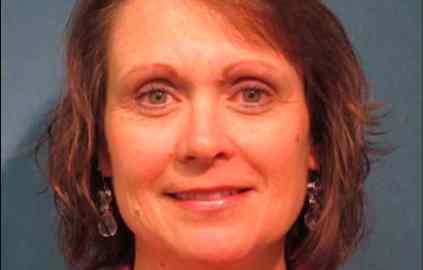


Opinion: Barton paying attention to what patients want

By Christine O’Farrell

Hospitals can be scary places for many. Patients are usually in pain or scared and friends or family members worried. You are also putting your care (and sometimes your life) in the hands of experts who are unfamiliar to you.

Except in an emergency, people have a choice of where they trust their health care. In a consumer perception survey done in the region in 2009, over 90 percent of respondents said they would travel over 40 miles for care if they felt it was better elsewhere. Barton recognizes this and has taken it to heart by making significant investments in patient safety, quality of care, and patient satisfaction.

Barton Memorial Hospital was recently recognized as one of the most improved hospitals in California in patient safety by the California Hospital Engagement Network. Focusing on 10 clinical areas of improvement against 174 other hospitals in the state, Barton showed a 75 percent improvement in patient safety over the last three years and has won three awards that recognize these great efforts. The benchmark for California hospitals was 40 percent, so we are proud of our great progress.

Christine O’Farrell

Christine O’Farrell

Barton is a learning organization that takes a critical look at adverse events in order to identify opportunities for improvement so we can significantly reduce the risk of harm to future patients. We do this by implementing evidence based best practices. To promote our transparency and to learn more, Barton has dedicated a section of our website to quality measures.

Barton utilizes a nationwide patient satisfaction survey to gain feedback on a number of patient experience factors including communication, pain, food, quietness and cleanliness. The hospital has made significant strides in patient perception, improving from 53.4 percent of patients rating Barton a 9 or 10 out of 10 in late 2009, to 78.5 percent of patients rating Barton a 9 or 10 out of 10 as of March 31, 2013.

The latest score brings Barton into the top 17 percent of all hospitals in the United States and well above the California state average for patient experience.

Patient satisfaction improvement initiatives continue and we are proud of our achievements that have gained attention from several hospitals nationally and internationally who have come to visit us to learn best practices.

Last year, Barton Memorial Hospital once again earned the Joint Commission’s Gold Seal of Approval for accreditation by demonstrating compliance with the Joint Commission’s national standards for health care quality and safety in hospitals. This voluntary process and accreditation award recognizes Barton’s dedication to continuous compliance with the Joint Commission’s state-of-the-art standards.

A team of Joint Commission expert surveyors arrived unannounced and evaluated Barton Memorial Hospital for compliance with standards of care specific to the needs of patients. In achieving Joint Commission accreditation, Barton has demonstrated its commitment to the highest level of care for its patients.

Barton is making a significant investment in quality on a daily basis and continues to put an emphasis on maintaining excellence and continually improving the care we provide. Barton is proud to be a leader in initiatives that improve patient care. While I hope that you will never have to come to Barton in an emergency, I wanted to share the good work and positive steps so you can feel comfortable and proud of your hometown hospital.

Christine O’Farrell is director of quality for Barton Health.


Opinion: Fire highlights need for upper watershed care

By Steve Frisch

As the massive Rim Fire continues to consume power lines and structures in its path, the potentially bigger story is that it is threatening delivery of water and power to San Francisco, the East Bay and hundreds of square miles of farmland. Rarely has the connection between rural natural resources, water security and urban prosperity been so abundantly clear.

All Californians share a need for predictable, clean and abundant supplies of water. The Rim Fire is a sobering reminder that our water resources are at risk; not only from wildfires but also from climate change and a legacy of poorly planned land management.

Steve Frisch

Steve Frisch

As the Sierra Nevada is burning, legislators in Sacramento are working on a 2014 bond to invest in California water resources. Sadly, water policy leaders seem fixated on the big engineering fixes – the dams, tunnels and pumps – while ignoring the upper watersheds and forests that are essential to making the entire system work.

The Sierra Nevada range provides most of California’s clean water in the form of precipitation captured and stored as snow in the great “free reservoir” of our watersheds and forests. This water is released naturally via snowmelt for use in the rest of the state. As it flows downhill, Sierra water creates most of our reliable hydroelectric power. This hydropower is an essential reason why, according to the Southern California Leadership Council, our electrical grid is amongst the lowest in carbon emissions in the world.

Fixing the state’s water system will take decades, but these fires highlight the fact that the Sierra has real and documented needs right now. Investing in the state’s “free reservoir” is the first step in a series of linked actions needed over the next 10-20 years to effectively address the state’s water needs. Despite this, none of the water bond proposals includes any substantive funding specifically for Sierra Nevada watersheds and forests: While 60 percent of California’s developed water comes from the Sierra Nevada, only about 1 percent of California’s investment in our water resources have gone to the Sierra Nevada.

This historic and dangerous inequity must stop or we are destined to see many more catastrophic fires in our future.

Sierra Nevadans understand that addressing water storage, Delta conveyance, and clean drinking water are essential to any long-term solution; however, the only way to truly secure the safety and reliability of our urban and agricultural water resources is to address the entire system: from the Sierra to the sea. We must substantially increase investment in upper watershed and forest management, as well as forest, wet meadow, and watershed restoration in order to reduce risk from catastrophic wildfire and adapt our landscapes to a changing climate.

The 2014 water bond should specifically commit at least $600 million to upper watersheds and forests in the Sierra Nevada for ecosystem restoration. This is equal to the amount being considered for the Delta. This money can be used to protect and restore streams and rivers, restore wetlands, treat forests, produce bio-energy, improve groundwater recharge, remediate pollution, and improve the safety and quality of California’s water supply. Only then can we achieve the state’s goals for a more resilient and secure water supply.

Steve Frisch is president of the Sierra Business Council.


Opinion: Public deserves better from McClintock

Publisher’s note: This editorial is from the Aug. 10, 2013, Sacramento Bee.

It’s completely reasonable for rural residents and elected leaders to have concerns and questions about the proposed listing of two yellow-legged frog species and the Yosemite toad under the Endangered Species Act.

But the public forum organized by Rep. Tom McClintock, R-Granite Bay, earlier this month wasn’t anything close to an even-handed look at this issue. It was a stacked hearing – part of a coordinated campaign to rile up rural Californians against the federal government and environmental protections in general.

Read the whole story


Opinion: Gen Xers coping with midlife crisis

By Sara Scribner, Salon

In the 1993 movie “Falling Down,” Michael Douglas plays an angry white man whose midlife crisis has him nearly foaming at the mouth. Appalled by a brutal traffic jam and disorienting changes in his world, he flips out in a Korean liquor store, tangles with the homeless and construction workers, amassing an arsenal as he tries to make his way across town. His breakdown leaves casualties, makes the news — everyone notices. An eloquent latter-day equivalent, Noah Baumbach’s “Greenberg,” shows a meltdown going differently: The protagonist’s moment of crisis: Shrouded in an oversize ski vest, he wanders alone, quiet and pathetic, existentially lost on the edges of a party. Even his best friends don’t notice.

Created nearly 20 years apart, the films illustrate two different generations hitting middle age. People heard it loud and clear when the baby boomers crossed over to midlife – you couldn’t avoid it. Radio talk show hosts probed into the transition, newspapers described boomer women coping with crow’s feet and men reclaiming their vitality in tribal drum circles. For the generation born after – in the ‘60s and ‘70s, raised by television like no previous generation and with the divorce rate skyrocketing during their childhood years — there is no media watch broadcasting their new trajectory. Few have even noticed that this small, notoriously rebellious clan – those born roughly between 1965 and 1980, which means about 46 million Xers versus 80 million boomers — has entered middle age. It’s a transition that, until now, has been captured, mulled over and ridiculed for each generation for more than a half-century. But not this time.

The problem is, with adulthoods repeatedly shipwrecked by economic disasters, Xers might have neglected to track the crossing over. Susan Gregory Thomas, author of the resonant memoir ”In Spite of Everything,” says that many Xers “are always living in a state of triage, always in a survivalist mode. We’re not thinking long-term.”

How is Generation X dealing with middle age? Celebration, turmoil, regret? Which issues are keeping Xers up at night? What happens when they wake up?

There’s plenty to joke about when it comes to midlife – there’s the stereotypical folly of the aging man grabbing his red Porsche and buxom young thing in order to stave off the fear of death. Crises are inherently filmic – and most of those films play midlife for laughs or shock value. Think of the musical-bed high jinks in “Bob & Carol & Ted & Alice” or Peter Sellers getting high with nubile hippies in “I Love You, Alice B. Toklas!”

But whether the rest of the world notices or not, it’s time for Xers – which, admittedly, is a broad, diverse bunch — to start assessing in a way that goes beyond punch lines.

Whether you believe, as Gail Sheehy stated in “Passages,” the ‘70s pop-culture classic on human life stages, that middle age is psychologically hard-wired or, as Patricia Cohen recently asserted in the book “In Our Prime: The Invention of Middle Age,” mostly a social and scientific construct, the pull of doing a full life assessment and inventory somewhere in your 40s has been historically difficult to resist.

This is true even when the inventory involves saying goodbye to youthful hopes. As Miranda July said about the inspiration for her film “The Future” in a 2011 New York Times magazine profile, “It’s kind of about letting go of that feeling of my 20s, that feeling that I will do absolutely everything, I will have sex with everyone, I will go to every country,” she says. “In your 30s, it’s obvious that a finite amount of things will happen.”

And then 40 – well, it’s all downhill from there. Right?

Read the whole story


Editorial: Efforts need to continue to preserve Lake Tahoe

Publisher’s note: This editorial is from the Aug. 25, 2013, Sacramento Bee.

Nevada and California have stepped back from the brink of breaking up the two-state compact to protect Lake Tahoe, the largest alpine lake in the world once famed for its crystal clarity.

Nevada’s threat two years ago to withdraw from the compact has receded with a new agreement between California Gov. Jerry Brown and Nevada Gov. Brian Sandoval. Whether changes agreed to by the two governors – already approved by the Nevada Legislature and now working their way through California’s – will reverse deterioration in the lake and promote orderly development remains to be seen.

Monitoring will be critical. So will continued funding – for stormwater, erosion-control, and road improvement projects and other measures. The federal Lake Tahoe Restoration Act of 2000, which expired in 2010, provided significant funds for this national resource, where 78 percent of the lands in the Tahoe basin belong to the American people – and drew in significant state and local funding, including private funds.

Read the whole story


Letter: Time to raise TOT in South Tahoe

To the community,

The city of South Lake Tahoe claims to have a deficit. So why does the city hire consultants and a city attorney at $150,000 a year? It’s a puzzle. Also, new hires are made routinely. Are things what they are said to be or is this a game of pick a number statistics? Whatever.

Bill Crawford

Bill Crawford

The city, to increase revenue, now has a paid parking program. It’s called a user’s fee. It has caused a verbal storm by locals who oppose paid parking. Some folks believe the program will not raise the projected revenue.

Before rushing into paid parking, it would have been smart for the city to explore raising the hotel room tax, TOT. It has been the same for two decades. The tax on a non-redevelopment room is 10 percent, on a redevelopment room the tax is 12 percent.

At about the turn of the century, the City Council tried to increase the TOT, but the lodging folks united and killed the proposal. So now the city has a deficit and is stuck with a stagnant revenue base on a major industry.

The city should again try to increase the TOT, especially since it has imposed a paid parking free, a tax on the pocketbook of locals. The TOT should be 12 percent on all hotel rooms.

Bill Crawford, South Lake Tahoe