Opinion: Collaboration needed regarding Syria

By Jimmy Carter

The only way to be assured that Syrian chemical weapons will not be used in the future is not through a military strike but through a successful international effort.

Regardless of the postponed congressional vote regarding the use of military force, other actions should be taken to address the situation in Syria, including an urgent effort to convene without conditions the long-delayed peace conference the United States and Russia announced in May. A resolution in the U.N. General Assembly to condemn any further use of chemical weapons, regardless of perpetrator, would be approved overwhelmingly, and the United States should support Russia’s proposal that Syria’s chemical weapons be placed under U.N. control. A military strike by the United States is undesirable and will become unnecessary if this alternative proposal is strongly supported by the U.N. Security Council.

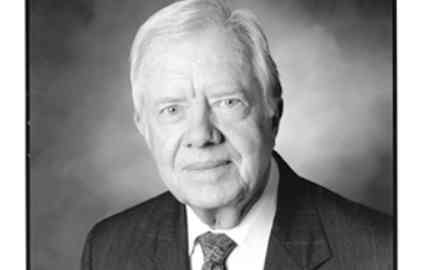
Jimmy Carter

Jimmy Carter

If fully implemented in dozens of sites throughout Syria, this effort to secure the chemical weapons would amount to a cease-fire, with a large U.N. peacekeeping force deployed. In the best of circumstances, this could lead to convening the Geneva peace conference, perhaps including Iran, that could end the conflict.

Some have predicted catastrophic consequences to the credibility of President Obama and our country if Congress were to reject his request for approval of military action against the Assad regime in Syria. These dire predictions are exaggerated. It is no reflection on the president that he expressed his decision clearly to our citizens and to the world, properly sought congressional concurrence and has done his utmost to implement his decision by securing necessary votes in the House and Senate. All U.S. presidents have been forced to endure highly publicized rejections of major proposals concerning both domestic and international issues. This is to be expected in any democratic nation, as has occurred recently in Britain and might soon happen in France.

It requires a lot of political courage to risk a public rejection, especially when the decision is believed to be right but known to be unpopular with the public, many allies and top military leaders. There is a special problem when the Security Council is divided on an issue the United States considers crucial and when our NATO allies refuse to take a stand. It is well known that some of the president’s political adversaries will not support any conceivable proposal he might make, that dovish members of Congress are likely to oppose military action and that some congressional hawks want strong and sustained action to change the course of the Syrian civil war. Going ahead with limited military action after a rejection by Congress would amplify many of these critical voices.

The president has wisely refused to answer media questions about how he would proceed if his efforts failed in Congress. If and when a vote takes place, there will be many factors involved, but the assumption of compliance is best because supportive votes would be lost by the president saying he would ignore a negative vote. Many legislators will be looking, at least in part, for popularity with constituents who strongly oppose using force. For those who are eager to see a strike against Syria, a presidential pledge to attack without approval would make it possible to achieve their objective without alienating voters back home. And for those who oppose military action but are willing to alienate constituents because of loyalty to the president, his pledge to ignore a congressional decision might lessen their commitment to him.

Despite all of the back and forth, some facts about the situation are generally accepted. Incontrovertible proof has been presented by Secretary of State John Kerry that there has been horrific use of chemical weapons in Syria. The international community should take concerted action to discourage or prevent a repetition of this crime. Although Security Council condemnation of Syrian President Bashar al-Assad is not possible because of division among world leaders about who is responsible for the atrocity, and a strong condemnatory resolution is likely to be vetoed, the ultimate goal of deterring future use of weapons of mass destruction would be greatly enhanced if the major powers were unanimous in their commitment.

Many members of Congress are still in a quandary concerning the ultimate consequences of an attack. The Syrian regime has had adequate time to intermingle war materiel and civilians, and more noncombatants in Syria will be vulnerable to U.S. missiles and bombs. Any casualties among them will be exaggerated and exploited to bring additional condemnation on the United States within the Arab world. The effect of limited airstrikes would be transient at best, but a sustained and robust action is more likely to incur a deeper and more lengthy U.S. involvement and result in additional waves of refugees.

Despite the claims and counterclaims that have surrounded the chemical attack near Damascus on Aug. 21 and an unknown number of earlier attacks, the issues are now clearly defined. The main goals of condemning the use of these outlawed weapons and preventing their further use can still be realized by concerted international action.

Jimmy Carter is former president of the United States.


Editorial: Don’t rush water bond talks

Publisher’s note: This editorial is from the Sept. 5, 2013, Modesto Bee.

With dry conditions igniting fires statewide and reservoirs dropping ever lower, state lawmakers should be thinking about water. The good thing – they are. They are thinking about a 2014 water bond.

Both chambers have produced legislation to rescind and scale back the bloated $11.14billion water bond that, if left unchanged, would head to the ballot in 2014 and face certain defeat. The total amounts would be $5.6billion in the Senate version vs. $6.5billion in the Assembly bill. Both would invest in clean drinking water, an issue that has risen in priority – particularly in the San Joaquin Valley – since the Legislature originally approved a bond proposal. Both have pots of money for water storage and watershed projection.

There are differences between these two pieces of legislation, both in substance and the process that produced them. Senate Bill 42, by Sen. Lois Wolk, D-Davis, was drafted following several stakeholder meetings, including ones with Wolk’s constituents in the Sacramento-San Joaquin Delta. As a result, it includes $500million in proposed investments in Central Valley Flood Protection Plan projects, a priority for flood-threatened Delta and Sacramento residents. It also gives the Legislature more control over how storage money is spent, a priority for many environmental groups.

Read the whole story


Letter: TRPA members don’t speak the truth

Publisher’s note: This letter was sent Sept. 3 to the California Senate president pro tem and speaker of the California Assembly.

Dear Senator Steinberg and Speaker Perez:

This letter is in response to the letter dated Aug. 22, 2013, from the California appointees on the Tahoe Regional Planning Agency board addressed to members of the Senate and Assembly. As citizen watchdogs, we are residents, business and property owners and, most importantly, have been deeply engaged in local issues at Lake Tahoe since the formation of the 1987 Regional Plan.

In their letter you are asked to vote for SB630 thereby endorsing the new Regional Plan update. While their rationale for doing so may, at-first-glance sound reasonable, there are serious errors of logic, omissions, and statements that are not grounded in the facts at Lake Tahoe.

Intentional or accidental, their narrative is fiction unsupported by the reality of Tahoe’s natural and man-made characteristics.

Supporters of SB630 assert that to preserve the bi-state Compact it must be amended. Yet they insist the amendments don’t change the Compact because the amendments are already in existing law and part of established practices.

The two amendments to the Compact are as follows: The first “requires weighing economic factors in decisions,” and the second “puts the burden of proof on the party who challenges a decision of TRPA.” After chastising the Sierra Club for arguing that these changes will “lead to severe environmental degradation,” the letter affirms that the provisions already exist in the Compact.

The letter states, “The bi-state Compact already requires TRPA to maintain the social and economic health of the basin. There is no way this recitation of existing policy leads to environmental degradation.” Similarly, regarding the burden of proof change, “This, like the other amendment, is nothing more than a re-statement of existing law.”

Why are the two amendments, described in the letter as “modest” and “restatements of existing law,” so necessary to proponents? The answer is obvious to those of us who have been engaged in the RPU process since its inception. These amendments will be used by the TRPA to prioritize economic considerations above environmental ones, turning the intent and purpose of the bi-state Compact upside down.

The Regional Plan update does not simply “update” or correct practical weaknesses in the 1987 plan; it rewrites the plan using the pretentions of “smart growth” to sanction corporate resort development rather than updating the Plan to fulfill the bi-state Compact’s original purpose.

The evidence and proof of this assertion can be found in the process and outcome of recent TRPA approvals of Boulder Bay Resort, Homewood Mountain Resort, and the Highway 28 lane reduction. All three projects presupposed conformance to smart growth planning principles on the surface, but when applied in the small town Lake Tahoe context became mired in controversy.

The projects have not been built yet, but were intended to inform and guide the RPU. Instead the same misuse of principles that gave rise to them has been carried into the RPU.

The RPU process did not begin in 2011. It began in 2006, with a new agenda initiated by the new executive director of TRPA, John Singlaub. A “new urbanism” vision was imposed on Lake Tahoe communities by TRPA’s new leadership that promised idealistic solutions described in very general but attractive terms.

The concepts, touted as “smart growth” planning principles, including “high density,” “mixed- use,” and “compact development,” aimed at creating “pedestrian friendly, livable, walkable, and sustainable villages,” and “gathering places.” This “smart growth” lexicon, designed to lure and captivate unknowing progressives, was co-opted, misconstrued, and marketed to portray corporate resort developments as nostalgic and quaint “villages.” Such wrapping of environmentally dangerous development in pleasant environmental rhetoric is not new; it is known as “green-washing” and regularly accompanies corporate resort developments from Colorado to California.

“Smart growth” principles originated as a thoughtful alternative to urban sprawl, redirecting such undesirable growth into more efficient and sustainable patterns. While progressive in some locales such as Portland, Oregon, which have large resident populations and suburban sprawl, it doesn’t fit Tahoe. Indeed, the 1987 Regional Plan, consistent with the bi-state Compact, ended sprawl development by prohibiting any further subdivisions of land. Therefore, since Lake Tahoe has no sprawl pressures, densifying town centers does not redirect growth, it simply adds population.

Raising building heights and increasing densities immediately clash with the limited road and utility infrastructure, and most importantly, contravene established environmental thresholds.

The term “smart growth” as a description of corporate resort development misleads the public into following only one means of economic redevelopment. Most of the small communities around the lake have historically followed a natural and democratic de facto model of redevelopment known as “Main Street.” Communities grow at a pace and scale appropriate to local residents, and from the ground up. In 2006, the practice was ended by local jurisdictions (the counties that border the lake) in favor of TRPA’s high-density corporate-owned and Wall Street financed resort developments.

In 2007, Nevada casino/resort developers and the ski resort industry incorporated the phrases associated with “smart growth” into their clever marketing campaign. These interests captured the TRPA and its Board and gave rise to TRPA’s Community Enhancement Program (CEP). The espoused intent was to incentivize projects that promised to embrace these principles when they actually promoted corporate resort development. When the dust settled, however, only Boulder Bay Resort and Homewood Mountain Resort were approved. Still, the TRPA staff continued the vision, and thereby the deception, by codifying CEP provisions into the RPU.

Finally, in 2011, Nevada passed SB271 which threatened Nevada’s pull-out of the bi-state Compact unless an RPU suitable to their demands was passed by TRPA. After the 2011 Tahoe Summit, TRPA intensified the campaign for an RPU that would satisfy development interests using SB271 as the reason for urgency and a very tight timetable. New staff was hired to generate new policy language and write the corresponding code provisions at a pace and in a manner that made it impossible for meaningful engagement by the environmental community and concerned citizens. This intention was clear and the “Update” process was rammed through.

From late October 2011, through February 2012 TRPA staff pushed through countless changes to the Codes and Ordinances. We attended all 15 TRPA Board Committee meetings, commented at every meeting, and asked detailed questions which were mostly ignored. At every meeting, TRPA’s staff presented policy changes already designed and vetted by resort industry lobbyists behind closed doors. After pressing TRPA about the source of the December 2012 deadline, which was not in SB271, we were finally told it was just an informal and arbitrary deadline.

A bi-state group “consultation process” was initiated at this time ostensibly to hammer out compromises of particular issues. It was comprised of several resort industry proponents and two inexperienced environmentalists who were mostly ignorant of both implementation problems of the 1987 Plan and the history of the RPU process. California’s Secretary of Natural Resources Laird arrived late to the scene but just in time, and with orders, to accelerate the campaign and meet the deadline.

The so-called “compromises” were manipulated to appear as compromises; e.g. increasing the level for unilateral local jurisdiction project approvals (in town centers) from 15,000 to 150,000 sq. ft, and then compromising on 90,000 sq. ft. (The largest single story building in Kings Beach is the Safeway Store at only 38,000 sq. ft.) This was hardly a “compromise.” Rather, the two young and new environmentalists were manipulated into believing that it was.

The bi-state consultation process ignored entirely the unsustainability of large resort development along with several other central issues because they were not on their agenda for discussion. There was blind faith that local jurisdictions, with their expanded delegation authority over large scale development, would somehow temper their lust for more tax revenue, and willingly sacrifice revenue for accountability to environmental thresholds. The deck was stacked and there was no stopping this freight train. Not surprisingly, therefore, the letter’s statement “… these compromises limited the levels of development …,” has only a tiny sliver of truth, just enough to allow clever people to spin what unknowing people want to hear.

The letter refutes Sierra Club statements that the RPU will urbanize Lake Tahoe by calling them “inaccurate,” because there “will be no new tourist accommodation units allocated.” But for 11,000 motel units the RPU allows conversion of a 300 sq. ft. motel room into an 1,800 sq. ft. fractional condominium with multiple bedrooms, baths and kitchens. Each unit is considered the same “tourist accommodation unit” (TAU) with the same impacts on the local infrastructure and the environment. Such morphing of TAUs meets the needs of corporate resort developers. The growth is not in number of units but in the allowed size, conversion of entitlements, and transferability of the units.

The letter continues that the RPU will “encourage removal of development from sensitive areas.” This provision already exists in the 1987 plan, but it is repackaged to appeal. The more complete truth is that the RPU transfer provisions apply to all property, whether it is developed, pristine forest, sensitive or not. Every tool has been codified to generate additional units for corporate resort developments.

The letter asserts “the RPU is a balanced plan which will facilitate environmental improvement and threshold attainment at Lake Tahoe.” The words are what everybody wants to hear, but the evidence undermines it. Achieving environmental thresholds means acknowledging all impacts to physical expansion and staying within the bounds of threshold monitoring. Without objective, consistent, and neutral monitoring of water and air quality indicators, there is no scientific monitoring of over-development.

The TRPA was granted the authority to promulgate laws, enforce the laws, and monitor the results. Unfortunately, however, the RPU does not strengthen threshold monitoring capability or enforcement. Instead, in addition to having no consequences for failing to reach thresholds, the TRPA continues to control measurement procedures for an easy political spin of negative results. This practice has corrupted the process and led to intense controversy.

The letter promises “bonus units are largely intended for affordable housing so workers can live closer to the job, thereby reducing traffic and air pollution.” The reality for both Boulder Bay and Homewood Mountain Resort is that only a token portion (less than 10 percent) of such units can be called affordable units. Such a figure represents a very small number of employees compared to the total employees, so there is no perceptible reduction of traffic or air pollution. Increased traffic from visitors/owners using the facility coupled with 90 percent of new employees will dwarf the traffic “reduced” by a few onsite affordable “bonus” units.

Finally, the letter spins Greenhouse Gas (GHG) legislation as the “driver” behind high density development at Lake Tahoe. Again, the purpose of the California legislation (AB32, SB375, and SB575) was to encourage concentrations of new development into major metropolitan areas, which would otherwise sprawl beyond existing suburbs. The legislation was never intended to drive the growth of the tourist accommodation industry throughout the Lake Tahoe Basin.

An often overlooked loophole in the GHG calculation is that the basis of measurements is year-round residents. In metropolitan areas the visitor accommodations comprise a small portion of the economy compared to total year round residents. But the Tahoe basin has an unusually high number (about 60 percent) of second/vacation homeowners who are exempt from GHG contributions at the lake because they have already been counted at their primary residences. The resort development industry, consequently, is able to capitalize on this loophole by converting small motel units into shared vacation condominiums without technically adding any GHG. Summer and winter populations could increase significantly, generating much more GHG, but no violation of state law occurs, and the spin claims a reduction of GHG at Lake Tahoe.

If SB630 passes, thereby endorsing the RPU, and the Compact is amended as TRPA desires, you will see many more very large corporate resort developments. Locals paying already high costs for utilities will suffer further rate hikes to pay for expanding the capacity of water, sewer, and power required by the corporate resorts. The controversies will intensify as the already approved projects are built, exacerbating traffic congestion, and compounding the violation of environmental thresholds. Actions to correct the continued degradation of the lake will be harder to impose as more money and interests are tied to physical expansion and profits to distant owners. It is not new. It has been happening all across the country and Tahoe is simply the latest target.

In closing, you must ask yourself about the source of your current perception of the RPU. Given your multiple responsibilities and limited time, one would presume that you would have done little personal research regarding this topic. Instead, you have believed “reliable sources” such as Secretary Laird, the TRPA’s planning staff, other policy makers, and so on. We all do this. The problem is that this can lead to what political psychologists refer to as “groupthink” whereby a perception of reality expands not due to its merit but rather because of those who support it, whether they understand it themselves or not.

History is replete with such follies from the Bay of Pigs, to Iraq’s WMD, to the cause and effect economic beliefs that led to America’s recent economic collapse. Sometimes it is an accidental error tied to sloppy science or intelligence and sometimes it is a deliberately manufactured lie.

In this case the groupthink is tied to the general acceptance of a logical fallacy where an underlying assumption goes unquestioned (that “smart growth” principles make up the best template for future growth) in its application to the realities of the Lake Tahoe Basin. The result is that the corporate resort development model ordained by the RPU is inconsistent with the bi-state Compact but few people know it.

The fantasy that sounds terrific becomes believed because reliable people heard it voiced by reliable people. Then cognitive dissonance sets in rejecting any information or science to the contrary.

Indeed, two signatories of the letter are new California TRPA board members, have no direct knowledge of the RPU process or local governmental dynamics in the Tahoe basin surrounding it, yet endorse the letter anyway, evidently to “go along to get along.” That is not the kind of decision making that we want to have governing Lake Tahoe.

Sincerely,

David McClure, president North Tahoe Citizen Action Alliance

Roger Patching, president Friends of Lake Tahoe

Ann Nichols, president North Tahoe Preservation Alliance


Letter: TRPA board members lobby for SB630

Publisher’s note: This letter was sent Aug. 22 to the California Senate president pro tem and speaker of the California Assembly.

Dear Senator Steinberg and Speaker Perez:

The undersigned are California appointees to the Governing Board of the Tahoe Regional Planning Agency (TRPA). We have been appointed by either the governor or the Legislature or are local government representatives. We write to express our support for SB630 and, in doing so, we speak for ourselves and not TRPA which has remained neutral on all legislation in either state involving the bi-state Tahoe Regional Planning Compact.

There are two principal reasons why we support SB630. First, the bill maintains the bi-state Compact and specifies that the two states will cooperate in implementing the new Regional Plan update adopted by TRPA on Dec. 12, 2012. The second reason is that passage of this bill will facilitate renewed joint efforts by the two states to help TRPA achieve the environmental thresholds as required by the Compact. Below we elaborate on the importance of these two components of SB630.

Prior to the adoption of the RPU there had been years of controversy and turmoil about what an updated regional plan should do. After direction from state and congressional leaders at the 2011 Lake Tahoe Summit, TRPA began an in depth review of possible provisions which would be included in the regional plan. A special committee of the Governing Board was assigned the responsibility for developing these provisions and bringing its recommendations to the full board. After at least 15 hearings, the committee completed its work but there were dissents on numerous key environmental planning issues. The two states stepped in and convened a bi-state consultation process, which was co-led by former Assemblyman and current Natural Resources Secretary John Laird. This stakeholder-driven process resulted in compromises which garnered the support of the vast majority of business, environmental, educational, scientific, and local governmental interests. For example, these compromises limited the levels of development; and, encouraged removal of development from sensitive environmental areas. These changes to the proposed RPU caused major environmental interests to change from opposition to support for the plan. We believe that the RPU is a balanced plan which will facilitate environmental improvement and threshold attainment at Lake Tahoe.

Despite all the efforts made to find common ground, the Sierra Club has been outspoken in its opposition to the RPU, pursuing litigation to have the plan overturned in Federal court and, now, opposing SB630. Unfortunately, the Sierra Club’s statements about the RPU are inaccurate. We will detail some of them here: The club has stated in effect that the new Regional Plan will urbanize Lake Tahoe to the detriment of the lake’s clarity and air quality. This is not the case. In fact, under the RPU there will be no new tourist accommodation units allocated. New hotels or motels will have to acquire matching existing units from sensitive lands, restore the site where they are located and transfer the units to the new location. The two new Resort Recreation Districts, the subject of much controversy and which are either located in already developed urban areas or adjacent to such areas, can have no development except by transfer and retirement of existing development. There are 600 bonus units available over a 20-year period for residential use, but these bonus units are largely intended for affordable housing so workers can live closer to the job, thereby reducing traffic and air pollution. The club has stated that there are 3,200 new residential units allowed under the plan. Six hundred of these are the bonus units just mentioned and 2,600 are units allowed on lots that were subdivided before the 1987 plan and where the owners have property rights. These are not new units created by the RPU. The club is correct in pointing to a new allocation for commercial use but most observers, including business interests, believe this will never be used. There is a significant surplus of existing allowable commercial use in the old plan that was not used.

The Sierra Club also alleges that high densities within existing urbanized town centers are going to lead to excessive development. Those provisions of the RPU, driven by environmentally significant California law (e.g., AB32 and SB375), call for concentrated development to reduce greenhouse gas emissions. Any additional densities within town centers will be tempered by the transfer of development provisions, discussed above. The RPU is a balanced approach to environmental improvement through proper location of new development and redevelopment of outdated development. In fact, old existing development is causing most of the lake’s clarity problems.

Our second reason for supporting SB630 is to bring a stop to the prospect of ending the bi-state Compact. Earlier this year, Nevada enacted legislation reaffirming the bi-state Compact. It is now California’s turn to live up to our side of the bargain. The two states reached an agreement in May which renews the two states’ commitment to work together to do what’s best for the environment and economy of Lake Tahoe. Included

in this agreement and reflected in SB630 are two modest proposed amendments to the Compact that Congress will have to enact. The Sierra Club has argued that these changes will lead to severe environmental degradation in the basin. This is incorrect. One of the amendments would require weighing economic factors in decisions made by TRPA. The bi-state Compact already requires TRPA to maintain the social and economic health of the Tahoe Basin. There is no way this recitation of existing policy leads to environmental degradation. The other amendment puts the burden of proof on the party who challenges a decision of TRPA. This, like the other amendment, is nothing more than a re-statement of existing law. Petitioners in lawsuits challenging government agency decisions have the burden of proving that the government agency made a mistake. It has always been that way and this amendment simply expresses that legal requirement in the bi-state Compact.

In summary, we believe that SB630 is key to preserving the bi-state Compact and the national focus on the protection of Lake Tahoe. We urge you and your colleagues to adopt SB630 so this bill, which reflects the agreement between the two states, can be presented to the governor for his signature.

Sincerely,

Casey Beyer, E. Clement Shute Jr., Elizabeth Carmel, Larry Sevison, Hal Cole, William Yeates and Norma Santiago


Letter: LTCC apologizes for press release

To the community,

As the director of College Advancement and Community Engagement for Lake Tahoe Community College, I would like to apologize for the poorly written press release, Insight Into Russian Language, Culture and Politics that I released Sept. 3.

I gave the false impression that LTCC instructor Maria Mircheva would be discussing “homosexual behavior” in her Russian I Conversational class. That was totally incorrect.

Since politics is a topic of conversation for the class, I was implying that the class might have a conversation on the new Russian law that recently passed.

TheGlobalEdition.com wrote, “A High Court in Moscow confirmed [Aug. 22] the decision of the city’s authorities to ban the existence of gays in the Russian capital for the next hundred years”.

Russian 141 focuses on vocabulary, idiomatic expressions and Russian customs. To imply “homosexual behavior” would be a topic of discussion was purely wrong and inappropriate and I apologize to anyone who may have been offended by the misstatement.

Sincerely,

Peter Bostic, public affairs officer Lake Tahoe Community College


Letter: Anonymous couple helps Bread & Broth

To the community,

For over 24 years, Bread & Broth has been the recipient of donations made by concerned and generous anonymous donors who support B&B’s goal of providing hot nutritious meals to the needy of South Lake Tahoe. Bread & Bread would like to acknowledge and thank a local couple who anonymously sponsored two Adopt A Day of Nourishment evening meals, one on Aug. 19 and the second on Sept. 2.

In their correspondence, the couple expressed their desire to encourage others to help feed the needy.

“The thank yous we saw in the newspapers made us aware of the fact that we could sponsor dinners,” they wrote. “What a great opportunity for those of us who have plenty of food to donate to those who do not. Thank you for the wonderful work you do at Bread & Broth.”

Bread & Broth’s work of feeding the hungry on Monday evening at St. Theresa Church Grace Hall and at the Lake Tahoe Community Presbyterian Church on Friday is only possible due to the donors, sponsors and volunteers who support the program.

B&B appreciates the many years of support from the South Lake Tahoe community.

To help B&B as a donor or sponsor, please contact me at (530) 542.2876 or carolsgerard@aol.com.

Carol Gerard, Bread & Broth


Opinion: South Lake Tahoe education officials need lesson about the impact of words

By Kathryn Reed

Tolerance and teaching differences is part of what our educational institutions are supposed to be about. Lake Tahoe Unified School District and Lake Tahoe Community College get an F this week for having done the opposite.

Both institutions were called on the carpet by Lake Tahoe News and neither responded.

LTUSD’s moral and ethical breach was more egregious because of how it was handled, the age group impacted and audience receiving the information.

Angie Keil, secretary to Superintendent Jim Tarwater and de facto public information officer, regularly sends out emails to the district and anyone in the community asking to be on the list.

Her last email came out Sept. 5. In it she included an item state Sen. Ted Gaines, R-Granite Bay, had sent to constituents on Sept. 3. That item was about the bill signed by Gov. Jerry Brown last month that allows transgender students to choose which bathroom and locker room they want to use and which sports team to play on based on their gender identity.

Gaines wrote in his newsletter, “To my shock and that of many of my constituents, Governor Brown signed Assembly Bill 1266 into law last month, effectively making California school bathrooms, locker rooms and other, previously single–sex areas into co–ed [stet] facilities.”

Keil in her email sent out all of Gaines’ opinion on this subject. But she also added her own emphasis. She made the words I underlined a larger point size. This is the first mention of the bill by Keil in one of her mass emails.

This is the email LTN sent to Keil on Sept. 5 that was copied to Tarwater, the five school board members and the principals at South Tahoe High and South Tahoe Middle schools:

Angie,

I was surprised and disturbed when you reprinted Ted Gaines rant from his newsletter about the transgender bathroom issue at schools. And even more alarmed when there was no context to it. As in, is there an issue at any of the schools here with transgenders, what is being done to help these youngsters to feel safe, and others to understand the rights of all?

It came across as though you were making a judgment call. A negative judgment.

And your email not only goes to all LTUSD employees, but many community members.

I found this inappropriate and unprofessional and hurtful to a segment of the community that is already marginalized. I also found it to be politically charged.

Perhaps someone could tell me how LTUSD is going to deal with this law? Is there an issue? What kind of education do kids get about transgender?

I’ve cc’d Ivone and Beth here with the belief they would be the principals with the greatest impact.

Kae

No one has responded.

But that does not mean I am alone in my feelings and beliefs about her email.

Here are comments from teachers and classified staff, who fear retribution and do not want their names used.

• I’m disgusted that she is writing this as a representation of how our district views this law … given her role as the voice of the district in these newsletters.

• Very unsafe way to present this obviously sensitive Assembly bill.

• She always includes her own opinion and gets away with it.

• Out of line. She clearly has a personal agenda.

• Does she read her own district’s rules about editorializing and sending out personal emails?

• We get threatened with write-ups if we so much as offer a couch to someone to use in his or her classroom. And she can write this?

• The opinion piece treats this as if everyone will be rushing the bathrooms and pretending to be transgender. That is ignorant and diminishes the fact that these are real people who are not faking it.

There is a transgender teen at South Tahoe High School who is out. Lake Tahoe News was told she was looking forward to this school year to be able to use the rest room facilities she felt most comfortable with.

At LTCC the issue also involves what the PIO emailed.

Peter Bostic on Sept. 3 sent a press release to the media about the new Conversational Russian I class being offered this fall.

The email talks about how the class will delve into current affairs in Russia.

(When I took a basic French class at LTCC the curriculum was not political in nature, but instead about helping us learn the language with some basics to help us get by if we were to visit France.)

The press release said, “As any news junkie knows, Russia is making headlines lately for banning homosexual behavior, for granting asylum to Edward Snowden (the government contractor who leaked information about the National Security Agency’s surveillance programs), and for the strained diplomatic relationship between the United States and Russia.”

This is the email I sent to Bostic and President Kindred Murillo:

I was a bit taken aback by the phrase “banning homosexual behavior” in the press release. It reminds me when people say the “gay lifestyle” — I’m still trying to figure out what that means. Maybe you could define heterosexual and homosexual behaviors for me.

No word from either of them.

The press release then quotes adjunct faculty member Maria Mircheva saying, “How and why these measures are working is worth a more careful cultural analysis. It is easy to label things as wrong and people as ‘bad’ without understanding their perspective.” And then the press release says, “To help explain that perspective, Mircheva’s class will host a number of guest speakers.”

So, from that logic can one then surmise that if we understand why people discriminate, it’s OK?

South Lake Tahoe has always been a little backward, but it’s 2013 people. While it’s perfectly fine to not like someone for whatever reason, it is not OK to teach that hatred in our public institutions or keep people on staff who publicly advocate for discrimination.


Opinion: Where is the empathy in children?

By Arlie Hochschild

Are the ideas on offer to reform America’s schools really the best we can come up with?

Texas has embraced reforms, for example, that call for increasing the number of charter schools and eliminating some of the exams required to graduate from high school, including one in world history. Iowa Gov. Terry Branstad just signed an education reform bill allowing parents who home school their kids to teach driver’s education. And 30 state legislatures have introduced bills authorizing some K-12 teachers to carry loaded guns to school.

But nobody seems to be talking about reforms addressing what President Obama, in a 2006 speech, called an “empathy deficit.”

Research suggests that there is such a deficit and that it is rising. In a review of 72 studies of American college students, University of Michigan psychologist Sara Konrath and her co-researchers compared students enrolled in the years from l979 to 2009. The 2009 students, they discovered, were 40% less likely to agree with the statements “I sometimes try to understand my friends better by imagining how things look from their perspective” and “I often have tender, concerned feelings for people less fortunate than me.” Over the same three decades, other researchers have found a growing proportion of college students who agree with the statement, “I will never be satisfied until I get all that I deserve,” and who feel they show “leadership ability.”

Arlie Hochschild is the author of, among many other books, “The Outsourced Self: Intimate Life in Market Times” and “So How’s the Family? and Other Essays.”

Read the whole story


Opinion: All is not well at Lake Tahoe

By Laurel Ames

On the shore of Sand Harbor Beach two weeks ago, state and federal lawmakers joined former Vice President Al Gore to celebrate modest improvements in Lake Tahoe’s clarity over the last two years and to laud the “cooperation” between California and Nevada toward ensuring the lake’s future.

Lost amid the pomp and circumstance of the 17th annual Lake Tahoe Summit, however, is the fact that due to recent actions by the very politicians who praised one another in Incline Village, Tahoe’s future is now murky at best.

The lake that was once the bluest in America now faces the very real prospect of becoming increasingly clouded by pollutants, fast spreading algae and aggressive water plants, with its spectacular mountain ridgelines and shoreline obstructed by new tall buildings, increased traffic and congestion around the lake.

That is because last December, the Tahoe Regional Planning Agency approved an innocent-sounding “Regional Plan Update” that upended more than three decades of carefully restrained growth rates and strong environmental protections. The old approach will be replaced with this radical increase in crowded areas and an equally radical reduction of protection measures.

Under the new plan, the planning agency all but abandons its primary mission: protecting Lake Tahoe. At the same time, the plan allows TRPA to cede its authority for planning and permitting to the same local governments that failed to protect Tahoe in the past.

The Coalition to Protect Lake Tahoe is speaking out to expose the fact that the plan allows more polluted runoff, traffic, smog, pavement and taller buildings – removing the firewall of environmental protection that the standards were intended to provide.

Sierra Club and Friends of the West Shore, represented by lawyers from Earthjustice, are legally challenging the new plan and opposing California Senate Bill 630, which would formalize TRPA’s new approach of placing economic desires on an equal footing with environmental protection, because we are determined to protect Lake Tahoe.

While the Sacramento Bee’s editorial “Regional pact, however imperfect, is best chance to keep Tahoe blue” (Aug. 25) acknowledged that the plan is “imperfect,” the Bee hinges its hopes for the lake’s future on implementation of the plan and more federal funding.

Yet even the best designed “implementation” and more federal funding can’t solve fundamental flaws such as the lack of proper monitoring and enforcement.

While the editorial rightly acknowledges the need to reverse deterioration of Lake Tahoe, there is no margin for error when it comes to absorbing any new increase in pollutants. The Regional Plan update is pushing the lake to its tipping point – the moment when pollutants overwhelm the ability of the lake to be restored.

Laurel Ames is conservation co-chair of the Tahoe Area Sierra Club and member of the Coalition to Protect Lake Tahoe.


Opinion: Time to make forests healthier

By David A. Bischel

The Rim Fire is one of the largest fires in recent California history. It highlights how every Californian has a stake in our forests, no matter how far away you are from the flames. Thousands of firefighters are working to attack the fire before it destroys the watersheds of Hetch Hetchy Reservoir – the water supply for millions in the Bay Area.

Many of our forests are overgrown because of more than a century of fire suppression and lack of forest management. Dense and unhealthy forests make fires burn hotter and faster. They then become too dangerous to attack on the ground, limiting the ability of our firefighters to contain the fire quickly.

As California experiences the effects of climate change, our forest environment will become hotter and drier. More severe and more frequent fires are predicted. About three-quarters of the state’s water, millions of homes, not to mention a multibillion-dollar tourism industry, are just a few of the benefits we reap from our forests. So, suppressing fires to protect our natural resources is not bad policy in itself, but it must be matched with efforts to create stronger, healthier forests that are more resilient to wildfire.

One way to begin to strengthen our forests is to burn them. “Prescribed fire” – intentionally set and closely controlled fire – is an effective tool, and we should not ignore its benefits. In California’s forests, fire is a natural process that benefits forest health by eliminating brush and trees that would fuel hotter, more intense fires. Low-intensity fires also can rid the forests of disease and insect infestation. In the Sierra Nevada forests, where the Rim Fire is burning, low-intensity wildfires historically occurred every 10 to 20 years.

But prescribed fires have potential drawbacks, including smoke and the potential for escape, which preclude its use in many forested areas bordering homes.

Another important tool is forest thinning, which is a process of selectively removing thick vegetation while leaving the majority of larger, more fire-tolerant trees in place. Trees from the thinning can be sold to cover the cost of the program. Thinning projects put people to work, create funding for the state and protect us from dangerous, costly wildfires.

When thinning is used as a part of an integrated strategic fire-prevention approach, it can make forest lands not only resilient after wildfire but also resistant to erosion, which harms water quality. Thinning also can create openings or paths that can be used as escape routes and locations where firefighters can safely attack the flames.

Forest management tools like prescribed fires and thinning imitate natural processes so that when fires do occur, our watersheds, our wildlife and our communities are all protected.

David A. Bischel is a registered professional forester and president of the California Forestry Association.