Letter: Cash mob a success at Gunbarrel

To the community,

The Cash Mob lunch on Oct. 8 at Gunbarrel Tavern & Eatery was a success.

Fifteen people showed up to try a variety of menu items including beer can chicken, shrimp ‘n grits, and jalapeno bacon mac ‘n cheese at the newest restaurant in the Heavenly Village.

Gunbarrel Tavern officially opened their doors on Aug. 30 with a ribbon cutting and grand opening ceremony. TahoeChamber’s Cash Mobs help grow the local economy by supporting local businesses in an innovative fashion – in the case of Cash Mobs – guests just show up and purchase lunch.

Cash Mobs also help support TahoeChamber’s commitment to providing relationship building opportunities and promoting the community. On behalf of the chamber board, staff, and ambassadors, a huge thank you goes out to the staff at Gunbarrel Tavern and the lunch mob attendees.

Jessica Cunningham, Lake Tahoe South Shore Chamber of Commerce


Opinion: Help available to find health insurance

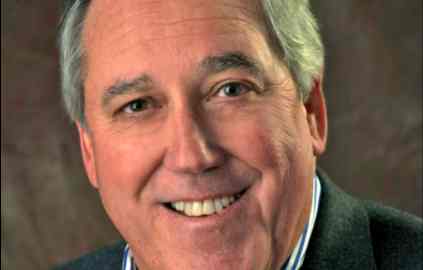
By John Williams

The Affordable Care Act, commonly known as Obamacare, is in full swing. Effective Oct. 1, Americans are able to enroll for the state insurance programs for coverage starting Jan. 1.

Two state insurance exchanges exist for South Shore residents; Covered California for California residents and Nevada Health Link for Nevada residents. Both exchanges allow for you and your family to compare health coverage options and choose the one that best fits your needs and budget. Through these exchanges some residents may even be eligible to receive financial assistance to make health care more affordable. This marketplace will help community members to shop online, over the phone and in person to find the right health insurance option for them. Individuals and small businesses can compare different health insurance plans and learn whether they qualify for federal subsidies and tax credits.

John Williams

John Williams

Additionally, residents will be able to determine if they are eligible for low-cost or no-cost health coverage through Medi-Cal and Medicaid, as these government programs have been expanded to cover more people than in the past.

Barton Health has been proactively working towards being able to assist our residents with getting health care coverage and access to health services. Over the past several months, we have worked to:

1) Contract with insurance companies working with the exchange in California. Barton Health is continuing to connect with insurers in Nevada working with Nevada Health Link to determine coverage options at Barton facilities for Nevada residents.

2) Expand and remodel the Community Health Center (formerly the Community Clinic) to address the anticipated increase in community members seeking preventative and treatment-based health care.

3) Become a Covered California official Community Outreach Partner and Certified Enrollment Entity. By the end of October, Barton will have 19 Covered California certified enrollment counselors on staff to assist community members with in-person support for insurance exchange sign-ups. Appointments with these counselors can be scheduled through our Heath Care Reform hotline at (530) 600.1984.

Americans who do not sign up for health coverage for 2014 will face federal penalties. These penalties equate to $95 or 1 percent of income, whichever is greater. A family will be charged a penalty of $95 per uncovered adult and $47.50 per uncovered child (up to $285 for a family) or 1 percent of the family’s income, whichever is greater. These penalties increase each year for those who are not covered.

Many have asked if care can be given across the state line for exchange coverage. Out-of-state coverage is subject to each individual health plan’s specific policies and network coverage as detailed within the health insurance policy. Each health insurance policy has a specific list of providers that are in the network for covered services. It is important for community members to check with each individual plan offered to confirm that your provider’s services are covered under that plan.

We are proud to be of assistance to our community members, as determining the best health care option for you can be overwhelming. To find out more about the state exchanges, California residents may go online and Nevada residents may go to this website. For your convenience, Barton has created a website with useful information on the reform changes including helpful links, videos and frequently asked questions.

John Williams is president and CEO of Barton Health.


Opinion: Obama is obstructionist to compromise

By Eric Cantor

For three years, Congress and the White House have been building to this moment. Not the debt limit or Obamacare specifically, but this clarifying moment of Washington dysfunction. President Obama has led us here by continually thwarting the will of Congress and dismissing its role in our constitutional republic. This must end.

The president not only has refused to negotiate on issues of debt and spending but also has mocked the very idea of engaging with Congress. President Obama has repeatedly made clear that he feels it is beneath the office of the presidency to work in a bipartisan way with the legislative branch.

Eric Cantor

Eric Cantor

The Constitution gives Congress the power of the purse and the power to borrow. The president was given the power to veto measures, including those related to spending and borrowing. These separate powers created checks and balances but also forced the executive and legislative branches to work together.

As James Madison wrote in Federalist No. 48, “It is equally evident, that none of [the branches of the federal government] ought to possess, directly or indirectly, an overruling influence over the others, in the administration of their respective powers.”

In the 224 years of our nation’s history, one party has controlled the House, Senate and White House for 130 years. President Obama enjoyed two of those years, and it’s no surprise he wishes that were still the case. Yet while 28 of 44 U.S. presidents have found a way to lead in divided government, this president has not.

In 2006, then-Sen. Obama said: “Washington is shifting the burden of bad choices today onto the backs of our children and grandchildren. America has a debt problem and a failure of leadership. Americans deserve better. I therefore intend to oppose the effort to increase America’s debt limit.”

Seven years later, and after the nation’s debt had doubled, President Obama refuses to even sit at the same table as Republicans and work to solve the “debt problem” he correctly identified as a senator. That is a much larger failure of leadership.

This has, unfortunately, been the case since 2011. President Obama has often chosen to unilaterally circumvent the law under the guise of executive authority. Most recently, that was demonstrated in July with his delay of Obamacare mandates for corporations, but it has been a hallmark of this presidency.

Courts have held that President Obama violated the Constitution with certain “recess” appointments, ignoring the required consent of Congress. He has abused executive-branch “rule making” rather than working with Congress to pass laws. He has ignored the letter of the law when it comes to religious liberty and work requirements for welfare.

President Obama has used executive orders to unilaterally change U.S. immigration laws. His administration has used waivers to change laws such as No Child Left Behind to compel states to adopt new policies.

In some of these instances, the president attempted to garner statutory authority, failed to do so and then acted in defiance of that. In other instances, he never bothered to find consensus and ignored Congress from the outset, usually contending that he simply had no choice. This is no way to govern, and it cripples the system of checks and balances that our Founding Fathers envisioned.

Working in divided government is not new. As recently as 1995, President Bill Clinton worked overtime with House Speaker Newt Gingrich to reach bipartisan compromise over the debt ceiling and to end a government shutdown.

Neither Clinton nor congressional Republicans got everything they wanted from those negotiations. They found consensus, and that consensus moved the country forward; they managed to balance the budget because they worked together.

Just two years ago, President Obama and House Republicans came to an agreement to raise the debt ceiling and implement much-needed reductions in spending. It wasn’t a perfect agreement, but it, too, moved the nation forward. For the first time since the Korean War, the United States will have two consecutive years of reduced nominal spending.

After that agreement, the American people re-elected a divided government. They expect us to work together just as it was done in 2011, 1996, 1995 and years before — and they will not accept one party simply refusing to negotiate. Mr. President, let’s sit down and talk. Let’s reach consensus and end the “my way or the highway” attitude once and for all.

Eric Cantor, R-Va., is the House majority leader.


Opinion: It’s up to us to define the forest’s future

By Mark Schwartz

The Rim Fire is nearly contained and will quickly fade from public consciousness. However, the fire has left a scar on a part of the Sierra Nevada that many of us hold particularly dear. How do we move forward to restore this vital watershed, and what lessons do we learn for the future?

Mega-droughts during the past several thousands of years are associated with wildfire events far more extensive than anything we have seen over the past century. In the Sierra, the fall rains have started, and the process of healing has begun. The forests will return.

Regeneration is nature’s process. Driving through Yellowstone National Park, the consequences of the massive 1988 wildfire remain apparent on the landscape. It will take several more decades for those trees to recover. We should expect a similar slow recovery in the Rim Fire, but mostly because some of the high-intensity burn areas are very large and far from seed sources. Many of us will never see mature forests in parts of this landscape again.

As long as the ground is bare, risk of landslides on steep slopes will remain high. Forests soak up water, so stream flows will increase, escalating flood risk for the coming years. Recovery will take decades in severely burned areas. In contrast, low-severity burn areas may look much like normal within a couple of years as the small, herbaceous understory plants quickly recover.

There are species that specialize in young forests. We should look with enthusiasm for these recovering forests over the coming years with the knowledge that fire, on balance, is what maintains biological diversity in the Sierra Nevada.

Through recent forest management practices, however, we have boxed ourselves into a future of increasing frequent and hot wildfires. Nevertheless, there is much we can do to reduce that risk and assist recovery of our forests and watersheds.

Our federal agencies have formed a Burned Area Emergency Response team, and more than 50 federal resource managers and scientists are evaluating what remediation measures are needed and how to prioritize them.

A critical question is: What kind of Sierran recovery are we aiming toward? Historically, deforested areas are replanted with the same species, using local seed sources. As climate changes, this might not be a successful strategy for ecosystem restoration. Further, federal budget cuts have resulted in great difficulty financing replanting on a broad scale. The agencies will need to be strategic about what and where to plant.

In Canada, foresters are planting more heat-tolerant mixtures of plant populations and species to build forests resilient to climate change. How far should our public agencies go in modifying the forest composition to create ecosystems ready for changing climates?

If we look at projected climates, there are places ravaged by fire where forests will be naturally replaced by chaparral and grasslands. Favoring management to prioritize historical conditions and wildlife values, or to minimize future fire risk is a social choice. Our agencies are making these decisions now.

Understanding the issues and considering what we choose our Sierra Nevada ecosystems to be will increasingly be part of the public debate.

This year has witnessed U.S. Forest Service and National Park Service funds originally targeted for other critical resource management activities swept up to pay for wildfire control. CalFire, which spent less than $20 million per year in the 1980s managing wildfire, now spends upward of $150 million per year. The Rim Fire alone cost more than $120 million. More fuels and increasing ignitions will result in more large wildfires, and more cost, in the coming years.

The fire is over, but the fiery debate about what, how much and where to plant is now set to begin. The U.S. Forest Service provides an online public forum for the general debate about forest management.

Figuring out how to pay for wildfire control and ecosystem restoration along with all of the other wildlife and recreational values that we seek from our national forests should be a grave concern for us all.

No lives were lost in the Rim Fire, but $121 million was spent containing the 402 square miles that were burned, and roughly 115 square miles of forest has been devastated. The fire gained added notoriety because it threatened San Francisco’s water supply and charred thousands of acres in Yosemite National Park. And yet the Rim Fire is a blip.

The Sierra Nevada has experienced fire for thousands of years, and the ecosystem has adapted to it. The Rim Fire is but one of more than 5,600 California wildfires to date in 2013, which is turning out to be a non-exceptional year: Both 2007 and 2008 had roughly three times as many acres burned.

Our forest losses are also partly a function of our failure to reduce fire hazards on private property. The Rim Fire was sparked by a hunter, but fires get larger in wilderness because fire crews are forced into high-risk situations protecting people and buildings. The consequence is an exposed ecosystem, and a bigger fire. Those living in the watersheds burned will face increased landslide and flood risk as a consequence of this fire. Those who depend on water in the Hetch Hetchy now bear an elevated risk to water supply. Human safety comes first, but we need to consider the cost of firefighting and how to share that cost among those who benefit from it.

Mark Schwartz is director of the John Muir Institute of the Environment at UC Davis.


Editorial: Calif. helping workers with rap sheets

Publisher’s note: This editorial is from the Oct. 4, 2013, New York Times.

The California Legislature passed a bill last month that bars government agencies from asking job applicants about criminal convictions until the agency has determined that the applicant meets minimum qualifications for the job.

This measure will help remove unfair barriers to employment that keep millions of qualified workers trapped at the margins of society. Gov. Jerry Brown should sign this sensible bill.

About 65 million Americans have criminal records that place them at risk of being shut out of work, often for minor convictions that occurred in the distant past or even for arrests that never led to conviction.

In addition, many people are shut out of jobs because of mistakes in criminal background databases that, even under the best circumstances, are difficult to get corrected.

Read the whole story


Opinion: Calif. GOP congressmen fine with shutdown

By Dan Morain, Sacramento Bee

Rep. Paul Cook, a first-term congressman from San Bernardino County, is not crazy, and he’s not radical.

But along with 79 of the wackiest conservatives in the House, Cook signed the letter that helped bring about the partial shutdown of the most powerful government the world has ever known.

“What a mess,” Cook said by phone from Washington, shortly before heading to the floor to cast more votes in the Republicans’ futile and probably self-defeating attempt to defund the Affordable Care Act.

Rep. Mark Meadows, a freshman from North Carolina, wrote the letter in August to Speaker John Boehner. FreedomWorks, the slick and heavily funded tea party group, helped line up support for it.

Most of the signatories to Meadows’ letter are from Southern and Midwestern states. No members from Oregon, Washington or Nevada signed it. But three members from this bluest of states – Cook, Rep. Tom McClintock of Elk Grove and Rep. Doug LaMalfa of Richvale – aligned themselves with Meadows. They knew exactly what they were doing.

Meadows, who represents the heaviest Republican district in North Carolina, won his seat last year with support from the banks, Koch Industries, the National Rifle Association and others including Boehner and House Whip Kevin McCarthy of Bakersfield.

In the letter, Meadows and his gang of 79 Republicans sought to link appropriations for Obamacare to Congress’ obligation to approve a continuing resolution to keep the government afloat after Oct. 1.

“Since most of the citizens we represent believe that Obamacare should never go into effect,” the letter to Boehner says, “we urge you to affirmatively defund the implementation and enforcement of Obamacare in any relevant appropriates bill brought to the House floor in the 113th Congress, including any continuing appropriations bill.”

Conservative commentator Charles Krauthammer called shutdown supporters the “suicide caucus.” Rep. Devin Nunes, a San Joaquin Valley Republican, likened shutdown backers to lemmings wearing suicide vests.

But the pressure to leap lemminglike into the abyss is considerable. FreedomWorks, which spends millions on campaigns, has included signing Meadows’ letter as part of its litmus test.

“Republicans in both chambers of Congress must all be committed to absolutely refusing to vote for any spending bill that contains funding for Obamacare,” FreedomWorks wrote recently.

FreedomWorks has named McClintock one of only five congressional members who have perfect scores on the issues it considers most important this year. Although LaMalfa and Cook signed the Meadows letter, they have strayed on other issues important to FreedomWorks, perhaps opening them to a primary challenge from the right.

Sacramento political consultant Sal Russo makes a tidy living as the man behind Tea Party Express, a political action committee that contributed $5,000 to Meadows’ campaign last year. In the past week, Russo has been busy sending out fundraising appeals revolving around the shutdown, including one attacking four House Republicans and one Republican senator for “giving in” to Obama.

“Once again,” a Russo fundraising pitch said, “we need your immediate support to put pressure on the weak Republicans to pass a sensible solution that allows America to avoid the Obamacare train-wreck, while fully funding the federal government.” Consider it a cautionary note to other Republicans thinking of “giving in.”

McClintock, who didn’t respond to my request for comment, also is using the shutdown as a fundraising vehicle, for himself, sending out an email pitch last week saying: “Defunding Obamacare is absolutely essential if people are going to continue to have access to affordable, quality health care. And for that matter, be able to keep their jobs or the hours that they’re working.”

There is a measure of irony in the line about jobs. LaMalfa, McClintock and Cook occupy districts that include national parks, which were closed as a result of the shutdown, leaving workers without hours or jobs, and businesses that depend on them without sources of income. McClintock represents the Yosemite area, where tourism is suffering because of the massive Rom Fire.

“We got burned by the recession. We got burned by the fire. Now we are getting burned by the shutdown,” said Lauren Nickell, who along with her husband, Bill, owns Sunset Inn, two miles outside Yosemite National Park.

Unable to fill her rooms because of the shutdown, Nickell, registered as a decline-to-state voter, is angry at the whole bunch in Washington. “In the real world, we have to compromise. So why doesn’t government? They need to work together. Otherwise, they’re all fired.”

Nickell’s view, alas, probably is not shared by the majority of the voters in McClintock’s district, or in LaMalfa’s or Cook’s. Congressional districts 1, 4 and 8 occupied by LaMalfa, McClintock and Cook run from the Oregon border, past Mount Lassen, down the Sierra past Tahoe, Yosemite and south to the Mojave Desert.

Their California is far removed from Berkeley, Marin and Santa Monica. Their districts are far whiter, grayer and more Republican than the rest of the state, according to data supplied by Paul Mitchell of Political Data Inc., and UC Davis political scientist Mindy Romero.

McClintock’s district of 411,100 voters includes 66,000 more Republicans than Democrats. Only 9 percent of the voters are Latino, Asian or African American. The vast majority, 371,500, were born in the United States. Almost half, 202,100, are 55 or older.

LaMalfa’s district of 390,000 voters has 45,480 more Republicans than Democrats. Voters in his district are even older than McClintock’s; 205,800 are 55 or older, and 15 percent are ethnic minorities.

Cook’s district is only slightly more diverse. But even there, only 24.5 percent of the 303,600 voters are nonwhite; 41 percent are 55 and older.

Cook, a well-read and thoughtful politician, by most measures is a centrist. A decorated Vietnam veteran, he taught history at California State University, San Bernardino, and served six years in the Assembly. He dislikes the Affordable Care Act, calling it a radical change, and said most voters in his district oppose it.

He also understands certain political realities. One is that Republicans don’t control the Senate or the White House. Democrats “are not going to defund Obamacare, and they are not going to wait on it.”

“I’m not going to be stupid, but I am more pragmatic than some of my colleagues,” Cook said. “You have only so many cards to play.”

He also knows that he will face a primary challenge. One candidate who has set up a website describes himself as “100 percent pro-life,” claims the right to bear arms is God-given and opposes any amnesty for illegal immigrants.

Smart Republican pundits understand that if the shutdown goes on for long, the Republican Party will suffer nationally. But Cook, McClintock and LaMalfa know the nature of their districts. The mess that is Washington aside, they could see clearly that there was great advantage to aligning themselves with Mark Meadows of North Carolina.


Letter: Chevys makes fundraiser a success

To the community,

Saint Joseph Community Land Trust extends a big “thank you” to Chevys Fresh Mex Restaurant in South Lake Tahoe for generously hosting our first “taco bar buffet” fundraiser.

Everyone who attended had fun, the food was delicious, and Chevy’s staff went out of their way to provide excellent service. Managers George West and Audie Leonard saw to it that everything was in place for an enjoyable and successful evening. We look forward to repeating this event in years to come and are grateful for Chevy’s support of our mission to provide decent affordable housing for Lake Tahoe residents.

Thank you,

Charlotte Rosburg, Saint Joseph Community Trust


Letter: LTN crossed the line

To the community,

I teach at STHS but would have the same reaction if that were not the case: it seems beyond unethical and irresponsible to toss in that little reference at the end of the Kushner piece linking this situation even remotely to the Gronwald situation. I’m left wondering why? What does that serve to leave that kind of association to a man by all appearances who is being victimized rather than victimizing?

As an experienced writer, you well know the effect of such associations and should be ashamed of such a tactic. Does it serve any value even bringing up a long-ago-settled matter in the first place? I wonder at the editorializing motive here and consider if worse than unprofessional. Put yourself for a moment in his shoes: somebody levels an attack at you; an article is then written about it with a reference to other prosecuted and convicted journalists in the past? In what way exactly does that make sense or rise to any sort of journalistic standard?

Mike Filce, South Tahoe High School teacher


Letter: Government actions don’t make sense

To the community,

After reading yesterday’s article on LTN of the USFS closing all of its parks and concessionaires, I thought it necessary to respond. I am a volunteer and on the board at Tahoe Tallac Association (Valhalla).

This move by the government agency is about as political as it gets and is just another ploy to try to get the American public to put pressure on congress to do their job and by doing so, our political leaders can shrug off their responsibility. The president has, I am sure, told all his department heads to shut down everything to make a point, and they are doing it quite literally ignoring anything that is self sustaining.

Bob Sweatt

Bob Sweatt

I would also speculate that our local USFS leaders have their hands tied and are only following directions from above. The old adage “Don’t bite the hand that feeds you” I think would be an appropriate response to the current decision to shut down Valhalla and other self sustaining concessionaires.

Valhalla, a nonprofit, is totally independent of the USFS. We operate under the auspice of the USFS, caring for, providing access to and maintaining the site facility for the USFS. This is just the surface — we are here for the public, running the summer festival which includes affordable theater and music venues at the boathouse not to mention the free music on the lawn concerts. There is no paid USFS staff at the facility and we run the site on the income that is generated by the events that are put on here.

All maintenance and upgrades to the site are done by that income. We also pay the utilities and staff that are necessary to run the site. By cutting our ability to generate income for the site, the USFS is diminishing our ability to properly take care of the historic site we all love.

Now, we have to tell the wedding parties, etc., who have had reservations for no doubt a long time, sorry you can’t come here. Does this make sense?

Bob Sweatt, South Lake Tahoe


Bob Sweatt, South Lake Tahoe


Letter: Stop the partisan games

To the community,

So, it’s really happened.

The federal government has shut down, threatening the livelihoods and well-being of hundreds of thousands of families like mine. It’s a good time for us to step back and look at who gets hurt – and why.

Small businesses get hurt. They get important loans from the government. California is home to 684,953 small businesses. People who are newly eligible for Social Security, like my parents, get hurt – there’s no one to process their claims. Federal employees get hurt – they’re not rich to begin with and now they are going to start missing paychecks.

That’s just a small sample of who gets hurt because Congress couldn’t do the one simple thing it needed to do to keep government operating. And why? It’s due to a doomed effort by Rep. Tom McClintock and his radical colleagues to defund, or at least delay, the Affordable Care Act. Back in 2010, Republicans tried to block its passage and failed. They tried to have it declared unconstitutional and failed there too. And then they ran a presidential campaign that was based in part on repeal and they failed a third time.

This is patently ridiculous. Rep. Tom McClintock needs to stop playing partisan games and get our government up and running again.

Patrick Stelmach, El Dorado Hills