Letter: Ameriprise helps serve at Bread & Broth

To the community,

Ameriprise Financial Services Inc. has a legacy of giving back to the community and annually sponsors a corporate wide National Day of Service with the goal of ending domestic hunger. This year, the South Lake Tahoe Ameriprise Financial Services office chose to join with Bread & Broth in their efforts to feed the hungry by sponsoring an “Adopt A Day of Nourishment” on Nov. 11.

“A humbling and uplifting experience. Very moving –- thank you for the opportunity to serve the community,” Roger Pratt, Ameriprise financial adviser, said after serving the evening’s dinner guests.

Also, from the South Lake Tahoe Ameriprise office were Rick Gross, Kristie Nauman, Travis Klover and his, son Mark Klover. The Ameriprise crew had a busy evening helping the B&B volunteers with bagging the giveaway food items, serving heaping trays filled with roast beef, mashed potatoes and veggies and even working the cleaning line by drying trays, pots and pans.

Since 2009, through Ameriprise’s National Day of Service program and individual contributions of time and money, over 28 million meals have been served to relieve hunger. Bread & Broth would like to thank Ameriprise Financial Services, Inc. and the local Ameriprise office members for their generous monetary and time contribution to seeing that over 90 meals were served to the less fortunate members of the south shore community.

To help B&B as a donor or sponsor, please contact me at (530) 542.2876 or carolsgerard@aol.com.

Carol Gerard, Bread & Broth


Letter: S. Tahoe impeding rights of citizens

To the community:

In the Nov. 27 edition of the Lake Tahoe News, it was reported that South Lake Tahoe’s City Attorney Tom Watson has “rejected” a vote initiative presented to him to provide a title and summary of the initiative, as provided by law.

Steve Kubby

Steve Kubby

I believe this is an outrageous and illegal effort by the city attorney to suppress the democratic process. The city attorney does not have the legal option of “rejecting” a voter initiative by the people. His objections can only be raised in a court challenge, after the initiative passes. Instead he has refused to perform his lawful duty, a direct and serious violation of the California Election Code which states: “Section 9203 (a) Any person who is interested in any proposed measure shall file a copy of the proposed measure with the elections official with a request that a ballot title and summary be prepared. This request shall be accompanied by the address of the person proposing the measure. The elections official shall immediately transmit a copy of the proposed measure to the city attorney. Within 15 days after the proposed measure is filed, the city attorney shall provide and return to the city elections official a ballot title for and summary of the proposed measure. The ballot title may differ from any other title of the proposed measure and shall express in 500 words or less the purpose of the proposed measure. In providing the ballot title, the city attorney shall give a true and impartial statement of the purpose of the proposed measure in such language that the ballot title shall neither be an argument, nor be likely to create prejudice, for or against the proposed measure.”

Violations of the state Election Code are a serious matter and I plan to file a criminal complaint with the secretary of state unless it is immediately corrected and a title and summary is issued to the paid parking foes.

Steve Kubby, South Lake Tahoe


Editorial: It’s getting harder to be thankful

We seem to have forgotten how to give thanks. It’s not about what’s on the table or even who is around it. And it’s certainly not about what is on sale today.

Thanks and giving are two things we should embrace every day – not just the fourth Thursday in November.

We seem to have become a society more of takers than givers. We keep what’s ours and don’t share. And we begrudge those who can’t provide for themselves.

Sometimes it’s a struggle to be thankful when you don’t know where the rent or the mortgage payment is going to come from, or if any meal, let alone a well-balanced one, will be on the table, or if that threadbare jacket will survive one more winter. Thanksgiving can seem like an afterthought.

It’s hard to be thankful when the basic necessities of life – food, shelter, clothing – are hard to come by.

Sometimes it’s a struggle to be thankful when we get used to abundance – the full table, the overflowing shopping bags – we expect it – having forgotten to be thankful for what we have.

Ironically, some of the biggest givers are those without abundance.

While economists say we are out of the recession, ask your neighbor if that’s true. Hundreds of millions of dollars were spent this year in the greater Lake Tahoe area on public and private infrastructure improvements. Ask around how many locals were working those jobs. So many in the basin work for the government – steady employment with outstanding benefits. The other spectrum is minimum wage jobs filled with uncertainty and decreasing benefits.

Ours is not a robust economy. The chasm between the haves and have nots is growing. Middle class – it hardly exists in the basin and is diminishing elsewhere as well. This group is on the fringe, barely hanging on – one step from qualifying for aid, one step from losing their home, one step from being a have not.

But perhaps for today we can find some common ground to be thankful for. Take a look outside. Something brought you to Lake Tahoe or keeps you here. Those mountains, that lake. We are lucky and should be thankful to live in such an incredibly beautiful place.

While nature’s beauty will not solve our problems, it can lead us to a place of happiness. From there, perhaps we begin to look at things with less despair. Perhaps we reach out to our neighbors and break bread together, or just say hello or wave for a change. It won’t get the bills paid or put food in our stomachs, but social scientists say attitude is a huge contributor to how things can affect us.

There is no better day than Thanksgiving to take a look around and be grateful for what you do have. Don’t think about what you don’t have. And take another moment to share with someone why you are thankful they are in your life. It might require picking up the phone, sending an email or text, or even writing a note to that person.

It’s time we all give a little more thanks.

Happy Thanksgiving from Lake Tahoe News!


Opinion: California needs to pay attention to structural deficit

By Dan Walters, Sacramento Bee

When Jerry Brown departed from his first governorship in 1983, he left behind what later became known as a “structural deficit” in the state budget.

It’s a deficit that results from spending commitments that outstrip revenues even when the underlying economy is doing well, rather than one caused by recession.

Dan Walters

Dan Walters

Brown’s structural deficit stemmed from two actions in the immediate aftermath of the 1978 voter approval of Proposition 13, the state’s iconic property tax limit.

Brown, then seeking a second term, famously morphed overnight from a Proposition 13 foe to a self-proclaimed “born-again tax cutter.” He and legislators cut state income taxes to align themselves with the mood of voters as they enacted a multibillion-dollar “bailout” of schools and local governments to cushion Proposition 13’s tax cut.

Raising spending while lowering taxes threw the budget into an immediate operational deficit, which was financed from reserves until they ran out as Brown ended his second term.

Read the whole story


Letter: Helping others has unexpected reward

To the community,

On Saturday, I saw an elderly man with a gas can struggling to inch his way forward, one step at a time. I stopped, offered him a ride and helped him get in. He told me he ran out of gas and needed to get to a gas station, which was about two miles away. That would have been an all day journey for this gentleman and he was grateful for the lift.

Steve Kubby

Steve Kubby

As we headed for a gas station, we talked and I learned several years ago he injured his back and was told he would never walk again. So just being able to walk was a huge win for him and now he was even looking forward to riding a bike again.

Once we got the gas, we had to spend some time looking for his truck because he had forgotten were he had parked it. We found his truck, said our goodbyes and as I drove away something unexpected happened.

I felt the weight of the world lifted from my shoulders.

Helping this gentleman had forced me to look at what difficult challenges others must face on a daily basis. It made me realize how fortunate I am and how much I have to be grateful for. It only took a few extra minutes of my life to help a fellow member of our community, but the reward was priceless.

Steve Kubby, South Lake Tahoe


Editorial: California needs to rethink water rights

Publisher’s note: This editorial is from the Nov. 22, 2013, Los Angeles Daily News.

When someone says that there are two Californias, the reference these days is usually to the political differences between coastal and inland residents rather than the historical split between north and south.

But there is a third and even more telling divide in this state, and it has to do with the water wars that create some of our most bitter intra-state rivalries.

While the rest of the nation and the world may imagine that California is all Silicon Valley and Silicon Beach, Sierra Nevada vistas and Hollywood stars, the reality is that we are also America’s greengrocer. There is no more fertile place on Earth than our Central Valley.

This comes at a cost for the West’s precious water supplies. That’s because it comes at very little cost the to state’s largest water user by far: agriculture.

Farming accounts for more than 80 percent of the state’s water usage, while providing less than 5 percent of its gross domestic product. That economic reality drives wasteful and even unsustainable agricultural practices, like flooding fields for rice cultivation in a state whose urban population constantly is hectored about water conservation.

How can farmers afford to flood? Because inherited 19th-century water rights make their water costs a tiny fraction of what the state’s residential and commercial users pay. Sometimes those rates are even use-neutral; farmers pay the same flat rate per year whether they use one drop or a thousand acre-feet.

Should we therefore stop farming? Of course not. It’s just that conservation of this precious resource must come from all Californians.

Read the whole story


Opinion: Diversity matters in the boardroom

By Mike Myatt, Forbes

I do quite a bit of work on matters of board composition, selection and succession, and what I can tell you is this; board diversity is simply smart business. You’ll never hear me recommend diversity solely for the sake of checking a box, but when diversity in the boardroom offers so many benefits to the CEO (and to the entire organization) it’s nothing short of irresponsible for chief executives not to place their board composition under the microscope.

Mike Myatt

Mike Myatt

In today’s column I’ll share with you the top 10 reasons why diversity is good for the boardroom.

I was having an interesting conversation the other day with my colleague Patricia Lenkov, who chairs our executive search practice at N2growth. She recently spoke at the Global Women’s Leadership Summit and just came off of a 2020 Women on Boards event in New York last week that examined gender diversity and the bottom line. Patricia’s passion is board work, and like me, she has seen just about everything when it comes to the variety of agendas, motivations, and expectations when it comes to building a board – they may often be well intentioned, but they’re not all healthy.

We came to the conclusion that many CEOs and nominating committees simply focus on the wrong things for the wrong reasons when it comes to board composition – specifically when it comes to the topic of diversity.

It’s not uncommon for a CEO’s first instinct to be to create a board that looks good to the public, and that also carries some cachet with important constituencies – laudable goals but not necessarily lofty ones.

Read the whole story


Opinion: Obamacare is really disaster-care

By Ted Gaines

The so-called Affordable Care Act (ACA), better known as Obamacare, was a disaster to start with and gets worse every day. It’s such a confusing mess, with ever-changing targets, that even the Obama administration seems to be winging it on the biggest social policy shift since the New Deal.

Last week the president committed a stunning about-face by announcing that insurance companies could temporarily continue offering insurance plans that were going to be canceled because they don’t meet the “essential benefits” requirements of the Obamacare plans. As many as 10 million people were scheduled to lose their plans as of Jan. 1. Now they aren’t – or at least might not be – because it’s not clear the president had the authority to change the law without Congress.

Now the insurance companies don’t know if they will be breaking the law if they follow the president’s lead. People have no idea what policies they will be able to buy. Nobody seems to know anything, and everyone is scrambling to get information to help them make these important decisions. And who knows what the rules will be next week?
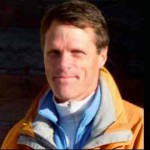
Ted Gaines

Ted Gaines

One thing that is clear, though, is that some people are going to be kicked out of their old plans and have to buy new, ACA-sanctioned plans, and they’re not going to like it. The ACA plans all have loads of useless add ons that most will never use but will still have to pay for. Men’s plans will have mandatory maternity coverage. People who have never had so much as a sip of alcohol will have to pay for heroin treatment in their plans. It’s ridiculous and it’s expensive.

People in my Senate district have been shocked by costs of the new plans. Here are a few examples from my constituents:

“I now pay $430 a month. For the same coverage/plan starting Jan. 1 it will go up to $800 a month. My husband and I own a small business and don’t know how we are going to afford keeping healthcare insurance at that price…”

“My existing premium is $240/month. The least expensive new quoted premium is $404/month. Not only is this a 67 percent increase in premiums, but also an increase in the co-insurance from 0 percent to 40 percent.”

“I was informed that my health insurance plan has been canceled. I liked my plan. I guess I don’t get to keep it. The plan that was offered to me and my husband was three times what I was paying before! We cannot afford to pay more.”

Somebody needs to tell me and all of these people how this is considered “affordable” to anyone? If we really wanted affordability, we would loosen the reins on insurance companies, and let them offer plans across state lines to increase competition. We would let them sell customized plans that weren’t full of coverage that people will never use. If we took just those two steps, California consumers would have so many more options at so many more prices. We would have a better marketplace and everyone would benefit. Instead, we are going for the central planning route that has never been successful for getting people what they want for a good value.

After years of work and billions of dollars invested, nobody knows for sure when Obamacare starts or how much it costs and this confusion has been a huge factor in the pitifully low enrollment rates. For average people just wanting to know what they have to do not to break the new law or break their bank, it’s too confusing and changes too often to let them make good decisions.

When it came to healthcare reform, the Obama administration didn’t know what to do or how to do it. They’ve just made everything worse. Free-market reforms could have given citizens better options at a fraction of the cost, without having the government hijack one-sixth percent of the economy.

Ted Gaines represents the 1st Senate District, which includes all or parts of Alpine, El Dorado, Lassen, Modoc, Nevada, Placer, Plumas, Sacramento, Shasta, Sierra and Siskiyou counties.


Editorial: Don’t arm federal airport officials

Publisher’s note: This editorial is from the Nov. 6, 2013, Sacramento Bee.

The shooting at Los Angeles International Airport reveals a harsh truth.

In our free, democratic society, we have a lot of open places – airports, train stations, shopping malls, grocery stores, post offices, schools and parks – where large numbers of people gather.

We cannot make them 100 percent safe.

Anyone can walk into any of these open public places with anything in a bag – as U.S. Attorney Andre Birotte Jr. said the LAX suspect did with an M&P15 semi-automatic tactical rifle (which is Smith and Wesson’s version of the AR-15 rifle), five 30-round magazines and hundreds more rounds in boxes. At airports, bags don’t get screened until the security checkpoint.

One thing we should not do is to seize upon this one incident – which resulted in the death of a TSA employee, the first killing in the 12-year history of the Transportation Security Administration – to arm TSA screeners.

Read the whole story


Opinion: Tahoe’s progress is infectious

By Joanne Marchetta

It’s been almost a year since the Tahoe Regional Planning Agency adopted a new blueprint for the future of Lake Tahoe. That day we came together around a common vision and the adoption of the new Lake Tahoe Regional Plan propelled us past planning and finally to action.

Whether your passion for Tahoe is a better environment, a better economy, or better social conditions in our communities – or all of it together – that common vision has something that’ll work for everyone.

Joanne Marchetta

Joanne Marchetta

So let’s pause for a moment and take stock on our progress since a year ago:

• New bike and pedestrian trail connections are being completed all around the lake. You can now ride or stroll from Nevada Beach to Round Hill Pines Beach or all the way from Sugar Pine Point State Park to Dollar Hill.

• A new community house is coming on-line in Kings Beach — a rehabilitated motel is now a beautiful new nonprofit social services center for anyone in need.

• The Aspens, a $9.5 million, 48-unit affordable housing project in South Lake Tahoe is finishing construction and is companion to the Domus affordable housing units completed in Kings Beach last year.

• Engaged citizens in the city of South Lake Tahoe with a passion for sustainability helped pass a new law limiting plastic bag use.

• Local residents championed new business and arts initiatives to benefit the community at a recent South Shore economic forum.

• The long-planned $18 million Highway 89 Fanny Bridge Community Revitalization project in Tahoe City is now fully funded and construction plans are expected out next year.

• Along Highway 50, old dirt paths are now new sidewalks with curbs, gutters, bus shelters, and street lighting and more areas of this historic road are slated for the same.


The lessons of sustainability have taught us that all of these things are connected. Each of them is important for Lake Tahoe’s health and they were made to happen by people who stepped in and got involved. Restoring our ecosystem and our communities together relies on new ideas coming equally from grassroots organizations, individuals, business groups, and agencies. The Regional Plan brought together the broadest coalition of supporters that the basin has seen in decades and today even more people are showing they are willing to step in, participate, and even lead Lake Tahoe’s communities forward.

Local governments are stepping in to work within their communities to create area plans that will direct environmental improvements and future redevelopment efforts in town centers around the lake. Lake Tahoe Community College is stepping in to create new education plans for students and the community. The city of South Lake Tahoe is contributing updated recreation strategies, and the Tahoe Prosperity Center is working to upgrade the basin’s digital signal capacity to serve visitors and make business connections reliable. Whatever your interest or passion, there is a place for you to get involved.

Positive progress in Tahoe is catching. We are also hearing from other communities that they want to learn from us. Lake Tahoe is often looked to as a leader in environmental protection from areas like the Adirondacks in New York and Lake Atitlan in Guatemala, and we are growing our reputation as a model for sustainability. At the 2013 Lake Tahoe Summit this August at Lake Tahoe Nevada State Park at Sand Harbor, Al Gore returned to our mountain lake for the first time since 1997 when he and then-President Bill Clinton convened the first summit. Gore delivered a call to action for all of us. He challenged us to make Lake Tahoe a place known not only for its awe-inspiring beauty, but also for the commitment we share to advancing sustainability and becoming a model for the globe.

These positive changes are coming at a critical time for Lake Tahoe. Water quality improvements that have resulted from earlier plans are proving to have a beneficial effect on the lake’s clarity. Science is showing that increased investment in infrastructure is a key driver of environmental gains. Now more than ever we need to choose to step in, to work together, and to look ahead. There will be those that encourage us to stop and look only backward. I encourage you to look around, find a place where you can get involved, and join us in moving forward.

Joanne Marchetta is executive director of the Tahoe Regional Planning Agency.