Letter: Heavenly a part of Bread & Broth’s success

To the community,

“Heavenly Mountain Resort sponsors Adopt A Days so often that it has become a fun challenge between departments to be the first to sign up for volunteering at the AAD dinner. The Heavenly IT Department is always the first,” said Tyler Morris, IT manager.

So for the fifth time in the past two years, the Heavenly IT Department staffed the volunteer crew representing Heavenly at Bread & Broth’s Monday evening meal on Nov. 18.

Joining Morris were Aaron Uretsky, It technician; Dave Erickson, systems analyst; and Kevin Franzen, PC technician. This great group of Heavenly employees knew exactly what to do, what was needed of each of them, as if they were regular B&B volunteers. Heavenly employee’s familiarity with Bread & Broth’s program is due to the generosity and the community involvement of Heavenly Mountain Resort through the Echo Foundation Program. With the Echo grant, Heavenly sponsors 12 “Adopt A Day of Nourishment” annually.

For each $250 sponsorship, Heavenly provides the funds needed by B&B to serve over 90 hot, healthy meals to the needy of South Lake Tahoe community. Bread & Broth is very grateful to be the recipient of both Heavenly’s financial support and their employee’s personal donation of their time to help with the sponsorship dinners.

To help B&B as a donor or sponsor, please contact me at (530) 542.2876 or carolsgerard@aol.com.

Carol Gerard, Bread & Broth


Opinion: Electric line expansion is a bad idea

By Ann Nichols

Today the forests between Kings Beach and Tahoe City are connected by the Tahoe Rim Trail, nature trails, dirt roads and a mostly paved route located at the summit of Highway 267 known as Mt. Watson Road or the “Fiberboard Freeway”.

This great North Shore recreation asset has it all: views of Lake Tahoe, access to Watson Lake, Jeep and equestrian trails, snowmobiling, cross country skiing, snowshoeing, and hiking. All are close to town, yet not marred by unsightly power lines.

That’s all about to change if Liberty Utilities and CalPeco, Liberty’s parent company, get approval for their proposed $45 million plus project. The company wants to double the existing power to serve the demands of new projects with prominent new power lines; think 1,200 units at Squaw, 1,000 more at Northstar Highlands, 760 units at the top of Highway 267 put forth by East West Partners, and the new lifts at Northstar.

The power company folks want to run the new power line between Kings Beach and Tahoe City along the Mt. Watson Road. The poles will visually dominate the pristine forest lands. They claim it will be easier to access and maintain the poles. That’s a given, but at what environmental cost?

The new thicker and taller poles will exacerbate their visual effect and degrade existing views. Here are some disturbing project highlights:

1. Trees removed: 47,000 (whole project including along Highway 267)

2. Damaging stream environment zones by removing 1,542 trees.

3. Power poles increase in diameter from an average of 16 inches to a maximum of 4.5 feet for self-supporting poles.

4. Power pole heights increases up to 12 feet or as much as a total height of 92 feet (nine stories). Most poles are now 40-feet high

5. Right-of-way increases width from 30 feet to 40 feet along the new Mt. Watson Road line.

6. Trees and vegetation within 150 feet of the power lines can be cleared producing a scar in the forest.

7. 7.5 miles of new right-of-way within the basin

Who will stand the cost of the expansion? A measly 49,000 ratepayers between North and West Shore and pay attention folks on the California side of South Shore, you are on the hook too. The power company is guaranteed an 11.8 percent return on these infrastructure improvements and it is likely we will see our power bills go up 20 to 30 percent. This huge project could easily run over $50 million. It’s a no lose situation for the power company, a boon for developers, but loaded with adverse effects for tourists, residents and wildlife.

Let’s not lose our public areas and diminish the quality of a great recreational experience with the permanent installation of unsightly power poles. Leave the power lines where they are now … they’ve served us well in that location since the ‘70s. Underground the new lines that will go through the east Kingswood neighborhood.

Do we really need five years of traffic impacts and 12,000 one-way truck trips? The basin is already 90 percent built out; is this major project absolutely necessary for Lake Tahoe? CalPeco, develop a project that won’t negatively impact our beautiful area.

Ann Nichols is president of the North Tahoe Preservation Alliance.


Letter: Harrah’s-Harveys helps Bijou school

To the community,

Thank you Harrah’s-Harveys Lake Tahoe. Harrah’s Harveys Lake Tahoe made a big contribution to the new Bijou Community School playground to finish off the $102,000 that was raised by the Bijou PTA.

The playground equipment has been purchased and the playground will be installed as soon as possible (weather will determine this).

We can’t thank the community businesses, community service organizations, and private individuals enough for the amazing support we have received to make this playground for our school and the community happen. We are continually impressed with the generosity and community-minded spirit of South Lake Tahoe and Stateline.

Thank you,

Kathy Haven, Bijou PTA


Opinion: Revamp S. Tahoe’s mayoral process

By Kathryn Reed

In one week, South Lake Tahoe will presumably have a new mayor.

It is customary that the council selects the mayor at the first December meeting. And it is customary that the mayor pro tem becomes the mayor. There have been exceptions, including mayors serving for more than one term.

This has pretty much been the process since the city incorporated in 1965. For most of those 48 years the role of mayor has been little more than ceremonial. The primary job is to run meetings that are once or twice a month. The mayor signs paperwork. That person helps set the agenda with city staff. And the mayor attends events in town on behalf of the city.

The Brown Act doesn’t allow for council members to work out among themselves ahead of time who the mayor will be. At most, they may discuss this, or any topic, with one other council member.

If I were to bet, on Dec. 10 I would say Hal Cole – who is mayor pro tem – would become mayor and Brooke Laine mayor pro tem. But that’s not what I’m advocating for.

First, I think we need to change the process of how the mayor is chosen. And while that is not likely to happen this year, it is time the citizenry became more interested in who the mayor of South Lake Tahoe is.

In the last few years as the city has taken a stronger stance regionally, in California and Nevada, and nationally, the role of mayor has evolved into more than a ceremonial position. Mayors are seen as leaders of a city and a notch above the other council members. With the title, there is a perceived sense of power from the person who has the job and those looking in from beyond the basin.

That is why it is time South Lake Tahoe rethinks how the mayor is chosen. Right now it’s a bit of popularity contest. If your colleagues don’t like you, you won’t get to be mayor. Just ask Bill Crawford and Bruce Grego. There have been others, too, in the past who served on the council without ever being mayor.

I am not a fan of the top vote getter being mayor. Being most popular does not make one most qualified.

It’s probably not legal, but what if when there is a council election, if there could be a question asking who out of the candidates as well as the council members not up for election would you want to be mayor? And then the top person became mayor.

Or what if the five council members had to fill out an application form like city commissioners do? A special form would be created for this position. Then each person wanting the position could give a short speech about why they are best. The five deliberate in public and a vote is taken.

Then the mayor gets to pick the mayor pro tem.

Or maybe there should be a public committee convened to pick the mayor? There have been community members asked to help select staff.

What if the mayor had the job for two years?

These are just things to think about. I’m sure others have better ideas. But we as the residents of South Lake Tahoe should start thinking about how our mayor gets appointed and who it is. That person represents us. We have the power to effect change in the process if we want to.

So, if I were the anointer of South Lake Tahoe’s mayor and mayor pro tem, I would pick Angela Swanson and Brooke Laine, respectively.

First, Tom Davis’ lack of leadership this past year as mayor proves he does not warrant a second term. As mayor he showed up at the state Legislature wearing one of his infamous Hawaiian type shirts. And he was there to give testimony. He used his tired phrase to tell the lawmakers “it was like speed dating” when it came to the amount of time he had to talk.

Davis and Hal Cole are often dismissive to their female colleagues.

At the Veterans Day ceremony Davis acknowledged the whereabouts of all of his colleagues except for Swanson. Davis and Cole have shunned Swanson in part because she was party to a charity taking money from someone who was later sent to prison on felony drug charges. She has never been charged with a crime, let alone arrested. Cole also hasn’t forgiven Swanson for alleging he was being racist during a council meeting.

While Cole runs a meeting well, he is not one who likes to socialize and glad-hand. Plus, he is the city’s rep on the Tahoe Regional Planning Agency board. Doing both well can be difficult. (Think Claire Fortier.)

JoAnn Conner is still too green to be mayor.

Laine, while she has served on the council for four years before this stint and was mayor, is there this time as an appointee to Fortier’s term. No one who was not elected by the citizens of South Lake Tahoe should be mayor, in my opinion. If she had been elected, I would have picked her. She is the only one who looks at people when they speak – whether it’s the public, a colleague or staff. The others have dismissive body language to colleagues, spend time on smart phones despite a ban on them, and often don’t seem to pay attention.

Put Laine in as mayor pro tem. This way if she runs for re-election in a year and gets on, she would be the front runner for the job as mayor – especially if the process is not changed.

While some could say by default this leaves Swanson as the choice for mayor, but the truth is she is the right person for the job. She has come out as saying she is not running for re-election next year because she wants to be county supervisor. Being mayor will give the public a chance to see if she is a leader. It will force her to learn the meaning of the word brevity and practice it – because a mayor needs to have that skill and she has yet to demonstrate she has it. The mayor should be the last person to give her or his opinion. She will need to be efficient with her time and be able to not mix campaigning with city work. That will be a test of ethics.

Swanson has shown leadership by taking on tasks beyond the expected council assignments. She is working in Sacramento on behalf of the city. At some point she will have to demonstrate how all those hours translate into meaningful benefits for the city and not just for herself as she seeks a life in politics.

This is by no means an endorsement of Swanson for supervisor. It’s just one person saying Swanson should be mayor of South Lake Tahoe for the next year. And more important, it’s time we rethink how the mayor is chosen.


Opinion: Anatomy and religion have a lot in common

By John Spinola

Religion is a lot like a penis.

It is OK to have one. It is OK to be proud of it. It is OK to share it with people who want it in their life.

It is not OK to take it out and wave it around or flaunt it in public. It is not OK to force it on people or children.

Like everything else there is a time and a place for it. It should not dominate every aspect of your life.

It doesn’t make you a better person for having one.

It doesn’t make you a better person for not having one.

Some people do just fine without one.

Some people are very passionate about theirs.

Some people believe theirs is the only one that matters.

Some people are really “attached” to the one they like or have chosen.

Some people don’t need one in their life to make them feel complete or fulfilled.

Different people like different ones for different reasons.

Yours is not the only one. There have been many throughout history.

John Spinola lives in South Lake Tahoe.


Opinion: Communication would help solve Tahoe’s problems

By Natasha Eulberg

As a native Californian with fond memories of happy summers spent in close proximity to Lake Tahoe, the idea that environmental regulations protecting the region I hold so dear are in danger of falling through is troubling. And yet that situation is very much a potential outcome of the court case regarding the regional management plan update for the Tahoe Regional Planning Compact.

Sierra Club and Friends of the West Shore vs. Tahoe Regional Planning Agency threatens to lead the Tahoe region into dangerous territory regarding perceptions of environment and land management. The case largely pits concerns over the legitimacy of environmental carrying capacity thresholds against opportunities for (re)development, community revitalization, and long-term environmental benefits. The Sierra Club and Friends of the West Shore (FOWS) officially filed the suit against the Tahoe Regional Planning Agency in February in response to TRPA’s approval of an update of the 1987 management plan for the region. While the concerns of the plaintiffs regarding TRPA’s decision to turn over responsibility for establishing and maintaining environmental standards to local governments and the worries of TRPA and development interest groups over the stagnation and dating of environmental regulations are both legitimate anxieties, these claims mask a larger problem that the case presents for the Tahoe region:

If regional maintenance of environmental regulation is forfeited now, we lose our best hope for a cohesive, holistic, and – most importantly – successful management strategy for Lake Tahoe in the future.

If responsibility for environmental protections is left in the hands of local governments and interest groups, “environment” will inevitably be compared to (and potentially lose out against) “development” and “economy.” What we need, rather than this contrast, is a forum where the goals, concerns, and potential benefits of both environmental and developmental interest groups can be discussed, analyzed, and ultimately integrated into a management plan that neither attempts to banish human presence from the Tahoe basin, nor abandons the local environment to human exploitation.

I feel that this lawsuit represents a golden opportunity to create just such a forum. Rather than delaying implementation of the possible benefits that the proposed 2012 Regional Plan update has to offer by sluggishly trudging through the legal gauntlet, discussion could mold those benefits into a new plan that simultaneously addresses the concerns of environmentalists and community members, creating a vision for a Tahoe that everyone has a stake in.

Litigation isn’t the answer to this problem; it’s a divisive strategy that determines a winner.

Communication, on the other hand, seems as though it has a lot of potential.

Natasha Eulberg is a senior at Gettysburg College in Pennsylvania. She is from Sacramento.


Opinion: AIDS becoming a forgotten disease

By Warner C. Greene

I saw my first AIDS case in 1981, the year the disease was identified. And for most of the time since then, I’ve conducted laboratory research to better understand the precise mechanisms by which the virus HIV causes AIDS.

Lately, however, I’ve been equally worried about a related condition that is prevalent, persistent and threatens to bankrupt us. People in my world call it AIDS fatigue.

AIDS fatigue has several telltale symptoms. One is thinking that the AIDS crisis is under control. Another is believing that AIDS is someone else’s problem, while still another is assuming that antiretroviral medications cure HIV/AIDS. All three notions, unfortunately, are false.

World AIDS Day — Dec. 1 — is a great opportunity to begin treating these malignant misconceptions, which we must do to address one of the most lethal pandemics ever to strike mankind. As a global community, we are not supplying — and may not even be able to afford to supply — enough of the lifesaving drugs required to prevent an HIV infection from progressing to AIDS for all the people who need them.

Our best option is to cure this disease — thereby eliminating the need to fund a lifetime of expensive medications for tens of millions of people — while also developing a vaccine to prevent new infections. And to do this, we must first treat AIDS fatigue with the only medicine known to address it: facts.

Warner C. Greene is a physician and the director of virology and immunology research at the Gladstone Institutes in San Francisco.

Read the whole story


Opinion: Feds need to extend prison overcrowding deadline

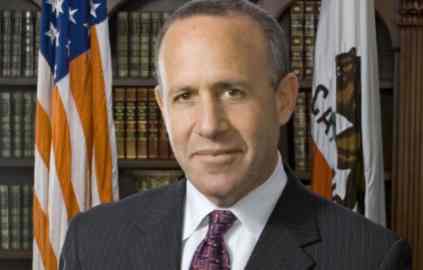
By Darrell Steinberg

For most of her adult life, a 31-year-old San Francisco violinist had been ravaged by debilitating mental illness. Newspaper accounts chronicled the compelling journey of Kim Knoble, who was caught in a cycle of shelters and homelessness, lack of self-control and aberrant behavior. It culminated in Knoble’s arrest for assaulting an older passenger on a city bus.

Yet that arrest led to Knoble regaining stability and dignity with the intervention of San Francisco’s innovative Behavioral Health Court. The judge’s conditions? Avoid jail time by agreeing to mandatory, intensive mental health treatment. After many ups and downs, Kim is safe, stable and playing music again.

Darrell Steinberg

Darrell Steinberg

One life saved. So many more at risk.

In the complex and contentious process in which the U.S. District Court three-judge panel deals with California’s overcrowded prisons, thousands of lives like Kim’s are at stake. Here is why.

The governor and the Legislature faced a key choice in response to the court’s order in June to reduce the prison population by 10,000 inmates. We could either spend $730 million to transfer those inmates to jails in and out of state, or we could gain an extension of what was then the Dec. 31 deadline to invest in mental health and substance-abuse treatment to reduce recidivism. The current 65 percent recidivism rate is the unacceptable reality that perpetuates prison overcrowding.

Our compromise in September, reflected in my bill, SB105, put that choice before the three-judge panel, which has since granted two short extensions to allow further negotiations on a durable solution. If the court ultimately agrees to push back the deadline for two to three more years, a significant portion of the $730 million (and more in succeeding years) must be spent on mental health care, substance-abuse treatment and other strategies to help keep people who leave prison from ever returning.

The stakes could not be higher.

In California’s overcrowded prisons, thousands of lives like that of the young violinist are hanging in the balance, waiting for a lasting solution. Prison and jail cells have become de facto holding pens for Californians in need of mental health and substance-abuse treatment. Correctional officers and physicians agree that a criminal sentence is woefully ineffective in getting drug addicts and mentally ill individuals back on a path to wellness.

The court’s decision will come on the heels of the turnaround in California’s budget. For the first time in modern state history, the single largest increase in the budget other than for education was for mental health: $142 million for 2,000 crisis-stabilization beds to ease the pressure on jails and emergency rooms; $60 million for new crisis caseworkers; $100 million to add mental health care and substance-abuse treatment for an additional 1.4 million Californians under the Affordable Care Act.

These investments are on top of existing funding that helps people like Kim Knoble. California’s one-of-a-kind Mental Health Services Act, formed under Proposition 63, generates $1 billion a year for “whatever it takes” to help the most severely mentally ill. For example, Prop. 63 money partially funds Citywide Forensics, a full-service partnership that provides client services for San Francisco’s Behavioral Health Court.

Long-term sentencing reform is key to reducing prison overcrowding. But reform alone, like simply building more jail and prison beds, is insufficient. Changing sentencing laws doesn’t directly reduce crime and its effect on communities, nor does it break the cycle for addicts and the mentally ill who complete their sentences only to be released with no hope and no future.

Now is the time to make fundamental change in California’s correctional system. Under SB105, the less money we spend on prison beds, the more money is earmarked to reduce recidivism. The longer the court extends the deadline to reduce the prison population, the more mental health and substance-abuse courts we can fund. The longer the extension, the more evidence-based services these courts can connect with offenders who leave the gates.

Kim Knoble could be anyone’s daughter, sister, mother, wife or co-worker. Her story is not uncommon. In this moment, the federal court, working together with state and local government, can help save many more like her.

Darrell Steinberg, D-Sacramento, is the president pro temp of the state Senate.


Letter: SLT city attorney violates First Amendment

To the community,

Like the paid parking foes who received a “rejection” of their initiative earlier this week, our medical marijuana voter initiative was also rejected. That makes two separate citizen groups that the South Lake Tahoe city attorney has denied their First Amendment rights and twice that he has flaunted the law to exercise authority he doesn’t have.

The city attorney claims, “It is the duty of the city attorney to review the text for compliance with California law. If the text is proper and appropriate following that review, the city attorney should provide a ballot title and summary, allowing the circulations of petitions.”

Steve Kubby

Steve Kubby

That is not what the law says. Here is the actual law that pertains: “Section 9203 (a) Any person who is interested in any proposed measure shall file a copy of the proposed measure with the elections official with a request that a ballot title and summary be prepared. This request shall be accompanied by the address of the person proposing the measure. The elections official shall immediately transmit a copy of the proposed measure to the city attorney. Within 15 days after the proposed measure is filed, the city attorney shall provide and return to the city elections official a ballot title for and summary of the proposed measure. The ballot title may differ from any other title of the proposed measure and shall express in 500 words or less the purpose of the proposed measure. In providing the ballot title, the city attorney shall give a true and impartial statement of the purpose of the proposed measure in such language that the ballot title shall neither be an argument, nor be likely to create prejudice, for or against the proposed measure.”

Please note that “any proposed measure” may be submitted and the city attorney must issue a ballot title and summary. The word “shall” means “mandatory” as it relates to issuing the ballot title and summary.

I publicly challenge the city attorney to provide a legal basis for his authority to reject a voter initiative, because the language of the Section 9203 (a) of the California Election Code is clear enough and he does not have any authority to decide what petitions qualify for the ballot. Furthermore, by rejecting our initiative the city attorney has directly violated one of the key warnings of Section 9203 (a), by creating an argument of “rejection” which creates extreme prejudice against our proposed measure.

Worse still, the city attorney is directly obstructing our First Amendment right to petition our government, under color of law. Such obstruction can only serve to create the appearance of a city government at war with the community, determined to block opposition through unlawful means.

So far, not one word from any City Council members to speak out against this outrageous and unprecedented attack on the right of the people to seek redress through the initiative process. Indeed, to the citizens who seek redress on the issue of paid parking, as well as those who seek a sane medical marijuana policy, these illegal actions by the city attorney and the silence of the City Council calls into question the judgment and character of those who are supposed to serve us.

Steve Kubby, South Lake Tahoe


Letter: Land trust says thank you

To the community,

Saint Joseph Community Land Trust gives thanks to the Knights of Columbus Council 10611 for hosting its annual membership appreciation night with a delicious spaghetti dinner in Grace Hall at St. Theresa Church.

More than 80 members and supporters came out on a snowy night to celebrate 11 years of service to communities around Lake Tahoe. Thank you also to Interstate Realty Management, and Annette and Al Luna managers of Sierra Garden Apartments, for donating a turkey and pies for our raffle. Sierra Garden Apartments is one of the affordable properties owned by Saint Joseph CLT.

We also appreciate Father Ben Deleon for allowing the use of Grace Hall; Mike Bradford with Lakeside Inn for donating a free dinner for two at one of their restaurants; South Tahoe Standup Paddle for donating a paddle boarding certificate for two; and numerous volunteers who assisted with set-up, decorations and clean-up.

At the dinner, board President Lyn Barnett announced Saint Joseph’s new capital campaign for the acquisition, rehabilitation and rental or sale of a one or two bedroom home to a qualifying household. Saint Joseph Community Land Trust has set a fundraising goal of $250,000 from local sources for this project.

Saint Joseph Community Land Trust is a democratically-controlled nonprofit organization founded in 2O02 to address affordable housing and life skills training needs for residents in the Lake Tahoe Basin. For more information on Saint Joseph Community Land Trust, please visit our website.

Charlotte Rosburg, Saint Joseph Community Land Trust