Opinion: Crises have political consequences

By Dan Walters, Sacramento Bee

America’s political executives – presidents, governors and big city mayors – are often judged by how they respond to unanticipated crises.

Dan Walters

Dan Walters

Jerry Brown knows the syndrome well. He had two major crises during his first stint as governor 30-plus years ago, a severe drought early in his governorship and an invasion of Mediterranean fruit flies near the end.

Brown’s Medfly debacle contributed heavily to the failure of his U.S. Senate campaign a year later. That experience may explain why Brown was clearly reluctant to declare an official emergency over the current drought, which he finally did two weeks ago after saying earlier, “Governors can’t make it rain.”

Read the whole story


Opinion: We are the poor

By Robert Reich

Fifty years ago, when Lyndon Johnson declared war on poverty, the poor were different – “other,” as in Michael Harrington’s seminal book of 1962, “The Other America.”

That’s no longer the case.

After the War on Poverty ended, Republicans told working-class whites that their hard-earned tax dollars were being siphoned off to pay for “welfare queens” (as Ronald Reagan decorously dubbed a black single woman on welfare) and other nefarious loafers. The poor were “them” – lazy, dependent on government handouts and overwhelmingly black – in sharp contrast to “us,” working ever harder, proudly independent (even sending wives and mothers to work in order to prop up family incomes dragged down by shrinking male paychecks) and white.

Robert Reich

Robert Reich

It was a cunning strategy designed to split the broad coalition that had supported the New Deal and Great Society by using the cleavers of racial prejudice and economic anxiety. It also conveniently fueled resentment of government taxes and spending.

The strategy also served to distract attention from why the paychecks of the working class began shrinking in the 1980s – because of corporations that were busily busting unions, outsourcing abroad and replacing jobs with automated equipment and, subsequently, computers and robotics.

But that divide-and-conquer strategy is no longer convincing because the dividing line between poor and middle class has all but disappeared. “They” are fast becoming “us.”

Poverty is now a condition that almost anyone can fall into. In the first two years of this recovery, according to a report from the Census Bureau, about 1 in 3 Americans dropped into poverty for at least two to six months.

Three decades of flattening wages and declining economic security have taken a broader toll. Nearly 55 percent of Americans between the ages of 25 and 60 have experienced at least a year in poverty or near poverty (the latter defined as below 150 percent of the poverty line), according to author and Washington University Professor Mark R. Rank. Half of all American children have at some point during their childhoods relied on food stamps.

When LBJ declared war on poverty, most of the nation’s chronically poor had little or no connection to the labor force, while most working-class Americans had full-time jobs.

This distinction has broken down, too. Now, a significant percentage of the poor are working but not earning enough to get themselves and their families out of poverty. And a growing portion of the middle class finds itself in the same place – often in part-time or temporary positions or in contract work.

Economic insecurity is endemic. Working-class whites who used to be cushioned against the vagaries of the market are now fully exposed to them. Trade unions that once bargained on behalf of employees and protected their contractual rights have withered. Informal expectations of lifelong employment with a single company are gone. Company loyalty has become a bad joke.

Financial markets are now calling the shots – forcing companies to suddenly uproot, sell out to other companies, transfer whole divisions abroad, liquidate unprofitable units or adopt new software that suddenly renders old skills obsolete.

Because money moves at the speed of an electronic impulse while human beings move at the speed of human beings, the humans – most of them hourly workers but many white collar as well – have been getting shafted.

This means sudden and unexpected poverty has become a real possibility for almost everyone these days. And there’s little margin of safety. With the real median household income continuing to drop, 65 percent of working families are living from paycheck to paycheck.

Race is no longer a dividing line, either. According to Census Bureau numbers, two-thirds of those below the poverty line at any given point identify themselves as white.

This new face of poverty – a face that’s both poor, near-poor and precarious working middle class and simultaneously black, Latino and white – renders the divide-and-conquer strategy obsolete. Most people are now on the same losing side of the divide. Since the start of the recovery, 95 percent of the economy’s gains have gone to the top 1 percent.

This means Republican opposition to extended unemployment insurance, food stamps, jobs programs, expanded Medicaid and a higher minimum wage could potentially backfire on the GOP.

Just look at North Carolina, a bellwether state, where Democratic Sen. Kay Hagan, up for re-election, is doing well by attacking Republicans back home as “irresponsible and cold-hearted” for slashing unemployment benefits and social services. The state Democratic Party is highlighting her Republican opponent’s “long record of demeaning statements against those struggling to make ends meet.” (Tom Tillis, the speaker of the state House, had spoken of the need “to divide and conquer” those receiving public assistance, and he called criticisms of the cuts “whining coming from losers.”)

The new economy has been especially harsh for the bottom two-thirds of Americans. It’s not hard to imagine a new political coalition of America’s poor and working middle class, bent not only on repairing the nation’s frayed safety nets but also on getting a fair share of the economy’s gains.

Robert Reich, former U.S. secretary of labor, is professor of public policy at UC Berkeley.


Editorial: McClintock complicating Rim Fire recovery

Publisher’s note: This editorial is from the Jan. 12, 2013, Sacramento Bee.

Gateway communities to Yosemite National Park suffered a triple-whammy in 2013 – the Rim Fire, the 16-day government shutdown and another winter with little snow. How this national treasure recovers from the 257,000-acre fire that swept through the Stanislaus National Forest, Yosemite National Park and private timberland from Aug. 17 until the end of September matters a lot, not just for the Sierra but for other wildlands that might be hit by fire.

The U.S. Forest Service has done a good job of bringing people together and working collaboratively. Existing laws that require public comment have garnered useful information and will make the recovery better. Thousands of people have weighed in. Still, the Forest Service has an extremely difficult task reaching consensus among competing interests in a way that avoids litigation.

Unfortunately, Rep. Tom McClintock, the Elk Grove Republican who represents Yosemite and the area scorched by the fire, seems determined to drive a political wedge, rather than forge agreement. He has called for immediate salvage logging that would be exempt from federal environmental laws, public comment and court review on the entire 257,000-acre burn area, including in Yosemite National Park.

Read the whole story


Opinion: Climate change deniers on thin ice

By Phil Plait, Slate

To me, one of the most fascinating aspects of climate change denial is how deniers essentially never publish in legitimate journals, but instead rely on talk shows, grossly error-laden OpEds, and hugely out-of-date claims (that were never right to start with).

In 2012, National Science Board member James Lawrence Powell investigated peer-reviewed literature published about climate change, and found that out of 13,950 articles, 13,926 supported the reality of global warming. Despite a lot of sound and fury from the denial machine, they have not really been able to come up with a coherent argument against a consensus. The same is true for a somewhat different study that showed a 97 percent consensus among climate scientists supporting both the reality of global warming and the fact that human emissions are behind it.

Powell recently finished another such investigation, this time looking at peer-reviewed articles published between November 2012 and December 2013. Out of 2258 articles (with 9,136 authors), how many do you think explicitly rejected human-driven global warming? Go on, guess!

One. Yes, one.

Read the whole story


Opinion: Football is the problem, not Title IX

By Jonathan Zimmerman, Los Angeles Times

In 1975, Nebraska Sen. Roman Hruska warned a congressional hearing that college football was in mortal danger. The threat came from Title IX, the 1972 measure that outlawed sex discrimination in educational institutions receiving federal financial assistance.

To comply with the law, Hruska feared, colleges would have to equalize athletic budgets for male and female sports, and the only way to do that would be to raid the football budget.

He need not have worried. College football budgets have skyrocketed; at most Division I schools, 80 percent of all sports funds go to two men’s sports: football and basketball. To comply with Title IX, schools have cut other sports instead.

Read the whole story


Opinion: Brown wants to avoid past budget errors

By Dan Walters, Sacramento Bee

Fourteen years ago, the governor of California solemnly pledged not to squander a $12.3 billion revenue windfall on unsustainable tax cuts or spending.

Dan Walters

Dan Walters

“I intend to resist the siren song of permanent spending whether it comes from the left or the right,” Gray Davis told reporters. “And I will stand up to anyone who tries to convince the Legislature that they should spend most or all of this money in ongoing expenses.”

Davis caved within a few weeks, agreeing to use two-thirds of the windfall for permanent spending and tax cuts. Not surprisingly, the state faced multibillion-dollar deficits a year later.

On Thursday, Gov. Jerry Brown stood at the same podium that Davis used in 2000 and solemnly pledged not to overspend a new surge in state revenue – even alluding indirectly to Davis’ failure.

Read the whole story


Letter: Chamber event raises cash for charities

To the community,

Thank you to Riva Grill for hosting the annual Business After Hours Mixer for Charity on Jan. 16. Riva provided their entire second floor for the event, as well as an impressive selection of appetizers, drinks and desserts. Approximately 200 guests attended to support the South Shore community and local food banks Christmas Cheer and Bread & Broth. All proceeds from the event were donated to charity.

Guests helped Lake Tahoe South Shore Chamber of Commerce raise $3,500 for the two food banks and also donated non-perishable food items. Christmas Cheer and Bread & Broth help feed the less fortunate in the South Shore community; donations from last night’s event will help restock both food banks so they may continue to provide meals for those in need.

Shannon Early, Lake Tahoe South Shore Chamber of Commerce


Letter: Vail Resorts helps feed those in need

To the community

Bread & Broth’s Jan. 13 Adopt A Day of Nourishment dinner was generously sponsored by Heavenly Mountain and Kirkwood resorts. Their hosting of the Monday evening event guaranteed that the attending 85 guests were served a nutritious and filling meal with tasty cabbage rolls as the main entrée along with calls for “seconds” and “to go” servings.

B&B appreciates and salutes the financial and volunteer crew support that we receive from the local Vail resorts each month.

“I am so happy Vail gives us this opportunity to serve the community,” wrote Michelle Morton, a Vail volunteer for the evening. “After coming today, I was touched by how everyone comes in and sits together, laughs and catches up with each other, just like an extended family on Thanksgiving.”

Also volunteering and spreading cheer at the Adopt A Day event were Morton’s fellow sales department members Arnaud Robin, Hillary Hutchens and Shannon Proper.

“I was also touched by how everyone looks out for families with kids. The smiles on their faces made it all worthwhile,” Morton added.

In addition to families, the B&B meals feed the working poor, elderly on fixed incomes as well as those living outdoors. Thanks to our many generous donors and AAD sponsors like the Vail Resorts, the less fortunate in our community are able to enjoy an evening every Monday that fills both their hearts and lessens their hunger.

Carol Gerard, Bread & Broth

Bread & Broth’s Jan. 13 Adopt A Day of Nourishment dinner was generously sponsored by Heavenly Mountain and Kirkwood resorts. Their hosting of the Monday evening event guaranteed that the attending 85 guests were served a nutritious and filling meal with tasty cabbage rolls as the main entrée along with calls for “seconds” and “to go” servings.

B&B appreciates and salutes the financial and volunteer crew support that we receive from the local Vail resorts each month.

“I am so happy Vail gives us this opportunity to serve the community,” wrote Michelle Morton, a Vail volunteer for the evening. “After coming today, I was touched by how everyone comes in and sits together, laughs and catches up with each other, just like an extended family on Thanksgiving.”

Also volunteering and spreading cheer at the Adopt A Day event were Morton’s fellow sales department members Arnaud Robin, Hillary Hutchens and Shannon Proper.

“I was also touched by how everyone looks out for families with kids. The smiles on their faces made it all worthwhile,” Morton added.

In addition to families, the B&B meals feed the working poor, elderly on fixed incomes as well as those living outdoors. Thanks to our many generous donors and AAD sponsors like the Vail Resorts, the less fortunate in our community are able to enjoy an evening every Monday that fills both their hearts and lessens their hunger.

Carol Gerard, Bread & Broth


Editorial: Fairness to all — a fitting tribute to MLK

Publisher’s note: This editorial is from the Jan. 18, 2014, Contra Costa Times.

Next month the nation will celebrate the birthday of two presidents, in May we will honor those killed in our defense, in July the founders will be front and center, and in November we will thank our veterans.

But before we get to any of that, we have set aside Monday as a day to celebrate our conscience — our social conscience, to be exact. Since 1986, Americans have done that by observing a national holiday on the third Monday in January to honor the birth and life of the Rev. Martin Luther King.

Admittedly, some see Monday as just another three-day weekend that happens to fall during what used to be prime snow season (ahem). But that myopic view ignores the profound social and moral impact King has had on the nation. His life drove change that continues to influence our culture daily.

Read the whole story


Opinion: Fireworks lawsuit unnecessary

By Carol Chaplin

With Tahoe South’s two annual fireworks celebrations meeting all state and federal standards, a recent lawsuit that could threaten the annual July Fourth and Labor Day events is totally unnecessary.

Water quality sampling conducted by the state of California’s Lahontan Regional Water Quality Control Board in Lake Tahoe following the fireworks events has demonstrated that levels of pollutants of concern are negligible within 12 hours of the shows and pose no threat to water quality. In a recent story in Lake Tahoe News, Lauri Kemper with Lahontan said that because the perchlorate had dissipated her agency determined there were no long-term effects to the lake from the chemical.

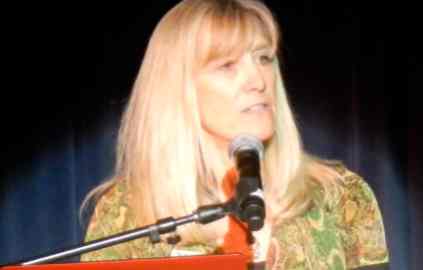
Carol Chaplin

Carol Chaplin

The water purveyors with intake lines near the barges from which the fireworks are discharged have also never reported any effect on the drinking water source as a result of the display.

“The Nevada Division of Environmental Protection encourages the Lake Tahoe Visitors Authority and its contractors to continue compliance with any applicable local permits, plans or requirements. NDEP does not require additional oversight of the twice a year firework displays,” JoAnn Kittrell with the Nevada Department of Conservation & Natural Resources was quoted in Lake Tahoe News.

As one of the most regulated areas in the nation, Lake Tahoe has multiple agencies at the federal, regional, state and local level monitoring all aspects of the area’s environment and ecology. The Lake Tahoe Visitors Authority and Pyro Spectaculars obtain permits from the U.S. Coast Guard and the local fire department each year to conduct the shows. These are the only required permits for events of this type. Since their inception the fireworks have employed a rigorous cleanup protocol. The LTVA also has a pre-event planning meeting for each show with Douglas County Sheriff’s Department, South Lake Tahoe Police and the Tahoe-Douglas fire marshal.

LTVA and Pyro Spectacular have worked collaboratively with the key regulators in the basin – Lahontan, the Nevada Division of Environmental Protection and the Tahoe Regional Planning Agency, in the production of the fireworks. Since the introduction of the National Pollutant Discharge Elimination System more than 40 years ago, no court in the nation has held that firework displays require an NPDES permit.

The fireworks used in the Lake Tahoe shows are designed to burn in the sky. If the shell does not disintegrate the remaining debris is primarily paper, cardboard and string. This is collected from the water after the display. Pyro Spectaculars uses a boat to patrol the fireworks display site for several hours post show and uses nets and other tools to clean up surface debris. The following morning a dive crew and another boat crew are dispatched. Divers cover an 8- to 12-acre area, starting at the launch location and working outward, collecting general trash as well as any fireworks debris. While conducting the cleanup the divers have also assisted by removing invasive Eurasian milfoil plants from the lake.

The LTVA was only made aware of Joseph and Joan Truxlers’ concerns about debris after the Zephyr Cove couple contacted media following the July 4 show. Representatives from the LTVA responded immediately to concerns and staff visited the beach and interviewed several year-round residents. Longtime homeowners told the LTVA that they had never witnessed a debris problem with the event.

Quite frankly, we’re disappointed in what we believe is an unnecessary lawsuit. In 30 years, this was the first time there was any issue – it was an anomaly. LTVA doesn’t need to be threatened with a lawsuit. If there’s a problem, we’ll fix it. This organization has always been responsible, engaged and committed to stewardship of the Lake.

We’re involved with numerous partners in various preservation programs to best position Lake Tahoe as a national environmental and business model. As part of our guiding philosophy, we promote our greatest attraction, the lake itself, in an appropriate and sustainable manner. Tahoe is our home, too, and we know its spectacular beauty and clarity is its timeless attraction, and we’ll always take that responsibility seriously.

The July 4 and Labor Day fireworks displays are among the area’s most popular annual events and generate approximately $4 million and $2 million, respectively, in revenue to Tahoe South each year helping locally owned restaurants, motels, retail and attractions whose livelihoods depend on tourism.

We appreciate the support we’ve received from residents and businesses throughout the local community and beyond on this issue. Most responses indicate that the majority is tired of needless litigation, rather the solution is for local cooperation to ensure the continued success of the fireworks and protection of the lake.

Carol Chaplin is executive director of Lake Tahoe Visitors Authority.