Editorial: California drier than it has to be

Publisher’s note: This editorial is from the March 7, 2014, Orange County Register.

Despite the recent heavy rain, California’s water situation remains dire. Data from the U.S. Drought Monitor, a partnership between the National Drought Mitigation Center at the University of Nebraska-Lincoln, the U.S. Department of Agriculture, and the National Oceanic and Atmospheric Administration, shows that 100 percent of California is “abnormally dry.”

But the state still seems bent on pushing ahead with water policies that appear to make the drought artificially worse, from the New Deal-style public-works Bay Delta Conservation Plan boondoggle that seeks to upend the Sacramento Delta for dubious water supplies and the benefit of a bait fish, the Delta smelt, to projects closer to home.

Read the whole story


Opinion: It takes a support system to create an Olympian

By John Rice

To create an Olympic level athlete you need first a gifted, talented athlete, then a strong sense of family support, a good support system of friends, a good coaching base, a great playground to hone their skills, financial assistance and sponsors for coaching, travel and fees, and a community that supports them in their overall education and growth as well as roots them on to success.

Some kids are just born with it, get the breaks and stay healthy, and ultimately have great timing when it comes to being at their best when the games come around. Support comes in many forms, and financial support is only one kind. I would argue that the other forms of support are more important to building the whole athlete.

John Rice

John Rice

How many times have you seen talented kids burn out, or make it to the big event and cant deliver.

Sierra has produced four Olympians since 2000, an impressive statistic for a smaller boutique resort that does not boast a million dollar support system. At Sierra, athletes are not pressured into performance, or subjected to the politics of racing and competitive organizations. Sierra simply provides the resources they need, and “removes the rocks” from their path.

It starts with the athlete having a dream, they have to want it, and they will ultimately make many sacrifices to get to the narrow part of the funnel. The resort can help shape that journey, but the athlete and their support system are key to their chances of getting to the next level.

If the kid has a dream, they have the talent and the family support, what can the resort do? Here are five things we do to provide the support that a driven, talented kid needs to make it to the top:

1) Commitment to a great playground –- the resort where the kids grow up has to have the dedication to providing the place to play, whether it be a groomed race course, a terrain park or a halfpipe. The resort needs to commit the resources and personnel to keep these areas consistently in great shape for their athletes. There are days when a race or event might close the trail or the park to the public –- a tough decision to make, but important to show the commitment. Kids will learn to have fun first, can be taught the right way to shape their skills if the playground is built and maintained. That means commitment to snowmaking, grooming, terrain, race hills. They have to have a place to play. In the off season it might be helping them with physical training, gymnastics or Woodward style camps. It might be building that special jump for them to learn the new trick on. At Sierra we have seven terrain parks for all abilities and levels. It helps to keep it fun and challenging at the same time.

2) Support youth competition programs –- from the very beginnings, developmental programs in the ski school and competition services should be focused on fun. Terrain based teaching helps them learn at the earliest stage how to use the mountain to turn, slow down, speed up and stop. Animated, themed learning terrain is best to keep their attention and fun factor high. At Sierra, the Riglet park (Star Wars themed) and the adventure zones (history of California themed) give instructors a fun/interactive environment for learning skills. The next level of learning comes with Buddy Werner (volunteer coaches) weekend programs and the Rippers (ski school developmental, paid coaches) programs where kids showing abilities are given a place to start light competition against their peers. Sierra identifies those with higher skills and will encourage the parents to consider the D-team. The next level has costs associated with it, but there is a 501(c)3 in place called the Sierra at Tahoe Education Foundation that provides financial assistance for event fees, coaching and other costs as the kids move up the system. Incentives are given for podium finishes, with the goal of becoming one of Sierra’s amateur athletes.

3) Hire and keep great coaches and instructors –- key to the athlete development, instructors and coaches not only teach the kids how to ski and ride, they become mentors in many ways. At teen years kids find it hard to accept authority figures, parents and teachers, but they listen to their coaches. Sierra has developed a team of coaches in all disciplines who understand the focus needs to be on the whole development of the athlete, how to be a good winner and an good loser, how to be their best when their best is needed. At Sierra we often give our young athletes access to our pro athletes. Jamie Anderson, Maddie Bowman and Hannah Teter have ridden and skied with the kids, sharing the fun aspects as well as mentoring the kids.

4) Hosting event at the resort -– Sierra has historically hosted USASA weekend events of all kinds: pipe, slopestyle and boarderX, Tahoe league and other alpine racing events to expose the athletes to the first stages of competition. These local events give the young athletes a foundation for learning to compete against friends, against other mountains, and ultimately try to make it to Nationals. The level of parent and coaching support for these programs makes it much more than simple competition, the social aspects, rooting for each other, sharing condos and meals, helps shape the kids in many ways. Having home resort events helps the kids and their families keep the costs in check as well.

5) Advocate for the athlete -– Help them find the right sponsors, agents and opportunities to move to the next level. That can be as simple as finding them equipment, or as complicated as helping them secure a contract to help defray the cost of their travel. Once the kids start to win events, they start to build their brand, and we help them by including them in video and facebook posts, photo shoots, incentives, and other means to share them with the world. We support their causes, their charities, we care about their goals and help them reach their dreams beyond simply wearing a logo and competing. Getting on Team USA isn’t automatic, negotiating the political challenges of that process can be distracting. At Sierra we help get the kids to right high profile events where they can get the attention of the team. Finally, showing up at the events and rooting them on, bringing the support of the mountain and the community lets them feel the joy of representing not only their mountain but their home.

There are stories within the stories, but this is the framework for how we have done it. Our first two time Olympian (Nagano and Park City), Travis Cabral was the youngest ever to win the U.S. Freestyle Championships and the Overall World Cup at age 15.

Hannah Teter came to Sierra before her first Olympic Games and asked for us to be her home training grounds (she is from Vermont), and then went on to compete in the next three Olympics (Torino, Vancouver and Sochi) winning two medals.

They paved the way for Jamie and Maddie to not only compete in Sochi, but come home with the top prize in their disciplines.

The low pressure, high support style has proven to be a winner. As we look on our next generation of future athletes, we hope to see some of them follow in their footsteps.

John Rice is general manager of Sierra-at-Tahoe.


Opinion: Nevada encroaching on rights of professional photographers

By Carolyn E. Wright

As an attorney in the Lake Tahoe area who represents photographers and who also is a photographer, I am concerned about the rights of photographers.

Carolyn E. Wright

Carolyn E. Wright

The Nevada Division of State Parks will have a public hearing at the Richard Bryan Building, 901 S. Stewart St., Carson City, 2nd floor Tahoe hearing room, on March 31 from 3-5pm for amended regulations relating to park entrance fees for photographers with commercial photography permits. The good news is there will be no fee increase associated with the amendments. The bad news is that, while reviewing the proposed changes, I learned that Nevada defines commercial photography as:

[P]hotography engaged in for financial gain, including, without limitation, the sale of a photographic image as a product or for use in advertising, motion pictures, television productions or portfolios and the archiving of an image by a person who uses photographic skills, equipment or resources to provide a photographic product for sale.

It’s disappointing that Nevada defines commercial photography by the purpose of the photography rather than by the activities that may affect the park and visitors, as is done with the National Park Service. Go online for more information.

But it gets worse. Currently, the website for the Nevada Administrative Code (“NAC”) 407.050 states:

 4.  For each day or partial day that a person engages in commercial photography in a park, the Division will charge and collect the following fee according to the total number of vehicles or the total number of persons, whichever results in a higher fee:

Number of Vehicles or Persons Fee Per Day

2 to 5 vehicles or 6 to 25 persons……………………………………………………………….. $200

6 to 10 vehicles or 26 to 50 persons……………………………………………………………… 350

11 to 15 vehicles or 51 to 75 persons……………….………………………………………….. 500

16 to 20 vehicles or 76 to 100 persons………………………………………………………….. 800

21 to 50 vehicles or 101 to 400 persons…………………………….………………………. 2,100

More than 50 vehicles or more than 400 persons………………………………………. 3,500

. . .

6.  The Division will not charge a fee pursuant to this section for:

(a) Commercial photography engaged in by one to five persons in a single vehicle . . . .


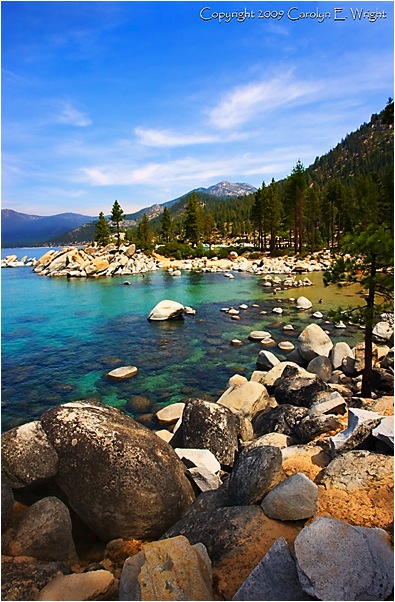
So when I took this photo at Sand Harbor State Park in 2009, I didn’t need a permit because I was shooting alone.

sand harbor2013 Revisions

But the NAC website is not up to date. Last year, the NAC made changes to the code that have not been posted online but are available directly from the Department of Conservation and Natural Resources. And the changes aren’t good:

1. The definition of commercial photography now includes portraits.

2. The fees have been divided into classes. Class A is now: 1 to 3 vehicles or 2 to 15 persons and the fee is $50 a day.

3. New provisions have been added that state:

7. A person may request an annual class A commercial photography permit . . . [for] a fee of $500. . . . A person to whom is issued an annual class A commercial photography permit shall:

(a) Pay the entrance fee required pursuant to NAC 407.055 each time he or she enters a park to engage in commercial photography;

(b) Maintain adequate insurance coverage for the entire period he or she holds such a permit and provide proof to the Division of such coverage; and

(c) Contact in advance the office of the park that he or she intends to use to confirm the availability of the areas where the person intends to engage in commercial photography.

Proposed Revision for 2014

So, the only substantive proposed change for 2014 relating to photographers is that the Code will be clarified so that:

The Division will waive the entrance fee for the park (referenced in paragraph 7 (a) above) upon payment of the fee for an Annual Class A photography permit.

Which is, at least, a little good news.

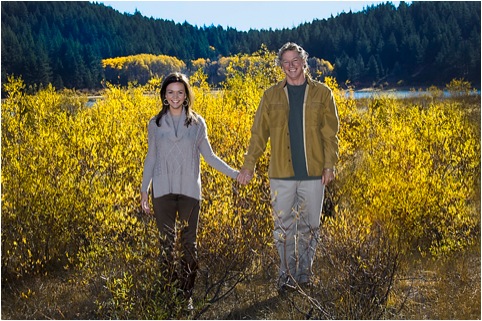
engagementTherefore, a photographer is supposed to pay $50/day or $500/year to take photos in Nevada State Parks, which includes Cave Rock State Park, the Spooner backcountry area, and Sand Harbor State Park in Lake Tahoe. But the photographer’s activity and impact on the park and other visitors likely is no different than that of a hobbyist photographer. Taking family vacation photos usually doesn’t affect the park or its visitors any more than taking portraits for seniors or engaged couples. Taking landscape or wildlife photos for later sale doesn’t affect the park or its visitors than it does for sharing the photos on Facebook. Given the literal interpretation of the statute, I was not violating the law when I took my friends’ engagement photos (example shown above) last October because it was my gift to them. But if I had charged them for the shoot, as I have for other clients, then I should have paid the State Park fee.

State legislators, please understand that photographers usually don’t use the park any differently than anyone else. So we shouldn’t have to pay more than anyone else. Instead, please modify the code so that it is similar to the National Parks guidelines.

Persons wishing to comment upon this proposed action of State Parks may appear at the scheduled public hearing or may provide their comments, data, views or concerns in written form to Division of State Parks, 901 S. Stewart St., Suite 5005, Carson City, NV 89701-5248. Written submissions must be received on or before March 31.

Carolyn E. Wright is a licensed attorney dedicated to the legal needs for photographers. She provides free legal information online.


Letter: Hidden lies hurting Meyers future

To the community,

“Honest baby, it was just once. It meant nothing, I promise.”

If you’ve never heard this before, thank your lucky stars. But if you have, you recognize a whopper when you hear it.

Via email, I received a copy of the third round of a grant, a grant that our county supervisor signed on Feb. 26, for $1,150,000, the very day she was punching her fists in the air proclaiming, “The Catalyst is Dead.” This grant basically throws Meyers under the bus. It reads something like this: Meyers will be the pilot community for the Sustainable Mobility Plan, the prototype for communities around the lake and around the world! Meyers is the “donor community” and apparently, we are all on board for this.

What?!

Boy, do I have issues with this. First, how could something be “sustainable” if our tax dollars are paying for it? Second, I’m getting a little sick of these meetings with half truths and almost honest answers.

Seven hundred and fifty thousand dollars of this grant goes to consultants, the rest to the agencies (TRPA, county, etc.). Consultants were included in the first two rounds of this grant, $850,000 and $950,000, respectfully. Pretty cool gig because consultants can consult indefinitely. Well, until the cause-du-jour runs out of grant money.

This particular cause is bikeable-walkable communities, buildings snuggled together with parking underground, tourist-retail on ground level, low income housing-timeshare-condos on upper floors. There’s your 40- to 50-foot tall buildings, just like the Catalyst. You heard me, the Catalyst is not dead, just renamed.

One of the problems with these sustainable communities is combined zoning. Who would want to live above a breakfast cafe where employees arrive at 4:30am? Who wants to hear doors slamming and car alarms chirping all night? Smelly commercial dumpsters, and of course, signs, street and emergency lights? How about inebriated people wandering around doing naughty things after the bars close at 2am? Commercial, residential, and tourist recreational, thrown together like a tossed salad, really?

This grant, the Incentive Plan (formerly Catalyst) and the TRPA’s Regional Plan update (RPU), all buy into this idea. Maybe everyone went to the same convention. I don’t know, but this is what the TRPA has been spoon feeding the Meyers Community Advisory Council (MCAC) since the beginning. The agencies were specifically dovetailing the Meyers plan to the RPU, calling the RPU our current plan. Well, lying by omission is still a lie. Our current and existing plan is the 1993 Meyers Community Plan.

The original focus of the MCAC was to update that ’93 plan and these good people did not realize they were being manipulated because the ’93 plan was never used for comparison. It still hasn’t. So much is being taken from us, so many huge changes to our community. This is planning for decades ahead, not just a year or two. This isn’t a game, people, this is our future.

The new Meyers plan has problems, it’s not ready, and most of us have never heard of it. How could we be on board? How could our supervisor be proclaiming, “This is your community! You can write you plan!” when the whole deal sounds set in stone? If you are interested in reading this grant, there is a new website which has compiled this and other documents from the agencies. Check it out. And, follow the money, like, how much money did it take to convince the Conservancy to take this bad publicity hit? Selling off sensitive lots for profit, changing sensitive lands to asset lands? I think that the TRPA is in no position to take any more bad press, but for some unknown reason, needs this new Meyers plan to get pushed through, ASAP.

What about this commodities transfer business? Changing residential allocations to commercial ones, changing commercial floor area to tourist accommodation units? Goofy — buy one get five free “incentives for big business”. It’s untouchable for small business. This kind of thing is ripe for corruption and misuse.

We mustn’t overlook the zoning changes. My commercial-light industrial property changed to Town Center. It pretty much wrecked my future, and not just mine. The entire commercial corridor in Meyers was rezoned and none of us was ever told. Are all these aforementioned things connected? All to accommodate one big new project? I am not opposed to growth, in fact, my business thrives on it. But what kind of growth are we really talking about here?

I don’t want to be the prototype for some cockamamie idea that a bunch of grant-gitters made up to make big money fast, and nobody wants another hole-in-the-ground. So, bring your questions and ideas to the next Meyers meeting at the CCC building, 6pm March 19.

Angela Olson, Meyers resident and business owner


Opinion: TRPA’s leadership goes beyond the basin

By Joanne Marchetta

The environment of Lake Tahoe does not often turn on a dime. Environmental progress is measured in decades, not the nanoseconds of the digital age.

When the Tahoe Regional Planning Agency and partner agencies started inspecting Lake Tahoe watercraft in 2008, all we knew was that we needed to protect our waters from the growing threats of aquatic invasive species. We took the necessary steps, but did not know then that the watercraft inspection program would one day help protect other water bodies as well. Five years later, Lake Tahoe aquatic invasive species experts are consulted across the Western states and are called to Washington, D.C., to help on the national level.

Joanne Marchetta

Joanne Marchetta

Lake Tahoe’s reputation as an environmental leader took an exciting turn last month. At a summit in Colorado, the water sports industry unveiled an aquatic invasive species boat filtration system developed in partnership with TRPA and other wildlife agencies. Spurred by the rise of watercraft inspection programs in the United States, a private company created a biologic filtration system, an innovation that can be installed in ballast bladders on many wake sport boats.

Leading aquatic invasive species researchers at UNR carried out extensive testing of the filter system in Lake Mead’s heavily infested waters. The system proved effective at keeping aquatic invasive species and their larvae out of ballast tanks, live-wells, and bait-wells. Its use, if it catches on, could save boaters wait-time and help keep the cost of the program down by eliminating the need to decontaminate most ballast systems at Tahoe.

The recent environmental innovation is already spurring change. The company has orders coming in rapidly from major boat manufacturers and dealerships. The result of collaboration will improve the efficiency of watercraft inspection programs here in Tahoe and across the country and could reduce the spread of invasive species to unprotected waters.

This is not the first time Lake Tahoe’s leading-edge policies catalyzed increased environmental protections beyond these shores. In 1999, when TRPA prohibited carbureted two-stroke watercraft engines in the Tahoe region, other water bodies, such as Donner Lake and San Pablo Reservoir, followed suit with similar regulation of the high-polluting engines. This was one instance where the environmental improvement to Tahoe was noticeable immediately. In the first year of the prohibition, a 70 percent drop in gas–related pollutants was measured lakewide. New federal EPA emissions standards for two-stroke engines came online in 2006 and most two-strokes are now cleaner burning, fuel injected engines.

The positive results of other Tahoe conservation programs that garner national and international attention are realized more slowly and doggedly. UC Davis last week released encouraging data from 2013 that shows the lake’s clarity is holding steady. After more than two decades of environmental guidelines and restoration projects, the decline of Lake clarity has halted and science is showing that with innovative strategies we can return Lake Tahoe to its historic depth of nearly 100 feet. Every year, planners from other countries visit Tahoe to take away lessons for harmonizing the natural with the man-made environment.

Tahoe is on a world stage environmentally for how we protect the urban and natural worlds for future generations. Few alpine lakes which claim such awe-inspiring beauty and pristine conditions also share the complexities of being a year-round vacation destination surrounded by diverse communities. Lake Tahoe is one of just three lakes on the West Coast designated an Outstanding National Resource Water and the only one outside the National Parks system with a mix of public and private property ringed by highways and a population in the tens of thousands.

These are among the reasons Tahoe’s environmental initiatives are so often used as models and drivers of environmental innovation. Our efforts to establish equilibrium between the human and natural environments provide both inspiration and instruction for communities grappling with similar issues. When we work to protect our shores, sometimes we are serving more than our beloved lake. We are setting an example of environmental stewardship for others far and wide.

Lake Tahoe communities are changing for the better and progress is coming from all sectors. As we strive to save the lake and improve our communities, it is important to recognize that we also carry the responsibility to share our innovations with others, which in turn pays dividends for Lake Tahoe.

Joanne Marchetta is executive director of the Tahoe Regional Planning Agency.


Letter: Meyers community needs to come together

To the community,

Meyers has a rich history behind what you see today. But in some ways it really hasn’t changed much.

Jim Wilson, land developer, began developing Meyers – then called Tahoe Paradise – in the 1950s. He traveled the world in search for the right recreational ideas for this new development. Wilson called Tahoe Paradise the Gateway to the South Shore. Wilson’s concept of a recreational location for sharing the magic of the outdoors around Tahoe Paradise wasn’t much different than the “vision” of Meyers’ folks today.

Long gone are the days when I worked at Fay and Lee Anderson’s Shell Gas Station putting on chains in winter and pumping gas, working as a car mechanic at Meyers Automotive, and playing real estate at Comstock Properties, Mountain Harbor Realty and Yank’s Realty. Somewhere back then I bought my first powerful stereo set from Joe Tveten.

Two years ago the Meyers community met in search of a “community vision”. It was apparent most Meyers, Tahoe Paradise, and Christmas Valley locals were not against carefully thought-out and responsible development in Meyers.

Meyers needs a combination of tasteful architectural development, parks and bike paths, and local job and revenue producing businesses. This should happen gradually.

The Meyers community has a new challenge. It appears we have outside corporate consultants-developers teamed up with TRPA and sustainability entities making their own plans for our community. These so called “sustainability entities” are largely comprised of TRPA staff, county planning agencies and corporate development consulting firms.

TRPA’s new agenda is to “sustain themselves” by joining forces with corporate developers/consultants for large scale commercial development within the basin.

This newly conceived partnership will produce revenue and development fees that will offset TRPA’s huge administration staffing and overhead.

The California Tahoe Conservancy has followed TRPA’s role change with a complete reversal of their original intent to protect Tahoe with their new revenue generating “Asset Land Sales Program”.

Agency incentivized large scale commercial development is devastating to Lake Tahoe’s air and water quality, and Tahoe residents’ quality of living.

If TRPA and CTC’s original intended missions are accomplished they should downsize or shut down.

Our local El Dorado County Supervisor Norma Santiago apologized for her involvement with One Globe Corporation and the “Catalyst Program” concept plan.

This misrepresentation of interest to her constituency did not set well with locals.

Some of us believe Supervisor Santiago may have a conflict of interest when she sits on multiple boards including the TRPA, the Tahoe Conservancy, the Sustainability Collaborative, and the county supervisors board.

These agencies and sustainability entities (TRPA, CTC, TMPO, LTSCP ) are additionally and separately funded with grant funds from the California Strategic Growth Council with our tax dollars. This additional grant funding seems to serve these agencies to work against us.

This SGC program’s original intent was to improve air and water quality, and promote a variety of other programs for the benefit of communities.

Our local fed, state and county agencies and the sustainable entities appear to be mainly focusing on only one of the SGC program aspects  — commercial development — for self-sustainment and profits.

They have recently reapplied to the SGC for additional grant funding in the approximate amount of $995,000 stating, “The community of Meyers in El Dorado County in the South Shore of Lake Tahoe is the first community that is ready to use its Area Plan, funded by SGC.”

This Meyers Plan is not ready to use. We’re not done.

Making matters worse is our MCAC or Meyers Community Advisory Council representation has been very poor at best.

Most Meyers residents had never even heard of this council until recently when some of us brought this new Meyers Area Plan draft to their attention last month.

This Meyers Community Advisory Council literally hid in opposite corners of the room in the recent TRPA facilitated MCAC-community meeting on Feb. 26.

The MCAC did not make a single effort to speak or represent their community at their own meeting.

The Meyers community needs to take charge of its own planning.

Our primary focus should be on these four points in the draft plan:

(1) Height restrictions of new commercial buildings

(2) Density of commercial development units per acre

(3) Land use and zoning – partially to protect businesses we already have

(4) Limited corporate development — approved by a “legitimate” local committee

(5) Incentive giveaway of CFA floor space

Meyers community, you must voice your opinions now.

The next community meeting is again at the California Conservation Corps. building, 1949 Apache Ave, March 19, 6-8pm.

We can do this together as the Meyers community.

Respectfully yours,

John Adamski, Meyers resident


Letter: LTCC helps at Bread & Broth

To the community,

Serving with big smiles and kind words, the Lake Tahoe Community College leadership team’s sponsor crew served over 95 community members at Bread & Broth’s March 10 dinner. B&B would like to thank the LTCC leadership team for once again supporting our goal of feeding the less fortunate of our community by Adopting A Day of Nourishment.

“LTCC truly appreciates the opportunity to serve our community by participating in Bread & Broth,” said Kurt Green, dean of instruction. “The heartfelt ‘thank yous’, the smiles and the staff camaraderie made this an uplifting experience for all.”

Joining Green in assisting at the dinner were fellow LTCC leadership team members Virginia Boyar, dean; Dave Burba, IT director; and Michelle Sower, director.

The B&B volunteers truly enjoyed working alongside the LTCC sponsor crew members who were eager to help in any way with the meal’s setup, serving and cleanup. Their desire to support the community is evident in the quality education they strive to provide and their efforts outside the classroom to improve the lives of our community members.

To help B&B as a donor or sponsor, contact me at 530.542.2876 or carolsgerard@aol.com.

Carol Gerard, Bread & Broth


Column: GOP ready to retake California

By Bob Huff

We’ve seen the election results. We have read the polls, too. It’s no secret that Republicans are not doing well in California. Statewide, our party registration is down. There’s not one statewide Republican elected official in California. There’s no argument that we Republicans have our work cut out for us. It is our job to reach out to all Californians. We start this work by renewing our faith that Californians want a government that works for all.

While the other party is coasting along on its cushion of public support, it’s crystal clear that we Republicans don’t have that luxury. If our party is going to survive in California, it is our responsibility to reach out and build trust with the people. And building that trust depends on connecting with voters who have come to distrust who Republicans are, though not necessarily what we stand for.

Talk is one thing, but actions speak louder than words. This year, Republican lawmakers are working to re-build trust with Californians. We’re doing this through a series of legislative efforts and policy initiatives that demonstrate we’re on the side of everyday Californians. We’re out to make it clear that Republicans believe in government. And just as important, while we’re at work in Sacramento,we’re going to do everything we can to ensure that our state government actually does what it’s supposed to do, and that is serve the people of California.

We see some opportunities to do that because frankly, with the other party in charge, the people are not doing so well. Jobs remain scarce while the cost of living keeps going up. We pay more for gas, but our streets are full of potholes. The other party, the party that controls how government works in California, is taking its cushion of public support for granted. That explains why the other party has made it clear they are focused on what works best for government. In case after case, the other party is taking care of government and its workers, and is placing the needs of the people on the back burner.

It’s no secret why this is the case. The other party enjoys the solid support of the groups and associations that represent government workers. That’s nice if you work for government, and it pays off for the other party on Election Day, but it leaves the rest of us out in the cold. However, that cozy connection also ties the hand of the other party. They are more than loyal to the government worker groups because they have become dependent on the government worker funding stream. It’s that misplaced loyalty that has forced the other party to choose between serving the public, or serving the public workers. Their choice is crystal clear.

Look at the evidence piling up. Whether it’s protecting bad teachers who are hurting our kids or public transit workers who throw up strike lines in order to line their pockets at the public’s expense,the other party must be held accountable for siding with the public workers over the public. This is what Republicans are doing in 2014. And by doing so,Republican lawmakers are getting the chance to show that we are worthy of your trust and support. We get to show why we count, too. Look at these cases where the other party has turned its back on the people, and what Republicans are doing about it.

Schools and colleges – Instead of passing the next round of tuition increases at our public colleges, Republicans are working to take the waste and fraud out of college administration. For instance, was it really necessary to hire the former U.S. Director of Homeland Security to run the University of California, and then pay her three times what she was getting at her last job?

The other party also fights Republican efforts to put students first. Our kids deserve safe schools and the best possible teacher in every classroom, but when our kids are being sexually molested in public classrooms and still we can’t pass a solid bill to protect them, it’s clear the other party is no longer on the side of kids and parents.

Small efforts like opening up teacher classroom assignments based on skills and need instead of time on the job, or making sure kids can attend any school they can get to, is what Republicans stand for and we’re fighting to make those changes the reality.

Public transit – The other party has made it clear that, more and more, everyday Californians will have to rely on public transit as a way of life. What they’ve failed to do is make sure that public transit is reliable. That’s not the case today, as was evident during last year’s two BART strikes. California Republicans have offered legislation to ban public transit strikes throughout the state. The other party killed my bill to do that at its first committee hearing, but my Republican colleagues in the Assembly are giving it another try this year. We must make sure that trains and buses show up as reliably as the six-figure salaries BART station agents get to take home.

Health care – We have to make sure that as California’s version of Obamacare, Covered California, rolls out in the coming months that the new health care system works as well as it can. People’s lives and families have been put at risk. As the legislature and governor roll out their new system, Republicans will stand for making sure that money spent by Covered California goes to patient care first and bureaucrats last. Health care reform is not an excuse for a government hiring spree. If we don’t take care now, in a few years we’ll find ourselves saddled with a health care system that passes out better benefits to the people shuffling papers behind the counter than the people walking in the door for treatment.

Water – While the other party is busy these days running around declaring droughts, Republicans have been working for years to increase California’s water supply. Meanwhile, the other party has been at work deciding how much water should go to fish and how much human beings should get. This year,Republicans will keep trying to get the other party to finally let the people vote on a water bond they agreed to in 2009 but have kept off the ballot ever since. Even now, in a drought, the leaders of the other party won’t commit to a water plan that increases the supply of fresh, clean water for all. So what’s the point of spending billions of dollars for a water bond that doesn’t guarantee any new water?

Jobs – Except for a handful of government positions, the other party continues to fail miserably at creating new jobs. California’s unemployment rate remains stubbornly high, yet the fastest growing industry in California is government. In fact, 25 years ago California had some two million manufacturing jobs, and just 800,000 people working for government. Today, those numbers are just the opposite. Instead of seeing cargo ships at the Port of Oakland heading out to sea full of goods made here, we’re seeing ships coming in to port loaded with goods from overseas. Good, solid paying jobs are what lead families to pride and prosperity. California families deserves better.

As we press these cases to the public, Republicans hope to gain more influence in Sacramento, and to be trusted by more Californians to represent their interests in 2014 and beyond. And it’s just as clear that the other party has no interest in offering up the real reforms that Californians want and deserve.

California deserves a government that works for everyone. And that’s why there’s room, and relevance, for Republicans in California in 2014 and beyond.

Bob Huff is a member of the California Senate. The Republican is from Diamond Bar.


Letters: Meyers residents need to be in control

To the community,

Meyers has a rich history behind what you see today. But in some ways it really hasn’t changed much.

Jim Wilson, land developer, began developing Meyers – then called Tahoe Paradise – in the 1950s. He traveled the world in search for the right recreational ideas for this new development. Wilson called Tahoe Paradise the Gateway to the South Shore. Wilson’s concept of a recreational location for sharing the magic of the outdoors around Tahoe Paradise wasn’t much different than the “vision” of Meyers’ folks today.

Long gone are the days when I worked at Fae and Lee Anderson’s Shell Gas Station putting on chains in winter and pumping gas, working as a car mechanic at Meyers Automotive, and playing real estate at Comstock Properties, Mountain Harbor Realty and Yank’s Realty.

Somewhere back then I bought my first powerful stereo set from Joe Tveten.

A few years ago I attended what I believed were genuine Meyers Round Table community meetings in search of a “community vision”.

As stated then is still true now, most Meyers-Tahoe Paradise-Christmas Valley locals are not against carefully thought-out and responsible development in Meyers.

Meyers can certainly use some degree of tasteful architectural development, parks and bike paths, and local job and revenue producing businesses. This can be achieved gradually.

The Meyers community has a new challenge. It appears we have outside corporate developers teamed up with TRPA and sustainability entities making their own plans for our community. These so called “sustainability entities” are largely comprised of TRPA staff, county planning agencies and consulting-development corporations. What a nice little convenient group they have become.

It’s obvious that TRPA and the California Tahoe Conservancy have completely reversed their original mandated missions to protect Lake Tahoe.

This reversal in their missions is purely in the interest of self-preservation and revenue generation to sustain their agencies and cause for existence.

TRPA is attempting to save themselves by joining forces with outside corporate developers-consultants for large-scale commercial development to generate huge fees for development, permitting, and mitigation. This newly conceived revenue will offset their huge administration staffing and overhead.

The CTC has followed with a complete reversal of their original intent to protect Tahoe with their new asset land sales program. These two agencies’ new mission reversals are absurd.

My opinion is – if their original intent and mission is accomplished, they should downsize or shut down.

Agency incentivized large scale commercial development is devastating to Lake Tahoe’s air and water quality, and Tahoe residents’ quality of living.

This new dangerous combination of agency-special interest activity is compounded by a lack of local community representation.

Our local El Dorado County supervisor, Norma Santiago, was recently exposed for her involvement with One Globe Corporation and “Catalyst Program” concept plan.

This misrepresentation of interest to her constituency did not set well with locals.

Supervisor Norma Santiago’s mistaken interest likely came from a possible “conflict of interest” when she sat on multiple boards for the past few years including the TRPA, the Tahoe Conservancy, and the Sustainability Collaborative.

On a related subject – these agencies and sustainability groups – TMPO, TRPA, LTSCP, etc. – are actually grant funded through the California Strategic Growth Council with our tax dollars. Please pay attention to this one people.

This SGC program’s original intent was to improve air and water quality, promote public health, increase housing affordability, and promote a variety of other programs for the benefit of communities.

What TRPA and the sustainability groups have apparently done is primarily focus on the commercial development aspect of this SGC program for self-interests and revenue.

They have recently reapplied to the SGC for additional grant funding in the approximate amount of $995,000 — literally stating, “The community of Meyers in El Dorado County in the South Shore of Lake Tahoe is the first community that is ready to use its Area Plan, funded by SGC.”

In my opinion, this statement is truly a falsified statement and deception to receive this grant funding.

This Meyers Plan is not done. We’re not done.

Making matters worse is our community representation has been almost non-existent with our so-called MCAC or Meyers Community Advisory Council.

Most of the Meyers residents had never even heard of this council until recently when some of us brought this new Meyers Area Plan draft to their attention last month.

These council members apparently have never recorded minutes for their meetings and possibly didn’t officially vote on any key concepts for the new plan.

Their role as a representation council for the Meyers community seems to have been purely directed by TRPA, the sustainability entities, and the TRPA Regional Plan update.

This Meyers Community Advisory Council hid in fear in opposite corners of the room under the protection of the recent TRPA facilitated MCAC/community meeting on Feb. 26.

Personally, I feel the case should be made that this entire planning process is and has been “illegitimate” and should be completely revamped to accommodate true community representation.

I believe the Meyers community has the right and responsibility to do our own planning.

Our primary focus should be on these four points in the draft plan:

(1) Height restrictions of new commercial buildings

(2) Density of commercial development units per acre

(3) Land use and zoning – partially to protect businesses we already have

(4) Limited corporate development approved by a legitimate local committee.

This matter is urgent. You need to voice your opinions.

We’d like to see all of you and more at the next community meeting at the California Conservation Corps Building, 1949 Apache Ave, March 19, 6-8pm

As a Meyers community – we can get this done.

Respectfully yours,

John Adamski, Meyers


Letters: Calling all Meyers residents

To the community,

It has been wonderful to see all of the comments you have been sending on the Meyers Area Plan; however, we need to remain diligent to make sure the new Meyers Area Plan reflects what we want for our community. Please mark your calendars for March 19, 6-8pm at the CCC building, if you haven’t already.

Preparing for March 19 meeting:

We were assured by our Supervisor Norma Santiago at the Feb. 26 meeting that we, the Meyers Community, would be heard at this March 19 meeting. This is our community and our plan — and our opportunity to speak up. Unfortunately, there is a lot of unclear, confusing information out there, so please review the Meyers Area Plan for yourself. It’s not very fun reading, but it’s important for the future of the community we have chosen to live in. But also, we must be careful to keep in mind that there are some rules in TRPA’s Regional Plan Update that will impact Meyers, yet are not mentioned in the Area Plan. See TRPA’s Code online.

For example:

Chapter 37 of TRPA’s Code includes 22 pages regarding height and exceptions that would allow more height. As it appears most people who have commented on height appear to like existing buildings like Century 21 and Bob Dog’s Pizza — which are not even as tall as the draft Area Plan currently proposes – without considering additional exceptions — perhaps we consider some language in the Meyers Area Plan to limit or prohibit the exceptions allowed in the TRPA Code?

Also, although we have heard there are “limits” on new commodities in Meyers, like commercial floor area, tourist units, etc., TRPA’s Code Chapter 50 allows these uses to be transferred, converted, and otherwise made available just about anywhere in the basin. If we want limits on these commodities, then let’s make sure our area plan says so.

New Meyers community website:

We want to help our community make informed decisions based on the facts. On that note, given there is so much information that relates to future plans for Meyers, and a lot of interest from the community, we have created a website to help keep you informed. Please go online to learn more and obtain information regarding other issues and plans which can affect Meyers, but that are not necessarily mentioned in the Meyers Area Plan language. Keep checking back too – we will keep the website updated as new information becomes available.

We will continue to remain diligent as well, with volunteers out to encourage attendance at the March 19 meeting and continue to obtain signatures on petitions for those who do not want the major increases in development currently in the draft Meyers Area Plan. In addition, we will remain in touch to provide additional information up until the March 19 meeting, and hope to see you all there.

Thank you,

Your fellow Meyers Area Residents and Business Owners

Joe Cardinale, resident

Jennifer Quashnick, resident

Jan Roman-Gonzales, resident and owner of Jan’s Preschool and Childcare

Moya Sanders, resident