Letter: Freel Perk deserves congratulations

To the community,

As a Meyers’ resident, I’d like to congratulate Barbara Gerland and her family on Freel Perk’s one-year anniversary this June. Barbara and her three children have put together a warm and eco-friendly shop at 3141 Highway 50.

They serve locally-brewed, fair trade coffees and teas from the Alpen Sierra Roasting Company in Minden, real fruit smoothies, pastries and bagels (from Don’s Cakes by the Lake), English muffins (from Truckee Sourdough), and pastries (from Sugar Pine Bakery).

Barbara and family are committed to supporting local businesses as well as keeping the environment clean and healthy. Above all, Freel Perk has quickly become a gathering place for community people. On any given day, you’ll see informal meetings of local paramedics, PTA members, and groups of moms with their kids.

I always look forward to a morning cup of coffee and having the Perk just down the road makes it even more enjoyable.

Congratulations to Barbara and family!

John Sutherland, Meyers


Letter: Valhalla teaches Scouts Tahoe history

To the community,

On May 27 from 6pm to 8pm, some members of our South Lake Tahoe Cub Scout Pack 592 were able to visit the Grand Hall, Boathouse and more out at Valhalla Tahoe.

Our hostess and docent, Carolyn Grubb of Valhalla Tahoem treated us to our own private tour of the area for about 25 children and their families. We played croquet on the Great Lawn and really enjoyed the evening together.

Thank you for your volunteer time and for sharing some of our Tahoe history with our Cub Scouts.

Sincerely,

Leslie Amato, Tiger Cub den leader


Letter: Lodging officials help at Bread & Broth

To the community,

With the funding provided from the Vail Echo Grant program, Lake Tahoe Lodging Company, Vail Resorts’ management company at Heavenly, was the Adopt A Day of Nourishment sponsor for Bread & Broth’s dinner May 19.

The dinner at St. Theresa Church’s Grace Hall served 90 guests with the help of Barbara Knapp, senior accounting assistant; Phylise Walker, assistant reservations manager; and brokers Greta and Mike Hambsch. These volunteers from Lake Tahoe Lodging Company arrived ready to cheerfully and graciously assist with the dinner event.

Taking a break from serving, Walker said, “This is such a great community service. It is wonderful to work with this dedicated group of people and it’s an honor to share a meal with our neighbors in need.”

For over 24 years, the working poor, families in need, people on fixed income as well those living outdoors in the our South Shore community have been enjoying the nutritious meals and loving care provided at each of B&B’s Monday dinners.

B&B would like to thank Vail Echo Grant Program and the helpful Lake Tahoe Lodging Company volunteers for their sponsorship and support of B&B’s goal of providing meals to those in need.

In addition to volunteering their time, our generous sponsor volunteers also brought fresh fruit and containers for distribution at the dinner.

Carol Gerard, Bread & Broth


Editorial: Bigger dams won’t make California greener

Publisher’s note: This editorial is from Bloomberg on March 30, 2014.

California’s northern rivers are so low that young Chinook salmon have to be trucked on their journey to the Pacific Ocean. Yet to listen to some farmers and their political allies, you would think the fish, shielded by environmental law, are doing fine, while the state’s $45 billion agricultural economy is being sucked dry by the epic drought.

Their solution: build huge tunnels, expand big dams (federally subsidized, of course) and pipe more water from the relatively wet north to the dry south. But Mother Nature is sending a different message: California can’t count on having bounties of water to meet all the claims on it.

Although some new storage plans make sense — especially small-scale, local projects and repairs to existing infrastructure — no new mammoth public works are going to draw more water from the sky. That 20th-century strategy perpetuates wasteful agricultural practices and antiquated water-rights laws. California’s water future would be better secured through measures that make the most efficient use of every drop.

Read the whole story


Editorial: Pierini for Douglas County sheriff

Publisher’s note: Lake Tahoe News convened an editorial panel of six South Shore residents to decide on this endorsement for the June primary.

The two challengers in the Douglas County sheriff’s race contend morale is not great within the department and a change in leadership is needed.

If this were true, then we wonder why the Douglas County Sheriff’s Protective Association endorsed Sheriff Ron Pierini. The bargaining unit represents deputies, investigators and sergeants in the Douglas County Sheriff’s Office.

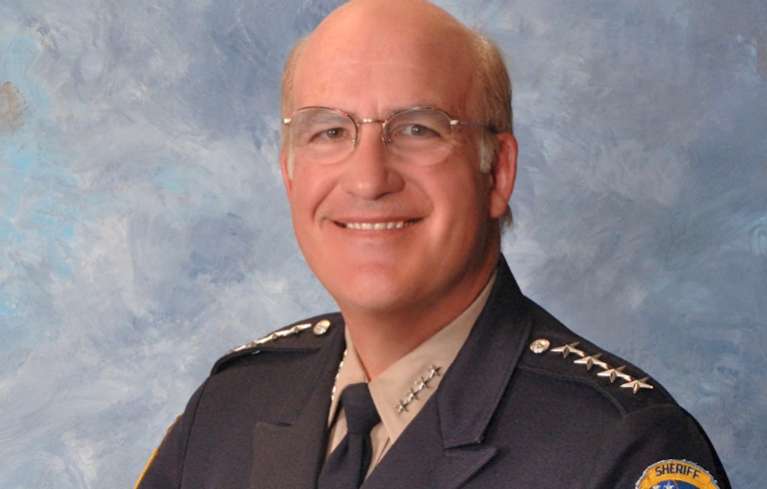
Ron Pierini

Ron Pierini

We concur with the bulk of the department’s employees that Pierini should continue to be sheriff, a position he was first elected to in 1997. He started with the department in 1976 – having been a captain in Tahoe, undersheriff and now sheriff.

He faces Dave Brady and Michael Gyll in the June 10 primary. The top two vote getters move onto a runoff in November.

Brady and Gyll are outsiders, even though Brady had been a reserve deputy for the department before he declared his candidacy.

While it’s not always in the best interest of a department to keep the status quo or to hire within, we also don’t believe in the need to change leadership for the sake of change.

Pierini has proven he is capable of weathering many storms. We believe he will continue to do so for the next four years.

The sheriff’s department’s budget has been cut by $2 million and 10 positions have been eliminated in the past few years. Despite the cutbacks, the department’s arrest to prosecution rate is 38 percent. Nationwide the average is 22 percent.

He was at the helm when 9-year-old Krystal Steadman was kidnapped and killed in 2000 in Stateline. In 1980, he was a captain at the Tahoe substation when Harveys was bombed.

While we don’t wish crimes like that to occur, it is reassuring to know someone with that breadth of experience will be directing the troops to find the bad guys.

By the nature of the job Pierini spends the bulk of his time in the valley. But he has a connection to Lake Tahoe that the other two candidates don’t. This is another driving reason to keep Pierini in office. He works well with the other leaders at the lake – whether it is peers in other law enforcement agencies, fire personnel, casino executives or other business people.

Brady’s financial background is intriguing and something often not seen in the ranks of law enforcement. But his character has been questioned. And already the voters of Douglas County ousted him out of office when he was a commissioner.

Gyll appears enthusiastic, but he presents no new ideas. He lacks the polish and gravitas to take on the top position within the Douglas County Sheriff’s Office.

We need a sheriff who can reach across the aisle. We need someone who is capable of making tough decisions. We need someone who is a leader in his department as well as the community.

That person is Ron Pierini.


Editorial: Honor service with moment of silence

Publisher’s note: This editorial is from the May 23, 2014, Seattle Times.

America’s gratitude to the men and women who gave their lives to protect our nation is genuine, though our emotional connection to Memorial Day has eroded.

Fewer and fewer people enlist and serve in the military, so the broad, common experience shared by earlier generations has frayed.

Here is a suggestion from The National Moment of Remembrance, which promotes a minute of silence to remember and honor those who have died in service to our country.

All Americans are urged to pause wherever they are at 3pm local time on Memorial Day to give thanks. A simple, elegant expression.

This Memorial Day is grabbing more headlines as the U.S. Department of Veterans Affairs draws fire over allegations that patients died while waiting for treatment. The number of VA hospitals under scrutiny has climbed from 10 to more than two dozen.

Read the whole story


Opinion: Be responsible in bear country

By Carol Singleton

May is Be Bear Aware Month and the California Department of Fish and Wildlife reminds the public to act responsibly when in bear country.

Spring is the time of year when California’s black bears emerge from their winter dens in search of food. Because bears are attracted to anything edible or smelly, their search often leads them into campsites and residential neighborhoods, where trash and food is readily available.

There are an estimated 30,000 bears in California. Throughout spring and summer, CDFW receives many calls when bears break into homes, rummage through trash bins and raid campsites. These bears are often labeled “nuisance” bears, but in reality they are just doing what comes naturally to them, foraging for food.

“Human-bear conflicts are largely the fault of humans. People need to adjust their behavior when they live and recreate in bear country,” said Jesse Garcia, CDFW’s bear program manager. “It is absolutely necessary to secure food and trash receptacles to avoid attracting bears. Campers and residents can prevent expensive property damage, safeguard people from injury and save the lives of bears by exercising a little common sense. Bears that become habituated to humans or conditioned to eating our food and trash often have to be killed.”

Bears have keen noses and can smell an easy meal from miles away. They can easily tear a front door off its hinges if they smell food left out on the kitchen counter.

The best defense against bear break-ins is not to attract them to your property by following these tips:

  • Purchase and properly use a bear-proof garbage container.
  • Wait to put trash out until the morning of collection day.
  • Don’t leave trash, groceries or animal feed in your car.
  • Keep garbage cans clean and deodorize them with bleach or ammonia.
  • Keep barbecue grills clean and stored in a garage or shed when not in use.
  • Only provide bird feeders during November through March and make them inaccessible to bears.
  • Don’t leave any scented products outside, even non-food items such as suntan lotion, insect repellent, soap or candles.
  • Keep doors and windows closed and locked.
  • Consider installing motion-detector alarms, electric fencing or motion-activated sprinklers.
  • Harvest fruit off trees as soon as it is ripe, and promptly collect fruit that falls.
  • Securely block access to potential hibernation sites such as crawl spaces under decks and buildings.

No one wants to worry about housekeeping on a camping trip, but maintaining a clean campsite is the responsible and safe thing to do when visiting black bear country.

Here are a few tips for bear-proofing campsites:

  • Use bear-proof garbage cans whenever possible or store your garbage in a secure location with your food.
  • Store food (including pet food) and toiletries in bear-proof containers or in an airtight container in the trunk of your vehicle.
  • Clean dishes and store food and garbage immediately after meals.
  • Clean the barbecue grill after each use.
  • Never keep food or toiletries in your tent.

The only species of bears in California are black bears. However, they do range in color from blonde to black, with cinnamon brown being the most common color.

There are an estimated 30,000 black bears in California.

Black bears will seek to avoid confrontation with humans. If encountered, always leave them an escape route.

Males are much larger than females and can weigh up to 500 pounds, although average weight is about 300 pounds.

Black bears can sprint up to 35 mph and they are strong swimmers and great tree climbers.

A typical wild bear diet consists of berries, plants, nuts, roots, honey, honeycomb, insects, larvae, carrion and small mammals.

As winter approaches, bears will forage for food up to 20 hours a day, storing enough fat to sustain them through hibernation. Bears often hibernate in large hollow trees 40 to 60 feet off the ground.

Bears that are accustomed to people can become too bold and lose their fear of humans.

Carol Singleton works for the California Department of Fish and Game.


Letter: County should listen to Meyers residents

Publisher’s note: This letter was first sent to the El Dorado County Board of Supervisors on May 21, 2014.

Dear Chair Santiago and members of the Board of Supervisors:

I am writing to you on behalf of California’s South Tahoe Chamber of Commerce (California Chamber) board President George Alm and the board of directors as a follow-up to my letter of May 2, 2014.

A meeting was held May 19 from 3pm to 5:10pm between me and five Meyers area residents and your Principal Planner Brendan Ferry at the county’s South Lake Tahoe office on Emerald Bay Road. The purpose of the meeting was to discuss the content of the May 2, 2014, letter and other related issues to planning in Meyers.

On behalf of the Meyers area contingent, I want to thank Brendan Ferry for taking time to meet and listen to our concerns and discuss the planning efforts to date. We all know that this planning effort has had challenges. We know as well that challenges can lead to opportunities for a successful outcome. We acknowledge that efforts are being made to make the planning process more inclusive. The Meyers area residents who attended (the May 21) meeting and our chamber board are committed to working with the county of El Dorado and TRPA officials to arrive at a plan that is acceptable to the community.

It is clear that a notable portion of the Meyers community has only recently began to understand the significance of the emerging new Area Plan and TRPA’s land use changes from the Regional Plan update. Many current residents and business owners and operators have heard great concern and confusion expressed by their community members. This condition creates a greater opportunity to ensure that the new Meyers Area Plan works for the community because community members are now more aware of and anxious to engage the planning process.

The product of our discussions (May 21) was acknowledgement that there is a great diversity of opinion regarding how residents, property owners, and business owners and operators view the future of Meyers as well as great confusion and lack of understanding of proposed land-use changes. This diversity of opinion about the future is in itself the core condition that must be assessed and evaluated in a manner that helps County officials to arrive at a verifiable and democratically-based decision on land use and restores faith that the entire community has had its voice heard.

Issue, concerns, and suggestions


The May 2, 2014, letter highlighted a number of issues and concerns of Meyers’ residents, and I will not repeat them here. I am highlighting issues that are reinforced by (the May 21) conversation and offer a community-based perspective on them.

1. A verifiable method for the county to determine that it has gained a wide range view of the proposed Meyers Area Plan. A “validated” communitywide survey of all residents and property owners is needed to guide and shape the final Meyers Area Plan. Such a survey would allow all interested parties in Meyers to have a voice in this 20-year plan. It would also provide the opportunity for all community voices to be heard. This request has been made in the past and is reiterated herein.

2. Defer any final action on the plan until a new county supervisor is elected and seated to allow him or her input on the new 20-year plan. The voters of the 5th District will elect a new supervisor in November and the man or woman elected should have an opportunity to be heard and decide on a final area plan. I am told and believe that all candidates for county supervisor for the 5th District support this suggestion.

3. Verification in the plan document that available incentives provided under the plan will be applicable to existing business and property owners. We understand that that changes to the draft (but not yet public) plan have been made to do so, and we are anxious to see specific language in this regard.

4. Specifically define height limitations in all planning areas. There should be a specific height standard written in the plan for all land uses leaving no room for creative interpretation of the plan.

5. Define clearly what criteria will be used and by whom to grant variances to building standards including height restrictions if variances are permitted under the plan.

6. Affirm in writing verbal assurances made by staff to make available to all existing business and property owners incentive allowed under an Area Plan.

7. Eliminate mixed land use additions to the plan that could compromise existing business uses (e.g. motel next to an industrial use). Do not allow the creation of uses near existing businesses that compromise the ability of owners to conduct their businesses. I am told that there is great interest in the community to maintain land uses under the 1993 Community Plan or some iteration thereof. Existing Meyers business owners and operators need to be carefully consulted so that land use decisions are clear and in line with the interests of Meyers’ business owners and operators and residents.

8. Ensure in language of the plan that all existing business will be permitted uses in any new plan adopted and that the owners of the businesses can sell their property for the same use to a subsequent owner.

9. Include in specific language of the plan that the County does not support and will not use of eminent domain (acquisition of private property over the objection of the property owner) to achieve plan goals and objectives nor will the county support the use of this extraordinary confiscatory power by other agencies.

10. Define in the plan that county and TRPA officials must carefully explore with Caltrans alternative ways to ensure safe passage of pedestrians and cyclists across Highway 50 including installation of a traffic signal. Options for safe passage must then be reviewed with the Meyers community to ensure that they are acceptable.

11. Maintain community character while striving for community improvements. Community members do not oppose new development in Meyers. They do want to retain the rural character of the community.

12. Write the language of the plan in plain English, not “planners speak.” Make the document user-friendly and informative.

13. Determine if the California Tahoe Conservancy is still willing to leave existing CTC-owned parcels vacant for community open space if Meyers residents want this to happen. I am told that this was a promise made earlier in the planning process.

14. Let the people of Meyers decide their future. Comments have been made to Meyers’ owners and operators over the course of the current planning process by certain policy makers and planners that Meyers should be changed and allowed to develop like “cities” in Europe living and working in a “Pack & Stack” world. Meyers is of course not a city. This “Pack & Stack” notion and “European” future scenario needs to be tested against what the people who live and work there think and want. It is the people of the community’s future that is being planned, and they need the ultimate say in the decision. The Board of Supervisors needs to hear from the community in a verifiable and inclusive way before making changes that impacts them.

Thank you all for taking time to read and consider the comments made in this letter. All of us appreciate the time and effort you make to serve us and our county. The California South Tahoe Chamber of Commerce Board remains ready to assist you, the Meyers community and our friends at TRPA to ensure a successful outcome. Copies of this letter will be sent to the members of the TRPA Governing Board and interested parties.

Sincerely,

Dave Jinkens, chamber board member and government affairs liaison volunteer


Letter: Power to the people — yes on L

To the community,

As a homeowner and longtime resident of South Lake Tahoe, the library is important to me because it provides a link to knowledge, and everyone knows knowledge is power: Power over poverty, power over ignorance, and power over circumstance.

To live and work in a community where power is in the hands of only the few would be quite stifling and recalcitrant.

Luckily for all of us, the citizenry of South Lake Tahoe feels otherwise, and votes accordingly. I only hope that the prevailing wind, with an emphasis on technology, will see the broader picture and realize that not all citizens have access to the same resources. The library provides that link to technology and to knowledge that many lack in their homes and residences.

Please vote yes again to keeping our library open and accessible to all. Vote yes on Measure L.

Sincerely,

De-Anne Hooper, executive director South Lake Tahoe Family Resource Center


Opinion: Telemedicine changing health care

By Ann Truscott

Expanding access to health care in rural communities requires innovation and collaboration. In remote areas like South Lake Tahoe with smaller populations, residents still expect high quality care and individual medical needs vary widely.

To increase specialty medical services available in our community, with consideration that unique medical conditions may not have the demand for a local office, Barton Health launched telemedicine in 2009.

Telemedicine, or telehealth, is an exchange of medical information through electronic communication. Saving time and gas money, a patient can conveniently see a specialist from a distant location. Using a live video stream, a specialist at another location discusses the patient’s medical condition and views the patient’s medical records, vitals, images, and other pertinent information electronically. All appointments and documents are kept confidential and transmitted over a secure network.

Telemedicine technology expands the spectrum of care. Without leaving town, a patient receives specialized care and continuity with his or her current care plan. Local medical providers play an active role in the process and expand their own skills. This patient-centered approach helps meet the patients immediate health needs, leading to more successful outcomes.

All Barton Telemedicine consultations take place with licensed medical providers. It is also reimbursed by most health insurance carriers and Medicare. Barton Telemedicine providers are located at larger medical centers, like UC Davis and UC San Diego. Barton also has arrangements with smaller practice providers from Truckee, Roseville, and Bakersfield. Current specialties available include cardiology, dermatology, endocrinology, infectious diseases, neurology, oncology, and psychiatry.

Barton has been recognized as a leader in telehealth services in California. In its fifth year, Barton hosts between 150 and 200 consults each month between Barton Memorial Hospital, skilled nursing, the emergency department, and five physician offices. Barton staff holds trainings for rural communities on how to integrate Telehealth and Barton Telemedicine received the California Telehealth Network Award for “Community Collaboration” in 2013.

Telemedicine continues to evolve and expand. In 2012, Barton was instrumental in encouraging the Federal Communications Commission to allocate funds for broadband access to rural areas and promote the expansion of telehealth services. To cover costs, Barton has received grants and mini-grants to grow the program. Future projects include neonatology consults with UC Davis Medical Center and a Telehealth reimbursement grant to identify costs and savings associated with the expansion of remote services.

For more information and complete list of services available with Barton Telemedicine, contact your local primary care provider or visit bartonhealth.org/telehealth.

Ann Truscott is the Telemedicine Coordinator for Barton Health.