Letter: Measure L advocates say thank you

To the community,

As of Friday morning, Measure L had 80.43 percent yes votes. So many people made this happen. The Committee for South Lake Tahoe Library – Measure L worked unceasingly.

Our local media gave us the opportunity to share the high stakes involved in this measure through articles, letters, guest columns, advertising and endorsements. Property owners allowed us to place signs all over town. Countless volunteers shared information with their friends, neighbors and work colleagues.

Most important of all, local voters supported Measure L. As a result of the choice you made on your ballot, South Lake Tahoe is now assured of a fully staffed, high quality public library open five days a week, for the next 12 years.

I thank you from the bottom of my heart.

Sincerely,

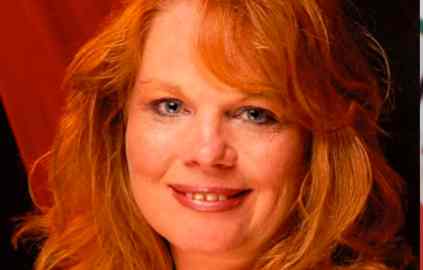
Kay Henderson, president South Lake Tahoe Friends of the Library and chair of the Committee for South Lake Tahoe Library – Measure L


Opinion: It took a community to build LTCC

“Education is the most powerful weapon which you can use to change the world.”

— Nelson Mandela

By Kindred Murillo

When I read the above quote, it evokes emotion that is difficult for me to put into words because I have such a passion for educating our youth and providing life-long learning to our community. Since arriving in South Lake Tahoe three years ago, I have come to understand just how much this community also values education. That is why I feel like I belong here.

As Lake Tahoe Community College celebrates 40 years of serving the communities of the South Shore, I want to take time to reflect on what propelled the college to this place. As we “Honor the Past … and Ascend into the Future,” it is clear that our community supported and made LTCC what it is today, right from its very beginning. For the efforts of those leaders who fought to bring access to higher education to South Lake Tahoe, to the more than 87,000 students who have taken classes, graduated, transferred to four-year institutions, and to the many generous individuals and businesses who have donated tirelessly to our causes, in particular scholarships for students in need – a heartfelt thank you.

Kindred Murillo

Kindred Murillo

To build an entire college from the ground up it truly takes a vision of what is possible and determination to make that vision become a reality. It happened here because of dedicated, sincere, and tenacious people who had a vision of bringing higher education to South Lake Tahoe. In the 1960s this group, led by individuals such as Roberta Mason, Tony Magliari and Gene Bellisario, among others, raised community awareness, took on California legislation, and fought to bring higher education to our community. These efforts led to the formation of a local college to provide higher education, arts, culture, and many other services to our small, rural community. It also led to an infusion of state funding that provided facilities, programs, and services that continue to benefit this community. What followed was the opening of the original campus in the old Gerkins Lodge on Highway 50, where every classroom had a fireplace and a bathroom: one of the perks to starting a college in a converted motel. The college’s current and permanent home on Al Tahoe Boulevard opened in 1988 under the leadership of Guy Lease, who, along with James Duke and the first board of trustees, left a footprint in this community that has forever changed South Lake Tahoe.

Community colleges are only as strong as the community that surrounds them. We depend on our local community members to attend the classes, programs, and access the services we provide. Thank you for attending our local art show openings, our theater performances, and for trusting us to educate your children and help them achieve their educational goals. Our community college is a great option for students wanting to earn their associates degree and transfer to four-year schools, with more students transferring from LTCC to the UC and CSU systems than other community colleges our size. It is also the best local option for those seeking career and technical education.

You as a community have taken advantage of these options, and have benefited from them. Even though more than 50 percent of students who graduate from South Tahoe High School and go on to college come to LTCC, our goal is to increase that number, and increase the percentage of local high school graduates who access higher education. Simply put, I believe in LTCC because I believe everyone deserves the opportunity to improve their quality of life through education.

We are grateful to our foundation board members, which includes many residents of our community whose commitment to education rivals my own. These professionals, business owners, retired community members, faculty, and staff raise money to support scholarships and programs that support student success at LTCC. I thank them, our board of trustees, our committed faculty, staff, and administration, and especially you, our community members, for your continued commitment and for championing our cause to deliver quality, affordable education to anyone who seeks it.

Please join with us this year in celebrating 40 years of excellence in education at Lake Tahoe Community College. We are one community, one college.

Kindred Murillo is president of Lake Tahoe Community College.


Editorial: State Parks deserves respectable leader

Publisher’s note: This editorial is from the May 23, 2014, Sacramento Bee.

Gov. Jerry Brown’s parks director quit after an embarrassingly short tenure, giving the governor an opportunity to try again to find someone who can transform the troubled but world-class system.

Anthony Jackson, a retired Marine major general, was supposed to restore confidence after the previous director blamed budget cuts for needing to close 70 parks, only to discover $20 million in an off-budget account. Jackson is departing after only 18 months, with the parks system still struggling.

The Department of Parks and Recreation is in need of help but also has incredible assets, much public support and great promise.

Read the whole story


Letter: Collaboration for kids pays off

To the community,

On May 30, Live Violence Free in collaboration with South Tahoe Middle School and Soroptimist International of Tahoe Sierra held the annual Girls Empowerment Retreat for 33 middle school girls, grades 6-8.

The retreat included self-defense training from Escobar Training Grounds, self-love and sisterhood workshop by Soul 2 Soul, health and nutrition education, arts and crafts and a documentary activity about the importance of education. The participants received pizza thanks to the generosity of MacDuffs Public House and a gift bag thanks to Barton Women’s Health.

The girls engaged in self-reflection, group activities, leadership building, and practiced supporting one another.

This event was only made possible due to strong community collaboration and enthusiasm to support the upcoming generation of leaders.

Thank you to those who participated and donated.

Hannah Greenstreet, prevention educator Live Violence Free


Opinion: Time for Tahoe to decide what it wants

By Nancy Kerry

The polls have closed and voting is complete. Now the tallying begins.

These past few months of debate regarding the value of parking meters as a revenue source for the city has resulted in a higher level of engagement and discussion among community members about revenues, expenses and the future of the south shore. An open and free democracy quite often results in these types of lively debate with opinions and positions on all sides of the issues.

Nancy Kerry

Nancy Kerry

I’ve had the privilege of listening to various opinions on both sides of the issue and have heard many good opinions. The City Council’s decision to put this question before the voters was the right decision. The community has spoken through their vote, and their collective opinion is held in high regard and the community’s involvement is appreciated.

I commend Peggy Bourland and her group of friends that took it upon themselves to challenge a decision they did not agree with and circulated a petition. Her efforts and those of her group are exactly what democracy in the United States is all about.

Even when we disagree or when democracy is messy, it’s a wonderful and respectful method of having a powerful voice in your government. At the time of this writing, we do not yet know the outcome of the vote as the polls have just closed. However, the votes have been cast, the decision is therefore made and it is now in the County’s hands for tallying.

Thank you to all of the voters in this election.

Now that the issue regarding the meters is settled, it is critical the community turn our attention to the future of the South Shore. The question remains, “What future do we want and how do we envision paying for it?” The community of the South Shore receives more federal and state dollars from taxpayers in other parts of the state and country than most other communities because of the state and federal government’s efforts to protect our beautiful Lake Tahoe. As a community, we have relied on these and other outside funding sources for many years for capital improvements and public services.

However, those funds are less plentiful today and more competitive to obtain. If we envision investment in improved recreation amenities, significantly improved streets and roads and attracting private investors to remodel commercial properties, we need a strategic approach to economic development, business attraction and job creation. As a community, we can improve our economic forecast, which currently remains uncertain, by attracting and obtaining more private investment, supporting the local business community (both small and large businesses) and using growth in revenues to invest in our future.

But what future does the community want to invest in? It is sometimes easier to know what we are against, than what we are for. Now would be a great time to leverage the community’s interest in local decision making process to shape the future of the South Shore.

In the past four years, the city has reduced expenses significantly, eliminated 30 percent of the workforce, reduced employee wages and benefits and simultaneously invested millions of local tax dollars back into the community through the Harrison Avenue project, street improvements and other capital projects. The city cannot reduce a sufficient amount of expenses to generate enough revenue for the amount of the investment needed in the community.

Although we have more to do to continue to reduce expenses and long-term liabilities, the question remains the same – “What does the community want and how do we as a community envision paying for it?” We will be discussing these questions and more at the next City Council meeting on June 17 and I encourage everyone to join in the discussion and debate and shape the decisions impacting our tomorrow.

Nancy Kerry is city manager of South Lake Tahoe.


Letter: Meyers deserves more than political hyperbole

To the community,

I love my old truck even though it’s a little unsightly. It always gets me there and back, gets good gas mileage and it’s paid for. It is not the end of the world if I spill a little paint in the truck bed or load a river-wet dog into the front seat. Indeed, my yellow Lab believes stoplights are made for shaking.

I can be seen on any summer day, at any red light, with muddy water dripping from my face and arms, and a spiky-wet yellow dog laughing next to me.

Just last week, I was disheartened to hear, yet again, from one of our public servants, that “The Meyers people want a bikeable/walkable community so there will be no need for cars”. No, we never said that. However, the county and TRPA did say that and repeat it every chance they get. What was actually said at the meetings I attended was that we would like to have our bike paths finished.

Good grief, Pat Lowe would roll over in her grave if she knew how many grants were applied for to finish a bike path that was essentially paid for 20 years ago. As long as our bike paths remain unfinished, these “sustainable” groups and agency consultants will keep applying for grants and get them.

I also went around and around with the county regarding zone changes in Meyers. My shop was in the Commercial/Light Industrial zone, one of four separate zones in our commercial corridor. The TRPA’s Regional Plan update changed all four zones to one zone called Town Center, which is mixed use: residential, commercial, industrial, retail and tourist accommodation, all thrown together in a sort of “no-zone” zoning.

I asked what that means and the answer was akin to the old Abbot and Costello skit “Who’s on first”.

It went like this:

“Has my property zone changed?”

“No.”

“This new zoning map shows my property in the Town Center zone.”

“Yes.”

“So, is it Town Center or Commercial/Light Industrial?”

“It’s Commercial/Light Industrial.”

“Then why doesn’t the map say Commercial/Light industrial Zone?”

“Because you are zoned Town Center.”

“What?!”

No, what’s on third.

The walkable part of this bikeable/walkable community sounds all snuggly in theory, but I wouldn’t enjoy being forced to hump my groceries home every day because cars aren’t allowed. It’s simply unrealistic to “incentivize” people out of their cars. In the big city maybe, but not in Meyers. Who really wants to walk to an appointment in a snowstorm? Are we really going to walk to some new transit center, catch a bus to town, walk to another bus stop to catch another bus to Stateline or wherever? Do we really have that kind of spare time? And more important, are wet pets allowed on public transportation?

If you see “multi-use” in a planning document where “multi-use” wasn’t before, pay attention, your property value just changed. Why? Because now, a condo can be built right next door. Wonder how those tenants are going to feel when I fire up my panel saw at 10pm? Just like every other business owner, I work late far more often than I care to admit.

A housing project for seasonal ski resort employees could go in beside the Cabinet Shop. Have you ever experience the decibels of a high RPM power tool called a Router, at say, 6am? I can hear the sheriff’s banging on our doors already. If we can’t do our work in an area that we invested our money and futures on, in an area that was Commercial/Light Industrial but which the TRPA changed over 18 months ago without notification I might add, that, changes our property values and our lives. These small service businesses will be forced to move. Perhaps we don’t contribute enough tax dollars for the agencies liking? Perhaps a large housing project/condo/hotel would keep the TRPA fat for a while, but who is going to fix a frozen pipe or overflowing toilet on a freezing January night? By the time a plumber comes up from Gardnerville they’d be all wet. Which begs the question, are wet agency staffers allowed on public transportation?

Look, we have an outgoing county supervisor that is shoving this bikeable/walkable business down our throats. She has also been working hard to push this Meyer’s plan through, and sadly, will not disclose why this has to be adopted before she leaves office. Every candidate for Supervisor 5 has publicly stated that this plan should be held until after the election. They don’t want to inherit a nightmare any more than we residents do.

There was a private meeting three weeks ago that our supervisor organized to presumably have the six members of the Meyers Community Advisory Council vote this plan forward. As of this writing, the homeowner’s, business owners and residents of Meyers have not had access to this revised Meyer’s Area Plan. Thank goodness this was thwarted by a handful of party crashing Meyers residents who left work, left their important projects to stop this mess. They did not vote that day, nor did the attending MCAC endorse the plan.

I would hate to open the “paper” one day and read that “Meyers is thrilled to have their new area plan adopted and are moving forward to become the nation’s prototype for Pack & Stack living” but if we, as a community, don’t keep our eyes open, it just might happen.

For more information on the current Meyers Area Plan, go online.

Angela Olson, Meyers resident and business owner


Letter: Library measure deserves a yes vote

To the community,

Tuesday is election day. What an awesome opportunity for the voters of South Lake Tahoe to have their voices heard. When the polls close, there will be winners and there will be losers, as is the case with all elections.

That said, if Measure L passes, the number of winners will be immense. A yes vote for continuing the existing parcel tax to fund the library benefits us all by allowing our library doors to remain open, employing our helpful and knowledgeable staff and by giving our community a wealth of services only a library can provide.

If you have yet to cast your vote, please vote yes on Measure L. Let’s guarantee that the South Lake Tahoe Library will remain “the people’s university” – a place available to all, regardless of age, skill level, or ability to pay- making us all winners.

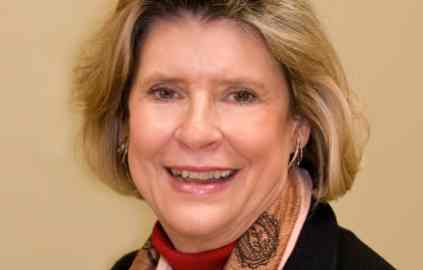
Denise Haerr, South Lake Tahoe


Opinion: Time to revisit outdated Master Plan for Higher Education

By Dan Walters, Sacramento Bee

As California’s population surged from migration and a postwar baby boom in the 1950s, education and political leaders wrote a Master Plan for Higher Education that envisioned a seamless array of low-cost, high-quality coursework.

Dan Walters

Dan Walters

Community colleges would offer two-year degree programs, technical training and lower-division classes for students planning to transfer to four-year schools.

The state college – later university – system would train the teachers, engineers and other professionals that a growing state would need in great abundance.

The University of California would be the state’s engine of research, offer a greater array of baccalaureate fields to top-tier high school graduates, train physicians and lawyers, and provide postgraduate studies up to the doctorate level.

Read the whole story


Letter: Don’t P on Tahoe

To the community,

The other day I saw a bumper sticker against paid parking in South Lake Tahoe on a nice car with a Nevada license plate. While the driver of that vehicle understandably would like to revert to the days of getting his front row beach access for free, eliminating the kiosks at Lakeview Commons and other locations simply means that South Lake Tahoe taxpayers will pick up the tab instead.

According to the city’s website, revenues gathered from the parking kiosks (approximately $250,000 per year) is dedicated to maintaining and improving the facilities where the kiosks are located, such as the boat ramps and restrooms at Lakeview Commons/El Dorado Beach. Without these dedicated funds, the city will either have to neglect maintenance — which would be unacceptable in this popular, highly trafficked destination — or use general fund revenue, aka local taxes, to pay for it.

Unlike the Lake Tahoe Airport, where city taxpayers subsidize high-rolling Nevada-bound golfers and gamblers, the paid parking program brings revenue to the city from those using city services, who paid on average $3.20 per visit last year. This is hardly an unreasonable price.

As a resident of El Dorado County, it’s in my selfish interest to get “free” parking, thank you very much city taxpayers. But as a resident of the South Shore community, I’m more than happy to make a small contribution for the privilege of parking right next to a great new gathering area on the lake that took tens of millions in public investment to create. If this were a private vendor trying to get a decent return on investment, rest assured the rates would be much higher.

Think of the community and the lake first when voting on the parking measure. Let’s not “P” on Tahoe – vote no on P.

John Friedrich, Meyers


Opinion: Collaboration emerges from ashes

By William Wade Keye

Disaster sometimes comes with a silver lining. Last summer’s 257,000-acre Rim Fire torched more than trees. The enormous blaze, which incinerated a large swath of the Stanislaus National Forest near Yosemite National Park, knocked out power transmission and threatened San Francisco’s water supply. It also cleared away some of the toxic social underbrush that has stymied federal forest management efforts for many years. This could lead to more fire-adapted, resilient and carbon-rich public forests across vast stretches of Northern California.

A Tuolumne County group, which includes timber industry and environmental representatives, had been meeting prior to the Rim Fire, searching for – and finding – common ground on previously deadlocked issues of forest management. Formed under the auspices of a 2009 law promoting ecological restoration, the Yosemite-Stanislaus Solutions collaborative is at the forefront of a new approach that is bringing people together to heal broken landscapes. The old “spotted owl versus logger” polarities have given way to fresh consensus, with fire ecology at its core.

Collaborative participants agreed on a mission “to restore and maintain healthy forests and watersheds, fire-safe communities and sustainable local economies using a science-based approach.” Since the Rim Fire, the collaborative has been aggressively pushing recovery efforts, which will include clearing dead trees from roadsides and replanting some of the most damaged sites. These restoration treatments begin with salvage logging, and this is where the story gets interesting.

Environmental members of the collaborative are sending a message to fellow conservationists that the days of routinely demonizing timber harvest on public lands may be coming to an end. An April letter from the group to Regional Forester Randy Moore, who oversees all the national forests in California, explained, “While individual members in YSS may prefer one or another of the possible salvage treatment alternatives, we all agree that prompt implementation of the hazard tree and salvage logging projects is essential to move the restoration process forward. Once salvage plans are completed, reforestation, watershed restoration, fuel reduction, and habitat enhancement plans can be given priority attention.”

This kind of consensus has been a long time coming, but it reflects growing concerns about the sustainability of our national forests in a time of climate change and increasingly destructive wildfires. California’s national forests are racking up ever-greater acreages of what the U.S. Forest Service terms “deforested conditions” following extreme wildfires such as the Rim Fire. These are situations where most, if not all, of the existing trees have been killed. Without replanting with trees, many of these burned acres will become choked with brush species, which store much less carbon than healthy timber stands.

The trend is now so firmly established that the Forest Service projects that by mid-century, our national forests will emit more greenhouse gases than they absorb. In other words, federal lands set aside for broad conservation purposes are on track to becoming major carbon polluters.

Yet this outcome is entirely avoidable.

Besides tree planting, forest restoration work requires an increased use of tools proven to reduce wildfire risks; thinning, chipping and prescribed fire. In some cases, selective timber harvest may be ecologically desirable, especially to improve site-growing conditions for long-lived and drought-tolerant Sierra Nevada pine species.

In addition to wildfire concerns, there is renewed focus on watershed health. This is especially important in California where most of our fresh water supply originates in our mountainous national forests.

Some organizations will continue to fight the old timber wars from the 1990s, raising alarms, fundraising and litigating to maintain their prestige and power over public land policies. Others, like the Yosemite collaborative members Central Sierra Environmental Resource Center and Tuolumne Group of the Sierra Club, are helping to move the forest management debate forward. Similar collaboratives have formed throughout the West to begin the process of revitalizing depressed rural economies.

Environmentalists who support forest restoration and ecosystem resilience are leading the way. Those clinging to past misgivings and ideological purity are being moved toward the exits.

Will some interest groups litigate to try to put a stop to the Forest Service’s recovery plans? Probably, but I hope not.

Even if the federal government, with the support of the collaborative, authorizes salvage logging, there will be plenty of dead trees left to decay naturally. The state’s wood-processing industry isn’t what it used to be. Even if the Forest Service wanted to clear all the dead trees – which it doesn’t – California sawmills couldn’t possibly absorb that much timber before it decays and loses commercial value.

There is something for everybody in the Rim Fire’s aftermath, most particularly the prospect of a healing, and not just for the land, but for the people who dearly want to see that land nurtured and sustained.

William Wade Keye is a registered professional forester and a past chair of the Northern California Society of American Foresters.