Letter: Aramark makes amends with customer

Publisher’s note: This follows up on the letter from earlier today about a Livermore family’s unpleasant experience with the Tahoe Queen, which is owned by Aramark.

To the community,

I received a very nice phone call from John Kenny, general manager from Aramark, and this follow up email. [See below]

He told us that he knows of the people involved with the situation and it was being addressed and taken care of. He apologized for their behavior and was very sorry about our unfortunate experience. I’m assuming he checked into everything we said, and found it to be true.

We really appreciate that he took the time to check into the situation and personally called us.

Anita Pasch

Dear Anita,

Thank you for taking my call today. I again want to apologize for your experience with us. As we talked about on the phone, please let me know when you will be back in Lake Tahoe and we will set you up with a nights lodging at Zephyr Cove Resort and also Champagne Dinner & Dance Cruise tickets aboard the MS Dixie II.

Again, please accept my apology.

Sincerely,

John Kenny, Aramark general manager


Editorial: DA needs to investigate EDC supes

Publisher’s note: This editorial is from the July 18, 2014, Mountain Democrat in Placerville.

Some of you may have noticed the My Turn column July 2 by all four members of the El Dorado County Board of Supervisors. [The same editorial was posted July 4 in Lake Tahoe News.]

Unusual.

Also, illegal.

Yes, there was no regular item on the board’s agenda for them to approve whoever wrote this on their behalf. It’s been clear to us for a long time that none of the four has ever exhibited a talent for writing. And now it’s also clear none seems to have a talent for knowing the law. Even if one board member happened to actually put together a few bullet points and a lot of general PR pabulum, it still required approval from the other three.

We’re sticking with the theory that someone on staff or someone on contract wrote this 864-word piece.

Why is this illegal? It violates the Brown Act that is also known as the local government open meeting law. Under Section 54952.2 (b) of the Brown Act, “… any use of direct communication, personal intermediaries or technological devices that is employed by a majority of the members of the legislative body to develop a collective concurrence as to action to be taken on an item by members of the legislative body is prohibited.”

The operative word here is “prohibited.”

For the four members of the Board of Supervisors to sign their names to this requires action. To act requires communication. Because this did not appear on an agenda item for the board members to vote in public they either did it secretly behind closed doors without notice or they approved it one at a time through the actions of an intermediary.

We call on the district attorney to investigate this, find out who the intermediary was, publicize that person and send a formal letter to the board to take corrective action for this “unlawful action by the legislative body.”


Letter: Tahoe Queen ruins 50th anniversary

To the community,

We just celebrated our 50th anniversary. We saved up to have a little party and then take our family to Lake Tahoe for a few days.

Back in April we booked the dinner cruise on the Tahoe

Queen for 12 people on July 17, our last night there. Since there was thunder that afternoon, we called the office to make sure the boat was going out. They asked for my name and confirmation number. They said, yes it was going out and to be there 30-45 minutes before the departure time of 6:30. We were there at 5:45. When we arrived, the boarding gate was locked and the

office closed. A crew member came out and said “tonight is a private party.”

I showed him my confirmation paperwork. He then went and got someone who we found out was Rubin, the food and beverage manager. He told us in no uncertain terms we were not getting on the boat. We could see he didn’t want to help us. He was rude and obnoxious in his attitude. He basically said that this was a $30,000 booking and our 12 people wasn’t very important.

We asked what he could do to help us with this situation. We asked for a phone number to speak to some

one else in charge. We were told they could put us on the Dixie. By now it’s almost 6:30. The

Dixie had already sailed.

When my husband explained that “you could have called us and let us know this was happening” he was told we called and left a message. It’s now 7pm.

The kids are hungry and the adults upset with how the situation was being handled.

When we got home Saturday, I checked my answering machine. It was Thursday at 11:44am. The message was from the company stating “the boat isn’t going out tonight, but we can put you on the Dixie.” I’m away from home, having family time. I’m not thinking about messages. You don’t call five hours before to tell us our cruise wasn’t going out.

You can’t tell me that the party of 160 was a last-minute booking. They had plenty of time to notify us of this event. We’ve all ready paid for the dinner cruise. We were told. we’d get our money back. That’s not the point.

Our celebration was ruined. The whole situation with Rubin and his attitude was very unprofessional. He wasn’t a very good representative for the company.

Ron and Anita Pasch, Livermore


Letter: Drug coalition recognizes businesses

To the community,

The South Tahoe Drug Free Coalition would like to extend a huge kudos to the businesses that attended the ABC (Alcoholic Beverage Control) seminar hosted by South Lake Tahoe Police Department on July 18.

It was great to see these businesses taking the extra steps to avoid selling alcohol to minors or visibly intoxicated community members.

Thank you for your hard work: Base Camp Pizza Co., Azul, Rojos, Classic Cue, Turn 3, Tahoe Bowl, Flight Deck, and 7 Seas Inn.

Melody Easton, South Tahoe Drug Free Coalition


Letter: Elks help dish food at Bread & Broth

To the community,

“The community needs help and we’re here to help them,” said Roger Barragan, trustee chairperson for the Tahoe/Douglas Elks Lodge No. 2670.

He and three fellow Elks Lodge members Jeanne Barragan and Don and Dee Young were the sponsor crewmembers representing the Tahoe/Douglas Elks Lodge at Bread & Broth’s July 7 evening dinner.

This was the second Adopt A Day sponsorship for the Elks Lodge this year and their generosity continues later this month with a third AAD sponsorship on July 27. Bread & Broth is extremely grateful to the Elks Lodge for so earnestly embracing the goal of the B&B program to feed the less fortunate of the Lake Tahoe South Shore Community.

With the continued support of donors like the Elks Lodge No. 2670, B&B is feeding over 150 needy guests at our Monday full course evening dinner at St. Theresa Church Grace Hall and a soup/pasta meal on Fridays at Lake Tahoe Presbyterian Community Church.

“Great experience,” said Dee Young. “More folks should come and enjoy the dinner.”

Bread & Broth really appreciates the enthusiasm and hard work of the Tahoe/Douglas Elks Lodge No. 2670’s sponsor crew and their Lodge’s financial support of B&B’s meal program.

Carol Gerard, Bread & Broth


Letter: Truckee air show a success

To the community,

The Truckee Tahoe Air Show and Family Festival has come and gone, and it was a great event. The local EAA Chapter 1073 registered Young Eagles on the day of the air show, and gave them free airplane rides the next day.

Several volunteers helped with registration Saturday and then helped with keeping things organized on Sunday when several pilots brought their aircraft out to fly the Young Eagles. The whole team of about 20 volunteers supported doing the flights for 128 very happy kids.

The EAA’s Young Eagles Program introduces young people ages eight through seventeen to aviation by giving them a free airplane ride. Pilots receive no compensation other than the smiles they see on the youths’ faces. EAA pilots have flown over 1.8 million Young Eagles across the nation and in several other nations since the program started in 1992, and our local chapter has flown over 2,500.

Once a youngster becomes a Young Eagle, many opportunities open to them, including a free Sporty’s Learn to Fly Course, EAA Student Membership, scholarships, etc.

Many thanks to all of our volunteer ground crew and our volunteer pilots. Thanks also to the Young Eagles who flew with us and got a taste of the joy of flying over our beautiful area.

Tom Meadows, EAA 1073 Young Eagles coordinator


Opinion: More shenanigans with Meyers plan

Updated July 18 12:15pm

Publisher’s note: Tahoe Regional Young Professionals has issued a statement since the column was posted that says, “Mr. Curtzwiler made the incorrect statement that TRYP was ‘behind the project’ for the catalyst project. This is completely unfounded and untrue. Our organization does not take stances on political or planning issues.”

—–

To the community,

The following is a letter sent by [Steve] Teshara. The Jason Drew mentioned is a member of the Tahoe Chamber board of directors as well as a member of the Tahoe [Regional] Young Professional group which is behind this new project.

This is what the original fiasco project was all about.

Kenny Curtzwiler

Kenny Curtzwiler

Yes, it would be nice to upgrade Meyers, but not at the expense of what is now here. I can’t believe how quiet my opponent has been throughout this whole project. She is on the board and has to know about this and how the community feels. I understand why Norma [Santiago] is quiet and went to a town meeting in Pollock Pines and found out she is not very well liked due to the fact that she is pushing an agenda down there that no one wants either. They actually want to increase the density first proposed as well as the height limit to accommodate this “bed and breakfast” concept when in actuality it is a hotel. Why, oh why, are they trying to be so sneaky about this project, not Brendan [Ferry], but the people who actually run the town. How many town centers do we need? Besides, Meyers is made up of about seven different areas from Golden Bear to Christmas Valley.

Kenny Curtzwiler, Meyers

Here is the letter:

Sustainable Community Advocates

218 Elks Point Road, Suite 202

PO Box 1875

Zephyr Cove, NV 89448

775.588.2488

Date: July 7, 2014

To: Brendan Ferry, Principal Planner El Dorado County

Adam Lewandowski, Long Range Planning Manager Tahoe Regional Planning Agency

Fr: Steve Teshara, Principal

Re: Comments on 3rd Draft of the Meyers Area Plan (June 2014)

Thank you for the opportunity to review the Third Draft and the list of June 2014 changes to the earlier 2nd Draft. As you are aware, I attended many of the early meetings of the Meyers Community Advisory Council and nearly all of the larger community meetings organized by El Dorado County with the assistance of the TRPA. As Chair of the South Shore Transportation Management Association (SS/TMA) I have been involved for the last twenty years in many Meyers Area transportation and community mobility planning initiatives. I have reviewed each of the previous draft Meyers Area Plans.

Unfortunately, several of the June changes constrain the value of the Area Plan and make the adopted Community Vision, Plan Purpose, and a number of the stated Goals and Policies, much less likely to occur. I strongly urge you to reconsider these changes.

My comments build on those you recently received from Jason Drew, a Meyers resident. For convenience, I have restated Jason’s concerns from his e-mail of June 29, summarized in the following three paragraphs:

• Height Limit. The 35-foot height limit is undesirable in the Town Center. This height limit constrains creativity and the potential for architectural character to be integrated in new commercial or multi-family structures. 42 feet provides more flexibility while still keeping structures from blocking viewsheds. The additional 7 feet is not enough to create another full story but does provide for additional dormer or attic space, which is important for architectural character or, in the case of small commercial businesses, the ability to integrate additional onsite covered storage.

• Density. The original plan called for 40 units per acre in what will now be the Town Center. The new draft calls for 15 units per acre. This drastic reduction will make it very difficult, if not impossible, to make the finances work on small commercial or tourist redevelopment projects. Although some participants at the March public meeting were in favor of the 15 units per acre, I don’t believe most people in the room understood what 15 units per acre looks like or means for penciling out the finances on a project. For example, many bed and breakfast properties or boutique hotels in other areas of the Basin or in other tourist destinations easily exceed this density. Bed and Breakfast accommodations are often 4 to 5 room facilities on a typically one-quarter-acre lot. This would put B&Bs at 16 to 20 units per acre and exceed the draft revised Plan limit. In order to encourage the type of redevelopment and investment our community wants, the Plan needs to provide density limits that make them viable.

[See specific example of a successful boutique hotel property in Truckee cited below].

• Commercial Floor Area (CFA). The Plan has focused on encouraging and promoting small business. This is commendable, but the requirement that one half of the CFA available in the Plan be set aside for small businesses (defined as less than 2,500 square feet) is troubling. Rarely will a commercial enterprise or small business have the capital to revamp an existing structure, redevelop a blighted site, or develop a new site at this size. Typically what happens is a larger project, with economies of scale, will redevelop or revamp an existing property (which may have multiple structures) at say 8,000 to 10,000 square feet and then will sell or lease smaller spaces to interested small businesses. Rarely do small businesses themselves have the capital to make the necessary investment to revamp or redevelop a site. By setting aside one half the available CFA for businesses less than 2,500 square feet, the Plan will unintentionally limit the variety and pace at which new businesses may start and thrive in Meyers. Please consider dropping this to one quarter of the available CFA or less.

In addition to the above, I respectfully submit the following comments:

• Boutique Hotel Example. The adopted Meyers Community Vision and other language in the Plan reinforce Meyers as “a hub for outdoor activities.” Based on this focus, I see the popular Cedar House Sport Hotel in Truckee as an excellent example of the type of lodging property investment that should be allowed and encouraged by the Meyers Area Plan.

The Cedar House Sport Hotel is comprised of 42 units located on 1.34 acres. An event center and restaurant is located on a separate adjacent parcel. There would be no Cedar House Sport Hotel if Truckee had limited tourist accommodation units to no more than 15 per acre.

I encourage you to visit the website. Below is a sampling of the property’s marketing position. I have stayed there and know many who have enjoyed the experience, so I can vouch for the claims. Cedar House has some great ratings on sites such as TripAdvisor.

Cedar House Sport Hotel – Where Style Meets Adventure

Cedar House Sport Hotel is:

Inspired by the mountains

Enhanced by nature

Designed for adventure

“The Cedar House Sport Hotel explores our need to connect to nature, emphasizing in its design a harmony that is sympathetic to the human body, mind and spirit. Strength, Structure, Environmental Awareness, and Respect to the natural materials used are found in the themes throughout the design. The Cedar House Sport Hotel was inspired by its setting high in the Sierra Nevada Mountains, nestled in the Martis Valley, just minutes from historic downtown Truckee and Lake Tahoe.”

Several Recent Plan Changes Are Inconsistent with draft Plan Goals and Policies

The recent changes in height, density provisions are inconsistent with several Goals and Policies. Here are just two examples:

• Land Use, Goal 1. This goal includes “tourist accommodation.” With the revised density limit of 15 units per acre, no tourist accommodation is likely in the Meyers Area Plan.

• Land Use, Policy 1.2: This policy includes reference to a “bed and breakfast inn.” With the revised density limit of 15 units per acre, no bed and breakfast accommodation is likely in the Meyers Area Plan.

Community Incentive Program

The 3rd Draft Plan eliminates Land Use provisions of the Community Incentive Program related to height and density. A related change was made to Section 130.A.1 (Scenic Quality).

As with the changes to height and density cited above, those in charge of making these decisions have failed to provide adequate justification to support the changes. No justification is provided in the short table “June 2014 Revisions to the draft Meyers Area Plan”. Absent adequate justification, the specific changes discussed in this memorandum that were made to the Land Use chapter should be reversed. There was substantial rationale for including them in previous draft Plans. In the alternative, corresponding changes should be made to the related Plan Goals and Policies. Goals and Policies cannot promise to deliver what they are unable to deliver.

There is much to like and support in the Meyers Area Plan. Please don’t undermine the Plan with changes that have no basis in good planning.

Thank you for the opportunity to provide these comments for your consideration. I would be happy to discuss further with you prior to the start of formal hearings on the Plan.
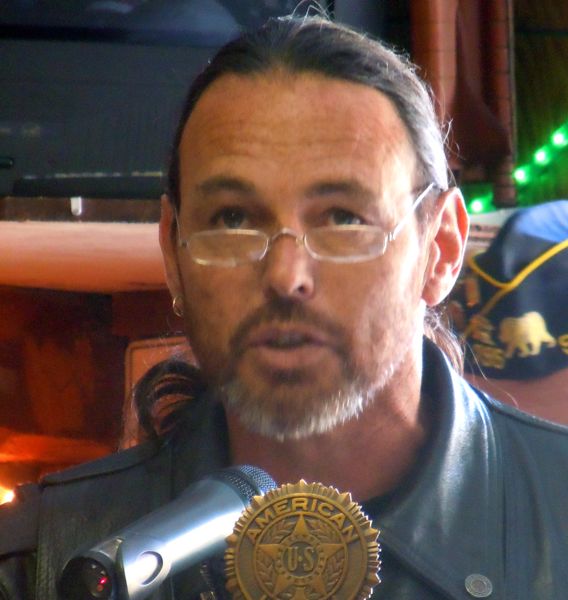



Opinion: Animals don’t need handouts

By Marc Kenyon

California’s wildlife is one of its greatest treasures, and the California Department of Fish and Wildlife is committed to protecting and conserving this important resource. As the drought continues into the summer months, CDFW reminds residents to be mindful of their actions in the outdoors and to take measures to discourage wildlife from coming into contact with humans.

During times of drought, animals may have to search farther for food and water. Although these periods can be stressful for animals, they are also a natural part of ecological systems that regulates their numbers. In nature, we must realistically expect some starvation and overall increased mortality. Otherwise, nature wouldn’t be natural.

Well-intentioned residents who set out food for wild animals are actually doing them no favors, particularly for large animals. Feeding deer may cause them to congregate in small areas in unusually high numbers, which can cause the spread of disease and increase the likelihood of collisions with vehicles. Deer may also attract dangerous predators like mountain lions to residential areas.

Careless campers and residents who fail to secure their garbage can also cause problems. The scent of trash, particularly leftover food scraps, will lure bears out of the woods. They are likely to return again and again in search of an easy meal. Habituated bears can cause extensive property damage, and some ultimately have to be killed.

Both deer and bear are considered “big game” mammals and it is against state law to feed them. A citation could lead to hefty fines and jail time.

Reports of wildlife sightings have become quite common with the increased use of cellphone cameras and social media, and with increased development into largely undeveloped areas. In most cases, wildlife sightings are not a cause for alarm and are not necessarily due to the drought. Wildlife lives in the hills, fields and forests all around us, and we must do our part to help them maintain their natural ways.

Follow these “Keep Me Wild” tips to help ensure you are not attracting wildlife to your property:

  • Secure trash in bear-proof cans and don’t wheel them out until collection day morning.
  • Don’t leave trash, groceries or animal feed in your car.
  • Harvest ripe fruit off trees and promptly collect fallen fruit.
  • Do not use bird feeders.
  • Keep barbecue grills clean and stored when not in use.
  • Don’t leave any scented products outside (i.e. suntan lotion or candles).
  • Keep doors and windows closed and locked.
  • Install motion-activated alarms, sprinklers and/or electric fencing.
  • Landscape with deer-resistant plants and install high fencing around gardens.
  • Remove shrubs and debris piles that provide hiding places for mountain lions.
  • Secure livestock in sturdy enclosures.
  • Do not leave small children or pets unattended outdoors.
  • Keep pet food and water dishes indoors.

If you aware of someone feeding wildlife, please call 888.334.2258.

Marc Kenyon is a senior environmental scientist with the California Fish and Wildlife Service.


Letter: Barton Auxiliary remembers Dan Kerr

To the community,

The Barton Health and South Lake Tahoe community have lost a special, irreplaceable friend. On June 27, Dan Kerr passed away. He was 76 years old.

Dan is probably best known as the Sacramento chairman of the blood drive. Dan donated more than 26 gallons of blood. Since 1981, he has coordinated blood drive efforts in South Lake Tahoe with the Barton Memorial Hospital Auxiliary. The South Lake Tahoe Blood Drive still takes place every other month and, with Dan’s coordination, celebrated its 48th anniversary in June.

Dan Kerr

Dan Kerr

In 1985, Dan joined the Barton Auxiliary, the hospital’s active group of volunteers, when men first could participate as members. Dan’s spirit of volunteerism may have also sparked from his mother, Harriet Kerr, who, as a founding Auxiliary member, helped form the hospital in 1960.

Always in the giving spirit, Dan was willing to help whenever Auxiliary volunteers were needed. Dan served as the Hospital Auxiliary president in 2001, 2002, 2004, 2005, 2009, and 2010. He represented the Barton Hospital Auxiliary with the California Association of Hospital & Health Systems.

Dan greeted patients for the wellness lab draws and actively stepped in for special events, including the annual holiday faire.

He also knew the secret recipe for cheeseballs, the Auxiliary’s holiday treat, and made hundreds to help raise funds for the hospital.

On behalf of the Auxiliary, we appreciate Dan’s commitment to Barton Auxiliary and for making a difference in our community.

Larry Coffman, Barton Memorial Hospital Auxiliary president


Opinion: Boat inspections prove to be beneficial

By Joanne Marchetta

I often speak about the importance of partnerships in this column and once again circumstances have proven the value of our collective teamwork and collaboration. Last week, the multi-sector partnership of the aquatic invasive species program prevented a boat from entering the lake that had quagga mussels and snail shells hidden within mud on the anchor.

Despite the fact that the boat was otherwise clean, drained, and dry, invasive quagga and snail shells were found by inspectors in the anchor locker of the boat from Lake Mead, a known-infected water body. Without the rigorous watercraft inspection program that TRPA leads in partnership with the Tahoe Resource Conservation District, this boat could have put the lake at risk.

Joanne Marchetta

Joanne Marchetta

We continue to get the message out to boaters that they are on the front line in our fight against invasive species. The majority of all watercraft arrive at Tahoe clean, drained, and dry. However, one simple act of carelessness could devastate the lake’s ecosystem along with our recreation-based economy. Research has shown that even in Lake Tahoe’s cold, high altitude waters, new invasive species could wreak havoc.

That’s why TRPA is leading a public-private partnership of more than 40 organizations to secure funds to keep the watercraft inspection program going next year. Boater fees cover half of the $1.5 million cost of the annual invasive species prevention program and federal funds historically have covered the balance. This federal funding is drying up and the program is in urgent need of new revenue sources to continue boat inspections in 2015.

We are tasked with a seemingly insurmountable challenge: how to continue to share this special place while also protecting it from the threat of infestation from aquatic invasive species. We’ve kept new destructive invaders out of Lake Tahoe over the last five years — the program has resulted in 36,000 watercraft inspections, 14,000 decontaminations of suspect or fouled vessels, nearly 30 acres of invasive weed removal, and unprecedented public awareness of the threat of invasive species. However, our work is far from done. The stakes are high. To fail could mean unimaginable environmental and economic consequences. To be successful, we must continue to work cooperatively.

Each of us has a role to play, and by that I mean residents and visitors alike. Even non-motorized watercraft should be mindful of the “clean, drain, and dry” message. The Tahoe Keepers program has successfully registered nearly 2,000 paddlers who have pledged to keep a watchful eye out for invasive species and self-inspect their watercraft.

The Tahoe watercraft inspection program has been recognized nationally for its high standards while still allowing recreational boating access to Lake Tahoe. Many water bodies have been closed to boating entirely because of quagga mussel threats or infestations. TRPA staff members have spoken at congressional briefings in Washington DC to raise awareness of what is now a national issue while at the same time sharing our successes and challenges here at Lake Tahoe.

So, our focus must remain on preventing the introduction of quagga and zebra mussels and other invasive species, while working to successfully manage those aquatic invaders already in Lake Tahoe, such as the Asian clam. Our efforts will require the continued participation of the boating community, scientists and researchers, volunteers, well-trained inspectors, managers of private and public launch facilities, the conservation community, and all else with a stake in Lake Tahoe. Moving forward, we will continue improving the inspection program and remain open to constructive feedback and suggestions.

All who have contributed to this effort thus far – in particular those who have given up money, time, and convenience – will have a mussel-free Lake Tahoe in the future to show for it. For up-to-date information about the inspection program, go to TRPA’s website.

 Joanne Marchetta is executive director of the Tahoe Regional Planning Agency.