Letter: Pipekeeping — an eye-opening experience

To the community,

I have been volunteering for the League to Save Lake Tahoe’s pipekeepers monitoring program for almost two years. Through this opportunity I have witnessed firsthand what I consider the single most influential source of the decline in Lake Tahoe’s clarity.

I am by no means an expert on lake clarity, but after personally watching a torrent of dirty water directly flowing into the lake every time there is a substantial amount of rain or from the melting of snow each spring, I have seen the amount of trash, dirt, oil, cigarette butts, fine sediment, etc., spewing into the lake through these drainage pipes.

By sampling and monitoring these pipes we can identify problem areas, decide what needs to be done to improve the filtering of the flow through the upward of 100 pipes and generate the funding needed to implement these stormwater treatment systems.

While gathering samples during the last major waterfall we experienced, I was amazed at how fast the flow of water ranged from a minimal outpouring to a torrential amount of dirty water. Some of you may have also observed this spectacle or noticed that because the water in the lake is at such a low level this year the outflow is filtrating to our beaches. I know the beach where my pipe is located has substantially changed this summer. The water is dark and murky and is depositing a shameful sludge along the shore.

The opportunity to personally experience the effect of washing a car in the street, putting fertilizer on lawns or disposing of unwanted material into our drainage systems has been impactful for me. As a Tahoe local for over 40 years, I have always thought of myself as a responsible community member who respects our lake. But after witnessing this pollution firsthand, I have realized that I can’t just sit idly and watch our beautiful home slowly being destroyed.

I encourage you all to step up and help be part of the solution for protecting our lake. The first step in cleaning the outflow of these pipes is to control what goes directly into the neighborhood storm drains. You can make a difference by not dumping pollutants into our streets.

Being a pipekeeper is another means to help clean up our water and it is a gratifying experience. I strongly urge anyone that wants to help keep Tahoe blue to consider adopting a pipe or teaming up with a group to adopt a pipe. You will be given hands on training. I suggest contacting the League to Save Lake Tahoe to ask how you can help, www.keeptahoeblue.org.

Until something is done to address the influence of this major pollution I feel we are fighting a losing battle in the war on water clarity. Please let your elected officials, Lahontan Regional Water Quality Control Board and TRPA know that the amount of dirty water entering our beautiful lake is unacceptable.

Linda Goodman, South Lake Tahoe


Letter: Candidate’s vote not for sale

To the community,

First, let me say that I respect my opponent in this race and consider him a friend. I also respect the other candidates for the other offices who were endorsed by the Nevada-based chamber. I and other candidates declined to participate. Here are my reasons.

Duane Wallace

Duane Wallace

I was stunned by their demand for my Social Security number and birth date. I was told that only B Gorman, the Nevada-based chamber CEO, would investigate our finances and give a personal thumbs up or down to a committee of four or five people who would decide for the entire general membership who the they would endorse. FPPC (Form 700) is available to the public and doesn’t expose us to possible identity theft. B Gorman is not bonded or qualified to examine people’s personal finances. I was aware of public statements that the political PAC they had devised was looking for candidates to select and support. Were decisions already made prior to having candidates go through the process?

I wasn’t comfortable with the written questions asking about my loyalty to their documents and programs. As a citizen of the city, I was genuinely concerned that the council gave the Nevada-based chamber $290,000 this year for a business counseling program. It seems like a huge conflict of interest. That’s probably why some council candidates also refused to participate.

I was also concerned by what appeared to be a blurring of roles between the chamber and the PAC that by federal election law is required to be independent. The process simply did not measure up to basic standards of transparency, except that their scheme was as clear as could be. Of course, I would like to be elected, I‘ve proven that I can do a good job for the public. But, my vote is not for sale.

Duane Wallace, South Tahoe Public Utility District candidate


Opinion: Future progress requires more money

By Joanne Marchetta

“A breakdown can pave the way for a breakthrough,” Gov. Jerry Brown said at the Lake Tahoe Summit on Aug. 19.

The governor was speaking about the challenges people face in looking beyond their differences for common ground, whether that’s working to craft the $7.5 billion water bond California voters will consider in November or working across state lines to protect and restore Lake Tahoe.

Joanne Marchetta

Joanne Marchetta

Several years ago, California and Nevada faced a breakdown over a long-needed update to the Tahoe Regional Plan. Working together, we forged a common vision and found our needed breakthrough. Less than two years after adopting the Regional Plan update, progress toward that common vision is evident.

The challenge is sustaining that progress, and bringing our creativity to bear on looming funding shortfalls.

The Bijou Erosion Control Project under construction in South Lake Tahoe will reduce the amount of fine sediment washing into Lake Tahoe by more than 20,000 pounds per year. The Harrison Avenue Streetscape Improvement Project, a partnership between the city and private property owners, is not only beautifying that street and improving its pedestrian routes, but also improving stormwater drainage. On the North Shore, the Kings Beach Commercial Core Improvement Project is beautifying streetscapes, upgrading bicycle and pedestrian routes and calming traffic. It’s expected to reduce fine sediment flows that carry pollutants into Lake Tahoe by another 45,000 pounds per year.

More than six miles of bike and pedestrian routes have been built since the Regional Plan update was approved in December 2012. Another three miles are on track to be completed by the end of summer or early next year.

Every local government around the Lake Tahoe Basin is embracing its responsibilities for environmental progress, local planning and economic revitalization under the new area plan framework. Douglas County adopted the South Shore Area Plan. South Lake Tahoe adopted the Tourist Core Area Plan. Five more area plans are under way, meaning every jurisdiction in the basin — South Lake Tahoe and El Dorado, Placer, Douglas and Washoe counties – is working to meet our new standards for environmental gain and economic revitalization.

Progress is being made. But funding for many of our major projects and some of our most critical programs has come from federal and state funding sources that are sunsetting. Tahoe is standing on a fiscal cliff and the ground is sloughing off beneath our feet. Finding ways to secure sustainable funding is our biggest challenge for continued implementation of the Regional Plan update.

That includes finding funding for our watercraft inspection program to keep aquatic invasive species out of the lake. The program has been called a model for the nation by the U.S. Fish and Wildlife Service. Gap funding has been secured to sustain the inspection program for at least one more year, but we need to find a way to sustain it in the long-term.

Continued environmental restoration at Lake Tahoe will require sustainable investments shared by all of our partners. We need continued vigilance pushing for congressional reauthorization of the $415 million Lake Tahoe Restoration Act and concerted efforts to pass the $7.5 billion California Water Bond initiative. Also key is working with Nevada to prioritize already authorized bond funds over the next decade.

Without progress in securing additional funds we risk backsliding in our efforts. Staring straight into an impending breakdown in funding, we are seeking another breakthrough. To that end, we are bringing our best creative thinking, our greatest drives toward innovation, our entrepreneurial spirit, and our strongest collaborative skills to imagining new funding sources, new collaborations and partnerships, and new solutions to the problems facing Tahoe.

Joanne Marchetta is executive director of the Tahoe Regional Planning Agency.


Editorial: Vail era begins in Utah

Publisher’s note: This editorial is from the Sept. 12, 2014, Salt Lake Tribune.

Just like that, more than half the economic muscle in Utah’s ski industry falls under one corporation, and it’s from Colorado.

To anyone who has followed the ski industry in the American West, Vail Resorts’ purchase of Park City Mountain Resort is the marriage of ’60s children. Stretch pants and cable bindings were de rigueur when Vail opened in 1962 and Park City in 1963, and both featured enclosed gondolas to carry skiers. That was a more upscale experience than the chairlifts at Alta and Aspen, the pioneering ski areas that made Vail and Park City possible. The older ski areas remained skiing’s high temples, but the upstarts eventually became bigger businesses.

Vail and Park City fueled a half century of competition between Colorado and Utah’s ski industry, a back and forth that saw Colorado gain, then give up, the Winter Olympic Games in 1976, and Utah succeed in hosting the 2002 Games. Colorado has always had more resorts and more skiers, but no one now questions Utah’s place among top ski destinations. Vail, regardless of its roots, was already invested in Utah’s success with its stake in the Canyons, and now it brings the leverage and exposure of 12 ski resorts stretching from Lake Tahoe to Michigan.

In the end, PCMR’s seller, Powdr Corp., had to bite the bullet, and it was a bitter taste to lose control of a ski resort like Park City Mountain Resort over a missed lease renewal. But the Cumming family that owns Powdr recognized that carrying on the bloody battle was harmful to everyone. Instead, Powdr exited with honor, including making the preservation of current employees’ jobs a contingency of the deal.

Read the whole story


Letter: S&H Holdings takes turn at Bread & Broth

To the community,

Feeding those in need has been the focus of the Bread & Broth program for the last 25 years and it has only been through the tremendous generosity of individuals, churches, organizations and businesses of our South Shore community that the program has been so successful in providing hot, well balanced and nutritious meals to our dinner guests.

S&H Holdings and its owner Valerie Soeter-Huse were the most recent Adopt A Day of Nourishment sponsors for the dinner served at St. Theresa Church’s Grace Hall. On Sept. 8, Soeter-Huse and her fellow sponsor crewmembers Millie Meng Behan, Patti Rio-Sherwin, Donna Lassetter and Brenda Nance helped the B&B volunteers to once again welcome and feed those attending the dinner.

“True happiness comes from helping others and we were blessed with joy to be able to participate in Bread & Broth’s community effort,” wrote Rio-Sherwin of the group’s experience that evening.

B&B would like to thank Soeter-Huse and her very helpful, positive and hardworking crew for their assistance and generosity of spirit by taking the opportunity to help people in need. For more B&B information, go online or find us on Facebook.

Carol Gerard, Bread & Broth


Letter: McClintock is not the problem

To the community,

A recent letter criticized Congressman Tom McClintock for opposing government regulation of the Internet. Net neutrality mandates by the federal government is not the answer. We do not need the government harming yet another industry. Look what happens when government gets involved in mortgages, picking winners and losers in energy and health care, and the increase in education funding and mandates without accompanying results.

There is a difference between a company needing a faster Internet connection to download a critical component for their company- upon which jobs depend- and the ability for someone to stream a movie or access social media. If someone is willing to pay more for faster service, they are free to switch to a company that better meets their needs.

The previous letter inaccurately linked Congressman McClintock’s position on net neutrality to campaign donations. This is not just misleading — it is plain false. Ninety-two percent of Tom McClintock’s come from individuals. OpenSecrets.org, which tracks campaign donations, shows that less than 0.02 percent of Congressman McClintock’s donations have come from the computers/Internet industry.

Mavis Bowes, Truckee


Opinion: Calif. water bond makes sense

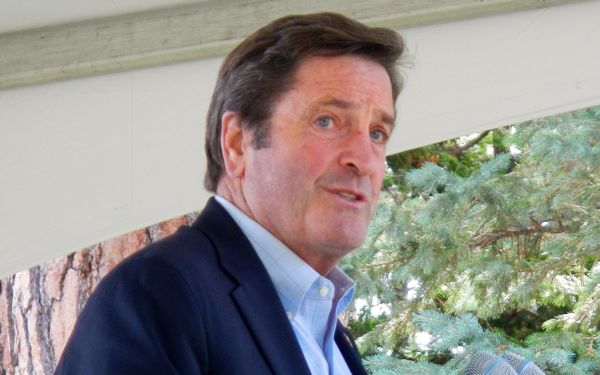
By John Garamendi

Everyone agrees that California’s aging water infrastructure is insufficient for our present and future needs.

When the Legislature and Gov. Jerry Brown negotiated the final language of the water bond, we monitored their work with trepidation. Had the proposed $25 billion twin-tunnels boondoggle been included, it would have divided our state and doomed the bond.

John Garamendi

John Garamendi

Fortunately, our state lawmakers pursued a more unifying approach and put Proposition 1 on the November ballot. It’s a $7.5 billion water bond that makes most of the right investments while remaining neutral on the twin tunnels.

The twin tunnels — three times the price tag of the entire bond — don’t create 1 gallon of new water and, if ever built, would create the mechanism that could destroy the largest and most important estuary on the West Coast.

Fortunately, the water bond does create new water and includes many of the priorities found in my Water Plan for All California, which is focused on six priorities:

  • New surface and underground water storage infrastructure;
  • Water conservation;
  • Water recycling;
  • Levee improvements and habitat restoration;
  • A science-driven process; and
  • The protection of existing water rights.

California needs to develop surface and underground water storage systems. The off-stream Sites Reservoir, north of Sacramento in Colusa County, is a key cornerstone for this. It has the capacity to store 1.9 million acre-feet of water and provide up to 700,000 acre-feet of water for use each year. That’s why Rep. Doug LaMalfa, R-Calif., and I have introduced legislation that would help Sites clear federal hurdles.

Sites is just the beginning. Los Vaqueros reservoir in Contra Costa County should be expanded. The San Louis dam should be repaired and expanded. New reservoirs could be built at Los Banos Grandes and other off-stream sites throughout the Central Valley.

The over-drafting of the critical underground aquifers of the Central Valley must stop. Any water plan must include infrastructure and regulations necessary to protect and replenish these critical water reservoirs.

The quickest and cheapest new water source is conservation. Robust conservation efforts in urban water use could save 1 million acre-feet of water each year. California’s $40 billion agricultural economy needs a sustainable water supply. The technology already exists to expand on existing water conservation practices and conserve an additional 3 million acre-feet of water each year. This new water would play a crucial role in meeting the needs of our valuable agricultural industry.

Every year, 3.5 million acre-feet of treated water is dumped into the Pacific Ocean by cities in the Los Angeles Basin. How foolish to pump water 500 miles, clean it, use it once, clean it to a higher standard than the day it arrives, and then dump it into the ocean. One million acre-feet could be recycled and stored in the underground aquifers in Southern California. Similar projects must be done in Northern California. Desalination of ocean water also can add to our supplies.

With adequate investment and implementation, urban and agriculture conservation, recycling programs and new storage could create approximately 5.7 million acre-feet of new water to use each year.

Any plan that doesn’t include levee improvements in the Sacramento-San Joaquin Delta is a plan awaiting disaster. Even the twin-tunnels plan relies on the delta levees to channel water to the great pumps at Tracy. Fortunately, the water bond, Prop. 1, provides money to maintain the critical levees protecting delta communities, agricultural land and water supply.

Providing a foundation for these projects is the protection of existing water rights. If we are going to build any project, these rights must be honored.

Taken together, a Water Plan for All California could create up to 5.7 million acre-feet at about half the cost of the twin-tunnels boondoggle. We would avoid the gridlock of a fruitless, time-consuming water war and meet the challenge of supplying our entire state with the water it needs.

Prop. 1 isn’t the complete solution, but it’s a necessary and important first step. We should vote for Prop. 1 and proceed with a Water Plan for All California

John Garamendi, D-Walnut Grove, represents the 3rd Congressional District.


Opinion: Is it time to end media blackouts?

By Joel Simon, Columbia Journalism Review

The brutal murder of journalist James Foley and now Steven Sotloff in Syria has sparked disbelief and raw outrage. Now, a broader debate is opening about the role of the media in conflict zones: Are some stories just too dangerous for journalists to cover? Should governments pay ransom when reporters are kidnapped? How should the media cover terrorist propaganda like that surrounding the beheading of these journalists?

Answering these questions requires accurate and timely information from conflict zones, precisely the kind of thing journalists risk their lives to report.

But there is one story the media has not been covering fully, at least until recently. And that is the story of the kidnappings themselves. Under a practice known as a “media blackout,” news organizations have routinely suppressed information about the widespread abductions of journalists and others that have taken place in Syria, Somalia, Pakistan, and other countries around the world. The number of journalists kidnapped each year varies greatly from conflict to conflict, but there has never been anything like Syria. More than 80 journalists have been kidnapped since the conflict erupted in 2011.

As head of the Committee to Protect Journalists (CPJ), I’ve been involved in far too many of these cases over the years. I’ve provided support from media organizations and families; I’ve participated in campaigns, both and public and private, to win the release of kidnapped reporters; and I’ve debriefed many journalists and media organizations about their experience.
Initially, I supported the use of media blackouts in selective cases. But more recently I have come to doubt that it is an effective strategy. The rationale behind blackouts is that they can save lives by facilitating hostage negotiations. But I have seen scant evidence to support this. Meanwhile, because the news is suppressed and sometimes never released, blackouts themselves stifle the public debate and undermine the media’s own credibility.

After Foley went missing while reporting in Syria on November 22, 2012, his family and editors initially asked for a blackout. But after much reflection, they decided to go public and in January 2013 launched a public campaign for his release. I believe this was the right decision. The terrible killing of Sotloff, whose abduction was not reported until ISIS itself broke the news in the Foley video, makes clear that blackouts are not likely to effect the outcome at least as far is ISIS is concerned.

In Foley’s case, the public campaign did put pressure on US authorities, which launched an unsuccessful military operation to try to rescue Foley, Sotloff, and other hostages. Media coverage of Foley’s kidnapping also raised public awareness about the perilous conditions in which journalists work in Syria. Finally, it prevented Foley’s depraved killers from using the video of his execution to define him as a helpless victim. Indeed, blackouts may well serve the interests of Islamic militants who peddle in murder videos since they make it easier for such groups to control the message.

The kidnapping of journalists is not a new phenomenon. From Lebanon to Colombia, militant, guerrilla and criminal groups have used media kidnappings to extract ransom, generate publicity, and shape coverage. Journalists are uniquely vulnerable because they need to interact directly with the militants and where possible gain their trust.

At first, the response to such kidnappings was to use the power of the media itself to put pressure on the perpetrators to release their hostage. That strategy worked so long as those holding the journalist were hurt by the negative publicity.

But that logic was subverted by the 2002 kidnapping and killing of Daniel Pearl in Pakistan. After The Wall Street Journal reporter was abducted in Karachi, media organizations drew from the old playbook, undertaking a campaign to humanize Pearl and employing prominent Muslims like Muhammad Ali and Yusuf Islam (formerly Cat Stevens) to appeal directly to his captors. But this media strategy inadvertently served Al Qaeda, which in turn used Pearl as a political prop to spread a message of ruthlessness and terror. The media campaign only heightened the trauma and visibility of the kidnappers. Meanwhile, Pearl’s videotaped beheading became a terrorist motif, emulated not only by Islamic groups as in the Foley case, but by drug gangs in Mexico.
In the aftermath of the Pearl killing, media organizations began to rethink their response to kidnappings. Intensive publicity, it was argued, not only helps disseminate the terror message, it can complicate sensitive hostage negotiations. As media kidnappings soared amidst the declining security environment in Iraq this new thinking was increasingly applied.

Read the whole story


Opinion: Vote no on Prop. 46

By Clint Purvance

Backers of California Proposition 46 claim it will protect the patient and reduce patient harm. While the initiative argues patient safeguards and seems well-intended, the proposition is flawed and costly. If passed as written, Proposition 46 would discourage doctors from working in California, jeopardize patient privacy, and increase patient and government healthcare costs.

Proposition 46 is a broad initiative with three separate issues bundled into one ballot measure. Written and funded by trial lawyers, it quadruples the limit on malpractice awards, or “non-economic” damages, made against physicians. After 40 years of unsuccessful attempts to increase lawsuit limits through legislation, attorneys want California voters’ support and added two seemingly less controversial issues: mandatory use of a statewide prescription database and random drug and alcohol testing on doctors.

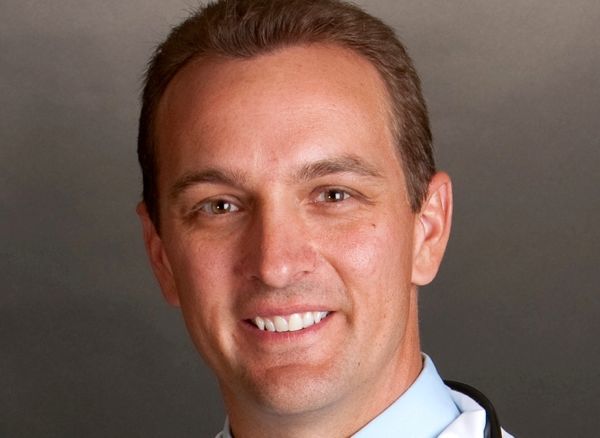
Clint Purvance

Clint Purvance

Consider why Proposition 46 shouldn’t be passed:

Higher healthcare costs

Increasing lawsuits and jury awards puts more money in lawyers’ pockets and raises healthcare costs. When lawsuits increase, insurance rates go up and these costs trickle down to the patient.

California’s non-partisan Legislative Analyst found Proposition 46 would cost state and local government up to “several hundred million dollars annually” on government health care. The Legislative Analyst staff estimates healthcare for California patients would increase $9.9 billion per year – approximately $1000 annually for a family of four.

Doctor Shortages

Hefty lawsuits lead to higher risks and costs which encourages physicians to seek work across the state line or elsewhere. Ninety percent of Barton physicians practice in California. We have made significant efforts to recruit high quality physicians, but Proposition 46 amplifies California’s physician shortage and jeopardizes patient’s access to services. Ultimately, higher costs and reduced healthcare access especially burden low-income families, senior citizens and residents in rural communities like South Lake Tahoe to receive high quality care.

Privacy violations

Proposition 46 also requires physicians and pharmacists use a statewide database that tracks patients’ prescription drug information before dispensing certain controlled substances. CURES, the government run database, is currently used, but plagued by technological shortfalls and understaffing issues. With potentially millions of database inquiries annually, Proposition 46 lacks solutions and funding to upgrade the database and address patient security. Other risks of a government-controlled prescription database include patient privacy, potential hacking, and inappropriate access.

Reduced patient safety

The third issue, mandatory drug testing on physicians, is a valuable patient safeguard, but many medical facilities, including Barton Health, use drug screening protocols to protect patients from impaired employees and clinicians. Proposition 46 itself is not well defined and allows any person to make a substance abuse accusation, which could suspend doctors for months or years during a lengthy investigation.

In my 10 years at Barton, medical errors and poor delivery of care haven’t been linked to impaired physicians. We’ve made substantial strides in patient safety and found initiatives on improving processes have prevented unintentional human errors and greatly improved patient safety.

Join Barton Health and the California Hospital Association; American Nurses Association, California; California Teachers Association and over 500 state and community organizations across party lines and vote “no” on Proposition 46. To continue to provide our community with consistently exceptional care, we appreciate your support and hope you will vote against Proposition 46 in November.

Clint Purvance is chief medical officer for Barton Health.


Letter: Financial support critical for hungry

To the community,

It was a special evening for the guests at Bread & Broth’s dinner on Sept. 1. Thanks to a generous donation by Robert Stiles, an agent with Chase International, and the outstanding efforts of the evening’s hardworking B&B cooks, the guests were treated to vegetarian pizzas which were made from scratch and served with a delicious alfredo pasta dish.

As the evening’s “Adopt A Day of Nourishment” sponsor, Stiles’ donation of $250 fed over 100 happy and appreciative diners. Stiles’ friend, Lydia Zuniga, cheerfully worked alongside the B&B volunteers on the serving line, preparing the drinks and dessert tables and helping with the meals take down and clean up.

“What a great opportunity to help others,” said Stiles. “I challenge you to do the same.”

As a nonprofit, all volunteer organization, Bread & Broth relies on the generosity of the members of the South Lake Tahoe community such as Stiles to finance the two weekly meals that are provided to the less fortunate members of our community. For almost 25 years, B&B has served a full course meal at St. Theresa Grace Hall every Monday evening, and in the last five years, Second Serving”was added to provide soup and pasta dinners on Friday evening at Lake Tahoe Community Presbyterian Church.

Bread & Broth would like to thank Stiles for his financial support, donating his personal time to be actively involved in the evening’s dinner and for challenging his fellow community members to help the needy of our community.

Carol Gerard, Bread & Broth