Opinion: Healthy forest critical for Tahoe

By Joanne Marchetta

With California and Nevada grappling with a third year of drought, one of the largest and most complex challenges we face over the long run at Lake Tahoe is adapting to a changing climate.

Climate change will affect the protection and restoration of our beautiful mountain lake as well as the expansive forests around it. And the health of our lake, forests, and communities are all intertwined.

Maintaining healthy forests here at Tahoe and also across the greater Sierra Nevada will be a critical issue as California works to confront its water scarcity problems and maintain water quality and quantity for nearly 40 million residents.

Joanne Marchetta

Joanne Marchetta

About 60 percent of California’s drinking water originates in the Sierra Nevada forests and the headwaters they shelter. Protecting the health of our Sierra Nevada forests is one and the same with protecting our communities and our water resources from fire.

The King Fire that broke out in western El Dorado County in September and burned nearly 100,000 acres is just the latest example showing that we have much work to do to better manage our forests and their watersheds. That same message was driven home by the “State of the Sierra Nevada’s Forests” report the Sierra Nevada Conservancy released in October.

Forests in the Sierra Nevada are overgrown and susceptible to wildfire and funding is not available to adequately treat them. That’s not to say the Tahoe Regional Planning Agency and its partner agencies in the basin have sat idle – far from it.

Working together as the Tahoe Fire and Fuels Team, agencies in the basin are leading by example – collaborating to secure funding to reduce fuel loads, prioritize the work and get it done. From 2008 to 2013, almost 37,000 acres in the basin were treated for hazardous fuels by local, state, and federal agencies.

Our projects have been keeping up with our plans, but much more remains to be done. Adequately reducing hazardous fuels in the forests around our watersheds and our communities will require more funding, a situation that’s true here at Tahoe and throughout the rest of the Sierra Nevada.

That’s why TRPA is asking Congress to adopt the Lake Tahoe Restoration Act of 2013. The bill would authorize $415 million over 10 years to pay for environmental restoration projects, watercraft inspections and control efforts to fight invasive species, the Lahontan Cutthroat Trout Recovery Plan, and scientific research. Nearly one-third of the funding, $135 million, would pay for hazardous fuels reduction projects.

We know treating forests to reduce hazardous fuels is far more cost effective than fighting wildfires. One recent study estimated that fighting wildfires between 10 and 100 acres in size in our forests costs $2,000 to $3,000 per acre. That’s two- to three-times as much as projects to reduce hazardous fuel loads in them.

The Angora Fire that burned on Lake Tahoe’s South Shore in 2007 destroyed 254 homes, cost almost $7,500 per acre to fight, and on top of that, caused about $150 million in damage – all within a 3,100-acre area that is small compared to other recent fires that have burned hundreds of thousands of acres in California.

In addition to funding, maintaining healthy forests and watersheds in the Sierra Nevada will also require extensive relationship building and collaboration across political boundaries. Communities inside the region will have to work together and with communities outside the region. Members of the public, too, must ensure they have adequate defensible space around their homes and do what they can to be part of the solution as we try to create what are called fire-adapted communities.

This challenge represents an opportunity for stakeholders to seek significant progress through multiple-benefit fuel reduction projects that not only protect our many communities from fire, but also improve the health of our forests, reduce erosion, and protect the water sources millions of people rely on. The time to act is now. Please join us at any scale in finding solutions to the next set of challenges, even those as daunting as the long-term effects of climate change here in our beloved Sierra Nevada.

Joanne Marchetta is executive director of the Tahoe Regional Planning Agency.


Letter: Measure F moves Tahoe out of status quo

To the community,

I’ve been closely involved with Lake Tahoe Community College since its beginning in 1974 when I was elected one of the first LTCC board of trustees members. I’d like you to consider, just for a minute, what would happen if the college’s Measure F bond effort failed to pass this Election Day.

Since the bond would cost homeowners $25 per $100,000 in assessed value, Measure F not passing would mean a homeowner savings of about $6 a month on average – that’s true. The college would continue to exist, and the board of trustees, college leadership, and faculty and staff would find a way to keep LTCC going. Our dedicated and professional educators would continue in their efforts to prepare students for transfer to four-year programs, for rewarding careers, and to lead them on enjoyable educational experiences.

But without the solid foundation Measure F provides, our teachers wouldn’t experience the excitement and freedom to create and innovate that reliable funding can make possible. Without funding, innovation is hampered. The spark innovation provides makes teaching a true joy, and that would be missing.

Our students deserve the best education we can give them. Measure F funds would continue and even improve the high-quality experience LTCC provides. Should we be satisfied with merely an adequate educational experience, in merely adequate facilities? I believe that in order to achieve their goals and do their best work, students need a well-supported and enthusiastic faculty, teaching in the finest facilities we can provide.

If Measure F fails, it tells our city and the world that the citizens of South Lake Tahoe are satisfied with the status quo, not interested in being the best, but rather in being just run of the mill. Great schools are the result of a dynamic, progressive, forward-thinking community that attracts new business and population to it. Will larger, healthier businesses be anxious to spend large sums of money in communities that don’t value exceptional education? Will the state of California be motivated to tap LTCC as one of its 15 pilot schools to offer four-year degrees in a community that’s satisfied with a status quo college?

True, everyone dislikes higher taxes. With Measure F, we’re talking about $6 a month to homeowners and businesses. But in the face of worldwide competition for investment and tourist dollars, can South Lake Tahoe afford to be labeled as “status quo”? The health of our local college is tightly bound to the health of our community. Please join me in voting yes on Measure F, and make the right call for our kids, college and community.

Sincerely,

Fritz Wenck, Lake Tahoe Community College board trustee


Editorial: Keep Pierini as Douglas County sheriff

Ron Pierini

Ron Pierini

Publisher’s note: This is a version of the Douglas County sheriff’s endorsement that ran before the June primary.

On Nov. 4 Douglas County voters will have the opportunity to vote to retain the current sheriff or replace him with someone from the outside.

Dave Brady contends morale is not great within the department and a change in leadership is needed. If this were true, then we wonder why the Douglas County Sheriff’s Protective Association endorsed Sheriff Ron Pierini. The bargaining unit represents deputies, investigators and sergeants in the Douglas County Sheriff’s Office.

We concur with the bulk of the department’s employees that Pierini should continue to be sheriff, a position he was first elected to in 1997. He started with the department in 1976 – having been a captain in Tahoe, undersheriff and now sheriff.

Brady had been a reserve deputy for the department before he declared his candidacy.

While it’s not always in the best interest of a department to keep the status quo or to hire within, we also don’t believe in the need to change leadership for the sake of change.

Pierini has proven he is capable of weathering many storms. We believe he will continue to do so for the next four years. The sheriff’s department’s budget has been cut by $2 million and 10 positions have been eliminated in the past few years. Despite the cutbacks, the department’s arrest to prosecution rate is 38 percent. Nationwide the average is 22 percent.

He was at the helm when 9-year-old Krystal Steadman was kidnapped and killed in 2000 in Stateline. In 1980, he was a captain at the Tahoe substation when Harveys was bombed. While we don’t wish crimes like that to occur, it is reassuring to know someone with that breadth of experience will be directing the troops to find the bad guys.

By the nature of the job Pierini spends the bulk of his time in the valley. But he has a connection to Lake Tahoe that the other candidate doesn’t. This is another driving reason to keep Pierini in office. He works well with the other leaders at the lake – whether it is peers in other law enforcement agencies, fire personnel, casino executives or other business people.

Brady’s financial background is intriguing and something often not seen in the ranks of law enforcement. But already the voters of Douglas County ousted him out of office when he was a commissioner.

We need a sheriff who can reach across the aisle. We need someone who is capable of making tough decisions. We need someone who is a leader in his department as well as the community.

That person is Ron Pierini.


Letter: Muddled Meyers plan a concern

To the community,

Most of us moved to Meyers because it’s a rural community, away from the city and tourist congestion. I am pro-growth; most locals are as long as it’s appropriately-sized growth for our community.

The proposed Meyer’s Plan, however, opens the door to a mega resort, with incentives for large development and in my mind, lacks long-range planning.

I started going to planning meetings last summer, just to listen, but it wasn’t until December that I got really concerned. Here’s a timeline of events, from my perspective:

Fall 2013 — At Meyers Community Advisory Council (MCAC) meetings, talk of a large project called the Catalyst. When asked about it, the subject was changed or question ignored.

December 2013 — Catalyst leaked, scares the heck out of residents and businesses due to enormous size.

January 2014 — County’s letter to Feinstein leaked. Letter pushes huge project forward in Meyers.

Around this time — Found out our commercial/light industrial zone changed by the TRPA back in 2012 to town center zone, without notification to property owners or businesses. “Town Center” allows for large projects, up to 40 units per acre along both sides of Highway 50, where only 10 units per acre were allowed before (West Meyers, Catalyst vicinity).

January 2014 — Six acres of California Tahoe Conservancy lots considered for sale in town center, land previously referred to as unbuildable Conservancy lots, now referred to as asset properties in direct vicinity of Catalyst project area. Does the CTC smell money?

January 2014 — Meyers Plan draft is released, complete with the aforementioned incentives.

Found out that the TRPA’s Regional Plan update now allows for conversion/transfer of commodities, things like commercial floor area and tourist accommodation units, a very sneaky business since it’s not mentioned in the Meyer’s plan, you must read the TRPA’s plan to know that these can be bought and brought into Meyers. This is a big deal. Commercial floor area is to large development what sewer permits are to residential building, except that you have to buy thousands of them. Does the TRPA smell money too?

February 2014 — Locals circulate fliers, petitions and hold community meeting — more that 100 people attend and almost all were unaware of zone and plan changes to Meyers.

February 2014 — Town center zone change detrimental to existing business owners, threat of eminent domain and the county’s lack of transparency leaves private property owner’s in limbo.

February 2014 — TRPA and county hold public show and tell, however, community still in the dark about plan changes because the meeting was conducted in TRPA speak.

March 2014 — Catalyst project name changed to incentive project due to negative reaction from the Meyer’s community.

March 2014 — Million dollar grant application by agencies falsely claims the Meyers plan is ready to go. They did not get the grant.

March 2014 — CTC promised asset lands can be used as green belt/open space if the community wants it, however , makes no attempt to inform the community.

April 2014 — CTC sends survey crew onto private properties in Catalyst project vacinity without permission and when asked why, lied and got caught.

May 2014 — U.S. Forest Service land swap, visitors center dismantled, also in direct vicinity of Catalyst project area. Can they smell money too?

June 2014 — Another agency dog and pony show, people left, remaining were asked about height limit for new buildings in Meyers, show of hands agreed upon maximum height of 35 feet.

Somewhere around this time the county announces “no more Meyers meetings”. The Meyers Community Advisory Council sort of fizzles and the community finds itself without a voice.

May-August 2014 — South Tahoe Chamber of Commerce writes several letters to the county on Meyer’s behalf, reiterating ongoing concerns, also requesting an independent survey with which to direct planners when rewriting the plan.

July 2014 — No response from county.

July 2014 — California chamber helps organize meeting with agencies. TRPA states they would not allow height limit in plan regardless of community’s vote.

July 2014 — Locals again try to inform Meyers by booking a facility for workshop and sending out agenda. Interestingly, the booked and confirmed date for workshop gets bumped by the Nevada chamber for their previously unscheduled and unheard of event.

August 2014 — Still no response from county.

August 2014 — Documents surface regarding county takeover of 56-acre Tahoe Paradise Park ( Senate Bill 1023), also in direct vicinity of Catalyst project. County denies takeover but suggests the park board sign a memorandum of understanding to help fund bookkeeping and such.

Somewhere in here, agency meeting, not open to public, CTC unpromises green belt land and re-rezones some lands “recreation zone”, which, coincidentally allows for large development, as long as it is sports-related, which includes pretty much everything.

October 2014 — Nevada chamber writes a creatively worded letter to the county in response to second Meyers draft. Somehow they found 300 employees in Meyers, really? State Fund will be thrilled. This letter alludes to 15 Nevada chamber businesses here, but after a quick look, their roster reflects differently, more like three. Could the Nevada chamber have an agenda, maybe something that includes a large smelly project?

October 2014 — At candidate meet and greet, the concept of the city of South Lake Tahoe expanding its boundaries or creating a whole new county with Meyers and city combined. Why would the city want anything to do with us now, they never did before? What’s in it for them?

Enough, you get the point. Whether “pro-growth” or “big growth”, future growth needs to be a community decision. And, well, transparency would be nice. Does anyone really believe the TRPA, county, Conservancy, USFS, Nevada chamber, and now even the city, changed all these things willy-nilly, at the same time, for no reason?

If the new Meyers plan is written with this in mind, growth can be the communities decision, so let’s take the time, create a survey for resident’s ideas and vision for our community. Please come to the Oct. 16 meeting at the airport, City Council Chamber, 9am.

Angela Olson, Meyers


Letter: Students deserve a vibrant LTCC

To the community,

Wait, what? Safer? Yes! As a 20-plus-year South Lake Tahoe resident and a recently retired FBI agent, I have experienced Lake Tahoe Community College as a student, a guest speaker, and as an occasional criminal justice instructor.

Over the years, these connections have proven to me just how essential LTCC is in giving our local youth a pathway toward a productive future. Whether students come to the college interested in criminal justice, the Lake Tahoe Basin Fire Academy, early childhood education, wilderness leadership and education, medical and dental office work, or any of the many programs offered at the college, LTCC is our town’s ticket to a good job.

Even better, many of these jobs directly contribute to a safer, healthier community for all of us. When our local youth has the opportunity to learn in a world-class, cutting-edge setting, they’re on the path toward a great job and a satisfying career for life. And that’s something we can all benefit from.

Please vote yes on Measure F this November to help LTCC keep our kids going in the right direction.

Chris Campion, South Lake Tahoe


Letter: Time for locals to support LTCC

To the community,

Measure F on the ballot this November is just as critical to the future of Lake Tahoe Community College as it is to the strength of the entire South Shore community. Imagine our community without a decent and competitive academic center like the college.

Jeff Cowen

Jeff Cowen

From grandpas to graduates, the college intersects the lives of nearly everyone. And while many voters remember the new campus being unveiled as if it ​happened yesterday, the main college buildings are a quarter of a century old. As the college has aged, learning technology, student demands and the need to diversify offerings have leapt ahead.

The kind of investments needed at LTCC will cost money and much of it must be raised locally. The evolution of tax policy in California and across the nation means that if we want a good college in our midst, we have to be the ones to step up and share the cost.

As a business owner, I recognize the need to cut from large state programs and expensive bureaucracies, but that does not mean that local needs simply disappear. Although there are matching dollars available from the state, Measure F is the way to unlock them and provide for our own future. The bond measure requires a local body to manage the money.

Can we afford Measure F? The measure would increase property tax for the average property owner less than $100 per year. That’s about the going subscription rate for cloud-based storage or a few magazines. The college is ailing and at a crossroads. Vote yes on Measure F for a more secure, locally-funded future for one of our community’s most critical assets.

Jeff Cowen, business owner and candidate for LTCC Trustee Area 2


Editorial: Grant for LTCC board

Bob Grant

Bob Grant

Publisher’s note: Lake Tahoe News convened an editorial panel of seven community members to come up with this endorsement.

An educator as board member is often frowned upon. This is because it can diminish the level of checks and balances, create favoritism and be a presumed vote for the unions.

But we have not found that to be the case with Lake Tahoe Community College instructor Larry Green being on the Lake Tahoe Unified School District board. Nor do we believe it would be the case with South Tahoe High School instructor Bob Grant being on the college board.

We believe Grant is hands down the best candidate for the LTCC board seat being vacated by Molly Blann. This is the first year the college will have had district elections where the seats represent a specific geographic area and not the entire college boundary.

Grant brings many things to the table that his challenger doesn’t. One is his depth of understanding of the education arena.

LTUSD and LTCC are in a unique relationship, whose bond continues to grow stronger. This has a lot to do with the leadership of the boards and administrations. It is a partnership that needs to continue to be nurtured to ensure resources are shared and not duplicated, that the interests of locals and others are understood, and that programs complement one another where possible.

Grant has proved himself to be a leader at STHS in his capacity as an instructor. He isn’t someone who puts in the minimum number of hours and calls it a day. He has taken on tasks that go well beyond the classroom.

Most important he puts students first. While the job of a board member and a teacher are extremely different, at the end of the day what is in the best interests of students needs to come first – no matter the grade level.

We believe Grant understands the complexities and nuances of the education field to be able to step onto the board without a learning curve. This is critical as the college navigates unchartered waters of looking at potentially managing a $55 million bond or revising it, creating a baccalaureate program, resurrecting the good neighbor policy with Nevada, expanding the sports program, leasing property for student housing, and dealing with a shrinking budget.

As for Grant’s challenger, Michelle Sweeney, she doesn’t have the experience Grant does. Plus, on her resume she wrote “CA Governor appointee to TRPA Governing Board.” This is simply not true. The truth is she worked for the governor’s appointee. She was never in a position to sit at the big table to cast a single vote, and we can’t get over the fact that she misrepresented herself in this way.


Letter: Important to vote yes on H

To the community,

Voting yes on Measure H helps to transform Meyers and the county into one of the many fire-adapted communities sprouting up around the country. An additional $100 per household is actually a sound investment considering the staggering cost of catastrophic wildfire.

The creation of a healthy forest through fire hazard reduction protects us from catastrophic wildfire, saving our families, our homes, and our way of life in Tahoe. It also supports small local businesses and is extremely cost effective compared to the cost of wildfire.

Fuels reduction costs $1,000-$2,000 an acre. According to the U.S. Department of the Interior’s Wildland Fire Management Program Benefit-Cost Analysis, firefighting costs alone run at around $3,000 an acre for fires between 10 and 100 acres. The Angora Fire at 3,100 acres cost taxpayers nearly $7,500 an acre to extinguish. These figures do not include major economic costs such as infrastructure damage, loss of tourism, community health problems, and the destruction of community homes and quality of life. The Angora Fire caused $150 million in damages. That equates to almost $50,000 an acre additional impact.

The cost of catastrophic wildfire is staggering, especially since it causes additional impacts from carbon dioxide release, soil erosion, watershed damage, and wildlife displacement. By funding Lake Valley Fire Protection District’s wildfire education and fuels reduction program, Measure H will protect our neighborhoods from the dangers of wildfire and save the community money in the long run.

A recent study estimated that wildland fires cost between two to three times as much as the cost to reduce hazardous fuels. The Mokelumne Watershed Avoided Cost Analysis, conducted by the Nature Conservancy, Sierra Nevada Conservancy, and the U.S. Forest, also documented the environmental gains a community receives from fuels reduction. Essentially, fuels reduction simulates what fire would do naturally in our ecosystem without posing a threat to our community. The benefits of this include the following: healthier and more mature stands of trees, reduction of invasive pest and plant species populations, improved habitat for large mammals, reduced soil erosion, healthier watersheds and riparian environments, increased carbon storage from larger tree stands, cleaner air, and a reliable source of renewable energy.

In the end, our community has the opportunity to be on the leading edge of fire prevention and environmental stewardship while also saving a substantial sum of money. Living in the forest carries with it responsibility. Make an investment in the future of our community by voting yes on Measure H.

Citizens for a Fire-Adapted Community – Yes on Measure H


Editorial: Elect Romsos, Wallace to STPUD

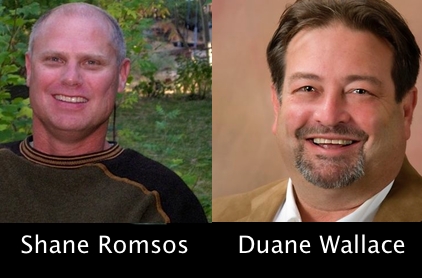
shane and duanePublisher’s note: Lake Tahoe News convened an editorial panel of seven community members to come up with this endorsement.

Most people don’t think about their water or sewer provider until the flow in either direction isn’t working. But South Tahoe Public Utility District has been in the news of late because of rate and salary increases.

When considering which of the four candidates to vote for on Nov. 4 we believe it is important to consider where our money is going. While we believe infrastructure and paying people a decent wage are important, the ratepayers should not be fleeced to do either or both.

We need people on the South Tahoe PUD board who can vote no. We need people who are not myopic in their vision. We need people who understand how to compromise for the greater good.

This is why Lake Tahoe News is endorsing Shane Romsos and Duane Wallace.

Romsos is new to the political arena, but not to the workings of Lake Tahoe. He is taking on Jim Jones, who was on the STPUD board for 12 years beginning in 1977, was off for four years and has been on since 1993.

We know Romsos is passionate about whatever he takes on, and hope this approach will carry forward to the STPUD board. In his work life he has come prepared to meetings, been professional and asked the appropriate questions – traits needed to be a successful board member.

His time working as a research scientist for Spatial Informatics Group – an environmental think tank specializing in landscape analysis to inform good natural resource policy and management, along with employment at the Tahoe Regional Planning Agency and U.S. Forest Service, Lake Tahoe Basin Management Unit will make him a better informed board member.

Romsos has also demonstrated that he can be forward thinking. We expect he will bring new ideas to the board and not be an automatic yes for more, more, more.

While we commend Jones for his tenure on the board, it has been disappointing to watch him vote time after time for raises for employees. We question why he was an advocate for rate increases last spring for infrastructure and at no time broached the subject of employee raises. And while improved water lines for fire capacity, storage and pump stations are necessary, so is a balanced approach to get these things. Jones has had an all-or-nothing mentality that is not good for the district or ratepayers.

He needs to be replaced with someone who is much more conscious of the district’s ratepayers.

When it comes to the other STPUD race between Duane Wallace and Andy Chapman, the choice is easy – Wallace by a landslide.

Wallace, while he has been on the board before and has baggage, also has experience. He would be replacing Eric Schafer, a longtime board member who is stepping down.

Wallace can listen; he can take direction. What he needs to do more of is be a team player and not take all the credit for accomplishments as he has done in the past.

He needs to listen to ratepayers, not just staff and employees.

We hope he will utilize his vast STPUD experience with independent thinking to make astute decisions that keep the district’s rates down, yet provide the same great service.

Wallace also has the desire to be involved beyond attending monthly meetings, which is more than can be said of some of the continuing board members. He has been to Washington, D.C., to lobby on behalf of the district, he knows the players inside and outside the basin. In this age of diminishing dollars and escalating needs, the ability to hit the floor running is critical.

Chapman is a recent transplant to California from Nevada. He doesn’t attend STPUD meetings. He works on the North Shore in marketing for the North Lake Tahoe Resort Association. Nothing in his background points to being a viable member of any water and/or sewer board. And how can ratepayers take him seriously when he snubbed them by refusing to answer questions submitted to him by Lake Tahoe News?

Romsos and Wallace will complement the existing board, bring varied backgrounds to the table, and keep an eye on the needs of the district infrastructure while being mindful of the ratepayers’ wallets.

Fiscal responsibility needs to become a mantra of the district. We don’t need another Taj Mahal, as the administrative building is often referred to. We don’t need the district giving out sweetheart deals involving bulk rate water and expensive pump station upgrades at the ratepayers’ expense as was done for Heavenly Mountain Resort for enhanced snow making. Nor do we need more public figures benefitting from special favors at the ratepayers’ expense.

None of this should ever happen again.


Letter: Heavenly helps at Bread & Broth

To the community,

On Sept. 22, Bread & Broth volunteers and the sponsor volunteer crew from Heavenly Mountain Resort served a beef and mushroom stroganoff dinner to the 124 guests that arrived at St. Theresa Church’s Grace Hall. As the number of individuals needing assistance increases, Bread & Broth is able to continue to provide two weekly meals due to the support of our generous community members.

B&B’s Monday full course dinners are mainly funded through its Adopt A Day of Nourishment program and its Friday soup and pasta meals served at the Lake Tahoe Community Presbyterian Church are funded by money donated by anonymous donors and funds collected through B&B donor jars located in businesses throughout South Lake Tahoe and Stateline.

Heavenly Mountain Resort through the Vail Echo Foundation has been an Adopt A Day sponsor since the inception of the program and generously sponsors an AAD every month. This month Cathie Rahbeck, regional manager for Vail Resorts Retail, and Mike Berberich, Jennifer Story and Marcie Canale, managers from Heavenly Sports store locations, were the helpful AAD sponsor crewmembers.

“We enjoyed having the opportunity to serve our community,” said Story. “The experience was both fun and rewarding. We look forward to volunteering again to help those less fortunate.”

B&B would like to recognize the important role that Heavenly Mountain Resort and its employees play in the success of B&B’s program of feeding the needy.

Carol Gerard, Bread & Broth