Opinion: You’re a jerk if you leave a small tip

By Colleen Shaddox, Washington Post

A Facebook friend was offended by the presence of an attendant with a tip jar in an airport bathroom.

“I felt harassed and examined and judged when I did not leave a tip or make conversation with the attendant,” she wrote, revealing herself to have zero experience being harassed, examined or judged. Many folks added a riposte sympathizing with her and making fun of anyone who had to earn their living minding a restroom.

“It’s how she feeds her family,” I commented.

My incredibly hardworking mother was a waitress, and I became one as soon as I turned 16. After almost 20 years surviving on tips, I understand what it’s like to be on the other side of that jar. Tipping is a demeaning custom. A worker’s compensation should not rest on somebody’s whim. Nor should she have to put up with insulting or handsy customers because she doesn’t want to endanger her pay. Tip-based compensation not only institutionalizes the examination and judgment of workers, it invites harassment, too.

Tipping absolutely should be replaced by fair wages. The regular federal minimum wage stands at $7.25 per hour, but for tipped workers, it’s just $2.13. While the regular minimum wage has risen by $3 since 1991, the tipped minimum wage hasn’t changed at all. People who work for tips are more likely to live in poverty. So until the system is overhauled, and all workers are given fair pay, your tips always should be large. If you can dine out, travel or get someone to clean your house, then you have discretionary income. Adding another $5 to the tip isn’t going to affect your standard of living, but it will make a big difference to the person serving you. That person almost certainly waits until her car’s gas gauge light comes on before pulling into the filling station. For $5, you can be a hero.

But when you do tip big, try not to think of yourself as a hero, lest you morph into a jerk. When my mother worked as as a waitress in a private club, the staff had to wear white gloves and line up like little tin soldiers as the officers of the club passed out the Christmas gratuities. The first year she worked there, she wondered – without any sarcasm whatsoever – if she should curtsey. No one should have to sit up and beg for a tip, but many customers think otherwise.

Read the whole story


Letter: Davis ready to work for all constituents

To the community,

Now that the campaign signs have been picked up, and the ballot counted finalized, I want to thank my campaign staff for their hard work, determination and dealing with the rigors of this campaign despite their busy schedules. I also want to thank this community for their continued support and for your votes this past election. I have done my very best these past four years to create a Lake Tahoe that we can be proud of and I am thankful for the vote of confidence to be able to continue that work for these next four years. As I have stated from the beginning of this campaign, the only endorsement that matters to me is from you, the voters. I am grateful for your endorsement, and I hear your concerns.

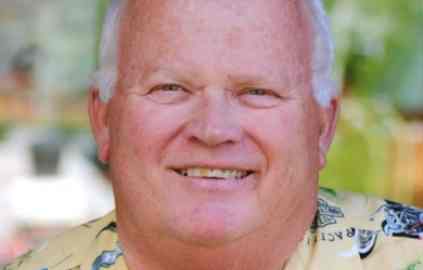
Tom Davis

Tom Davis

I am humbled by this community’s faith in me and what I strive to accomplish everyday as a member of your City Council. Progress in Lake Tahoe is definitely a marathon and not a sprint, and I have done my best to stick to my principals, campaign promises and goals from the very beginning. I will continue to work as hard as I have for you, my fellow citizens to continue to make Lake Tahoe the best that it can be, to live, work and play.

For those of you that didn’t vote for me, my job is to represent all the citizens of South Lake Tahoe. So I ask that if you have any comments, questions, concerns or suggestions, please stop and speak with me, call me or join me for coffee. Even when we disagree, I’m always available to listen, lean and try new perspectives and ideas. I believe as a small community, we are all in this together and moving not only our agenda but our city forward, requires hard work and dedication from all of us.

Finally, to my son, Justin, thank you for your time, effort and unwavering dedication to my campaign and me. I could not have asked for a better campaign manager and I would not have been able to accomplish this task without you, your guidance and your hard work.

Now ladies and gentlemen, the hard work begins once again. I am looking forward to rolling up my sleeves and getting back to work.

Sincerely,

Tom Davis, South Lake Tahoe councilman, 530.545.1168 or tdavis@cityofslt.us


Letter: TRYP appreciative of community

To the community,

The Tahoe Regional Young Professionals board of directors and members would like to say thank you to the Lake Tahoe Visitors Authority and American Century golf for continued support and concern for our residents.

Thank you for your continuous support of our commitment to retain and attract young professionals who are driven and enthusiastic about doing business in our region. With your help, we are keeping our young professionals informed and engaged, while attracting others to move to our area. We hope to continue to work with the Lake Tahoe Visitors Authority and American Century for years to come.

We would also like to express our most sincere appreciation for all of those who attended, donated to, hosted or sponsored our Winter White Holiday Party on Nov. 22. Thanks to all of you, our event was a huge success and enabled us to make a significant donation to Sierra Family Services’ Project 44, which strives to find foster homes for local kids.

We were taken aback with all of the generosity shown by our host at the Riva Grill, as well as our numerous silent auction, raffle and monetary donors. Although we regretfully cannot list the names of each and every individual donor and business, we our forever grateful and look forward to your continued support at next year’s Winter White Holiday Party.

Tahoe Regional Young Professionals


Opinion: UC wrong to raise tuition

By Ted Gaines

The University of California Board of Regents recently voted to raise student tuition by as much as 25 percent over the next five years. The tuition increase would vary depending on the level of state funding, but could stretch to 5 percent each year for the next five years.

Current, in-state UC students pay $12,192 in mandatory tuition and fees. According to the UC, the first-year increase could push those mandatory expenses up by $612. A 5 percent increase over the duration of the plan would elevate those mandatory fees to nearly $15,600. These fees are independent of room and board, books, transportation and any other expenses students face while earning a degree.

ted gaines

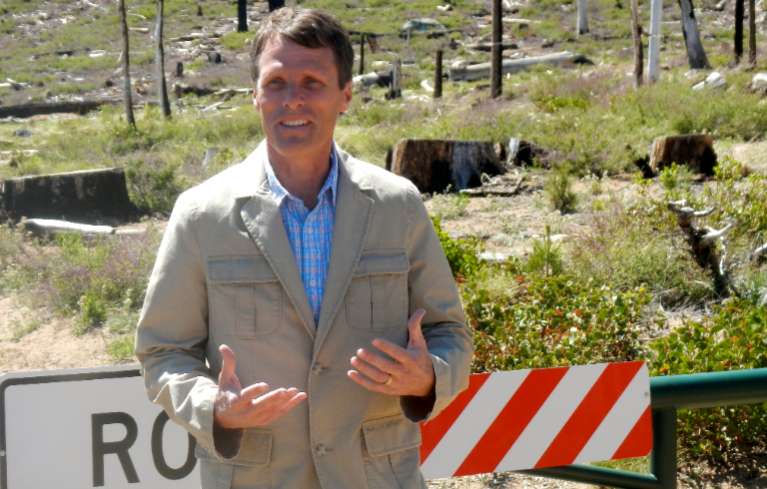
Ted Gaines

This another gut punch to middle–class families already struggling to make ends meet in this high-cost state. Just two years ago, Californians had their taxes increased with Proposition 30, after being promised that the money would be used to freeze the skyrocketing cost of college. This year, only about two percent of those funds have been spent on universities. What an embarrassment.

The UC administrators should take a close look at this policy. They are compensated like tech company CEOs with exorbitant salaries and lavish pensions. It’s unconscionable that students are being asked to dig deeper while the expansion of the UC ruling class continues without pause.

It’s political sport in California to see how much we can punish and antagonize the middle class, and this proposal is a gold–medal winner. I’m sick of it. I know that wealthy families won’t be affected by this. The poorest families will be damaged, as the dream of college is dimmed by the thought of unattainable expenses, but they will qualify for more UC financial aid. But the hammer will truly fall on the families in the middle, who will get to fork over this money straight out of their checking accounts or by taking on loads of new debt that could take decades to pay off. Who is looking out for them?

Rather than raise tuition, the regents need to reduce spending, offer more online classes and limit faculty and executive pay raises. Any year there is a tuition increase, there should be an automatic freeze on administration salary increases.

I say no to the misguided and punishing tuition hikes. Our world-class universities must be open and available to everyone in the state, not just the wealthiest sliver.

Ted Gaines, R-Rocklin, represents Lake Tahoe in the California Senate.


Editorial: Cope with the drought by thinning forests

Publisher’s note: This editorial is from the Nov. 20, 2014, Desert Sun.

A U.S. Forest Service analysis of the 2013 Mountain Fire showed that controlled burns and other efforts to thin the forest were effective in some areas.

However, the efforts have been paltry. Richard Minnich, a fire ecologist and UCR professor, calls prescribed burns that have been carried out in the past decade “postage stamps.”

Much more needs to be done.

The Mountain Fire was sparked by an electrical failure on private property near the intersection of highways 74 and 243 in the Idyllwild area on July 15, 2013. It burned more than 27,500 acres and cost $26 million over two weeks to fight. Smoke from the fire cascaded into Palm Springs.

Read the whole story


Opinion: California’s massage industry explosion

By Joe Mathews

For the record, I did not intend to get naked for this column.

But the woman at the local massage parlor insisted that I remove my pants and underwear before she would put her hands on me. And so I took it all off–in order to better understand today’s California.

Judging by our streetscapes, this is a state of massage. It has become nearly impossible to drive a thoroughfare anywhere in California without encountering multiple massage parlors. Since the 2007 arrival of the Great Recession, no retail business sector has grown faster, with hotbeds in San Francisco, San Mateo, Fresno, and Sacramento and Orange counties.

Then there’s California’s massage capital, the San Gabriel Valley, where I live. The city of San Gabriel has gone from one to 53 massage parlors in a decade, while little old ladies in Pasadena can now choose from more than 100 massage parlors (that’s one for every 1,300 residents), up from nine a decade ago, according to the Pasadena Star-News. My own neighbors in South Pasadena also seem to have a lot of stress in need of relief. On a recent walk, I counted 10 parlors within six blocks of our house, with names like Massage Place, Shiatsu of Zen, King Spa, Massage Villa, Gifted Hands Therapeutic Massage, Massage Envy, and Happy Feet Foot Massage.

Read the whole story


Opinion: Sac Bee needs to get facts correct

By Larry Weitzman

On Nov. 19, the Sacramento Bee in its inimitable style wrote an editorial entitled “El Dorado County deserves better” which repeated the same old lies by writing, “Both an outside firm’s assessment of county government and a county grand jury found a deeply dysfunctional government in which bullying, intimidation and disrespect run rampant.”

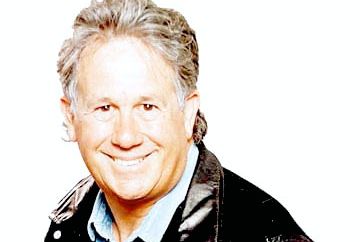
Larry Weitzman

Larry Weitzman

The editorial contended that the now terminated Terri Daly was trying to “turn around the culture of the county administration.” In an email to the editorial page editor, Dan Morain, I asked the question if they read the Van Dermyden Maddux report assessment of EDC government sometimes known as the “climate of fear” and the grand Jury report? The response was written by one of their editorial writers, Mariel Garza, and it said,“I don’t know where you get the idea we didn’t read the report. We did.” The Bee’s reading of the report leads me to believe English must be their fourth language, as they didn’t comprehend anything they read by writing their editorial.

Maybe the Sac Bee can read the very plain English as published in Lake Tahoe News, just the facts, not emotion. The claims as asserted by Daly and the GJ report that attempted to destroy County Auditor Joe Harn was that he was a bully and that there was a culture of fear in the county. Unfortunately, the Van Dermyden Maddux “study” showed absolutely no such thing and if there were a “climate of fear”, it was created by Daly.

Here are the facts from the Van Dermyden study: The highest employee satisfaction rating in county departments consisting of four or more employees was, you guessed it, Harn’s Auditor-Controller’s Office at 92 percent. The survey was secret and anonymous. Some of the lowest satisfaction ratings were in the CAO’s office with the Community Development Agency scoring the lowest at 22 percent. Guess who headed the CDA? That’s right Kim Kerr, Daly’s handpicked candidate for the position of assistant CAO. Kerr was also forced out of EDC as she submitted her resignation a week after Daly was forced out. If there were a bully in EDC’s administration, it sounds like it was Kerr.

Another low scoring department within the CAO’s office was IT at 41 percent, which was run by Daly’s handpicked head Kelly Webb. Webb has since been demoted by the BOS because she was incompetent. What does that say about Daly? What does that say about the reading comprehension of the Sac Bee editorial writers?

Of the 1,934 people who were surveyed, only 11 mentioned harassment as an issue and the question as to workplace challenges only one commented as to bullying. There is a significantly higher percentage of bullying and harassment in kindergarten classes.

More positive numbers showed that 91 percent of those employees who responded said their work “makes a difference to the citizens of EDC.” Eighty-seven percent of respondents said that their department “provides a high level of public service.”

About 88 percent of the 86 percent who responded to the question of the most desirable aspect of the workplace are (in order of descending percentage) the people, the work environment, the work itself, compensation and location. But the No. 1 response was the people. With results like those, one would have to understand that there is good employee morale in EDC and if there is a climate of fear, it is located within the CAO’s office and created by Daly and Kerr. Since Daly’s departure, according to employees within the CAO’s office, the atmosphere has become more relaxed with less tension already.

Readers have to wonder what survey the Sacramento Bee read in assessing that there is a climate of fear in El Dorado County unless they are referring to the CAO’s office itself. But that wasn’t the case as the Bee looked at Daly as being the savior of EDC. In reading the executive summary of the Van Dermyden Maddux survey, one has to wonder of the Bee’s ability to comprehend the questions and the survey results and tabulations. Maybe the Bee purposely didn’t want to understand the results.

One important fact that remains unknown and which the authors of the study wouldn’t reveal is how the data from the EDC survey stacks up against other jurisdictions. Perhaps the reason is that the survey results are some of the best when compared to other surveys.

The Bee’s read of the grand jury report “A Prescription for Dysfunction” only adds to the Bee’s failure of reading comprehension saying that the GJ “found a deeply dysfunctional government in which bullying, intimidation and disrespect run rampant.” Again, it is the Bee’s failure to comprehend the English written word. With respect to the allegations of criticism against the auditor, the GJ admits they don’t know if the allegations are true when they wrote, “Whether or not the criticisms directed at the controller are true…” and they admitted they never investigated any of the allegations when they wrote “the GJ did not investigate the allegations made against the auditor-controller following the county’s workplace assessment….”

It sounded like Jonathan Gruber, the economist who designed Obamacare and who said, “The American voters are too stupid to understand,” participated in writing the GJ report when it wrote, “the electorate has no valid basis for evaluating the performance of officials performing the specialized and sometimes esoteric duties of these offices (referring to the auditor, etc).”

Therefore any conclusion made by the GJ regarding these issues should be printed on toilet paper because that’s their net worth, but that might be wasting toilet paper. If there is a dysfunction in EDC, it is in the GJ itself. Instead of being finders of fact, the GJ became political spin-doctors committing malpractice. Nothing they said in that report had any basis in fact. It was an attempt by Daly to take more control of the county. It reminds me of the latest Obama moves with bypassing our elected Congress and ignoring the results of the last election.

But the Bee was certainly correct about one thing; El Dorado County does deserve better. And with the termination of Daly and Kerr it hopefully finally will happen, but that is up to the BOS.

Larry Weitzman is a resident of Rescue.


Opinion: TY&FS helping runaway, homeless kids cope

By Cheyanne Lane

What are the first thoughts that go through your mind when you see a youth on the streets? How did they get there, where are their parents, and are they safe?

It’s disturbing to realize that between 1.6 million and 2.8 million youth run away annually. Most youth who run away do so because of threatening environments at home, such as physical-verbal abuse, neglect, substance abuse issues, questions of sexual orientation, or escaping state care.

Unfortunately, by choosing to run away, they further subject themselves to threatening situations that impede their progress in life. Young people who live on the streets are at high risk of developing serious, life‐long health, behavioral, and emotional problems. They suffer from high rates of depression, poor health, low self-esteem, and higher likelihood of suicide, survival sex, pregnancy, substance abuse, and post‐traumatic stress disorders. The longer they live on the streets, the more likely they are to fall victim to sexual exploitation, human trafficking and engaging in high-risk behaviors, which in turn cause them to be more likely to remain homeless and more resistant to change.

Almost 40 years ago, the groundbreaking Runaway and Homeless Youth Act created the first line of defense for young people who had run away from home, become homeless, or been asked to leave home by their families. Congress recognized the precarious circumstances of young people who could not return home but did not yet have the financial, social, or emotional resources to live successfully on their own. Today, that safety net is woven by the Runaway and Homeless Youth Act, most recently reauthorized by the Reconnecting Homeless Youth Act of 2008, and administered by the Family and Youth Services Bureau (FYSB) within the Administration for Children & Families of the U.S. Department of Health and Human Services.

Tahoe Youth & Family Services has been able to provide for homeless, runaway, couch surfing, or at risk youth for 38 years in South Lake Tahoe, eight years in Gardnerville, and three years in Alpine County. We have provided these supportive services by being awarded the Basic Center Program grant that funds our emergency host home shelters for minors up to the age of and 18 and drop in centers services for youth up to the age of 24 who are either at immediate risk of being homeless or who are already on the streets.

Beyond emergency services, basic centers provide supportive services, mediation and counseling to keep youth in their homes or to reunify them with their families after they’ve left, if appropriate.

TYFS has also been awarded the Street Outreach Program grant that provides education and prevention services to runaway, homeless and street youth who have been subjected to, or are at risk of being subjected to, abuse or exploitation.

Last fiscal year TYFS had 92 unduplicated clients pass through our doors. Youth accessing Basic Center services through TYFS’ drop in centers received 7,526 individual food, 271 backpacks of healthy food and snacks and survival aid items including 192 pairs of socks, 309 hygiene products, 16 sleeping bags, two tents, 284 articles of clothing, 18 pairs of shoes and staff assisted three chronically homeless youth with obtaining proper identification in order to obtain employment, apply for funding to attend the local community college and get off the streets.

Tahoe Youth & Family Services’ drop in centers are a point of entry to provide information, resources, and opportunities to all youth who are homeless, living in poverty or who may be at risk of becoming homeless and/or are seeking to improve their overall wellness, and quality of life to find stability. Our drop in center staff can assist youth with the following supportive services: food, clothing, socks, sleeping bags, back packs, hygiene supplies, laundry services, showers, help looking for a job or filling out an application, obtaining proper identification, as well as motivation to move beyond the street with guidance and compassion.

The Drop in Center is a great place for youth to: get recharged, get resources and get respect.

Become a mentor for youth in our community today, to help prevent youth from looking toward the streets as a way out.

For more information on the drop in center or how you can help runaway and homeless youth in our community please contact me at 530.541.2445.

Cheyanne Lane is the supportive services coordinator for Tahoe Youth & Family Services.


Letter: Soroptimist give back via B&B

To the community,

Soroptimist International of South Lake Tahoe sponsors many events and grants that improve the lives of others. This year, the Soroptimist have chosen to focus on the issue of hunger and joined with Bread & Broth to host their second Adopt A Day of Nourishment on Nov. 17.

For over 25 years, the B&B program has been feeding members of the South Lake Tahoe community at St. Theresa Church Grace Hall every Monday and thanks to the generous support of our donors, sponsors and volunteers, a second meal has been added on Fridays at the Lake Tahoe Community Presbyterian Church.

“Many thanks to Bread & Broth for this wonderful program benefiting our community,” said Brenda Knox, Soroptimist president-elect. Knox, along with fellow Soroptimist members Ellen Goldberg, Colleen Manzar, Linda Mitchell and Kimberly Templeton, spent three hours helping the B&B volunteers provide the dinner guests with a great experience of warm welcomes, nutritious food and a safe and secure place to gather. Helping the community is a major focus of the SISLT.

Thanks to their spirit of service, the Soroptimist members generously donated $250 to cover the dinner costs and send a great team of sponsor volunteers to help ease the lives of those experiencing hunger. Kudos to the Soroptimist International of South Lake Tahoe for consistently giving back.

Carol Gerard, Bread & Broth


Opinion: Collaborate over good policy

By Steve Urie

In a recent op-ed released to regional news services (Lake Tahoe News, Nov. 20), Tahoe Regional Planning Agency Executive Director Joanne Marchetta wrote: “TRPA is taking partnership to the next level and is making ‘epic collaboration’ its central strategic goal.” She went on to say that the Compact between California and Nevada that created TRPA was to “harmonize the needs of the region as a whole so as to ensure equilibrium between the region’s natural endowment and its man-made environment.”

Steve Urie

Steve Urie

That may have been the intent, but it hasn’t been — nor will be — the reality. When TRPA was formed in 1969, on the Nevada side of the border a race was under way to see who could build the largest and gaudiest casino, and on the California side developers had already converted Tahoe’s most important wetlands into a 1,500-homesite marina community. Whether by shrewd planning or blind luck, in constructing TRPA the states agreed to a 15-member board of governors with seven voting members from each state and the 15th to be a non-voting federal appointee. Gridlock was assured, all development ceased, and the basin’s environment was spared further mass destruction.

The constant policy tug-of-war between developers, environmentalists, and agencies from two states and six local governments guarantees that only the very wealthy and very patient can afford to navigate Tahoe’s development process. And as a result, mercifully the basin’s land-use is locked in the 1970s. Contrary to Marchetta’s lofty goal, since its inception TRPA has been spectacularly unsuccessful in creating collaboration, much less harmony, between developers, environmentalists, and the Basin’s residents and three million annual visitors.

Even the two state legislatures that created TRPA are in constant conflict over Tahoe’s land-use and development policies. Less than two years ago, TRPA was precariously close to being shut down because there was no collaboration between Nevada and California. Seven times since 1975, Nevada has threatened to withdraw from TRPA when they believed the agency was unaccommodating to their needs. Only because California Gov. Jerry Brown understands that the bureaucratic standoff overseen by the TRPA Board of Governors assures that a 1960’s-style development free-for-all doesn’t return to the basin does TRPA still exist. At Lake Tahoe, it’s not collaboration that maintains environmental equilibrium, but contentious ongoing policy gridlock.

But that’s not to say that there is no collaboration at Lake Tahoe. Since 1997 when President Bill Clinton promised federal money “to protect Lake Tahoe’s environment, and with it the area’s economy and quality of life,” there has been epic collaboration between the more than 50 agencies, universities, and organizations that have cozied up with TRPA to share in the more than $100 million that has annually flowed to environmental programs managed by the federal agency.

That kind of serious money attracts those whose paychecks are underwritten by the public like pigs to slop and has bought major collaboration from the basin’s public service employees. But that money is drying up, and with Congress as contentiously gridlocked as the TRPA Board of Governors, the prospects of California Sen. Dianne Feinstein’s $415 million Lake Tahoe Restoration Act passing and replenishing TRPA’s environmental coffers continues to dim.

Of the $1.7 billion spent on environmental projects, more than $100 million has gone toward environmental research, monitoring, and technical assistance. One of the research and environmental program centerpieces implemented on Marchetta’s watch is the Asian clam control program. In her op-ed, she says of it: “At iconic Emerald Bay, divers are removing five acres of rubber mats that were laid down to control an infestation of harmful invasive Asian clams. The collaborative project not only reduces the population of non-native clams, but also studies the mats’ effectiveness as a way to control other invasive species populations in the lake.”

That summary of the multi-million-dollar program by the head of the agency responsible for scientific and fiscal oversight of the program is stunningly uninformed, self-serving, and naïvely wrong. By all measurements, the Asian clam control program was a disaster, and TRPA staff says that it’s probable that the 35 tons of rubber mats that covered Emerald Bay are currently being put into storage and will never be taken out.

Two years ago amid much media hype when the mats were rolled out, Tahoe Environmental Research Center Director Geoffrey Schladow said that the project was “already a scientific success.” Since then Schladow and three other researchers concluded in an obscure $264,000 Forest Service study that “it is difficult to understand the efficacy of a large scale [clam] treatment program. [And] a hypothetical 100-acre area for [clam] treatment indicates that total costs of treatment can range [up] to $26 million.” That’s a lot of money to kill tiny mollusks that cause no harm.

Yet at this summer’s Tahoe Summit, Schladow glossed over the project’s failures and boasted to the politicians and environmental stewards that 90 percent of the clams under the mats had been killed. He neglected to tell the 400 dignitaries and contributors that at least a dozen native species had been decimated along with the non-native clams, and that the clams would repopulate Emerald Bay in about the same time as it took to suffocate most of them.

Even though by all observations and measurements the $900,000 Emerald Bay project to “control” the benign clams was a complete disaster, in a thinly veiled appeal for more funding, Schladow recently said that whether Asian clams should be suffocated under rubber mats in the future is now “a community decision of do we want to try to control these [clams] at a cost, or throw up our hands and say, ‘that’s it.’”

It’s not only gratuitous but irresponsible for one of the basin’s leading environmental researchers to toss his failures back to the community and imply that because he didn’t receive enough money to continue his program, it’s not his fault if a project fails, but the community’s — an accusation sure to foster harmonious collaboration between the public and the scientific community. (Two years ago, Schladow started referring all attempts at technical collaboration from this correspondent to TRPA.)

The plan to eradicate Asian clams may be the most ecologically destructive invasive species control plan ever employed — and it not only didn’t work, but destroyed many times the number of Tahoe’s native aquatic animals as it did non-native clams. Yet, Marchetta points to it as a model project that underscores the value of TRPA’s Environmental Improvement Program.

TRPA is charged with oversight of the basin’s invasive species programs, and the report to the Forest Service says that all data was given to the Lake Tahoe Asian Clam Working Group. When asked who the working group members were and what was reported in their minutes. TRPA’s public information officer wrote: “No minutes are kept as this is an informal working group. We generally keep minutes for meetings where policy decisions are made. The meetings are open to all stakeholders. Each interested organization is represented by appropriate staff members, and there is no selection process for which organizations attend.”

If millions are spent to carpet the bottom of one of the world’s scenic wonders with rubber matting is not a policy decision, the public is not considered a Tahoe stakeholder, and environmental programs are determined by an informal group of various agencies’ staff at unpublished meetings, it’s concerning what other informal decisions TRPA is making.

And if TRPA and their scientific partners are going to blame environmental failures on a lack of funding and invoke the community’s best interests when launching new programs, it only seems equitable that the community be allowed to participate in the environmental decisions of how their money is spent.

TRPA wasn’t formed to create collaborations. Its charter is straightforwardly simple: the agency is to protect and restore the Tahoe basin’s environment for all. And hopefully, Marchetta’s plans for epic collaboration include the public in those decisions that most affect them and their environment.

In a September op-ed Marchetta said, “Tahoe is standing on a fiscal cliff and the ground is sloughing off beneath our feet. Staring straight into an impending breakdown in funding, we are seeking another breakthrough. To that end, we are bringing our best creative thinking, our greatest drives toward innovation, our entrepreneurial spirit, and our strongest collaborative skills to imagining new funding sources, new collaborations and partnerships.”

Harmonious collaboration would certainly make TRPA Executive Director Marchetta’s job much easier, and it doesn’t take much imaginative thinking or creative entrepreneurial skill to understand that the best way to get public support is to allow their participation, listen to their wants, spend their money wisely, and collaboration will then follow.

Steve Urie is a 40-year Tahoe-Truckee resident and is the author of “Tessie, Quagga Mussels, and Other Lake Tahoe Myths”. To learn more about Tahoe’s AIS programs and to sign a petition asking TRPA to perform an independent aquatic invasive species risk assessment, go online.