Letter: LTUSD grieving loss of student

To the community,

Our community is still reeling from the tragic turn of events this weekend. I have been receiving phone calls and emails today from concerned community members wondering how they can help Dejon Smith’s family in this time of need. I spoke with a representative of the family today and they did not have funeral or memorial plans yet. I will let you know when we hear anything.

I do know that Mr. and Mrs. Smith’s cousin has set up a fund to help the family with funeral expenses. I also spoke with a co-worker of Mrs. Smith’s at Grocery Outlet, where she is employed, and was told that they are also accepting donations for the family.

Superintendent Jim Tarwater said today, “There are no words to ease the heartache and pain that Dejon’s family and friends are experiencing following this tragic accident, but our hearts go out to them. Our counselors and local grief support professionals are providing assistance at school for the students and our tight-knit community will rally to do all that it can to help bring comfort during these difficult times.”

Our counseling team will continue to be based in the Stadium View Building (SV107) all week and will be available to work with any student or group of students who need help. Please encourage any children who are expressing concerns at home to avail of the services.

Thank you for your continued support.

Angie Keil, Lake Tahoe Unified School District


Opinion: Time to undo Daly’s damage

By Larry Weitzman

Although President Dwight D. Eisenhower used the term D-Day meaning Departed Day. For the purpose of this column it means Deficit Day and it is fast approaching.

Actually, El Dorado County is already running at a deficit and has been doing so for about a year and a half. At the end of the county fiscal year on June 30, 2013, EDC had a General Fund balance of about $54 million. At the end of the FY 2014, the General Fund balance was down to $45 million. In other words, spending exceeded revenue by $9 million and therefore operated for FY 2014 at a $9 million “loss.” That is operating at a deficit.

Larry Weitzman

Larry Weitzman

According to its own projections, the county General Fund for the FY 2015 (July 1, 2014, to June 30, 2015) will operate at a $32 million deficit. That’s based on a sales and property tax growth of 5 percent. Those revenue projections appear to be overstated in that just four months prior a similar EDC projection showed that property tax revenues would be flat over the next five years. That might be a more reasonable assumption since the real estate market is relatively flat.

Secondly, three years of history shows that property tax revenues for the fiscal years 2012, 2013 and 2014 were $52.5 million, $52.7 million and $54.6 million, respectively. There are some rising property tax assessments from Proposition 8, but the last three years don’t demonstrate the kind of growth projected in the latest forecasts. But let’s get to the real issues, the overspending created by former CAO Terri Daly.

In my Oct. 2 column, I discussed that the 170 new employees hired by Terri Daly over the last two years cost the county about $13,600,000 annually based on an average salary and benefits of $80,000. When you examine the fiscal history of the county, that number will become more important.

The county has little control over its revenues as it comes from taxes and fees, and right now there is little new activity which points to rising revenues except for minor property tax assessment adjustments because of Proposition 8. Otherwise revenues will probably grow no more than the rate of inflation. Even if property values rise significantly, other than Proposition 8 adjustments, Proposition 13 limits the rise in property tax revenues to just 2 percent a year. The only real way for significantly increased property taxes is new development and that doesn’t look too realistic considering the current slow/no-growth climate in El Dorado County.

But what the county can control is General Fund expenditures. And this is where history becomes important. According to our chief budget officer, salaries and benefits make up about 65 percent of the county General Fund expenditures. For the last four fiscal years, actual salary and benefit expenditures were as follows, FY 2011 $118.2 million, FY 2012 $116.0 million, FY 2013 $118.5 million and for FY 2014 $132.1 million. As you can see when the excessive employee hiring started during FY 2013 there was a small increase in salaries but from FY 2013 to FY 2014 the increased cost of employees grew by, that’s right, $13.6 million. Understand some of that increase was due to the first 5 percent of a 15 percent across the board pay raise (about a 1.75 percent impact), which is also Daly’s doing, that took effect in the middle of the FY 2014.

When EDC budgets and forecasts included are all employee positions whether filled or not. For the FY 2015 the forecasted budget shows $153 million in salary and benefits. But currently there is an 8 percent vacancy factor (that is average vacancy rate for unfilled positions for the last several years), so if none of those positions is filled, the real expenditure for salary and benefits should be about $141milliion. That would still mean a deficit for the year of about $20 million.

When you compare FY 2015’s $141 million in salary and benefit expenditures to the level of FY 2013, the increase in salary and benefits over the two year period is $23 million. It is the main cause of the EDC deficit. The secondary cause is the Daly 15 percent raise. When it becomes fully implemented during the FY 2015, salary and benefit expenditures will continue to grow for the following years and the deficit for future years will make the current situation look like small potatoes as revenue growth will not keep up.

Even EDC’s own salary and benefit expenditures are projected to grow about $8 million annually for the next four years with a corrected number (unfilled positions accounted for) of $172 million by FY 2019. An actual projected growth of $31 million over four years and $54 million since FY 2013 all because of 170 mostly unnecessary new employees hired by Daly.

As written in previous columns, the position of the county is untenable.

What is the solution? It’s a rather obvious one in that there has been little change, if any in county services over the last three years, so it appears there is no identifiable benefit from the 170 new hires. As to public safety, the sheriff has essentially no new hires from these recently hired 170 employees. The plurality of the 170 employees was hired into the CAO’s office. Yes, by Daly. She packed her office with 18 do nothing analysts, fiscal techs and other administrative positions that alone cost the county nearly $2 million a year. Daly said in recent open session of the Board of Supervisors that “even with these new 170 hires, the county is not back to pre-recession levels,” implying that we are no longer in a recession. That’s funny, perhaps Daly could explain why the nation’s work force has shrunk to its lowest level in decades, income is still below pre-recession levels, housing prices are still in the tank in spite of historically low interest rates and most new jobs are low level, low pay retail and service jobs.

The solution is obvious, the county is going to have to lay-off most of those 170 new employees and most of the deficit will magically disappear. There should also be a freeze of the last portion of the Daly 15 percent raise. Done, problem solved. Now who on the BOS has the guts to do it?

Larry Weitzman is a resident of Rescue.


Opinion: State Park police in Tahoe ruin visit

By Steve Hutchison

I am writing to express our collective disappointment at the treatment we received during an encounter with a member of the State Park police on Nov. 8 at D.L. Bliss State Park at Lake Tahoe.

My wife, our Friends, their boys, (6- and 8-years -old), and our two small dogs, a 14 pound French bulldog, and a 17 pound Boston terrier, packed a small lunch and took a walk down the beach toward D.L. Bliss State Park along the low water line, as we have often done this time of year for the past 40-plus years.

After an hour or so of walking along the completely deserted shoreline, we arrived at a similarly empty beach adjacent to D.L. Bliss State Park, where my friend and I, with our dogs, stopped just past a line coincident with the park fence to wait for the kids and our wives.

The dogs were tired from the walk, (they are quite small and it’s a long boulder strewn walk), so we took them off leash so they wouldn’t tangle on the bench legs where they both promptly fell asleep in the afternoon sun. After a half hour or so, the girls and the kids arrived, at which point we broke out water and some sandwiches.

After a few minutes we observed an official looking white pickup truck arrive and stop in the parking lot with police radio on, obviously some sort of park ranger, about a 150 feet from our position.

We awoke the dogs, placed them back on leash, (as we always do in public or when any potential stimulus for the dogs is seen), and expected an inquiry regarding our presence (as I assumed the park was closed as are all the others around the lake this time of year), and expected to be greeted by a bored ranger, asked to be careful or at worse, asked to leave.

Instead, we were challenged by an angry policeman (name illegible on citation) badge No. 1513 (complete with flak vest and completely equipped police utility belt and side arm) who approached us, and in an agitated manner, informed us that there are no dogs allowed on the beach, to which I responded: “Oh, we thought the park was closed, if it’s a problem, we’ll leave back the direction we came down the beach.” (Pointing north along the deserted beach).

To which the policeman responded in an even more accusatory and combative manner: “If it were closed, you would all be trespassing and all going to jail!”

“Now I need to see everyone’s ID!”

To which we responded that none of us had any as we were out for a walk. This seemed to further incense the policeman to which he responded: “You drove here without a license?”

“No, again we walked here and are fine with just leaving.”

All of us are now also becoming quite angry with the treatment we were being subjected to, but not wanting to escalate a silly situation into something else that it was obviously headed for, we again volunteered to simply diffuse the situation and leave the abandoned beach the way we came.

Then he informed us in an even angrier tone that not only are dogs not allowed, but that they must be leashed, to which we responded: “Well they are [leashed] see?” (Holding both dogs up to chest level displaying their harnesses and leashes-they are toy breed sized).

“I don’t’ believe you! They weren’t leashed,” adding angrily, “Don’t you see the big sign? No Dogs.”

There is indeed a 3-foot-by-4-foot “No Lifeguard On Duty” sign whose main purpose (judging by the fact that 75 percent of the sign is dedicated to those words) is to inform that there is no lifeguard on duty, but includes about a half dozen smaller icons with red slashes through them indicating all the various things that are prohibited, one of which is a dog, which on shading our eyes and squinting toward the setting sun we could just make out, next to the parking lot over 100 feet away.


We acknowledged the sign, but pointed out that it was far away and obscured by the glare of the setting sun; and that there is no sign when approaching the beach from the north (where we came from). Explanations which fell on the policeman’s deaf ears. When asked if the policeman was detaining us, he confirmed that he was detaining us and to remain where we were, stating: “You all stay here while I decide what I am going to do with these dogs.”

At this point the children think:

1. We may be going to jail,

2. That this policeman may try to seize our dogs.

I commented that I found it quite sad that the park rangers I remember from my youth at the lake in the 1970s were kindly naturalists, who were friendly and helpful, who would never have dreamed of subjecting us to the DHS storm trooper kind of treatment we were receiving from this officious and bullying policeman, all of which was brought about by having two small docile dogs on an empty beach.

At this point we were insulted, angry, and upset and (although not stated) definitely not about to let this rogue policeman so much as touch our harmless and special needs dogs.

Is this really the kind of demeanor and public relations policy the parks department seeks to promote? Threatening hikers and children with jail and seizure of their beloved pets? I fear the altercation that will inevitably occur when (not if, in my opinion) this policeman takes this very aggressive and combative tone and attitude with somebody with less to lose, or who for whatever reason is not in a mood to be bullied while on vacation n front of their children, in a campground where they are on vacation by the likes of this individual.

This is all of our business as citizens, as when someone exercises authority to the point of being ludicrous, we all lose; especially when it escalates to an altercation that potentially gets physical (that in my opinion this policeman was game for in threatening arrest and seizure of our dogs), and when, in the courts a decision is made to rightly award a victim of authority run amok, we as taxpayers and citizens all pay monetarily and in further erosion of confidence in our country’s leadership.

In this instance, a simple friendly warning would have been immediately heeded and we would have gone the 100 feet it would have taken to pass the fence where the policeman assumed his jurisdiction began.

We again had two small dogs completely under control (with refuse bags attached to their leashes) and causing no disturbance whatsoever on a 100 percent deserted beach in November. We were cited (§ 4312, e and f) for dogs on state park property, and dogs off of a leash then mockingly told to have a nice day and come again.

In conclusion, we will fight this in court and share this negative experience with our friends and associates, and recommend a second thought when considering visiting a State Park.

Steve Hutchison is a resident of the Bay Area.


Letter: Squaw-Alpine coping with power issues

To the community,

While the recent “storm of the century”, as proclaimed by many meteorologists, didn’t deliver as much snow as originally thought, it did provide Squaw Valley-Alpine Meadows with nearly 20 inches of snow and the ability to open more terrain at both mountains today.

The storm did not deliver as much snow as anticipated, but it did create power problems for many in our area. As a result homes, businesses on the North Shore of Lake Tahoe, and other resorts around the lake, including Heavenly, lost power over the course of the last few days.

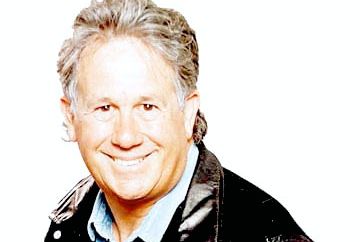
Andy Wirth

Andy Wirth

Having not experienced the same power problems as others in our region, it was with great anticipation that we opened our mountains today under blue skies and with great snow conditions. Unfortunately, late this morning, our utility company, Liberty Energy, had difficulty providing energy to us. Consequently, our chairlift systems were without power for parts of the day. This was an unfortunate situation that was unforeseeable and outside of our ability to control.

Fortunately, our mountain operations teams immediately went into action and ran many of our lifts on auxiliary power. While we did everything we could to continue to operate the mountains and provide for skiing and riding throughout the afternoon while Liberty Energy worked to restore our power, we acknowledge the inconvenience that this power outage caused our guests. At Alpine Meadows power was restored approximately one hour after the initial Liberty Energy caused power outage and then a bit over four hours later at Squaw Valley. Again, most lifts were kept running throughout that time frame at both mountains. Once power was fully restored, we extended operations at both mountains – running our lifts as late as possible, which at this time of year means until 4:30pm.

I have received multiple assurances, personally, from officials at Liberty Energy that as power has been restored, we should absolutely plan on normal operations (Sunday) and in the future. I’ve also received assurances from those same representatives from Liberty Energy that they are doing everything in their power to ensure that this circumstance does not happen again. We do appreciate the hard work they did today to restore power to our mountains.

To those who were inconvenienced by this circumstance, we genuinely regret the fact that your day was adversely impacted. Our guest service team stands by to further assist should you have any questions about your experience today.

Importantly, we look forward to normal operations tomorrow, which will likely feature even more terrain and lifts. It’s likely to be a spectacular day and we look forward to welcoming you as well as the next weather system, which looks quite promising early next week.

See you on the mountain.

Warm regards,

Andy Wirth, president and CEO Squaw Valley Ski Holdings


Letter: Chamber says thank you

To the community,

Despite the power outages and high winds in the South Shore, the Marriott Grand Residence Club was warm and cozy with power on Thursday night, which made it the perfect first stop for Lake Tahoe South Shore Chamber of Commerce’s annual Winter Wine Walk Business After Hours Mixer.

Nearly 100 guests began their tours at the Marriott Grand Residence Club with a taste from Crystal Basin Cellars before embarking on a tour to participating businesses. Each shop welcomed attendees with food, drinks and raffle prizes. It was a fun, blustery night that included great food, wine and friends.

A special thanks to Yellow Cab and Good Samaritan International for providing safe ride vouchers.

Best,

Shannon Earley, chamber communications coordinator


Opinion: Snow removal do’s and don’ts

By Tracy Franklin

South Lake Tahoe would like to thank locals and visitors for their contributions to efficient and effective snow removal. Our goal article is to familiarize those new to the area of “Snow Removal Do’s and Don’ts.”

This might be old news to people who have lived in the Tahoe basin for a while. However, for some visitors and new residents, this information could be beneficial when dealing with a Tahoe winter and snow removal.

Of utmost importance to everyone is emergency access, 24 hours a day, to all areas of the city. That means that city crews work around the clock clearing 127 miles of city streets until the streets are open to their full widths.

The city uses the right-of-way for storage of snow removed from the streets. The right-of-way is the only storage site the city has available; therefore, it is not available as snow storage for individuals. Right-of-way generally extends five to ten feet beyond the edge of the pavement.

Anything left in the right-of-way can and does interfere with snow removal. One of our biggest problems during snow removal is a car parked in the street. At times, illegally parked cars actually preclude streets from being plowed and hamper emergency personnel when responding to a call. An unplowed street is especially frustrating for the people who live on that street. The best policy is to keep your vehicles parked off the streets at all times.

For people who have home mail delivery, the mailbox should be installed on private property at the right side of the driveway while facing the street. It is the resident’s responsibility to clear a path to the mailbox and keep the box accessible for mail delivery.

In addition to cars, anything left in the right-of-way, such as landscaping, building material, rocks, shovels, etc., becomes a hindrance for equipment operators. So, please remember to keep this area free of obstacles that could interfere with snow removal efforts or break the equipment.

Again, we wish to thank you for your understanding and cooperation during snow removal. The city’s snow removal number is 530.542.6030 and additional information can be found online.

Tracy Franklin is South Lake Tahoe’s public information officer.


Opinion: TPRID needs to be wary of county

By Michael Clark

There is an important meeting of the Tahoe Paradise Resort Improvement District planned for the evening of Dec. 11 at the CCC building. There is an effort being made to approve an memo of understanding (MOU) with El Dorado County. The purpose of this MOU are unclear to me and to many others. Since the TPRID was formed under the auspices of El Dorado County, they are already obliged to assist the TPRID with administrative functions, and they already do.

The TPRID does not have a checking account. El Dorado County keeps all records, writes all checks, retains all monies and provides oversight of their finances. It has been this way since the TPRID was formed in the 1960s. When the TPRID spends any money, the spending is approved by the TPRID board, there is a check request form submitted to El Dorado County by the TPRID, signed by at least two members of the TPRID board of directors, then El Dorado County sends the funds to the vendor(s).

What exactly will be changed by the MOU? Nothing will materially changed with this process and someone will still need to provide vendor numbers, addresses, coding and signed check requests to the El Dorado County bureaucracy. So why is an MOU needed and how will it provide any further assistance to the TPRID?

Further, the TPRID wisely chose to invest in using their asset to provide space for weddings and other functions on their property about a decade ago. It has proven to be a significant revenue source for the TPRID. The scheduling of these events has been difficult at best. Anyone who has planned an event, especially a wedding, knows how important a local contact can be.

The MOU proposes to cede this scheduling to El Dorado County.

Currently, the TPRID manager schedules these events and receives a portion of the proceeds as part of his compensation and motivation. Should an administrator in El Dorado County take over this scheduling, there will be far less motivation. It is difficult to understand exactly how El Dorada County can be expected to manage administrative functions from Placerville for a district in Tahoe Paradise with their current staffing.

My understanding is that they are facing a $20 million deficit and will likely have to reduce staff. And, the on-site manager will still have to interface with those who wish to use the facilities. The TPRID manager will have to do all the work that was done previous to the MOU, but will have no compensation and motivation. It is difficult to see how this will result in success. Again, there is little benefit to the TPRID.

When I served on the TPRID board, myself and every other director visited the park once or twice a week. We discussed what was being done, the priorities and provided direction to the TPRID manager on an almost daily basis. We accomplished a lot: built a playground that was funded 50 percent by a grant, repaved the parking lot, improved the clubhouse, etc.

One manages employees by providing solid direction, definable goals and specific instructions, not by second-guessing after the fact. I see this MOU as nothing but an attempt to abdicate responsibility to El Dorado County.

The directors of TPRID have to realize what their oath means and agree to act in the interests of the district’s members, the property owners within the TPRID boundaries. I strongly recommend that the TPRID board consider focusing their efforts on working within themselves to provide clear, concise direction to their employee and to focus on the operation of TPRID rather than look for ways to decrease their involvement.

The TPRID is the only entity that has any official status in El Dorado County here in Tahoe Paradise in regards to recreation. And yet, they have no Internet presence and little support from El Dorado County. While, at the same time, the various permutations of the “Meyers Plan” has a website hosted by El Dorado County. One must really wonder about that reality. Why would the unofficial “Meyers Plan” group be supported by El Dorado County when the official TPRID is not? Considering that there is an El Dorado County supervisor on the TPRID board, this is hard to understand. Do the members and organizers of the “Meyers Plan” have an MOU with El Dorado County? If so, why? And if not, why not?

What I find incredible is that this MOU is extremely contentious within our little community. There are many property owners within the district that are opposed to it. There must be those who are supportive of it as well. But absolutely no information has been released to the public in any meaningful way, through public sources like newspapers or blog sites, by any interested party. One would expect that responsible property owners, TPRID directors or El Dorado County supervisors would want to provide information and rationale for such an agreement before it is proposed. But that is apparently not the case. Hence, my attempt to put this MOU vote into some perspective.

Part of this MOU may be understood in the context of the structure of the TPRID. The way that the district was structured when it was founded is no longer used as it has proven to be difficult to manage. There is legislation available under California state law which allows the TPRID to be changed to a different form of district, a community services district. Many have interpreted this change as “giving up the park” or allowing El Dorado County to “take over” the park. I had a lengthy conversation with El Dorado LAFCo (Local Area Formation Commission) Director José C. Henríquez, who authored the state legislation. After our conversation, I understood the conversion process in far more detail and found it to be sensible. The application to convert the TPRID to a more efficient model would be beneficial to the district without “giving up” the TPRID to anyone, in my humble opinion. This conversion would offer similar administrative advantages in the form of assistance from El Dorado. However, it requires serious study and consideration by the TPRID board of directors to initiate the process.

I attended the El Dorado County Board of Supervisors meeting at the Lake Tahoe Airport in October. I made two appeals to the supervisors at that time, requesting that the TPRID be made a larger part of their focus on recreation, attempting to bring the TPRID into their discussions.

There was little interest and, in fact, the BOS cited the limited budget of El Dorado County for being unable to provide such assistance.

It is difficult to understand how El Dorado County would wish to enter into an MOU if they clearly have no interest in being involved with the TPRID. Although assistance is greatly needed, this MOU is entirely too broad and without specifics to be of any real use to the TPRID or its members. In addition, the relationship already exists. So why is this so important again?

In conclusion, I believe that the proposed MOU is not in the best interests of the property owners within the TPRID boundaries and will prove to further complicate the relationship between El Dorado County and the TPRID. Adding layers of government bureaucracy has seldom proven to improve matters.

Michael Clark is a resident of Meyers and former Tahoe Paradise Resort Improvement District board member.

Note: Lake Tahoe New earlier this week requested from the District 5 supervisor’s office an agenda for tonight’s TRPIP board meeting but was not provided one.


Editorial: CIA betrayed American values

Publisher’s note: This editorial is from the Dec. 9, 2014, San Jose Mercury News.

The CIA betrayed American values in the wake of the Sept. 11, 2001, attacks. It knew torture was immoral, illegal and nearly always counterproductive as an interrogation tool. Yet acting upon the direction of then President Bush and Vice President Dick Cheney — and at times breaking even their trust — the CIA violated the Geneva Conventions dramatically lowered America’s standing as a nation of principle.

The Senate Intelligence Committee report released Tuesday describes outrages that confirm what most Americans already believed. At least the U.S. Senate had the courage to expose the crimes that were committed in this nation’s panicked attempt to win the war on terrorism. We can only hope this exposure helps return us to the moral high ground.

This is the blackest mark on the United States’ moral standing since it interned Japanese-Americans during World War II.

Read the whole story


Editorial: Let Calif. plastic bag ban stand

Publisher’s note: This editorial is from the Dec. 5, 2014, Los Angeles Times.

Some people just don’t know when to stop fighting. Immediately after Gov. Jerry Brown signed the nation’s first statewide ban on disposable plastic bags, the plastics industry vowed to overturn it.

Since then, out-of-state bag makers have contributed $2.5 million to help collect 504,000 signatures by the end of the year to put a referendum on the November 2016 ballot reversing the ban, despite polls showing that it has widespread support.

Under the landmark environmental law, grocery stores and pharmacies are supposed to phase out single-use plastic bags by July 1; convenience and liquor stores have an extra year to comply.

But if the referendum qualifies for the ballot, the law is put on hold until after the 2016 election. That means another year and a half of plastic bags littering parks, rivers and beaches, and more plastic debris polluting the ocean and killing marine life. There’s no need for delay — Californians have already debated the issue ad nauseam and decided to ban the bag. Voters should just say no when asked to sign the petition for the referendum.

Read the whole story


Opinion: California is more bust than boom

By Ted Gaines

Ebola, landslide elections, immigration and Ferguson have dominated the holiday season news, and those massive stories have obscured a host of other events that augur poorly for the future of California unless we act to change the way we govern this state. It’s the problems related in these stories that inspired me to write “CA-Boom! California’s Amazing Past, Troubled Present and Unlimited Future”.

These stories lost among the mega-events are not new – they are continuations of troubling California trends – and I tackle them all in my book and address how they can make or break our state moving forward. Here’s a sampling:

Ted Gaines

Ted Gaines

Social Security Disability Insurance (SSDI) will become insolvent in 2016 unless the federal government slashes benefits, raises taxes, changes eligibility, or takes all three of those steps. In my book I discuss the staggering growth of disability payments and how expanding entitlements affect the workforce. But most important to our long-term future, I ask the question: If jobs are getting physically less demanding, and medical care is getting better, then why are fewer and fewer people able to work? What does that mean for California in the decades to come? If you’ve ever had a sense of unease about SSDI, check out “CA-Boom!” to see some numbers that will validate every fear you’ve ever had. Here’s a hint – it’s worse than you think.

The free-market Cato Institute recently issued a “fiscal report card” of all 50 governors. Gov. Jerry Brown was dead last and it wasn’t close. Despite his claims of austerity and a beneficial action here and there, Brown’s spending increases over the past three years are more than double the national average. That’s unsustainable. And because spending equals future taxes, Brown’s expansion will put pressure on government to wring more out of every taxpayer. “CA-Boom!” looks at our tax burden and shows why increasing taxes, at least in this state, could be a disaster.

Proposition 47, recently passed by the California voters, will dump thousands of criminals onto the streets, supposedly non-violent and low-risk offenders who shouldn’t be in prison at all. I take a look at some data and conclude one thing: It’s hard to end up in prison. In 2011 there were nearly 400,000 felony arrests in California. How many of those people saw the inside of a prison cell? My book tells you, and I bet the number is much, much smaller than you think.

I also examine innovation and its role in the California economy; our crumbling infrastructure; and why our schools cost so much and return so little. There are charts in the book about education spending and educational achievement that will make you rethink every call for more money in our schools. I look at how our energy policy could supercharge our economy but instead drags it down and other issues critical to the health of the Golden State.

It’s obvious that California has enough problems for 10 states, but what defines us is hope, hope that we can recapture our glorious economic past. Everything in the book is discussed in the context of our state’s rich Gold Rush history. In it I ask: “What would happen if John Marshall dipped his hand into the American River today and pulled out that same brilliant sparkle? Nothing. No Gold Rush. No mass migration. No inventions. No progress. Nothing. California’s current government would kill off a new Gold Rush before it started.”

We’ve fallen a long way from the freewheeling, risk-taking spirit that fueled the most amazing economic spectacle the world has ever seen. But that is the government’s fault, not the people’s. However, with the right policies, we can unlock the potential in today’s California and turn the state back into the Gold Rush dream that pulled people from around the world to our shores.

Sen. Ted Gaines represents the 1st Senate District, which includes all or parts of Alpine, El Dorado, Lassen, Modoc, Nevada, Placer, Plumas, Sacramento, Shasta, Sierra and Siskiyou counties.