Letter: LTVA, STR thank community for giving

To the community,

Recently the Lake Tahoe Visitors Authority, in conjunction with South Tahoe Refuse & Recycling, conducted a “drive and drop” at the LTVA’s California visitors center, and curbside collection on regular pick up days.

Once again we were overwhelmed by the generous response from our South Lake Tahoe community. Together we collected over 1,500 pounds of food and toys to benefit Christmas Cheer all Year, plus over $1,200 in cash, $1,000 of which was donated by the Kiwanis Club of Lake Tahoe.

Thank you to all who participated in making the holidays a little brighter for those in need.

Special thanks to Howie Nave and Steve Harness with 93.9 KRLT the Lake for the live remotes which encouraged additional donations while they were on the air. Thanks also to Aramark/Lake Tahoe Cruises for donating sightseeing cruise passes to give away during the live remotes.

With gratitude,

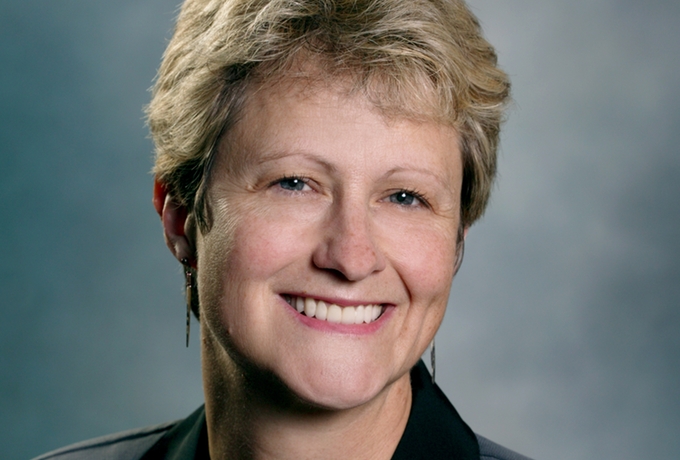
Sue Barton, deputy director Lake Tahoe Visitors Authority

Jeanne Lear, human resources manager South Tahoe Refuse & Recycling


Opinion: EDSO ready to keep leading

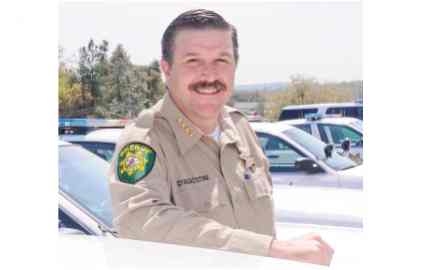
By John D’Agostoni

Another year has passed and another holiday season is upon us. This is a time of year to reflect on the year that was and the year that soon will be. From a personal standpoint, it’s a time to reflect on the priorities in life; faith, family, friendship, health and happiness. From a professional standpoint, it’s a time to take a few steps back and assess our progress, re-evaluate our priorities and prepare ourselves for the year to come.

John D'Agostini

John D’Agostini

This season is a time for family gatherings and celebrations. Whether it is families traveling to a relative’s home to celebrate or friends venturing out for their holiday shopping, these trips typically require driving. All of our area law enforcement agencies will be working around the clock to ensure the safety of our community out enjoying Christmas and New Year parties and celebrations, but we also look to each and every person to take responsibility for their actions, drink sensibly, and not drive after drinking.

At all levels of government and private industry we are still facing an uncertain fiscal future. As you know our sheriff’s office and employees have made significant budget reductions doing their part to assist the county attain a balanced budget without reducing the level of service to our community.

I want you to know that providing public safety services will continue to be my highest priority and I will ensure that when you need our assistance, we will be there.

My vision is to maintain one of the best law enforcement agencies in California, building on the hard work and service provided by the dedicated employees at the sheriff’s office. Your sheriff’s office consists of highly professional, well trained staff, with access to some of the most reliable equipment and technology available to law enforcement. With these tools and a commitment to public service, our level of interaction with the community will increase and I will work hard to protect your rights and our foothill lifestyle.

Please know that we work for you and accept my wishes for a happy and safe holiday season for you and those you hold dear.

Merry Christmas and a Happy New Year to you and all you cherish.

John D’Agostoni is sheriff of El Dorado County.


Letter: Vail Resorts continues B&B support

To the community,

With the funds provided by Vail Resort’s EpicPromise Grant Program, Heavenly and Kirkwood resorts sponsored their 12 Bread & Broth Adopt A Day of Nourishment for 2014 on Dec. 8.

Attending the evening as sponsor crew volunteers were team members from Heavenly Mountain Resort’s Ski and Ride School. Volunteering at her second B&B dinner was Leslie Amato, day care center manager, who “loves volunteering and finds it to be a wonderful experience.”

It was the first time volunteering for the rest of the Ski and Ride School members Amy Rice, office manager; Michelle Peterlin, assistant day care manager; Rachel Georgieva, training manager; and Jack Pippin, general manager.

“We all feel very fortunate to work for a company like Vail Resorts, that so strongly promotes giving back to the community,” was the collective response from the team of their role in helping the B&B volunteers serve those who enjoyed the night’s dinner.

Taking the opportunity to help folks in need is a wonderful way to give back and change lives. According to the letter sent to EpicPromise recipients, “Heavenly and Kirkwood mountain resorts are committed to working with non-profits who make a positive impact for those who call the South Lake Tahoe area home.”

Bread & Broth would like to thank Vail Resorts for their generous contribution to our program and the dedication of their employees in volunteering at Heavenly/Kirkwood sponsorship evenings.

For more B&B information, go online or find us on Facebook.

Carol Gerard, Bread & Broth


Letter: Meyers appreciative of support

To the community,

The Meyers Community Foundation would like to thank the individuals and businesses that made our 4th annual Meyers Tree Lighting event on Dec. 5 such a success.

Almost 400 people showed up to ring in the holidays and celebrate Meyers, and we couldn’t have done it without phenomenal local support.

As most people know, the tree had been struck by lightning and it took a community effort to bring our holiday tree back to life. Instrumental to the lighting of the Meyers Community Tree were the skillful team of Ed Cook Tree Service, K and K Services (Kenny Curtzwiler), Liberty Energy and John Dayberry.

Also, a special thanks goes out to CalStar for “dropping in Santa,” Lake Valley Fire District for their Christmas truck, the California Conservation Corps, Santa Dylan Thomas, Santa’s helper Misty, Sunrise Rentals for providing power, Downtown Café for providing cookies, Sierra-at-Tahoe for providing the cotton candy booth and JoAnn Conner for providing Santa suit.

Businesses, families and individuals that donated to the tree lighting are recognized as follows:

Platinum sponsors: The Appointment Biz-Colin Hupp and Julie Threewit, RE/Max Realty Today, Jeff Chamberlain DDS, Divided Sky, the Fair Family;

Gold sponsors: Greenfront Mortgage, Lira’s Supermarket, Bert’s Café, Getaway Café, Meeks, Alpine Septic and Plumbing, Novasel and Schwarty Investments, Inc., Vichas Consulting, the Brejc Family, the Praul-Cooper Family, Sierra Windows and Doors, New Visions Construction, Sierra-at-Tahoe and Lake Tahoe Golf Course;

Silver sponsors: Richard and Joan Young, John and Susan Hartzell, Freel Perk, Rise Designs, Studio Lake Tahoe, Bona Fide Books, Lee and Margaret Vestal, the Hannah Family, Affordable Construction Services, Carl Ribaudo and the Orr Family;

Bronze sponsors: Golden Bear Events and Watta Bike.

Thanks to all who came out to enjoy the festivities — we wish you a happy holiday.

The Meyers Community Foundation


Opinion: Quiet demise of TRPA’s Asian clam program

By Steve Urie

In a recent Voices post, (Collaborate over good policy, Lake Tahoe News, Nov. 28), I criticized the Tahoe Regional Planning Agency for carpeting acres of Lake Tahoe with rubber mats in a futile attempt to eradicate Asian clams. Since 2008, millions have been spent on the failed project that killed many more animals native to Lake Tahoe than the nonnative clams. Mercifully, when the 35 tons of mats that covered 5 acres of Emerald Bay were rolled up last month, the project was placed on hold, and there is no plan to reuse the mats.

In the November post, I wrote that Asian clam shells don’t create high-calcium microzones where quagga mussels can survive, a reason that TRPA and UNR Professor Sudeep Chandra used to justify the eradication program. I also said that the clams slightly decrease dissolved calcium by absorbing it from the water to build their shells and for muscle function.

Steve Urie

Steve Urie

A respondent to the article, who identified himself as Cosa Pescado, wrote: “Living [Asian clams] absorb calcium, yes. And the dead ones leave shells that release calcium. Baseline calcium is low for Tahoe. What is also telling about your understanding of science is that you mentioned limestone as a source of background calcium. It certainly is … the remnants of living organisms are responsible for the calcium in limestone.”

Although Cosa Pescado’s response appears logical and some aspects of his argument are correct, the science is wrong. He says that baseline calcium is low for Lake Tahoe — about that he’s correct, it’s exceptionally low. Tahoe’s average shore zone dissolved calcium is 9.16 parts per million. (The minimum calcium threshold for survival for Asian Clams is 6.5 ppm and for quagga and zebra mussels it’s 12 ppm — only 9 percent of all U.S water bodies have dissolved calcium less than 12 ppm.) Whittier, et al., 2008

Cosa Pescado also accurately points out that the remnants of living organisms are responsible for the calcium in limestone. But he then inaccurately implies that clam shells add to calcium concentrations in the water column, creating what Chandra calls “calcium hot zones.”

For all practical purposes, the total amount of calcium in Lake Tahoe is constant. There is a tiny increase from concrete leaching and natural sources, but the vast quantity of Tahoe’s water quickly dilutes it, and the average annual increase from external sources is minute. Asian clams and the half dozen native Tahoe mollusks filter calcium to build their shells, which reduces the lake’s dissolved calcium and proportionately increases the solid calcium — but the total calcium remains the same.

Measurable reduction of calcium in the water column by mollusks has occurred in the Great Lakes. In a research report, Long-term trends of Great Lakes major ion chemistry, scientists attribute slightly decreased dissolved calcium in the lower Great Lakes water to zebra mussels.

Like all mollusks, zebra and quagga mussels need calcium to build their shells, and they get it from the water. Hypothetically, how much calcium is needed to raise Lake Tahoe’s dissolved calcium from 9.16 ppm to 12 ppm? It would take approximately, 1.48 million tons of pure limestone (CaCO₃) to raise the lake’s dissolved calcium by 2.84 ppm. That’s enough limestone to fill a freight train stretching for 80 miles from Oakland to Sacramento — it is estimated that all of the Asian clam shells in Lake Tahoe would fit in a large dumpster.

Cosa Pescado also takes issue with my statement that because “Asian clams live on detritus and algae that they filter from the water, they actually improve water quality and clarity,” and he writes that that the clams “fecal matter concentrates nitrates,” which degrades water quality. That is true, but the logic error is similar to that which he makes with dissolved calcium — the clams remove more waste than they create.

All of Tahoe’s native mollusks and Asian clams are prodigious filter feeders, and steadily remove pollutants, micro-particles, algae, bacteria, and waste from the water; convert it to shell material and use it for muscle energy and function. Unarguably, they measurably improve clarity and water quality. This has been demonstrated over the last 20 years in Lake Michigan where water clarity is greater than at any time since the 1950’s. That Asian clams improve water quality was even acknowledged in a study in which Chandra was a principal investigator: Natural and Human Limitations to Asian Clam Distribution and Recolonization.

But looking at the larger picture of whether the Asian clam control program was not only a colossal waste of money, but also environmentally destructive, in 2013 Chris Rosamond, a freshwater biologist at UNR’s Desert Research Institute and a colleague of Chandra’s, wrote: “I would concur [with the] disdain for the ‘Keep Tahoe Blue by putting big blue tarps all over the bottom and killing everything’ approach that has been used these last few years.

“In addition to the initial shock of suffocating whatever native benthic organisms there are in these locations, the anoxic conditions under these tarps will alter nutrient dynamics in the benthic substrates, particularly phosphorus and nitrogen cycling. Recall that nitrogen and phosphorus are our two greatest pollution concerns in the basin. In short, sterilizing the floor of Tahoe’s shallow habitats through suffocation is probably not a viable long-term solution.”

Last month at Emerald Bay, Rosamond was proven to be correct.

The Wittmann study also states: “Costs of Asian clam treatment in Lake Tahoe were approximately $210,000 per acre. A hypothetical 100-acre area for treatment indicates that total costs of treatment can range [up to] $26 million and will neither achieve eradication, nor the maintenance of low density populations of Asian clams in Lake Tahoe.”

In other words, suffocating clams with rubber matting is prohibitively expensive, even if it were effective.

The quiet demise of the Asian clam control program won’t be as hyped as its rollout was, but it is long past due, and Tahoe is the better for it.

Steve Urie is a 40-year Tahoe-Truckee resident and is the author of “Tessie, Quagga Mussels, and Other Lake Tahoe Myth’s. To learn more about Tahoe’s AIS programs go online.

A note to Cosa Pescado: “The Science” reference in my November post was not put in quotes to cheapen science or employ sarcasm, but to direct the reader to “The Science” tab on the website, where science studies and articles relevant to the Asian clam program and other TRPA AIS prevention and control programs can be found. Since you have an obvious interest in the subject, but aren’t willing to spend $10 to buy the book, please use “Contact” on the website to send me a postal address, and I will send you a complimentary copy.


Letter: Appreciation for Tahoe concert cruises

To the community,

Over the last few weeks, the talented duo of Ike and Martin have rocked the MS Dixie and the Tahoe Queen with a series of free concert cruises.

I can’t begin to express how wonderful these musical interludes, in the midst of all the holiday madness, lightened our moods and elevated our love of all things Tahoe. Kudos to not only Ike and Martin, but to Aramark Parks and Destinations along with their very hospitable staff on both ships.

There really are few things as magical as a lake cruise, surrounded by friends, listening to exceptional music. It was a Christmas present, in and of itself.

Thank you to all who made it happen.

Denise Haerr, South Lake Tahoe


Opinion: TRPA Compact keeps protecting Tahoe

By Shelly Aldean

Forty-five years ago, in December 1969, President Richard Nixon signed a unique bi-state compact approving California and Nevada’s plan to create the Tahoe Regional Planning Agency. It was the first such undertaking of its kind, uniting two states, six local jurisdictions, and the federal government in a shared mission to protect Lake Tahoe’s sensitive environment from overdevelopment.

Shelly Aldean

Shelly Aldean

That effort has shaped the Tahoe we know and love today, and will help shape the Tahoe that we bequeath to future generations.

As we mark this important milestone, it’s important to note that some of our progress is measured by what’s not seen at Tahoe. The creation of the TRPA halted the runaway growth of the 1960s, ending plans for the development of a 750,000-resident city and a four-lane highway around the lake with a bridge across Emerald Bay.

Collaboration and progress have been a constant part of our efforts. So, too, unfortunately, has conflict.

Humans have cherished our beautiful mountain lake for thousands of years. Tahoe’s splendor inspires our imaginations and powers our appreciation of nature. It also supports a $5 billion per year economy and attracts millions of visitors annually. Residents, business owners, environmental groups, and tourists all have interests in Lake Tahoe’s well-being, and often hold differing views about how it should be protected and enjoyed. Our greatest progress over the past 45 years has been achieved through collaboration – and from working through our conflicts in search of compromise.

Disagreements about regulation and control between the states and local jurisdictions in the 1970s and differing views on the amount of development to permit at Tahoe in the 1980s led to the adoption of our prohibition on new housing subdivisions and our growth control caps for new lodging, commercial floor area, and homes. In the 1980s, consensus emerged from a plethora of opinions, resulting in the creation of an ambitious set of environmental thresholds that TRPA has a mandate to attain for key indicators such as air and water quality, lake clarity, fish and wildlife habitat, vegetation, scenery, and recreation.

None of our progress over the last 45 years has come without controversy or conflict, and yet, our progress has been real and noteworthy.

TRPA’s ban on highly polluting two-stroke watercraft engines at Tahoe was the nation’s first. It was highly controversial at the time, but has significantly improved our lake’s water quality. Our mandatory boat inspection program for aquatic invasive species prevention is considered a model for the nation.

Launched in the mid-1990s, the environmental improvement program has invested about $1.7 billion in federal, state, local, and private sector funding in projects that have stabilized our lake’s once-declining clarity, installed erosion control measures on 674 miles of roads, treated almost 56,000 acres of forest land with hazardous fuel reduction projects, restored 20,000 acres of wildlife habitat, improved public shoreline access, and built 137 miles of new bicycle and pedestrian routes.

Conflict has often tested the commitment to our unified effort, but it has been unable to break our common bond and purpose. Instead, it has strengthened our resolve and led to some of our greatest accomplishments.

In the years leading up to the adoption of the Regional Plan update in December 2012, differences emerged between California and Nevada that threatened to break apart our bi-state Compact. Once again, we found common ground with a science-based plan designed to improve lake clarity, make communities more walkable and bikeable, and streamline the permitting process for homeowners and businesses.

California and Nevada are as committed as ever to our shared mission, and to the continued implementation of that Regional Plan Update for the benefit of our environment and our communities. California Gov. Jerry Brown put it best at this year’s Lake Tahoe Summit in August when he said, “A breakdown can pave the way for a breakthrough.”

We have much to be proud of after 45 years, but much more to do. Conflict and differences of opinion over policy at Tahoe will remain a constant part of our effort. The most important issue is how we manage that conflict, look at the needs of the basin holistically in our search for common ground, and chart the best path forward for our beautiful lake and surrounding communities. History has shown us time and time again that this is how real progress is made and true success is achieved.

In the words of Henry Ford, “Coming together is a beginning; keeping together is progress; working together is success.”

Shelly Aldean is chair of the Tahoe Regional Planning Agency Governing Board.


Letter: Heavenly appreciative of storm help

To the community,

On behalf of Heavenly and its employees, I would like to say a big thank you to our local utility companies and contractors who provided immediate and professional support in the aftermath of last week’s storm.

Pete Sonntag

Pete Sonntag

With trees down on Dipper Express and multiple power lines across the mountain knocked to the ground, their teams responded quickly to get us back in business. Prioritizing the community’s needs first, they quickly jumped into action to help Heavenly as resources became available.

I also want to thank the Heavenly staff who provided key support to these teams and responded efficiently to other emergencies around the Resort.

I have never been so proud of the team I work with and the community in which we live.

Wishing everyone a safe and happy holiday season,

Pete Sonntag, Heavenly vice president and COO Heavenly


Opinion: End death penalty or charade of delays

By Marcos Breton, Sacramento Bee

Why even seek the death penalty when it hasn’t been implemented in California in nearly a decade and when Democrats who rule the state allow it to linger in perpetual limbo?

Jan Scully, the outgoing district attorney for Sacramento, answered the question without a hint of cynicism on Tuesday – quite a feat considering how cynical people on both sides of this issue have become.

Some death penalty supporters have come to believe that death penalty cases just waste taxpayer money because legal obstacles have prevented anyone from being put to death in California since Clarence Ray Allen was executed by lethal injection on Jan. 17, 2006.

Yet there was Scully, and her counterpart from Placer County, announcing they would seek the death penalty for Luis Enriquez Monroy Bracamontes, the Mexican national accused of killing two law enforcement officers in a terrifying late October crime spree that gripped the region.

Read the whole story


Opinion: U.S. must learn from torture report

By Dianne Feinstein

A week ago today, a five-year review of the CIA’s detention and interrogation program was finally made public, drawing back the curtains on a very dark period of American history. The purpose of making this report public is simple: to ensure something like this can never happen again.

The 500-page executive summary that was made public is part of a larger 6,700-page review of a CIA program that included clear examples of torture, far outside the bounds of American values.

Dianne Feinstein

Dianne Feinstein

It’s important to remember the study is based on CIA’s own records: 6.3 million pages of the CIA cables, memos, reports, e-mails and other documents. These records from the very time the actions took place — appear extensively in the report’s 38,000 footnotes.

Many of these records were disturbing, at times deplorable.

But there was also some wisdom in those records, like a 2005 email from then-CIA Inspector General John Helgerson. It read, in part: “We have found that the Agency over the decades has continued to get itself in messes related to interrogation programs for one overriding reason: we do not document and learn from our experience — each generation of officers is left to improvise anew, with problematic results for our officers as individuals and for our Agency.”

This report provides that documentation, and now we need to learn from it and apply the lessons.

We must never again allow our country to veer so far off course. To do that, we have to study where we went wrong.

Sen. John McCain, R-Ariz., said last week on the Senate floor, “The truth is sometimes a hard pill to swallow.” Indeed, the executive summary includes some particularly vile treatment, and it’s difficult to comprehend what happened. We included these details to drive home how wrong and un-American this program was.

One detainee was kept awake for 180 hours — that’s more than seven days without sleep. One otherwise healthy detainee died while in custody, likely from hypothermia.

Beatings were common, painful stress positions were often used and threats were made against detainees’ lives and against their families. There were even mock executions.

All of this happened outside the normal system of checks and balances. Congress was blocked from oversigt, and policymakers reviewing the program were often misinformed. What guidelines existed to prevent abuse were repeatedly ignored.

The result of these actions? A program of interrogation and torture that yielded no information necessary to stop terrorist plots or capture terrorists.

This was an ugly program, but let me be clear: Our country is strong enough to own up to what we did and make the necessary changes to make sure it never happens again.

It’s what the most powerful country in the world should and must do.

Lindsey Graham, a Republican colleague from South Carolina who also spoke on the Senate floor on Dec. 9, made this point: The evils our enemies visit upon us are far worse than how we treated these prisoners, but we must hold ourselves to a much higher standard than ISIL or al Qaeda.

This isn’t about our enemies. This is about us.

So now we need to move forward. It’s time to finally enact federal laws that ban interrogation techniques like these from ever being used again.

In the coming days, I plan on joining several other senators in offering a series of recommendations that stem from this report. We shouldn’t have to rely on a presidential executive order, which could be reversed and is the only thing prohibiting the CIA from resuming this program.

Critics of this report have said that releasing it will make us less safe, that the world is too unstable to handle what this report found. In considering these concerns, I determined that there is never a good time to admit we tortured people, but it must be done.

But it’s not the report that’s at fault, it’s the fact that we allowed torture to happen in the first place.

When we released the report, I talked on the Senate floor about how the study was conducted, what was in it and what it meant.

But the speaker who followed me really put it in the proper context, and that was Sen. McCain.

No one knows better that torture doesn’t work than John. He spent five years as a prisoner of war. He lived this debate, and I’m proud to have him on my side.

John spoke eloquently, offering argument after argument against the use of torture.

One passage in particular stuck me: “It is essential to our success in this war that we ask those who fight it for us to remember at all times that they are defending a sacred ideal of how nations should be governed and conduct their relations with others — even our enemies.”

Let’s not forget that lesson. Let’s not repeat the same mistakes. I encourage everyone to read the report, come to your own conclusion and if you agree, join in the fight to end torture.

Dianne Feinstein represents California in the U.S. Senate.