Opinion: Open-office trend is destroying the workplace

By Lindsey Kaufman, Washington Post

A year ago, my boss announced that our large New York ad agency would be moving to an open office. After nine years as a senior writer, I was forced to trade in my private office for a seat at a long, shared table. It felt like my boss had ripped off my clothes and left me standing in my skivvies.

Our new, modern Tribeca office was beautifully airy, and yet remarkably oppressive. Nothing was private. On the first day, I took my seat at the table assigned to our creative department, next to a nice woman who I suspect was an air horn in a former life. All day, there was constant shuffling, yelling, and laughing, along with loud music piped through a PA system. As an excessive water drinker, I feared my co-workers were tallying my frequent bathroom trips. At day’s end, I bid adieu to the 12 pairs of eyes I felt judging my 5:04 p.m. departure time. I beelined to the Beats store to purchase their best noise-canceling headphones in an unmistakably visible neon blue.

Despite its obvious problems, the open-office model has continued to encroach on workers across the country. Now, about 70 percent of U.S. offices have no or low partitions, according to the International Facility Management Association. Silicon Valley has been the leader in bringing down the dividers. Google, Yahoo, eBay, Goldman Sachs and American Express are all adherents. Facebook CEO Mark Zuckerberg enlisted famed architect Frank Gehry to design the largest open floor plan in the world, housing nearly 3,000 engineers. And as a businessman, Michael Bloomberg was an early adopter of the open-space trend, saying it promoted transparency and fairness. He famously carried the model into city hall when he became mayor of New York, making “the Bullpen” a symbol of open communication and accessibility to the city’s chief.

Read the whole story


Opinion: Be smart when driving in winter conditions

By Leona Allen

The Tahoe Fire and Fuels Team would like to remind everyone that extra precautions need to be taken while traveling during the winter. Along with potential hazardous road conditions, motorists can expect extreme delays due to snow conditions or accidents. We recommend following these tips to ensure a safe trip to your destination:

· Ensure that your vehicle is stocked with extra warm clothing, food, water, a shovel and other survival supplies in case you become stuck on a mountain road.

· Make sure that your gas tank is full before leaving on any trip.

· Always carry chains (it’s the law).

· Leave your headlights on while driving.

· Advise someone when you’re leaving and where you’re going.

· Drive carefully, even when the roads appear dry. Patches of ice tend to accumulate on curves and bridges when the rest of the roadway is clear.

· Clean the snow completely from your car. Any snow left on your roof can slide down unexpectedly and a thin glaze of ice can reflect in the sun, obstructing your view.

· Check road conditions before you leave. For California go online or call 800.427.7623). For Nevada go online or call 877.687.6237.

· You must stop and put on chains when highway signs indicate chains are required. You can be cited by the California Highway Patrol and fined if you don’t. You will usually have about a mile between “Chains Required” signs and the checkpoint to install your chains.

· lf you are driving slower than the traffic around you, use turnouts so that others may pass.

Leona Allen works for Lake Valley Fire Protection District.


Opinion: Not all baseball artifacts are in Cooperstown

By Larry Weitzman

Our national pastime, baseball has been with us since the middle of the 19century. To honor its greatest players, a shrine in Cooperstown, N.Y., was created almost 80 years ago to honor the greatest that have played the game.

But as we are learning, to become a member of the Baseball Hall of Fame you need to be elected by 75 percent of the approximately 500 baseball/sports journalists who are members of the Baseball Writers Association of America. The election is in January of each year.

Founded by Stephen Clark, grandson of Edward Clark who was a founder of the Singer Sewing Machine Company, the site of the Hall of Fame was part of a gymnasium built by Clark’s father Alfred Corning Clark. It was the first gymnasium built in Cooperstown and Cooperstown was the birthplace of Stephen Clark. Part of Clark’s thinking with respect to the hall was tourism for Cooperstown.
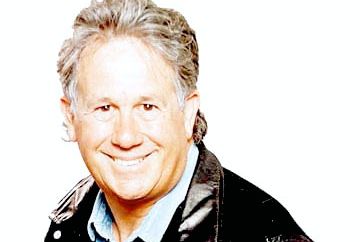
Larry Weitzman

Larry Weitzman

With nearly 500 baseball writers making the selection, the procedure is very political. Just look at the controversy created by the likes of Mark McGwire or Sammy Sosa, players with incredible credentials but politically barred by the alleged use performance enhancing drugs. Look what happened to Barry Bonds. McGwire and Sosa perhaps single-handedly saved the game after the baseball player strike of the mid-1990s with their home run duel in 1998. It brought fans back to the game in droves.

However, there is another place that these baseball players may find themselves someday, the Baseball Reliquary. Founded in 1996 in Monrovia, Calif., by Terry Cannon, the Reliquary contains artifacts of the game like some of the original turf and soil from Elysian Fields (located in Hoboken, N.J.), thought to be the place of the first organized (played under the first written rules) baseball game played on June 19, 1846.

Cannon says the Reliquary celebrates the merging of baseball, culture and art and the effect on all three as well as people who had an affect on the game that may not be well known, like Emmett Ashford who became the first black umpire in the Major Leagues. But the reason Ashford is significant isn’t necessarily his skin color, but because Ashford turned umpiring into an “artform.”

Those of us who were here during the era of the Pacific Coast League and teams like the Sacramento Solons, Hollywood Stars, San Francisco Seals and the Los Angeles Angels knew Ashford well. He added style to the game with his “colorful” moves and he was a sharp dresser off the field. When Ashford made it to the show in 1960, Cannon actually got his autograph at Angels stadium (the Big “A”) in the early 1960s.

Cannon has been a baseball fanatic since he first read as a 9 year old child in 1962 the book “Veeck is a wreak.” Bill Veeck Jr. was the general manager of the Chicago White Sox who in 1951 put 3-foot-7-inch Eddie Gaedel in the line up to get the team a walk. Shortly thereafter American League President Will Harridge banned midgets from the game. While Gaedel’s jersey wore the number “1/8” and hangs in the Hall of Fame, his athletic supporter is part of the Reliquary collection along with a miniature trophy given to him by the St. Louis Browns sponsor, Falstaff Brewery. Cannon since has read hundreds of books about baseball. One of the Reliquary supporters is Jim Bouton, former big league pitcher and author of the best seller “Ball Four.”

In 1999, the Reliquary started its own hall of fame called the Shrine of Eternals, honoring three people every year voted in by its 300-plus members. And the beauty is anyone can become a member so the public essentially votes members in. There are currently 42 Shrine members and they are an eclectic group. Members include Jim Abbott (one-armed pitcher), Yogi Berra, Ila Borders (daughter of former Major Leaguer Pat Borders. Ila pitched for the Colorado Silver Bullets and reportedly had an 86 mph fastball), Bill Buckner, Steve Dalkowski, Mark “the Bird” Fidrych, Shoeless Joe Jackson, Curt Flood (broke baseball’s reserve clause), Bill “Spaceman” Lee, Roger Maris, Minnie Minoso (played in six decades), Pete Rose, Casey Stengel, Louis Tiant, Fernando Valenzuela and many others, some of whom are already in the Hall of Fame.

On a recent ballot were people like Sy Berger, who joined Topps bubble gum Company as a sales promotion executive after World War II and re-invented the modern baseball card as we know it today. Also on the ballot is a star from the Pacific Coast League’s Los Angeles Angels, Steve Bilko who hit 56 home runs and won the PCL’s Triple Crown in 1956. I saw him play many times and being a Hollywood Stars fan, didn’t like him much. It is said that Phil Silvers, who starred as Sargent Bilko in the TV comedy “You’ll Never Get Rich” took his characters name from Steve Bilko because of his popularity. (I thought Silvers took the name as a play on words because he was always trying to bilk people out of money.)

Ballots are replete with others who made significant contributions to the game like Bert Campaneris (he played all nine positions in one game in 1965 and became part of the A’s World Championship dynasty from 1972-74), Rocky Colavito, Carlos Delgado, Ernie Harwell, Bo Jackson, Manny Mota, Tug McGraw (his son is singer Tim McGraw whose other talent is baseball as well. Tim played in the minor leagues), Annie Savoy (yes, a character from Ron Shelton’s film classic Bull Durham), Rusty Staub (whose charitable foundation created the year after his retirement from the game after 23 years in the Bigs has raised more than $112 million), Fay Vincent, Rube Waddell and even Don Zimmer.  There are more, too many to name, but you get the idea.

The Reliquary which goes on periodic display at various libraries and similar venues in Southern California are loaded with significant and unusual artifacts of the game like Joe Bauman’s 70th home run ball from 1954, 44 years before Mark McGwire accomplish the feat, Bauman did it while playing for the class C league Roswell Rockies (he went on to hit 72 that year). Or does the Dave Bresnahan potato pique your interest? What is a potato doing in the Reliquary you ask?

Bresnahan was catching for the Double A Williamsport team in the Eastern League and before the game he made a potato look like a baseball and concealed it on his body. When there was an opposing runner on third base he threw the potato wildly over his third baseman’s head in a pickoff attempt. The runner on third came home and was tagged out with the real ball which Bresnahan still held in his glove. The umpire called the play deceptive and awarded the runner home and threw Bresnahan out of the game. The next day he was released by the club and his career was over, but he became an instant celebrity. Three years later the club had a Dave Bresnahan day and retired his number. Not bad for a backup catcher hitting .140. A young fan retrieved the potato and preserved it.

A recent documentary DVD by Jon Leonoudakis aptly sums up the Reliquary with the title “Not exactly Cooperstown, an unorthodox look at America’s most orthodox game.” If you love baseball, you at least have to visit their website. Just give yourself enough time, because it is like a book you cannot put down.

Larry Weitzman is a resident of Rescue.


Editorial: It’s time for a humane immigration solution

Publisher’s note: This editorial is from the Jan. 1, 2015, Los Angeles Times.

In this nation’s never-ending debate over immigration, those who demand strict enforcement of existing laws are armed with a simple rejoinder: What, they ask, do you not understand about “illegal”? To them, the solution to illegal immigration is to identify those who are here illegally and deport them.

It’s a reasonable point. A law should be enforced. But the argument can’t be isolated from the realities of immigration, which is propelled by regional economic imbalances, familial connections and the basic human desire to live a better, safer and richer life. Those are powerful forces, unlikely to be thwarted by stepped-up deportation. Instead, under those pressures, our immigration system has crumbled, and strict enforcement has become impractical, even impossible.

Congress can and should, but probably won’t, fix it.

That leaves pragmatism — which President Obama exhibited with his recent directives offering deportation reprieves for some 5 million immigrants here illegally.

Read the whole story


Editorial: Too many in U.S. ignorant of democracy’s basics

Publisher’s note: This editorial is from the Dec. 29, 2014, Los Angeles Times.

In 1954, when the Supreme Court ruled that segregated public schools were unconstitutional, Chief Justice Earl Warren emphasized the importance of public education as a crucible for good citizenship.

“Today,” Warren wrote, “education is perhaps the most important function of state and local governments. Compulsory school attendance laws and the great expenditures for education both demonstrate our recognition of the importance of education to our democratic society. It is required in the performance of our most basic public responsibilities, even service in the armed forces. It is the very foundation of good citizenship.”

But a growing number of critics charge that education in good citizenship is being shortchanged by an American educational system that is focused on other “core competencies.” The result is that too many products of that system are ignorant of the basics of how American democracy functions, and lack the knowledge to participate fully in the society it sustains. One of the most prominent spokespeople for this view is retired Supreme Court Justice Sandra Day O’Connor, the last member of the court to have held elected office.

In a 2008 article written with former Rep. Lee Hamilton of Indiana, O’Connor argued that “civic education has been in steady decline over the past generation, as high-stakes testing and an emphasis on literacy and math dominate school reforms. Too many young people today do not understand how our political system works.”

Read the whole story


Opinion: Stop the math, science obsession

By Emily Eckart, Washington Post

When I was a child, I wanted to be a scientist. For a school project, I grew my own bread mold and dressed up as Alexander Fleming. I read about Marie Curie’s travails with the enthusiastic fandom that most girls dedicate to movie stars or singers. Microbiology, entomology, neuroscience, medicine—all beckoned with promises of discoveries to be made, fundamental truth hiding behind a microscope or a tricky equation.

Then, it all came to an end.

In seventh grade, I read Lawrence Krauss’s book “Atom”. The book followed a single atom from the days of the Big Bang to present. Krauss concluded by saying that he was composed entirely of atoms, and that upon his death, these atoms would be recombined into other objects. This passage was apparently intended to uplift, but I found it troubling. What was the purpose of everything if it all came down to mechanical interactions of particles and cells — what was the point of living, of doing anything at all?

Those of us who cherish the humanities know well the disappointment our math and science teachers express when we choose to “squander” our bright young minds. In high school, when I confessed to a former science teacher that I had decided to major in music, her face fell. “Emily,” she said, distraught, “what happened to science?”

It is commonly claimed that STEM majors are the “most valuable” — value being defined as immediate job offers and high earnings. Articles promoting STEM have a clear focus: jobs and money. College is increasingly viewed as a form of vocational training, useful only for teaching the quantitative skills that our data-obsessed society demands.

But defenders of the humanities have long recognized that the study of history, literature, art and language develop other skills that are critical for students’ success. With their focus on careful reading and analysis of texts, humanities foster clear communication, both in speaking and in writing.

Read the whole story


Opinion: Barton not surprised by ER visits

By Warren Withers

Are you seeing illness related to the cold temperatures?

Withers: We seeing quite a few cases of cough, cold, and flu.

We have seen a few cases of frostbite, but not any severe cases. People complain of feeling cold, but hypothermia is rare.

Any activity related to SnowGlobe?

Withers: Any time there is a large event such as SnowGlobe there is some degree of emergency care needed. What we are seeing appears typical for a large scale event and long night of revelry.

Any advice?

Withers: If you have mild cough or cold symptoms, stay home. Get plenty of rest and drink fluids. If needed, you can go to Urgent Care in Stateline or we are available to provide further evaluation at the Emergency Department.

Warren Withers is head of the Emergency Department at Barton Hospital.


Opinion: LTBMU forest supervisor says goodbye

By Nancy Gibson

The New Year brings big changes for me personally and for the Forest Service in Lake Tahoe. After 37 years with the agency, I’m looking forward to retirement and handing over the reins at the Lake Tahoe Basin Management Unit to a new forest supervisor.

I’m grateful for steady basin leadership that has enhanced relationships making them stronger. Days of past tensions between conflicting interests have passed. Today, local agencies work closely together on solutions that protect our communities and our environment.

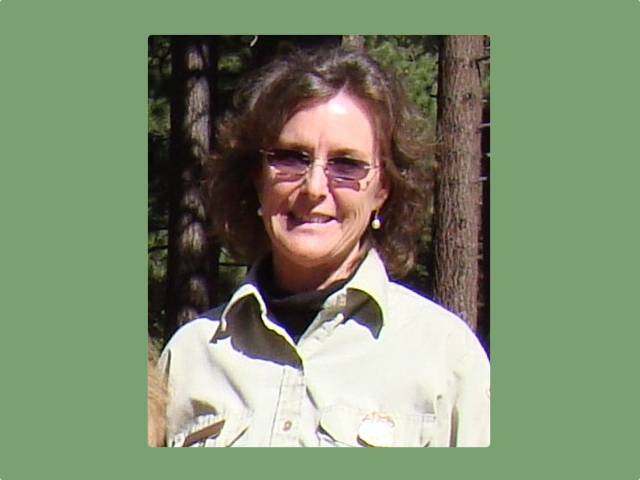
Nancy Gibson

Nancy Gibson

I’m proud of contributions this agency has made to Lake Tahoe restoration. The Forest Service has made ecological restoration its top priority nationwide, and nowhere is this more evident than Lake Tahoe. Our projects not only repair past damage, they increase resilience of our lands to future impacts, such as climate change and catastrophic wildfire.

We’ve been fortunate to have dedicated funding from sales of federal land in Southern Nevada. One of the challenges my replacement and our partners face is identifying funding to complete important work that remains.

During my time here, we completed planning for the massive South Shore fuel reduction project. We are now three years into forest thinning and prescribed fire on South Shore that reduces the risk of severe wildfire and increases forest health. We’ve completed initial forest thinning around much of the lake, complementing the work of California and Nevada state agencies, local fire districts and individual homeowners.

We’re midway through a major project with the California Tahoe Conservancy that will restore a stretch of the Upper Truckee River. The project will reduce sediment that harms Lake Tahoe’s clarity, encourage return of meadow vegetation and improve habitat for fish and wildlife. Once completed, it will stand alongside other successful stream and meadow restoration projects, such as Cookhouse Meadow, Blackwood Creek, and Cold Creek/High Meadows.

We’ve helped build bike paths and trails, enhance water quality at our recreation sites, provide outdoor education experiences for young people, and educate and entertain our 5.7 million visitors.

In the next few months we will complete our Forest Plan revision; a culmination of eight years of effort and analysis made stronger through public involvement. The revision sets a solid foundation for the next 15-20 years of National Forest management in the Basin.

In my last few days as forest supervisor, the work hasn’t slowed. I’ve signed a decision to return former manmade Incline Lake to wetlands. Another project that will take ecological restoration in the basin to the next level, through tree-thinning and prescribed fire operations in six impaired meadows, is moving forward for public comment.

In retirement, I’ll be enjoying the home my husband and I built here in South Lake Tahoe and playing outdoors on beaches and trails I’ve worked to protect. I’ll do so knowing I’ve left the future of the basin in the capable hands of my former employees, dedicated partners, and the next supervisor of the Lake Tahoe Basin Management Unit. I hope to see you out there.

Nancy Gibson’s last day as forest supervisor of Lake Tahoe Basin Management Unit is Jan. 3, 2015.


Letter: Proud of CTC accomplishments

To the community,

As time goes by, and the older I get, it is truly rewarding to look back and reminisce over the many wonderful California Tahoe Conservancy projects that we have accomplished in Lake Tahoe.

I attribute our major successes to the outstanding Conservancy staff. Their knowledge, energy, and motivation make my tenure on this board very worthwhile.

I have always been very proud to say I am a member of the California Tahoe Conservancy. Although 29 years have come and gone, we still have a very bright future at Lake Tahoe.

I hope you will take a look at the Conservancy’s 2014 Report to learn more about this year’s highlights. Thank you for your continued support. Wishing you happy holidays and a wonderful 2015.

Sincerely,

Larry Sevison, chair of the California Tahoe Conservancy


Opinion: California must deal with pension issues

By Ted Gaines

Jan. 1 marks the New Year and also the day that hundreds of new California laws go into effect. In addition to the changes those laws are supposed to bring, there are other major problems facing the state in 2015.

The budget picture is improved, but the state consistently ignores the longterm, massive, and unfunded pension costs when it makes its rosy announcements about balanced budgets.

Ted Gaines

Ted Gaines

The unfunded pension bill may be in the hundreds of billions of dollars. As municipalities in California and around the country file for bankruptcy, driven in part by lavish pension promises and the costs that follow, it’s critical — for the state, for the taxpayers and for the workers — that California uses conservative, honest and transparent accounting for pensions and for all state taxing and spending.

The pension bill is going to come due and politicians are already looking at the state’s improved finances and calling for increased spending. To pay for it all, I’m worried about the threat of a Proposition 30 tax extension and that legislators are going to turn to the worst and most predictable page of their playbook and raise taxes by undermining Proposition 13. This watershed Proposition has saved citizens countless billions of dollars since 1978, but it can be altered to make it easier for cities and counties to raise taxes. I think that would be a terrible mistake. Without spending control, no amount of tax dollars will ever be enough. It’s not more revenues Sacramento needs, it’s more self–control.

This legislative session, I will be fighting to keep taxes down and to keep a tight lid on state spending, and looking for ways to make California the best place for businesses to prosper. A growing economy and a little common–sense fiscal discipline could inject some truth into the “balanced budget” statements we are likely to hear again in 2015.

Stay tuned for more information on Proposition 13 and other developments this year. Until then, I want to wish each and every one of you a Happy New Year.

Sen. Ted Gaines represents the 1st Senate District, which includes all or parts of Alpine, El Dorado, Lassen, Modoc, Nevada, Placer, Plumas, Sacramento, Shasta, Sierra and Siskiyou counties.