Opinion: Use common sense to not be a victim

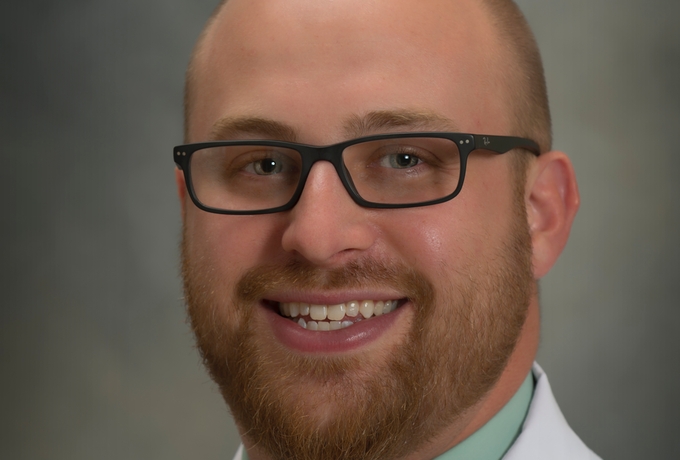
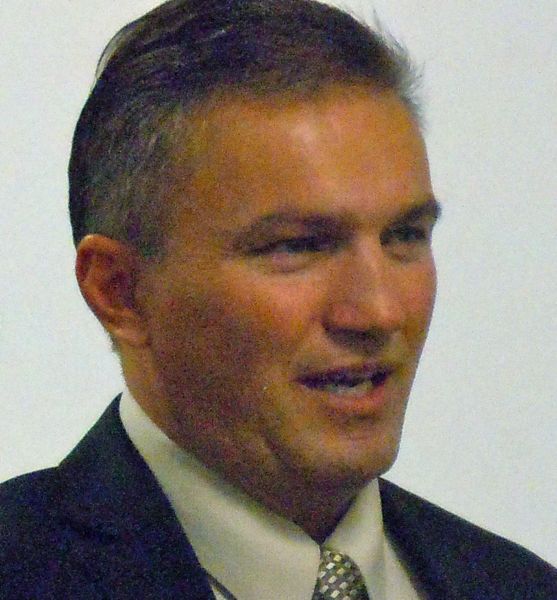
By Brian Uhler

All too often, we hear from people who have been victimized by some sort of scam. Before the Internet existed these “confidence scams” were frequently perpetuated through direct contact and bolstered by a victim who is too trusting. With the Internet and other technology, criminals have shifted their efforts so as to accomplish their rip-off over long distances and without direct contact.

Unfortunately, local law enforcement has limited capacity to track and ultimately prosecute such crimes. Foremost, the volume of these crimes is overwhelming, but from a practical standpoint it makes little sense to spend hundreds of investigative hours, costing thousands of taxpayer dollars for a crime involving small losses.

Our best offense against this type of crime is through education and prevention.
Brian Uhler

Brian Uhler

Here are a few simple techniques to safeguard you from becoming a victim:

  • Live with a healthy level of skepticism. If someone tells you they’ve inherited millions of dollars and they need to post surety cash to recover the money, it’s a lie. Have you ever heard of a “real” situation like this? The old adage, “if it sounds too good to be true, it probably is” can help.
  • Email with a real looking logo or from a company with whom you do business is not always legitimate. That email from PayPal, as an example, asking you to click a link (then asking you to verify security information) is probably from someone trying to steal your online identity. In response, consider signing-on to your PayPal account and checking for legitimate messages.
  • Phone calls from unknown people should be treated like a stranger on the street. Suppose someone walked up to you and told you they were from your bank, used your name, and asked you to verify a personal identifying number (PIN) or credit card security code. You’d never give your sensitive information in these circumstances. Change this to a phone call with other “confidence building” questions in between and a confused victim will often give-up the PIN (or other data) — even when feeling uncomfortable inside. Legitimate businesses would never put you in this position. In this situation, you can say, “I’m busy right now, I’ll call the bank in a couple minutes.” Use the number you know, not the one provided by the caller.

Here’s a recent scam in South Lake Tahoe that more than one person fell for:

Caller: Hi, I’m Robert, I’m calling from the _____ Court (fill in the blank). With whom am I
speaking? (This caller uses good English.)

Victim: (Hearing “court” and with anxiety building, the caller answers) I’m Pat Smith.

Caller: I show an outstanding parking ticket and we’re about to issue a warrant for your arrest. I want to
give you a chance to clear this up without the need for your arrest

Victim: Where was the ticket issued?

Caller: I’m sorry, I don’t have those details, but if you take care of this now, it will cost you $75, if
your arrested this will cost you $275.

Victim: (Fearing arrest) OK, what do I need to do?

Caller: I need you to get a green dot card at a local convenience store (caller continues to make arrangements to retrieve the prepaid card, which is as good as cash).

Another variation also recently used by crooks is to claim they are from the IRS. In these cases, tension causes victims to acquiesce, believing they are “getting off easy.” Please be alert and avoid becoming a victim.

Brian Uhler is South Lake Tahoe’s chief of police.


Opinion: California’s budget saga

By Dan Walters, Sacramento Bee

Although the state budget is finally balanced after years of deficits, polls tell us that most Californians are still concerned about the state’s fiscal stability.

Their concern is well-placed.

Dan Walters

Dan Walters

A temporary tax increase, mostly on the wealthy, and a recovering economy have provided the wherewithal to cover the state’s current obligations.

Gov. Jerry Brown, who championed the tax hike, has also restrained the ambitions of his fellow Democrats to spend more money and persuaded voters to create a rainy-day fund as a partial hedge against future downturns.

Nevertheless, the budget is “precariously balanced,” Brown reminds us, and is dangerously dependent on how wealthy taxpayers’ investments are faring – a peril echoed in a new Standard & Poor’s report on California last week.

Read the whole story


Letter: Kirkwood serves at Bread & Broth

To the community,

Taking the opportunity to help people struggling with hunger, Kirkwood Mountain Resort was the Adopt A Day of Nourishment sponsor for Bread & Broth’s dinner serving on Jan. 26. The dinners, which are held every Monday evening at St. Theresa Church’s Grace Hall, offer full course, nutritionally, well-balanced meals to all who attend.

With the funding provided by the evening’s host, the creative B&B cooks are able to provide sufficient food to serve over 100 guests, offer seconds servings and provide “to go” containers.

Representing Kirkwood and donating their time at its sponsorship dinner were Jon Copeland, director of skier services; Ashley Sell, team lead, ski school; Anjie Goulding, sales manager; and Becca Daiek, executive administrator. These four friendly Kirkwood team members jumped right in with the B&B volunteers to help make the evening a well-run and enjoyable experience for those attending the meal.

Jon Copeland enjoyed being behind the line serving. “Everyone is so grateful,” he said.

Bread & Broth would like to thank Kirkwood Mountain Resort for their financial support through the Vail Epic Promise grant program and the incredible service their volunteer sponsorship crew provided throughout the evening. B&B is very grateful for the positive impact that our Adopt A Day sponsors have on the lives of those attending the Monday dinners.

For more B&B information, go online or find us on Facebook.

Carol Gerard, Bread & Broth


Opinion: Reading to a child is critical

By Jonathan Halem

Can you recall a favorite nursery rhyme from childhood? How about a favorite book?

Some of my early favorites were the “Incy Wincy Spider” song and “Brown Bear, Brown Bear, What do you See?” picture book.

Jonathan Halem

Jonathan Halem

Early language development is intricately linked to a child’s exposure to reading, talking, and singing starting from infancy. Though infants may not talk back, research shows a child’s language exposure at an early age predicts his or her success in school.

According to the 2012 National Survey of Children’s Health, more than 35 percent of U.S. children enter kindergarten without the language skills needed to effectively learn how to read. This challenging start can cause academic difficulties in the years to come.

Help your child get an early start with his or her reading skills. Here are storytelling tips I have compiled with recommendations from pediatricians and the American Academy of Pediatrics to help stimulate early brain and language development.

  • Make it fun. Cuddle up and make reading time a comforting interaction. Infants recognize and favor their parents’ voices and faces from when they are only a few days or weeks old. Read with emotion and mix up the volume with whispers, sing-song tones, and silly voices. Although infants may not comprehend the words or story, they will respond to vocal emotions and facial expressions when you read or talk.
  • Make it tactile. Select colorful and durable books. Children respond excitedly to bright colors and, as they get older, may like holding the book or putting it in their mouth to experience the feel. Though a young child may lose interest in a story after a few minutes, continue to read, talk, and sing with your child frequently. This interaction stimulates the child’s interest and expands his or her attention span.
  • Make it insightful. Stories open the opportunity to ask questions and talk about feelings. Can you show me the train? Which animal says “tweet”? In time, as comprehension expands, your child may identify what is in the picture. Suggest what emotions the characters in books might be feeling and give your young child a chance to share if he or she sometimes feels similar emotions, such as happy, sad, or mad.
  • Make it interactive. Preschoolers can be chatty and very curious. At this age, they may retell parts of their favorite stories or make up their own. Build on this cognitive development by asking your child follow-up questions. What do you think will happen next? What is the character thinking or what is this character feeling? These conversations not only help develop language and reading skills, but also spark creativity and curiosity.
  • Make it a routine. Read with your child every day. Make it a calming activity – this is especially beneficial for the bedtime routine or afternoon downtime.

Your child is never too young or too old to enjoy reading a book with you. Get inspired from attending “Mother Goose on the Loose” and other storytimes at the public library. Expand your book collection by checking out library books or exchanging books with other families. Then have your child pick out a book, get comfortable, and enjoy this important time.

Jonathan Halem is a pediatrician at Barton Pediatrics in Stateline.


Editorial: Ban personal-belief exemption for vaccinations

Publisher’s note: This editorial is from the Jan. 27, 2015, Los Angeles Times.

Unvaccinated teenagers have been sent home from school for as long as three weeks. Dozens of babies who may have been exposed to measles have been placed in quarantine. One in four of the more than 73 Californians infected has required hospitalization. It’s getting hard to keep up with how many cases of measles have emerged thanks to the single infected woman who visited Disneyland just before Christmas, or where it might show up next.

Enough. It’s time to ensure that more Californians are vaccinated.

The outbreak this winter has illustrated quickly and forcefully how a highly contagious disease can spread when the vaccination rate falls below the level needed for “herd immunity.” Herd immunity means that so many people are immune that the chance of outbreak is low, which protects the few who are not immunized because they are too young to have been fully vaccinated or because they are among the few in whom the vaccine doesn’t “take” or because they haven’t been vaccinated for valid medical reasons.

Read the whole story


Opinion: Fox faux news forces rare apology

By Leonard Pitts Jr., Miami Herald

Tucker Carlson said on Fox that more children die of bathtub drownings than of accidental shootings. They don’t.

Steve Doocy said on Fox that NASA scientists faked data to make the case for global warming. They didn’t.

Rudy Giuliani said on Fox that President Obama has issued propaganda asking everybody to “hate the police.” He hasn’t.

John Stossel said on Fox that there is “no good data” proving secondhand cigarette smoke kills non-smokers. There is.

So maybe you can see why serious people — a category excluding those who rely upon it for news and information — do not take Fox, well…seriously, why they dub it Pox News and Fakes News, to name two of the printable variations. Fox is, after all, the network of death panels, terrorist fist jabs, birtherism, anchor babies, victory mosques, wars on Christmas and Benghazi, Benghazi, Benghazi. It’s not just that it is the chief global distributor of unfact and untruth but that it distributes unfact and untruth with a bluster, an arrogance, a gonad-grabbing swagger, that implicitly and intentionally dares you to believe fact and truth matter.

Many of us have gotten used to this. We don’t even bother to protest Fox being Fox. Might as well protest a sewer for stinking.

But the French and the British, being French and British, see it differently. And that’s what produced the scenario that recently floored many of us.

Read the whole story


Editorial: Time for ‘family values’ Congress to value families

Publisher’s note: This editorial is from the Jan. 24, 2015, Sacramento Bee.

There are few realizations as sobering for working parents as that moment when the actual cost of child care becomes clear.

In California, a year of infant day care – in a day care center, not with a nanny – averages $11,628, roughly the cost of buying a new Nissan Versa every year until preschool. A typical family with two kids in child care can expect to spend less on a year’s rent than on baby-sitting.

And California isn’t the exception. According to Child Care Aware of America, which tracks child care costs in this country, this state isn’t even among the least affordable places to raise a child while drawing a paycheck. (Memo to working couples: Don’t procreate in Massachusetts.)

An analysis last year by Vox found that since 1994, child care costs have risen at nearly double the rate of prices economy-wide. Another, by the Pew Research Center, marked a concurrent uptick in working mothers opting to stay home rather than pay for day care.

Read the whole story


Opinion: Nev. has waited a long time for real reform

By Steve Sebelius, Las Vegas Review-Journal

As far back as 2006, we all knew the year of real reform would be 2015.

In 2006, Republican Rep. Jim Gibbons survived campaign-trail scandal to stumble his way into a one-term governorship characterized by texting, divorce, vetoes and periods of time where staffers weren’t entirely sure of the governor’s physical location. It was clear 2010 would see a change at the top.

Many of us thought that change would come at the hands of a Democrat: Clark County Commissioner Rory Reid geared up for a run against the politically mortally wounded Gibbons. But we seriously underestimated Republican establishment players, who refused to let Democrats post an easy victory.

Two of their most prominent consultants — Pete Ernaut of R&R Advertising, and Greg Ferraro of the Ferraro Group — visited their childhood friend Brian Sandoval, then serving a lifetime appointment as a U.S. District Court judge in Reno. They coaxed him to leave that job and run for governor against Gibbons in a Republican primary.

This, by the way, is one of the events that make “consultant” an epithet among the tea party/libertarian base of the Republican Party; Gibbons was many things, but he was a conservative. He kept his promise to veto all tax increases. (In fact, he had a party on the front porch of his office, proudly waving copies of rejected bills scarred by his custom-made “veto” stamp.)

Read the whole story


Opinion: Supervisors blind to ex-CAO’s evil

By Larry Weitzman

Like Capt. Edwin Smith of the Titanic, our Board of Supervisors didn’t heed the warnings of an impending debacle (in EDC’s case, huge deficits). Smith was advised several times of icebergs and he neither chose to slow down the speeding Titanic nor change to a more southerly course. As with the Titanic, the warning signs of impending disaster were ever present.

Let’s examine the Kelly Webb-Terri Daly debacle. Daly became EDC’s chief administrative officer Dec. 18, 2010. In less than four months, EDC terminated the information technology director and the CAO immediately appoints an extremely unqualified (not even one full semester of college) Webb, an overpaid analyst in her office, to the job as interim IT director (now super overpaid). With Webb at the head of IT, Daly now has access to the emails of all employees. Sounds a little like having an NSA spy in our midst, but highly placed sources confirm that was the primary reason. But wait, it gets better.

Larry Weitzman

Larry Weitzman

Webb’s interim appointment was at step 2 of the salary scale. By a BOS unanimous vote on Sept. 4, 2012, and a satisfactory performance review and at Daly’s recommendation, Webb gets a raise from step 2 to step 3 (5-0 vote).

But Webb’s failure as interim IT director is looming in a scathing report from the State Controller’s Office that was to be received by the CAO on July 25, 2013. Daly, instead of seeking Webb’s immediate removal, places at the next BOS meeting (July 23, 2015) an unagendized item in violation of the Brown Act (improper notice) and in violation of the county Charter (no recruitment process) to have Webb appointed as full IT director and another pay raise to step 4. Our completely blind BOS approves this illegal item 5-0.

To add insult to injury, Daly’s evil isn’t finished. Knowing the report from the State Controller’s office isn’t public yet, Daly seeks a retroactive pay raise for Kelly Webb of about $10,000 for the past period from March 10, 2012, to Aug. 7, 2013, which is also illegal and a violation of state law. It causes the county counsel’s office to issue a lengthy legal opinion that Daly’s attempted retroactive pay raise is illegal. Daly doesn’t care about the taxpayers of EDC as she hires an outside law firm to prove her correct and the county counsel wrong. The outside law firm also said Daly was acting outside the law. The county, not Daly, paid that legal bill.

What’s the big deal about the State Controller’s Office report? The following excerpt from the report says most of it: “… it was found that the functional costs in the cost plan cannot be substantiated…. Network and Mainframe costs have been estimated then allocated based on methodologies that are not sufficiently documented, supported or understood by current IT management … I/T Department Management does not understand the purpose of the Countywide Cost Allocation Plan.”

This state controller’s report, which as a direct result of failure of Daly as CAO and Webb as interim IT director, costs El Dorado County $3 million of state reimbursable costs.

After our own county auditor pointed out to the BOS and other county employees of Daly’s attempted illegal actions, does the BOS (on Aug. 6, 2013) place Webb back to the position of interim IT director? No, they gave her yet another pay raise to step 5 by a vote of 5-0.

And I called them three blind mice in my last column. It should have been five.

It took another full year before the BOS to finally removed Webb from being the interim IT director. This whole episode demonstrates the evilness of Daly and the ineptitude of the then BOS. I have all the county documents supporting the above information.

Edwin Smith went down with the ship. Terri Daly is still attacking the county auditor who said the county under Daly was going to deficit spend $150 million over the next five years.

Larry Weitzman is a resident of Rescue.


Editorial: Prepare for reality check on state water bond

Publisher’s note: This editorial is from the Jan. 22, 2015, Chico Enterprise Record.

It’s hard to know what voters expected to happen when they approved the $7.5 billion water bond in November.

We do know our north state legislators thought the $2.7 billion included for increased water storage would result in pretty quick movement toward at least one and maybe two new reservoirs. That’s why they supported it.

We were skeptical. There was no specific language in the bond that the money would go to Sites Reservoir west of Maxwell or Temperance Flat, on the San Joaquin River upstream from Millerton Lake northeast of Fresno. We recommended a no vote on Proposition 1 for that reason. It seemed like we were taking on a lot of debt that would send money who knows where.

However, our representatives were enthusiastic backers of the bond. Sites would happen, they said, because it was so far ahead of the game. Years of already completed work points to Sites as the best solution. There’s no way the bureaucrats charged with making the decision would ignore the obvious, right?

Yeah, right.

After the State Water Commission met Wednesday, its chairman, Joe Byrne, issued a statement that said basically, we don’t have to allocate the money for storage until the end of 2016, and we’re going to spend the next two years developing a whole new set of guidelines and regulations on how to allocate the bucks.

Read the whole story


Mind you, the water system that serves California has been in place for decades and the glaring problems with it have been obvious for years.