Letter: Martis Valley project reality check

To the community,

Well, there’s some good news and some bad news regarding the sprawling Martis Valley West project. The good news? East West Partners currently does not plan to build 112 luxury lodges in a gated community atop an undeveloped ridgeline at Lake Tahoe. The bad? The Martis Valley West project is still atop that ridge, but now it could grow to be significantly larger than was originally proposed. How much larger? East West isn’t saying.

Here’s what we know: There will be more development than originally submitted on the Martis Valley (Northstar) side of the ridge — 760 units instead of 648, plus 6.6 acres of commercial. This means no net reduction in the number of units, and some kind of new development still planned for a forested ridgeline.

Incredibly, the Tahoe area has no enforceable ridgeline standards in place from either Placer County (which oversees the non-basin portion of this project) or the Tahoe Regional Planning Agency (which handles the Basin portion). So big developers are free to submit plans for new subdivisions and other developments of any size, on or off undeveloped ridgelines.

Additionally, East West’s proposed area plan, which includes that ridgeline luxury community, has only been suspended, not terminated.

They can and will continue to pursue permissible uses on Tahoe lands, and the aforesaid area plan will only be terminated when permits for a viable project are approved. What this means is that they could (and probably will) be going after a change of zoning: from forest-conservation to resort recreation zoning (which, among other things, allows condominiums) for this undeveloped one-mile stretch of forestland.

East West has also recently floated the idea of building more than 800 campsites on this land, with RV parking, yurts, “eco-shelters,” a clubhouse-lodge, and a pool. By comparison, Yosemite — which is over 200 square miles — has just 1,445 campground spaces. Imagine how much more population density, traffic, and noise/light pollution this size development will bring to the Tahoe area.

This is not a done deal, but East West should tell the public what they intend to do – especially with the lands inside the Tahoe b-asin – immediately. Projects of this size do not exist in a vacuum; they have cumulative negative environmental impacts, as well as negative effects on wildlife and every resident of the North Shore and the Martis Valley. Should they receive the approval they’re seeking, Martis Valley West will be a precedent-setting project, and no ridgeline in this area will be safe.

They cudgel East West holds over our heads is the agreement they have to “save” 6,300-plus acres in Martis Valley, land their partner (Sierra Pacific Industries, a logging firm) owns, in exchange for this huge new incursion on land where residential development is currently not allowed. East West characterizes the community’s valid concerns as a “Tahoe basin-centric focus … which jeopardizes” this conservation agreement – which, by the way, is between East West and two conservation groups with no presence in the Basin.

So in short, it sounds like our worries are far from over. The only way to stop the madness is for TRPA and Placer County to immediately institute enforceable ridgeline protections; public pressure is the only way to make them listen. Go online to find out who to write to.

Coral Amende, Incline Village


Opinion: Warm rains dictate new reservoirs

By Dan Walters, Sacramento Bee

California’s winter storms come in two varieties – cold ones from the Gulf of Alaska and warm ones that pick up moisture from more tropical portions of the Pacific Ocean.

Dan Walters

Dan Walters

The cold ones dump lots of snow, while the warm ones bring rain, sometimes torrential rain.

Those who believe in inexorable climate change tell us that in the future, Californians will see less snow and more warm storms, such as those that whipped through Northern California over the weekend.

The storms dumped copious amounts of rain, providing respite, if not relief, from the state’s prolonged drought.

Operators of the big state and federal reservoirs – Shasta, Oroville and Folsom – lowered their discharges to a minimum in hopes of maximizing the capture of storm runoff and all remained in that operational mode Monday. As a result, all were seeing their water storage, which had dropped to ominously low levels, rise.

Read the whole story


Opinion: Relationship violence not just an adult problem

 By Hannah Greenstreet and Ashley Yuill

When most of us hear the terms “domestic violence” or “relationship violence,” our minds immediately focus on adult relationships and marriages. The terms can often build the mental image of extreme attacks from one adult partner, stereotypically male, to another, a woman as the victim, but rarely do we consider that violence occurring between teens.

Sometimes we may even think that teen relationships aren’t as serious as adult relationships, and therefore the circumstances that lead to violence don’t exist. Unfortunately, this couldn’t be further from the truth. In reality, teen-dating violence is a serious problem in the U.S.

Many teens do not report mistreatment in a dating relationship because they are too afraid to, or are too inexperienced in relationships to even recognize the violence.

February is National Teen Dating Violence Month and Live Violence Free is committed to raising awareness this month by educating about how teen dating violence actually looks and sounds like, and how adults can help protect or support teens.

Teen-dating violence includes mistreatment through forms of stalking, physical, sexual, emotional-verbal, and digital violence. Often, the small signs of emotional manipulation, intimidation, threatening, and cyber harassment can place teens in a position of being controlled and hurt without their friends and family knowing.

According to the Nevada Network Against Domestic Violence, nearly one in 10 high school students has been hit, slapped or physically hurt on purpose by a boyfriend or girlfriend. In response to these facts, Live Violence Free is dedicated to providing education and support to South Lake Tahoe’s middle and high school students in order to prevent further dating violence. Through six- to eight-week sessions, students receive skills and tools to address the types and warning signs of abusive behavior, whether minimal or severe, but also how to develop and expect respect, trust and healthy communication in any relationship.

As a parent or influential adult in a teen’s life, there are many ways that you can also help in supporting our teens. If you suspect that your son/daughter or any teen is in an unhealthy or abusive relationship, discuss what you are observing with them in a calm and loving manner. Remind your child that you care for their safety and want to help. It is extremely important not to pressure the teen to end the relationship, as it may actually draw them closer to their partner. Saying things like, “You are not to blame”, “No one deserves to be abused”, or even “If you don’t want to talk to me, please find someone you trust and talk to them”, are excellent ways to keep open communication with the teen and let them know they are not alone.

To speak confidentially with a trained advocate on relationship abuse, call our 24-hour crisis line at 530.544.4444 to receive information and assistance.

Hannah Greenstreet and Ashley Yuill work for Live Violence Free in South Lake Tahoe.


Opinion: Parents need to monitor what kids watch

Publisher’s note: This editorial is from the Fe.b 6, 2015, Deseret News.

The humorist Josh Billings, who lived and wrote about the same time as Mark Twain, once said, “To bring up a child in the way he should go, travel that way yourself once in a while.” This wisdom applies today, even in the example parents set by what movies or TV shows they watch.

The Annenberg Public Policy Center conducted a survey in 2014 with the goal of finding out how parents gauge which movies are fitting for their children. Family Studies shared the survey; the results are shocking.

One thousand parents of children ages 6-17 were shown eight clips from popular movies. The shortest clip was 14 seconds long; the longest was 54 seconds. All eight clips contained some degree of violence or sexual content. Parents were asked to judge which clips were appropriate for which age groups.

Every time, although the clips were shown in random order, the first clip was seen as suitable only for older teenagers. But by the last clip, no matter the order the clips were shown in, parents always said it was suitable for younger viewers, as young as 6.

These results should be a reminder of how easy it can be to grow desensitized to invasive material over just a short time period.

Read the whole story


Opinion: EDC refuses to sever ties with ex-workers

By Larry Weitzman

Jorge Santayana said, “Those who cannot remember the past are condemned to repeat.” It seems the El Dorado County Board of Supervisors is again guilty of violating this basic principle of leadership.

At the Jan. 27 BOS meeting there was a small innocuous item on the consent calendar agenda. The consent calendar is supposed to be used for perfunctory matters that are easily understandable and have little consequence to EDC. Past CAO Terri Daly snuck things through on the consent calendar regularly; her most infamous use was when she was the CAO of Amador County when she had an item on the consent calendar that ended up costing Amador County nearly $20 million.

Larry Weitzman

Larry Weitzman

This particular item was consent item No. 25 wherein the CAO was recommending the BOS sign an amendment to a contract with Alliant Insurance Services Inc. to provide employee benefit consulting for human resources and risk management extending it until Jan. 31, 2016, and increasing the fee charged to EDC by $100,000, not to exceed $610,000. Not exactly chump change. But wait there is more to this item, a lot more.

First is the failure to disclose pertinent information on the agenda item with respect to this Alliant contract. It was the county auditor, Joe Harn, doing his job as auditor who put CAO Pam Knorr and the BOS on notice the day before the hearing. He alerted them to the very important fact that the county administrator on this contract from the time of her employment at EDC until her termination about a month ago was none other than Kim Kerr. Harn also advised the CAO, two BOS members and county counsel that Kerr’s new employer was, that’s right, Alliant who now wants to extend the contract for another $100,000. Perhaps that fact alone creates an air of impropriety. We all know how incompetent Kerr was just by a simple examination of the Van Dermyden Study and/or a recent Amador County Grand Jury report.

The actual text of Harm’s email to the CAO, BOS members Brian Veerkamp and Ron Mikulaco, and the county counsel is as follows: “I think we should disclose in big bold letters that Kim Kerr works for Alliant. Kim used to be the contract administrator for Alliant. This looks real bad. We should make sure that it doesn’t look like we are trying to sneak one by the public.” Harn then suggested that the matter be continued for a week for research, deliberation with all the facts and disclosures.

At the Jan. 27 meeting and now with obvious knowledge of this disturbing fact, the acting CAO, Knorr, said to the BOS with respect to this item No. 25 that a former county employee who administered this contract now works for Alliant. What Knorr left out was the employee’s name, Kim Kerr. That would be considered an incomplete disclosure, considering the circumstances.

But a more significant problem is within the contract itself and its administration requirements. At the hearing during a short discussion I revealed the name of the county employee involved and suggested that the contract needed study and the possible conflict of interests of Kerr and Alliant. At the Feb. 3 BOS meeting I went into more detail as to the potential conflicts and significant, potentially negative, contract provisions.

First, the contract plainly provides that on top of their fees of $100,000 or more as specified, Alliant can charge insurance placement fees. In other words, if Alliant places 500 employees with XYZ insurance company, Alliant may get a placement fee of so many dollars an employee over and above their stated monetary compensation. Making matters worse, Alliant has to only report these fees to guess who? That’s right Kim Kerr. Do you think anyone at EDC knows of this or the amount? Doubtful. Additionally these placement fees could be considered a conflict of interest with respect to Alliant as to what is in the best interest of their client, EDC; Alliant earning the best placement fees or EDC’s obtaining the best health insurance deal?

Second, is the fact that Alliant could pack the employee premiums with expenses charged to Alliant from its several subsidiaries, raising the cost of insurance to every EDC employee. This also was apparently unknown to Knorr and the BOS and probably to all EDC employees. But evidently the BOS and Knorr didn’t care to put the matter over for some understanding and investigation. It was a 4-0 vote approving the contract, with Mikulaco abstaining.

In the aftermath of passing this item, Harn, the county auditor, sent an email to Knorr asking for a contact at Alliant so he could ascertain what, if any, additional fees did Alliant charge the county. Instead of cooperation, Knorr stonewalled Harn in saying you can work through her or her designee and they would work with the appropriate contact at Alliant. What is Knorr afraid of? Don’t you love government transparency especially when transparency eludes the auditor?

According to this contract, only Kerr or Daly was to be advised of these fees. Keeping that knowledge from the county could have been beneficial for Alliant and bad for EDC. Was Kerr feathering her bed and that of Alliant at the same time? We don’t know as of yet. But the BOS (except for Mikulaco) in its finite, limited wisdom and knowledge approved the contract instead of more investigation and a further vetting as suggested by the county auditor. It’s obvious that Knorr and the BOS didn’t care or protect the taxpayers and employees of EDC, even though they had more than a chance and were so advised prior to their vote with enough information that more vetting was absolutely necessary.

Larry Weitzman is a resident of Rescue.


Letter: Elks help a little at B&B

To the community,
For the second time this year, the Tahoe-Douglas Elks Lodge No. 2670 sponsored a Bread & Broth Adopt A Day of Nourishment.
B&B is very grateful to the Elk Lodge members for their continued support of B&B’s goal of providing hot, nutritious meals every Monday evening to those who are experiencing issues of hunger and difficult times in their lives.
At the Feb. 2 Adopt A Day dinner the Tahoe-Douglas Elk Lodge was represented by members Roger Barragan, Jim Planenig and Gary Wendt. All three members have served at their lodge’s sponsorship dinners over the years because “we care, we share,” said Wendt. After helping prepare the utensils for the dinner, the three dished out heaping servings of French bread pizza to 107 very happy dinner guests.
The pizza was so good, 40 guests came back for seconds. Bread & Broth would like to thank the Tahoe-Douglas Elks Lodge No. 2670 members for their sense of community, and as Barragan says, they’re “always here to help” attitude.
B&B is very fortunate to have so many great volunteers, donors and sponsors to partner with us in supporting our program for over 25 years.
Carol Gerard, Bread & Broth


Opinion: EDC needs to fund ambulance service

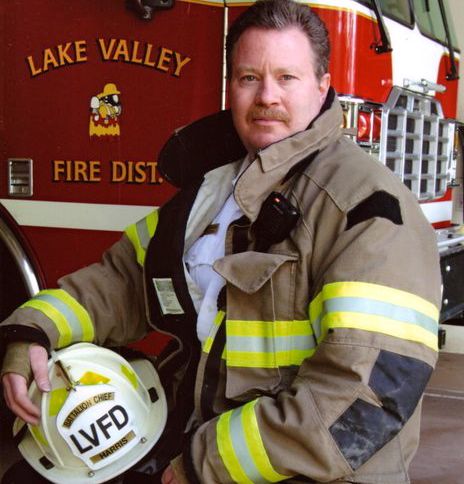
By Gareth Harris

The Lake Valley Fire Protection District is one of two members of the California Tahoe Emergency Services Operations Authority (JPA). The JPA has a contract with the county of El Dorado to provide advanced life support ambulance services to the California side of the South Shore of Lake Tahoe as well as a portion of Alpine County. The JPA has been providing advanced life support services under two different contracts with the county since 2001.

Gareth Harris

Gareth Harris

The JPA operates three staffed and two reserve ambulances out of fire stations strategically located throughout the South Shore. The city of South Lake Tahoe staffs two ambulances and Lake Valley Fire District staffs one ambulance 24 hours a day, 365 days a year. In addition, Lake Valley also cross-staffs a reserve ambulance with engine company personnel that is available whenever the three-staffed ambulances are committed to calls for service. Both fire departments have the depth and ability to recall off duty personnel to staff additional reserve ambulances as needed or for planned high call volume events such as New Year’s Eve or July 4 celebrations.

Since the inception of fire department-based delivery of emergency medical services in 2001, the county of El Dorado has compensated the JPA for providing these services to the citizens and visitors of the South Shore. The level of compensation is the key issue at hand since the JPA has always exceeded all of the performance criteria required by the county. Since implementation of the first contract, the level of compensation by the county has only been enough to provide for half of the staffing required of the three ambulances. The city of South Lake Tahoe and the Lake Valley Fire Protection District have both paid for the other half of the required ambulance staffing and continue to do so daily.

The other significant issue with the insufficient level of compensation by the county to the JPA is the requirement for the JPA to continuously upgrade and replace its capital assets, including four-wheel drive ambulances and medical equipment such as cardiac monitors. The level of compensation is simply not enough to sustain the JPA’s capital replacement needs over the long term. Over the course of the last four years, the JPA has reduced its reserves by purchasing required capital equipment to the point that the reserves are becoming dangerously low.

Both the city of South Lake Tahoe and the Lake Valley Fire Protection District take a significant amount of pride in the exceptional level of care provided to our constituents and visitors. Our fire department-based EMS delivery system has many advantages over other options. These advantages include advanced life support paramedic certified personnel on engine companies, depth and ability to staff up reserve ambulances, and a proven history of 14 years of excellence in the delivery of advanced life support services to the communities we proudly serve.

The JPA is currently governed by a Board of Directors made up of two City Council and two fire district board members. The JPA board of directors has already formally requested that the county of El Dorado increase the compensation to a level that would fully fund the staffing and capital replacement needs of the JPA. What we are asking for is both reasonable and consistent with what the county of El Dorado is currently compensating the JPA that provides EMS services to the West Slope of the county.

The Lake Valley Fire Protection District wants passionately to continue to provide the highest level of emergency medical services to the community we proudly serve. We believe that the current fire service-based partnership is working very well and has done so for the past 14 years. The fire district urges the county of El Dorado to recognize the excellent level of care the JPA provides, and increase the level of compensation to the appropriate level to ensure sustainability for the future of EMS delivery services in the South Shore.

Gareth Harris is fire chief for Lake Valley Fire Protection District.


Opinion: How secular family values stack up

By Phil Zuckerman, Los Angeles Times

More children are “growing up godless” than at any other time in our nation’s history. They are the offspring of an expanding secular population that includes a relatively new and burgeoning category of Americans called the “Nones,” so nicknamed because they identified themselves as believing in “nothing in particular” in a 2012 study by the Pew Research Center.

The number of American children raised without religion has grown significantly since the 1950s, when fewer than 4 percent of Americans reported growing up in a nonreligious household, according to several recent national studies. That figure entered the double digits when a 2012 study showed that 11 percent of people born after 1970 said they had been raised in secular homes. This may help explain why 23 percent of adults in the U.S. claim to have no religion, and more than 30 percent of Americans between the ages of 18 and 29 say the same.

So how does the raising of upstanding, moral children work without prayers at mealtimes and morality lessons at Sunday school? Quite well, it seems.

Far from being dysfunctional, nihilistic and rudderless without the security and rectitude of religion, secular households provide a sound and solid foundation for children, according to Vern Bengston, a USC professor of gerontology and sociology.

Read the whole story


Opinion: Ring the school bell later

By Richard V. Reeves, Wall Street Journal

It is easy to lose heart over the prospects of improving American education, and in particular for narrowing achievement gaps between affluent and poorer students. Reforms are often expensive, politically fraught, or structurally complex (or all three). But once in a while, along comes a reform that is almost free, proven to be effective, and simple to implement. A perfect example: start high school later in the morning.

A raft of studies have shown that high school start times of 8:30am or later make for healthier, happier teenagers and higher test scores. There is a bigger positive impact for students from lower-income families, so later start times should narrow, even if just a little, the huge inequalities in educational outcomes. It is now well-established that most adolescents, as a result of changes in their body clock during puberty, will get their best sleep between 11pm and 8am. Right now, the average American high school starts class at 7:59am. Many start even earlier.

A report out this week from the Center for Equitable Growth argues for policies to narrow the school achievement gap. “Some of these policies are costly to put into practice because they involve complex social, economic, and cultural considerations,” concedes the report’s author, Robert G. Lynch. “But others, such as delaying the start time of high schools so that teenagers can get more sleep, are inexpensive and breathtakingly simple to implement.”

Read the whole story


Opinion: Don’t let your voice be bypassed

To the community,

Written public comment on the draft EIR and the seven proposed alternatives will be accepted until the close of business on Feb. 17. The public should be aware that the current heavy traffic volume which travels east to west through the commercial core of Tahoe City is outside the scope of the proposed project.

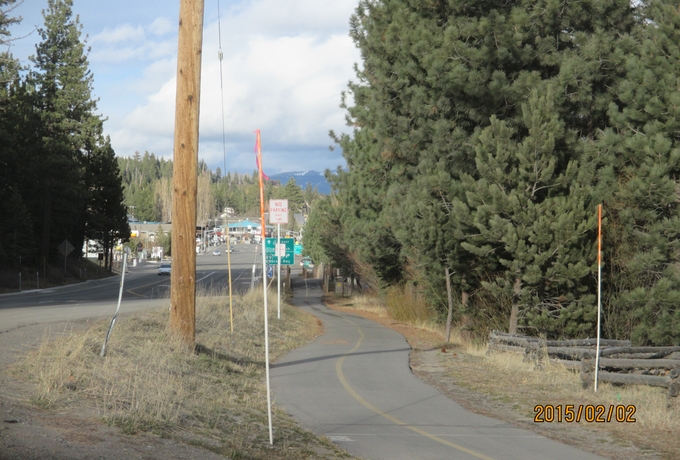
With concerns on the already struggling economy in Tahoe City and the potentially significant scenic impacts on recreation user views as noted in the drift EIR, some community members are concerned that the proposed Highway 89-Fanny Bridge Community Revitalization Project is unjustified. Articles published to date which only show a picture of the existing Fanny Bridge may have mislead your understanding and need for the proposed project. If alternatives 1-3 are selected, the west entrance to Tahoe City could see the first elevated roundabout and bridge structure in the Tahoe basin. Alternatives 1-3 will require the existing roadway near the Caltrans yard to be elevated nearly 10 feet to allow the proposed roundabout and multi-lane bridge over the Truckee River to be raised over the existing bike trail. The tops of the PVC poles in the photo, below, are approximately at the elevation of the new road surface and bottom of the proposed multi-lane bridge.

tahoe city

The Caltrans Bridge Inspection Report dated June 9, 2014, notes that the girders and columns on Fanny Bridge are structurally sound. The bridge improvement cost is noted at $400,000. Caltrans has confirmed that once the minor maintenance work is completed the “structurally deficient” rating on Fanny Bridge will be removed. All of the proposed alternatives except for the “no build” alternative include reconstruction or replacement of Fanny Bridge.

With a projected income loss of 60 percent for businesses within the bypass area, the draft Economic Analysis states, “That because these businesses are established and are popular regional attractions, they are not likely to receive negative impacts from a decline in roadway traffic volumes”.

While two emergency exits are desired in emergency egress situations from the West Shore, the highway section along the West Shore will remain a two-lane highway from the proposed roundabout south of Bank of the West under all Alternatives for 25 miles to the South Shore. Additional roundabouts proposed under Alternatives 1-3 will require increased law enforcement for traffic control during emergency egress. CalFire has indicated that each alternative would either increase or maintain existing emergency response times, and means of egress, in the event of a fire or other natural disaster.

Information from Caltrans and the North American Highway Standards indicate that additional development of roadways discourages the use of alternative methods of transportation; thus leading to encouraged use of personnel vehicles and increased traffic.

The Bureau of Reclamation is willing to work with the project design team on lane alignments on Fanny Bridge to not impact structures in the area by cantilevering off the existing bridge deck.

Since the 2002 Project Study Report, which is one of the base studies for the proposed project, the traffic has decreased from a 10-year period, peak-monthly daily volume growth rate of 2.5 percent annually to a slight increase of 0.1 percent at six study intersections between 2009-10 and 2013. The current information published by the Tahoe Transportation District indicates that, “It should be noted that some or all concepts developed may not improve levels of service to levels normally considered acceptable to one or more of the agencies’ criteria.”

With a 2010 report attributing the loss of lake clarity to increased fine sediment run-off with the transportation system as a primary source, the TRPA established an urban boundary to cap the roadway capacity of the basin and reduce the reliance on the private automobile. Members of the community and environmental agencies are awaiting the vote by the TRPA board on the proposed alternative selected.

Members of the community and environmental agencies are encouraging the TRPA to support their responsibility to protect the scenic resources, minimize greenhouse gases by discouraging use of the personnel automobile, minimizing the amount of paved surfaces and associated road sand to improve lake clarity.

The public is invited to a forum scheduled for 6pm Feb. 11 at Dockside 700 in Tahoe City to review the proposed alternatives and provide your comments to the proposed draft EIR.

The Tahoe Transportation District and TRPA board of director’s will be voting on the proposed project. Of the approximately 26 voting members, only two members live between Tahoe Vista and Tahoe City. Your voice as a member of our local community is imperative to represent a project that meets the needs of our community.

Comments on the proposed draft and proposed alternatives may be sent to bjudge@trpa.org by Feb. 17.

Jim Sajdak, Tahoe City