Editorial: With Prop. 47, cities and counties have savings to count, decisions to make

Publisher’s note: This editorial is from the Feb. 18, 2015, Los Angeles Times.

Just over 100 days have passed since California voters adopted Proposition 47, which reduced six specific felonies to misdemeanors; and it will be nine more months before the state quantifies and distributes the first year’s worth of savings it will accumulate by no longer imprisoning so many felons. So, of course, it’s far too early to assess what the initiative has accomplished and what problems, if any, have emerged.

Still, there is enough early information to allow the state Legislative Analyst’s Office to note, as it did Tuesday, that in addition to those expected state savings, California’s 58 counties are already being relieved of spending “several hundred million dollars annually” that they formerly had to allocate for prosecuting, locking up and supervising suspected and convicted felons locally. Proposition 47 backers focused their campaign on the state savings; the local windfall that is currently materializing is a bonus.

So local governments already have spending decisions to make. They can still arrest and jail people for the former felonies. They can also seek effective alternatives to incarceration.

Read the whole story


Opinion: 500 miles in one season

By Aaron Hussmann

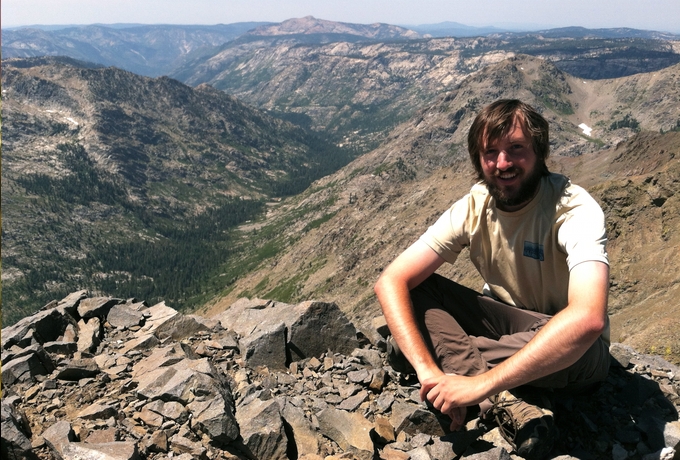
In summer 2013, I walked a demanding 500 miles and I’m damn proud of it.

After working 60-80 hour weeks for nine months, living in a crowded city, and becoming one of the thousands of tired, nerve-shaken souls John Muir spoke about, I realized the famous naturalist was right when he said, “going to the mountains is going home.”

Aaron Hussmann

Aaron Hussmann

I packed my old Subaru full of my worldly possessions and headed home to South Lake Tahoe. Breathing in crisp mountain air and soaking in the stillness of the granite peaks surrounding me, I resolved to drag my city slicker feet over 500 miles of trail that summer.

Hiking 500 miles in one season isn’t the most difficult task in the world, especially if you’re a Pacific Crest Trail through-hiker. But it’s also not the easiest thing to do. It can be difficult to stay motivated, to get out of bed, or out of your tent, and hike every day. Hiking 500 miles requires a steady balance of careful planning and wild spontaneity. The end result, however, is an overwhelming sense of pride and accomplishment, a rewarding connection (or re-connection) with the natural world, and a new appreciation for a slower pace of life.

Here are five tips to plan for and stay motivated during a 500-mile season, but feel free to liberally apply these tips to any hiking adventure.

1. Invest in solid hiking boots and socks. I can honestly count my blisters on one hand after almost five years of dedicated Oboz use. Your feet are your most valuable, yet underrated, piece of gear on the trail, and your fancy, ultra-light thingamajig won’t do any good unless your feet are comfortable, dry, and blister free. Seriously, try caring how many ounces your titanium spork weighs when your feet are covered in blisters. The winning combination in my blister-free history has always been an Oboz boot with Vermont Darn Tough socks.

2. Small hikes add up, so get outside every day. Researchers at the University of Michigan and Edge Hill University in the UK have found that weekly walks in nature significantly reduce stress and lower depression. These short walks also significantly add toward your 500-mile goal for the season.

3. Rediscover the familiar and explore the brand new. When embarking on your 500-mile ambitions, ease into the season by hiking familiar trails with a new eye for discovery. Consider buying a guidebook and map for hikes in your local area. For you Tahoans out there, I recommend this book, with over 500 miles of South Lake Tahoe trails (written by yours, truly). In the end, don’t be afraid to wake up in the morning, unfold your map, close your eyes, and drop your finger on a new destination for the day.

4. Learn the local flora and fauna. John Muir taught his children the names of dozens of plants and animals on their Martinez ranch that served as a powerful lesson about respect, wonder, and inter-connectedness with nature. Pick up a guide to the local plants, trees, flowers, and wildlife in your area and bring it with you on every hike. Each step down the trail becomes a learning experience or a re-acquaintance with a familiar friend. Plus, you get to look like a nature badass for knowing what all those different pine trees are.

5. Learn to love (and hate) hiking. You’re likely reading this because you’re already a fan of hiking. Yet, no matter how much you love hiking, at some point you might want to tell your hiking boots and trekking poles that, “just because I love you doesn’t mean I have to like you right now.” For me, being stuck in my tent for 30 hours of torrential downpour, having my “waterproof” rain fly soak through, and hiking through seven miles of trail-turned-river is one of these moments. But as my father always says, “the misery makes the memory,” and my miserable hiking experiences are ones I will cherish for a lifetime.

In the end, whether you’re hiking 500 miles or 50, when you connect the sole of your boots with the dirt on the trail, you’re also connecting your own soul with the natural world surrounding you. With these five tips in mind, the only step left is to lace up your boots, grab your map, and hit the trail.

Aaron Hussmann is the community engagement associate with the League to Save Lake Tahoe and author of “500 Miles of South Lake Tahoe Hikes.”


Opinion: Transportation an environmental driver

By Joanne Marchetta

There’s a lot to be learned by studying the success of others. At the Tahoe Talks Brown Bag Lunch this month, a design engineer for the Federal Highway Administration discussed how modern roundabouts are being used to improve traffic and make roads safer for drivers, bicyclists, and pedestrians, as well as where they would make the most sense at Lake Tahoe.

Tahoe Regional Planning Agency and its partners started the monthly discussion series to better engage people and get all of us thinking about critical issues such as transportation and how we can work together for solutions to our biggest challenges.

Joanne Marchetta

Joanne Marchetta

Transportation plays a central and transformative role in restoring Lake Tahoe’s environment, revitalizing our local communities, and making our Region more sustainable. About 70 percent of the fine sediment that washes into the Lake and reduces its water clarity comes from roads and developed areas.

Fortunately, costly projects to upgrade our roads, bridges, transit systems, and bike trails can achieve multiple benefits. They can reduce traffic congestion and stormwater pollution while at the same time improving safety, air quality, pedestrian mobility, public access, scenery, parking, quality of life, and economic vitality.

TRPA is working with many partners in and out of the basin to envision, develop, and deliver the transportation system Lake Tahoe deserves.

We’re updating our TRPA Regional Transportation Plan and TRPA Bicycle and Pedestrian Plan. We’re teaming up with the Tahoe Transportation District to complete a set of comprehensive traffic corridor studies that will identify some of our biggest transportation needs.

We’re also working with Tahoe Transportation District on a long-range transit plan to improve connectivity for increased ridership. The plan will identify strategies for an integrated regional transit system with improved connections outside the Basin, and explore options for free-to-rider service.

While those major planning efforts continue, significant work is being done to upgrade roads in our communities.

Last year, California and Nevada transportation departments continued their multi-year water quality program and invested $130 million in projects to add bike lanes and reduce stormwater pollution on highway 50s, 89 and  207. That work is part of an ongoing effort to improve Lake Tahoe’s water quality by upgrading stormwater treatment on area highways.

Placer County started a $48 million project to revamp Highway 28 through the Kings Beach commercial core. The project will improve traffic flow, pedestrian access, and landscaping, and reduce fine sediment pollution into Lake Tahoe by an estimated 45,000 pounds per year.

South Lake Tahoe rebuilt Harrison Avenue with a new traffic pattern, streetlights, sidewalks, bike paths, and landscaping to revitalize that commercial corridor and reduce stormwater pollution.

TRPA’s new On Our Way grant program awarded $550,000 in federal funding for local jurisdictions, school districts, and nonprofit groups to identify neighborhood- and community-level projects that can increase walking, bicycling, and public transit use.

Progress will continue this year as El Dorado County finishes its Lake Tahoe Boulevard Enhancement Project to complete a missing link in the bike path network between South Lake Tahoe and Meyers and Tahoe Transportation District starts building a three-mile bike trail from Incline Village to Sand Harbor with $12 million in federal funding and help from the nonprofit Tahoe Fund, which raised more than $1 million in private donations for the project.

Other important projects are under environmental review and on the horizon for us to consider, including the Highway 89/Fanny Bridge Community Revitalization Project, the Highway 50/South Shore Community Revitalization Project (aka loop road), and a proposal to restore cross-lake passenger ferry service between the North Shore and South Shore.

Some of our transportation challenges are financial. We need to fix flawed transportation funding formulas that steer dollars into our Region as if it is only a little known, sparsely populated rural area and fail to recognize the millions of people who visit each year, many of them driving up from nearby metropolitan areas and putting significant demand on our infrastructure.

Roundabouts are one tool in helping to solve our transportation challenges. Much more remains to be done. And now is a crucial time for people to be informed, engaged, and vocal about what they want to see happen in the Lake Tahoe Basin because transportation is transformation.

Joanne Marchetta is executive director of the Tahoe Regional Planning Agency.


Editorial: Pensions may not be sacrosanct in bankruptcy

Publisher’s note: This editorial is from the Feb. 18, 2015, San Jose Mercury News.

Besides common sense, here’s another reason cities and other government agencies should fully fund their retirement plans — and public employees should not count 100 percent on plans that are not fully funded today.

A federal judge’s ruling in the Stockton bankruptcy case earlier this month was the wake-up call that public worker pensions in California could be altered in times of fiscal crisis. Retirement boards, government officials and public employee unions can head this off by fully funding retirement programs and, most important, setting salary and benefit levels that are sustainable. Otherwise, the outcome of a bankruptcy could be worse for public employees than it was for Stockton’s workforce.

When Judge Christopher Klein upheld Stockton’s plan to exit bankruptcy after nearly three years, he made clear that, although pensions were spared, they could have been on the chopping block.

He rejected arguments that California’s Constitution and laws protect pensions from cuts in U.S. bankruptcy proceedings.

Read the whole story


Opinion: Clutter it taking over our lives

By Pamela Druckerman, New York Times

I recently discovered the secret to livening up even the dullest conversation: Introduce the topic of clutter. Everyone I meet seems to be waging a passionate, private battle against their own stuff, and they perk up as soon as you mention it.

“I don’t buy anything — no clothes, no shoes,” a woman who works in the French fashion industry told me. A New Yorker on a de-cluttering bender explained: “There’s too much in my head, there’s too much stuff in my house, too.” Another friend said that when his girlfriend got angry, she called him the clutter of her life.

Clutter isn’t a new problem, of course. But suddenly, it’s not just irritating — it’s evil. If you’re not living up to your potential, clutter is probably the culprit. Marie Kondo’s “The Life-Changing Magic of Tidying Up,” the top-ranked book on The New York Times list of self-help books, promises that, once your house is orderly, you can “pour your time and passion into what brings you the most joy, your mission in life.”

Read the whole story


Editorial: State parks in trouble

Publisher’s note: This editorial is from the Feb. 15, 2015, San Diego Union Tribune.

The California parks system is a network of incredible wonderlands spread among 280 parks covering 1.6 million acres from the deserts to the mountains to the sea. But for years, the system has been plagued by bureaucratic mismanagement, badly deteriorating conditions in the parks, a $1 billion backlog in maintenance, and expenses that far surpassed revenues every year.

New leadership in Sacramento, pushed by an independent commission co-chaired by former Sen. Christine Kehoe of San Diego, seems to have a better grip on the problems and what needs to be done. But the task is monumental.

Start with the money, and with some of the state parks in our own backyard.

Read the whole story


Letter: Weidinger PR takes a turn at B&B

To the community,

As each guest entered the serving line at Bread & Broth’s dinner on Feb. 9, they were warmly greeted with big smiles from the sponsor crew members of Weidinger Public Relations and B&B volunteers. Their warm greeting was just the beginning of a pleasant evening filled with a hearty serving of chili dogs and baked beans, bags of food to take home and visiting with friends and acquaintances.

As the Adopt A Day sponsor for the evening, Phil Weidinger and his associates Jenn Boyd and Erin Leigh Frederick showed up at 3pm to begin bagging the give away bags, then served firsts, seconds and to goes, and wrapped up the evening cleaning and stacking tables and chairs. They were a happy and very helpful sponsor crew.

“We’re happy to be able to give back to our community. Every little bit helps. And a simple smile can go a long way,” said Jenn Boyd.

Weidinger Public Relations is an awarding winning public relations firm “promoting the serious business of fun” for many businesses and organizations in the Lake Tahoe area. It was obvious throughout the evening that they were very serious about making the dinner a positive experience for those attending.

Kudos to Weidinger PR for hosting a B&B dinner and for the smiles they brought to the faces of our guests.

To help B&B as a donor or sponsor, contact me at 530.542.2876 or carolsgerard@aol.com.

Carol Gerard, Bread & Broth


Editorial: Voter ID laws are a solution in search of a problem

Publisher’s note: This editorial is from the Feb. 15, 2015, Las Vegas Sun.

As the state’s top election official, Barbara Cegavske, Nevada’s newly elected secretary of state, supports a proposal that would require voters to show identification at the polls. Republicans in the Legislature also support the plan.

At first glance, it sounds smart. People should show some sort of proof of who they are before they vote, shouldn’t they?

But ask a few questions about the proposed voter ID law, and you’ll see another side of the issue.

What problem does this fix?

That is a question proponents of voter ID laws have a difficult time answering.

Read the whole story


Editorial: Freedom of Information Act upgrade a good start

Publisher’s note: This editorial is from the Feb. 10, 2015, Los Angeles Times.

The Freedom of Information Act, first enacted in 1966, allows the public to see how their government functions — and fails to function — by providing access to official records. In fiscal year 2013, government agencies released some or all of the information sought in 440,997 requests.

But too often, information that should be released isn’t because agencies invoke of one of nine exemptions spelled out in the law, ranging from from protections for personal privacy to considerations of national security.

Critics have focused especially on the overuse of an exemption for “inter-agency or intra-agency” documents that has come to be known as the “withhold it because you want to” exemption. For example, the CIA invoked that exemption to deny a request for release of a 30-year-old internal history of the 1961 Bay of Pigs operation in Cuba.

Read the whole story


Opinion: How to protect customers’ private information

By John Krieger, Las Vegas Sun

Privacy laws are becoming more consumer-focused, and companies that collect personal information about consumers — and fail to disclose what they do with it ­— are beginning to find themselves in uncomfortable situations.

New regulations are aimed at protecting people’s privacy, and companies need to know their obligations, particularly if they have an Internet presence and are gathering personally identifiable information about their customers.

If a business collects personally identifiable information — defined in most states as someone’s first initial and last name and an account number, such as a credit card, bank account or driver’s license number — the company has an obligation to keep that information safe.

Read the whole story