Opinion: Should California become Florida?

By Joe Mathews

Florida Gov. Rick Scott travels to California this weekend to steal away some of our state’s businesses. So why don’t we return the favor by developing plans to steal away some of Florida’s greatest assets — old people?

Californians like to think of this state as a place of endless youth and growing diversity. But the biggest transformation in California is the breathtaking speed with which our population is aging. Instead of measuring ourselves against oil-rich Texas or Wall Street-dependent New York, we should focus on Florida as our competitor.
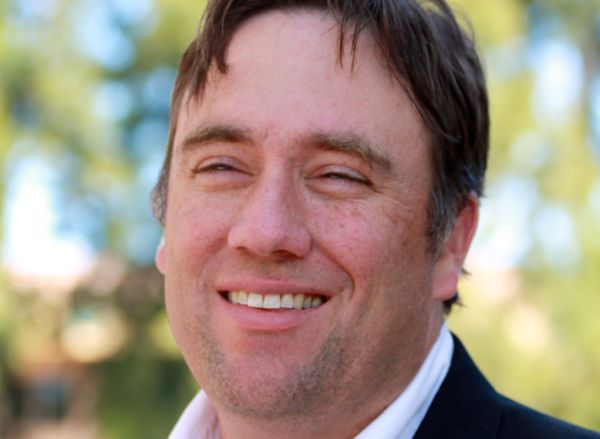
Joe Mathews

Joe Mathews

While Californians 65 years or older represent just 12 percent of the state’s population today (a figure slightly below the national average and well below Florida’s rate of 19 percent), the number of 65-plus seniors is projected to nearly double, representing 20 percent of the population by 2030. That rate of growth is roughly the equivalent of adding one new Rossmoor — the massive senior community in Walnut Creek — twice a month for the next 15 years.

And even that may not be enough geezers to meet our needs. Other sources of new Californians are drying up — immigration is flat, the birth rate has dropped, and high costs of living are pushing young families out of state. Our state’s budget system relentlessly forces cuts at our universities and older voters dominate our politics — both preclude big investments to attract more young people. So if California wants to grow, and find new buyers for our homes and new shoppers for our retail, our best option may be to convince more people to spend their golden years in the Golden State.

U.S. economic surveys show that the fastest-growing American regions are the most successful in attracting retirees. Yet California has built very little of the senior-oriented infrastructure that makes Florida a magnet for the old. Instead, we’ve treated seniors like cost centers (because of their high health costs) and spent the last generation cutting back services they need — from health and housing to culture and transportation. Too many California communities are chasing the same young, creative people with the same bike paths and downtown lofts — even though the young are declining as a share of the state’s population. It’s telling of our myopia about the old that the biggest California debate involving seniors right now is about how to make it easier for them to end their lives when they’re terminally ill.

State Sen. Carol Liu, one of the few state leaders focused on aging in California, contrasts the avalanche of attention she received for a bill requiring helmets for adult bicycle riders to the silence that greeted a recent comprehensive report from her select legislative committee on aging. But that report is worth reading. In more than 200 pages, it recounts California’s collective failure to plan properly for old age — long-term care programs scattered across six departments, an alarming lack of data and standards — and makes 30 recommendations, including the appointment of an aging czar.

California may never be able to compete with Florida on income taxes (ours are high, theirs are non-existent), but our climate is more comfortable, and, as anyone who has visited the Coachella Valley knows, we have lots of things to offer seniors. (Maybe some Californian could pitch Gov. Scott, who will be termed out of office in Florida shortly after his 66 birthday in 2018, on buying in La Quinta.)

Given the expense of living in coastal California, it would make sense to focus senior recruiting efforts on lower-cost communities inland. UCLA Anderson School economist Jerry Nickelsburg has argued that the Central Valley would have much to gain by focusing on seniors. That would require governments and private companies to build improved health care facilities and train more people to work in professions serving seniors. The good news is that those are low-risk investments that would raise education levels and produce badly needed jobs.

Liu’s report notes that California’s seniors will be highly diverse. And therein lies more opportunity. According to the United Nations, the worldwide population of older persons — age 60 or over — is expected to more than double to 2 billion by 2050. If California can develop senior infrastructure that can serve people of many cultures and languages, California could pitch itself as a global destination for retirees.

Go West, old man.

Joe Mathews is California and innovation editor for Zócalo Public Square, for which he writes the Connecting California column.


Opinion: Nevada’s tax system is failing

By Bill Robinson, Las Vegas Sun

Gov. Brian Sandoval said it. The Chamber of Commerce is saying it. Democrats are saying it. Republicans are saying it.

Saying what? The tax system in Nevada needs reform.

Why now? My mentor, Reuben Zubrow, did a study in 1960 which the Nevada Legislature used to build a tax system that was simple, stable and synchronized with the budget. For two decades, it funded our state effectively on three legs: property, sales and gross gaming revenue taxes. It was designed to collect lots of taxes from folks who live outside Nevada.

Starting in the 1970s, however, things changed in two ways.

Read the whole story


Editorial: Big Ag should be part of water equation

Publisher’s note: This editorial is from the April 4, 2015, Sacramento Bee.

As the rest of California comes to grips with the state’s historic new water mandates, there’s an elephant in the room. And it’s wearing a farmer’s hat.

Gov. Jerry Brown’s order for a 25 percent cut in water consumption homed in hard on towns and cities. From now into an uncertain future, the nice voluntary things many of us have been doing – the drought-tolerant flowerbeds, the slightly shorter showers – are going to have to be just the beginning of a much more water-conscious lifestyle.

Heaven knows, it is long past time for homeowners here to wake up and smell the Dust Bowl. But with groundwater tables shrinking and the Sierra snowpack fading toward zero, with new rules that are going to cramp everyone from cemetery owners to car washers, even those of us who have already taken a hit are rethinking old habits.

So why isn’t more being asked of the constituency that uses 80 percent of the state’s developed water?

What about agriculture?

Read the whole story


Letter: Saying thanks during difficult time

To the community,

We would like to extend our deepest gratitude to the Tahoe Douglas Fire Protection District, the South Lake Tahoe Fire Department, the fire departments on the North Shore, and so many wonderful residents of Lake Tahoe for their generous outpouring of support for our nephew, fire Capt. Pete Dern of Fresno.

Only 10 days ago, Pete led his firefighting team onto the roof of a burning garage. Suddenly, the unimaginable happened. Pete fell through the roof of the garage into the inferno below. Pete’s fellow firefighters removed the garage door and, guided by Pete’s own voice, they found their way through the heavy smoke to locate him. Their rescue was heroic and life-changing.

Currently, in critical condition with severe burns over 70 percent of his body, Pete’s new life has begun at the Leon S. Peters Burn Center at the Community Regional Medical Center in Fresno. Numerous surgeries are scheduled for Pete over the next several months. His family, including his very large firefighting family, stand beside Pete every single day. In turn, the outstanding nurses and support team at the hospital and the tireless Fresno firefighters stand beside Pete’s wife and daughter every second of the day.

The outpouring of support for Pete and his family has extended throughout California, Nevada, the entire U.S., and even internationally by kind-hearted and caring firefighters and citizens everywhere. To all of them, we say thank you.

Most of all, we cannot thank our local Tahoe firefighters for the impressive support they have provided to Pete and our family. Their encouraging words, emails, and outreach have been tremendous and we are deeply thankful. We are so fortunate to be part of a community that has such admirable heroes among us.

Our deepest gratitude,

Joan and Joe Truxler, Marla Bay


Opinion: Keeping tabs on local elected officials not easy

By Joe Mathews, Zocalo

Did we win in Bell?

Thinking LA-logo-smallerThere is no greater symbol of local California corruption than Bell, a city of 35,000 people, 2 1/2 square miles, and many gas stations in southeast L.A. County. For years, Bell City Manager Robert Rizzo and his minions exploited every dark corner of California’s convoluted systems of local governance and finance. They paid each other scandalously high salaries (Rizzo’s package of wages and benefits was worth $1.5 million annually), used the city’s redevelopment agency like a piggybank, borrowed improperly, squirreled away money in illegal retirement accounts, purchased property off the books, approved illegal fees and taxes, and used a sham charter election to exempt themselves from state laws.

Joe Mathews

Joe Mathews

Today, five years after this malfeasance was exposed, a new narrative of Bell has emerged. That narrative is one of triumph, best exemplified by a conference on the corruption scandal organized by Chapman University last month. The tale’s heroes were all assembled: journalists who broke the story, a police whistleblower, citizens who challenged corrupt officials, prosecutors who won convictions of those officials, and state officials who put through new laws in response. They were joined by the administrators and lawyers who painstakingly put the city of Bell back together. Among their many successes is a $22 million reserve in the city’s coffers.

All this should be cause for celebration. The Bell case—and the response to it—provided a new roadmap for how California communities can respond after they are victimized by city hall. Future municipal corruption cleanup crews will have new laws and two new state appeals courts rulings to aid them in removing and obtaining restitution from corrupt officials.

ut when it comes to the question of prevention—of how to make sure that California doesn’t see more Bells—there is less reason to party. That’s because Californians have failed to learn the central lesson of our long history of municipal corruption: The new rules that are a response to such scandals often enable future scandals.

To put it another way: The sense of triumph we feel after getting past a scandal is part of our problem.

Bell, while spectacular in its particulars, is really part of a larger wave of never-ending local corruption cases that goes back 50 years. Back in the 1950s and 1960s, county tax assessors from San Francisco to San Diego put their discretion up for sale—offering businesses lower property tax assessments in exchange for power, cash, and votes.

The predictable response was to limit the discretion of local officials over property—first with state laws, and later with Proposition 13, which effectively took away the power of local officials to set tax rates. This set the pattern for responding to local California scandals. When cities or school districts find some way to cheat, the state puts new limits on their discretion. This limits the power of local communities and their appointed leaders. But it hasn’t stopped scandals.

Why not? Because the weight of all these new limits on the locals has made community governance in California incredibly complex. So complex that it’s nearly impossible for citizens to understand what local representatives are up to—and thus provide a check on their actions. In fact, it’s so hard for local elected officials to understand their own actions that most cities must hire expensive administrators and consultants to navigate through the sea of rules.

Effectively, all these limits have left local governments with two options if they want to obtain revenues and improve their communities. The first is to beg the state for money; this has been such a popular option that local governments represent by far the biggest lobby in Sacramento.

The second option is to cheat. Or, to put it less judgmentally: to peer into the dark corners of the complicated system and invent new ways to get around the rules to govern and raise revenues. It’s worth remembering that while the Bell officials were corrupt and flouted laws, they didn’t steal and they didn’t embezzle, at least not in the traditional sense. They were just unusually brazen in exploiting the dark corners of California municipal finance.

So to truly reform local governance, Californians must first recognize a paradox: Preventing local officials from behaving like those in Bell requires giving more discretion and freedom to local officials.

Instead of using limits and restrictions to force city officials into dark corners, let’s lift limits and give officials more discretion to operate more easily in the daylight. The best, most direct reform would be to give California’s local governments more power to raise taxes and other revenues themselves.

The power of taxation is itself a tool of accountability. When cities can tax, the citizens and businesspeople who might see their taxes raised have a strong incentive to watch what’s happening in city hall. And when taxpayers are watching, it’s much more difficult to give your city manager an $800,000 salary.

If local control means anything, it means letting local elected leaders make their own choices about how much revenue they must raise to meet their local needs. But for 50 years, California leaders and voters have moved in the very opposite direction.
Doug Willmore, the city manager who is now leaving Bell after having dug it out of its hole, noted in his presentation at the Chapman conference that the city’s finances remain very complex. Revenues and expenditures are accounted for in 36 different funds. The city’s chief objective must be “normalizing” finances, his presentation said.

But California’s rule-heavy system doesn’t allow for normal. And so here’s the bad news about the good news in Bell: The city’s recovery may delay our reckoning with our own role in municipal scandals.

Until we understand the paradox of Bell, there will be more Bells.

Joe Mathews is California and innovation editor of Zócalo Public Square.


Opinion: Church’s gay marriage policy change a good thing

By Henry G. Brinton 

The long evolution of marriage has continued in the Presbyterian Church (USA), with the decision last month to redefine marriage as “a unique commitment between two people, traditionally a man and a woman, to love and support each other for the rest of their lives.” Previously, marriage had been permitted in the church only “between a woman and a man.”

While many people fear that this change represents a departure from biblical authority, I am convinced that it brings us closer to the Christian ideal of the covenant of marriage — a promise-based relationship of life-long love and commitment, with deep roots in Scripture.

Traditional marriage has been in flux for thousands of years, with numerous elements discarded for good reason. For most of human history, marriage has been a financial decision determined in large part by property transfers. The wedding question “Who gives this woman to be married to this man?” is a remnant of this transaction — the pastor is asking the father of the bride to transfer ownership of his daughter to the groom. Good riddance to this practice.

Polygamy is another traditional marriage arrangement that most people now reject. Yes, it made sense in ancient Israel, when families needed to have as many children as possible, to herd the sheep, fight the wars and continue the family line. Polygamy was an efficient way to create the largest possible families, but it imposed second-class status on women. Monogamy is now the law in the United States, for good reason.

But polygamy does raise the question of procreation, which has been a central feature of marriage for most of human history. Biblical prohibitions against same-gender sexual activity (Leviticus 18:22) and masturbation (Genesis 38:9) are designed to encourage procreation, since these activities do not produce offspring. Today, many Christians consider procreation to be an essential aspect of marriage, and the Catechism of the Catholic Church says that “sexual pleasure is morally disordered when sought for itself, isolated from its procreative and unitive purposes.”

The Bible, however, does not put procreation at the heart of the covenant of marriage. In Genesis 2:18, God creates Adam and Eve and says, “It is not good for the man to be alone. I will make a helper suitable for him.” God’s decision to create Eve doesn’t emphasize procreation but stresses relationship. Later, the prophet Hosea suggests that the marriage relationship should be one of mutual love, justice, respect and fidelity (2:19-20), with the wife calling her spouse “my husband” and not “my master” (2:16).

Jesus did not marry, nor did he advise his disciples to marry. He certainly viewed marriage in a positive way, and discouraged divorce out of concern for the welfare of vulnerable women and children (Matthew 19:1-9). But procreation was not a top priority for Jesus or his followers.

At the heart of the message of Jesus is the commandment “You shall love your neighbor as yourself” (Matthew 22:39). This is lived out in numerous ways, including the life-long love and commitment that is at the heart of the covenant of marriage. Children can be produced by this relationship, but they are not essential to it. In fact, many couples who are too old to have children are married in Christian churches every day, with the full expectation that they will have rich and satisfying marriages.

With its redefinition of marriage, the Presbyterian Church (USA) has focused in a biblical way on covenant — a relationship that can be entered into by any two people who are willing to promise to be faithful to each other for as long as they both shall live. Such a marriage is deeply rooted in the Christian faith, and does nothing to undermine traditional heterosexual marriage. If anything, the desire of same-gender couples to make promises to each other should be a challenge and an inspiration to heterosexual couples.

In his book “The Bible’s Yes to Same-Sex Marriage,” Presbyterian Mark Achtemeier writes, “a relationship of mutual love and commitment with a beloved partner reflects growth into the image of Christ’s self-giving love. It is precisely through giving ourselves away in this fashion that human beings find our true selves.”

Because these words are equally true for same-gender and heterosexual Christians, I am glad that my denomination has now changed its definition of marriage.

Henry G. Brinton is pastor of Fairfax Presbyterian Church in Virginia and author of “The Welcoming Congregation: Roots and Fruits of Christian Hospitality.”


Letter: Wyndham spends evening helping community

To the community,

Bread & Broth’s mission is to feed community members who are struggling with hunger. Thanks to the tremendous support of individuals, organizations, churches and businesses from the Lake Tahoe South Shore community, B&B has been providing nutritious meals to anyone who attends our dinners for over 25 years. Our Adopt A Day of Nourishment program is just one way our sponsors can support our program and feed up to 130 meals for just $250.

A frequent sponsor for B&B’s meals is Wyndham Vacation Ownership, which hosted the Adopt A Day dinner on March 30.

“Wyndham sponsors and volunteers for four Adopt A Days a year,” said Sue Harley, a Wyndham recruiter. “We love being able to give back and support the needs of our community.”

Due to the additional generosity of Wyndham, the dinner guests were given toothpaste and shampoo/conditioner samples to supplement their food filled give-away bags provided by B&B and local stores.

Helping the B&B volunteers with the dinner event, Harley was joined by fellow Wyndham associates Jacob Garcia, quality assurance; Kelly Osiow, administrative assistant; and Cassie Hamilton, marketing. This great group of sponsor volunteers worked diligently to give back to those in need and make the evening a great experience for the evening’s diners. B&B would like to thank Wyndham Vacation Ownership and its employees for their efforts to help those in need in our community.

Carol Gerard, Bread & Broth


Opinion: Pot or alcohol — a tough choice

By Aaron E. Carroll, New York Times

As my children, and my friends’ children, are getting older, a question that comes up again and again from friends is this: Which would I rather my children use — alcohol or marijuana?

The immediate answer, of course, is “neither.” But no parent accepts that. It’s assumed, and not incorrectly, that the vast majority of adolescents will try one or the other, especially when they go to college. So they press me further.

The easy answer is to demonize marijuana. It’s illegal, after all. Moreover, its potential downsides are well known. Scans show that marijuana use is associated with potential changes in the brain. It’s associated with increases in the risk of psychosis. It may be associated with changes in lung function or long-term cancer risk, even though a growing body of evidence says that seems unlikely. It can harm memory, it’s associated with lower academic achievement, and its use is linked to less success later in life.

Read the whole story


Opinion: Bringing awareness to sexual violence

By Chuck Allen

In Nevada, every 8 hours, 6 minutes someone is raped.

Throughout the month of April, the Washoe County Sheriff’s Office will be supporting the Alliance for Victim’s Rights and Sexual Assault Awareness in Northern Nevada. Sexual violence is a serious problem that can have lasting and harmful effects on victims and their family. It’s important to raise awareness and have an open discussion about prevention strategies.

Sexual assaults can happen to anyone: children, students, wives, mothers, grandmothers, the rich and poor, boys and men. The assailants can be anyone: classmates, co-workers, or a total stranger although often a friend or a family member.

The most predominant form of sexual assault in Washoe County is alcohol or drug related.

“In many alcohol related sexual assaults, the perpetrator takes advantage of the victims intoxication,” said Detective Lt. Tom Green, “when the victim is drinking, it makes it very difficult for them to guard against an assault.”

The sheriff’s office offers the following recommendations on ways to reduce risk of a sexual assault:

1. Avoid Dangerous Situations

Don’t let alcohol or other drugs cloud your judgment. Most law enforcement calls on sexual assaults occur at parties involving drugs and alcohol.

Trust your instincts-if a situation or place makes you feel uncomfortable or uneasy, leave.

Be aware of your surroundings. Knowing where you are and who is around you may help you to find a way to get out of a bad situation.

Try to avoid isolated areas or being alone. It is more difficult to get help if no one is around.

Walk with purpose. Even if you don’t know where you are going, act like you do.

2. Safety Planning

Make sure your cell phone is with you and charged and that you have money.

Don’t leave your drink unattended. If you leave your drink alone, get a new one. Don’t accept drinks from people you don’t know or trust.

Have a code word with friends or family so that if you don’t feel comfortable, you can call them and communicate your discomfort without the person you are with knowing. Your friends or family can then come to get you or make up an excuse for you to leave. If you see a friend heading into a dangerous situation at a party, encourage them to leave or stay by their side.Be conscious of exits or other escape routes.

Think about options for transportation (cab, car, bus, train, etc.)

Avoid putting music headphones in both ears so that you can be more aware of your surroundings, especially if you are walking alone.

3. Your Home

Make sure all doors (don’t forget sliding glass doors) and windows have sturdy, well-installed locks, and use them. Install a wide-angle peephole in the door. Keep entrances well-lighted.

Never open your door to strangers. Offer to make an emergency call while someone waits outside. Check the identification of sales or service people before letting them in. Don’t be embarrassed to phone for verification.

Be wary of isolated spots-apartment laundry rooms, underground garages, parking lots, offices after business hours. Walk with a friend, co-worker, or security guard, particularly at night.

Know your neighbors, so you have someone to call or go to if you’re uncomfortable or frightened.

If you come home and see a door or window open, or broken, don’t go in. Call the police from a cell phone, public phone or a neighbor’s phone.

4. Outdoors

Avoid walking or jogging alone, especially at night. Stay in well-traveled, well-lit areas.

Wear clothes and shoes that give you freedom of movement.

Be careful if anyone in a car asks you for directions; if you answer, keep your distance from the car.

Have your key ready before you reach the door-home, car, or office.

If you think you’re being followed, change direction and head for open stores, restaurants, theaters, or a house with its lights on.
5. Your Car

Look around and under your car and in the back seat before you get in.
If your car breaks down, lift the hood, lock the doors, and turn on your flashers. Call police on a cell phone, or use a “Call Police” banner or flares.
If someone stops, roll the window down slightly and ask the person to call the police or a tow service.

Don’t hitchhike, ever. And don’t ever pick up a hitchhiker.

6. If the Unthinkable Happens – Your Goal is to Survive

Scream and make a scene. Be rude, make noise to discourage your attacker from following.

Alert those around you if you are threatened.

If you become a victim of a crime, you should call the police. The sooner you tell, the greater the chances the rapist will be caught. But if you are uncomfortable about calling the police, contact the Crisis Call Center’s Sexual Assault Support Services 800.273.8255.

Residents are encouraged to attend any of the following special events in support of Sexual Assault Awareness Month:

UNR Joe Crowley Student Union, April 21 – 6:45pm: Screening of “The Mask You Live In” with a community/panel discussion following the film. The Mask You Live In follows boys and young men as they struggle to stay true to them-selves while negotiating America’s narrow definition of masculinity.

Alliance for Victims’ Rights (AVR) Washoe County Candlelight Vigil & Award Ceremony on April 22 at 5:30pm at 1 South Sierra St. in Reno.

Safe & Healthy Homes Fair & 5k River Run/Walk hosted by Washoe County Domestic Violence Task Force on April 18 from 8-11:30am, Idlewild Park California Building.

Chuck Allen is sheriff of Washoe County.


Opinion: Time to address mental illness

By Brian Uhler

Last month, the city manager and City Council hosted a strategic planning session with all city departments to ensure we are coordinated and pulling together to address key community issues. Community wellness is one such focus area.

On a daily basis, South Lake Tahoe police officers respond to calls for service involving people who are in a mental health crisis. All too often, the services available to such people are limited, especially when those calls occur in the middle of the night. Sometimes these people also commit crime and are arrested, then put into the jail for the crimes they commit.

Brian Uhler

Brian Uhler

In March, Barton Memorial Hospital and the Lake Tahoe Unified School District hosted a mental health forum which included over 80 people who are community leaders or work in the mental health arena. This effort is well under way with plans to bolster community awareness, improve organizational responsiveness, and ultimately get people who need support the help they need.

Also in March, El Dorado County Superior Court Judge Suzanne Kingsbury, and officials from SLTPD, El Dorado County Sheriff’s Department, El Dorado County Health Department, and others met to coordinate an effort to obtain a grant to help provide more local support for those with mental health issues. If the grant acquisition effort is successful, more resources will be focused on helping those people who commit crime and also have mental illness.

In South Lake Tahoe we experience a suicide rate which is much too high. Health experts also recognize that many with mental health issues also self-medicate with illegal drugs. Consider the following statistics for the City of South Lake Tahoe:


Year       Suicides     Fatal Overdoes

2012       2                 4
2013       3                 6
2014       4                 11

Obviously, this trend is alarming. In the coming months, mental health authorities are supporting the police department with special crisis intervention training. It is hoped that we can help with turning this around in the coming year by providing better services earlier in the cycle of need.

Now that I have given you some information about things under way, you might ask, “what can I do to help?” In South Lake Tahoe, we are lucky to have many great nonprofits which specialize in supporting those with mental illness. One idea might be to seek out such an organization and offer help. If this doesn’t appeal to you, there may be other opportunities. In the U.S., May is Mental Health Awareness Month. Stay tuned to this topic and I am sure you will learn more specific ways to help.

Lastly, it might be helpful to review this link just in case you have friends or family members you are worried about.

Come January 2016, I will be asking staff to compile these stats again. Let’s work tirelessly to make sure our friends or family members will not be a sad statistic in the future.

Brian Uhler is chief of police in South Lake Tahoe.