Letter: Kirkwood spends time at Bread & Broth

To the community,

Bread & Broth is very grateful to Vail Resorts for their EpicPromise grant that funded their fifth Adopt A Day of Nourishment dinner of 2015 on May 4. The EpicPromise grant sponsorships are alternated on a monthly basis between Kirkwood Mountain Resort and Heavenly Mountain Resort.

On May 4, Kirkwood Mountain Resort took the opportunity to send management team members who donated their time to work with B&B volunteers to provide a hot, nutritious meal and a safe place for dinner guests to gather and socialize.

Bread & Broth would like to thank Kirkwood Mountain Resort management team members Dave Myers, mountain operations director; Brian Bigley, base operations director; Jon Copeland, skier services director; and Rebecca Daiek, administrative executive for being very dedicated and helpful volunteers. The team’s consensus was that they are happy to help and look forward to coming back at future Kirkwood sponsorships.

With the recession and the depressed economics of the area, many community members continue to struggle with hunger. B&B works to ease this hunger by serving full-course meals on Mondays at St. Theresa Church Grace Hall and soup suppers at Lake Tahoe Community Presbyterian Church on Fridays. B&B’s is able to continue its mission thanks to our generous volunteers, donors and sponsors. Kudos to Vail Resorts and Kirkwood Mountain Resort for their continuous and generous support.

For more B&B information, go online or find us on Facebook.

Carol Gerard, Bread & Broth


Opinion: Drought makes wildfire more of a threat

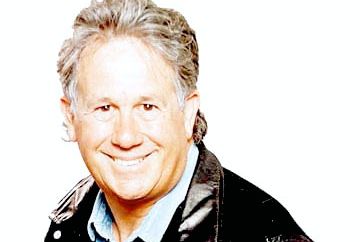
By Joanne Marchetta

It’s Wildfire Awareness Month at Tahoe, and with the summer tourist season around the corner, we must all remember that drought has left our region with severely dry forest conditions and an extreme risk of wildfire. This summer we need to think about “when” not “if” another fire will happen. All of us have important roles to play in preventing the next wildfire, and in making sure our homes, families, and communities are prepared for it.

The ongoing drought has brought unprecedented warm, dry weather to much of the American West, and California’s drought is like none we have ever seen. It is the most severe in California’s recorded history, and according to some scientists, may be the most severe drought California has experienced in more than 1,000 years. Hundreds, if not thousands of communities, including our own, are at increased risk of wildfire.

Joanne Marchetta

Joanne Marchetta

The winter of 2014-15 was the warmest ever recorded in California, breaking a record set the previous winter. April snowpack was also at a record low, measuring just 5 percent of average in the Sierra Nevada and just 3 percent of average at Lake Tahoe. Now entering its fourth year, the drought shows no sign of ending and has already brought the driest three consecutive years ever recorded for statewide precipitation.

Drought is taking a toll on California’s forests as well as its dwindling water supplies for farmers and cities. Experts have been reporting exceptionally dry forest conditions at Lake Tahoe this spring that normally would not be seen until mid-summer or later. Trees are stressed and mortality from bark beetle outbreaks is expected to spread throughout the Sierra.

Notably, more than half of California’s 20 largest wildfires have occurred during years of drought. The massive Rim and King fires that burned in the Sierra in recent years show how catastrophic wildfires can grow out of control and devastate tens if not hundreds of thousands of acres in areas where hazardous fuels have built up. The Angora Fire at Lake Tahoe in 2007 showed us how even comparatively small wildfires, at least when compared to the Rim and King fires, can wreak havoc in short order, charring 3,100 acres, destroying 254 homes and structures, and causing $150 million in property damage.

Government agencies and fire protection districts within the Lake Tahoe eegion have been collaborating and working together for years to reduce the risk of a catastrophic wildfire, and that work remains a top priority. Last August, TRPA and other members of the Tahoe Fire and Fuels Team updated the Multi-Jurisdictional Fuel Reduction and Wildfire Prevention Strategy, a blueprint to improve the safety of our communities and the health of our forests.

More than 55,690 acres of forest in the Lake Tahoe Basin have been cleared of hazardous fuels through the Environmental Improvement Program, with more than 36,890 acres treated since 2008. More projects continue this spring, and our Region is on track to meet targets to reduce hazardous fuel loads in the roughly 117,000 acres of wildland urban interface in the Tahoe Basin where our communities and our forests meet.

All private properties in wildland urban interface areas at Lake Tahoe need to create adequate defensible space by 2020. It’s an ambitious goal, but entire neighborhoods are stepping up, creating defensible space, clearing hazardous fuels, and installing fire breaks for improved community protection. Your participation can make the goal achievable.

Fire protection districts are inspecting properties for defensible space, educating residents about the importance of wildfire preparedness, and holding evacuation drills this spring so residents are as ready as they can be for the next wildfire.

TRPA works collaboratively with regional fire officials to reduce our wildfire risks. That means we’re continuing to educate the community about the importance of creating defensible space on private properties and implementing fire adapted community concepts so our homes and businesses are as fire-resistant and prepared as possible.

People must be vigilant reporting wildfires so they can be put out quickly when they are small. Webcams at Alert Tahoe are making citizen vigilance possible. Report anything of concern to fire officials. People must also be responsible with any activities that could start a fire while out recreating on our region’s treasured public lands. Illegal campfires start more than 90 percent of the wildfires on public lands at Lake Tahoe, and caused the devastating Rim and Angora fires. Curtailing that one preventable human cause of wildfire, while also better preparing our own properties, would significantly improve our odds this wildfire season. And let’s not forget about the Gondola Fire at Lake Tahoe in 2002, when the careless toss of one lit cigarette started a blaze that destroyed nearly 700 acres. The scar of that fire remains visible more than a decade later, and we can all take responsibility to remind locals and visitors alike of these preventable actions.

The reality is that wildfire risk will remain with us regardless of drought. We live in a region that is prone to wildfire as a natural process, and that hazard is only expected to increase with climate change, making it more important than ever for all of us to be vigilant, be responsible, and work together now to be prepared.

Joanne Marchetta is executive director of the Tahoe Regional Planning Agency.


Opinion: Nev. wants to reform initiative process

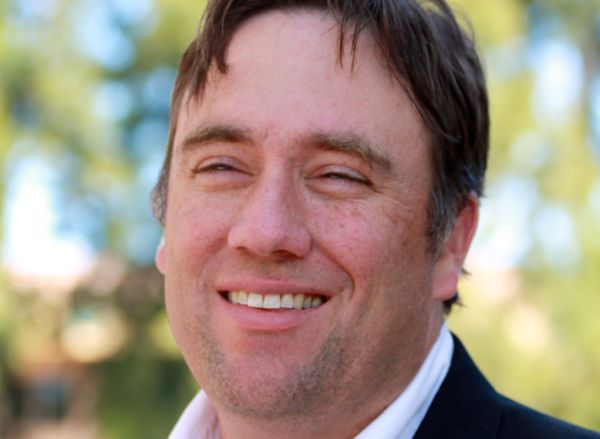
By Steve Sebelius, Las Vegas Review-Journal

CARSON CITY — Political language, Orwell said, is designed to make lies sound truthful. But sometimes, even the best political wordsmith can’t get the job done.

Steve Sebelius

Steve Sebelius

Take Senate Bill 434, a bill aimed at reforming the initiative petition process. It passed out of the state Senate on a 12-9 vote with bipartisan opposition on Friday.

The legislative bill drafter gamely tries to assert that the Legislature has enacted provisions intended to “facilitate the efficiency, veracity and clarity” of petitions laid before the voters. Of course, the rules are intended to have the opposite effect, being cumbersome burdens to the right of the people to amend their constitution or state law books.

(It should be noted initiative petitions and constitutional amendments are not, strictly speaking, examples of the First Amendment right of the people to petition their government for the redress of grievances. Rather, initiatives are the people acting directly in their legislative capacity.)

Read the whole story


Opinion: Tangled web of political musical chairs

By Larry Weitzman

Patrick Blacklock is the current CAO of Yolo County. It would take some explaining to understand that his influence and impact on El Dorado County has been more significant than any of our current members of the Board of  Supervisors. Blacklock started his employment by government bodies in May 2001 as the county administrator officer of Amador County.

As Amador CAO it was Blacklock who elevated Terri Daly from her position of manager of In-Home Supportive Services  to assistant CAO of Amador County. After Blacklock left Amador, Daly became  CAO of Amador County. When Amador County refused her salary demand in 2010, Daly left to find a job as ACAO in EDC, later to become the CAO. It is unknown if there was an appropriate recruitment, and a quality and thorough background check performed.

Larry Weitzman

Larry Weitzman

EDC recently has failed in performing background checks of many potential high-ranking employees.

How EDC hired our latest county counsel is also an interesting series of “coincidences.” Robyn Drivon, 60, was essentially fired as Yolo County counsel when her contract was not renewed.  In case you forgot, Patrick Blacklock is Yolo County CAO. Luckily for Blacklock an administrator he mentored, Terri Daly, was in need of a county counsel. In an abbreviated recruitment EDC miraculously ends up with Drivon, at the highest pay step no less, saving Yolo County from a potential age discrimination lawsuit. On top of that what kind of background check was performed? More on age discrimination later.

That leads us to the current interim CAO, Pamela Knorr, who is on a one-year agreement after the BOS terminated Daly, with the BOS paying Daly three times the amount of her contract requirement or about $153,000 upon her firing. Supervisor Brian Veerkamp voted in favor of such severance pay, after knowing of the massive hiring of new EDC employees by Daly and her raise recommendations. (On Nov. 5, 2013, it was Knorr as then director of Human Resources who made the raise recommendation along with Daly at the BOS meeting when all BOS members – including Veerkamp, approved it). That one-two punch of mass hiring and 15 percent raises are the main cause of EDC’s current fiscal problems. The county has bled $25 million to $30 million in cash over the last two years and it continues at the rate of about $1.3 million a month. Starting on July 1, because of the final 5 percent of the raise package becoming effective, the bleed could increase to about $1.7 million a month.

Knorr’s recent history is worth a look. Knorr, 44, claims to have 28 years of public administration experience. Her definition of what is public administration experience would be interestingly to learn, especially her public administration experience when she was 16 years old.  Knorr’s last three jobs were in Texas as an administrator for the Attorney General’s Office, child support division (2007-08), as the first CAO of Alpine County (2008-13) and HR director of EDC starting in September 2013, about a month after her termination from Alpine, and then as the interim CAO after Terri Daly was fired in last November.

Where is Blacklock in Alpine County? Nowhere, except whom do you think did Alpine County hired as a consultant to help with their new CAO position? You guessed it, a Blacklock, but in this case it was John Blacklock, Patrick’s father. It was John Blacklock who participated in the background check and provided Alpine County a recommendation and guess who the recommendation was from? According to Skip Veatch, retired Alpine sheriff and Alpine County BOS member, he remembers a recommendation from Patrick Blacklock. In a phone conversation with Patrick Blacklock he denies making any recommendation of Pamela Knorr to Alpine County and further stated he barely knows Knorr, maybe meeting her once at a California State Association of Counties event.

As for EDC doing a background check on Knorr, it appears nothing significant was done and that would have told a story. Knorr’s termination from Alpine County is even more interesting. In my investigation, and via the California Public Records Act, I acquired most relevant documents  concerning Knorr’s employment and termination including Knorr’s severance document with Alpine, her last employment contract and a tort claim for harassment against Alpine. However, when inquiring of her employment file regarding letters of recommendation and background checks, I was advised in a phone conversation that the file seems to be strangely missing from county records. However, when confirming this fact about a week later by email this reply was received: “No, no missing. Just not available to the public. I have a copies of the applications and recruitment materials from all of the applicants but again, it is not a public record. I was not working in Personnel at the time of the recruitment so I cannot absolutely verify that this is all of the information that the board received at the time; however, I have no reason to believe there was more. Sorry if that was misunderstood.”

Knorr’s employment contract with Alpine dated July 3, 2012, and her tort claim against the county filed April 11, 2013, raises a huge question. Knorr executed an employment contract with Alpine County dated July 3, 2012, with an effective date of June 2, 2012, to June 30, 2017. It was an at-will contract on 120 days notice that paid $11,757 a month plus $400 for a car allowance and a credit card for business expenses.

In a claim for damages filed under penalty of perjury by Knorr on April 11, 2013, Knorr alleged that since April 16, 2012, she was harassed, intimidated, retaliated against by Sheriff John Crawford, causing fear, emotional distress and harassment and that this started on April 16, 2012, and was ongoing. Knorr claimed such damaging behavior or actions also against several other high-ranking Alpine County officials, including the undersheriff, a BOS member, the county auditor and county counsel. According to the claim, there was another specific act of retaliation and harassment that occurred on June 18, 2012. In fact, Knorr even attached an alleged email of resignation on that same April 16, 2012, where she said, “I can no longer work under these conditions.” In addition it was signed as “Former County Administrative Officer.” From the email you can see an implication that these conditions were ongoing before April 16, 2012, as that was the date of the email. It is unknown if said email was actually sent to its intended recipients, BOS members and county counsel.

If this is a truthful depiction of Knorr’s working conditions, then why would she sign a long-term employment contract? Sounds like a set up? You will understand more. One of the aforementioned contract provisions in the July 3, 2012, contract was, “In the event the County terminates without cause, County shall provide severance pay … for 18 months. This severance pay is conditioned upon … receiving Employee’s signed written liability release.…” Instead of paying out $211,626, Alpine County via a negotiated severance agreement paid her $158,000 in two equal payments, one on execution Aug. 1, 2013, and a second on July 1, 2014. In addition, Alpine County was to provide Knorr with a positive letter of recommendation. Knorr was also paid $10,000 from her tort claim for damages. One Alpine BOS member is sorry he agreed to the recommendation letter.

About a month later after collecting nearly $170,000 in severance, Knorr was hired in at El Dorado County as HR director and Terri Daly actually gave Knorr a raise, from about $141,000 a year (her Alpine salary) to about $160,000, a new high salary for HR directors in EDC by about $30,000 a year, a raise that was approved by the BOS. By the way, Daly’s plan was to appoint Knorr as HR without any recruitment and background check.

It is not known yet if Blacklock played a role in Knorr’s EDC hiring, but Blacklock seems to have a history with one or both women.

Larry Weitzman is a resident of Rescue.


Opinion: Can two people hold Calif.’s higher ed hostage?

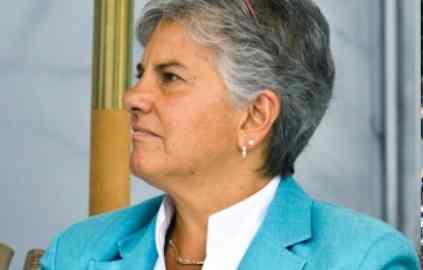
By Daniel J.B. Mitchell

As its official budgeters measure it, the University of California has a $27 billion operating budget — of which a little less than $3 billion comes from the general fund of the state. Each of those state dollars is roughly matched by a tuition and fee dollar from students. You can argue about the accounting. You can hold legislative hearings. You can demonstrate at regents meetings. You can demand more “efficiencies.” But that doesn’t change the fact that most of the support for the university doesn’t come from the state. The bulk of the budget comes from sources like research grants, patient revenues in university hospitals, and fees for managing the U.S. Department of Energy labs.

When you get down to it, the current conflict between the university and the governor over budgets and tuition, dramatic though it may be, deals with a small fraction of the overall cost of running UC. The second fact to appreciate is the budgetary multiplier effect. Apart from any indirect stimulus to the economies near the UC campuses, the state is putting in under $3 billion of funding into UC, and getting $27 billion in direct economic activity out of it.

That return seems like a good deal.

So what’s the problem? Or put another way, what would the current governor’s dad see as the problem, if he saw one at all? Would it be that the UC budget is insufficiently transparent? Would it be that the university is being disrupted by new technology and isn’t reacting fast enough? Would it be that university administrators are overpaid? Would it be that those administrators are “tone deaf,” as the Assembly speaker put it, to state politics?

My guess is former Gov. Pat Brown would not see these as key problems. My guess instead is he would see the key problem as a lack of strategy regarding public higher education in California.

What we have today – instead of a process to develop a new master plan to follow Pat Brown’s 1960 master plan – is an ad hoc arrangement known as the “Committee of Two,” consisting of Gov. Jerry Brown and UC President Janet Napolitano, who have held much-discussed meetings this spring. The Committee of Two reflects Brown’s hang-ups about UC, and his personal engagement with it; he has been attending regents meetings previous governors skipped. The Committee of Two may come up with a budget agreement. But the Committee of Two does not include the Legislature, which must enact whatever the state allocates to UC, or any of the interests that have a stake in UC.

The Committee of Two is limited to UC issues. In contrast, the old master plan sought to look at higher education in California more generally. It considered what are now the California State University system and the community colleges and tried to carve out roles for each of the three segments. With hindsight, we know that not every element of the old master plan was retained. But the master plan was an attempt at developing an overarching strategy and public consensus. That is why it still hovers over all California conversations about public higher education. It is hard to imagine that 55 years from now, Californians will still be referring to the Committee of Two.

By itself, the narrowly focused Committee of Two can’t produce a new master plan. It can’t produce a higher education strategy for California. It can’t produce the kind of wide consensus needed to back such a strategy.

Pat Brown’s legacy today is largely seen as a major state water project, transportation (expansion of the freeways), and a higher ed strategic plan (the master plan). Jerry Brown, now in his last term, seems also to be thinking about legacy. He has a water project (the tunnels) and a transportation project (high-speed rail). If he wants to complete the package, he’ll need something more than his personalized Committee of Two. To get to a new master plan – a legacy – he would need to back off from personal engagement and open the process to the legislature and key interest groups. And he would need to widen the agenda to encompass all three segments of California higher ed. Producing a new master plan will take time and political skill. The clock is ticking.

Daniel J.B. Mitchell is professor emeritus at the UCLA Anderson School of Management and the Luskin School of Public Affairs. He co-teaches a course at UCLA each winter on California Policy Issues with Michael Dukakis.


Opinion: End of life debate needs more discussion

By Joe Mathews

Seventy-four years ago in Long Beach, a bride stood at the back of the Second Presbyterian Church, preparing to walk down the aisle. Her father eyed the groom warily and whispered in her ear: “It’s not too late to change your mind, dear.”

Today, that bride greets me from her bed in a board-and-care home in San Mateo. “Did you know I’m 100 years old?” she asks.

Joe Mathews

Joe Mathews

My grandmother is exaggerating. She’s 98. But I don’t correct her. I’ve inherited her conviction that facts shouldn’t get in the way of a good line. She’s also taught me that you can’t ever be too sure about life, especially its end.

Grandma Oops, as we call her (she’s a major league klutz), is in my thoughts these days, as SB128, the End of Life Option bill, makes its way through the California Legislature. The legislation would allow mentally competent California residents with six months or less to live to obtain a prescription for lethal drugs they can give themselves.

I have no beef with the legislation, and my grandmother is strongly for it. Such legislation suits California, where the long-standing movement to give people more control over how they die dates at least to the 1963 publication of Oakland resident Jessica Mitford’s exposé of the funeral business, “The American Way of Death”.

What doesn’t fit California, or the reality of the end of our lives, is the strident tone of those on both sides of the debate.

The advocates for SB128 can be unnerving in their unswerving commitment to the right to die, and in their bullying of those of us who would dare to use the term “suicide” in this context. The opponents are just as rigid. Religious leaders call the suicide of a terminally ill person an affront to God. Doctors claim that physicians are healers and nothing more (despite the lack of empathy and excessive charging of helpless patients in that profession).

These claims, and all the attention to the bill, are too much, for two reasons. One is mathematical. Even if the bill is enacted, such assisted suicides are certain to be extremely rare. In Oregon, which pioneered this right, there have been less than 1,000 such suicides since 1998, representing well less than 1 percent of deaths in the state. The second reason is fuzzier, literally: To apply rigid moral claims to a sphere as uncertain as the end of life is foolish. And wrong.

It also misses the point. The most important right to protect at life’s end is not the right to die but rather the right to change your mind.

Changes of mind define a life — that’s what my grandmother taught me. She didn’t care for marriage or family, but married as a nod to the times — you couldn’t spend all your time with a man if you didn’t marry him. She changed her mind about kids when she saw how good her husband was with them. She was committed to the casual Southern California life in Long Beach but became a Northern Californian — a teacher in San Mateo — when my grandfather, a civilian Navy employee, got a job at Hunters Point in San Francisco.

Because her teaching job came with government benefits, she could choose her end-of-life care, she selected a board-and-care that a large Tongan family runs out of their home. Tracking the decline of Grandma Oops has been a challenge. She was prone to spills and mixing up names when she was young, so falls and forgetfulness weren’t reliable signs of problems.

On her 90th birthday, Grandma Oops was taken to the local hospital and told she needed dialysis or she would die. She refused, saying she’d used too many of the earth’s resources already. Eight years later, she’s still refusing treatment when she’s ill. But when I visit her, I bring along her three great-grandchildren, ages 6, 4, and 20 months. She hugs them and encourages them to run down the long hallway of the board-and-care. She says she’s changed her mind — she’s glad she lived along enough to know them.

One of the best things about SB128 is that it leaves room for people to change their minds. You have to make two oral requests for lethal drugs 15 days apart, and a written request with witnesses. And you have to administer the medication yourself. The real problem with the legislation is its narrow focus. California needs a much broader conversation about improving end of life care for all of us. Palliative care is very hard to find. And we Californians have decided not to make the investments in the care we’ll need as our senior population explodes in the next several years.

Of course, it’s not too late for us to change our minds.

Joe Mathews is California and innovation editor for Zócalo Public Square, for which he writes the Connecting California column.


Letter: Community comes together for blood drive

To the community,

The Barton Memorial Hospital Auxiliary and Sacramento Blood Source would like to thank the local businesses who generously provided donations at the Auxiliary Blood Drive on May 1 at the South Lake Tahoe Recreation Center.

The Barton Auxiliary collected more than $700 in gifts for our gracious blood donors. We received gift certificates for a tasty meal from the restaurants Agave Azul, Ernie’s Coffeeshop, My Thai, and Lake Tahoe Golf Course. Tahoe Bowl stepped in for an active bowling thank you. Lastly, the Barton Hospital Gift Shop and the Attic Thrift Store supplied vouchers for their stores.

We appreciate the thoughtfulness in giving back to those who kindly donate their blood and platelets for our community needs. Our next Blood Drive is July 31.

Sincerely,

Cathy Vogelgesang, Barton Auxiliary member


Opinion: Use pencil and paper for tests

By Rebecca Castillo

Remember the days when computers were a passing fad and information was derived from dusty encyclopedias after hours of searching? Me neither. I was born in 1998. By the time I was 14, my teachers stopped asking if we had a computer and Internet available because they had become a necessity. By now, at age 16, I can code a website, use Photoshop, and do more with an iPhone than the folks at the Apple Genius Bar.

But this spring I, like 11th-graders around the state, had to take the new California State Testing exclusively on computers. And my feelings about the testing, which started just this spring, are decidedly mixed.

To the good: having a computer was much handier for writing essays on the English section of the test, since I could type faster than I could write longhand. Editing text on a computer was so much easier. Of course, the questions felt dated — one part of our test examined the pros and cons of newspapers and blogs using social media, a decade-old question. And the software was definitely outdated — one classmate lost part of hers when her computer crashed. But overall, English went smoothly. Most people managed to finish in the time allotted. I didn’t feel as nervous as I would have if I had to do the entire test by hand.

But testing math on computers? “Horrible and ridiculously hard,” in the words of my friend and classmate Caleigh Zwahlen. The problem goes beyond computers. The new Common Core Standards make the questions more confusing and difficult than they need to be.

For example, we students could not respond to the geometry questions by drawing out geometric figures – because the computer did not permit it. Instead, we had to write out our answers in words, and then explain, also in words (as opposed to graphs or figures) how we got the answer. This felt like testing a contestant’s eye-crossing skills on the show “So You Think You Can Dance”. It missed the whole point of the exercise.

Computer testing posed other challenges for my school in the San Gabriel Valley. Our campus only had a certain number of computers, fewer than the number of students tested. For months, we heard rumors that we would switch to a block schedule so all students would have the time necessary to test. Typically, classes are 50-minutes long with a 25-minute study hall, with seven periods in the course of the day; under a block schedule, each class is two-hours long — but we only have four classes a day. The rumors proved true — and when testing time came in April, the changes to the school schedule, affected my life schedule as well.

The testing took place over 16 days; during each two-hour testing period, a new class would come into the computer lab and test. The test consisted of two sections which were spread out over three or four days. Sometimes, students wouldn’t finish so they would have to be pulled out of another class later on to finish. So, depending on how quickly the student could write essays, completing the entire test could take anywhere from four to seven hours.

I normally got out of school at 1:45pm. Unfortunately, the new schedule had me getting out at 2:40pm almost every single day. And that wasn’t the worst of it. The schedule took away our study period, when we can reach teachers outside of class and complete various other assignments. There were weird holes in the new schedule – some days, I went to my first class, then had two hours until my next class. The administration suggested we go to the library and do homework. I have a lot of homework, but some of my peers, as you might imagine, were not that happy about it.

The last straw for me was when they eliminated the late start for school that we had on Wednesday, forcing me to be at school even earlier. Because of testing, I spent more time at school last month than I ever had in three years of high school – even though I was spending less time in actual classes.

When you consider all the impacts, the cons of online testing far outweigh the pros. Yes, I love technology. Yes, my older brother is a web designer and my 12-year-old brother is already working on taking apart and putting together computers. And yes, my generation will bring forth a multitude of web designers, software developers, and mechanical engineers.

But that doesn’t mean we’re dependent on technology or unable to live without it. For all of technology’s uses, there are times when it is better to honor time-tested traditions. And when it comes to testing, I think it’s best if we stick to the good ’ol pencil and paper. If the state continues with the Common Core Standards and online math testing, they can expect scores to plummet as fast as the iPhone 3’s popularity.

Rebecca Castillo is a writer who enjoys sunsets on the beach and rainy days. Her work can be found on HelloGiggles and HerCulture, and she participates in WriteGirl, a creative writing and mentoring organization in Los Angeles. She wrote this for Thinking L.A., a partnership of UCLA and Zócalo Public Square.


Opinion: Flexible economy making workers’ lives hell

By Robert Reich

These days it’s not unusual for someone on the way to work to receive a text message from her employer saying she’s not needed right then.

Robert Reich

Robert Reich

Although she’s already found someone to pick up her kid from school and arranged for childcare, the work is no longer available and she won’t be paid for it.

Just-in-time scheduling like this is the latest new thing, designed to make retail outlets, restaurants, hotels, and other customer-driven businesses more nimble and keep costs to a minimum.

Software can now predict up-to-the-minute staffing needs on the basis of  information such as traffic patterns, weather, and sales merely hours or possibly minutes before.

Read the whole story


Opinion: Calif. tries to cope without water

By Timothy Egan, New York Times

In a normal year, no one in California looks twice at a neighbor’s lawn, that mane of bluegrass thriving in a sun-blasted desert. Or casts a scornful gaze at a fresh-planted almond grove, saplings that now stand accused of future water crimes. Or wonders why your car is conspicuously clean, or whether a fish deserves to live when a cherry tree will die.

Of course, there is nothing normal about the fourth year of the great drought: According to climate scientists, it may be the worst arid spell in 1,200 years. For all the fields that will go fallow, all the forests that will catch fire, all the wells that will come up dry, the lasting impact of this drought for the ages will be remembered, in the most exported term of California start-ups, as a disrupter.

“We are embarked upon an experiment that no one has ever tried,” said Gov. Jerry Brown in early April, in ordering the first mandatory statewide water rationing for cities.

Surprising, perhaps even disappointing to those with schadenfreude for the nearly 39 million people living in year-round sunshine, California will survive. It’s not going to blow away. The economy, now on a robust rebound, is not going to collapse. There won’t be a Tom Joad load of S.U.V.s headed north. Rains, and snow to the high Sierra, will eventually return.

But California, from this drought onward, will be a state transformed. The Dust Bowl of the 1930s was human-caused, after the grasslands of the Great Plains were ripped up, and the land thrown to the wind. It never fully recovered. The California drought of today is mostly nature’s hand, diminishing an Eden created by man. The Golden State may recover, but it won’t be the same place.

Read the whole story