Opinion: Senate race highlights California’s differences

By Joe Mathews

Are you a Kamala or a Loretta?

Attorney General Kamala Harris and Rep. Loretta Sanchez — the leading candidates for U.S. Senate next year — confront Californians with a choice. But it’s not a choice about competing policies or visions. Californians don’t have political arguments about what we believe anymore. Harris and Sanchez are both Democrats in a one-party state, where disputes these days are over just how many resources to devote to the causes we favor.
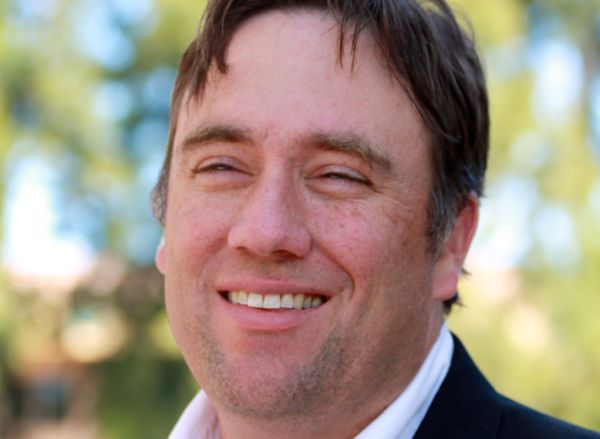
Joe Mathews

Joe Mathews

No, this is a choice about identity, personality, manners, and culture.

This is about who you are.

And where you live.

The contest between Harris — who grew up mostly in the Bay Area and has made her adult life there — and Sanchez — a Southern Californian to the core — shows how the differences between San Francisco and greater Los Angeles have changed, and endured.

And while our race- and ethnicity-obsessed media prefer to emphasize that Harris is black and South Asian, and that Sanchez is Latina, the heart of the difference between the candidates, and the two regions, is class.

Harris comes off as a 21st century aristocrat — poised, disciplined, distant. Her shorthand bio: born and raised in the Bay Area by two academics (who also were immigrants), one a professor at Stanford. Then she graduated Howard University — the so-called “Black Harvard” — and got a law degree at Hastings. In all this, she’s representative of the rising Bay Area, an upper middle-class island of advanced education in a struggling state. (Every single Bay Area county has a median income significantly higher than the state average).

Sanchez was born in Lynwood, a poor city in southern Los Angeles County; she graduated high school in working-class Anaheim. One of seven children born to Mexican immigrants, a machinist and a secretary, she earned her degree from Chapman, an underdog college that more recently gained renown. In this, she represents a Southern California that has become more working-class, with education levels stagnant, median income falling, and fewer payroll jobs than two decades ago.

In these two regions, people rise differently. Harris has climbed one of the Bay Area’s many established ladders — in the legal field. Her political rise has been supported by Northern California elites of all sorts — her book, “Smart on Crime,” even acknowledges Reagan treasury secretary, George Shultz.

By contrast, Sanchez emerged out of nowhere to take on Orange County’s entrenched Republicans and knock Bob Dornan out of Congress in 1996.

Harris, with the security of someone who knows where she stands in the Bay Area’s clear pecking order (people there know who their politicians and billionaires are), is direct and decisive. She entered the U.S. Senate race quickly and with a well-articulated plan. Sanchez, from a Southern California where status is far from clear and the powerful can be invisible (Quick: could you recognize billionaire Donald Bren, who built much of Orange County, on the street?), played Hamlet for months before getting in the race.

While you won’t find much difference between the liberal positions of Northern and Southern Californians, there are differences in style and speech. Harris follows the Bay Area fashion by inventing jargon to obscure more than explain — her book talks endlessly about “rocking the crime pyramid,” whatever that means. Like her Silicon Valley neighbors, she uses the word “disrupt” as if being disruptive to other people’s work and lives were a good thing.

Sanchez is earthy, bawdy, SoCal. She sent holiday cards with illustrations of herself riding a motorcycle and wearing a tank top. Southern Californians are pretty blasé about loose-talking political figures, and Sanchez has gotten away for years with saying impolitic things that touch on race and ethnicity. Now running statewide, she’ll need to dial back; she got into trouble for making a “war cry” gesture to describe Native Americans recently.

The reaction to Sanchez’s candidacy has split along geographic lines. Northern pundits question whether someone so gravitas-deficient can be considered a serious candidate. But farther south — where people know that politicians practically have to set themselves on fire to get on TV — pundits have responded with versions of, “What’s the Big Deal?”

Of course, not all of us are Kamalas and Lorettas. You might be a San Diegan Republican from the military (and thus a Rocky Chavez). I had a Kamala education, but, as a bombastic Southern Californian with working class roots, I’m a Loretta at heart.

For now, the Kamalas are ascendant. (So is Kamala Harris in the polls). Northern California politicians, businesses and unions are in charge because northerners cast ballots far more often than we do in the South, a voter turnout wasteland.

But one day, working class Los Angeles might awaken, and assert itself at the polls. If that happens, California might be a messier place, but more freewheeling and more fun. More like Loretta.

Joe Mathews is California and innovation editor for Zócalo Public Square, for which he writes the Connecting California column.



Opinion: State keeps an eye on Tahoe dredging

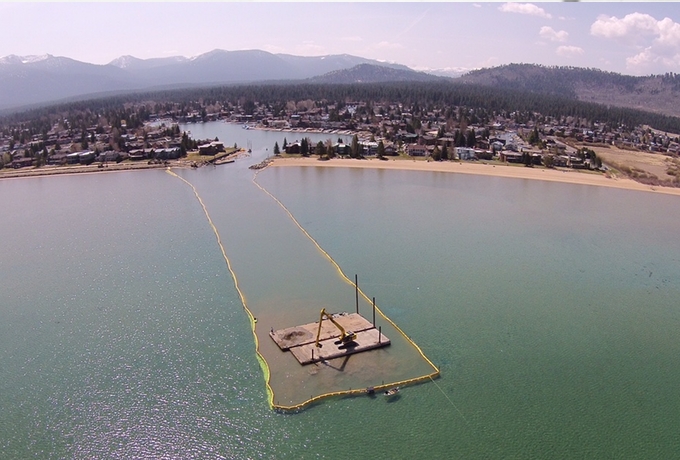
Dredging at the Tahoe Keys Property Owners Association channel was completed earlier this month. Photo/Melanie Green

Dredging at the Tahoe Keys Property Owners Association channel was completed earlier this month. Photo/Melanie Green

By Alan Miller

With low water conditions at Lake Tahoe due to the ongoing drought, there have been a number of maintenance dredging projects taking place to keep boating and commercial access open at existing marina and boat ramp facilities. Some of these dredging projects have been completed, while others are going on right now, and some have yet to begin.

The Lahontan Regional Water Quality Control Board of California plays a role in ensuring water quality is protected for beneficial uses such as drinking water, recreation in or on the water, and the protection of plants and animals that live in or near the water. The Lahontan Water Board does this by issuing permit requirements to control pollutants from dredging activities.

For the established California marinas at Lake Tahoe, the Lahontan Water Board has issued a single Marina General Permit. This permit includes requirements to control wastes and pollutants from all marina operations, including wastes in stormwater runoff. Within the Marina General Permit the Water Board has granted an exemption to its waste discharge prohibitions that allows for dredging in previously dredged areas to provide for ongoing public recreation.

Approval of maintenance dredging projects is streamlined for those meeting the requirements of the Marina General Permit. The permit requires the project to complete an application specifically describing the activities and pollution control methods.

•Tahoe Keys Marina (above) has begun dredging. •	Tahoe Keys Property Association is done dredging. •	Ski Run completed dredging for inner harbor, no application for dredging further out into the lake.  •	Homewood is dredging. •	Lakeside Marina’s application is incomplete. •	Fleur de Lac's application is incomplete. The plan is to dredge in the fall. •	Star Harbor has its permit and plans to dredge in the fall. Source: Lahontan Water Board

Tahoe Keys Marina (above) has begun dredging.
Tahoe Keys Property Association is done dredging.
Ski Run completed dredging for inner harbor, no application for dredging farther out into the lake.
Homewood is dredging.
Lakeside Marina’s application is incomplete.
Fleur de Lac‘s application is incomplete. The plan is to dredge in the fall.
Star Harbor has its permit and plans to dredge in the fall.
Source: Lahontan Water Board

These methods, sometimes called best management practices, or BMPs, include plastic curtains, also known as turbidity curtains, to contain water clouded by soils disturbed by dredging. The turbidity curtains are anchored by weights at the lake bottom, with floats at the top. The idea is to keep the suspended sediments contained within a small area and keep the rest of Lake Tahoe clear and blue.

If suction dredging is used, large volumes of water and sediment must be managed, often requiring large areas to separate the solid material from the water. Water must either be placed on land to percolate into the ground or filtered prior to discharging back to the lake. Also, project staff must describe the disposal or reuse of the dredged material. A plan to monitor water quality, during and following the project, is also required, as is pre- and post-project lake bottom surveys to ensure that only maintenance dredging occurs.

The Lahontan Water Board staff reviews all applications for the adequacy of the BMPs that are proposed, and issues authorizations under the Marina General Permit that may include special conditions. Such conditions may include limiting equipment access; controlling the spread of aquatic invasive species; land restoration following wetland or other disturbance; or monitoring and reporting on the dredging activity.

During the application review staff considers proposed containment and dewatering methods, locations for dredging and disposal of spoils, types of mechanical equipment to be used, access routes (from water or land), and needed monitoring. When the Water Board is satisfied that adequate controls are proposed to protect against potential or actual effects that may be harmful to water quality, aquatic life, wildlife, recreation, and water aesthetics, then the dredging is allowed to proceed.

Maintenance dredging is needed because the lakebed and shoreline materials are subject to periodic movement under the action of stream inputs, in-lake currents, storms and waves. Over time, the low spots tend to fill and so they must be dredged — especially in low-water conditions — to maintain access for boaters.

The Water Board is here to ensure the best possible dredging projects, and to reduce impacts to water quality and uses of water from allowed activities. Besides the obvious recreational benefits, dredging can also be beneficial by removing or controlling the infestations of non-native or invasive aquatic organisms, and by removing fine sediments that may be contaminated by metals, oily wastes, or pollutants in sediment from urban runoff.

In most cases, however, the primary concern is keeping the soils from the disturbed lakebed from getting outside the containment areas during dredging. It’s a balancing act as the Water Board strives to meet the desires of the public to enjoy Lake Tahoe, while also protecting it.

Alan Miller is the senior water resource control engineer with the Lahontan Regional Water Quality Control Board.


Opinion: The tyranny of constant contact

By Henry Alford, New York Times

Everything I know about the Internet, I learned from my 87-year-old mother.

Like, the harder you hit “Send,” the faster the email travels. If you want wholly to colonize your reader’s subconscious, just end your email or text right in the middle of the. If you’re still not sure your reader is fully invested, simPLY LEAN ON YOUR CAPS LOCK TO IMBUE YOUR MISSIVE WITH A THROBBING IMMEDIACY.

But Mom’s larger message is that the Internet and cellphones have created a kind of tyranny of connectedness: Even those of us who don’t have small children or jobs with the State Department, it seems, now need to be accessible at all hours of the day. It’s as if we’re doctors on call.

Like Madonna confessing that during her marriage to Guy Ritchie each kept a BlackBerry tucked under their pillows at night, we have to keep up standards. If you go to the theater and discover your phone has died, you better borrow a seat mate’s phone and pre-emptively call the last five people you spoke to; if there’s a glitch in Gmail, you better start checking all your other portals with an assiduousness that verges on the robotic.

Read the whole story


Letter: Reasons to stop Fanny Bridge project

Publisher’s note: This letter was originally sent to Ricardo Suarez, division director of Central Federal Lands Highway Division, regarding the Fanny Bridge Community Revitalization Project. It was then sent to Lake Tahoe News for publication.

Dear Mr. Suarez,

I would like to thank the Central Federal Lands Highway Division and your staff members Michael Davies and Matt Ambroziak for their involvement in the proposed SR89/Fanny Bridge Community Revitalization Project located in the Lake Tahoe Basin. Based on continuing concerns from residents and business owners with the direction and justification of the proposed project, I am requesting your involvement.

In the 1994 Tahoe City Community Plan the concept of a proposed bypass through the 64 acre recreational area in Tahoe City was first introduced. In 1994 the yearly traffic growth was approx. 2.5 percent with levels of service through the commercial core at a level “F”. In 1994 there were no sidewalks and parking was random through the commercial core of Tahoe City. Cars would park wherever they could find room and would back up into lanes of moving traffic resulting in the low levels of service. Sidewalks and standardized parking in the commercial core of Tahoe City was completed in approximately 1998. In 1994 based on an anticipated continued traffic growth, the concept of a future bypass was justified. Being 21 years ago things have changed. Traffic has declined (1992-2010 reduction noted at 23-26 percent) with last year showing no growth or a minor growth of approximately 0.1 percent. Other changes that have occurred in the last 21 years have been toward the movement in providing alternative forms of transportation with the construction of a $12 million transit center located next to Fanny Bridge. Based on these changes the justification for the proposed bypass 21 years ago has also changed.

In the 2002 Project Study Report the concept of a proposed bypass once again surfaced. At this time there were three alternatives which included a bypass through the 64 acre recreational area and a fourth alternative to widen or replace Fanny Bridge to better accommodate bicycles and pedestrians. Annual traffic growth rates over the last 10 years were again noted at 2.5 percent.

As a full-time resident of the Tahoe City Community my involvement in the SR89/Fanny Bridge Community Revitalization project began in December 2011 when after reading the project description provided by the Tahoe Transportation District (TTD) and later the California Access Program Project Application in 2013. It was noted during my review of this information that the information provided to the Central Federal Lands Highway Division was falsified and did not represent the actual conditions of the project area.

On Nov. 10, 2014, I provided a letter to the Federal Lands Highway Division noting the false information provided by the TTD in the California Access Program Project Application. Since the time that this information was disclosed, representatives from the Central Federal Lands Highway Division have been more involved in the project and have made multiple visits to the project site. Projected traffic counts were also found to be inaccurate. The project is titled SR89/Fanny Bridge Community Revitalization Project. There is nothing at all about this project that will revitalize the community. The economic study misrepresented the actual impacts of the project. The final EIR was attempted to be voted on for approval by the TTD after four days of releasing the multi-hundred page document. The final EIR is also skewed to support an unjustified project. As a member of the Citizens Review Committee we were told we had no vote. It was apparent that the committee was being moved toward Alternative No. 1 by consultants hired by the TTD. Our Placer County supervisor also told us a year ago that the decision was already made toward Alternative No. 1. Businesses that will be bypassed have stated their concerns with comments from the design team of potential lost revenue. Homeowners who now back up to open space and a recreational area along Granlibakken Road now have to disclose that a new section of highway is planned below their property; causing a loss in their home value. The bike counts stated in the funding application were found to be taken at the bike trail bridge at 64 acres not on Fanny Bridge as stated. Fanny Bridge was found to not be structurally deficient and ready to fall in the river as stated. The June 2014 Caltrans Bridge Report states that all of the major components of Fanny Bridge are structurally sound. The Caltrans Bridge Report notes an estimated project cost of $672,000.00 for required repairs to Fanny Bridge. The TTD has stated that this minimal project cost is based off using unit costs from 1995. Caltrans is yet to confirm the truth to this statement.

All of the published information provided to the public in the newspaper right up until almost the close of the draft EIR period only showed the existing Fanny Bridge. It wasn’t until a few members of the public requested that the public be shown elevations of the proposed height of the bypass bridge, roundabouts and elevated roadway through 64 acres. A special meeting was scheduled with simulation models provided in February of this year. It took three years after the project was restarted to show the public the real scope of the proposed project. The time period for comments on the draft EIR had to be extended to allow for public generated from that meeting. The TTD had no intention of truly showing the public the actual scope of this project until the Central Federal Lands Highway Division stepped in. Being involved in every aspect of this project for the last four years, I had no idea that both roundabouts and the roadway through 64 acres were elevated until I found this information in the hundreds of pages of the draft EIR. Imagine what the general public thought when all they saw were pictures of Fanny Bridge and a title stating that Fanny Bridge was going to be revitalized.

When I started on this project four years ago all of the proposed build alternatives included a bypass through 64 acres. It was based on my involvement that the proposed alternative with replacing the existing Y with a roundabout was drafted. From the very beginning the design team did all they could to discard this alternative. I was first told the roundabout would not fit within the area of the Y. Then I was told the roundabout would not meet the project goals and objectives. The TTD rejected the roundabout for these reasons. With a continued request from myself and other members of the community the roundabout alternative (6A) stayed in; however, the design team did not work toward a successful design. I have worked diligently with the design team to come up with a comparison to the bypass which is buildable. The current proposed roundabout under Option No. 2 at the wye intersection resulted from a phone call and request by the Central Federal Lands Highway Division to the design team to remove the signalized intersection. Interesting how it would not work under my request.

In reviewing Appendix G of the final EIR there are many factors noted that currently exist that impact the traffic flow at Fanny Bridge and the wye which are not related to the actual volume of traffic. Noted are the random seven mid-block uncontrolled pedestrian crossings known to occur in the study area likely would result in lower average travel speeds and levels of service. Drivers on northbound SR89 react to the presence of large amounts of pedestrian and bicycle traffic adjacent to their travel lane by slowing down significantly. This lower travel speed reduces the vehicular capacity of northbound 89. Also, vehicular traffic is frequently required to stop at a pedestrian crossing signal at the south end of the bridge where significant pedestrian and bicycle traffic crosses SR89. This causes further reduction in SR 89 travel capacity at the south end of Fanny Bridge. These influences reduce the capacity of Fanny Bridge below that of the SR 89 roadway, so the bridge is effectively the limiting factor in the capacity of this segment of SR89. With Mackinaw Street and parking access on both sides of SR89 by the Dam Café this creates the potential for a variety of unexpected and uncontrolled traffic movements. Such as vehicles backing toward oncoming traffic. This lack of driver expectancy results in further slowing down/stopping of vehicular traffic which leads to decrease capacity on SR89 at the north end of the bridge. There are two areas where three lanes of traffic merge into one lane of traffic within 200 feet, which also results in confusion and congestion on the north side of Fanny Bridge. Driver behavior is noted when drivers often force their way into slow-moving through traffic streams on SR89, or drivers on SR89 courteously wave side street drivers ahead of them. This situation wherein side street traffic gains “priority” over major street traffic as a result of driver yielding behavior is one of the factors in further reducing the traffic capacity of SR89 through the wye intersection area during peak saturated demand conditions. Unfamiliar drivers visiting the area for recreation generally react to the observed conditions by traveling at a slower speed. Traffic conditions at peak times on SR28 east exceed capacity. Lack of capacity on SR28 through Tahoe City and the uncontrolled intersection of Grove St. contribute to the long queues on northbound SR89 in the vicinity of Fanny Bridge and the existing Y intersection.

Also noted in Appendix G, “However, a calibration to match real world conditions was not performed as part of this analysis. Calibrating simulation models is a time-intensive effort that involves multiple data collection efforts across all modes of travel. For instance, the pedestrian/bicyclist activity at the Fanny Bridge signal crossing and other mid-block pedestrian crossings on eastbound SR28 between the existing Y and Grove Street would have to be counted and entered as model inputs.”

In summary of Appendix G – There is a large list of items that effect the traffic flow at Fanny Bridge and the Y that need to be corrected. None of which are corrected under the proposed. These corrections should be addressed or accepted as is and their results reviewed prior to moving forward with the proposed bypass.

TRPA notes that a level of service E is “targeted”. Further noted is “the level of service may be exceeded when provisions for multi-modal amenities and/or services such as transit, bicycling and walking facilities are adequate to provide mobility for users at a level that is proportional to the project-generated traffic in relation to overall traffic conditions on affected roadways.” The area around Fanny Bridge has safe bicycle and walking facilities. The existing transit center was constructed as a “park and ride” facility to minimize traffic congestion during peak times. The transit center is far from being used to capacity. Constructing an additional section of highway has been shown to further minimize the possibility of getting motorists to use alternative forms of transportation.

In meeting with the staff of Sen. Dianne Feinstein and reviewing the Lake Tahoe Restoration Act, it is noted that forest management activities should be conducted that help achieve and maintain the environmental threshold carrying capacities established by the TRPA, unless the attainment of such benefits would excessively increase the project’s cost in relation to the additional benefits gained. While this project is not a forest management project, one would believe the same cost and environmental concerns would apply. Under Alternative No. 1 the only positive is the shorter travel distance of approximately 200 yards for the vehicles on SR89 traveling from Squaw to the west shore. The negatives are added pavement through a forested recreational area, added pavement in an SEZ area, removal of over 400 trees, financial impacts to businesses and homeowners, noise and light pollution closer to homes, scenic impacts of a multi-lane bridge over the river, scenic impacts of the raised roundabouts and highway, relocation of the high pressure sewer line, added road sand becoming air born and impacting lake clarity at a cost of $33 million. A reconfigured Y intersection at a minimal cost with minimal environmental impacts, no added road sand, no added pavement, no financial impact to the businesses or homeowners, provides for an incentive for use of the existing transit system. Based on information established by the Lake Tahoe Restoration Act, the proposed project under Alternative No. 1 is unjustified based on the benefits gained by constructing the proposed bypass through a forested recreational area at a cost of $33 million with major disturbance to the irreplaceable environment for traffic that may exist 5 percent of the year. There is nowhere in the state of California that does not experience some form of “congestion” during peak times especially for only 5 percent of the year.

The only agencies which support this project are: Caltrans who will be getting a new section of highway and entry with a refurbished maintenance yard at no cost. Homewood Resort who is required to mitigate traffic to their proposed $500 million resort through the Fanny Bridge area which supports why Placer County is offering funding for the bypass project and the willingness to take over the annual maintenance on Old 89 and Fanny Bridge. Placer County will be collecting transient occupancy tax on the proposed Homewood Resort which will far outweigh their upfront and annual expenses. The Homewood Resort also requires the construction of a waste water treatment plant which brings a financial interest to the Tahoe City PUD. The PUD will be collecting water and sewer fees from the Homewood Resort as well as TOT dollars from the county to maintain the bike trails in the area. The only justification for the proposed bypass is to support the construction of the Homewood Resort at the expense of federal and county taxpayers.

There is a lot more development needed before we reach a successful project that benefits our environment, community and businesses. Let’s take that time. I am proposing addressing the intersection of Grove Street by installing a signal and working on the seven uncontrolled pedestrian crosswalks through Tahoe City before moving forward with a project that involves the large impact to Tahoe’s irreplaceable environment, our business community and homeowners with a bypass.

I request your support in having the design team work with the TRPA, Bureau of Reclamation and Caltrans to comply with the guidelines and the cost vs benefit direction noted in the Lake Tahoe Restoration Act for a project that does not include a bypass. In summary there is a lot more to this proposed project then your agency expected based on the title of a “community revitalization”. Having the lead project manager for the TTD just recently resign may also be a red flag to the justification of this proposed project.

Sincerely,

Jim Sajdak, resident; Carl Cox, business owner; Larry Boehm, homeowner 


Opinion: College transition easier with dual enrollment

By Paola Soto, San Diego Union-Tribune

The idea of attending college is frightening for some high school students. But the possibility of being exposed to the college atmosphere while still in high school can be rewarding.

My junior year at Kearny High School, I was given the opportunity to enroll in a three-unit course per semester at Mesa College. I was able to take three college classes over three semesters. I finished my high school course work a semester early and during the second semester of my senior year, I was able to attend Mesa as a full-time college student enrolled in 12 units. I was a full-time college student before receiving my high school diploma.

I received one spot out of a total of 100 available to the Kearny High campus for the Fast Track partnership program with Mesa. The students are selected on a GPA basis and the counselors decide which students are ready for the rigorous coursework. As Erica Heinzman, AVID teacher from Kearny High School, stated, “Our first priority is always to have the students graduate from high school.”

When I graduated from Kearny in June 2013, I received my high school diploma and had already completed 21 units at Mesa College.

Before even attending my first college class at Mesa College, I learned about applying to a community college, registration dates, registering for a course, the price of college textbooks and the effort necessary to be successful in a college classroom. I knew where and how to look for resources.

Read the whole story


Opinion: New school money kills old excuses

By Dan Walters, Sacramento Bee

Gov. Jerry Brown’s revised 2015-16 budget sharply increases spending on California’s 6-plus million elementary and high school students.

Dan Walters

Dan Walters

He estimates that local property taxes, state aid and federal funds will raise K-12 spending to $83 billion, or something north of $13,000 per pupil. Most of it is devoted to Brown’s “Local Control Funding Formula,” which provides extra money to school districts with large numbers of poor and/or “English-learner” students.

More than half of our school kids fall into that category and the extra money – in theory, at least – will help close the “achievement gap” between them and their more affluent white and Asian American classmates.

Coincidentally, as Brown unveiled his education-centric budget, a coalition headed by former U.S. Secretary of State Colin Powell released a report on high school graduation rates, and California didn’t fare too well.

Read the whole story


Letter: STPUD employees work Bread & Broth line

To the community,

The community of South Lake Tahoe is blessed with very generous and kind-hearted people, organizations and businesses. Bread & Broth has been a recipient of this generosity and every week for the last three years, there has been a sponsor for every available Monday evening dinner.

Being no exception, the May 11 dinner was hosted by the employees of the South Tahoe Public Utility District. These community minded folks collected and donated the funds from their personal recycling efforts to pay the $250 donation for the sponsorship of a B&B Adopt a Day of Nourishment. Not only did the employees donate their personal funds, but also the five STPUD employees who came at 3pm to help at their sponsorship dinner took time off work to be able to represent their fellow STPUD members.

Taking time off from work at STPUD to take the opportunity to help people in need were Debbie Noorda, James “Cuz” Cullen, Mario Mangiaracina, Keith Parr and Julie Ryan. B&B is very grateful to these very special folks. Also helping to coordinate the STPUD employee sponsorship was Melonie Guttry. She said, “They did enjoy the dinner event and I have heard several of them mentioning how rewarding it was for them.”

One of the rewards is seeing the smiles on the faces of B&B’s dinner guest. Thank you STPUD employees for your generosity.

Carol Gerard, Bread & Broth


Letter: Memorial Day remembrance

To the community,

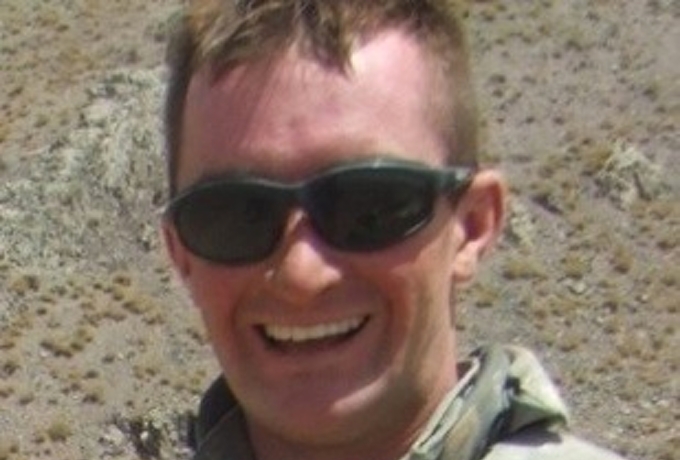
Tim Smith

Tim Smith

Timmy Smith touched so many lives and always made you smile when he entered a room. Timmy loved to make you laugh and also was proud to serve his country. Timmy was always a protector to all.

You will never be forgotten —  Sept. 20, 1982-April 7, 2008.

Forever on our hearts.

Love,

The Smith family, South Lake Tahoe

Note: Sgt. Timothy M. Smith, 25, of South Lake Tahoe died April 7, 2008, in Baghdad from wounds suffered when his vehicle encountered an improvised explosive device. 


Letter: Fanny Bridge project a financial boondoggle

To the community,

As a member of the Placer County Board of Supervisors, an obligation exists to make ethical and justified decisions which are beneficial to the taxpayers of Placer County.

On April 29, I requested justification from the director, staff and board members of Placer County to provide the benefits to the taxpayers of Placer County for spending $3.2 million and taking over the annual maintenance costs associated with Highway 89 and Fanny Bridge. This comes at a time when Placer County will face a $4 million financial reduction in tax revenue resulting from continuing lower fuel sales. To date there has been no response or justification provided from Placer County.

Caltrans, like Placer County, is facing current and future reductions in highway funding. The recent Caltrans deputy directive shifts funding priorities from constructing new sections of highway to maintaining current highways. This may explain why Caltrans is not financially involved in the bypass project; however, Caltrans will be provided with an enhanced maintenance yard.

Placer County will also be responsible for funding the annual maintenance for items such as street lights, benches, landscaping and sidewalks. To date how the annual maintenance funds will be generated has never been disclosed to the business community. Currently our bike and pedestrian trails are closed for half of the year and the bus shelters are being maintained by nonprofit community organizations.

Members of the community have met with Sen. Dianne Feinstein’s staff. The senator and her staff are reviewing the environmental and financial impacts of the proposed project against the goals and objectives of the Lake Tahoe Restoration Act. Under the Lake Tahoe Restoration Act, the environmental benefits must outweigh the project cost and impacts to the environment. The only gain for this project is shortening the travel distance for West Shore vehicles by approximately 200 yards. This minor gain does not outweigh the negative environmental and economical impacts. The proposed project with an estimated cost of $33 million is believed to not be supported by the Lake Tahoe Restoration Act.

The Placer County board is being pressured to support a project which resulted from a misleading and falsified funding application.

·      Fanny Bridge was determined to be structurally sound.

·      400 bicyclists and pedestrians per hour was not surveyed at Fanny Bridge.

·      There is no abnormal safety conditions. The pedestrian signal at Fanny Bridge provides a safe and controlled crossing.

·      There have never been two-hour backups.

·      The traffic congestion is through the commercial core, not at Fanny Bridge.

The Tahoe Transportation District stated, “It should be noted that some or all concepts delivered may not improve levels of service to levels normally considered acceptable.” Why would Placer County spend $3.2 million on a project that more than likely will not resolve the current conditions.

I request that the Placer County Board of Supervisors do what is ethical and vote against the current proposed project scope based on the unjustified expense to the taxpayers of Placer County. Let’s first address the traffic problem which exists through the commercial core.

Sincerely,

Jim Sajdak, Tahoe City


Opinion: Leaving a legacy on the South Shore

By Nancy Kerry

Leaving a legacy is often described as passing something down from one generation to another; in other words, what impacts will remain after a lifetime of service and actions?

Recently a broad group of South Shore community leaders came together to consider what our shared legacy for the community would be as a result of our collective actions. This group of nearly 40 leaders included elected officials and staff from both counties, city staff, college board members, business owners, community leaders and chief executive officers from local employers, as well as nonprofit and agency leaders. We discussed the benefits we could achieve if we developed and agreed upon shared legacy principles that we would utilize to guide our decision-making and strategic planning.

legacy logoWe sought to develop principles upon which we collectively agreed should be the legacy goals of our community. In designing these principals, we agreed they should convey our community’s interests in an exceptional quality of life and also address impacts on the economy, environment and social equity. We discussed how legacy principals should demonstrate environmental stewardship, economic diversity and contribute to a sustainable and vibrant community.

We shared what we collectively understand and what we have learned from our community, which included these concepts: our community should be inclusive of all members; our community comes together in times of crisis and supports one another; and ours is a community of individuals striving to make a living in one of the most beautiful places on Earth. The group developed an initial list of more than 50 ideas, which were paired down to those with similar themes resulting in the nine proposed “legacy principles” listed below.

Now it’s your turn to provide input about our shared legacy. After reviewing the proposed principles below, choose three or four principles you think are the most important for the South Shore. Consider how these principles might be utilized by private businesses, nonprofits and public agencies in their decision-making.

Proposed Legacy Principles

Collaborative Leadership – we recognize and incorporate a collaborative approach to leadership at the South Shore; we collectively represent a diverse group of residents, businesses and agencies and recognize no one particular private, public or non-profit agency or company is solely responsible to lead the South Shore community; we value our collective resources and by adopting a collaborative leadership philosophy we will leave a valued legacy for the South Shore.

Gratefulness – we are a community that expresses our appreciation for all that is the South Shore, which includes Lake Tahoe’s unparalleled natural environment, our community pride, neighbors helping neighbors, grateful for the opportunity to live, work and play in Lake Tahoe; we are a community investing in our shared successes grateful for the opportunity to leave a legacy for the next generation.

Environmental Integrity – we are a community that invests time and resources toward environmental stewardship; we believe it is our shared legacy that we have been entrusted to care for the outstanding natural resource of Lake Tahoe; we believe our built environment should closely mirror the natural environment and as a result, the natural and built environment will demonstrate our environmental integrity.

Shared Experience – we recognize residents and visitors may share a wide variety of experiences at the South Shore; we share experiences ranging from those valuing nature to those celebrating festivals and concerts.

Vitality – we are a community representing a belief in the health and wellness of individuals; we encourage a healthy lifestyle as well as neighborhood, community and economic vitality.

Inclusiveness – we are an inclusive community; we welcome new residents to the community as well as long-time residents; we are inclusive of all sectors, organizations, points of view from residents and visitors alike.

Culture and Recreation – we are a year-round community comprised of indoor and outdoor cultural and recreational opportunities for residents and visitors.

Bold Innovation – we are a community that embraces innovation in our approach to community challenges; we are supportive of innovators and entrepreneurs including those with big, bold ideas for we recognize bold innovation will enable us to leave a legacy of entrepreneurship.

Thank you for taking the time to help identify the principles that should be our shared legacy for the South Shore. Please share this opportunity with your friends and family and weigh in at Speak Up South Lake Tahoe a new civic engagement tool to collect community comments, share and discuss ideas and develop a collective understanding of the views in the community. A few weeks from now, the leadership group will meet again and assess the level of community agreement about these principles and develop a list of Legacy Principles to share with the community.

Nancy Kerry wrote this in collaboration with members of the South Shore CEO Round Table, which includes a large group from the public and private sectors.