South Lake Tahoe couple uses life’s lessons to teach others how to cope with mental illness

Publisher’s note: This is one of several stories about mental health issues in the Lake Tahoe Basin that will be running through October. All stories may be accessed by going to the Home page, Special Projects, then hit Mental Health.

By Jeanne Nelson

Nearly five years ago a kind nurse saw me sobbing in the waiting area of a psychiatric hospital.

I told her, “I don’t know what to do to help our young adult son.”
Mental-ILLNESS-LOGOBecause of overly restrictive HIPPA laws and our lack of psycho-education at the time we did not know the right questions to ask or the right information to proactively share to get him the help he needed and deserved. This kind nurse whispered in my ear, “You need to find NAMI.”

We had recently retired and moved to this beautiful rural area from the Bay Area. We could not find NAMI (National Alliance on Mental Illness) support and education locally so we would drive five hours each way monthly to attend NAMI Family Support groups in Palo Alto. Our loved one was living in the Bay Area receiving mental health services and supports there.

Through NAMI support we found hope, education and healing. At first we did not comprehend that recovery was possible. The doctors and nurses helping our loved one were so confident about his ability to recover and thrive. We learned quickly the importance of believing in recovery and learned the important role psycho-education of the family/caregiver/friend community support system plays in the recovery process.

Based on our experience we felt compelled to help expand the availability of information about mental illness within the community; hoping to help others avoid the frustrations that we experienced. We now facilitate a NAMI monthly support group for family members and friends of those living with mental illness (second Tuesday of each month at 6pm at the South Lake Tahoe Library). We also offer a yearly evidence-based NAMI Family-to-Family class to help family members learn how to best help their loved ones, and themselves.

After struggling to find our way though the gaps in the mental health and criminal justice system for years we have identified several things that seem crucial to implementing an effective mental health support system, but are often unavailable. First and foremost there is a severe shortage of mental health providers. Psychiatrists are few and far between, and those willing to take on cases involving psychosis are mind-numbingly hard to find.

We need greater cross training for primary care physicians, cross training of mental health professionals in co-occurring addiction, and need greater cross-training of mental health professionals in actual brain science. The notion that bad parenting or purely trauma caused all psychiatric issues is outdated.

Jeanne and Alan Nelson have used their experience to help other with mental health issues. Photo/Provided

Jeanne and Alan Nelson use their experience to help others with mental health issues. Photo/Provided

Trauma is a powerful thing, but genetic predisposition plays a strong role. We are fortunate in South Lake Tahoe to have two psychiatrists (three as of Aug. 1) plus tele-medicine for psychiatry. We also have many quality therapists locally.

LTUSD has secured excellent counselors, psychologists and nurses skilled in mental health focusing on early education and intervention.

We have far superior mental health services in our rural South Lake Tahoe than the vast majority of rural communities across the nation heavily due to the facilitation Barton Health has provided in pulling the community leaders and service providers together to work collaboratively on strategic priorities. Still, the waiting lists are often several months long and you must have very specific types of insurance to access the providers.

Within the mental health system there is no universally recognized standard of care as there is in other fields of medicine. Policies must be enhanced toward a standard of care that is patient-centric. Metrics needs to drive this change in staff behavior and performance.

We had so many families calling us in the South Lake Tahoe area saying their loved one was released from the hospital but they do not have an outpatient appointment yet and they did not know what to do. This is one of the most common places our loved ones slip through the cracks.

This led us to publishing a post-hospitalization tip guide for El Dorado County. They are available at our NAMI support group meeting or one of the six new mental health kiosks located at these locations: Barton ER, Barton Family Medicine, Barton Community Health, El Dorado County Library on Rufus Allen Boulevard, and Lake Tahoe Community College.

Mental health care workers have not yet evolved to a community care approach. In-patient and outpatient workers need to see themselves as part of a single treatment team. The notion that my patient has been released from the in-patient psychiatric unit in Sacramento so my job is done needs to be more than just frowned upon. Policies must be enhanced toward a standard of care that is patient-centric.

Jeanne Nelson believes a sense of humor is critical to get through hard times. Photo/Provided

Jeanne Nelson believes a sense of humor is critical to get through hard times. Photo/Provided

We know that the jails in the United States are the largest provider of mental health services, and yet, they are not equipped to adequately deal with the mentally ill inmates. It is crucial to have a behavioral health court to divert some of the mentally ill arrestees to treatment, rather than jail.

Other counties such as San Mateo and Santa Clara have loads of folks lining up to get into those diversion programs and they have some superbly trained compassionate probation officers skilled at recognizing signs of de-compensation and skilled at facilitating treatment adherence.

Behavioral health court diversion programs require proactive collaboration by the jail nurse, probation, county mental health and substance abuse clinicians, the judge, and NAMI. If any of these key player-ingredients are not playing their position to proactively hunt for improvements in the overall program, we are falling short.

The Mental Health Commission (which is comprised of experienced volunteers) recently agreed to assess our EDC Behavioral Health Court in South Lake Tahoe. Such assessments may inspire establishment of improved performance metrics. The results will be available by late summer.

Another thing that concerns us greatly is that many states across the U.S. have now “voted-in” marijuana as medicine, completely bypassing the FDA required studies to understand fully the potential effectiveness of a drug on a particular illness, as well as the side effects of the drug. Unfortunately, there is extremely limited research to support most of the claims of marijuana’s efficacy as a medicine and there is significant research to suggest that marijuana has a role in the onset of schizophrenia. Thirty-eight percent of those living with alcohol addiction and 53 percent of those with drug addiction have a co-occurring mental health condition and many do not realize it. This is why we emphasize the importance of having the crucial family history conversation with adolescents so they understand family genetics and the risks their choices can play on their life-long wellness.

We often think about how things could have been if we had been better educated about mental health before our journey began and consider what we would have done differently. We now know that family/caregiver support is a key ingredient in the recovery journey.

We now know who to talk to and what questions to ask psychiatrists and other mental health professionals. We know to use California’s AB-1424 form (medical history) and advise all family members with loved ones with mental health conditions to get familiar with this form (available on the El Dorado County website or at our NAMI support group meetings).

In hindsight we should have intervened much sooner in spite of others believing it was “just marijuana” causing the symptoms. We would have attended NAMI support group earlier in the process. We would have attended NAMI education sooner and would have pursued understanding our family history by assessing both addiction and mental health genetic predisposition risks sooner. We would have had crucial conversations with our children earlier.

South Lake Tahoe has made impressive improvements in mental health services and support in the past year, and we are on the verge of a major transformation in the coming years. The better educated we all are about mental illness, the greater our progress and transformation will be.

We encourage a sense of humor within our family and in our community. My husband makes me laugh every day. This spring he surprised me with daffodils he planted in the shape of a giant happy face.

Jeanne and Alan Nelson are the NAMI – National Alliance on Mental Illness – representatives on the South Shore.


Mount Rushmore — more than 4 stone faces

Publisher’s note: This is one in a series of stories about the National Park Service, which is celebrating its 100th anniversary in 2016. All articles may be found via the Home Page, select Special Projects, then National Park Service 100th.

Mount Rushmore illuminates the night sky of South Dakota. Photo/Kathryn Reed

Mount Rushmore illuminates the night sky of South Dakota. Photo/Kathryn Reed

By Kathryn Reed

MOUNT RUSHMORE NATIONAL MEMORIAL, S.D. – I’ve never lived in South Dakota, but it’s still my home. And nothing will ever change that fact.

My parents were high school sweethearts living in Rapid City. My three sisters were born there. Even though no one on my mom’s side still resides in the state, this hasn’t stopped us from having regular family reunions in the Black Hills.

Those hills are also home to an incredibly famous rock – Mount Rushmore.

I don’t know how many times I’ve seen The Faces – that’s what locals call Rushmore. (My lineage makes me a local, at least in my heart.) I don’t recall a time of ever not seeing The Faces when I’ve been in the state. It’s almost like a calling; I have to go there.

A friend asked me “why?” before I went back there earlier this month. I didn’t have an answer. Now I do. It’s about family, it’s about patriotism, it’s about tradition.

So many memorials are erected out of tragedy, or are about war and death.

Mount Rushmore is about celebrating the accomplishment of four iconic presidents – George Washington, Thomas Jefferson, Teddy Roosevelt and Abraham Lincoln. It’s a message of inspiration, fortitude and solidarity. It’s about being proud of their life’s work and what it meant for the greater good of the United States.

It’s also about a sculptor – Gutzon Borglum – creating a masterpiece one chisel at a time, one precisely placed stick of dynamite at a time. (Ninety percent of the rock was removed with dynamite.) Borglum died before his creation was completed. His son, Lincoln, finished the work. This marks the 75th anniversary of Mount Rushmore National Memorial’s completion.

It has grown into a destination for travelers throughout the world; with more than 3 million visitors a year.

A path allows visitors to see The Faces at different angles. Photo/Kathryn Reed

A path allows visitors to see The Faces at different angles. Photo/Kathryn Reed

One of my favorite memories is 10 years ago when the reunion was over Fourth of July. To see the fireworks light up The Faces, well, it was emotional. It sent chills through my body.

Our family tradition is to go in the early evening to see the transition from day to night. The lighting ceremony keeps evolving, but the awe of the event never fades. The spotlight on those four faces is breathtaking, just as it is to walk in through the Avenue of Flags and have them make a frame of sorts around The Faces.

Calmness washes over me when I see Mount Rushmore. I’m home, I’m with family and the future seems bright when looking at our past.


South Shore educators grapple with mental health issues throughout K-12 spectrum

Publisher’s note: This is one of several stories about mental health issues in the Lake Tahoe Basin that will be running through October.

By Terra Breeden

In Lake Tahoe Unified School District, 42 children were taken to Barton Memorial Hospital for suicidal tendencies this past school year.

The growing problem of mental health-related issues in children and teens has education officials on both sides of the state line scrambling to become de facto experts in a field that until a few years ago was not on anyone’s radar.

“In my experience there has been an increase in mental illness,” Nancy Cauley, principal of Zephyr Cove Elementary, told Lake Tahoe News. “There needs to be more time taken to examine what we need to do as a community to support these students.”

According to the National Alliance on Mental Illness (NAMI), 20 percent of children ages 13-18 live with a mental health condition. These conditions include mood disorders, depression, and anxiety disorders. Although the South Shore is a small community, the wave of mental health problems affecting youth is a big concern.

At South Tahoe High School, Nicole Bergner works as an intervention counselor and gives extra support to higher needs students.

“I see a lot of students with anxiety, depression and trauma-related fallout from family issues,” Bergner said.

Even with the increasing awareness, figuring out the cause of mental health problems in youngsters is tough. Cauley speculates that the recent economic recession may have affected children as much as adults.

“The economic downturn of 2008 had a huge impact on the emotional well-being of children,” Cauley said. “When a parent loses their house, job or income it affects the child. Stability is important and it plays a big part in a child’s emotional well-being and how they respond in the classroom.”

Teri White“Teachers and counselors do what they can to support students and families, but it’s hard in a rural community with limited resources and social workers.”Teri White, Douglas County School District superintendent


Nicole Zunino, the intervention counselor at South Tahoe Middle School, told Lake Tahoe News that social media is also a cause of mental health issues in youngsters. On social networking sites such as Facebook and Instagram, impressionable children are hit with a barrage of images and advertisements, coercing them to compare themselves to others and influencing their self-esteem.

The rise in school shootings nationwide has created fear on campuses and contributes to student mental health issues such as anxiety disorders, as well.

“I wonder why we are seeing so much anxiety and what comes to mind is that this generation is seeing school shootings regularly and we are living in this time of fear,” alternative education counselor for LTUSD Amy Jackson said.

Jackson told Lake Tahoe News that after her young son experienced a school shooting drill, which is now a commonly practiced training drill at schools, he was fearful, and later, wanted to talk about it.

The reasons for mental health issues are vast and they effect children differently depending on the child’s age.

“With younger children, there might be more issues with their family environment and with older children it tends to be more peer-related,” Terri White, superintendent of Douglas County School District, told Lake Tahoe News.

Lake Tahoe teachers and faculty are trying to identify the problems that arise at different ages. But in elementary schools, recognizing a mental health issue can be especially difficult.

“Elementary kids hide it pretty darn good,” Jackson said. “The little guys need counseling, but these mental issues can be hard to identify. You don’t see the symptoms until middle school or high school.”

Identifying a mental health problem is much easier when the child is an adolescent. However, by this age, the perils of anxiety or depression can be far greater.

“For us, the thing we see with adolescents is suicidal tendencies and trying to deal with their problems by turning to risky behavior,” White said.

Lake Tahoe education officials are doing whatever they can to combat mental health problems in schools. At STMS, faculty members conduct six prevention groups a week to help students cope with anxiety and depression. In the weekly meetings, students are taught to regulate their emotions instead of acting out. Relaxation techniques, deep breathing exercises and “I”-statements are utilized to assist children in dealing with their mental health issues.

“Teachers are the first line of defense,” Nicole Zunino, intervention counselor at STMS, said. “They are the eyes and ears of the school. We pick students with patterns of behavior and academics to place in these groups”

Ten common warning signs of mental health issues in teens •Being sad or withdrawn for more than two weeks •	Severe mood swings that cause problems in relationships •	Intense worries or fears that get in the way of daily activities •	Drastic change in behavior or sleep habits •	Repeated use of drugs or alcohol •	Extreme difficulty concentrating or staying still •	Seriously wanting to harm or kill oneself  •	Not eating, throwing up or using laxatives to lose weight •	Significant weight loss or weight gain •	Sudden overwhelming fear for no reason. Source: NAMI

10 warning signs of mental health issues in teens
• Being sad or withdrawn for more than two weeks
• Severe mood swings that cause problems in relationships
• Intense worries or fears that get in the way of daily activities
• Drastic change in behavior or sleep habits
• Repeated use of drugs or alcohol
• Extreme difficulty concentrating or staying still
• Seriously wanting to harm or kill oneself
• Not eating, throwing up or using laxatives to lose weight
• Significant weight loss or weight gain
• Sudden overwhelming fear for no reason.
                                         Source: NAMI

For children with mental health problems, it’s important for parents to be involved. Recognizing their child’s harmful behavior and providing support is the first step. LTUSD education officials work closely with students, but stress the importance of parental participation.

“We try to get parents involved because the outcome will be better,” Zunino said. “We also work really closely with agencies in town like Barton Health.

LTUSD students with known mental health problems are given personalized counseling and support from intervention counselors like Bergner and Zunino. LTUSD also provides specialized education programs to ignite their interest in school subjects and divert them away from harmful behavior.

“We are very good at customizing a student’s education,” Jim Tarwater, superintendent of LTUSD, said. “We have certain programs that will hook a kid and have stories where kids have had 180 degree turn-a-rounds.”

In Douglas County, schools have a hard time providing counseling for students with mental health issues. Currently, there are no mental health counselors on staff. There simply aren’t enough resources available for DCSD schools to provide on-campus counseling.

“If we have children who are struggling with mental health, we refer them out and connect them with outside agencies like the Tahoe Youth & Family Services,” White said. “But that can be difficult because of health insurance.”

White hopes to rectify the lack of support and provide more in-depth care to students with mental health problems. DCSD has applied for a social worker grant through the Department of Education and has plans to work with Project AWARE, which provides social workers to schools through a partnership with UNR and the Department of Education.

“Teachers and counselors do what they can to support students and families, but it’s hard in a rural community with limited resources and social workers,” White said.

At Zephyr Cove Elementary, Principal Cauley says that regardless of limited resources, children with mental health-related problems are given individualized support at the school.

“When we are made aware that a child needs mental health support we work with the parents and community to help that child,” Cauley said. “No matter what a child has, we always work with every possible team member to ensure that student is successful in school.”


Breaking down the basics of mental health

Publisher’s note: This is one of several stories about mental health issues in the Lake Tahoe Basin that will be running through October.

By Lake Tahoe News

Mental illness is a growing problem throughout the country, and Lake Tahoe is not immune to this trend.

Barton Health is taking an active role in bringing help to people in this area by hiring more specialists, adding services, and being a leader in getting people to be more aware about what mental illness is and what can be done to help people.

Mental-ILLNESS-LOGOKim Kilgore, a licensed clinical social worker at Barton Community Health Center and Barton Family Medicine, provides counseling services for adults experiencing mild to moderate mental health issues. Here she provides insight about mental illness and health issues in the greater Lake Tahoe community.

Why should people care about mental health?

Kim Kilgore: We all know and love people who are affected by a mental illness. The stats show us that mental health conditions shape the society we live in and affects us all.

For example, according to Barton’s Community Health Needs Assessment, 10.3 percent of the population reported fair or poor mental health and 31.4 percent showed symptoms of depression.

From a national perspective, the National Alliance of Mental Illness (NAMI) shares these facts:

·       43.8 million Americans experience a mental illness each year

·       26 percent of homeless adults are living with a severe mental illness

·       24 percent of state prisoners have a “recent history of a mental health condition”

·       Depression is the leading cause of disability worldwide

·       Serious mental illness costs the U.S. $193 billion in lost revenue each year

·       Suicide is the 10th leading cause of death in the United States, 90 percent who commit suicide have an underlying mental illness

·       Nearly 60 percent of adults with a mental illness did not receive mental health services in the previous year and 50 percent of youth (ages 8-15) did not receive treatment.

Define mental illness.

Kilgore: The National Alliance for Mental Illness defines mental illness as a “condition that impacts a person’s thinking, feeling, or mood and may affect his or her ability to relate to others and function on a daily basis.”

How common is it to have a mental health issue?

Kilgore: Approximately one in five people have a mental illness, according to NAMI. The Substance Abuse and Mental Health Service Administration (SAMHSA) state that 18 percent of adults have a mental illness. Anxiety disorders are the most common mental illness in the United States.

What did this area’s Community Health Needs Assessment (CHNA) reveal about mental health on the South Shore?

Kilgore: According to the CHNA, the suicide rate in El Dorado County is higher than the California average and neighboring Douglas County. Two-thirds of participants surveyed believe mental illness is a major problem in our area, which has led to more community actions and cooperative efforts to address mental health.

How is mental illness hereditary?

Kilgore: Many mental illnesses have been linked to genetic components. For example, adults with relatives that have bipolar disorder are 10 times more likely to develop bipolar disorder. According to current research, bipolar disorder has the greatest genetic link of all mental illnesses. SAMHSA also breaks down other mental illness and the genetic component on their website.

Is there a way to prevent mental illness?

Kilgore: Mental illness can be caused by a variety of different events including genetics, environment, lifestyle choices, substance abuse, and traumatic incidents. One of these events, or combination of events, can create conditions which may lead a person to develop or be more susceptible to developing a mental illness.

Evidenced-based prevention strategies include:

·       Destigmatizing mental illness.

·       Education about common signs and symptoms of mental illness.

·       Identifying signs/symptoms and providing early intervention when a person develops a mental illness.

·       Abstinence or reducing use of drugs and alcohol.

·       Increasing an individual’s protective factors (which include: social support, self-esteem and self-control). Access to mental health and substance abuse treatment.

When should someone seek help? And where?

Kilgore: If signs and symptoms of mental illness are lasting for weeks to a month at a time and are impacting everyday life and relationships, it is time to get help. Mental illness is treatable. A person should talk to his or her healthcare provider about the symptoms or request a referral for mental health counseling. You can also contact the health insurance company and request a list of mental health providers in your area.

If a person needs immediate assistance and having thoughts of self-harm or harming others, 24-hour help is available by calling 800.272.8255. The person can also call 911 and request a “welfare check.”

What can a relative or friend do to support a loved one who may be suffering from a mental health issue?

Kilgore: Some ways a relative or friend can show support for a loved one suffering from a mental health issue are:

·       Help a loved one find resources for help where he or she lives.

·       Learn more about mental illness.

·       Listen empathetically and with compassion

·       Contact your local NAMI chapter or get tips from NAMI online.


Pinnacles Park — A peak experience

Publisher’s note: This is one in a series of stories about the National Park Service, which is celebrating its 100th anniversary in 2016.

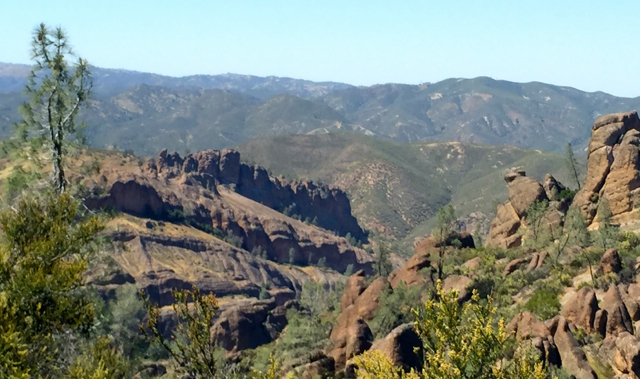
Pinnacles National Park is a geological wonder. Photo/Susan Wood

Pinnacles National Park is a geological wonder. Photo/Susan Wood

By Susan Wood

PINNACLES NATIONAL PARK — Whatever your penchant for an ideal national park, Pinnacles ranks as the most recently inducted. It was established as a national monument by President Theodore Roosevelt in 1908, and 105 years later, President Obama signed it into law as a park.

“Where?” people ask.

What Pinnacles lacks in fame, it makes up for in grand-scale features.

Condors are gradually becoming more prominent in the park. Photo/National Park Service

Condors are gradually becoming more prominent in the park. Photo/National Park Service

A bird’s-eye view

First, it might be a blessing it isn’t well known considering the endangered California condor calls it home. The nesting grounds represent one of a few release sites in the United States and Mexico. Loss of habitat, shootings and poisoning from lead bullets almost did them in when they made the list in 1967. The population has dwindled down to 435 – make that 436 as No. 828 was born in the last few weeks – with 167 in captivity.

The condor is one of the largest birds in North America, with a wingspan of 9½ feet. It soars on thermal updrafts at 55 mph, at altitudes of 15,000 feet. When you see one, it is a spectacle to behold.

The Park Service has established an aggressive program to monitor their progress.

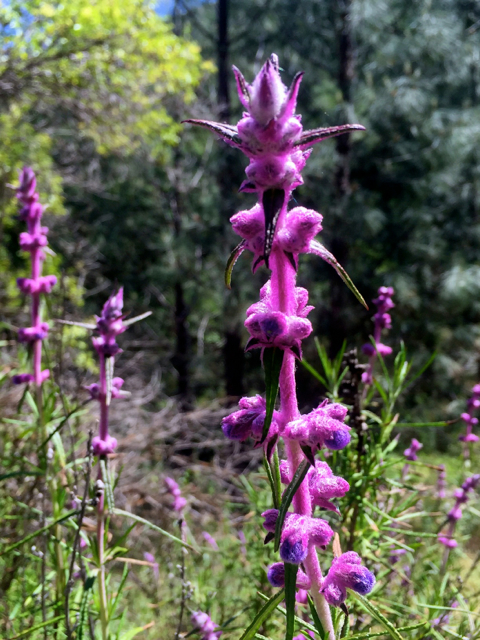
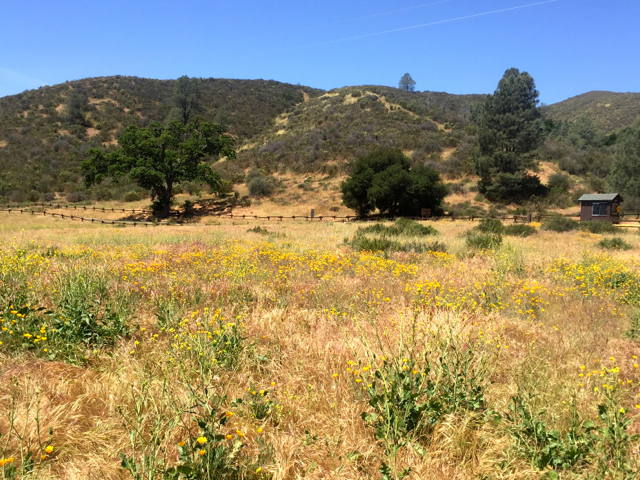
Winter rains bring spring flowers. Photo/Susan Wood

Winter rains bring spring flowers. Photo/Susan Wood

“We want to get a general sense of where the birds are,” program park worker Arianna said, while holding a transmitter at a picnic table stationed at the Bear Gulch day use area. Bear Gulch is ground zero for condors, as the social birds can often be spotted in the afternoon flying over High Peaks and swooping down into the valley. The park workers set up a spyglass station to help spot them between the campground and Bench trailhead.

The birds wear radio transmitters that workers track a few times a day. If a bird doesn’t move after eight hours, workers know to go find it because something’s wrong.

This is not an easy task. They tend to fly in remote areas and weigh 20 pounds, making it a challenge to carry them out. They nest at night and feed on dead carcasses during the day.

It’s a big deal when a new chick enters the flock. Park workers even announced No. 828 on a sandwich board sign at the general store.

That’s not all to announce. Pinnacles’ terrain, wildlife and lack of light at night make programs unique. There’s stargazing, life with bats – which hang out in the Balconies Cave – and in spring, wildflowers that pop out of the ground as far as the eye can see. There are larkspur, mariposa lilies and poppies everywhere.

An array of wildflowers fill the landscape. Photo/Susan Wood

An array of wildflowers fill the landscape. Photo/Susan Wood

This is especially true this year, as park workers celebrate Mother Nature bestowing a lot of water last winter that fell on the 26,606-acre park that is split between San Benito and Monterey counties.

Sunset magazine rated Pinnacles Campground – which used to be private before it melded into the national park — one of the top 50 in the West. Large meadows give the appearance of a wide-open expanse and plenty of shade from trees form canopies to provide relief from the sun. Many songbirds find refuge in these trees. It’s highly recommended to close one’s eyes and allow for a pure sensory experience as the birds compete with the gentle winds. For a more stark auditory experience, wild turkeys that roam the land can be heard at all hours.

It’s hard to imagine what would happen if they tangled with the also-roaming javelinas.

Granted, it’s easy to just hang out at the campground to see how the day unfolds. But there are rewards for hikers wanting to venture out.

At ground level

The terrain at Pinnacles National Park represents a magnificent landscape of rock formations.

The Earth has moved in this region, creating a moving experience for those who take in its beauty. After all, the park is situated very close to the long San Andreas Fault that slices through 600 miles of California. Millions of years ago fault lines divided volcanic and sedimentary rocks that developed an uplifting of land forming steep cliffs. Signs along the Bench Trail from the campground to Bear Gulch highlight the extraordinary geology.

Spring is an ideal time to visit -- before it gets too hot. Photo/Susan Wood

Spring is an ideal time to visit — before it gets too hot. Photo/Susan Wood

Erosion from water and wind make the spires and towers seen today. The High Peaks loop from the Bear Gulch area was calculated at only 5 miles, but the spires appear from the parking lot to be a two-day backpack away.

The trek is well worth the effort. Views dominant the hike, with a short scamper on the top of the ridge to the tippy-top of Hawkins Peak at 2,720 feet, providing that top-of-the-world experience.

The return from the Condor Gulch Trail may not be for the faint of heart, but it’s definitely suggested for the adventurous spirit. There’s a reason this place is a rock climber’s paradise. Hiking becomes more like bouldering – with the safety of iron bars and chopped out steps to keep the trekker balanced in some precarious spots.

The scenery is more spectacular at every turn.

—–

Notes:

·       Pinnacles National Park is located in the Central Valley off Highway 25, 35 miles from Hollister.

·      Camping is $23 for tent sites, $36 for RV sites with electrical hookups. Reserve online.


Demand for mental health care grows in Tahoe

Publisher’s note: This is one of several stories about mental health issues in the Lake Tahoe Basin that will be running through October.

By Kathryn Reed

Mental health is a growing problem on the South Shore that is affecting all ages and has no socio-economic boundaries.

More people are committing suicide. Substance abuse is an issue, which exacerbates mental conditions.

Mental-ILLNESS-LOGOThese are some of the findings in Barton Health’s latest Community Needs Assessment. Officials from the Tahoe healthcare conglomerate spoke to the South Lake Tahoe City Council this month – which is Mental Health Awareness Month. A different foursome – three from Barton, one from NAMI (National Alliance on Mental Health) – gave a talk a few days earlier at Lake Tahoe Community College.

“We see worsening trends,” Clint Purvance, CEO of Barton Health, said.

The top three priorities from the 2015 assessment are mental health, substance abuse and access to services. All are interrelated.

South Lake Tahoe has a higher rate of suicides compared to the state and national averages, as well as more drinkers and drug-induced deaths. The access to primary care physicians, though, is less than the state and national averages.

Barton is going after grants to help implement programs to help address these issues.

What worries Purvance is that there are so many outside factors contributing to one’s mental health that are out of the immediate purview of Barton, such as homelessness among school-age youth and adults living in motels.

When Councilman Tom Davis asked Purvance to put a price on dealing with the issue on a communitywide basis, the answer was at least seven figures with no true number having been calculated.

For Barton, the next steps are to maintain and expand mental health services, spearhead community collaboration and engagement to improve the care flow system, and to build awareness through education and prevention campaigns.

At the community talk Tracy Protell – psychiatrist at Barton; Betsy Glass, licensed clinical social worker at Barton Community Health Center; Kate Mosher, licensed clinical social worker with Sierra Child and Family Services; and Jeanne Nelson of NAMI El Dorado gave some insight about they see in the community, particularly regarding depression.

“The key is all levels are treatable. You really can get the brain back to a healthy state,” Protell said.

She said depression is often misdiagnosed in younger people as attitudinal behavior issues.

A clinical diagnosis of depression is when someone has five of the following nine symptoms for more than two weeks:

·       Sadness/irritability

·       Anhedonia

·       Sleep disturbance

·       Decreased energy

·       Appetite disturbance

·       Difficulty with concentration

·       Excessive feelings of guilt-worthlessness

·       Psychomotor agitation/retardation

·       Suicidal thoughts.

The experts are proponents of starting with lifestyle changes – eating, sleeping, exercise, social interaction – before medication.

Therapy, though, is also a viable option for many people. However, there is an extensive wait list for psychiatric and psychotherapy through Barton. The good news is new patients are prioritized, with the most severe cases rising to the top.

A third psychiatrist is coming on board with Barton this summer, which should help.

Money can also be a deterrent for people when it comes to seeking care.

NAMI offers some free group therapy sessions and has a wealth of information. El Dorado County operates a 24-hour crisis line. A therapist will meet patients at Barton Hospital’s emergency room.


Grandeur of Denali doesn’t disappoint

Publisher’s note: This is one in a series of stories about the National Park Service, which is celebrating its 100th anniversary in 2016.

The road to Denali. Photo/Jacob W. Frank/NPS

The road to Denali leads to a world of outdoor wonder. Photo/Jacob W. Frank/NPS

By Kim Wyatt

DENALI NATIONAL PARK & PRESERVE – After almost four hours on the bus, the driver pulled to the side of the road and opened the door.

“Little Stony Creek.”

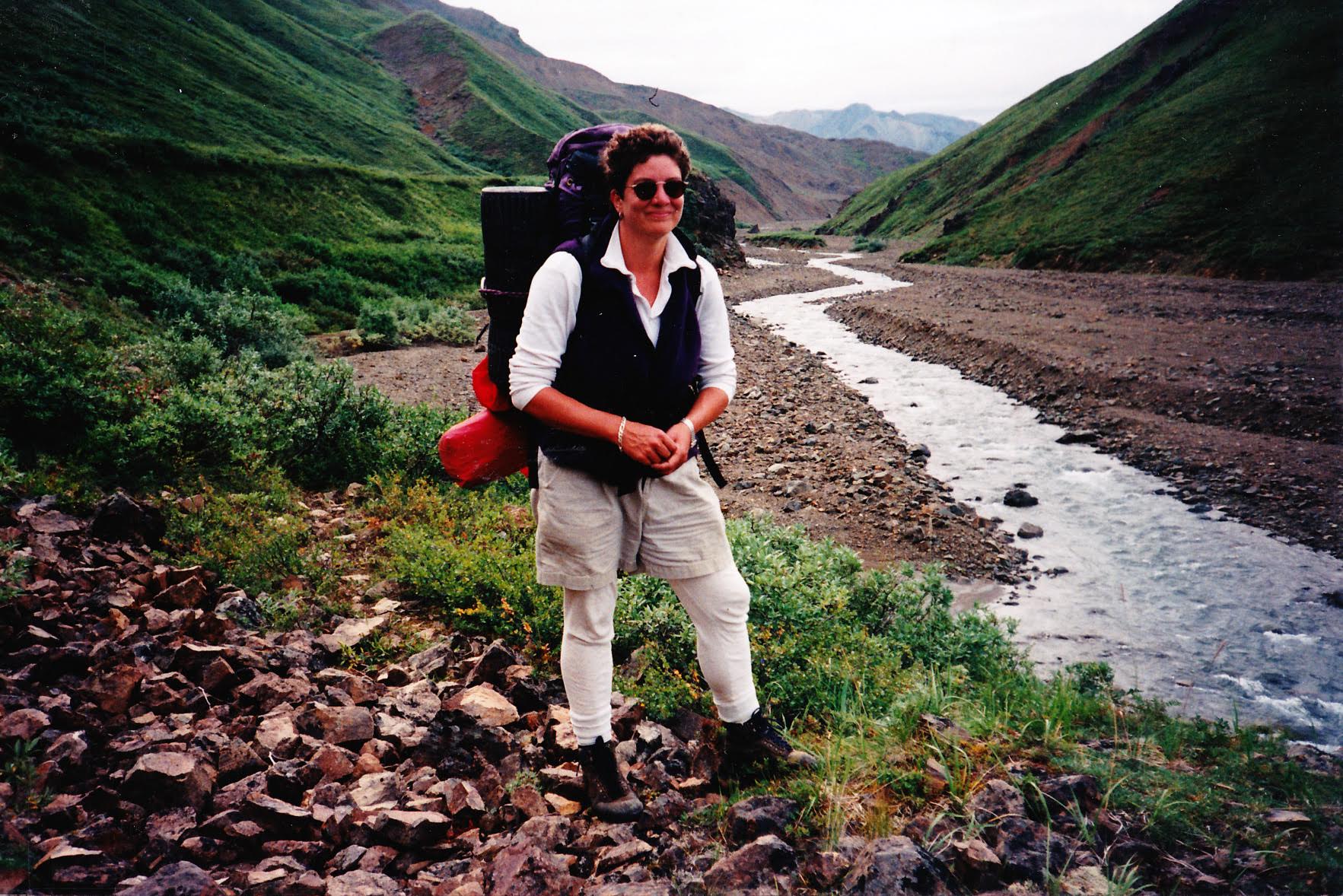
We heaved our backpacks over our shoulders and stepped off. The bus receded in the distance. We stood in a massive valley, surrounded by broad-shouldered peaks, rolling tundra and absolute silence.

All my problems rolled away with the bus. Across the valley floor, I saw two boulders tumbling down a green slope. I pulled out my binoculars: They weren’t boulders; they were baby grizzly bears, playing. In one swift motion mama bear stood, growing twice in size, nose in air.

S hit,” I said. “We’ve got to go.”

My hiking companion and I headed up a creek bed and were soon in a small canyon, out of any range I hoped the adult grizzly would find threatening. The hike itself was typical of my experience in Alaska: periods of tundra and rocky streambeds punctuated by river crossings and something I rarely encountered in Tahoe, fear. Of animals, wet feet, the elements. Even in mid-summer, the weather was ever-changing—it looked as if the turbulent sky might rupture any minute. And around seemingly every corner were enormous piles of what looked like regurgitated berry pie: grizzly scat. So we’d sing louder to keep them away, maybe every song I remember from the ’70s. By the time we reached camp I had just exhausted my Tony Orlando and Dawn repertoire.

I rarely thought about dying when backpacking in Yosemite or Desolation Wilderness. But I did in Alaska.

It’s the scope of Denali National Park & Preserve that gets you. At 6 million acres, it’s the third largest national park in the U.S. (the top two are also in Alaska). It contains the highest portion of the magnificent Alaska Range, glaciers and massive rivers spilling into grand valleys. Conservationist Charles Sheldon and dog musher Harry Karstens first wintered in Denali in 1907. Deeply moved by their experience, they lobbied Congress to establish Denali as a national park to conserve wildlife. In 1917, Mount McKinley National Park was created; the park name was changed in 1980 to include the native Athabaskan word “Denali,” meaning “the high one.” I wanted my whole life to see this massive peak, but clouds had obscured previous attempts. At 20,310 feet, Denali creates its own weather, and doesn’t show itself easily.

Kim Wyatt backpacks through the wilderness of Denali National Park & Preserve. Photo/Provided

Kim Wyatt backpacks through the wilderness of Denali National Park & Preserve. Photo/Provided

Except for a lottery held twice a year, cars are not allowed on the road inside the park. If you plan to backpack, before being issued a permit you must watch a video on Denali’s humbling weather, the Golden Triangle—your tent, cooking area and bear canister must be at least 100 yards from each other—how to cross a wide, braided river and, finally, advice on bear, wolf and moose encounters. (For example, never run from a grizzly or a wolf. But if charged by a moose in open terrain, run in a zigzag pattern. It’s a lot to remember, how to run/not run.)

Then you can apply for your permit. Denali National Park & Preserve is made up of 87 units, and you have to choose your unit before you apply. There are quotas and limits to the number of people allowed in each one to avoid the kind of scene you have at popular trails in other parks. And then you take a converted school bus to the trailhead. When you’re done hiking, you come out and wait for the bus.

Only four people were allowed in our unit. We never saw the other two.

You must apply for your permit in person. Because Denali is not exactly on the beaten path–it’s about a five-hour drive from Anchorage, where I lived—you should be ready to roll. We’d been warned to have three or four options, as the most popular hikes might already be at their limit. All of our choices were booked, so we took a ranger’s recommendation of Stony Creek, one of her favorites, a hike with varied scenery, and if we were lucky, a superlative view of Denali on a rare clear day. (Weather is something else you need to worry about in Denali. Cloud cover necessitates knowing how to use a map and compass.)

I’d lived and worked in Yosemite for a decade before I moved to Alaska and I felt confident about my trail skills. The problem—or the beauty—in Denali is once you get off the bus, there are no trails. There are no signs. The rivers are wider than highways and there are grizzly bears and wolves and moose that you should run/not run from. And walking on taiga and tundra, rather than granite, is not as easy as it sounds. Alpine tundra is low and scrubby, but brushy tundra is soft: two steps forward, one step back.

After dinner, the clouds hunkered down and we lost any view we might have had, so we retreated to the tent. A few hours later, I woke to the sound of footsteps in front of the tent. My heart seized: Would I stupidly die in grizzly country? But the steps were light, and multiplied until they sounded like castanets. Rain on rocks, perhaps. I peered out the tent’s avalanche chute to see caribou, one after another, walking single file past the tent in twilight. It turned out that we were sleeping on a caribou migration route. I opened the tent door and watched them pass until falling back to sleep.

In the morning, the tent glowed bright yellow. The sun was out! I jumped from my bag and hopped outside and there was Denali in all its glory. My jaw dropped.

An ecstatic current ran through me. While the world around me awoke, the massif held my gaze—a form of communication beyond the corporeal plane. The intimacies of the park were more captivating than its scope: Up close with grizzlies and caribou. Birds and berries. Just me and a grand slam view of Denali in full sun. Places like this change you; they settle your soul.

Why is it important to preserve these wild spaces? Although conservation of species and habitat is crucial, humans need these wild spaces, too. We need the places where we can escape from the pressures of modern life and reconnect to our best selves. Writer Wallace Stegner had it right when he said, “National parks are the best idea we ever had. Absolutely American, absolutely democratic, they reflect us at our best rather than our worst.”

A few years ago, a close friend with cancer asked me to take her to Yosemite National Park before she died. Walking near the Ahwahnee Meadow, she said incredulously, “This belongs to all of us.” I’d never thought of it that way, but, yes, it does. And the more time we spend in our parks, the more likely we are to care for them. Saving our wild landscapes is saving ourselves.

Kim Wyatt is the publisher of the independent press Bona Fide Books, which published “Permanent Vacation: Twenty Writers on Work and Life in Our National Parks”. She worked in Yosemite National Park for 13 years.

Note: Information on backpacking in Denali National Park & Preserve may be found here.


Spreading hope for those with mental illness

Publisher’s note: This is one of several stories about mental health issues in the Lake Tahoe Basin that will be running through October.

By Kathryn Reed

Recovery is possible. That is the overriding message from parents of a mentally ill son.

Jeanne Nelson cried in the shower every day for a year grieving for the loss of the life her son could have had, she struggled with guilt for not knowing sooner and therefore not getting him help sooner.

Mental-ILLNESS-LOGO “I wonder if he had gotten help sooner, if his cognition would be higher,” she said.

Nelson and her husband, Alan, are the NAMI – National Alliance on Mental Illness – representatives on the South Shore.

Their son is doing fine; lives on his own, has a job. He’s on medication, with long lasting injectables his solution. It’s just not the life he had dreamed about. Adjusting expectations – that’s another thing everyone in the family has had to do.

The couple spoke April 13 at Temple Bat Yam in South Lake Tahoe about what they have learned and now what they have to offer others. There was a time when they didn’t believe their son had any hope for a normal life. That is why they are quick to share that things can get better – for everyone.

NAMI started in 1979 in New York with two moms with grown children who had mental issues. The grass-roots movement has expanded to every state.

One of the big issues with any mental condition is the stigma. NAMI is helping to break down those barriers. The hope is one day mental issues will be talked about the same way physical conditions are. After all, the brain is an organ just like the heart and no one winces at discussing heart issues.

“Telling someone to snap out of it is like telling someone who is deaf to listen harder,” Jeanne Nelson said.

Considering 20 percent of the population is living with a mental health condition, the topic is relevant. One problem, though, according to Jeanne Nelson, is that on average the delay in getting treatment is eight to 10 years after symptoms first arise.

Signs to look for include excessive worrying or fear, mood swings, a high-degree of sadness, confused thinking, avoiding social interaction, cutting and change in sleep patterns.

Types of brain disorders include depression, bipolar, schizophrenia, obsessive compulsive disorder, anxiety, posttraumatic stress disorder, and eating disorders.

It’s also good to know one’s family history because mental illness can be hereditary.

nami

Jeanne Nelson on April 13 talks about mental illness. Photo/LTN

Even after a diagnosis it can still be difficult to get help. Psychiatrists are in short supply throughout the country. In-patient treatment programs – especially in rural areas like Lake Tahoe – don’t exist.

Many who are in jail are there with some sort of mental illness. Help for them varies from facility to facility. Substance abuse and mental health often go hand-in-hand.

Jeanne Nelson said there is a tremendous difference between what happens in California and Nevada.

“There’s less oversight in Nevada. It has the worst mental health care in the nation,” she said.

The Reno Gazette-Journal this year exposed some of the squalid conditions of clients in Northern Nevada that has gotten the state’s attention.

The couple said it’s important for the advocates of those with mental issues to be vocal, file grievances when necessary and document everything. And while health care officials cannot share information about a patient who is 18 or older without that person’s permission, it is perfectly fine to provide doctors with insight about the patient that might help with a diagnosis or care.

—–

 Notes:

·       NAMI support group meetings are the second Tuesday of the month from 6-7:30pm at the South Lake Tahoe Library.


Spotlight on mental health on the South Shore

Publisher’s note: Beginning today Lake Tahoe News will be delving into the topic of mental health in the Lake Tahoe Basin. This is the first of several stories that will be running through October.

By Jessie Marchesseau

Considering one in five adults experiences some sort of mental illness in any given year, it’s no surprise this subject hits close to home for so many.

Yet even with such high numbers, mental illness still carries a stigma. Doing away with this stigma is a key factor to ensure people receive the necessary treatment, explained Michael Ward, project facilitator for the Mental Health Cooperative on the South Shore. He said mental health needs to simply be considered a part of the health system as a whole, not a separate issue.

Mental-ILLNESS-LOGO“We’re not going to make real progress without helping our community to understand that it’s OK to talk about these problems,” said Rhonda Sneeringer, chief medical officer for Barton Health.

Barton hosted its third annual mental health forum on April 7 at Lake Tahoe Community College.

About 70 people attended, and nearly everyone seemed passionate about the topic. Many were industry professionals such as doctors and therapists; some were employees and volunteers for local health organizations. Representatives from area schools attended, as did the South Lake Tahoe chief of police and community members whose lives have been affected by friends or family with mental illness.

And over the last few years local entities have been joining forces to make that a reality.

Progress so far

Talking about and recognizing mental health issues are some things health service providers have been encouraging within the community, especially with the younger generations. The fact that 50 percent of chronic mental illness begins by age 14 and 75 percent by 24 are reasons to make sure kids and teens are informed, too. This is partly why local schools were prolific recipients of the Barton Foundation’s community health grants last year.

Kindle Craig, Barton Health’s director of Strategy and Development, took a moment to acknowledge the grant recipients which also included Live Violence Free, NAMI (National Alliance for Mental Illness), Sierra Child and Family Services, and the South Tahoe Drug Free Coalition, as well as funding for brochure racks displaying informational mental health brochures.

Craig explained to Lake Tahoe News there is a waiting list to receive mental health treatment in South Lake Tahoe for all ages. Wait time depends on the specific circumstances of each individual, and navigating the system to find the correct type of treatment can be difficult.

This makes South Lake Tahoe’s mental health needs seem dire. But as part of the larger picture, she said, in relation to the rest of California, South Lake’s situation is comparatively not bad. However, being in a rural community means that even one tragic mental health crisis, such as a suicide, can affect a large portion of the population.

These are some of the reasons Barton Health chose to lead the effort to improve the state of the local mental health system. But Craig stressed they are not doing it on their own; this is a collaborative effort between Barton, El Dorado County and other area health providers.

“We have a collective awareness of the issue, and we all have a collective buy-in,” Craig said.

She described it as all the entities extending their reach a little bit, and together they can fill in the gaps. This idea has proved effective, and the system has come a long way in recent years, thanks, in part, to annual forums like this one.

Last year’s forum was a full-day workshop out of which came the Mental Health Cooperative and a long list of goals for the following six months. Among those goals were a wellness service directory, securing new leadership for the local NAMI chapter, developing two new transition houses for those in need and opening a warming room for the homeless. Ward announced 95 percent of the dozens of goals on the list were completed within the specified timeframe.

After seeing how far the mental health arena has come, the focus turned to what will be coming up.

Barton Health annual forums about mental health are making a difference on the South Shore. Photo/Jessie Marchesseau

Barton Health’s annual mental health forums are making a difference on the South Shore. Photo/Jessie Marchesseau

The future

First on the radar for the upcoming year is Mental Health Awareness Month in May. Entities all over town will be hosting events, some attendees even created events on the spot. A calendar will be available online within the next couple weeks. Buttons depicting green ribbons were distributed to wear, and residents were encouraged to raise awareness via social media throughout the month of May using the hashtag #eachmindmatters.

As for the Mental Health Cooperative, its list of initiatives for the upcoming year is lengthy but revolves around three main topics: access, awareness and resources. One of the first orders of business, however, is a trip to Washington, D.C., where representatives will be seeking grant money from the national Health Resources and Services Administration with which to implement these initiatives.

Barton is also making efforts to provide more access to mental health services. It has increased the number of available social workers and counselors, and will be hiring a psychiatrist this summer.

Even though substantial progress is being made, there is a long way to go. It is still essential for individuals to do their part.

How we can help

Sabrina Owens, program manager of El Dorado County Mental Health in South Lake Tahoe, gave a short presentation to educate viewers on how to recognize and take proper action when it comes to mental health issues. She pointed out how symptoms can often be vague and overlap from one illness to another. Symptoms such as excessive sleeping, dropping grades in students and unusual behavior could be signs of a greater underlying problem.

Being able to diagnose the issue is not the goal, simply acknowledging an issue and encouraging the person to seek further evaluation is what is important. Time is of the essence in mental treatment, so she encouraged people to be diligent and not just let possible symptoms slide by.

The forum wrapped up with an interactive exercise where the room broke into groups, each with a specified “patient.” The groups then had the task of talking through the chain of events leading to recovery and identifying the issues that could arise along the way.

Obstacles including insurance, education, misdiagnosis, avoiding treatment and navigating the system were identified, among others. The exercise opened eyes and discussions about where the system can fall short, what could use more improvement, as well as how we can all help loved ones and others in our community get the treatment they deserve.

In the end, attendees from all walks of life left educated, inspired and motivated.

“We’re all just trying to create a vibrant, healthy community,” Ward said.


Winter casts magical spell on national parks

Publisher’s note: This is one in a series of stories about the National Park Service, which is celebrating its 100th anniversary in 2016.

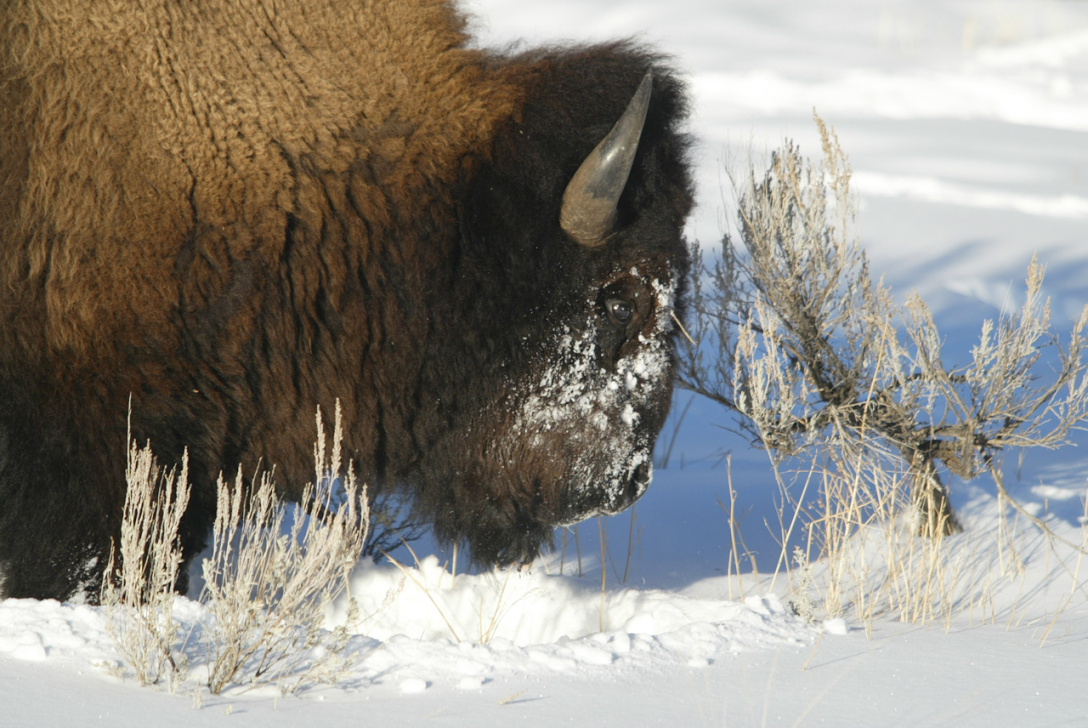
Sometimes it's better to find Plan B when a bison is on  trail. Photo/National Park Service

Sometimes it’s better to find Plan B when a bison is on the trail. Photo/National Park Service

By Susan Wood

YELLOWSTONE NATIONAL PARK – For me, the real stand down involving the national parks occurred long before Yosemite’s former concessionaire Delaware North decided to play hardball with iconic park names they trademarked.

It was a face-to-face encounter almost 20 years ago with three bison standing at the other side of the bridge on my cross country ski journey to Fairy Falls in the 2.5 million-acre Yellowstone National Park.

Reflecting back, it was a memorable time. For years, Yellowstone has been ground zero for controversial land-use issues.  These include the reintroduction of wolves and its effect on nearby ranchers; the balance between recreation and environment regarding pollution from snowmobiles; the management of fire prompted by one of the nation’s worst blazes in 1988; the study of geothermal activity in the land of more than 9,000 geysers; and the protection of a large free-ranging herd of bison from slaughter.

Considering Yellowstone represents a “survival of the fittest” hotbed, I was not about to challenge a 1,400-pound animal that can run 35 mph.

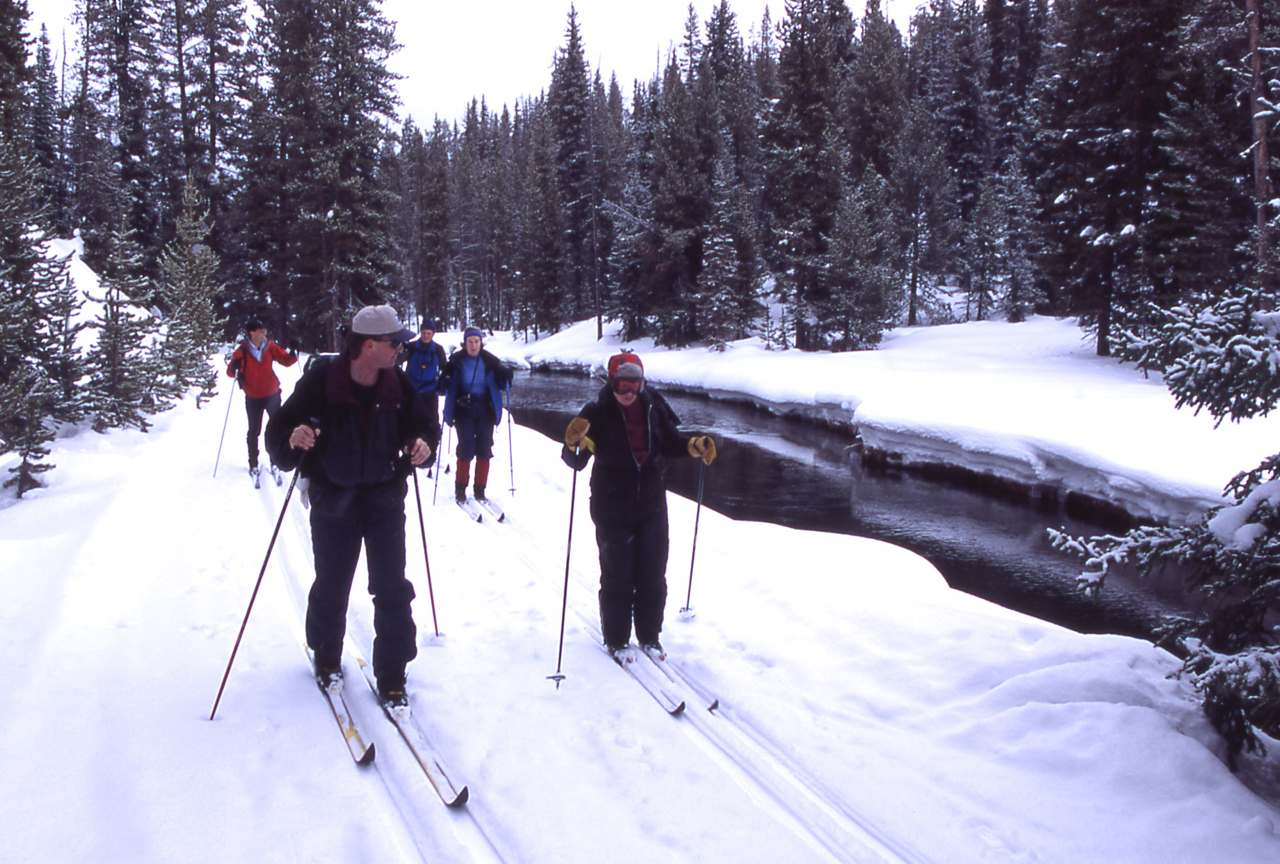
Cross country skiing in most national parks is special experience, especially so in Yellowstone. Photo/National Park Service

Cross country skiing in most national parks is a special experience, especially so in Yellowstone. Photo/National Park Service

I took a snow shuttle there (part of the beauty in visiting in winter), so there was no vehicle to save me. If I insisted on continuing on the trail, my only other option if it charged would have been jumping into the icy cold Firehole River on long skis. I made the wise move and changed course to Lone Star Geyser from the Old Faithful Snow Lodge, my home base.

I was astounded by the solitude. Although the geyser erupted prior to my approach (it goes off every three hours), I stood in awe. The large mound resembled something out of “Close Encounters of the Third Kind.”

Yellowstone’s charm lies in its massive, scenic landscape and wildlife encounters – from the serene to the raw reality of nature. It’s accentuated in winter. That’s why the Park Service manages a fleet of snow coaches with top hatches to spring up for photo ops. The commuter van on treads appears like something out of the military, grinding through some of the most challenging terrain in the park.

It’s the vehicle of choice for visitors and wildlife enthusiasts entering the park from the town of West Yellowstone, deemed the snowmobile capital of the United States. I passed on a snowmobile rental given the sub-zero degree temperatures Yellowstone is known for. Park Service employees have a saying of Yellowstone’s seasons – winter, winter, winter, summer.

Regardless of the cold, I knew I was in for a special treat upon my first day. It’s not every day one can catch a wolf gnawing on a dead elk. But that’s the cycle of life at Yellowstone. Hours later, I came within 15 feet of an elk while I was on a quick, introductory 5-mile ski along a cluster of geysers from the lodge near Old Faithful. I suppose I was off in my own little world, but it was plain to see that I didn’t notice him until I was in his zone. The recommended distance from an elk is 25 feet. I veered way out, so I could keep an eye on the animal without getting any closer. I wouldn’t have witnessed a spontaneous eruption from a dormant geyser if I hadn’t taken the alternate route.

Author Thomas Wolfe once characterized the park as “the one place where miracles not only happen; they happen all the time.” I believe it.

Yellowstone is the oldest national park in the United States; established in 1872.

On Day 2 of my cross country ski adventure, I captured the grace and elegance of white trumpeter swans on Yellowstone Lake, just south of the Continental Divide. Rick, our guide, was full of stories. Some I didn’t want to hear. He drove the snowcoach 30 miles that day, so he had plenty of opportunities to share things like the claw marks of a grizzly bear on a tree next to the trail. I felt mortal at the thought of a possible encounter.

The falls in the West Thumb region plunge with such force they freeze on the back splash, much like Multnomah Falls on the Columbia River Gorge east of Portland – but to a larger scale. As for grand, there is such a thing in the Wyoming Park. The Grand Canyon of the Yellowstone, as they call it, provides spectacular views of a gash in the Earth 1,000 feet deep and 4,000 feet wide.

The feast for my eyes reminded me of another cross country vacation two years prior.

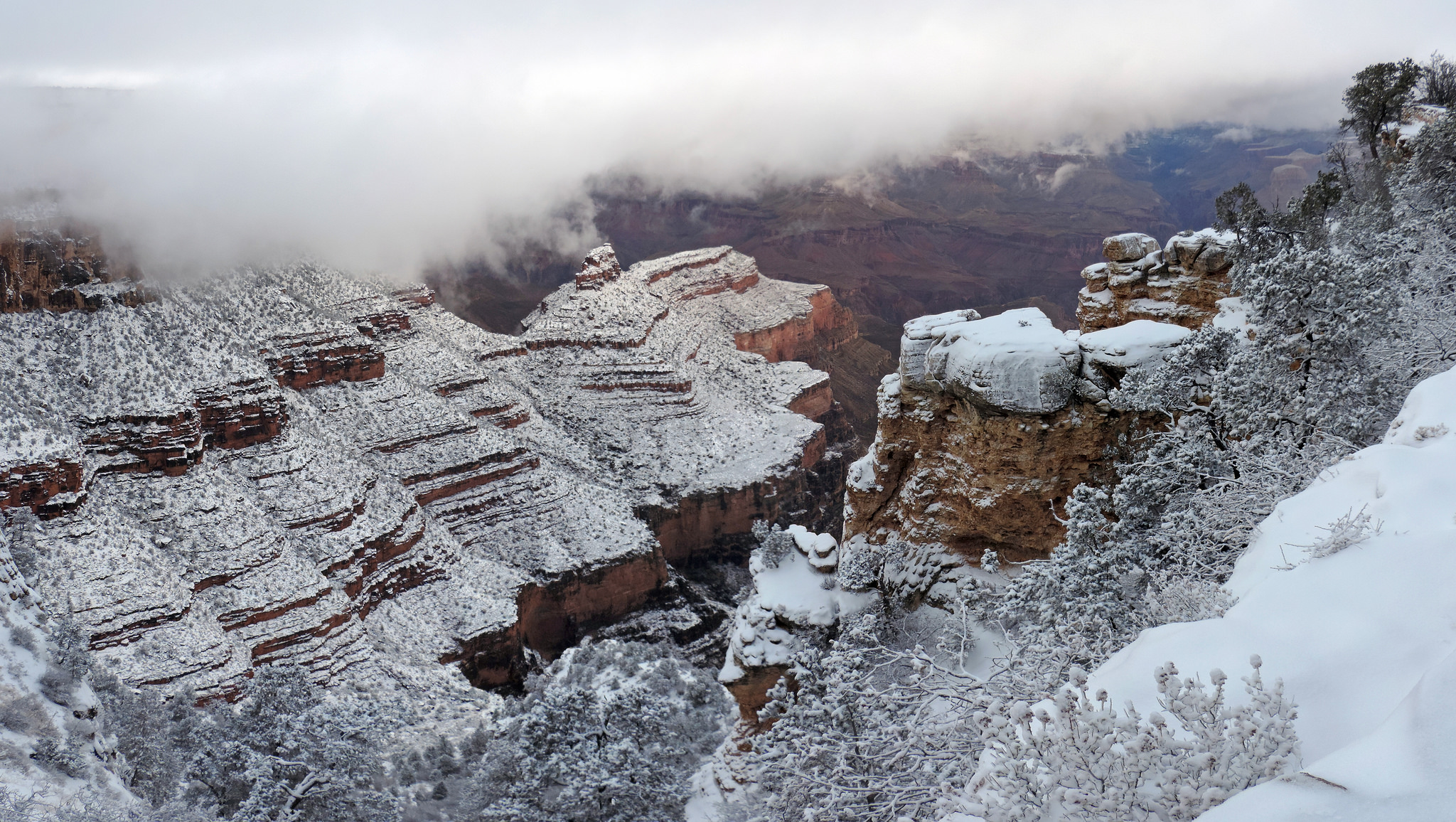
Crowds are not a problem during winter at the Grand Canyon. Photo/National Park Service

Crowds are not a problem during winter at the Grand Canyon. Photo/National Park Service

The other Grand Canyon experience

Arizona is known as a sweltering hot desert state. Many a movie scene and vacation photos have shown sunburns and shorts at the South Rim of one of the nation’s most popular national parks. It was established in 1919.

However, it’s a different world on the North Rim – and an even more unique one in winter. Amid the pinion pines and uncrowded terrain marks the Grand Canyon’s North Rim in the winter months. Like Yellowstone, visitors are brought in via snowcat to Kaibab Lodge, an old, rustic lodge complete with a large wood fireplace and the allure of musicians sitting around it. The cabins tucked in the woodsy setting of the Kaibab National Forest were even more rustic – like something out of a youth summer camp.

But what seemed like the minimalist approach in the sleeping quarters went rather upscale in the lodge’s “living room,” kitchen and trail provisions. The chef, who I heard honed his cooking skills in prison, but I didn’t care, whipped up quite a spread for the holidays that might almost rival one at the Ahwahnee Hotel (and I will still call it that).

I chose New Year’s to partake in this experience in 1995. Here I have the fondest memory of cross country skiing all day along the sweeping landscape of the North Kaibab Trail. No matter what side of the Canyon a visitor stands on, it’s difficult to get tired of the view – whether it’s from Cape Royal or Bright Angel Point. The snowcat took a group of us out to the rim where we skied the perimeter. From there, I opted to ski back and I’m glad for doing so. I got in a good 15 miles that day, burning off the calories from the best toasted peanut butter and honey sandwich I’ve ever had.

My timing on the long ski day was a bit tight. I crested the last ridge back to the lodge as I contemplated pulling out my head lamp when much to my delight my eyes rewarded me immensely. There the lodge stood in the distance, lit up with Christmas lights like part of a Thomas Kincaid painting. It was heart and body warming to see.

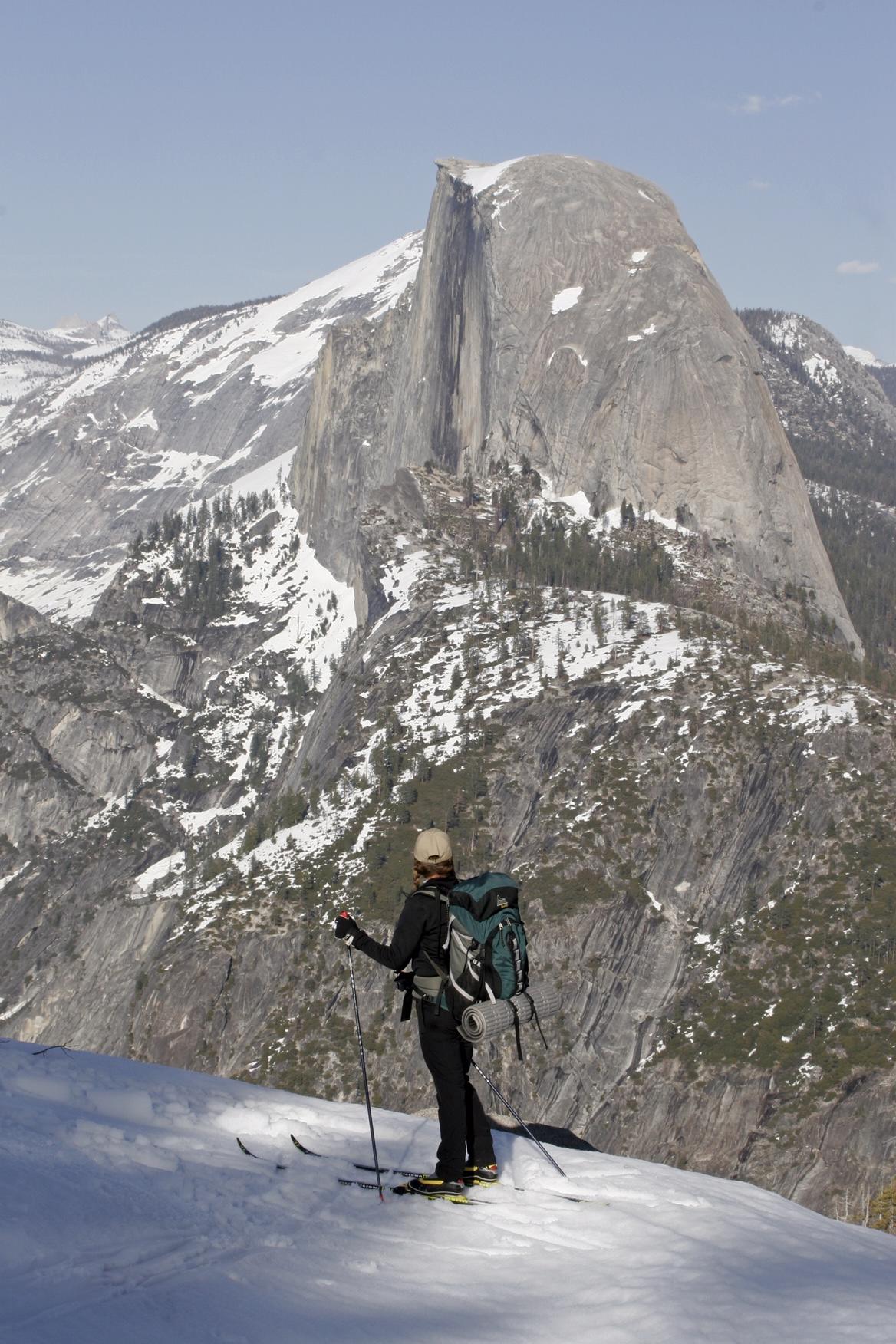
Views of Half Dome and other iconic Yosemite landmarks are even more delightful in the snow. Photo/National Park Service

Views of Half Dome and other iconic Yosemite landmarks are even more delightful in the snow. Photo/National Park Service

The Trans-Sierra trip of a lifetime

To backpack and snowcamp Yosemite is to follow in the footsteps of such a notable pioneer as John Muir, but with a few more provisions than a loaf of bread and cup for water. Muir, the iconic Sierra Nevada ecologist before there was such a thing, never grew weary of the granite-dominated, glacier formed national park established in 1890.

On this Sierra Club guided trip set in mid-April 1996 over my birthday, 12 days before Earth Day and Muir’s birthday I knew why Muir had such feelings. I threw a 40-pound pack on my back filled with my life for four days and set out on cross country skis from Lee Vining on the east slope of Yosemite while following Tioga Pass Road most of the way.

The first night was a treat. As an introduction to the wilderness, we stayed in the comfort of cabin quarters at Tioga Lodge. The staff even baked a cake for me. Given the preservative-laced stir-up meals on the agenda for the next two nights, I devoured that cake and the entree.

Snowcamping can be a test in patience and logistics.

It takes good prior planning and a Plan B for the unexpected. When your skis decide to stick to the snow because the terrain and temperature changes, it’s good to have wax. When you need to climb on crusty slopes, you’d better untangle your skins (a course layer applied to the bottoms of backcountry skis for gripping). When your metal tent anchors freeze deep in the snow overnight, you’d better learn to use long string as a simple trick. And the list goes on and on.

What tries you, though, rewards you with some of the most stunning views of this magnificent spectacle of a national park.

I had a precursor to magnificent views in skiing out and camping at Glacier Point in winter from Badger Pass on another trip and that was enough for me to feel the allure. Try a 180-degree view of Yosemite Valley with Half Dome dead ahead as the sun dipped below the horizon and cast ever-changing shadows on the famous rock monolith.

This Trans Sierra trip provided the type of untouched scenic beauty so pure it can take your breath away — coupled with midday sunny spring skiing conditions where sunscreen rules.

Rewards abound with the appreciation of the simple pleasures. Take the beautiful virgin snow collar that rims a river and its rocks. Take the unbelievable, rarely-seen back side of Half Dome as you descend from the northeast into Yosemite Valley. Take the classic looks on visitors’ faces when you walk with full ski gear into the Village without a snow patch to be found. Take the never-take-it-for-granted reward of getting the largest cheeseburger on the menu with French fries and a milkshake at the café because you probably lost 20 pounds reducing your food intake and burning it all off on that day. Take the end of the white-knuckled shuttle plane trip back to Lee Vining in which your seat involves a backpack and you scoff at the pilot handing you a seatbelt.

Then, take the thought of having a real bed for the first time in four days.

Now that my friend is living – living the Sierra Nevada in a winter dream.