Thousands of cyclists to ride around Tahoe

On June 4, more than 3,000 bicycling enthusiasts from all over the country will participate in the 26th annual America’s Most Beautiful Bike Ride around Lake Tahoe.

This fun ride, is not a race. It is a fully supported bike tour that promotes the Lake Tahoe Bikeway project, the master plan to construct and inter-connect all the bike lanes around Lake Tahoe, and assist the Lake Tahoe Bicycle Coalition with it’s annual Bike Safe Lake Tahoe, bicycle safety campaign. 

The ride is also the culmination of the Leukemia & Lymphoma Society’s spring Team in Training (TNT) Cycle 100 national fund raising program where 750-plus participants from 35 chapters and branches are participating and expect to raise more than $3 million.

In the past 20 years, TNT has brought 24,360 participants to Lake Tahoe, bringing their total funds raised to $94 million.

Bicyclists have two tour options based on their ability level with all rides starting and finishing from the Hard Rock. The 72-mile route circumnavigates the highways around Lake Tahoe in a clockwise direction and offers more than 4,000 vertical feet of climbing. The 100-mile option has an additional out and back on Highway 89 from Tahoe City to Truckee.

All ride options begin between 6-7:30am.

 The ride has a limited number of spots for late same day registration. For more info, go online. http://www.bikethewest.com/


Sierra wildflowers will bloom through August

By Debbie Arrington, Sacramento Bee

In the Sierra and other California mountain ranges, the big bloom is coming. But unlike the flourish of flowers that opened in March and April at lower elevations, mountain “spring” arrives in summer.

So far, 2017 has been a spectacular wildflower year. As if celebrating the end of California’s epic drought, vast expanses of wildflowers covered swaths of the Central Valley and southland deserts this spring. At higher elevations, more wildflowers are expected to put on their own prolonged show well into August.

First, the snow has to melt.

Read the whole story


Trails day all about volunteers putting in work

National Trails Day, always on the first Saturday in June, allows organizations and agencies around the country to foster stewardship of trails and introduce people to volunteer trail work opportunities.

Tahoe Area Mountain Biking Association, Tahoe Rim Trail Association and Biggest Little Trail Stewardship are joining together to host a large volunteer trail day on the Thomas Creek Trail in the Galena area of Reno. The work is performed in cooperation with the U.S. Forest Service and Washoe County Regional Parks and Open Space by volunteer crew leaders trained in trail maintenance techniques. 

Volunteers will be performing tasks ranging from rerouting trail around damaged sections, maintaining trail drainage, and conducting annual maintenance on the bridges over Thomas Creek. Wear long-sleeves, long pants, and sturdy shoes and bring drinking water, work gloves, sunglasses and sunscreen. All tools are provided. Hard hats are provided, or a bike helmet may also be worn if preferred.

Preregistration is required to plan crew leaders, tools, food and drinks. Do so online.

The workday is June 3, 8:30am-12:30pm. Meet at the Thomas Creek trailhead located at the very end of Timberline Drive.


Why are coyotes so polarizing?

By Lawrence Lenhart, High Country News

First things first: Coyote. When you read the word, how many syllables do you hear? Your answer, according to Dan Flores, author of “Coyote America,” may be “immediately diagnostic of a whole range of belief systems and values.”

The ki-YOH-tee versus ki-yote divide is one of the best indicators of a person’s coyote politics, a nearly hard-and-fast way that we subconsciously identify ourselves: as defenders of the species, in the case of the former, or as a manager, shooter and/or trapper, in the latter.

In “Coyote America,” Flores occasionally assumes the mantle of coyote’s head of public relations, demonstrating how the species, once “dead last in public appeal — behind rattlesnakes, skunks, vultures, rats, and cockroaches,” overcame its stigma as “varmint” to become a darling among the very people who most infrequently encounter it — modern-day urbanites. More often, though, Flores is content to serve as a guide to the species, relaying the coyote’s complicated natural, cultural, political and mythological histories. It is why Flores describes his book as, “in most respects, a coyote biography.”

Read the whole story


Massive tree removal project to resume on South Shore

The U.S. Forest Service Lake Tahoe Basin Management Unit will resume work this week on the South Shore Hazardous Fuels Reduction and Healthy Forest Restoration project. 

Mechanical whole tree removal will take place near Fallen Leaf Campground along Fallen Leaf Road off Highway 89. This involves cutting the entire tree and moving it to the landing area to remove the limbs and cut it into sections.  The Forest Service recommends the public avoid this area due to the hazards posed by heavy equipment and falling trees. Hazards may be present even when operations have ceased for the day.

The South Shore Fuels Reduction project authorizes thinning of trees and brush on National Forest lands on the south end of the Lake Tahoe Basin to reduce the risk of severe wildfire and create healthier forests.   

Work in this area will stop about July 1. Any unfinished work will resume after Labor Day. 

In addition to temporary closures of recreational areas, other short-term impacts from fuels reduction projects include changes to the appearance of basin forests. 


Tahoe-area climber summits Everest without oxygen

Adrian Ballinger of Olympic Valley stands atop Mount Everest on May 27. Photo/Adrian Ballinger and Emily Harring

By Benjamin Spillman, Reno Gazette-Journal

Tahoe-area climber Adrian Ballinger on Saturday joined elite club of people who climbed to the top of Mount Everest without using supplemental oxygen.

It was Ballinger’s seventh time to the top of the mountain and his first without using supplemental oxygen. He attempted a non-oxygen climb last year but suffered hypothermia and stopped just 300 meters from the peak. 

Only 200 people have summited Everest without oxygen according to Eddie Bauer, a Ballinger sponsor.

Read the whole story


Nev. sports books expand NBA betting options

By Todd Dewey, Las Vegas Review-Journal

Add the NBA Finals MVP Award and the NBA draft to the growing list of off-field events bettors can wager on at Nevada sports books.

The Nevada Gaming Control Board granted approval Wednesday to offer prop bets on the NBA draft, which will be June 22, and on the winner of the NBA Finals MVP.

William Hill, which operates 109 sports books in Nevada, petitioned the board for approval to take wagers on both events and quickly became the first book to offer betting on the finals MVP.

Read the whole story


Star Guide: Saturn is worth a visit

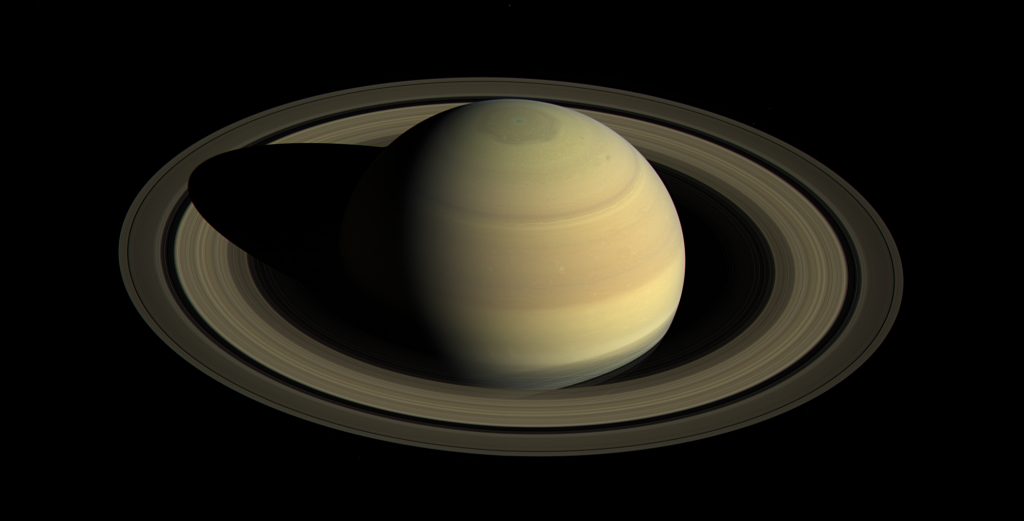
Saturn is visible at night with a telescope. Photo/NASA Cassini

By Tony Berendsen

He has been in our night sky long before we were walking the surface of the Earth. Moving among the fixed stars in a repetitive path every 29 years he was noticed by us and given the name Saturn by our ancestors. Saturn, the father of Jupiter, and a variety of mythological stories, are all we knew about him until the development of a new technology allowing a closer look; the telescope.

Viewing the planet Saturn through a telescope is an amazing experience. To the unaided eye it’s a fairly bright yellowish star, but through the eyepiece its unique ring system heightens our imagination and wonder about the solar system.

You can go to Saturn if you like. Of course we don’t have human space flight out to Saturn yet, but with a little imagination, some awesome images from robotic space explorers, and maybe a peek through the eyepiece of a telescope this summer you can have an “almost like being there” experience. And you won’t have to ride in the openness of space for several years, held up inside a rocket, nor worry about getting back to Earth safely.

Let’s start with my favorite way to go to Saturn, through the eyepiece of a telescope. The telescope doesn’t have to be expensive, but it should have a good quality optical system and a sturdy mount. The scope need not be computer controlled or have motors for tracking, although I do prefer computer controlled scopes. There are many telescope manufacturers to choose from, but I prefer Celestron, their product line is amazing, offering something for everyone.

To go to Saturn with a telescope you first need to know where Saturn is in the night sky. This June Saturn is rising in the East in between the constellations of Scorpio and Sagittarius just after the sun sets. As the stars start to become visible, Saturn will be the first to appear above the eastern horizon. If you’re not sure which star is Saturn, load up a star gazing app on your phone and it will show you.

Next, choose an eyepiece for your telescope that gives a low magnification between 30 to 60 power. The low power will give a larger field of view and a sharper image of Saturn. If you’re not sure about which eyepiece to use Sky and Telescope magazine is a great resource. Depending on the aperture (light gathering power) of your telescope, you will see a beautiful image of Saturn, and at least one moon Titan, or up to seven or more.

Looking through a telescope at high magnifications (to get a closer look) can be very disappointing. Our atmosphere is very turbulent at times, causing a blurred image. There are optical limits to sharp images at high magnification, too. So, if you want a really close look at Saturn have a robot share some images with you, let Cassini take you to Saturn.

The Cassini spacecraft was launched from Earth in 1997 and began orbiting Saturn in 2004. Since then this robust robotic space explorer has sent thousands of images of Saturn and its rings and moons back to the Earth. NASA has posted them for all of us to see on the Nasa Cassini site. Spend some time looking at these images, read the descriptions, and you will be amazed with the absolute beauty and wonder of Saturn.

Don’t stop at those wonderful images, go back to the eyepiece and look at Saturn again. Let the photons bouncing off that distant planet flow into your eyes and ignite your imagination, remember the Cassini images: you are at Saturn.

Tony Berendsen runs Tahoe Star Tours. He may be reached at 775.232.0844 or tony@tahoestartours.com.


Tahoe embracing Wildfire Awareness Month

Several activities are planned in June for Wildfire Awareness Month in the Lake Tahoe Basin.

Community events include:

  • North Tahoe Fire Protection District’s 2nd annual Fire Safe Bar-B-Que on June 10 from 11am-3pm at 222 Fairway Drive in Tahoe City. For more information, contact Beth Kenna at 530.583.6911, ext. 714.
  • South Lake Tahoe Fire Rescue’s 4th Annual Wildfire Safety Expo on June 17 from noon-3pm at the TJ Maxx parking lot. For more information, contact Al Martinez at 530.542.6161.
  • Lake Valley Fire Protection District is conducting a Meyers Community Gathering on June 25 from 11am-3pm at Tahoe Paradise Park. The event will mark the 10-year anniversary of the Angora Fire by focusing on the community’s healing and resiliency. For more information about this event, contact Perry Quinn at 530.559.4813. As part of the day’s activities, the Tahoe Network of Fire Adapted Communities has organized a workshop including an Angora Fire time series photo display and formal presentation by UNR Professor Peter Goin, as well as a series of 15-minute talks about a variety of relevant topics such as fire adapted communities, defensible space landscaping, and evacuation planning. 

Here are tips to prepare for a wildfire:

  • Create defensible space by removing dead vegetation, leaves and pine needles that are located next to a home, on the roof or in rain gutters.
  • Trim low tree branches to a height of at least 10 feet.
  • Move firewood stacks to a location at least 30 feet from the home.
  • Develop a personal and family evacuation plan.
  • Put out campfires before leaving the campsite, and only have campfires in designated fire rings where they are allowed.
  • Avoid the use of charcoal when barbecuing.
  • Use an approved spark arrestor when off-roading.
  • Don’t light fireworks; they are illegal in the basin.


Study: Heat a major contributor to rock falls

By Lisa M. Krieger, Bay Area News Group

When rocks get hot, they do what people do: shed a few layers.

And the hottest hours of the day — during the hottest months of the year — are prime time for unexplained rockfalls and cracking, according to a study of the granite domes and cliffs in the Sierra Nevada, which finds that hikers, tourists and wildlife are at less risk of being flattened during cooler times.

“Cliffs move in and out, and detach,” said Menlo Park-based U.S. Geological Survey scientist Brian Collins, who uses instrumentation to measure restless rocks at Twain Harte reservoir and Yosemite National Park.

“People look at landscape as static, that it will be there forever,” said Collins whose study, in essence, is explaining what turns mountains into molehills. “But it’s changing all the time.”

Read the whole story