Casinos embrace esports as they work to understand it

By Wayne Parry, AP

Casinos are slowly embracing competitive video game tournaments as a way to help their bottom lines, but the money is coming from renting hotel rooms to the young players and selling them food and drinks, not from turning them into gamblers.

Like most other ways gambling halls have tried to attract millennials and their disposable income, it hasn’t been easy. Atlantic City was first city in the nation to adopt skill-based slot machines to woo millennials but bailed on them after a few months when the response was underwhelming.

Competitive video game tournaments, known as esports, are a growing industry around the world. The fast-paced action, vivid graphics and often violent on-screen action is catnip to millennials, the audience casinos are targeting as their core slot players grow old and die.

Read the whole story


Sage grouse conservation changes praised, provoke alarm

By Mead Gruver and Matthew Brown, AP

The Trump administration has opened the door to industry-friendly changes to a sweeping plan imposed by his predecessor to protect a ground-dwelling bird across vast areas of the West.

Wildlife advocates warn that the proposed changes would undercut a hard-won struggle to protect the greater sage grouse.

Representatives of the ranching and energy industries cheered the policy shift as needed to give states flexibility.

States affected by the conservation plan are California, Colorado, Idaho, Montana, Nevada, North Dakota, Oregon, South Dakota, Utah, Washington and Wyoming.

Read the whole story


Golf event benefits Truckee Humane Society

The Humane Society of Truckee Tahoe will host its second annual Balls in the Ruff Golf Tournament on Sept. 8.

The scramble-style tournament begins at noon at the Tahoe Donner Golf Course. It will include pet themed contests throughout the event.

Entry is $150, including 18 holes of golf with cart, box lunch, a golfer goody bag and an awards dinner.

Go online to register. It is also possible to purchase additional dinner tickets for those not playing.


Pro athletes won’t pay income tax in Nevada

By Adam Candee, Las Vegas Sun

The arrival of the Vegas Golden Knights this year and the Raiders in three years will excite local sports fans, but the players might feel equally giddy about the prospect of calling Nevada home.

As one of seven states that does not tax personal income, Nevada offers an attractive bonus for the hockey and football players.

The Raiders in particular will see a major change in tax liability — California imposes a 13.3 percent income tax on earnings over $1 million, and 24 players on the team’s roster will make at least that much this season. Even rookies making the NFL minimum of $465,000 face a state tax rate of at least 10.3 percent.

Read the whole story


Thunderstorms in forecast for Tahoe this week

South Lake Tahoe received more than 3 inches of rain Sunday afternoon when a thunderstorm rolled through town.

While streets were covered in debris, no serious damage was reported.

Pea-size hail pummeled some areas.

No fires were started from the lightning. However, lightning struck a tree on Oglala Street in Meyers.

The National Weather Service in Reno is calling for isolated thunderstorms through Wednesday for the Lake Tahoe area.

— Lake Tahoe News staff report


Defunct ski areas: How to heal their wounds?

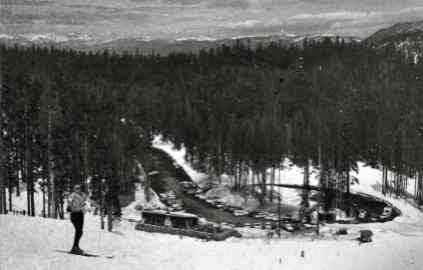
There used to be a ski resort at Echo Summit. Photo/Lake Tahoe Historical Society

By Lisa M. Krieger, Bay Area News Group

The rope tow is long gone. The parking lot is empty. Instead of the bustling chatter of a happy crowd of skiers, there’s just silence.

But the landscape of the abandoned Powder Bowl ski area still bears witness to its past, more than two decades after its closing.

Throughout the Sierra there are dozens of abandoned resorts that hark back to a different era, when snow was plentiful and skiing a favorite pastime. With increased competition from bigger resorts and a decline in skiers, many have closed and the scars they have left behind may have dramatic impact on our watershed.

Read the whole story


Nature’s bouquet at Lake Winnemucca

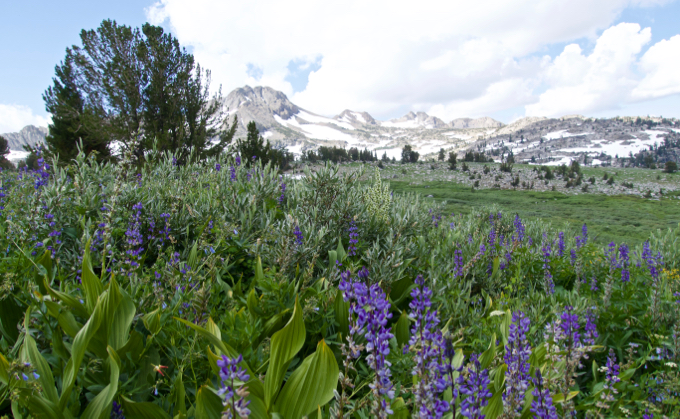
Purple is the dominant color on the way to Round Top. Photo/Kathryn Reed

By Kathryn Reed

A kaleidoscope of colors dances across the landscape in the gentle breeze.

The record-setting snowfall from winter 2016-17 is still being felt – or at last seen. The flowers are late, but they were worth waiting for. If you think you’ve seen vibrant, healthy lupine, you haven’t seen anything until you go to Winnemucca Lake.

Flowers of all colors are spread across the trail. Photo/Kathryn Reed

An explosion of wildflowers is erupting in the High Sierra – about one month later than normal. And they appear to be at their peak.

The splash of deep purple, mixed with the lavender of the wild iris, interspersed with the vibrant red Indian paintbrush, the dainty yellow daisy-like flowers, and the white Queen Anne’s lace are like a bouquet ready to be picked. Instead, the hikers are capturing memories with photographs.

Some are close to the ground; others a few feet high. Some are in isolated patches; others appear to be a field of flowers.
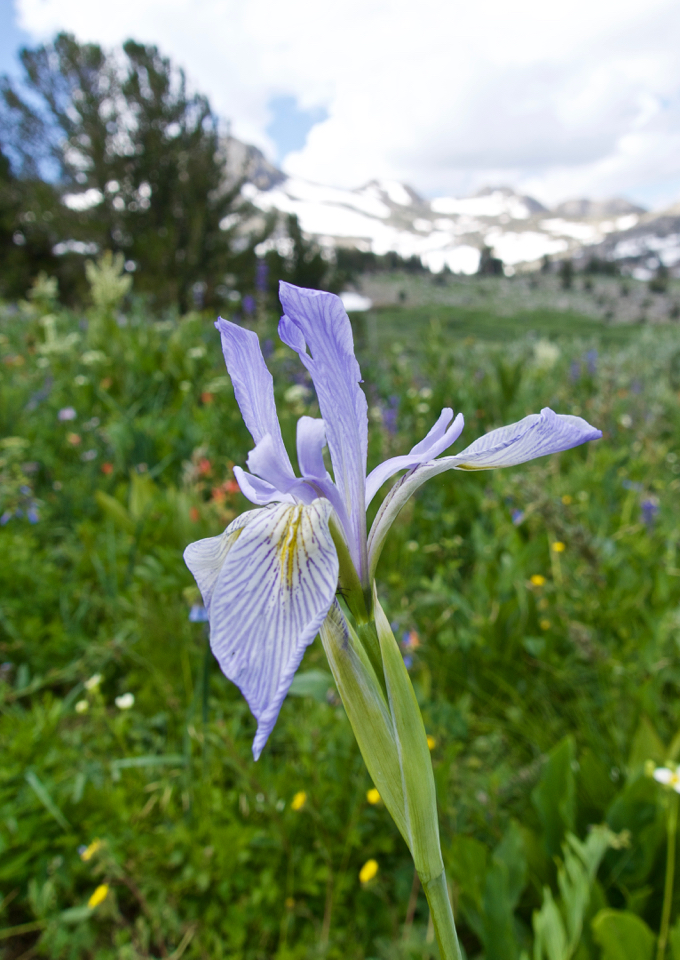
Wild iris

While locals know better than to do this hike on a weekend day, there appeared to be more Tahoe-ites on the trail Aug. 6 than out-of-towners. Yes, it was a bit of a freeway, but the joy this wondrous outing brought all of us made it more of a celebration of sorts. We were all happy to be sharing in the party Mother Nature was throwing.
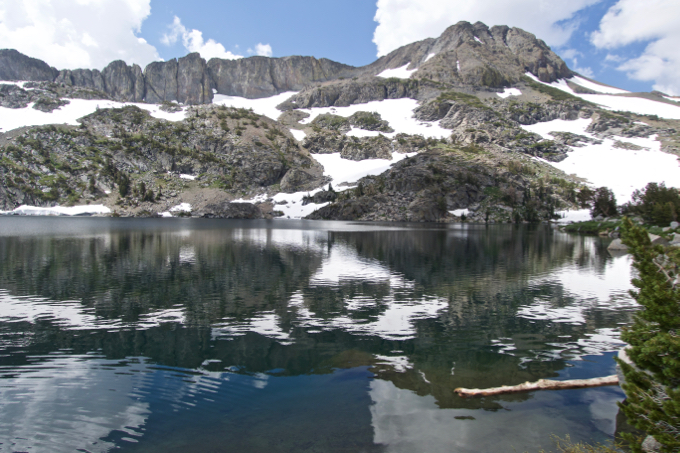
Reflections of Round Top at Winnemucca Lake. Photo/Kathryn Reed

At about 5 miles round trip, this is a relatively easy hike. The only thing that might set someone back is that it starts at 8,500 feet. Elevation gain is about 500 feet.

A couple patches of snow still cross the trail. The only remarkable thing about it is how late in the season this is. Water on the trail is not an issue.
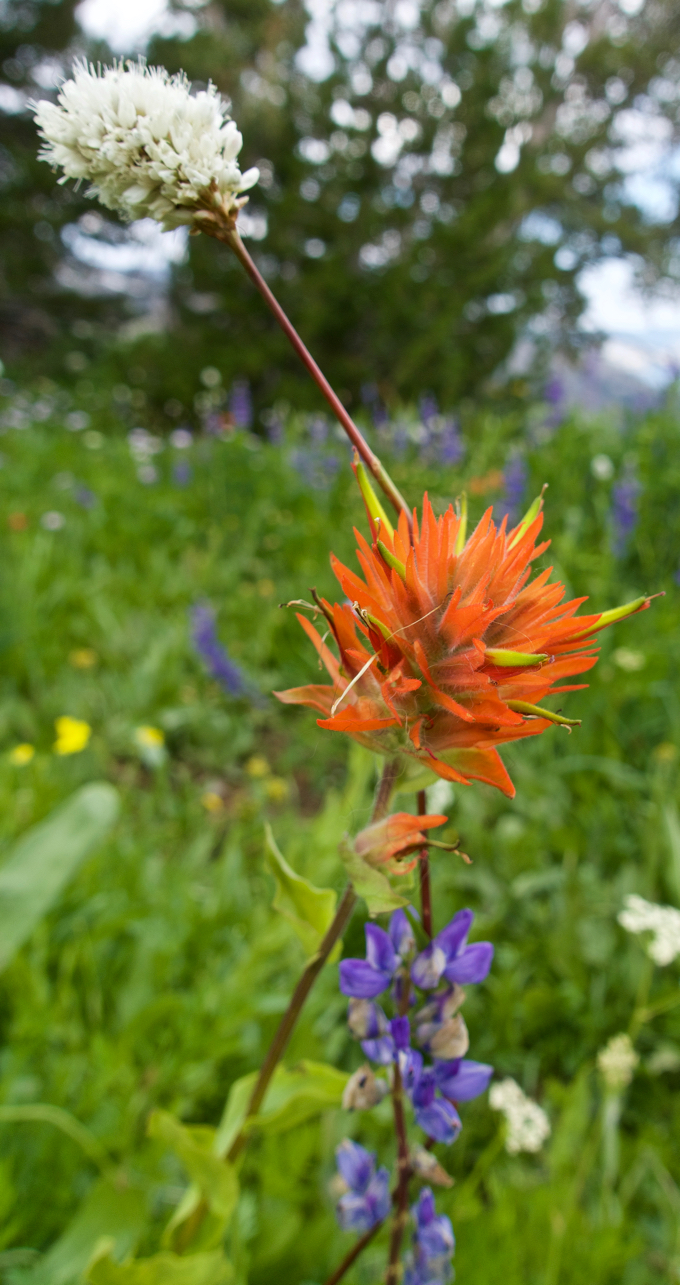
Beauty is everywhere on this hike out of Carson Pass. Photo/Kathryn Reed

Sitting at Winnemucca Lake looking up at Round Top (10,381 feet) plenty of snow dots the rocky landscape.

Thundering water can be heard rushing on the far side of the lake. Waterfalls not normally seen this time of year are tumbling down the rock into the lake. Some appear to be roaring beneath the snow.
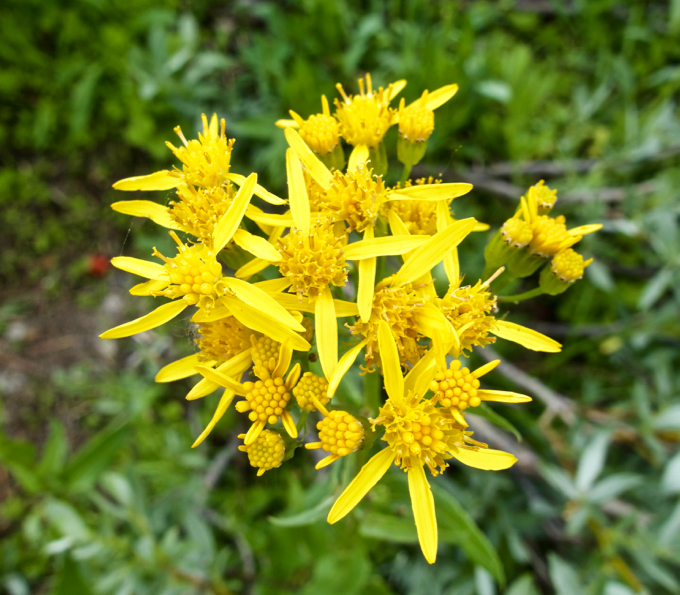
Wildflowers are at their peak. Photo/Kathryn Reed

An ice shelf looks like something out of a winter landscape that doesn’t belong in the Carson Pass – especially in August.

This raw, ruggedness is a reminder of the many personalities of Ma Nature. This flashback to winter makes me wonder if the next one is closer than I want to admit.
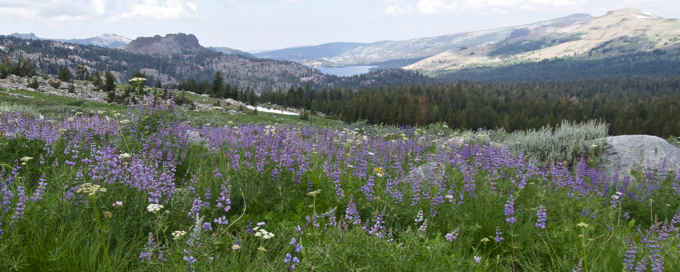
Lupine with Caples Lake in the distance. Photo/Kathryn Reed

—–

Getting there:

From South Lake Tahoe, take Highway 50 west. Just past the bug station in Meyers, go left onto Highway 89. At the T-intersection, go right onto Highway 88. At the top of Carson Pass is parking to the left. Cost is $5.



Airports adding gyms as way to kill time

By Justin Bachman, Bloomberg

America’s airports are where long lines, crowds, and the TSA combine to make life miserable. But once the metal detectors, explosives-sniffers, and pat-downs are behind you, suddenly all is transformed into boutiques, bars, and restaurants.

Why not gyms, too?

The airport terminal has long been lucrative commercial real estate, thanks to a captive audience. For those who have hours to wait, there’s not much else to do except shop, drink, and eat. So two graduate business students at the University of Oregon started wondering whether an airport gym could thrive in such a setting. After researching the airport and fitness industries, Cynthia Sandall and Ty Manegold concluded that the only obstacle is mainly cost—not because air travelers consider it ridiculous. Thus, a business model was born.

Its name is Roam Fitness, which opened its first airport location in January at Baltimore Washington International, with a goal of adding two airports this year.

Read the whole story


Moth causing damage to forest near Marlette Lake

The non-native white satin moth is causing medium to heavy defoliation in the North Canyon and Marlette Lake areas at Lake Tahoe Nevada State Park.

Nevada Division of Forestry has recently mapped approximately 200 acres of defoliation in this area. Sightings in the Carson Valley, Spooner Summit, USA Parkway area and Paradise Valley have also been confirmed.

White satin moth

The white satin moth (Leucoma salicis) is a non-native defoliator of aspen, cottonwoods, willows and other deciduous species and is native to Europe and Asia.

It was first introduced into North America in British Columbia in 1920. It is currently distributed from BC to Northern California, and has been present in Nevada since the 1980s. Moths overwinter as larvae, and hibernate on trunks or branches in silken coverings, which are very hard to see because they are covered by bark, mosses and other debris. They emerge from May to early June and feed on the new young leaves. Feeding continues through July as the larvae grow until they are approximately 3.5-4.5 cm long caterpillars. This stage is the most often seen and the caterpillar is grayish brown with a dark head and back. Unique markings for identification include a row of large oblong white to pale-yellow patches down the back. The caterpillars spin cocoons and emerge as adult moths from late July through August. The white adult moth is 2-4 cm long and has no markings on the wings.

Damage done by the white satin moth larvae is directly related to their population size. Defoliated trees can produce new leaves the same season and will have a ragged appearance. However, continued, repeated defoliation can weaken trees, causing long term damage and tree death.

Current damage is medium to severe with damage ranging from 40 to 70 percent canopy loss. The most significant areas of defoliation known are on the east side of Marlette Lake at the campground and in aspen stands immediately south of the lake in north canyon. Other damage has not been estimated but will be monitored for the remainder of the summer season.

The Nevada Division of Forestry will also investigate the possibility of a control program in the future to minimize damage to the aspen forest.

NDF is requesting if the public has observed the white satin moth or the damage caused by this insect to call Gene Phillips at 775.849.2500, ext 241.


Tree project to affect South Shore beach, bike trail

Pope Beach and the Camp Richardson bike trail will be impacted by a tree thinning project.

The U.S. Forest Service will be thinning of trees to reduce excess vegetation that can feed wildfires, provide defensible space to neighboring communities and improve forest health.  

Work is expected to continue through mid-October.

It is expected that the Forest Service will temporarily close the bike path. The temporary closure is anticipated to last for approximately two weeks. Signs will be posted.

Hazards may be present even when operations have ceased for the day.    

In addition to temporary disruption to recreational areas, other short-term impacts from forest thinning projects include changes to the appearance of forests. Treated areas look disturbed at first, but recover visually within a few years.

This forest thinning is part of the South Shore Hazardous Fuels Reduction and Healthy Forest Restoration Project, which aims to treat approximately 10,000 acres on the South Shore of Lake Tahoe over the next few years.