Rahlves not letting dislocated hip stop him

vanolyBy Matthew Piper, USSA

NORDEN — Casey Puckett (Aspen, CO) and Daron Rahlves (Sugar Bowl, CA) have had to fast track their recoveries from recent injuries, but their performances training in Rahlves’ hometown have bolstered their coach’s opinion that the pair should contend for medals.

“Daron and Casey have surpassed my expectations in many ways,” said U.S. Olympic Ski Cross Head Coach Tyler Shepherd. “Both have been determined and motivated to get the job done in Vancouver.”

The two-man Team is wrapping up an on-snow camp at Sugar Bowl, where the resort built a skiercross course just to give the Americans a chance for some final training before heading to Canada.

Shepherd said the veteran Olympians — the two have been to a combined 11 Games with the U.S. Alpine Ski Team — weren’t pulling any punches despite making the trip to Sugar Bowl for “an easy tune up.”

“These guys put that ‘easy’ to bed, and showed me they are in very good form,” Shepherd said. “Considering that both are coming back from injuries, their recoveries have been outstanding. I’m not sure other athletes would be capable of such speedy recoveries, but these guys are extremely motivated.

“I stand by what I’ve been saying, and will say it again that both Daron and Casey will be podium threats.”

Rahlves dislocated his hip by wrecking in the opening race of the X Games in Aspen, Colo., a little more than two weeks ago, but already he is back on the racecourse and feeling strong. He took fourth in his last World Cup event in Lake Placid on Jan. 24, following a second place in St. Johann, Austria.

“The recovery from my hip dislocation has been amazing,” said Rahlves, who has been doing four to six hours of physical every day, topped off with acupuncture and pool sessions. “The first week on crutches progressed to on snow by Week 2 with minor discomfort.

“Having an Olympic competition just three weeks out has been a huge motivator,” he added. “Staying positive and getting the most out of every day has worked well. On snow, I started off slow and ramped up my intensity on each run. My goal is to ski smooth, relaxed and focused.”

Puckett was hampered by a shoulder injury, but said he “turned a corner” in camp and will be ready when ski cross kicks off as an official Olympics event on Sunday.

Shepherd was grateful his athletes could have access to such a course so late before the Games.

“Sugar Bowl has gone above and beyond, and I can’t thank them enough for the tremendous training venue they have provided,” he said. “A full SX course that would rival any World Cup course, all to ourselves.”

Puckett actually arrived in Vancouver last week, marching in the opening ceremonies, then heading back to Sugar Bowl. He and Rahlves will arrive for a Thursday press conference, with training beginning Friday.


Lake Tahoe ski report, Feb. 16

curtisSun, sun and more sun is today’s forecast. Here is the ski report from Curtis Fong, the Guy from Tahoe.


Squaw’s tram face to open for competition

The world’s best skiers and snowboarders are battling it out again for the Freeride World Tour Championship title at four of the world’s most prestigious ski resorts.

It all starts on the Russian slopes of Sochi, followed closely by the next stage in Chamonix-Mont-Blanc, France. The Tour then journeys to Squaw Valley for the only North American stop to “ride” the mythical

Squaw's tram face. Photo/Provided

Squaw's tram face. Photo/Provided

Tram Face that has never before successfully opened for competition, as weather deterred the event (and first legal descent) from taking place in 2009.

The stage is set for a second attempt to make history on the permanently closed terrain during Nissan Tram Face – Squaw Valley on Feb. 27-March 5.

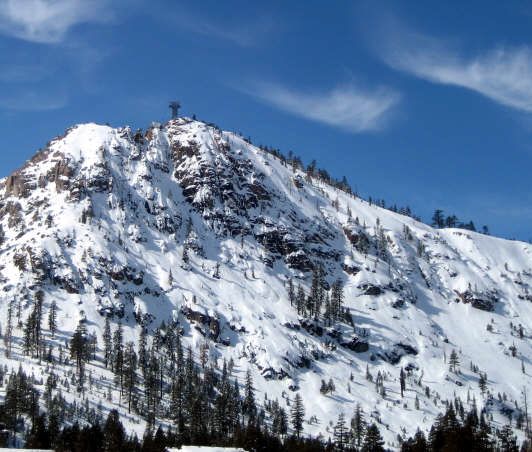
In Squaw Valley’s 60 years of operation, the steep rock face below Tower 1 of the Cable Car (known as the “Tram Face”) has remained strictly off-limits. Its steep and seemingly unskiable pitch and permanent closure have made it a coveted line among the freeride set that calls the mountain home.

For more information, go to www.freerideworldtour.com.


Holland just misses medal in snowboarder cross

vanolyBy USA Today

Seth Wescott of Sugarloaf, Maine, won the men’s snowboard cross final today to give the USA its second gold medal of the Vancouver Games. Wescott was the defending champion in the event, having won gold in 2006 in Torino.

Nate Holland of Squaw Valley was the other American to advance to the four-man final. He faltered early and finished fourth.

Canada’s Mike Robertson took silver, France’s Tony Ramoin won the bronze.

Read the whole story


Miller 3rd in downhill; Squaw’s Sullivan falls

vanolyBy USOC

Bode Miller (Franconia, N.H.) won the bronze medal in men’s downhill skiing at Whistler Creekside Monday afternoon. He got down the hill in a time of 1:54.40, a mere 0.09 behind gold medalist Didier Defago of Switzerland, who posted a 1:54.31. Miller was just 0.02 seconds away from the silver medal, which went to Aksel Lund Svindal of Norway.

Miller’s medal is the first for the US in the event since Tommy Moe’s gold medal at the 1994 Lillehammer Olympic Winter Games and only the third overall. Bill Johnson’s gold at the 1984 Sarajevo Olympic Winter Games was the first time an American medaled in the event.

The time margin between gold and bronze is the smallest in the event’s history, surpassing the 0.11-second interval between Austrian Patrick Ortlieb’s gold and countryman’s Gunther Mader bronze at the 1992 Albertville Olympic Winter Games.

Steven Nyman (Sundance, Utah) was 20th with a time of 1:55.71. Right behind him was teammate Andrew Weibrecht (Lake Placid, N.Y.), who was 21st with a 1:55.74. Marco Sullivan (Squaw Valley, Calif.) took a tumble in the bottom portion of the course but was able to complete his run, finishing 60th with a time of 2:07.76.


Lake Tahoe ski report, Feb. 15

curtisThe men’s downhill will finally be raced today at the Olympics — so get some runs in before finding the nearest TV. Oh, and it’s Presidents’ Day. Here is the ski report from Curtis Fong, the Guy from Tahoe.


Whistler-Blackcomb defines big-mountain skiing

By Susan Wood

WHISTLER, British Columbia –The stiffest competition for Lake Tahoe athletes and others showing their stuff at the 2010 Winter Games may not be with each other. It may be sharing the spotlight with the mountain, or mountains.

As the largest ski area in North America, Whistler Blackcomb located in Canada’s Coastal Mountain Range is hosting the Olympics in a grand way — much like the beauty of its scenery and magnitude of its terrain. It’s steep, deep, vast, inviting, gorgeous and involves a level of concentration few ski mountains in the United States command.
wh-4

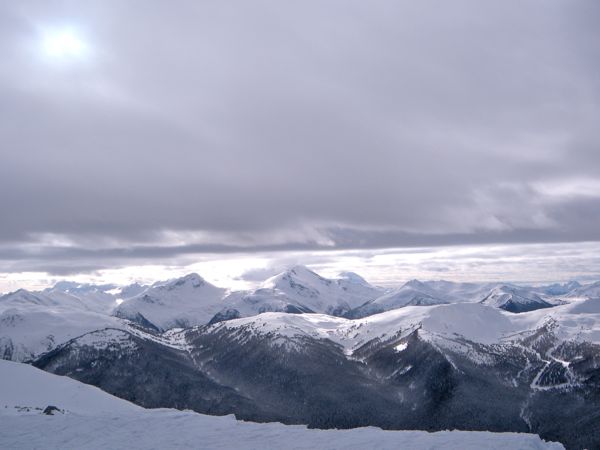
Views from Whistler-Blackcomb are stunning in all directions. Photos/Kathryn Reed

Nearly double Heavenly Mountain Resort’s 4,800 acres of terrain, and you have Whistler-Blackcomb mountains, which are linked by the $52 million Peak-2-Peak Gondola that can whisk 28 skiers and boarders — 4,100 per hour — from the high elevation of one to the other in 11 minutes.

The views, including those provided from the nearly 3-mile gondola that opened in December 2008, offer something out of the most dramatic scenery in Europe — Zermatt, for example. The Switzerland ski area boasts the world’s longest run, 8 miles into Italy. Whistler is a close second with a 7-mile connection of runs from Sidewinder to Upper and Lower Olympic runs. The mountain’s summit to base adds up to a 5,000-foot vertical drop from 7,494 feet to the 2,140-foot bottom.

Traversing to other trails is refreshing compared to some Tahoe resorts. The terrain heads where it’s supposed to — down. For skiers and boarders wanting to get down and dirty on the slopes, the angles — at times 45-plus degrees — along with the degree of difficulty, make it challenging.

Skiing Whistler is like being in the center of a magical vista of rugged, jagged peaks that seem to envelop the resort.

And the beauty of this Winter Games venue goes beyond the stunning scenery of white-capped mountains. Ninety percent of this massive ski resort will be open while competition is going on. The men’s and women’s downhill runs, along with the super G and giant slalom courses, lay near to one another or overlap above the Whistler Creekside area. (See Lake Tahoe News archives for a firsthand look of the downhill courses.) This leaves the Whistler Village base and all of Blackcomb Mountain to ski during the Olympics.

Even the Whistler Sliding Centre — which features the bobsled, luge and skeleton runs — was built in the lower elevation above the tubing park outside the ski area boundary. The Nordic events, including the ski jumping, are set for Callaghan Valley just south of Whistler.

And the freestyle and snowboarding events such as skiercross and halfpipe competitions will be staged at Cypress Mountain just north of Vancouver. Organizing committee officials were feverishly trucking in loads of snow placed over hay bales and wood to support the terrain parks for the event, as Cypress Mountain’s lack of snow and pounding rain became an issue in mid-January. (Lake Tahoe News recently witnessed the construction effort.)

But the British Columbia resort of Whistler, 90 miles north of Vancouver, is having a banner year of snow. Shortly before hosting the world’s premier sporting event, more than 32 feet had collected. That’s about the seasonal average in most years.

And although the ski resort was experiencing a bit of a pre-Olympic lull like many host cities do, the Martin Luther King holiday weekend brought out record crowds to enjoy the windfall of soft snow. Whistler logged three times its usual number of customers with more than 21,000 riders hitting the slopes. The holiday turned out to be busier than Christmas.

The snow in mass quantities has covered much of the trees and most every bowl and glacier. Blackcomb has two glaciers, a namesake and Horstman. There, mountain host tour guide Susan Sommer reminded her group they were standing on 200 feet of glacial ice situated between the Jersey Cream Express and Glacier Express chairlifts.

No need for “express” in the chairlift names. All the lifts are fast, faster than what many U.S. resorts tout as high-speed.

Lighted boards placed in convenient areas tell a visitor what’s open and closed. They also indicate the length of wait in lift lines.

Little things like having the lift lines taper into a single shoot by strategically placing barriers to force skiers to merge makes for a more pleasant experience than the pushing-shoving herd mentality in Tahoe, or dealing with less than efficient lifties who can’t seem to get people to fill a chairlift.

Friendliness is another component of Whistler that seems to be as big as the mountain. The employees, the locals, the tourists — everyone is friendly.

And the skiers — who dominate in number over snowboarders — are predominately at a high skill level. That’s not to say all are. But even the little tykes in ski school were taken in and out of the trees and through the multiple, massive terrain parks.

And if you’re lucky enough to catch a powder day, Whistler-Blackcomb can make every run a giddy experience.

It’s easy to fall in love with Whistler’s sweeping views and challenging terrain. Blue runs would be considered black throughout much of the United States. One that goes off the charts in expert terrain is off the 7th Heaven Express chairlift. A ridgetop peninsula stops at a sheer drop in both directions and is fondly referred to as Proposal Point. A little folklore says men were thought to have proposed marriage at the cliff. If the prospective mate said “no” to the suitor, she’s pushed off.

John from England, who was on the free tour, told Sommer he thought she called it “disposal point.”

“I don’t think I like the sound of that,” he joked.

From the Hughes Heaven and Crystal Traverse trails to the Ridge Runner and Cruiser runs, Blackcomb offers spectacular views and many options for terrain that extend to Whistler mountain’s four bowls and cute names for runs like Doom and Gloom and Grande Finale.

“You can come up here the rest of your life and never get tired of it,” Sommer said, glancing off to the distant mountains from Blackcomb. The tour guide, who has lived in the Whistler area for 34 years, pointed out the Black Tusk — a volcanic cone of molten ice.

It’s recommended a visitor make time on vacation to grasp all there is to offer at Whistler because even three days on a well-worth-it $93 adult lift ticket does not cover it — especially if electing to go in for lunch in the resort’s 17 restaurants. Both mountains have two large-scale mountain restaurant-retail complexes — the Rendezvous on Blackcomb and Roundhouse on Whistler. Others are smaller like the Crystal Hut at Blackcomb’s mid-mountain, which touts the waffle zone for its infamous breakfast meal.

The food choices are phenomenal, their prices are less than in the States and no smoking signs make it clear what the priority is. A variety of accents can be heard on the slopes and lodges.

Scott Wright, who originally hails from the Fresno area, brought his family of six to the slopes from New Zealand.

“We usually go to Colorado, but this is a better value,” he said, while exiting a chairlift. Wright was able to get a direct flight from Auckland to Vancouver. He also commented on the lodging and food being less expensive at Whistler than Aspen.

Tahoe roots exist

Whistler-Blackcomb ski area was inspired by a trip to the 1960 Squaw Valley Olympics by Franz Wilhelmsen, whose name graces the women’s downhill run. He formed Garibaldi Lift Limited with the intention of creating a ski area on what was called London Mountain in Whistler.

It was renamed Whistler Mountain in August 1965 in honor of the local alpine marmot who whistles when it communicates. Whistler opened for skiing in 1966, and its neighbor Blackcomb Mountain threw open its gates 14 years later.

Now the mountain has 38 lifts, including two T-bars and the latest Peak-2-Peak Gondola. The latter is the showcase lift for skiing and sightseeing.

Below the gondola, the Fitzsimmons Creek meanders through a deep valley where a renewable energy project plans to offset the total annual energy consumption of the resort — 33 gigawatts of power. Sustainable practices are a part of the plan here, with recycling programs that include using ceramic mugs for hot chocolate. With that, the resort was able to reduce its single-use cups by 833,100 cups in one year during the season beginning 2008.

Kathryn Reed contributed to this story.

ngg_shortcode_0_placeholder


USFS may keep gates to recreation areas open longer

Updated Feb. 15 7:35am with link to USFS site.

The U.S. Forest Service is seeking public comments on a proposal to modify road gate opening and closure dates to 20 recreation areas within the Lake Tahoe Basin Management Unit.

The open and close dates are displayed within the Motor Vehicle Use Map (MVUM) that the Forest Service uses to inform the public of roads that are available for public access primarily during the spring, summer and fall.

Proposed changes of the dates listed in the MVUM will allow the Forest Service more flexibility in opening gates earlier in the spring and closing them later in the fall, depending on weather and other environmental factors. Click here for details.

Areas affected by the proposed changes are primarily recreation areas such as beaches, campgrounds and some recreation residences and organization camps. Other areas include the Valhalla Historic Site, and the Taylor Creek Visitor Center and the Camp Richardson Corral.

The full list of proposed changes to the MVUM are available at the Forest Service Supervisors Office at 35 College Drive, South Lake Tahoe.

Provide comments to Garrett Villanueva at (530) 543.2762 or gvillanueva@fs.fed.us before March 3.


Lake Tahoe ski report, Feb. 14

curtisHappy Valentine’s Day! Go find some love on those slopes at Lake Tahoe. Here is the ski report from Curtis Fong, the Guy from Tahoe.


4-day telemark, freeride fest at Alpine

The Second Annual Telemark Ski and Freeride Festival at Alpine Meadows Ski Resort, presented by Tough Guy Productions, is Feb. 18-22.

This four-day event will showcase snow safety courses, parties and big mountain ski competitions.

Join in the action at the Keyhole Classic Feb. 19, when some of the best competitors will rip down Keyhole Slope (one of Alpine’s signature advanced descents) for a chance to qualify for the final. Skiers will be judged on line choice, control, fluidity, technique and aggressiveness. The top 10 finalists will go on to compete in the Big Mountain Final on Feb. 20, with only one chance to fight for the title of “Freeride Champion.”

An awards ceremony and party will follow, complete with a slide show, music and prizes. Awards will be given for the top telemark skiers, top junior skiers, and the “Big Sack award” will be given to the competitor who showed the most guts.

Aside from intensity and speed, safety will be a big theme at the festival. Guests will have the chance to attend a free snow safety course on Feb. 19, taught by Alpine Meadows Ski Patrol. Skiers and riders can put those mountain safety skills to the test in the Uphill/Downhill Avy Savvy Race on Feb. 21. Two transceivers will be buried in a simulated avalanche zone, and the first male and female to race down and recover a buried transceiver will win.

The Estelle Bowl Challenge is the final competition, on Feb. 21. This top-to-bottom big mountain race is open to snowboarders, alpine and telemark skiers. Three sets of wide-spread gates will be placed on the mountain, and competitors will be scored on style and time. The festival will finish with an awards ceremony to name the winners of the Uphill/Downhill race as well as the Estelle Bowl Challenge.

For additional event information or to register, click here.