Heavenly cements Hollay’s legacy at resort
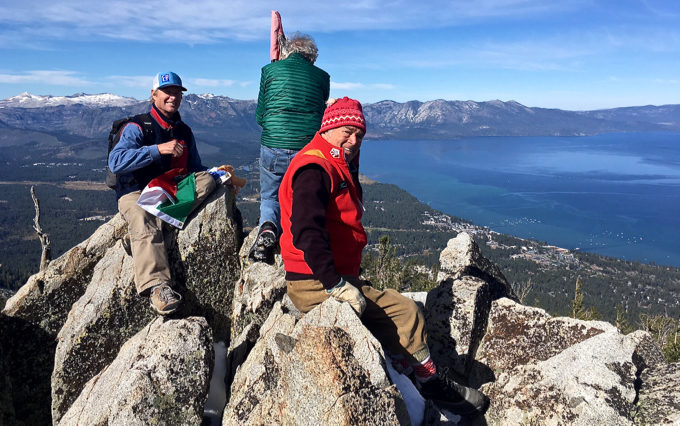
Martin Hollay has been an icon at Heavenly for decades. Photo/Terra Breeden

By Terra Breeden

There are a lot of South Lake Tahoe residents who ski, ride or work at Heavenly Mountain Resort, but few have had an impact on the mountain like Martin Hollay. The 96-year-old skier embodies the spirit of Lake Tahoe.

On Sept. 25, Heavenly honored Hollay with a hiking trail named after him in his honor of his lifetime of dedicated work and joyous skiing at the resort.

“He’s a legend in everyone’s mind but his own,” Stan Moore, friend of Hollay and longtime Tahoe resident said.

Hollay is a Hungarian native who has lived in South Lake Tahoe for well more than six decades. His passion for skiing brought him to Tahoe in the late 1950s. He began working at Heavenly in the 1960s.

At Heavenly, Hollay was the head of ski patrol in the winter, and he planned and carved out runs in the summer, cutting trees and pruning branches to open up areas to tree skiing. Hollay also had a hand in building Heavenly’s first snowmaking machine, and a dam and reservoir to conserve water runoff. Through his work, Hollay has helped transform Heavenly from a small-time ski resort to the sprawling world-class resort that people enjoy today.

“He created all of the runs on the Nevada side of Heavenly, laying them out and felling the trees,” Tom McGowan said. “He’s done so much for this mountain and today is all about him, as it should be.”
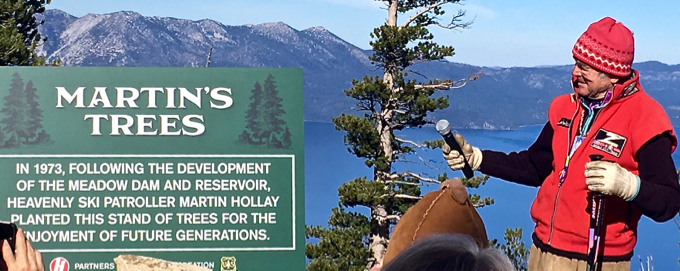
Martin Hollay on Sept. 25 at Heavenly is honored with a trail and grove of trees named after him. Photo/Terra Breeden

Hollay not only cut down trees at Heavenly, he also planted them. The man has a soft spot for nature. He hated seeing the mountain barren of trees after clearing a run, so over the years, Hollay planted saplings around the resort. Today, if you ski down Maggie’s run, many of the towering trees you’ll see on either side were planted by Hollay decades ago.

An avid skier, Hollay spent every day of the winter at Heavenly until he retired from ski patrol when he was 70. At 96 years old, Hollay still skis more than 100 days a year. It’s a personal goal of his. Last winter, when Heavenly closed for the season, Hollay had only gotten 96 days of skiing under his belt, so he drove to Mammoth and skied four more days there, just to make sure he achieved his goal.

“I admire Martin Hollay because as long as he’s doing it, I know we all can do it,” South Lake Tahoe Mayor Austin Sass said.

A crowd of about 60 people gathered at the base of the Heavenly gondola on Monday morning. The day was crisp and clear and South Lake Tahoe residents were bundled in gloves and beanies as they exchanged greetings and hugs. When Hollay arrived, he was immediately surrounded by friends and together, the crowd took the gondola to the mid-station.

On the Observation Deck, Hollay was honored for a lifetime of achievement at Heavenly resort with a trail named in his honor: Martin’s Trail. The quarter of a mile-long trail winds from the Observation Deck through the trees to Martin’s Peak.

“His life is a life well-lived and that’s an understatement,” Mike Goar, Heavenly COO said. “We want to thank him for creating this place: a world-class ski resort.”

During the event, the grove of trees planted by Hollay all those years ago was given the name “Martin’s Trees” and a sign emblazoned with the story was unveiled to resounding applause from the crowd.

Hollay stood at the podium afterward with tears in his eyes.

“When the dam was finished, I looked around and saw that all the trees had been cut down,” he said. “I had to get the trees back on the mountain. So in 1973, I planted the trees at Maggie’s Run.”

At the end of the event, the crowd hiked Martin’s Trail to Martin’s Peak, an outcropping of rocks overlooking the Lake.

Hollay led the way.

“Here we go,” he said. “I hope I make it.”

Everyone in the group laughed. It was clear that if anyone could make it to the top, it was Hollay.

When all of the hikers reached Martin’s Peak they noticed a scrappy bit of red fabric waving from the top. The tattered remains of a flag Hollay hung there decades ago. On Monday, a new flag was hung there in Hollay’s name. A brand new, red, white and green Hungarian flag.



Hunters being urged to be fire safe

The Humboldt-Toiyabe National Forest is reminding people that human-caused wildfires are still a major concern heading into hunting season.

Here are tips for a wildfire-safe hunting experience:

Know before you go: When planning any outdoor adventure, people are encouraged to call ahead to check on location conditions and current restrictions.

Be careful with all fires: Whether a campfire, gas lantern, cook stove, barbecue, etc., all can quickly start fires. Be certain your campfire is completely out before you go to bed or leave the area. Pour water on the fire and douse the site thoroughly. Stir the campfire until there are no embers and the ashes are cold to the touch. Remember, if it is too hot to touch, it is too hot to leave.

Be careful with all motorized equipment: Parking vehicles on dry grass can ignite fires. Chain saws, generators and other machines with gas engines can also start fires.

Be on the lookout for fires: If you spot a wildfire, report it immediately by calling 911. Hunters may want to carry a shovel and water jug in their vehicle and put out any campfires they see left unattended.

Avoid burned areas: The land is still recovering from an extreme fire season. Burned areas can be hazardous in many ways, including falling trees, holes, loose rocks, etc. They also are not much fun to hunt. Give them a rest and let the land recover.


Nevada has money for OHV projects

Approximately $1.2 million in grants is available for off-highway vehicle (OHV) projects in Nevada.

The money is generated by the registration of OHVs in the state.

Grants are available for OHV projects relating to: (1) studies or planning for OHV trails and facilities; (2) mapping and signing of OHV trails and facilities; (3) the acquisition of land for OHV trails and facilities; (4) the enhancement or maintenance of OHV trails or facilities; (5) the construction of OHV trails or facilities; (6) restoration of areas that have been damaged by the use of OHVs; (7) construction of trail features to minimize OHV impacts to environmentally sensitive areas; (8) OHV safety training and education; and (9) OHV compliance and enforcement.

Applications are due by 4pm on Nov. 1. The Nevada Commission on Off-Highway Vehicles will award the OHV grants in December.

OHV grants may be used for OHV projects by federal, state, and local governments, Native American tribes, special government districts, profit or nonprofit organizations, and private individuals.

Application packages are available online.


Stinging reality about yellowjackets

By Linda Fine Conaboy

INCLINE VILLAGE – Who knew yellow jackets could be so fascinating? But spending time with Lynn Kimsey one blustery evening last week at Sierra Nevada College and listening as she revealed some of the secrets of these pesky critters was almost as entertaining as sitting around a campfire swapping stories.

At best, Kimsey knows her bugs and doesn’t hesitate to share her scientist’s look into the mysterious world of yellow jacket wasps, commonly referred to by some as the scourge of the Sierra.

Lynn Kimsey

Although they can be easily angered and have the potential to inflict painful stings if their nests are threatened, they also help to keep other insect populations in control, as well as serving as a food source for area bears.

There are about 10 species of yellow jacket, but only two are considered pests—the Western Yellow Jacket being one; the Bald-faced Hornet the other. Their ravenous appetites lead them to collect everything they can find including human food, garbage and road kill, along with myriad insects that keep the colony well fed.

“These two pest species are doing very well,” Kimsey said, “because we humans ‘feed the beast’ so to speak by providing lots of avenues and places to find food.”

Although there are thousands of wasps, the yellow jackets are social wasps, like bees, but unlike bees, they do not pollinate. “They collect nectar for their own needs. The nectar can be considered their jet fuel; it allows them to fly.”

Unlike the Bald-faced Hornet that make aerial nests and are not particularly aggressive, the Western Yellow Jacket can be nasty and choose to construct their homes in cavities, such as hollow trees or rodent burrows.

“Yellow jackets sting for two reasons—defense and killing. Their venom is a cocktail of chemicals and they will sting as long as they’ve got venom left—they are good for up to three stings.”

Stings cause pain, irritation or swelling and can be dangerous if allergic, which can lead to organ failure. “If you get stung and your throat becomes scratchy or swollen or if you have trouble breathing, call 911 at once,” she said. “At the very least you need an Epipen and Benadryl.”

Normally, a sting can be soothed by applying ice and an antihistamine, with pain lasting a few days depending on pre-exposure. “My advice is don’t put your hands and feet anywhere you can’t see into.”

The summer of 2017 saw a decrease in the number of yellow jackets in the Sierra, although Kimsey said she had her first invasion at her home in Davis this summer.

“My understanding is that the numbers are down in the Sierra, but in the Sacramento Valley they’re up. The populations depend on the weather in the previous months.”

She said colonies last about nine months, but the health of the colony depends on the queen surviving the winter alone after mating. She remains fairly dormant during the cold months, finally reviving herself in the spring. Instinctively, she knows it’s her responsibility to find a suitable place to establish a new colony where she is responsible for the initial population of the new group. After this initial flurry of birth, the workers take over. One queen can produce up to 5,000 wasps.

Historically, wasps live a cyclical life; however, a constantly warming climate seems to be causing some colonies to become perennial, resulting in huge numbers of inhabitants within a nest—up to three million workers. Hawaii, with its moderate year-round climate has perennial wasp colonies, a phenomenon that seems to be filtering now to the Mainland and other places.

Kimsey treats the subject of bugs humorously, delivering her vast knowledge in easy-to-understand terms. Her expertise has led her to a professorship at UC Davis in the Department of Entomology and Nematology, where she also serves as director of the Bohart Museum of Entomology located on the UC Davis campus.


Sharing the beauty of Carpenter Valley

By Priya Hutner, Tahoe Weekly
 
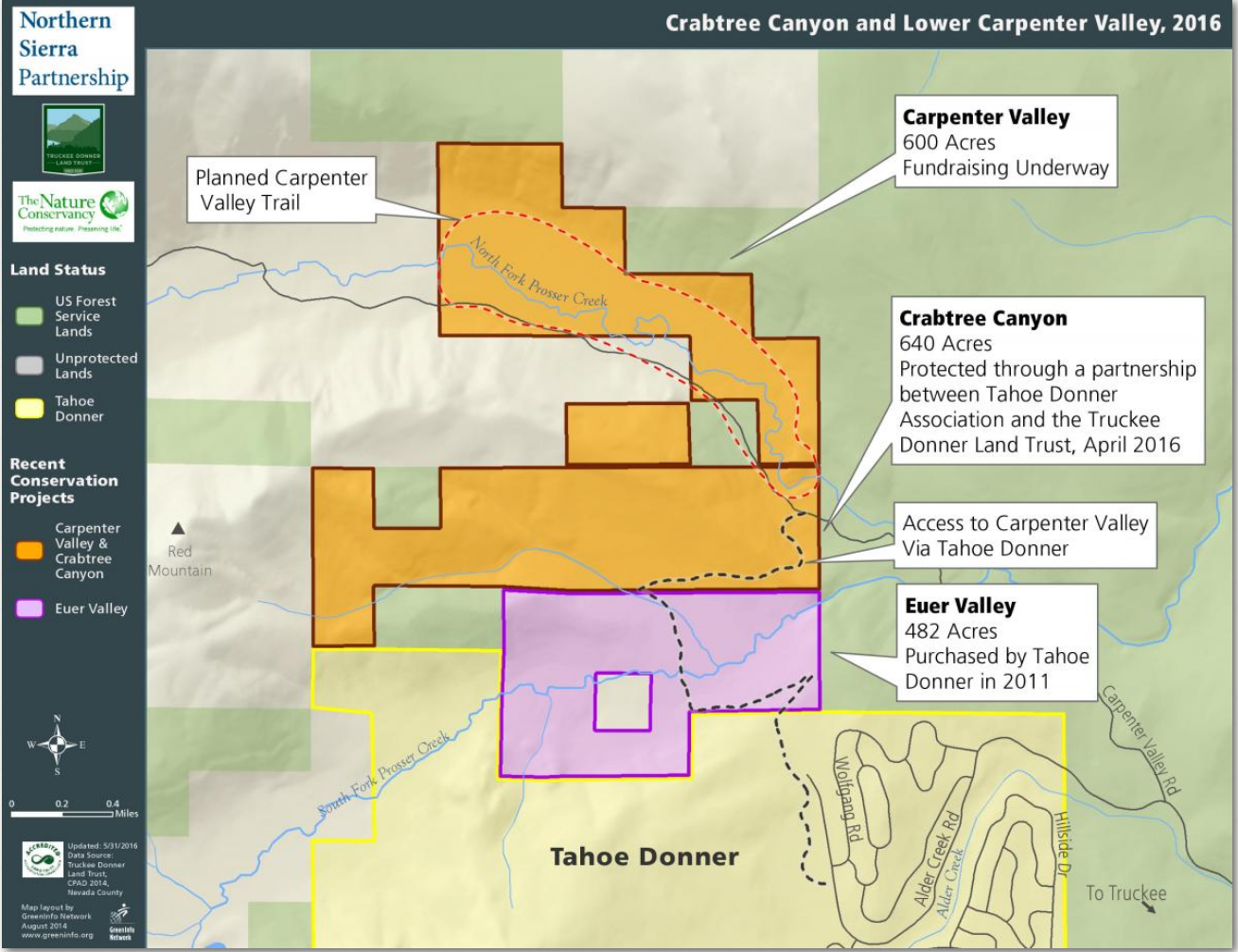
The 600 acres of Carpenter Valley were purchased in July, and the Truckee Donner Land Trust is offering docent-led hikes so people can experience the beauty and ecology of this newly acquired gem.

There was a crowd of 40 people gathered around volunteer docents Andrew Terry and Bob Bowles when I joined a recent guided hike to the valley. Leslie Benson, also one of the docents, was the sweep on this tour and trailed behind the group.

The wildflowers were mostly finished blooming, but aster, Indian paintbrush and goldenrod dotted the area.

Working with the Nature Conservancy and the Northern Sierra Partnership, the Truckee Donner Land Trust’s mission is to protect the area’s ecological gems.

Read the whole story


Ski industry lobbying for more immigration

By Megan Michelson, Powder
 
Urh Vodopivec is a 24-year-old ski instructor and student from Slovenia. He’s been traveling to Tahoe the last two summers to work seasonal jobs at restaurants. He’s one of about 300,000 people, many of whom are college students, visiting the U.S. each year on J-1 visas, which are designed as cultural exchange work permits for short-term foreign visitors.

“I would love to come back in the winter to teach skiing,” says Vodopivec. “But right now, it’s too hard to get a visa.”

Ski towns rely heavily on these visas to fill seasonal jobs—an estimated 7,000 to 8,000 J-1 workers are employed at ski resorts nationwide each winter, according to the National Ski Areas Associations. Yet tightening governmental restrictions on foreign visas may make it harder for ski resorts and other ski town employers to continue hiring these short-term international employees.

Read the whole story


4 distances in Kokanee running events

The annual Kokanee Trail Runs put on by the Tahoe Mountain Milers are Oct. 8.

There will be a  5K, 10K, half marathon and tadpole trot at Camp Richardson.

Race day registration begins at 6am, or register in advance online.

Races have staggered starts beginning at 7am.

No headphones, dogs, strollers or baby joggers are allowed.


Granite Lake trail worth the initial drive

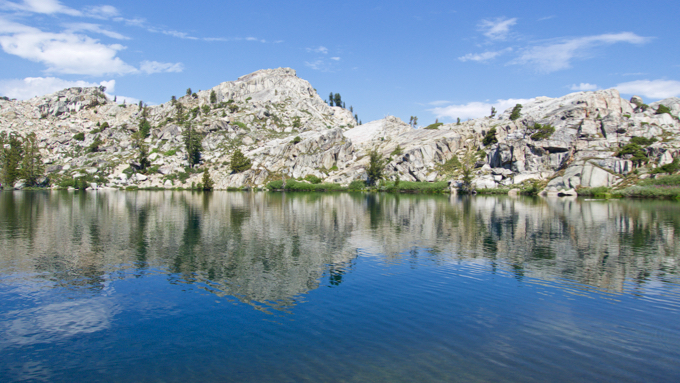
Granite Lake lives up to its name. Photo/Kathryn Reed

By Kathryn Reed

HOPE VALLEY – Hiking is supposed to be about getting away from the masses and being immersed in nature. That’s why the chaos of Blue Lakes Campground was a bit of a turnoff and caused us to wonder why we were there on Labor Day weekend.

Fortunately, the campers seemed to think the campground and immediate lakes provided enough entertainment.

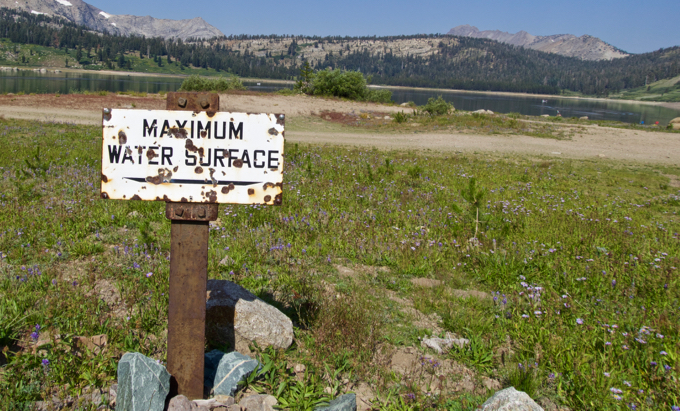
Upper Blue Lake is being drawn down and Middle Creek Campground is closed to reduce the risk of flooding if an earthquake were to occur. Seismic analysis of Upper Blue Lake Dam has necessitated these actions by PG&E, which has the rights to this body of water.

As soon as we got onto the trail near upper Blue Lake it was like we were in a different world. Civilization, so to speak, was completely behind us.

Upper Blue Lake is not full because of seismic concerns regarding the dam. Photo/Kathryn Reed

We took the advice of backpackers to walk across the earthen dam, then go down a little hill to hook up with the trail. This meant not having to cross the creek.

The superlatives ran off our tongues. None of us had been there before. There being the trail to Granite Lake. This is the Granite Lake in the Mokelumne Wilderness, not the one in Desolation Wilderness.

A pleasant surprise was the dazzling display of wildflowers not far from Granite Lake. I can only imagine what they might have looked like a couple weeks earlier.

From the trail we could see the backside of Round Top. It’s the highest peak in this wilderness area at 10,382 feet.

The trail is a gradual climb – about 700 feet total elevation gain. It meanders by a lake without a name, before taking a short, steeper climb toward our final destination. A couple splotches of snow remain to the side.

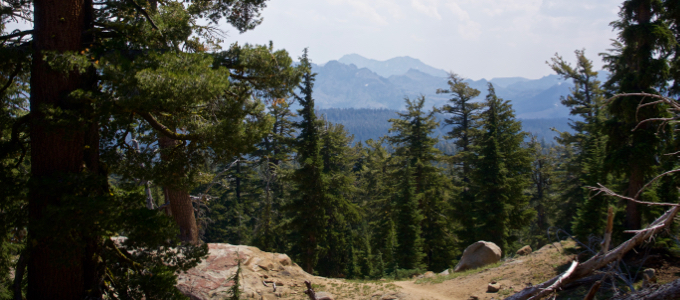
Looking toward the mountains near Ebbetts Pass. Photo/Kathryn Reed

In some places the trees are dense, other locations the foliage is lush from the ample flow of water, while other areas have rock outcroppings.

The lake is aptly named because it is essentially in a bowl surrounded by granite, though it’s not as rugged as some areas in the Sierra.

Several people were there, many with fishing poles. They were hoping to catch golden or Lahontan cutthroat trout.

While Granite Lake is hardly a secret, it was a special little gem that until then the three of us knew nothing about.

Rosemary and I have a history of extending hikes or experiencing weird mishaps. This particular Sunday was no different. A vehicle appeared to block the road just past Lower Blue Lake so we parked there. Plus, the road appeared to get a little sketchy. (Walking on it proved it was fine, and passenger vehicles had made it to the upper campground.) So, this mileage added to what we were planning on.

In total, we walked eight miles. The actual trail, according to my mileage tracker was 5 miles round trip. The sign says it’s 2 miles to Granite Lake.

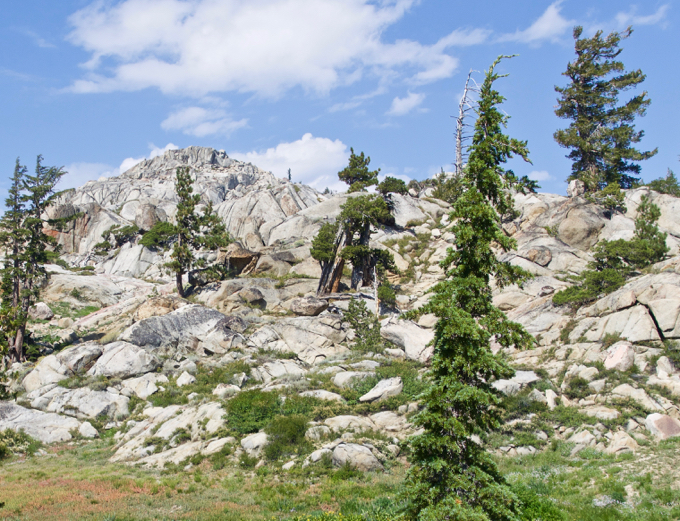
Granite is one of the dominate features in this area of the Mokelumne Wilderness. Photo/Kathryn Reed

—–

Getting there:

From South Lake Tahoe, take Highway 50 west. In Meyers, go left onto Highway 89. At Picketts Junction, go right onto Highway 88. Blue Lakes Road will be on the left; and not too far. Follow the road – it’s long – and park near the Grouse Lake trailhead. There is a trailhead sign.


Tahoe’s level could change quickly this fall

By Paul Nelson, KTVN-TV

Last winter brought a record amount of precipitation to the Sierra, filling Lake Tahoe almost to the brim. Several feet of water were also released from the Tahoe City Dam to make room for the snow melt. 

The lake is still in good shape. Tahoe’s level is still more than 5 feet above its natural rim and less than a foot from its legal limit.

The lake’s level has only been this high 12 other times. If the Sierra has a repeat of last winter, Chad Blanchard, federal water master, said it would be a welcome sight as long as it comes in the form of snow.

Read the whole story


Electric bikes steal the show at Interbike

By Todd Prince, Las Vegas Review-Journal

The son of a champion motorcycle racer, Zeno Panarari grew up in a region of Italy so well known for its gasoline-fueled bikes that it’s sometimes called Motor Valley.

Thus, when the mechanical engineer took to building a bicycle, it turned out more like his father’s motorcycle than a Schwinn pedal bicycle.

Panarari’s model was just one of the many eye-grabbing electric bikes on display at Interbike, the cycling industry’s largest North American show, with roughly 25,000 attendees and hundreds of exhibitors. The three-day show ended Friday.

While the U.S. cycling industry is in stagnation as younger people pursue new forms of sport and recreation, the electric bike industry is speeding ahead, according to industry professionals.

Read the whole story