Recreation measure language massaged to appeal to voters

By Kathryn Reed

R is for recreation. At least that’s the thinking of the three-member panel that is moving closer to putting a measure on the November ballot that would redefine how Measure S money might be spent.

Measure S, approved in 2000, taxes property owners in El Dorado County who live in the Lake Tahoe Basin $18 a year.

Two years ago people not satisfied with how far the money was going for ball fields failed in their attempt with Measure B.
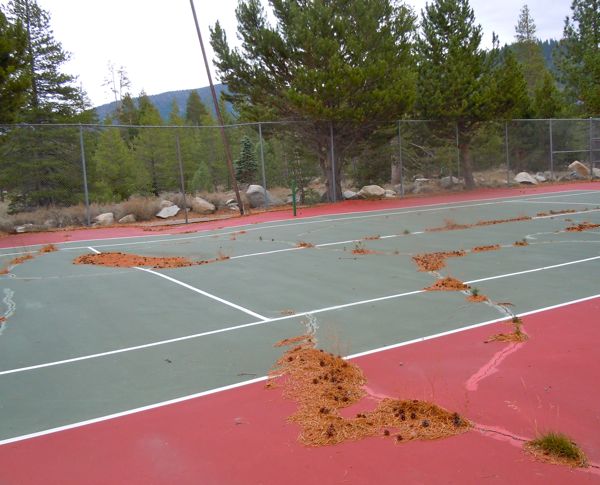
No one talks about the sorry shape Tahoe Paradise Park is in -- and Measure S is supposed to help it. Photo/Kathryn Reed

No one talks about the sorry shape Tahoe Paradise Park is in -- and Measure S is supposed to help it. Photo/Kathryn Reed

What has people thinking voters will be more amenable to altering the measure now is that the cycling community is being considered. With Measure B, the money allocated for bike trails would have been spent on ball fields.

Measure R, as the 2011 rewrite is being called, would allow bike trails installed pre-Measure S to be fixed with these funds that will continue to be collected until 2030.

The tax won’t change; just how it can be spent will be.

It’s at the June 30 meeting of South Lake Tahoe Recreation Facilities Joint Powers Authority that the final vote is expected as to whether to definitively go forward. All the language for the ballot must be approved by July 29. Those wanting to write a rebuttal to be included in the Nov. 8 election material would have until Aug. 2 to do so.

The three-member JPA made up of El Dorado County Supervisor Norma Santiago, South Lake Tahoe City Councilman Hal Cole and Tahoe Paradise Park board member Deborah Henderson met May 5 to talk about Measure R, which they dubbed it at the meeting.

They agreed to lose the Little League specific language and change it to youth baseball and softball fields. And instead of targeting improvements for the fields at Rufus Allen Boulevard and Lyons Avenue, money could go to fields within the boundaries of the special district.

Henderson relayed the message that her board would not support Measure R if there were any known opposition to it because of not seeing the money to do so as being a worthy expenditure.

It cost $18,000 (money that is collected through Measure S) to bring Measure B to the ballot. It’s not the people advocating for these changes that must incur the expense to do so, it’s the taxpayers via Measure S. This in turn means less money going toward recreation. It could cost that much or double that amount to bring Measure R to voters in November. It’s dependant on sharing the costs with other entities that have elections in November.

Santiago said the legalities of this are spelled out in the election code.

Gender equality

Part of the reason for making the language encompass girls and boys is Senate Bill 2404 enforces the civil rights of girls in community athletics as an institution in local jurisdictions and special districts.

The whole Title IX issue of equity in athletics at the K-12 level may play a roll as well as the lines of ownership of the fields becomes more convoluted, along with maintenance and accessibility.

Marilyn Breisacher voiced her concerns Thursday about the disparity among fields used for softball and baseball. The latter are in much better shape, including basics like covered dugouts.

To counter Little League coach Carl Buchholz’s statement that every organization should be doing its part to keep fields playable, Breisacher said that would be easier if the softball teams didn’t also have to pay to use the field at STHS.

Breisacher is also concerned girls will be losing a field in a proposal circulating amongst the city and Lake Tahoe Unified School District staff that would alter the use at South Tahoe High School. That whole issue – which would include a $250,000 commitment from the city – is scheduled to be before the City Council May 17.

“Boys’ baseball teams currently have a decent field and concession building at South Tahoe Middle School. In order to bring about equity, LTUSD will construct a comparable concession building at the girls’ softball field, which will be available to ASA and other teams. Restrooms for their facility will be constructed as part of the new Joint Use Student Union Building. The city of South Lake Tahoe through CACC (Community Athletic Coordinating Council) funds will improve the fields and assist in the material costs for the girls’ dugout,” LTUSD Superintendent Jim Tarwater wrote in an April 28 letter to the South Lake Tahoe City Council.

Another item in Title IX is that improvements to a playing area must be equal for the genders. While the football field at STHS gets lights this summer for its games to be played Friday nights, the theory is this opens the field up for girls soccer on weekends when normally football had access to the field.

Not everyone is in agreement that this meets the spirit of gender equality in K-12 sports because the improvements are in fact being made for football – a sport played by boys. The improvements to the STHS fields are the result of a lawsuit. Time will tell if the football field lights will prompt another Title IX lawsuit.

Some history

Originally Measure S was to pay for an ice rink ($4.3 million facility opened in 2002), four ball fields ($1.3 million spent near Lake Tahoe Community College on one field that opened in 2005), improve Tahoe Paradise Park (no evidence exists that has been done), and maintain 25 miles of new bike trails (about 10 miles have been built).

Most of the $625,000 that is collected annually is spent on bond principal and debt — $400,000. Tahoe Paradise Resort Improvement District receives $50,000 a year, as does ball field maintenance. Bike maintenance is $5,000 per new mile of new trail, with up to $125,000 set aside/spent per year.

Another $4,000 a year (or $40/hour) goes to John Upton, the loan paid staff member. He was not at Thursday’s meeting.


Bears looking for food in Tahoe neighborhoods

It’s that time of year when bears are roaming Lake Tahoe neighborhoods.

Although it’s never a good idea to put trash out before the day it picked up, it’s even more critical now not to so these bruins don’t get hooked on human food.

The anonymous South Lake Tahoe photographer says this bear named Brutus was hit by a car two weeks ago and is now scavenging for food.

An anonymous South Lake Tahoe photographer says this bear named Brutus was hit by a car two weeks ago and is now scavenging for food.

The Bear League has information about living with bears.

Lake Tahoe Wildlife Care is also a good resource for information.

— Lake Tahoe News staff report


North Shore bike trails open

In preparation for the 2011 Amgen Tour of California that will be in the Tahoe area May 15-16, North Lake Tahoe trail crews have been working long days to clear snow from the region’s many paved bike trails.

Spectators can now gather on the miles of paved trails to cheer on the Tour’s professional cyclists as they race for the coveted yellow jersey during Stage 1, which includes a lap-and-a-half around the lake starting on the South Shore and finishing at Northstar-at-Tahoe May 15. Stage 2 takes off at the Village at Squaw Valley and onto Highway 89 before heading to Truckee May 16.

North Lake Tahoe is also hosting the Tahoe 10-Day Countdown, kicking off May 5, prior to Stage 1 and Stage 2 with a number of community-oriented events planned in the region’s commercial core districts that are now reachable via the paved bike paths.

All of North Lake Tahoe’s paved bike trails are recreational-rider friendly and some favorites include the route along the Truckee River from Tahoe City to Squaw Valley, the West Shore from Tahoe City to Sugar Pine Point State Park and Lakeshore Drive in Incline Village with its awe-inspiring Tahoe mansions.

Although the paved bike trails are accessible, the trails officially open May 27. Riders and walkers are advised to be aware of any missing signage and asphalt repairs, as well as freezing conditions at night that can make trails slick in the early morning.


Reno Bike Project collecting pieces for cycling gallery

By Reno Gazette-Journal

The Reno Bike Project now is collecting art for the “We heART Bike” gallery that it will present at Northstar-at-Tahoe Resort on May 14-15, in conjunction with the Amgen Tour of California bike race.

Submissions are open to everyone and are due on May 11.

Every item featured in the gallery will be for sale, of which 50 percent of the proceeds will benefit the Reno Bike Project.

Read the whole story


Tahoe-Truckee watershed ‘snapshot’ day on May 14

The 11th annual Water Quality Snapshot Day will be May 14 throughout Lake Tahoe, Truckee and Reno.

Volunteers are needed to help conduct the water quality sampling and habitat assessments. The event is a citizen-based environmental effort designed to take a “snapshot” at one moment in time, of the water quality throughout the Lake Tahoe and Truckee River watershed. Water quality monitoring will take place from the tributaries flowing into Lake Tahoe all the way to the waters of Pyramid Lake.

It is sponsored by California Trout, Nevada Division of Environmental Protection, University of California Cooperative Extension, Tahoe Regional Planning Agency, Incline Village General Improvement District, and the Truckee River Watershed Council.

Community volunteers will meet at central locations in Lake Tahoe, Truckee and Reno for an overview briefing about water quality measurements. All volunteers will meet at 8:30am to get their team and stream assignments and then proceed to their stream location(s) finishing up at noon with a free group lunch.

• Reno-area volunteers meet at Bartley Ranch Regional Park, 6000 Bartley Ranch Road;

• Truckee-area volunteers meet at the Truckee River Watershed Council office, 10418 Donner Pass Road;

• South Lake Tahoe volunteers meet at Lake Tahoe Community College cafeteria;

• North Lake Tahoe volunteers meet in Incline Village at Patton Landing on Highway 28 in Carnelian Bay.

Volunteer teams, led by trained group leaders, will then fan out to take samples and measurements at various locations at the same time on the same day. The teams will field-test streams for dissolved oxygen, conductivity, pH and temperature; collect water samples for laboratory analysis of nutrients, sediment and bacteria; and conduct visual habitat assessments of the sites. Team leaders will share watershed facts and provide information about how citizens can improve and protect the Truckee River and Lake Tahoe watershed. Team leader training for the South Shore will be from 2-5pm on May 7 at the LTCC portable room G2b.

To sign up as a volunteer or team leader, either register online or call the local site leader Mary Kay Riedl at (775) 687.9454 (Truckee River-Nevada portion), Beth Christman at (530) 550.8760 (Truckee River – California portion), Jenny Francis at (530) 541.3495 (South Shore) or Rebecca Sawyer (North Shore) at (775) 832.1284


LTVA: Road closure won’t dampen enthusiasm for bike race

By Kathryn Reed

While the good of the Amgen Tour de California bike race was touted, that’s not all South Lake Tahoe City Council members wanted to hear from the South Shore’s tourism agency.

Carol Chaplin, executive director of Lake Tahoe Visitors Authority, gave a brief update Tuesday about the multi-day bike race through the state that starts at the state line.

amgen“This really has long-term benefits,” Chaplin said of the event. Much like the annual celebrity golf tournament, exposure for the area via the media pays dividends down the road with increased travel by people who see the race or read about it.

Mayor Hal Cole asked if people are canceling room reservations now that Highway 50 will be closed over Echo Summit that weekend. Chaplin didn’t know, but said she’d get back to the city with that information.

Councilman Tom Davis’ concern is if jobs are going to be lost with the main artery to the South Shore off-limits for 10-14 days starting May 11.

To this, Chaplin pointed out May is the shoulder season and to have an event like Amgen will be a boon for the area – despite the roadwork. Plus, the route to town is being billed as a scenic 35-mile detour from the Bay Area or Sacramento.

Chaplin’s big concern locally is realizing many in the area don’t even know about the bike race and how it could affect them. In fact, 10 days of events start Thursday.

The race starts at 10:30am May 15, with cyclist going around the lake 1.5 times before finishing at Northstar. Rolling road closures lasting up to 30 minutes will occur as the riders go by.

This means most businesses along the route will be impacted. People going to church late that morning should think about attending the early service.

Highway 50 is being designed to be one big party with kiosks from the Y to Stateline.

Chaplin said a special guest is in town. “You may see him riding,” she told the council May 3. She smiled, and wouldn’t give any hints.

Lance Armstrong isn’t competing, but he knows his way to Tahoe – having played in the celebrity golf tournament. And Greg Lemond’s last known address was Reno — and he’s very familiar with the roads here. But with everyone in lycra and bike helmet looking similar, the mystery rider might be able to stay incognito for a while.


Banning felt-soled waders may help stop spread of invasive species

By Jeff Delong, Reno Gazette-Journal

Felt-soled waders, a time-honored safeguard for anglers knee-deep in slippery streams, are under mounting scrutiny in Nevada and across the country.

With officials concerned that felt soles on waders and boots could help aquatic invaders hitchhike from one place to another, regulations regarding their use are being considered or are already in place.

Maryland became the first state to ban them, effective March 21. They became illegal in Vermont on April 1. Across Alaska, felt-soled waders and boots will be prohibited beginning Jan. 1, 2012.

The soles have a problem. Porous felt can trap spores and larvae of non-native plants and animals, allowing them to spread in much the same way invading mussels can move from place to place attached to motorboats.

That’s what’s believed to have happened in Vermont, where felt-soled footware is suspected in the spread of didymo, a slimy algae commonly called “rock snot,” said Shawn Good, a fisheries biologist with the Vermont Fish and Wildlife Department.

Read the whole story


Hot August Nights cancels expansion to Long Beach

Publisher’s note: Hot August Nights CEO Bruce Walter resigned this week.

By Karen Robes Meeks, Press-Telegram

Organizers of a major vintage car show have put the brakes on coming to Long Beach.

Lack of car entries and sponsorships have prompted organizers of Hot August Nights to cancel the four-day show Aug. 3-6 in Long Beach, a top Long Beach Area Convention and Visitors Bureau official said today.

CVB senior vice president Iris Himert said organizers met with her briefly this morning to deliver the news.

“We’re very disappointed that Hot August Nights has decided against expanding the show into Long Beach,” she said.

She did not know about how many more cars or sponsorships were needed or whether the event would return in 2012. An earlier report about needing 3,000 vehicles “to break even” was incorrect, Himert said.

Read the whole story


Water content 209% of average near Echo Summit

By Kathryn Reed

PHILLIPS STATION – Snow was literally melting as the last water survey of the season was taken.

Although the numbers are good for this time of year – 209 percent of average with 33.7 inches of water content and a snow depth of 66 inches – under warm sunny skies Monday, it was a bit mushy in the snow field.

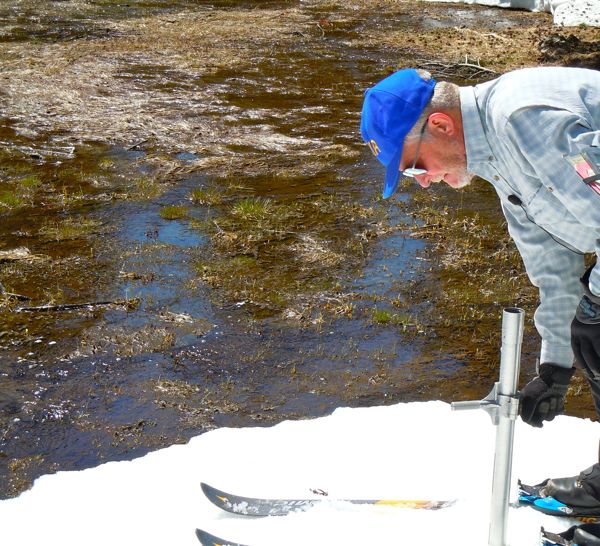
Frank Gehrke barely has room to take the seventh water content reading May 2. Photo/Kathryn Reed

Frank Gehrke barely has room to take the seventh water content reading May 2. Photo/Kathryn Reed

But there are years when May 2 has more dirt than snow covering this field at the entrance of Sierra-at-Tahoe on Highway 50.

“This is a good year, but this is not record setting,” said Frank Gehrke, who takes the measurements for the Department of Water Resources. In 1995, the water content was 44.7 inches.

He attributed the below average temperatures of April and some of overcast days for keeping the snowpack as solid as it is.

However, the stream on the far side of the meadow that has been evident most of the previous four snow surveys this season is even larger now. Gehrke was barely able to get in a seventh reading.

Gehrke said with the amount of snow still in the Sierra, a high stream flow should last into late spring.

Water content in the snow throughout the state is what determines how much people downstream get. Users of the State Water Project are scheduled to receive 80 percent of the water they have requested. The intricate canal system delivers water to 25 million Californians and irrigates about 1 million acres of farmland.

The abundance of snow this winter belied the fact that forecasters had called this a La Nina year – which by definition means much less snow than what actually fell.

Gehrke said this proves there is not definitive way of predicting what California’s weather will be like.

“There are so many variables – how the ocean and other things influence California winters,” Gehrke said.

Location

Elevation

Snow Depth

Water Content

% of Long Term Average

Alpha

7,600 feet

117.1  inches

60.1  inches

231

Phillips Station

6,800 feet

66  inches

33.7  inches

209

Lyons Creek

6,700 feet

105.2  inches

52.2  inches

231

Tamarack Flat

6,500 feet

missing

missing

missing


Wildfire Awareness Week focuses on defensible space

The second annual Lake Tahoe Basin Wildfire Awareness Week is May 28-June 5. The theme this year is “Get Defensive: We’re Counting on You!” The focus of the week will be to promote community based defensible space activities.

Fire agencies, fire safe chapters and local organizations will collaborate to have community clean up days, including offering free chipping and pine needle pick ups and hosting neighborhood meetings and educational activities.

Check the Living with Fire website to find out about events in your area.

The goal of the Lake Tahoe Basin Wildfire Awareness Week is to encourage individual action to reduce the threat of wildfire to homes and communities. Activities will provide information and resources to create defensible space around homes.

Creating defensible space involves selecting and maintaining vegetation near the home, thereby reducing the risk that homes will be ignited and destroyed during a wildfire. It takes a coordinated effort between individuals and local fire and other agencies to prepare a community to survive wildfire.

For information on how to create defensible space in the Tahoe basin go online, or contact Susie Kocher at (530) 542.2571 or sdkocher@ucdavis.edu.