Nevada officials try to ban beavers from Truckee River

By Susan Voyles, Reno Gazette-Journal

Every week day since December, a Washoe County sheriff’s community service crew has worked the banks of the Truckee River, wrapping trees with chicken wire to protect them from beavers, cleaning up homeless camps and picking up other debris.

Since December, they’ve wrapped 423 trees and removed 95 homeless camps, 1,058 large bags of garbage and 63 hazards such as rebar and pipe that present a danger to people, said Don Lawson, work supervisor.

But once a Truckee River Fund grant for $90,000 runs out in late July, the crew of six to eight members will be disbanded for a lack of a supervisor.

“We have been on beavers since December,” Lawson said. “We got started when the river was coming up. There’s still a lot of work to do. There’s a lot of trees to be wrapped. We are hitting the worst spots.”

The Truckee River Fund is supported by customers of the Truckee Meadows Water Authority, the area’s biggest water company.

Mike Carrigan, TMWA board chairman, said he would encourage the sheriff’s office to apply for another grant through the board’s grant advisory committee. “I think it’s money well spent,” he said, after hearing the statistics.

Read the whole story


Eagle Falls spew forth like they belong in Yosemite

By Kathryn Reed

DESOLATION WILDERNESS – Water. It’s going to be the common denominator for all hikes in and around the Lake Tahoe area for a while.

And that’s a good thing when waterfalls are involved.

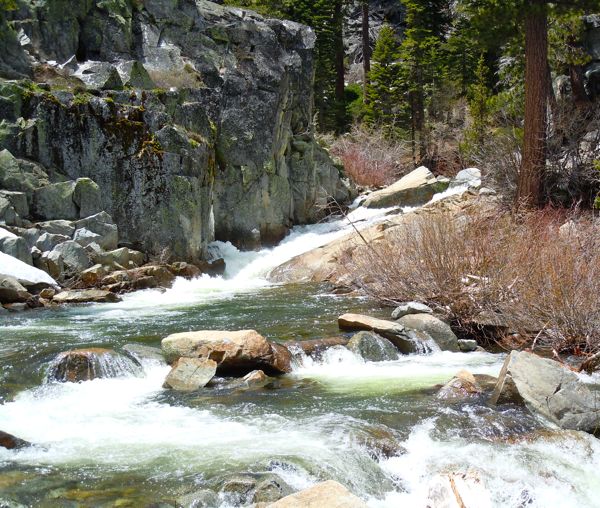
Rumbling water is a constant sound on the trek from the Eagle Falls parking lot to Eagle Lake. Sometimes it’s roaring, sometimes a bit more faint – but always there.
Eagle Creek is running fast. Photos/Kathryn Reed

Eagle Creek is running fast. Photos/Kathryn Reed

With June 11 being National Get Outdoors Day, the $5 parking fee has been waived by the U.S. Forest Service.

This area was revamped in 2005 with a walkway from Highway 89 to the trailhead which means no longer having to contend with vehicles to get to the path. Restrooms were put in at the same time.

We start our Saturday by checking out the lower falls from the other side of the highway. What a perfect lunch spot for one trio as they sit near the flowing water, gazing out at Emerald Bay.

Our destination is upper falls and then Eagle Lake. The Forest Service website says it’s a 20-minute walk to the lake. With all the Kodak moments along the way, we took at least twice that long. For those wanting a longer hike, a sign clearely states when to turn left to reach the three Velmas, Dicks, and Fontanillis lakes.

Starting off we take the loop to the right – which is longer than going directly to the upper falls. We don’t care. Today is about enjoying the scenery and practically pinching ourselves that we live here.

It’s just one of those magical places that even the most jaded person would have to pause to appreciate Mother Nature’s handiwork.

Interpretive signs are on this section. I learn something new – Emerald Bay is 3 miles long and 1 mile wide.

Water is on the trail, making it a good idea to wear hiking boots.

Spanning Upper Eagle Falls is a bridge. Water rushes beneath me. It’s hard to hear my own thoughts because of the thundering falls. Doing a 360, I marvel at the granite above me, the amount of water running on either side, the rocks being pounded by this snowmelt.

To do the loop, the bridge is where you’d turn around. But we aren’t done.

Across the bridge we hit snow. Mostly it’s dirt the rest of the way – but that white stuff is unavoidable at times.

So much snow this winter is causing waterfalls to spill from the sides of the mountain as though pores have opened. A sheet of granite looks like a streak of tears.

Granite is more dominate in this section of Desolation Wilderness than conifers. Spires of jagged rock line one wall of what feels like a canyon at times.

We stop for lunch before reaching the lake. Slabs of smooth granite beckon us to recline – until an aggressive critter smells our food. He reminds me of the “friendly” critters atop Mount Tallac.

Emerald Bay and Lake Tahoe are in the distance. If only there weren’t a controlled burn at Zephyr Cove that day, the view would have been perfect. A touring helicopter flies by. Is it the required 2,000 feet above Desolation? Hard to tell. What point does the FAA start measuring?

Onward we go to the lake. It looks so beautiful, but so uninviting. I won’t even dip my toe in her frigid waters. On a hot summer day people swim and paddle out to the little island. No one is doing that this day. This day we’re still trying to have traction on slick snow.

Getting there:

From South Lake Tahoe, go north on Highway 89. The Eagle Falls parking area is on the left at the end of Emerald Bay before reaching the parking area for Vikingsholm. It costs $5 to park. If going to Eagle Lake, be sure to fill out the permit for Desolation Wilderness.

ngg_shortcode_0_placeholder (Click on photos to enlarge.)


Park advocates question wisdom of closing Mono Lake

By Lance Williams, California Watch

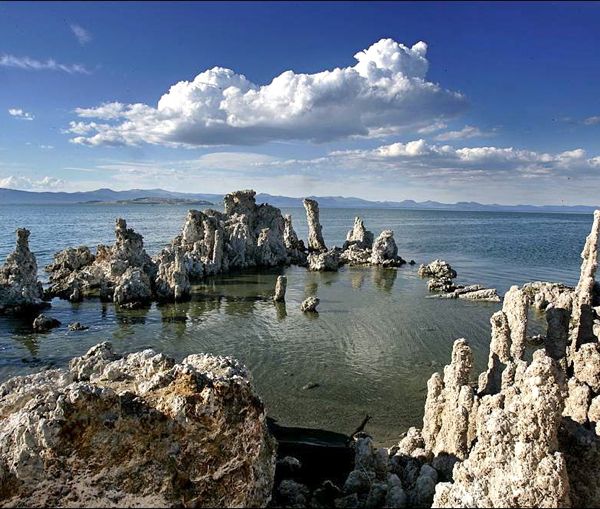
Mono Lake is the second-largest lake in California – a gorgeous, otherworldly expanse of aquamarine saltwater in the high desert east of Yosemite National Park.

Mono Lake is one of 70 California parks threatened to be closed. Photo/Michael Maloney

Mono Lake is one of 70 California parks threatened to be closed. Photo/Michael Maloney

Its very existence is a modern environmental success story. As late as 1984, the lake was condemned to become a 65-square-mile salt flat, as the city of Los Angeles had dammed its tributary streams and diverted the water into the LA aqueduct.

It was saved, in dramatic fashion, by an unlikely coalition of trout fishermen, environmentalists and water-rights lawyers. Today, it’s recovering from 50 years of abuse.

But now, as part of a round of budget cuts, Gov. Jerry Brown has ordered the closure of the Mono Lake Tufa State Natural Reserve, the state park established as part of the effort to save the lake.

It’s one of 70 state parks being shuttered in hopes of saving $22 million.

Mono Lake’s boosters say closing the park won‘t save the state a dime. But they say it will derail volunteer programs that have allowed the park to operate for years at minimal cost to the state.

“It doesn’t make any sense,” said Geoff McQuilkin, executive director of the Mono Lake Committee, the organization founded in the 1970s to save Mono Lake.

Read the whole story


Youth basketball camp in Stateline

Ball handling and basketball shooting camps will be at Kahle Community Center in Stateline June 27-July 1 from 9am-4pm.

This is for boys and girls in grades K-10.

Cost ranges between $125 and $265.

For more information, call Gil Llewellyn at (310) 903.6473

or email coachgil@advantagebasketball.com.


Burn permits to be suspended in July

CalFire is suspending burn permits in Amador County and on the western slope of El Dorado County beginning July 1 at 8am.

This does not apply to the Lake Tahoe Basin. Call (530) 543.2600 for burning regulations in the basin.

Reminders for safe burning:

— Keep all piles no larger than 4 feet by 4 feet

— Have a charged hose and shovel within arms reach

— Maintain a 10-foot barrier of bare dirt around each pile

— Keep a telephone (cell phone, etc.) nearby

— Only burn vegetation from your property; household trash of any kind is illegal to burn

— Do not use a burn barrel, they are also illegal

— Never leave your pile unattended.

For more information regarding proper burning techniques and other life-saving information, go online.


Study warns of youths with concussions

By Oliver Renick, Bloomberg

Football accounted for 57 percent of trauma-related sports deaths among youth, many that would have been prevented if athletes with head injuries had been kept off the field, said researchers who analyzed 30 years of data.

The report, which reviewed information from a U.S. registry of 1,827 sudden deaths of young athletes from 1980 to 2009, found that 261, or 14 percent, were caused by blunt trauma. The study, published this week in the journal of Pediatrics, analyzed data on fatal injuries that occurred during 22 different sports.

Twelve percent of the 138 football deaths caused by head or neck injuries involved students who returned to the game after a concussion, researchers said. In some of these “second-impact syndrome” deaths, athletes were cleared for play despite symptoms from a previous head injury. More education is needed for coaches, trainers, parents and students on the consequences of repeat head blows, the researchers said in the report.

“Second-impact syndrome is avoidable,” said study author Dr. Barry Maron of the Minneapolis Heart Institute Foundation, a cardiovascular education and research center. “It’s obviously a coaching and medical issue to avoid this, independent of the equipment used, so football players do not return prematurely to play.”

Read the whole story


Dangers of boating-drinking part of national ed campaign

Operation Dry Water is a national weekend of boating under the influence detection and enforcement aimed at reducing the number of alcohol and drug-related accidents and fatalities and fostering a stronger and more visible deterrent to alcohol and drug use on the water.

It is always the weekend before Fourth of July.

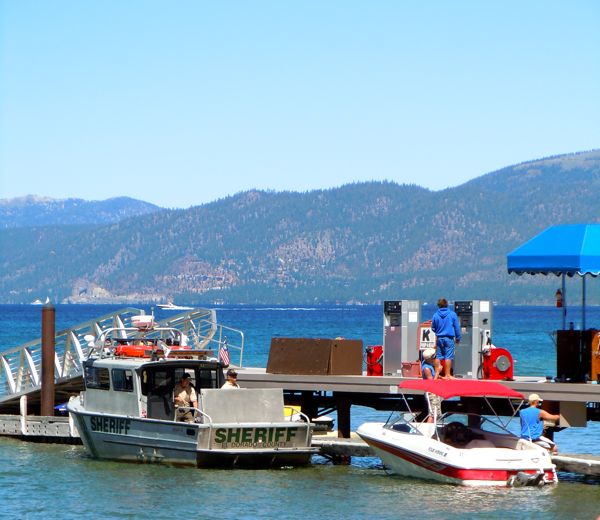
Law enforcement in education mode about boating and drinking. Photo/LTN file

Law enforcement is in education mode about boating and drinking. Photo/LTN file

Officials will be on Lake Tahoe helping educate people about the dangers of BUI.

It is coordinated by the National Association of State Boating Law Administrators — with the states, the U.S. Coast Guard and other partner agencies.

Curbing the number of alcohol and drug-related accidents and fatalities is key to achieving a safer and more enjoyable environment for recreational boating.

According to the most recent U.S. Coast Guard statistics, boating under the influence is still the leading contributing factor in fatal boating accidents, with 17 percent of boating fatalities a direct result of alcohol or drug use.


Thursday night track meets beginning

Thursday Night All-Comer’s Track & Field Meet runs June 23-July 28, 5-8:30pm.

It is for ages 2-90. The cost is $5 — free for ages under 9.

Races are at South Tahoe Middle School.

For more information, go online.


Flood threat remains in Tahoe; trails covered in water

By Kathryn Reed

It’s hard to know if more should be read into the National Weather Service in Nevada declaring this Hazardous Weather Awareness Week.

The reality is creeks, rivers and streams in and around the Lake Tahoe Basin are rising. Even Lake Tahoe is rising.

The threat is so real the Weather Service in Reno has issued a small stream flood advisory until 9pm June 24 from Alpine County, along the West Shore, to Squaw Valley. Most of the problems will be west of Highway 89 in the basin, according to weather officials.

The bike trail near Gardner Mountain and above the Camp Richardson stables on June 19. Photo/Kathryn Reed

The bike trail near Gardner Mountain and above the Camp Richardson stables on June 19. Photo/Kathryn Reed

Campgrounds, hiking-biking trails, and back roads are subject to flooding.

“Peak flow in area streams will occur each evening into the overnight hours from tonight through early Friday evening,” the Weather Service said. “Slightly cooler temperatures by this weekend will mitigate the flood potential.”

The threat to recreationists is so real the U.S. Forest Service on Tuesday issued a warning, too.

“Water that you may have crossed easily at one point in the day may not be crossable when you’re ready to return,” Lisa Heron, spokeswoman for the USFS, said.

Besides water flowing in places it usually doesn’t flow – like covering the bike trail by several inches behind Meeks Lumber in South Lake Tahoe – snow is found on trails not far from trailheads.

The Forest Service advises people to take cross country skis or snowshoes into the backcountry.


Fun bike rides through the Carson Valley on Sunday

The Carson Valley Chamber and Visitors Authority and Bike the West’s 4th Annual Tour of the Carson Valley – Barbecue & Ice Social is June 26. It starts and finishes at Mormon Station State Historic Park in Genoa.

This is a kick-off to summer and a celebration of the cycling culture and more of a social event, as all types of pedal powered cycles are invited to participate. From unicycles to three-wheeled recumbents, retro road bikes, high wheelers, custom bikes, cruisers and more.

There are three non-competitive tour options including an 11-mile Family Fun Ride; a 20-mile Bike and Hike Option with the Carson Valley Trails Association; and a 44-mile Tour along the foothill of the Sierra, retracing the historic routes of pioneers, wagon trains and the Pony Express up to Woodfords Station and around Diamond Valley.

The Tour of the Carson is from noon-8pm at the Holiday Inn Express in Minden at the junction of Highway 395 and Highway 88. Bike Habitat will provide bicycle safety checks and technical support for the event. The ride starts between 8:30 and 9:30am.

For more information, call (775) 771.3246.