A year after the lightning tragedy in the Tetons

By Brad Wieners, Sports Illustrated

Those wishing to climb to the top of the Grand Teton set out well before daybreak. It’s safer to travel over any ice and snow then, when it’s still likely to be frozen, and the early departure leaves time to hike all the way back down to the trailhead before dusk. One of the beauties of the Grand, the 13,770-foot signature peak of the sublime Wyoming mountain range and national park, is that it lies less than a full day’s hike from the road. It’s a world-class mountaineering experience that’s also a weekender. There is another advantage to the predawn start: In the dark it is harder to discern the thousand-foot voids beyond the mountain’s edge.

The appeal of the Tetons is obvious, even if you get no closer than a turnout on U.S. 89, 12 miles away. With no foothills, the 40-mile range rises from the earth’s crust in one precipitous sweep, like an ax through a door. Upon seeing the mountains, Teddy Roosevelt is said to have remarked that they were ideal—the way a child draws them—and it’s easy to see his point. The pinnacles are etched like a fever chart into the Western sky.

On Wednesday, July 21, 2010, the handful of parties hoping to summit the Grand Teton all awoke early. They were camped above timberline, some in a seasonal hut, others in tents; a few climbers, taking advantage of the clear night, had unrolled their sleeping bags between boulders and slept out under the stars. The day before, the forecast had been typical for the Tetons in summer: partly cloudy with a chance of thunderstorms by afternoon. But overnight the likelihood of a storm had increased, so the commercial guides hustled their clients out of their sleeping bags at 3:30 a.m. At close to 4:30, three self-guided groups began pulling on their harnesses, helmets and headlamps, and a half-hour later they were making their way with coils of rope up through the talus and bands of cracked rock to the near-vertical terrain below the summit. They were aware of clouds on the horizon but determined to get to the top and back down before they closed in. They had less time than they imagined.

Leading the first of the three groups were two brothers from Newton, Iowa, Greg and Barry Sparks, and their old friend from Worthington, Minn., Bob Miller, all in their 50s. Their group was relatively large—eight in all—and had the widest range of age and climbing experience. The eight were relatives and church friends, such as Greg’s son-in-law Tim Vogelaar, 43, a middle school art teacher. Over the years some of them had been up Devil’s Tower, Gannett Peak and scores of Colorado’s 14ers—mountains over 14,000 feet high. The Sparks group planned to climb via the Owen-Spalding route, the oldest and easiest way up the Grand.

This year Barry Sparks had invited his daughter Katie’s boyfriend, Brandon Oldenkamp. A senior-to-be at Dordt College, a small Christian school in Sioux Center, Iowa, the 21-year-old Oldenkamp was a rally-starting sixth man on Dordt’s basketball team, a three-point threat and an invaluable practice player. The kid hustled and was always there for his teammates and friends. He and Katie weren’t engaged, “but it seemed to be moving in that direction,” Barry said. “I hoped this trip would be a chance for him and I to get to know each other better.” His prospective son-in-law jumped at the offer.

The Sparks group had the whole week to work with and began with climbs of the South and Middle Tetons. Everyone made it to the top of the South Teton, no problem, but the “old guys” decided to conserve their energy and leave the Middle to the younger four, who summited in brilliant sunshine on Tuesday.

The second group, the Tyler party, was a father-and-sons trip. There was dad Steven Tyler; his two sons, Dan and Mike; their brother-in-law Troy Smith; and a work friend of Steven’s, Henry Appleton. Steven, 67, had always been an outdoorsman, taking Dan and Mike backpacking from an early age. Steven had first topped out on the Grand Teton in 1966. In 1983, when Dan and Mike were 13 and 12, respectively, they’d all tried it together; bad weather kept them from the top that time. Still, it wasn’t as if the Tylers felt they had unfinished business. They just wanted to take advantage of the fact that they’d finally found a week in which they could all climb together. Smith, 40, a lawyer with the Department of Defense, flew in from Odenton, Md.; Dan Tyler from Miami; Mike from San Diego. Steven Tyler and Appleton, 31, were already there, both working in Grand Teton National Park. The Tyler party also chose the Owen-Spalding route.

The third group, a couple and two friends from Bozeman, Mont., was led by Alan Kline, a 27-year-old climbing guide originally from Virginia. He had planned to go to Wyoming with only his friend Andrew Larson, 23, but at the last minute Kline’s girlfriend, Betsy Smith, 26, and their friend Matt Walker, 21, rearranged their schedules and joined them. Kline and Smith had met in Yellowstone three years earlier and fallen in love over their shared love of the wilderness. The Bozeman group had climbed together, too, but not in the Tetons.

For their ascent, Kline settled on the Exum Ridge route. The Exum gets a little more sun than the Owen-Spalding, but it’s on a ridge, so there is nowhere to hide, and it’s trickier to descend than other popular routes.

After setting out that Wednesday morning, all three parties made good progress. By about nine or so, the Bozeman group had made it to within a hundred vertical feet of the summit; the Tyler party had made it up through the Owen Chimney, considered the hardest challenge of the route; and the Sparks group, moving a little more slowly because of its size, had just cleared the Belly Roll, a detached, car-sized flake of rock bisecting a narrow ledge that requires one to climb up and over it, or out and around it. The handholds are solid, but climbers are exposed to a sheer drop of 800 to 1,000 feet. For someone new to climbing, it’s terrifying to anticipate and enormously rewarding to overcome. When Oldenkamp made it past the Belly Roll he flashed a wide, goofy smile that made him look as if he had just won a junior high league championship with a shot at the buzzer.
Read the whole story


Ski resort summer operations bill advances in Senate

By Ski Area Management magazine

WASHINGTON — The Senate Energy and Natural Resources Committee unanimously recommended passage of the Ski Area Recreation Opportunity Enhancement Act of 2011, which would amend the National Forest Ski Area Permit Act of 1986 to explicitly allow a much wider array of winter and summer activities within resort permit areas.

The 1986 law explicitly allows only alpine and Nordic skiing. Snowboarding and mountain biking, while widely approved on Forest Service land, are not mentioned in the existing law. The Forest Service has frequently allowed these activities because they use the same facilities—lifts and trails—as alpine and Nordic skiing, and thus require little or no additional development.

Read the whole story


Skater who trains in S. Tahoe headed to collegiate championships

By Dan Hinxman, Reno Gazette-Journal

Figure skating is beauty and grace and elegance in a sequin dress.

Hockey pucks.

“It’s a lot tougher than people realize,” Barbara Johnson said of her daughter, Jaclyn Johnson. “She always likes to say it’s the extreme sport that nobody recognizes as extreme.”

Jaclyn, a 22-year-old University of Nevada student, has got the body to prove it: Both patellar ligaments are detached, victims of multiple impacts with the ice; one hip ligament is torn; she’s had at least five sprained ankles; she’s got a little scar on her chin from a meeting with the ice (“No stitches, though; I butterflied it closed.”); and one of her front teeth needed a root canal from another inadvertent kiss with the ice.

“We don’t get any pads,” a chuckling Jaclyn said Tuesday before one of her sessions at Framework Personal Training, where she works mostly on injury prevention and recovery with owner Paul Fischer.

Reaching one of the highest levels in U.S. Figure Skating has taken its toll on Jaclyn, who grew up in Washoe Valley and graduated from Damonte Ranch High. But the physical part pales in comparison to the other major hurdle in her pursuit, travel.

“It’s a huge challenge,” said Jaclyn, who leaves today to compete in the U.S. Collegiate Championships, Friday and Saturday at Sun Valley, Idaho. “I don’t have any free time. I’m pretty much always in the car.”

That would be the 1995 BMW that knows what it’s like to be Jaclyn. It has 200,000 miles on it, has been totaled and repaired, has a cracked windshield, and has a front bumper that is partially held together with duct tape.

It’s amazing, really, that Jaclyn has reached the level she has, Junior Lady, in U.S. Figure Skating. It’s the seventh of eight levels. Only Senior Lady, where Olympians are culled, is higher.

Read the whole story


USFS collecting weather data in Meyers

The U.S. Forest Service’s Remote Weather Access Station in Meyers is up and running.

The weather station collects vital fire forecasting data such as wind speed and direction, relative humidity, temperature, precipitation depth, fuel moisture and solar radiation.

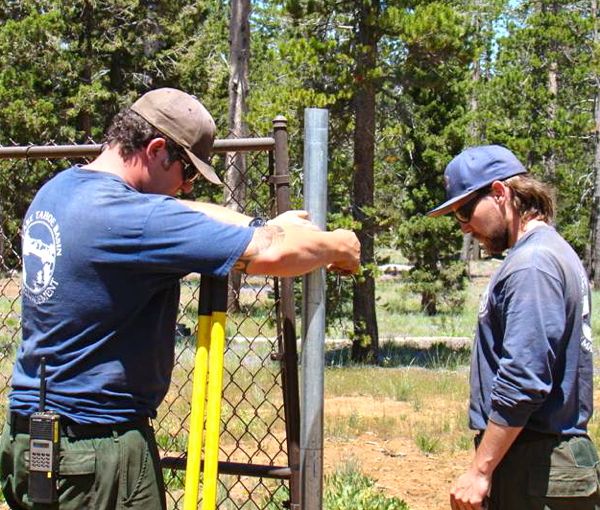
USFS employees install the weather station. Photo/Lisa Herron/USFS

USFS employees install the weather station. Photo/Lisa Herron/USFS


Action sports camp turning Boreal into year-round resort

By Katherine E. Hill

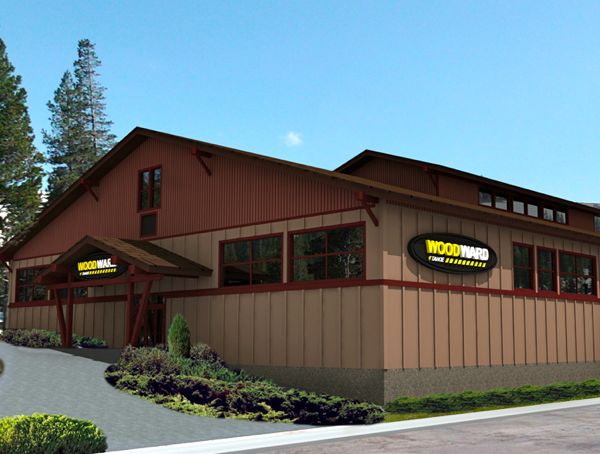
Boreal Mountain Resort is transforming itself into a year-round destination for freestylers from all sports. Known for its terrain parks attracting freeriders and freeskiers each winter, Boreal is hoping to capture more of the freestyle market with an indoor facility that will serve as part-camp, part-training ground for skateboarding, skiing, snowboarding, BMX riding and cheer-gymnastics.

The 33,000-square-foot facility is under construction next to the ticket windows, with plans to open the center – dubbed Woodward Tahoe – next summer, according to Boreal General Manager Jody Churich. The goal of the camp is to provide an action sports training center to youth and to provide Boreal with year-round business.

Boreal is becoming more than a ski resort.

Boreal is becoming more than a ski resort.

“It’s the economy of it … it’s very much the point of it to fill in the valleys” when there is no snow, Churich told Lake Tahoe News.

The project also is helping to fill the valleys of the local economy with Truckee-based J&S Construction building the camp. Churich estimates that the project would employee between 50 and 75 people during construction.

Churich said Boreal had been looking at the Camp Woodward program, based in Woodward, Pa., for about a year before deciding to contract with the company to build an instructional facility at the resort.

“Copper Mountain built in 2009 and we’re owned by the same company,” she said. “I looked at it and it’s a niche very heavily skewed in action sports and terrain parks.” She said that makes it a perfect fit for Boreal.

Powdr Corp., which owns Boreal and Soda Springs resorts on Donner Summit, recently acquired and partnered with Camp Woodward, Churich said. She said the decision to build Woodward Tahoe at Boreal was made before Powdr Corp. purchased Woodward.

Woodward Tahoe will be open for about 10 months of the year, Churich said, with closures likely in September and October for maintenance. The center will offer weeklong programs in a camp-like setting for the summer months, while also offering half- and full-day programs open to everyone the rest of the year.

The camps are geared toward action sports with an emphasis of freestyle instruction and will focus of snowboarding, skiing, skateboard, BMX and cheer-gymnastics. The programs will be open to kids as young as 7 to 8 years up to 17 years of age. The camps will be tailored according to age and discipline. The weeklong camps also will offer onsite lodging at existing facilities at Boreal.

Woodward Tahoe will open at Boreal in 2012.

Woodward Tahoe will open at Boreal in 2012.

When completed, Woodward Tahoe will feature an indoor skate park, ski-ride ramps, trampolines, a digital media area and foam pits. The foam pits are used for practicing freestyle maneuvers for all of the sports and contain large foam blocks that young athletes can use to practice grabs and other tricky maneuvers before trying them on the slopes or the parks, Churich said. As well, there will be an outdoor park and pipe for riding in the summer.

Churich said they believe there’s a market for more youth-based action sports camps and noted that a skiing and snowboarding camp offered in June at Boreal was a success.

In addition to facilities at Cooper Mountain in Colorado and the camp in Pennsylvania, Camp Woodward operates camps geared toward action sports in Wisconsin, Tehachapi, and Beijing.

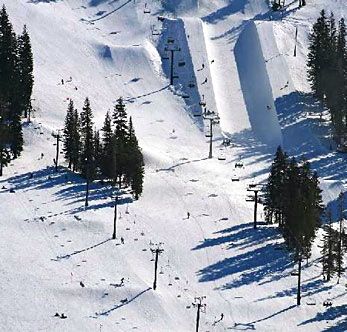
Boreal will be open for summer skiing and riding on July 23 with the Castle Peak quad chairlift running from 9am to 2pm, with a full terrain park and one run open. Beginner terrain will not be available, but rental equipment and food and beverages will be available. Tickets are $25.


Tahoe City rafters waiting for more water

By Emerson Marcus, Reno Gazette-Journal

TAHOE CITY — The serenity of river life brought Jack Simon, 22, back to Tahoe City this summer.

Simon, then an English major at DePauw University in Indiana, worked last summer as an intern for a Lake Tahoe entertainment guide. To earn extra money, he also worked as a river guide, taking rafters through the stem of the Truckee River.

“It’s the greatest job in the world,” Simon said of river rafting. “People spend a lot of money to do what I do every day.”

Simon graduated in May and two weeks later was back in Tahoe City. But since his return, the Truckee River Raft Co. has not sent one rafter down the river because of low water levels.

Simon has had to take a job at a local 7-Eleven. The lack of rafting also has hurt the economy in Tahoe City and forced many people to ask, “When are water levels going to increase?”

“I talk to the river raft people nearly every day,” said Bric Haley, manager at the River Ranch Lodge in Tahoe City. “We are always talking. We are always discussing when they are going to open the dam.”

Haley said 15 percent of reservations have canceled, primarily because of the absence of rafting.

“I have to admit, as tough as it is on the local economy here, the water master has no choice,” Haley said. “He has to do his job.”

Read the whole story


TRTA hosting 2 backcountry camps

The Tahoe Rim Trail Association will host two backcountry camps Aug. 6-7 and Sept. 3-5.

Both camps will be near the Mt. Rose trailhead of the TRT, at the top of Highway 431. Volunteers of all ages and skill levels are welcome to attend.

The TRTA’s backcountry camps are a family friendly way to work on the trail and enjoy the Tahoe outdoor lifestyle. Food will be provided, but in order to offset this cost the camp is $30 for the two-day August camp and $40 for the three-day September camp.

Families are welcome, and children’s camping equipment is available upon request.

For more information or to register, call Teresa Crimmens at (775) 298.0239.

Volunteers must bring their own camping equipment, and must wear long-sleeved shirts, long pants, boots and work gloves; bring sunscreen, bug spray and plenty of water. Check the weather reports and bring additional clothing as necessary. The Tahoe Rim Trail Association will provide hard hats and all trail tools.


Great gray owls finding a home in Placerville

By Tom Knudson, Sacramento Bee

Flip through a field guide to western birds and you’ll discover the great gray owl occupies the narrowest of ecological niches in California: dense conifer forests next to moist mountain meadows.

But lately, the elusive owl has been spotted swooping through much different terrain: the sun-baked Sierra Nevada foothills where – surprisingly enough – it is thriving on land owned by the state’s largest timber company, Sierra Pacific Industries.

The bird’s discovery south of Placerville has startled wildlife biologists and bird-watchers who have long considered the exceedingly rare, brownish-gray owl to be a stalwart of higher elevations, a winged icon of the wilderness.

“It’s pretty exciting they are being found this low,” said Graham Chisholm, executive director of Audubon California. “It shows the resilience of these birds.”

Read the whole story


Biking on busy streets linked to heart risks

Brett Israel, Environmental Health News

When Ed Campaniello chooses his biking route between his Mission District home and job in downtown San Francisco, traffic is a top consideration.

And new research shows that’s a smart move – not only because fewer cars mean less of a chance of being hit, but because polluting vehicles may give cyclists heart problems.

The 42-year-old solar energy consultant said it makes sense. Occasionally, he gets a funky taste in his mouth after riding behind trucks and buses.

“I consider bicycling part of what keeps me healthy,” he said. “But the benefits might be mitigated by the greater level of pollutants I’m being exposed to.”

A new study published in the journal Environmental Health Perspectives showed a link between biking in heavy traffic and heart health risks, with cyclists having heart irregularities in the hours after their exposure to a variety of air pollutants on busy roads.

Canadian study

The study by scientists from Health Canada, Environment Canada and the University of Ottawa does not suggest that bikers would be better off driving. Rather, the findings intensify the scrutiny on cyclists’ pollution exposure and point to simple solutions for a cleaner ride, such as avoiding busy roads whenever possible.

For the study, 42 healthy, nonsmoking cyclists in Ontario wore heart monitors before, during and after cycling for one hour on congested and uncongested roads. Instruments on the bikes measured exposure to air pollution.

Read the whole story


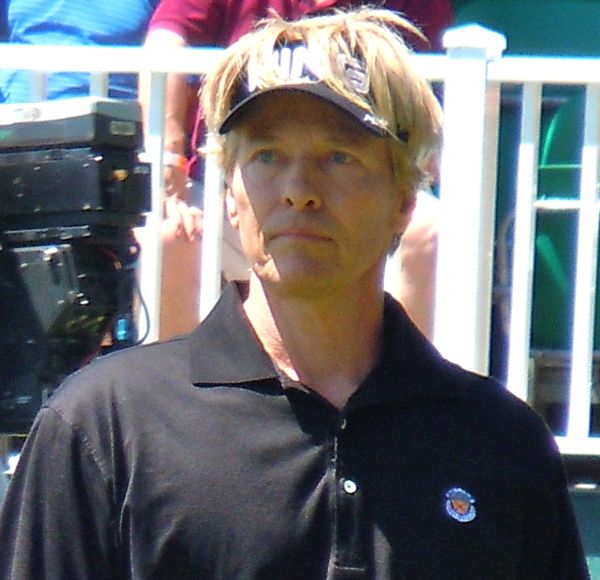
Wagner wins celeb tourney; Sakic sinks hole-in-one

By Dan Hinxman, Reno Gazette-Journal

STATELINE – The best golfer at Edgewood Tahoe this past week didn’t play a single hole in the 22nd annual American Century Championship celebrity golf tournament.

But he did play a major role.

PGA Tour player David Berganio Jr., caddied for longtime friend Jack Wagner, and when Wagner’s big lead began to evaporate Sunday, Berganio helped steer him to victory.

Jack Wagner

Jack Wagner

“It’s a combination of friendship and a pro going, you know, ‘Hey, dude, work through this. You gotta work through this,’” Wagner said after eking out a three-point win over Romo. “’You’re as good or better than anyone else out here on the greens. You’re the best putter by far in the tournament. Knock it in.’ …

“Today I stayed pretty positive. That’s a lot to do with David, by the way.”

Wagner, who led throughout the tournament, had a 10-point lead through the first nine holes over playing partner Tony Romo, but Romo’s six-point eagle on No. 11 closed the gap.

By the time the two reached the par-3 17th, Wagner’s lead was down to two. He sank a 10-footer for birdie right after Romo missed his 12-foot birdie try, and then both players hit their second shot on 18 into Lake Laimbeer. Romo needed to make about a 30-footer to force Wagner to get up and down in three shots, but he missed and Wagner claimed his second ACC title in five years.

It put the finishing touches on a day of quality golf, with Wagner shooting a three-under 69 and Romo shooting a 66. Wagner finished with 80 points, the second-highest total in the tournament’s modified Stableford scoring history (since 2003).

Wagner also became the first golfer since 2003 to go wire-to-wire, capturing the $125,000 check as the tournament celebrated a record weeklong crowd of 40,156, about 6.5 percent higher than the previous record set last year.

Wagner’s check was tiny, though, compared to the one Joe Sakic received. The retired NHL star aced the 167-yard 17th hole to win $500,000, nearly the amount of the entire purse ($600,000). The ace was worth $1 million, half of which goes to the Lance Armstrong charity, Livestrong.

Read the whole story