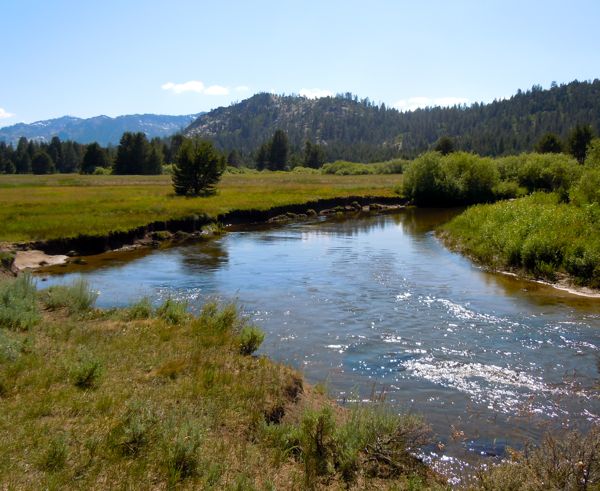
Dogs on leash allowed in Upper Truckee Marsh

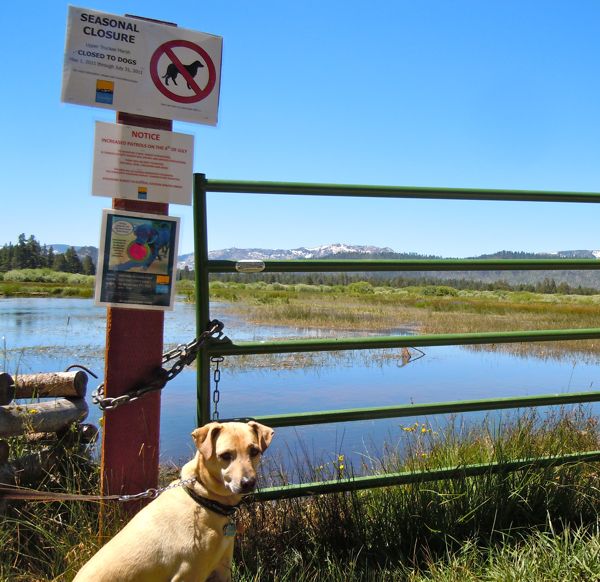
Dogs are allowed in the Upper Truckee Marsh if on leash. The canine ban was lifted today.

For three months dogs were not supposed to be in the South Lake Tahoe meadow that borders Trout Creek and goes to Lake Tahoe.

Even though Trout Creek is still exceeding its banks, AJ is ready to walk in the meadow. Photo/Kathryn Reed

Even though Trout Creek still exceeds its banks, AJ is ready to walk in the meadow. Photo/Kathryn Reed

Dogs running free was the problem. The animals threatened or destroyed wildlife habitat.

The California Tahoe Conservancy, which owns this sensitive piece of land, will evaluate the data collected during the closure in the coming weeks and present it to the board later this year.

No determination has been made if the seasonal closure will be instituted again.

— Kathryn Reed


Mixed martial arts specialists being groomed in S. Tahoe

By Kathryn Reed

Twenty-six seconds. That’s all it took for Corey Carlson to win his first mixed martial arts bout this summer.

Now the 24-year-old South Lake Tahoe resident is training for a match at MontBleu in Stateline this fall. A date for the cage fight has not been set. Also in the ring will be Ryan McCarthy and Paul Hubbell of South Lake.

The trio train at Escobar Training Grounds in their hometown.

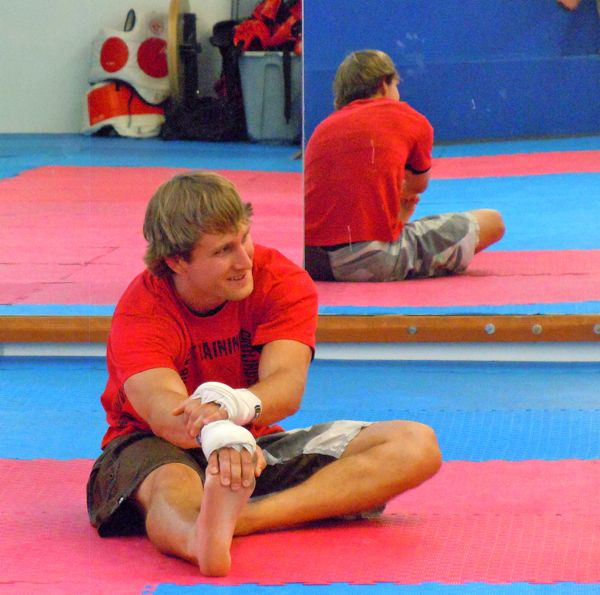
Corey Carlson stretches before he spars at Escobar Training Grounds. Photos/Kathryn Reed

Corey Carlson stretches before he spars at Escobar Training Grounds. Photos/Kathryn Reed

“I love the shape I’m in,” Carlson says.

He lost his first two bouts in the 170-pound division. Now he fights at the 155-pound level. Between diet, taking cardio workouts seriously and being more disciplined he got into better shape and dropped the weight he needed to be more competitive.

Standing, talking to him he doesn’t look imposing – especially with his boyish smile. Then the video of his win in Reno is played. Abs of steel, biceps that bulge and legs of iron. Don’t mess with this guy.

Being in great shape, proper mindset and accurate execution is what will take him to the level he aspires to – the Ultimate Fighting Championships in Las Vegas.

Mixed martial arts have been around a little more than a century, with the popularity in the United States having taken off more recently. It’s practically a free-for-all in the ring. Boxing, wrestling, jiu-jitsu, karate and judo are all allowed.

Competitors wear boxing gloves and are bare foot. Punching the other guy while he’s down is OK. Kicking is common.

A full round is 3 minutes, with three rounds being a full match. If a knockout isn’t scored, then the winner is determined based on points.

Carlson trains just about every day. When he’s not at the gym, he’s on his bike or running. Having reconstructive ACL surgery 18 months ago after landing a kick the wrong way has not slowed him down.

Escobar Training Grounds – better known as ETG – is not the typical gym.

Cory Escobar, who owns the facility with wife Dori, likes to call it a school instead of a gym.

“Every day you are being taught,” Escobar says. He’s hobbling around with a cast on his leg – the result of a water skiing accident.

Escobar grew-up in this lifestyle with his dad having a gym in South Lake in the early 1990s. He lived here from 8- to 13-years-old, and then moved back at 18. The 30-year-old opened the gym four years ago, but this is the third location because they needed to expand.

Three distinct areas are set up, with the front being where adult martial arts classes are going on. In the center is the regulation-size boxing arena. Behind it is where kids as young as 3 are learning karate. When they are done the sparring class takes over the mats. This is where Carlson is.

Most people are not on the competition track. Instead it’s about embracing the challenge of martial of arts.

Dori Escobar mostly teaches kids, with some adult karate classes. She has seen her students take the discipline and respect aspects learned at ETG and have them transcend to the classroom in terms of improved grades.

“Respect is a big one. We work a lot on moral integrity,” she said.

ngg_shortcode_0_placeholder (Click on photos to enlarge.)


Wildlife thrives on a N. Nevada desert island

By Jeff Delong, Reno Gazette-Journal

In a lake that’s arguably one of the most unique in the world, it’s a special place in its own right.

Anaho Island, located off the east shore of Pyramid Lake, is a volcanic formation studded with odd-shaped tufa deposits.

It’s one of the few American white pelican nesting colonies in North America. This year, thanks to plentiful water and lots of fish for food, four times the number of pelican chicks were produced than were last year.

A desert island in a desert lake, it teems with life — both feathered and scaled.

“This island is really amazing,” said Donna Withers, a refuge specialist with the U.S. Fish and Wildlife Service.

Withers, who spends her time on the island studying pelicans and other inhabitants, said this year was an important one for Anaho.

That’s because like other places, Anaho benefited substantially from a big winter that left a huge mountain snowpack, swelling the region’s rivers and streams and raising the levels of lakes and reservoirs.

One result was a huge spawning run for Pyramid Lake’s cui-ui fish, a primary food source for pelicans. A big year for cui-ui translates to a big nesting year for pelicans.

After only about 500 pelican chicks were produced during nesting season last year, roughly 8,000 adult pelicans converged on the island this spring and summer, producing about 2,000 juveniles, Withers said. The adults hung around in large numbers, producing and protecting their young because of the presence of plentiful food.

“With the amazing cui-ui run we had, that success will translate to the pelicans,” said Beverly Harry, environmental manager for the Pyramid Lake Paiute Tribe.

“It’s an amazing relationship,” Harry said. “The pelicans have always been here. This is their home.”

Read the whole story


A day at the beach Lake Tahoe style

By Kathryn Reed

ZEPHYR COVE – As captivating as Lake Tahoe is, it’s the people watching at the beach that can be more enthralling. And all those toys to play with in the sand and on the water. Kids have it good today.

Round Hill Pines Beach is a bit different than some of the other popular sandy destinations on the South Shore because it’s not all about the party scene and the best body.

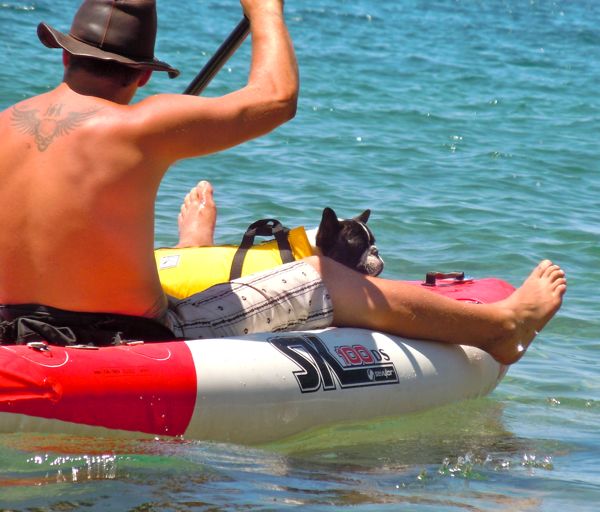
Man's best friend is well taken care of -- a free ride and zipped into a life vest. Photos/Kathryn Reed

Man's best friend is well taken care of -- a free ride and zipped into a life vest. Photos/Kathryn Reed

Families dominate the landscape on this particular Sunday. One dad is teaching his son how to pump a water gun, another is on a standup paddleboard taking his child for a cruise among the moored boats, while other parents are helping to build sand castles.

This is not to say adult activities are not taking place. The Rum Bar is right on the beach, offering up a slew of cocktails that make you want to sing a Jimmy Buffet tune. Food is served a few steps away in a permanent structure.

For those who didn’t bring their water toys, ones are available for rent. Personal watercraft is available and people are in the air parasailing.

Tour boats dock here, too – like Harrah’s Tahoe Star and the Bleu Wave.

A game of beach volleyball is being played, while others toss a football.

In 2009 this is where then Sen. John Ensign, R-Nev., hosted that year’s environmental summit. Much of the talk that year was about the fuels reduction project on this swath of land owned by the U.S. Forest Service.

Expect beach weather to continue as the calendar moves into August, even though there is a slight chance for afternoon thunderstorms today. Highs will continue to be in the 80s.

Getting there:

From South Lake Tahoe go east on Highway 50. Go past Elks Point Road. Turn left at the sign for Round Hill Pines Beach. Note there is no left turn lane and it’s a precarious blind spot.

Cost is $8 per vehicle.

More information is online.

ngg_shortcode_1_placeholder (Click on photos to enlarge.)


Lecture and hike about Tahoe’s volcanic history

Professor Frank DeCourten is giving a lecture one day and leading a hike the next about the volcanic rocks in the Lake Tahoe region.

He plans to reconstruct the volcanic history of the area in non-technical terms.

The Aug. 6 hike will provide opportunities to directly explore the volcanic rocks and landscape features along the portion of the Pacific Crest Trail between the trailhead on Old Highway 40, through the Sugar Bowl ski area and along the Judah Loop to Roller Pass.

The lecture is Aug. 5 at the Olympic Village Lodge, Squaw Valley. No-host bar social hour begins at 6:30pm, with the program at 7pm.

It is free for Squaw Valley Institute members, $10 for others.

The hike begins at 8:30am at the Pacific Crest Trailhead parking area off Old Highway 40 (Donner Pass Road). The fees are the same as the lecture.

Space is limited. Tickets may be purchased online.


El Dorado County woman ready to compete after near-fatal encounter

By Sam McManis, Sacramento Bee

Such plans Nicole Young made for her 40th year. She could hardly wait. In fact, she chose not to. She ramped up her running and bike training early last October so that, by the time the Big 4-0 hit in March, she’d be in prime shape to dominate her new age group.

“I figured, this is the year I’m on top of my game,” said Young, a distance runner and triathlete. “I’m just really going to go all-out and kick butt.”

Fate, in the form of an overlooked rock on a dirt trail, had other plans. A simple six-mile out-and-back training run near her Shingle Springs home on Oct. 21 changed her life. Nearly ended it, actually.

Young, a two-time defending ironwoman champion of Eppie’s Great Race, had just made the turn on the El Dorado Trail and needed to hustle back to pick up her two kids from school. She tripped on a rock and gouged her left knee. Nothing major, she thought. Didn’t even hurt. Yeah, it took three stitches to close it later at a drop-in clinic. But Young’s an endurance athlete, so she’s used to scrapes.

Four days later, a fast-moving antibiotic-resistant bacterial infection, whose genesis was in that seemingly innocuous knee injury, nearly killed her. She contracted necrotizing fasciitis, more commonly and ghoulishly referred to as “flesh- eating bacteria.” Five surgeries over the subsequent eight days – and an aborted sixth that would’ve resulted in amputation of her left leg – saved her life but left her mostly incapacitated.

Doctors at Mercy San Juan Medical Center told Young, whose kidneys had shut down and whose other organs were compromised during the ordeal, that it might be a year before she could walk again.

Read the whole story


Gnarly mountain bike trails sprouting up across the country

By Jim Carlton, Wall Street Journal

KETCHUM, Idaho — As mountain biking surges in popularity, federal land managers are building dozens of miles of special backcountry trails to accommodate adrenaline-junkie riders and cut down on crashes with hikers.

Dozens of one-way, so-called flow trails allowing bikers to ride downhill at breakneck speeds have been built across the U.S. in recent years, with more in the works. Many of these trails are built on Western public lands managed by the U.S. Forest Service and Bureau of Land Management. They are specially designed with jumps and berms to allow riders to flow unimpeded down the mountain without stopping, making the downhill-riding experience akin to skiing or sledding.

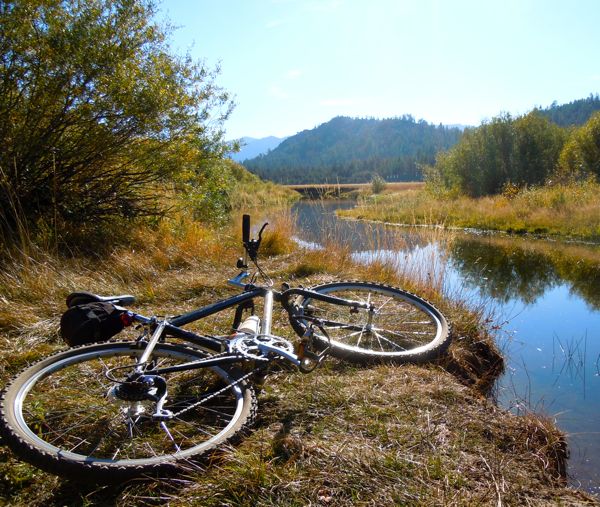
Lake Tahoe is joining the country in expanding mountain bike opportunities. Photo/LTN

Lake Tahoe is joining the country in expanding mountain bike opportunities. Photo/LTN

“It’s like a luge,” said 30-year-old Jeremy Newberg of Hailey, Idaho, after riding a flow trail called “Punchline” in the state’s Sun Valley this month. “It’s just awesome.”

As well as thrilling riders, the trails provide a legitimate alternative to guerrilla trails carved out illegally in some areas. And supporters say the flow trails help solve what backcountry visitors say is a growing problem: bicyclists careening into fellow trail lovers on foot and horseback.

“Most trails, you don’t know if someone is coming around the corner, but this you can trust going down,” says Tiff Koehn, a 37-year-old, Spandex-clad corporate pilot, after hurtling down another Sun Valley flow trail called “Forbidden Fruit.” It takes just three to five minutes to barrel down that 1.3-mile course.

More than two dozen locations nationwide now boast multiple flow trails, according to the International Mountain Bicycling Association.

The expansion in the number of these trails comes as mountain biking has grown from being the obsession of a handful of enthusiasts 30 years ago to a sport with 7.1 million participants, according to the Outdoor Foundation, a nonprofit group in Washington, D.C. Bikers are now the No. 2 users of backcountry trails after the 32.6 million hikers in the U.S., according a 2010 report by the group. Amid this growth, hikers have been struck by cyclists and seriously injured, and horses have thrown riders after being spooked by bikes.

“If [cyclists] are coming downhill, we have to be alert,” says Bob Anderson, a veteran horseman from South Lake Tahoe.

The conflicts have gotten ugly at times. In 2002, someone booby trapped a trail in Santa Barbara County with a wire designed to knock a rider off a bike. No serious injuries were reported, though some riders were shaken up by falls. No arrests were made, according to news reports at the time.

So far, the flow trails are drawing support from a wide spectrum of backcountry users. “The problem is when hikers, bikers and dogs intermix,” says Nick Hilbers, a 55-year-old hiker from Beaverton, Ore., who recently alerted local officials to an illegally made mountain-bike trail in a nearby city park.

These illicit trails have sprung up in several areas in recent years, helping spur the growth in sanctioned runs on federal lands. In the Lake Tahoe Basin, for instance, as many as 150 miles of unauthorized trails ringed the surrounding mountains a decade ago, says Garrett Villanueva, a Forest Service assistant engineer for the basin.

Read the whole story


USFS’ fish testing puts Upper Truckee River off-limits

By Barbara Barte Osborn, Sacramento Bee

Anglers and others wading in South Lake Tahoe’s Upper Truckee River could be in for a shock – literally – if they fail to heed warning signs.

Beginning the first week of August and continuing through the summer, U.S. Forest Service crews will be using electro-shocking equipment to temporarily stun and measure fish in the river.

USFS: Stay out of the Upper Truckee River. Photo/Kathryn Reed

USFS: Stay out of the Upper Truckee River. Photo/Kathryn Reed

The project is an effort to record data that will help evaluate the effectiveness of river restoration, said Cheva Heck, public affairs officer for the forest service’s Lake Tahoe Basin Management Unit.

The study will start at the river’s mouth near Tahoe Keys and work toward the Highway 50 bridge in Meyers.

“Members of the public should stay out of the water and keep dogs out of the water where crews are working,” Heck said. “A human or dog could receive a mild electric shock if entering the water while the fish sampling devices are on.”

Read the whole story


Quagga mussels found in 2 N. Nevada reservoirs

By Jeff Delong, Reno Gazette-Journal

Juvenile quagga mussels are present in Lahontan Reservoir and might also exist in Rye Patch Reservoir, a new round of tests indicates.

There is no evidence adult mussels are thriving or reproducing in either of the popular reservoirs, but the danger of that possibility must be taken into account as boating activity is managed across the region, officials said Tuesday.

Experts from the U.S. Bureau of Reclamation, U.S. Fish and Wildlife Service, Nevada Department of Wildlife and other agencies held a press conference to discuss the latest tests at Lahontan and Rye Patch.

Preliminary tests in April suggested microscopic mussel “veligers” were in both reservoirs. Subsequent tests, including DNA analysis, came back with mixed results, but Lahontan is now considered positive and Rye Patch “suspect” for mussels, said Andrea Minor, a specialist with the Bureau of Reclamation.

Read the whole story


Optimal cycling involves properly fitted bike, flexibility

By Kathryn Reed

Cycling is so much more than pedaling. To do so efficiently and without injury takes a bit of understanding about how ones body relates to her bike.

That was the message Jason Collin, physical therapist with Tahoe Center for Orthopedics, dispersed Wednesday night.

Besides being a PT, Collin has been a professional bike fitter for the past eight years. While the average rider may not go through all the testing Lance Armstrong did that resulted in changing the seam on his outfit for better aerodynamics, there are things people can do to reduce injuries from occurring and to improve performance.
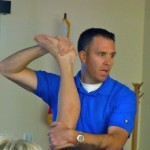
Physical therapist Jason Collin demonstrates flexibility tests for cyclists. Photo/Kathryn Reed

Physical therapist Jason Collin demonstrates flexibility tests for cyclists. Photo/Kathryn Reed

“I don’t fit people without cleats,” Collin said. “You can’t get it dialed in.”

With 30 percent of the power, on average, from cycling being from the pulling motion, that is lost without cleats.

“In the relationship between bike and rider, the flexible one has to be you,” he told the group of nearly 40 at Lake Tahoe Community College. “That is why you need to make sure your bike fits.”

Coming from Southern California a few years ago, he thought working in South Lake Tahoe would mean dealing with a lot of mountain bikers. He doesn’t know why, but this mountain biking community isn’t big into getting their bikes fitted.

While he didn’t go through the whole process of an actual bike fitting session, which can last two hours and costs $100 or $199 depending on the level of detail, he did explain what it’s like.

Colleague Chris Kozlowski was his model of sorts as she allowed Collin to manipulate her leg to test her flexibility in her hip and leg muscles, as well as to see if both legs are the same length.

Posture, biomechanics, flexibility and strength of the rider are assessed before the bike is even considered.

A tight hip might be detected. While this is common in most cyclists, it’s even more predominant in woman. It’s also linked to women’s increased ACL problems. When it comes to cycling, if the knee tends to go out, this is an indicator of a tight hip.

Collin is a proponent of exercises and stretches that are relevant to the motion of the sport the person participates in. During individualized assessments the therapists suggest strengthening activities and stretches applicable to cycling.

With all the power in cycling coming from how the body transfers movement to the tiny pedal, it’s important the ball of the foot is on the pedal and the rest of the leg properly lined up. Knee issues are the common injury when from foot to hip the alignment is out of whack.

While being in alignment is ideal, that may not be possible at the get-go based on how the rider’s natural alignment is. Forcing a straight alignment by altering the bike could lead to injury.

That is why the process is so individualized. And getting fitted for a road bike will not mean the same measurements will work on your mountain bike. The same goes for triathletes. They are all different sports.

When it comes to adjusting the seat the most common situation is to find people riding with it too low, Collin said. And sometimes it’s too far forward because people want to sit up straighter.

But creating a stable platform, as he calls it, will create power.

The place where more subjectivity comes in is with the handlebars, or cockpit of the bike. People complaining of neck, wrist and low back pain when cycling may need this part of the bike adjusted.

Much of this adjustment is about comfort.

For more information about a fitting, call (530) 543.5896 or click bike program.

This is one of a series of free lectures Barton Health has put on throughout this year. There are three more scheduled to date in the Wellness Lecture Series.