Volunteers needed for annual Forest Stewardship Day

The 2011 Tahoe Forest Stewardship Day is partnering with the Incline Village General Improvement District to focus on fuel reduction, native vegetation rehabilitation, trail and stream restoration, biomass cleanup and educational outreach.

The 14th annual event is Sept. 10 from 9am-2pm in Incline Village. It is open to all ages.

Wear sturdy shoes, long pants and bring water and snacks. Tools are provided.

Orientation is at 8:30am at the Village Green Park, 960 Lakeshore Blvd., Incline.

For more information, call (530) 541.5388.


Weekend of golf helps military members hurt or killed in action

For Patriot Golf Day 2011, Old Greenwood and the Golf Club at Gray’s Crossing have planned a Labor Day weekend of events to raise money in support of families of military persons who were killed or disabled while in service. A portion of all proceeds will go to The Folds of Honor Foundation.

Patriot Golf Day is the flagship fundraiser for the Folds of Honor Foundation, a nonprofit organization that provides post secondary educational scholarships for the children and spouses of military men and women disabled or killed while serving. The Patriot Golf Day campaign is jointly supported by the PGA of America and the United States Golf Association.

In honor of Patriot Day Sept. 1-5 green fees are $100 at both courses; twilight rate is $75. For a tee time, general information and a complete listing of 2011 season rates, go online. Golf reservations may be made up to 30 days in advance. Special NCGA rates are available. Or call (530) 550.5800 for Gray’s Crossing and (530) 550.7010 for Old Greenwood.

Patriot Golf Day has raised more than $8 million in the past four years, and the Folds of Honor Foundation has awarded more than 2,100 scholarships.


Tennis players being aced out of court availability

By Kathryn Reed

Tennis doesn’t get talked about much as a reason for tourists to visit the South Shore, while Tahoe City and Truckee are a draw for people looking for good courts.

Maybe it has something to do with the quality of and accessibility to courts in and around the Lake Tahoe Basin that makes the difference.

But it’s also locals on the South Shore, particularly on the California side, who are put off by what is going on with the myriad courts.

Lack of accessibility to South Tahoe High School's tennis courts is an issue for the public paying for them. Photo/Kathryn Reed

Lack of accessibility to South Tahoe High School's tennis courts is an issue for the public paying for them. Photo/Kathryn Reed

Lake Tahoe Community College has offered tennis classes for years, and will again this fall. It used to be taught at Tahoe Paradise Park, then South Tahoe Middle School and now at South Tahoe High School.

The college’s master plan includes courts, but last week they were stripped from the five-year facilities schedule because college President Kindred Murillo said there’s no way they’ll be built in that time span.

LTCC’s classes keep changing locations because the courts keep deteriorating to the point they are dangerous to play on.

The three courts at Tahoe Paradise Park near Meyers were locked because of the horrible condition they were in. Two have been resurfaced, but are sitting without paint and lines – therefore, unusable. The groundskeeper says expect them to be playable in September. Only two are being fixed; the other is left as an eyesore.

The four courts at South Tahoe Middle School are open to anyone, but a “use at your own risk” sign should be placed there because of the numerous cracks.

South Tahoe High School’s six courts were resurfaced as part of the Measure G bond that was passed by voters in 2008. The problem is accessibility.

The district wants to keep its $400,000 investment pristine, but that means a lock is on the courts when no one is there monitoring them. Skateboarder and cyclists are the users not wanted on the courts.

Justin Clark has the key. But it requires calling him ahead of time to open the courts or go during scheduled public time. For instance, Lake Tahoe News went to the courts on Wednesday at 1:30pm and found them locked, no one playing. The STHS court schedule does not favor the public when the high school tennis teams are not using them.

And the schedule is not posted on the courts – you’d have to read this story or have another connection to know the hours.

Clark is also LTCC’s tennis instructor. Plus, he runs a for-profit tennis academy at the courts.

“We are not getting money from him. He has to put money back into the facilities, like $3,000 worth of backboards that he paid for,” Lake Tahoe Unified School District Superintendent Jim Tarwater said of Clark.

Those backboards should be up by the end of the month, according to Clark.

People have been dismayed they have to pay to use the courts when in the past they have been free. People have been complaining to Lake Tahoe News that they don’t want to have to reserve a court, nor do they want to pay Clark.

To appease the general public, some of who are the taxpayers paying for the courts, the district is looking at putting in a card key for next summer. Rates have not been established, nor how it would work for the person just wanting to play once or twice.

This source of revenue for the district could then be used for future upkeep to the courts, and not go into an individual’s pocket – something people have concerns with.

Clark would like to turn the courts at STHS into what Douglas County has at Zephyr Cove Park. It costs to play at those six public courts, plus there is a ladder and other tennis events.

The Tahoe Tennis Classic was at Zephyr Cove earlier this month.

Other tournaments in the basin include the 30th annual Incline Open that was last weekend and the Northstar Tennis Open the weekend of Sept. 10-12.

Incline Village Tennis Center has 11 courts.

Northstar-at-Tahoe has for years been singled out in Tennis magazine as a place to travel to play tennis. It has 10 courts and tons of camps for all ages.

Granlibakken resort in Tahoe City has been home to the Nike tennis program for years.

Tahoe City Public Utility District Parks and Recreation runs public courts –eight of them.

The only covered court in the basin is at Ridge Tahoe on Upper Kingsbury Grade. To use it, you must be a guest or owner of a time-share.



Prosthetics blur line between disabled and able-bodied athletes

By Alexander Wolff, Sports Illustrated

Examine what military tacticians call the tip of the spear—the leading force in combat—and you’re liable to find 1st Lieut. Melissa Stockwell, U.S. Army (ret.). It’s a role she has embraced since April 2004, when a roadside bomb in Baghdad blasted off all but six inches of her left leg and made her the first female American amputee of the Iraq war. Four years later, as a swimmer, she became the first veteran of that conflict to qualify for the Paralympic Games. Now, having just passed her board exams to become a certified prosthetist, she figures to be a very busy woman, spearheading yet another movement.

Stockwell leads a generation of disabled veterans of the Afghanistan and Iraq wars who are becoming elite athletes. The combined number of vets on the U.S. teams at the 2008 Summer and ’10 Winter Paralympics jumped to 21 from a total of seven at the previous Games, in Athens and Turin. At next year’s London Paralympics, U.S. officials estimate that 20% of Team USA will be composed of veterans. That infusion has helped the U.S. creep up in the medal count, from fifth to fourth to third, over the last three Summer Paralympics.

Stockwell’s cohort stands poised to deliver more than medals, however. It’s the vanguard of a revolution in attitudes toward people with disabilities. “My prosthetic is definitely a badge of honor,” says Stockwell. “I’ll walk around in shorts and flip-flops.” At the same time, tens of millions of dollars from the departments of Defense and Veterans Affairs are funding advances in prosthetic technology so profound that they raise essential questions about what it means to be human.

To meet the growing demand from wounded warriors, the U.S. Olympic Committee is disbursing $7.5 million donated by the VA to help not only veterans but also active-duty soldiers. Since 2004 U.S. Paralympics has been hosting military sports camps to enhance the rehabilitation of veterans and active service members with disabilities. Meanwhile the USOC and the DOD are ramping up events such as the Warrior Games, which were staged for the second time, in May, in Colorado Springs, with 200 physically impaired vets and soldiers competing in seven sports.

People who work with them agree that soldiers are athletes to begin with, and injured ones are like any jock aching to get off the DL. “It’s amazing how many say to me, ‘I’m going to be your best patient,'” says Peter Harsch, director of prosthetics at the San Diego Naval Medical Center. “Their driving force is, Number 1, to get back to their division or squad. But then, this is a military where everyone had a choice whether to go into it.” (As many as 18 percent of amputees return to active duty, most of them to noncombat jobs.)

When Stockwell arrived at Walter Reed Army Medical Center in Washington, D.C., her very survival still hung in the balance. After 15 operations, 20 blood transfusions and a series of infections, she was turned over to Walter Reed’s therapists. “I looked around and saw people missing two, three and four limbs, people with traumatic brain injury and lost eyesight,” says Stockwell, who had been a rower and diver at Colorado. “It motivates and inspires.” After one year at Walter Reed and two more dedicated to swimming, she was still a long shot at the 2008 U.S. Paralympic trials, yet she lopped a staggering 17 seconds off her previous best in the 400-meter freestyle to make the team. (She did not medal in Beijing but carried the U.S. flag at the closing ceremonies.) Now a paratriathlete, Stockwell won gold in the severe leg impairment category last September at the world championships in Budapest. “I’ve done more with one leg,” she says, “than I ever would have done with two.”

Read the whole story


White signs with Vail; Northstar to be home resort

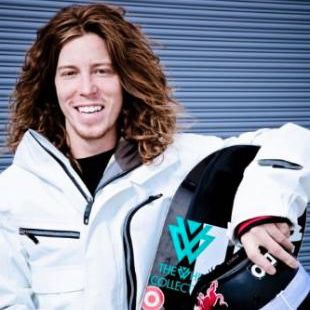
Two-time Olympic gold medalist, professional snowboarder and skateboarder Shaun White has signed a multi-year deal to represent Vail Resorts’ six mountains.

Northstar-at-Tahoe will become his home mountain and primary training site. He plans to design a 22-foot halfpipe for aspiring snowboarders.

As part of the launch of the new relationship, Vail Resorts will donate $5 for each Epic Season Pass sold to White’s chosen charity, St. Jude

Shaun White

Shaun White

Children’s Research Hospital. In addition, White will be designing a limited edition Epic Season Pass, which will be available to Epic Season Pass holders this fall through a Facebook promotion.

White was recently honored with the 2011 ESPY for “Male Action Sports Athlete” for the fourth consecutive year.

— Lake Tahoe News staff report


Yosemite deaths: Americans may have lost respect for nature’s risks

By Matt Weiser, Sacramento Bee

YOSEMITE NATIONAL PARK – Just three weeks after death laid a heavy hand on the Merced River, sweeping three tourists to their deaths over Vernal Fall, life went on for a new crop of visitors, some of them oblivious to the danger before them.

On Wednesday, children waded in a small eddy just 50 yards from the edge. Some playfully teetered on a log that separated the eddy from the river’s torrent. Upstream, a man swam across Emerald Pool and back, crossing the Merced River current and ignoring warnings and prohibitions posted nearby.

It was just another summer day at Yosemite, one of many natural wonders in California that routinely tempt people to toy with danger.

The park has seen 14 deaths this year. That is about double the average for the season, but not record-setting.

There have been dozens of other deaths across the state, including ski and snowboarding fatalities during the winter, and numerous drownings in the months since, including two professional kayakers killed separately on remote Sierra Nevada creeks in recent weeks.

It is the kind of year that causes experts and casual hikers alike to question their relationship with nature. Are we underestimating the risks of commonplace outdoor recreation? Have modern Americans – taskmasters behind a steering wheel and in front of a computer – simply lost respect for nature’s whims?

Read the whole story


Meetings set to decide projects for Tahoe National Forest

By Barbara Barte Osborn, Sacramento Bee

A bi-county advisory committee for the Tahoe National Forest has scheduled three meetings in September to discuss funding for projects that will benefit the forest.

The Nevada/Placer County Resource Advisory Committee has approximately $300,000 to allocate for projects in those two counties.

The purpose of the meetings is to review and vote on previously submitted projects that the committee will then recommend for funding.

Read the whole story


The truth about pain: It’s in your head

By David Epstein, Sports Illustrated

Cross-country skiing around a wide, icy curve, Petra Majdič slid off the course during a warmup for last year’s Olympic women’s individual sprint at Whistler Olympic Park outside Vancouver. She fell 10 feet into a craggy creek bed, her chest hitting rocks. The impact snapped her ski poles and splintered the tip of one ski.

When volunteers rushed to her aid, she screamed at them to take her to the start of the qualifying heats, which began in 20 minutes. Her coach, Ivan Hudac, and her sports psychologist, Matej Tušak, told her she could attempt to ski, and if the pain was too great, she could drop out. And so she tried. Majdič completed the 1.4-kilometer course, finishing 19th of 30 qualifiers, before collapsing and screaming in pain. She still had three more rounds of races to go.

Majdič, a 31-year-old from Slovenia, had come into the one-day competition as the favorite. She was expected to win several medals in Vancouver. Four years earlier an equipment mishap—she used cold-weather skis on an unexpectedly warm day—had kept her from a medal in Turin. Now her Olympic dream would come down to how much pain she could tolerate over the next five hours.

After the qualifier, Majdič was taken to an on-site medical tent for an ultrasound. If her ribs were broken, she wouldn’t continue. The excruciating pain from snapped ribs can stop even the toughest athletes, and perhaps no sport puts more strain on the body’s core than cross-country skiing. If it was only pain, though, maybe Majdič could go. For the last two decades she had spent hour after hour trudging through snowy woods, her legs and lungs burning, forging a relationship with pain. “The beauteous things in life are born from pain,” she says. “For example, a child is born from great pain. In summer, in autumn, in winter, I struggle with pain, so my pain level is really [high].” In 2008, when her boyfriend of six years couldn’t understand her obsessive training any longer, she chose skiing, her first love, and that too hurt. Now, in Vancouver, she couldn’t give in to “just pain.” With the quarterfinal heat less than 90 minutes away, doctors didn’t have much time to assess her condition. On the ultrasound, nothing appeared to be broken. It’s just pain, the team doctor told her.

Majdič won her quarterfinal race, but afterward, ashen and hunched, she told Hudac she couldn’t go on. It felt, as Majdič later put it, “like when somebody would all the time give you a knife” in your chest.

“She had a crisis,” said Tušak. “We tested her, and she could not go five meters up a hill and turn around. She could not sit, so she was lying down, and when she stood up she was [hunched over]. But doctors told us nothing is broken, and I told Ivan, if nothing is broken, we go on. If we let her quit, she will be mad at us. This is her last chance to get a medal.”

So Majdič continued. For the semifinals, her coaches again told her just to try. She finished fourth out of five in her heat but, based on time, qualified for the six-woman final.

During the 20 minutes between the semifinal and final, the pain got still worse. Majdič could hear a gruesome click, click in her chest—her ribs moving. “That’s when I know it was something serious,” Majdič says. She couldn’t take an injection of painkiller, though, because it would numb the muscles she needed to race. Tušak talked to her about Kerri Strug, the U.S. gymnast famous for her gold-medal-clinching vault on an injured ankle at the 1996 Olympics, and about Majdič’s 22 years of sacrifice. He reminded her that her arms and legs were still working. He talked to her about the pain she was feeling. He convinced her that it was in her head.

“I had a great team—coach, doctor, a [ski] service team,” Majdič says. “You have to understand, these are people who are coming from the same [country] as I do. We were just always poor in the cross-country skiing world. Now for four years when I’m on top, we are showing the world, don’t joke with small nations because we can beat you!”

In the final Majdič started outside but pushed through and finished third, fending off Anna Olsson of Sweden for the bronze. Five hours of pain had ended in Slovenia’s first medal in cross-country skiing.

Read the whole story


Organized ride on South Shore bike paths

On Sept. 18, Lake Tahoe Bicycle Coalition’s board of directors will lead a recreational bike ride along South Lake Tahoe’s bicycle path system.

The ride starts and ends at Blue Dog Pizza at the north end of Raley’s Shopping Center near Stateline.

The ride begins at 1pm and is expected to last 3 to 4 hours and travel 15 to 20 miles. The ride is free and open for everyone interested in a relaxed pace ride, stopping for photos, and chatting about the bike paths and surrounding areas.

RSVP to biketahoe@aol.com.


Disc golf tournament at Squaw

Squaw Valley is hosting the resort’s first PDGA-sanctioned professional and amateur disc golf tournament Aug. 20-21.

The tournament will consist of two rounds of 18 holes, one round per day.

The only lift-accessed disc golf course in the Lake Tahoe region, Squaw Valley’s course is of championship caliber. Holes 1, 2 and 18, located directly behind the High Camp complex, account for the easier holes on the course, while holes 3 through 17 offer a more extreme challenge as the course winds down and up Squaw Valley’s Rainbow Bowl under the Solitude chair lift.

Registration for the Squaw Valley’s Pro/Am disc golf tournament ranges from $40 to $80, depending on bracket level, with $10 off for PDGA members. Discounted Cable Car tickets are included in the entry fee. Participants can go online for further details and registration forms.