N.Y. lake putting deep freeze on Asian clams

By Scott Rapp, Post-Standard

Cayuga County has a chilling plan to kill the swelling population of Asian clams at the north end of Owasco Lake.

The county is planning to freeze the critters to death by lowering the winter lake level by one more foot than usual to 709 feet above sea level in November.

Dropping the lake level an extra foot is expected to kill an estimated 90 percent of the tiny mollusks, an invasive species that could wreak environmental and recreational havoc on the lake if left unchecked.

Tens of thousands of the clams are living mostly in sandy-bottomed water less than six feet deep in an area that encompasses about 123 acres at the north end of the lake, according to a recent study. Initially, officials estimated the clams, first spotted in the lake a year ago, had invaded about 15 to 25 acres near Emerson Park.

The clams are tiny but can cause big problems, like those being seen in Lake George and Lake Tahoe. Asian clams can trigger toxic blue-green algae blooms, which can ruin boating and swimming, and can make people sick and cause animals to die. Also, the clams can clog water intake pipes and befoul water quality.
Read the whole story


Nevada game wardens dealing with pot on public lands

By Jeff Delong, Reno Gazette-Journal

Hunters, anglers and field scientists face a new danger tromping through Nevada’s backcountry — one that is also requiring increasing time and attention of the state’s limited force of game wardens.

Officials of the Nevada Department of Wildlife report a “tremendous increase” in illegal marijuana cultivation on public land in recent years, with much of the activity associated with violent Mexican drug cartels.

“It’s been on our radar screen for years but not on the front of our radar screen,” Chief Game Warden Rob Buonamici said. “It is now.”

Indeed, dealing with marijuana grows is becoming one of the basic duties of game wardens, right along with checking hunting and fishing licenses, arresting poachers and conducting boat patrols, Buonamici said.

Read the whole story


Preparing for winter includes outdoor house projects

By Susan Skorupa, Reno Gazette-Journal

Look out the window or the back door; stroll around the house, paying attention to the things you’ve overlooked all summer.

The gutters under the roof eaves already are filling with leaves, the back deck is scuffed and splintered in some spots, a few roof shingles look ragged.

Already in the evening, chilly drafts are seeping inside from around doors that open to the outside or the unheated garage. Window curtains dance with the slight breeze around unopened windows indicating some kind of unsealed space where the outside is creeping inside.

Winter’s coming. Time to clean the furnace and boost the amount of insulation in the attic, but it’s also time to look at the exterior of the house. What’s going on with roofs, gutters, windows, doors and outdoor living areas needs attention, too.

Where to start? No. 1 on the list: Caulking. Door frames and window frames inside and out can let cold air inside.

“Caulking today is more scientific than it was 10 years ago,” said Chuck White, field divisional merchandising manager for the Home Depot western division. “At minus 50 or at 110 degrees, you can put it on. The technology has grown and it lasts longer; it’s easier to use and consumer friendly. It’s the No. 1 repair that do-it-yourselfers can do.”

Look up on the roof. Rather than climbing around on the shingles, scan the roof for loose shingles or flashing or possible weak spots from a ladder or from inside a neighbor’s house.

Read the whole story


Fallen Leaf Lake trying hard to keep out AIS

By Kathryn Reed

Not everyone at Fallen Leaf Lake believes enough is being done to keep out aquatic invasive species.

This South Shore lake has no invasive species and residents want to keep it that way. But with Lake Tahoe just a mile away, that could be difficult. The much larger lake is home to unwanted plant life such as milfoil and animals like Asian clams.

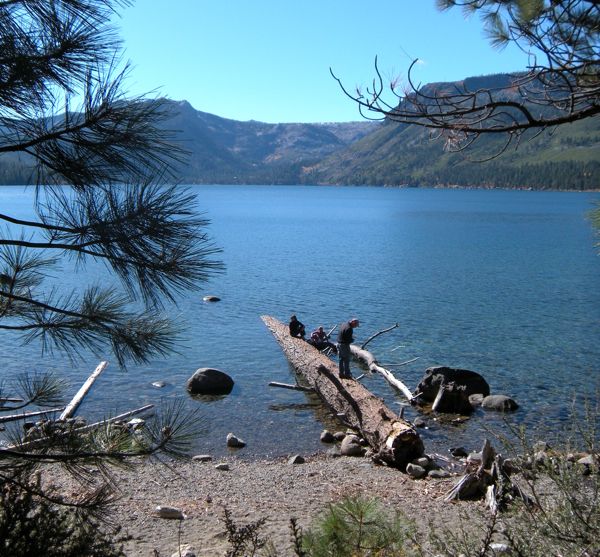
Fallen Leaf Lake wants to remain uncontaminated of aquatic invasive species. Photo/LTN file

Fallen Leaf Lake wants to remain uncontaminated of aquatic invasive species. Photo/LTN file

It’s mandatory to have boats and trailers washed when launched at Fallen Leaf Lake. What some would like is a station at the other end of the lake at the campground.

Residents have set up a website to help educate people about aquatic invasive species, or AIS.

“We are hoping to get support from community members and the visiting public to help convince the USFS to do the right thing and let us help them by installing and operating the boat decontamination station at the campground,” Fallen Leaf Lake resident Mike Kraft told Lake Tahoe News. “If we can do this, we will be able to decontaminate nearly 98 percent of the boats being launched into the lake. This will help preserve the health and beauty of Fallen Leaf Lake for our future generations.”

The Forest Service owns the campground. The policy is to screen people as they come into the campground and explain the clean-drain-dry protocol. It’s kayaks, canoes and rafts that are launched from the campground.

This July 2011 document explains the USFS policy surrounding AIS.

“We follow TRPA’s protocols and rules for boat inspections,” explained Cheva Heck with the USFS.

Kraft, though, believes more needs to be done.

“We have even offered to provide, install, operate, and maintain the system so there is absolutely no cost to the USFS and they still will not help us protect Fallen Leaf Lake,” he said.

The Forest Service believes it is doing what it can.

Tahoe Keepers was launched this summer as an entity to work with the paddling community to become educated about AIS. The issue with paddlers is they launch at places other than marinas and therefore are not subject to the AIS inspections.

Even though the devastating quagga and zebra mussels have been around for decades, those in charge of waterways have been slow to implement policies to keep them out. It won’t be until next year that Truckee area lakes impose mandatory inspections. Quagga mussels have been found at the Lahontan and Rye Patch reservoirs in Northern Nevada.

An idea that has been floated but is not known to be in place anywhere is to decontaminate vessels when they leave a lake known to be contaminated with an aquatic invasive species so they would not be able to be transported elsewhere.


Winter weather about to hit Lake Tahoe

The first winter storm warning of the season has been issued – 12 days into fall.

The National Weather Service in Reno is calling for the severe weather from 11 tonight through 1pm Thursday above 7,000 feet.

The heaviest mountain snow is expected late tonight into Wednesday morning, with snow showers continuing into Wednesday evening. When it’s over, 5 to 10 inches may have fallen above 7,000 feet, with slushy snow expected at lake level.

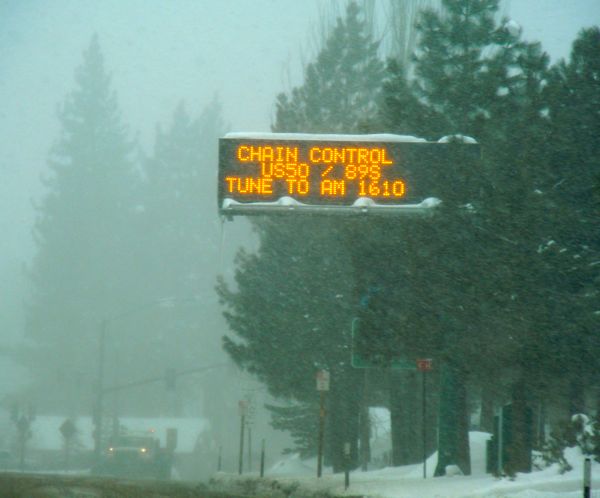
Expect chain controls this week in the Sierra. Photo/LTN file

Expect chain controls this week in the Sierra. Photo/LTN file

Wind will likely be an issue, which will make for interesting driving conditions. With this being the first moisture of the season, the roads will be particularly slick because of oil accumulation for the past few months.

Winds will be out of the southwest at 15 to 25 mph, with gusts up to 40 mph below the ridges. Ridge gusts could hit 100 mph late Tuesday night and early Wednesday morning.

The snow level will likely drop below 6,000 by late Wednesday morning.

The weather is such that California Emergency Management Agency acting Secretary Mike Dayton is urging residents to be prepared for the unseasonably chilly and powerful storm by having at a minimum an emergency supply kit that includes a three-day supply of drinking water for each person, food, a first aid kit, battery-operated radio, flashlight, extra batteries, cash and manual can opener.

— Lake Tahoe News staff report


Horses’ health is primary concern during Tevis Cup 100-mile ride

By Sam McManis, Sacramento Bee

Much as we might be inclined to anthropomorphize horses – Mr. Ed, anyone? – much as we’d like to put faith in rugged-as-Robert Redford “horse whisperers” to intuit deep meaning from every neigh or nod, the sad fact is that even the elite equine athletes in the Tevis Cup 100-Mile Trail Ride are sorely lacking in one important area.

“They don’t talk,” said Garrett Ford, last year’s winner of the Haggin Cup, awarded to the top-10 finisher in the Tevis whose horse was judged as best conditioned. “That, obviously, is the challenge.”

Oh, but think how much easier caring for and racing endurance horses would be if a common interspecies language were indeed possible.

They could tell riders and race veterinarians when, and exactly where, they are hurting.

They could say why they won’t drink when they’ve gone too long without fluids on the trail and why they refused to chew hay and grain offered at a checkpoint.

They could explain why their pace has suddenly slowed, why they seem knackered when they should be at a brisk canter, why that pail of cold water dumped on them during the heat of the day has withered their withers.

As it is, though, the many problems that can beset a horse in an endurance ride such as Tevis – which starts Oct. 8 and goes from Squaw Valley to Auburn along the Western States Trail – remains an educated guess, something to be determined by experts only through a battery of diagnostic procedures performed at 10 checkpoints along the course.

There, horses will be poked, prodded and inspected nostril-to-hoof by equine veterinarians. They will have their pulses checked, their respiratory systems monitored, their skin pinched and gums pressed, their muscles palpitated, their gastrointestinal tracts listened to, even their mucus examined.

Think of a Tevis vet check as the equine equivalent to a NASCAR pit stop – the big difference being that it takes a lot longer and is considerably more thorough.

Even the fittest horse, whose heart rate slows quickly when resting and who appears fully hydrated, will spend 10 minutes idling at mandatory stops. If a horse’s metabolism cannot recover within 30 minutes, or is deemed physically unsound, it is pulled from competition.

Read the whole story


Pile burning in Angora could begin this week

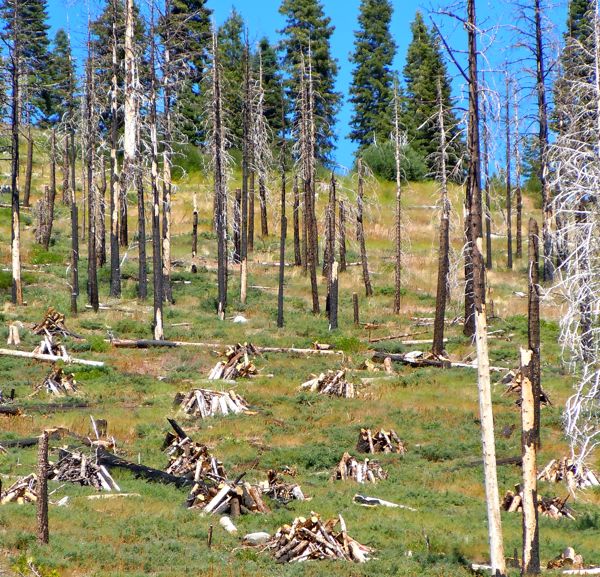
U.S. Forest Service fire and fuels management crews plan to begin prescribed fire operations in the Angora Fire area this fall, burning piles created during the fuels reduction component of the Angora Ecosystem Restoration Project.

Operations could begin this week.

Burning the piles is the last step in the fuels reduction process in these units, which have been treated by hand. Fuels reduction using mechanical equipment continues in other parts of the fire area. Fuels reduction efforts, including prescribed fire, in the Angora Fire area aim to reduce the long-term risk of high intensity wildfire.

Piles stacked this summer in the Angora area could begin to be burned this week. Photo/LTN

Piles stacked this summer in the Angora area could begin to be burned this week. Photo/LTN

The piles border the neighborhoods around Tahoe Mountain Road, Fallen Leaf Lake Road, North Upper Truckee, South Tahoe High School and Gardner Mountain. If a window of good weather conditions occurs, crews will burn as much of the approximately 440 acres of piles as they can accomplish safely and while minimizing the effects of smoke on local communities. If crews light a significant number of acres at one time, the project may produce a smoke plume resembling that of a wildland fire.

Forest Service fire and fuels management staff monitor weather conditions closely prior to prescribed fire ignition. They are looking for conditions that will carry smoke up and out of the Lake Tahoe Basin. Crews conduct a test burn before igniting a larger area, to verify how effectively fuels are consumed and how the smoke will travel.

Other federal, state and local fire management agencies may also be conducting prescribed fire work during this period.

To directly receive prescribed fire updates, send an email to pa_ltbmu@fs.fed.us. Forest Service staff will post road signs around areas affected by prescribed fire, and update the local fire information line at (530) 543.2600, No. 6.


Grant will fund parking at Tahoe Vista Rec Area

The North Tahoe Public Utility District has been awarded $1.42 million from the Department of Boating and Waterways for construction of the parking lot at Tahoe Vista Recreation Area.

This funding, along with $500,000 from Placer County Redevelopment Agency and $500,000 from the North Lake Tahoe Resort Association Infrastructure Funding allow the district to move forward with construction in 2012 once all permits are in hand.

Completion of this parking lot will provide the final critical element for the Tahoe Vista Recreation Area. Beginning with property acquisitions dating back to 1991, funded by the California Tahoe Conservancy, more than $10 million has been spent on this prime public lakefront property including acquisition, permitting, environmental documents and construction. Funding for construction has come from the California Department of Boating and Waterways, CTC, Placer County and NLTRA.

The initial phase of the project included most of the lakefront amenities and was completed in summer 2005. In 2010, the boat launch was dredged and courtesy docks installed in the harbor. This final phase of the project will provide parking for 21 boat/trailers and 41 vehicles. The parking will be located on the northwest corner of Highway 28 and National Avenue.

The district anticipates going to bid for this project in spring 2012 with construction being completed in the fall. Public meetings regarding this project will be announced once they have been scheduled.


8th-grader’s pedaling prowess benefits Boys & Girls Club

By Paula Peterson

What started as a challenge during a spin class turned into a fundraising effort of more than $1,000 by South Tahoe Middle School eighth-grader Mykala Muskovitz.

Muskovitz was in a spin class with her mother when local businesswoman Jana Walker Spano proposed a challenge. Spano would donate $300 in Mykala’s name to the Boys & Girls Club if she finished the Tour de Tahoe on Sept. 11.

Mykala Muskovitz, center, did more than ride 72 miles. Photo/Paula Peterson

Mykala Muskovitz, center, did more than ride 72 miles. Photo/Paula Peterson

Muskovitz spent her summer getting ready for the 72-mile ride, which included weekly spin classes and finding a bike that could handle the trek. Bike, riding shoes and clothing in hand, she joined her parents, Adam and Wendy, that Sunday morning and the three proceeded to complete the ride in six hours.

They stopped only at official rest stops even though the tough uphill climb near Sand Harbor would have made the best of bike riders want to take a break. When other people heard about Muskovitz’s challenge by Spano, they wanted to be part of the fundraising efforts. Money came in from several people and Muskovitz was able to present the Boys & Girls Club with a check for $725.

Local businesses that helped the fundraising besides Spano’s Sealed With a Kiss and Lakefront Wedding Chapel businesses were Steve Kosmides of Lake Tahoe Plumbing & Heating, House & Garden Nutrients, Kevin and Ashley Evans of Southeast Freight, Steve and Trina Jones of NXT Ventures, Kristi Jouett of Sierra House Elementary, and Julianne Mehrtens of Skinapeel.

But it doesn’t stop there. With the help of Spano, Muskovitz is going to take the remaining $300 she raised and start a fund for Christmas shopping for the children of the South Lake Tahoe Women’s Center.

Spano is sharing the “service above self” Rotary philosophy with young people as well as her employees in hopes of inspiring a future generation of philanthropists to be more community minded. She was proud to see Muskovitz accept the challenge without question and said, “Her motivation to help those kids far outweighed the overwhelming physical exhaustion she experienced. Never once did she consider giving up on them.”

If you are interested in helping Muskovitz with her continuing fundraising efforts, contact her parents at muskovitz@sbcglobal.net or Spano at jana@shopswak.com.


UCD demo garden needs workers

UC Davis Native Demonstration Garden organizers are looking for people to help weed, clean, and plant in the native demonstration garden.

The event is Oct. 4 from 9am-2pm at the UC Davis Tahoe City Field Station, 2400 Lake Forest Road, Tahoe City.

Bring work gloves, hat, lunch, sunscreen and water.

For additional information, contact Katie Merrill at klmerrill@ucdavis.edu or (775) 881.7560, ext. 7483.