Public-private deal stops tons of silt from clouding Tahoe

By Anne Knowles

Installation of a stormwater treatment system at the Sierra Colina Village development site this week marks the completion of the first private-public partnership project many say is the kind of work that is key to Lake Tahoe’s future.

The system will filter, treat and store runoff from the development and from Echo Drive. It is part of a larger, Burke Creek watershed facility being built by Douglas County to treat stormwater runoff from Lake Village Drive.

According to Douglas County, the entire project will reduce sediment loads into the lake by 74 tons annually.
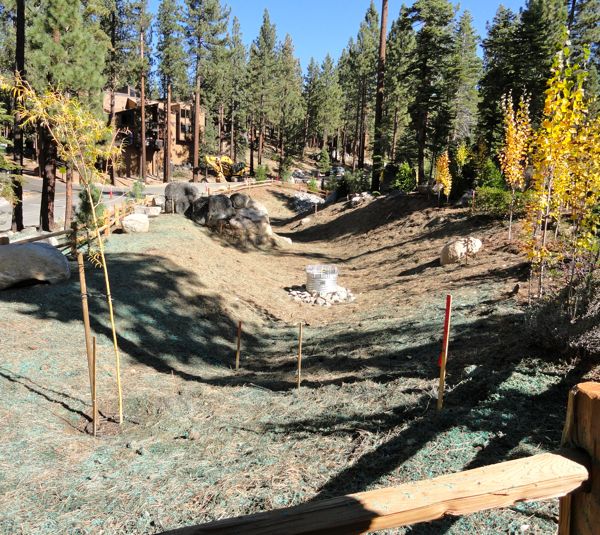
Environmental improvements are being made to Sierra Colina before construction begins. Photo/Steve Kenninger

Environmental improvements are being made to the Sierra Colina site before construction begins. Photo/Steve Kenninger

The Sierra Colina portion of the water quality improvement project (WQIP) is being paid for by the developers of the 18-acre site, Steve Kenninger and Gail Jaquish, who plan to build 41 market-rate and nine moderate-income, deed-restricted dwellings that will be Leadership in Energy and Environmental Design certified.

The private developers funded the initial $25,000 study conducted by Northwest Hydraulic Consultants of South Lake Tahoe and used by Douglas County to plan the system, and spent $250,000 for the construction of the Sierra Colina portion and will likely spend another $250,000 to maintain it. (Per agreement, the county will maintain the entire system and invoice Sierra Colina for its portion.)

The county, through an $878,600 grant from the Nevada Department of State Lands and an $876,600 grant from the U.S. Forest Service, is spending $1.76 million to design and build the rest of the WQIP. The WQIP was designed by Nichols Consulting Engineers in Stateline and built by Peek Construction, which has an office in Stateline.

“The entire project would not be as efficient or as effective if the Sierra Colina group had not decided to partner on it,” said Mahmood Azad, principal engineer/fisheries biologist for the Nevada Tahoe Conservation District and the former Douglas County engineer who is managing the project for the county. “If we’d both done separate projects, we would have spent more money and it would not be as efficient.”

With the cost of restoring Lake Tahoe clarity to 80 feet by 2025 estimated at $1.5 billion, while public funds continue to dry up, everyone from Nevada Gov. Brian Sandoval to Tahoe Regional Planning Agency Director Joanne Marchetta has been saying that the only way to achieve the clarity goal is through private-public partnerships like the WQIP project.

One obstacle, though, may be convincing private parties that the cost of such endeavors is in their best interest. The Sierra Colina project price tag, for example, was $525,000 — or more than three times the $160,000 coverage mitigation fee the developers could have paid instead.

“The TRPA code gives us two options,” Kenninger told Lake Tahoe News. “We could pay the coverage mitigation fee or create a new public water quality project if you can show you completely mitigate the runoff from the private project’s coverage.”

Kenninger said they studied the issue and found that the land, even undeveloped, was creating problems.

“The status quo was hurting water quality,” said Kenninger, and the development as planned would create an additional load.

Kenninger said he wanted to completely mitigate the load caused by the new project rather than pay the mitigation fee.

“Public-private partnerships haven’t happened before because of the cost,” Kenninger said. “We wanted to show everybody we can work together. This project is a model because future federal and state EIP funds are going away. In return, they’ll allow redevelopment to happen. And the revenue from that pays for the private contribution to treat public stormwater.”

Kenninger and Jaquish went forward with environmental improvements even though the development is tied up in court.

Azad said the county is now looking for potential other projects to work on with private parties, but that nothing has been indentified yet.

“The lesson I’ve learned from all this is it takes longer and requires more manpower upfront,” Azad said. “But it ends up being more efficient and cheaper in the end.”

Nev. bear season half over, 10 killed — none in Tahoe

By Jeff Delong, Reno Gazette-Journal

Ten bears have been killed in Nevada’s first black bear hunt, bringing the number of animals than can be taken to the halfway point.

A female bear was killed Sunday and a male bear on Monday, the first since Sept. 18. The other seven bears were all killed during the first eight days of a hunting season that commenced Aug. 20, according to officials with the Nevada Department of Wildlife.

No more than 20 bears can be taken during a season ending in late December. The season will end earlier if six females are killed, and four of the bears killed thus far have been females.

Hunting activity appears to be picking up with cooler fall weather, said Chris Healy, spokesman for the Nevada Department of Wildlife.

Read the whole story


Tahoe Vista disc golf tourney sells out

The Tahoe Mountain Sports 5th Annual Pro/Am Disc Golf Tournament was a huge success; selling out to the full 90- player capacity for the first time in five years.

The Oct. 8-9 tournament, a PDGA Sanctioned “B” Pro/Am event, brought high-caliber disc golfers from nine states across the country to the Tahoe Vista course.

Top results:

Pro Open Men’s: Jere Eshelman (1st), David Madruga (2nd), Nathan Genthner (3rd)

Pro Open Women’s: Nancy Shillinger (1st), Leah Feltenstein (2nd), Nicole Bradley (3rd)

Masters: Steve Loyd (1st), Scott Miller (2nd), Nick Stellern (3rd)

Grandmasters: Jeff Fiedler (1st), Ken Swafford (2nd), Doug Werner (3rd)

Advanced: Neal Bownds (1st), Chris Bristow (2nd), Tony Lockard (3rd)

Advanced Masters: Terry Woods (1st), Don Hansler (2nd), Blake Tresan (3rd)

Advanced Grandmasters: Scott Murray (1st), Kevin McDermott (2nd), Doug Greenwood (3rd)

Intermediate: Jeremy Tjensvold (1st), Edward Poynor (2nd), Rory McLaughlin (3rd)

Intermediate Women: Cyndi Baker (1st), Mindy Carbajal (2nd), Kristen Kirkland (3rd).


State fish won’t receive federal protection

By Louis Sahagun, Los Angeles Times

The California golden trout — the official state fish — will not receive protection under the Endangered Species Act after a 10-year review of scientific information and conservation programs, the U.S. Fish and Wildlife Service announced Friday.

“Conservation measures throughout the trout’s historic range have done much to protect the species,” service spokeswoman Sarah Swenty said in a statement. “In large part because of those measures, the service determined that the intensity of threats does not indicate the species is endangered, or likely to become so in the foreseeable future.”

Trout Unlimited filed a petition in 2001 asking the government to list the golden trout, which grows to less than a foot long and is often reddish gold with brilliant orange highlights and blue-gray spots on its belly and fins. Genetically pure strains of California golden trout can be found in just 15 miles of Sierra Nevada high-country streams.

Read the whole story


S. Tahoe kids help break jumping jacks world record

Some people are still jumping – which is a good thing if the effort is going to set a world record.

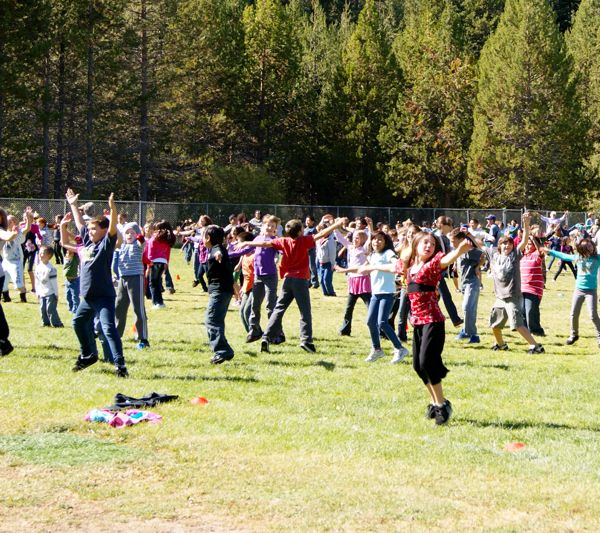
At Tahoe Valley Elementary School on Tuesday, 431 students and teachers did jumping jacks for one minute without stopping.

“Our state PE organization, CAHPERD, was promoting the record attempt and I signed up our school with the support of Mark Romagnolo, our principal at Tahoe Valley,” TVES PE teacher Seth Martin told Lake Tahoe News. “NationalGeographic for Kids will be collecting paperwork from all locations and then will send them on to the Guinness Book of World records for certification. Tahoe Valley will receive a special certificate for having over 100 jumpers (Tuesday) if the record is broken.”

Hundreds of South Tahoe students may be part of a world record. Photo/Seth

Hundreds of South Tahoe students may be part of a world record. Photo/Seth Martin

First lady Michelle Obama got the contest going Oct. 11 at the White House with Al Roker and figure skater Michelle Kwan.

The event ends at noon today.

People are jumping all over the place – including the entire length of the Golden Gate Bridge.

— Lake Tahoe News staff report


Upper Truckee River scenic designation hits snag

By Kathryn Reed

It’s more about the fishing experience than anything else. That was the message delivered by proponents Tuesday to the El Dorado County Board of Supervisors during a lengthy discussion about whether the Upper Truckee River – the Meiss Meadow area in particular – should have the designation of National Wild and Scenic River.

Meeting in South Lake Tahoe for their once a year venture from Placerville, the five electeds tend to have a Tahoe-centric agenda on these days. Oct. 11 was no different.

However, at the end of the day only Supervisors Norma Santiago and Ray Nutting thought going on a tour of the new facilities at South Tahoe High School was worth their time.

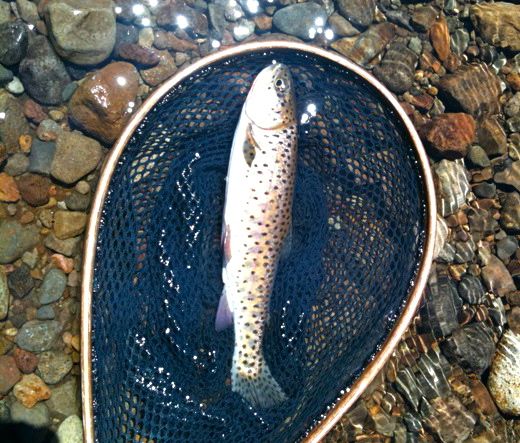
A Lahontan cutthroat troat near Meiss Meadow. Photo/Dick White

A Lahontan cutthroat trout near Meiss Meadow. Photo/Dick White

But the five did work through the normal lunch hour to come to the conclusion more information is needed before a vote on the river designation will be taken. However, no date was given when it might resurface. It was already continued from September. The Oct. 11 continuance was done on a 4-1 vote, with Supervisor Jack Sweeney ready to vote no on the whole notion of the designation.

Meiss Meadow is where the Upper Truckee River begins. At 21.4 miles, it is the largest tributary to Lake Tahoe.

One thing that makes the area above the falls unique is this is where Lahontan cutthroat trout prosper.

While Jenny Hatch with CalTrout and David Lass with Trout Unlimited told the supervisors the Upper Truckee River is the only stream-based population of this fish, the U.S. Fish and Wild Service’s website says otherwise.

It’s 7.3 miles of the river that would be part of the larger 32 miles that would potentially receive the federal scenic designation. Included in the area are Round, Dardanelles, Showers, and Meiss Lakes, and other creeks in the watershed.

The U.S. Forest Service, which owns the land in El Dorado and Alpine counties that is being discussed, in 1999 determined the area met the criteria to be part of the National Wild and Scenic Rivers System. However, it takes an act of Congress for the designation to become a reality.

It would also take an environmental assessment or environmental impact statement to be done before it’s a done deal.

The Forest Service has done its part. Now it’s up to another entity to carry the torch, so to speak, to get Congress to act. The two trout groups want to be the torchbearers, but need the backing of a public agency like the Board of Supervisors to have the clout. Thus the reason for the hearing.

“We manage the area as though that designation has come through,” Nancy Gibson, Lake Tahoe Basin Management Unit forest supervisor, told the board.

After the discussion, Santiago told Lake Tahoe News, “The protections are temporary at best (for the area). Someone could say, ‘Let’s dam up the river.’”

While that is not likely to happen, with the LTBMU this winter set to release its updated Forest Plan for a 90-day review, it’s possible what is adopted could change how the Meiss Meadow area and Upper Truckee River are managed.

Four residents spoke at the meeting, with three against the designation.

Santiago, in the same post-discussion conversation with LTN, said she has more constituents than just those three who spoke.

Sue Novasel, who has a house on the river, is appalled the first she heard of the issue was at the meeting. She has experienced two fish kills on the river that no longer allow ample fishing from her back yard.

“I think less regulation is better,” Novasel told the supervisors.

Shirley Taylor, whose family once ranched a large part of the acreage being talked about, is dead-set against the proposal. She went to the September Alpine County Board of Supervisors meeting to speak her piece. The body agreed to send their El Dorado County colleagues and CalTrout a letter not supporting the scenic designation.

The trout enthusiasts believe the designation would mean being able to attract more people to the area just for the thrill of reeling in the rare Lahontan cutthroat trout. The opportunity exists today as well. The scenic designation would ensure the area is kept as is for future generations.


10,000-acre thinning project may start in 2012 on S. Shore

By Kathryn Reed

With parts of the forest near developed areas being in prime condition for a wildland fire much like in June 2007 when the Angora Fire consumed more than 3,000 acres, the U.S. Forest Service is ready to do something about that land.

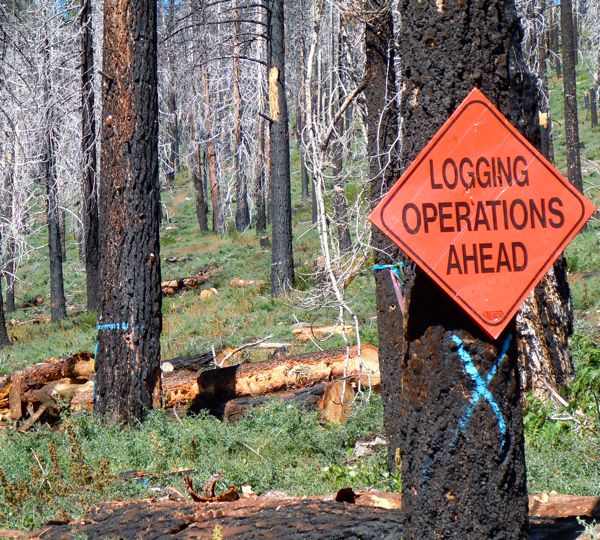
Once the long-awaited South Shore Fuel Reduction and Healthy Forest Restoration Project gets under way – which could be next summer — 10,112 acres will be treated.

The 10,000-plus South Shore fuels project could begin in 2012. Photo/LTN file

The 10,000-plus South Shore fuels project could begin in 2012. Photo/LTN file

Duncan Leao, U.S. Forest Service forester, calls the wildland urban interface (this is where the forest abuts development) on the South Shore one of the areas in the basin that most needs treatment.

“It’s important work to do. We don’t want another Angora Fire. The conditions we are looking at in many places on the South Shore are conditions we saw in Angora before the fire,” Leao told Lake Tahoe News.

It will take about four years to thin the trees, with another four years for follow-up treatments. In all, it is roughly estimated to cost $40 million. The U.S. Forest Service, mostly through the Southern Nevada Public Lands Management Act, has secured three-quarters of that figure.

Before a single branch is limbed or tree felled, comments on the project will be taken until Oct. 28 from anyone who submitted a comment when the environmental impact statement was first released. If anyone files an objection to the final EIS, it triggers a 30-day resolution period.

Ultimately it is up to the forest supervisor to sign off on the document, allowing the project to go forward.

Then comes the process to obtain the necessary permits. The one from the Lahontan Regional Water Quality Control Board is the biggie.

However, Lauri Kemper, No. 2 at the regional water board, said the draft of the permit has been on hold since February 2010. But it takes more than a signature to make it valid.

California Environmental Quality Act regs are what Lahontan is going by. Lahontan officials must certify the EIS addresses CEQA concerns.

The project will involve working in stream environmental zones – that’s a main sticking point for the water board. It doesn’t mean no permit; it means a thorough review and not just taking the Forest Service at its word that the EIS is complete and addresses those concerns.

“We’re all for fuels reduction,” Kemper said.

What could hold up the project is the Lahontan board may not grant a permit until its May meeting. The Forest Service cannot go out to bid until all the permits are in place. This could delay work in what is already a limited season for thinning because dirt in the basin, per TRPA rules, can only be disturbed between May 1-Oct. 15.

A combination of mechanical and hand treatments are likely to be used.

Whether hand thinning could begin without the Lahontan permit depends on what type of permit Lahontan decides to issue. There are three possible ways it can permit the project.

Trees 16-inches and less in diameter are likely to be felled by hand, while those up to 30 inches would be taken out by machines. Most likely the process will be similar to what is being done in the Angora area in terms of the machines used. The forest pattern will be different because Angora is mostly about removing dead trees.

“A lot of hand work goes pretty quick. Then (people) would see piles. Those may last a couple years,” Leao explained. “With the mechanical you do not see as many piles because most of it is removed.”

Trails used by recreationists will either be off-limits at times or rerouted to ensure no one is hurt as the work is being done.

“It will be a combo of biomass and merchantable material — stuff that could go to a mill will depend if there is a mill nearby. The market is very difficult to predict,” Leao said. “If no sawmill is open, then contractors would have to determine what to do with that. It’s very helpful to have both biomass and saw log markets.”

The USFS decides which trees to thin first based on size – taking out the smallest at the get-go. Then the health of the tree and species are determining factors.

Jeffery and sugar pine, incense cedar and larger trees are ones Leao said the Forest Service wants to keep.

Diseased trees, including ones with mistletoe, will be on the chopping block.

“Ideally, you want a forest with multiple sizes and age classes. You can’t do that with thinning alone,” Leao said. “As we get the WUI stuff done, the forest still has an even age to it. Fire and planting trees, and other methods could be used to get it into a healthier condition. That is more long term.”

To view the South Shore final EIS, go online.


Reno woman represents U.S. in world tennis competition

This is year 15 that Doris DeVries of Reno has competed in the World Team Championships.

DeVries and her 75s Queen’s Cup teammates are in Turkey now through Oct. 15 for the tennis tournament.

DeVries is the reigning European Champion in 75s singles and doubles.

— Lake Tahoe News staff report


TVES to be part of Guinness world record attempt

Students at Tahoe Valley Elementary School are going to be a part of a world record jumping jack attempt Tuesday.

The entire school will be on the field at 12:30pm to be a part of it.

First lady Michelle Obama kicks it off in front of the White House.

If enough people are certified, the South Lake Tahoe school will be a part of an official Guinness Book of World Records record.

For more information, go online.


Sugar pine seedlings ready to be put in the ground

The Sugar Pine Foundation plans to plant 15,000 young sugar pines and other native tree seedlings throughout the Lake Tahoe region now through November. During this time, the soil is naturally moistened from rainfall and conditions are ideal for giving young seedlings a good start.

On the South Shore, there will be two community plantings. The first is Oct. 22 from 10am to noon at the U.S. Forest Service’s Dreyfus Estates property. The site is located off of Highway 50 between Zephyr Cove beach and Skyland. South Lake Tahoe Rotary will be assisting in the planting, but more volunteers are needed. SPF plans to put 1,200 trees in the ground at this site.

The second planting is Oct. 29 in the Glenbrook community – also from 10am to noon – and volunteers are needed. Glenbrook Homeowners Association, the Forest Service and Nevada State Parks are also hosting planting events with South Tahoe Middle School students throughout the fall. All sixth-graders from South Tahoe Middle School will plant trees and learn about forest and fire ecology, watershed health and acquire basic orienteering skills on their field trips to Glenbrook, the Dreyfus Estates and Van Sickle Bi-state Park.

The sugar pines SPF is planting need all the help that they can get because they are the progeny of white pine blister rust resistant sugar pines. White pine blister rust is a nonnative, invasive fungus that is killing sugar pines, Western white pines, and whitebark pines in the Tahoe area. Between 3 and 5 percent of sugar pines are genetically resistant to the fungus. The goal of the SPF is to help save Tahoe’s sugar pines by planting blister rust-resistant seedlings throughout the basin and surrounding areas.

Fall 2011 planting schedule:

Oct. 16, 9am-1pm: Truckee River Day Planting. Park at Glenshire/Devonshire Clubhouse at 15726 Glenshire Drive — sign up with Truckee River Watershed Council.

Oct. 22, 10am-noon: Community Planting at Dreyfus Estates. Park along Highway 50 between Zephyr Cove Beach and Skyland.

Oct. 29, 10am-noon: Glenbrook Community Planting. Get directions to China Gardens at the gate.

Nov. 5, 11am-1pm: Waddle Ranch Community Planting. Meet at Truckee Airport to carpool or 4WD needed.

For more information, go online or email admin@sugarpinefoundation.org.