Sierra clears 1,750 lbs. of garbage from its slopes

More than 175 people helped clear more than 1,750 pounds of trash from Sierra Resort on Oct. 16.

Found during the annual Keep Sierra Clean Day were two snowboards, a few skis, an iPhone, a digital camera and a lift ticket from back when the resort was called Sierra Ski Ranch.

Plastic bottles, cans, trail fencing and signs were also collected.

Sierra employees spend the winter and summer months cleaning up the base area and parking lots, but cleaning up the slopes is a job that takes many helping hands.


Hydraulic mining leaves colorful scar on state park near Nevada City

Publisher’s note: Lucy D’Mot is making it her mission to visit the 70 state parks slated for closure next year.

By Lucy D’Mot, Sacramento Bee

Mother Nature would take many millennia to create the likes of the huge, colorful cliffs at Malakoff Diggins State Historic Park, 11 miles north of Nevada City.

These sheer bluffs were carved in just a few decades by streams of water shot from powerful cannons, washing away piles of dirt and gravel.

Gold miners used hydraulic mining, employing flumes and ditch systems, as they eroded and sifted the soil for the precious ore. As much as 100,000 tons of gravel per day would disappear. Entire mountains were lost.

The mining companies built a 7,847-foot tunnel that went right through the bedrock to serve as a drain.

Farms along the south Yuba River were flooded and destroyed. Silt flowed all the way to San Francisco Bay, impairing navigation on the Sacramento River and parts of the bay. River channels closed to steamboat traffic.

But because residents prospered from mining operations, they simply built their levees higher to hold off floodwaters.

Read the whole story


Northstar upgrades resort with lift, trails and lodge

By Kathryn Reed

TRUCKEE – New lift, new lodge, new terrain – it’s what Vail Resorts has done to Northstar with an infusion of $30 million since it bought the North Shore resort a year ago.

With a projected opening date of Nov. 18, the resort will have the Promised Land Express chairlift running, with the Zephyr Lodge expected to open a month later, and the additional 170 acres of ski area ready when Mother Nature cooperates.

The resort even has a new name. Gone is the “at-Tahoe” part of Northstar. The formal name is Northstar California – with the idea that it’s more than a mountain. The logo is changed and font is slightly different. The tagline is – The Way It Should Be.

The new detachable quad provides more access to the Backside – doubling the lift capacity to that area. Castle Peak run lines up so intermediate skiers are schussing toward that mountain in the far distance. Islands is so named because it has 22 trees – essentially providing islands – for skiers to skirt around.

Snowmaking guns will make sure they are covered with white stuff; plus Drifter now has snowmaking.

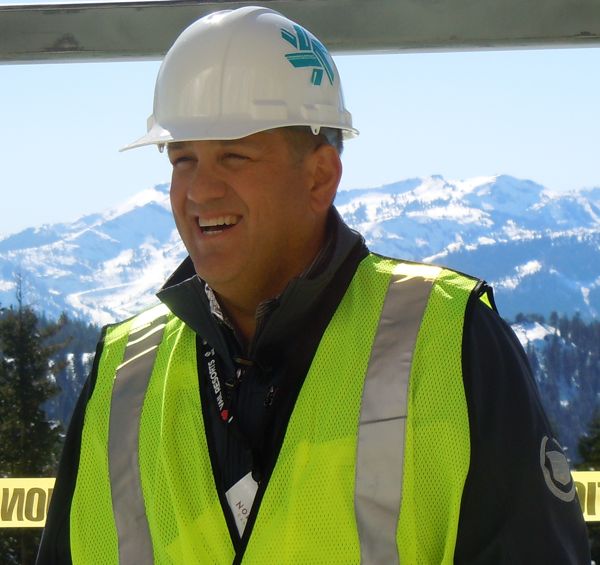
COO Bill Rock said so many lines exist off Islands trail that people may never want to leave it.

“As you can see, there are spectacular views of the whole Pacific Crest.”          — Bill Rock, Northstar COO

For the more advanced rider, the long-awaited access to Sawtooth Ridge is happening bill rockthis season. Called sidecountry terrain, this area in the past was accessed by hearty hikers carrying their gear up in order to ride down. Now Northstar will use snowcats to transport people to the area when conditions permit. Guided tours will be available there as well as to White Rabbit. One day the resort hopes to put Sawtooth inside the boundaries.

The additional 170 acres in the 2011-12 expansion don’t include Sawthooth. The boundaries have been extended to the skier’s left of the Prosser trail on Lookout Mountain. This adds about 1,000 vertical feet of terrain for new Lookout Glade, which is accessed from Martis Camp Express. Another 800 vertical feet is on the Sawmill Glade (off Vista Express) which is to the skier’s right of Logger’s Loop.

That’s all advanced terrain.

The additional runs bring the skiable acres at Northstar to 3,170.

While Northstar, especially with the addition of the mid-mountain Ritz-Carlton two years ago, would like to be a year-round resort, Rock acknowledged, “Our bread and butter is winter. We are a winter business.”

Thus the reason for millions of dollars being spent on winter guests.

Gold is also coming to the resort in the form of Shaun White – two-time Olympic gold medalist. He chose Northstar to be his training ground this season. The 22-foot halfpipe that will be built for his needs will be open to aspiring Olympians.

Dining with a view

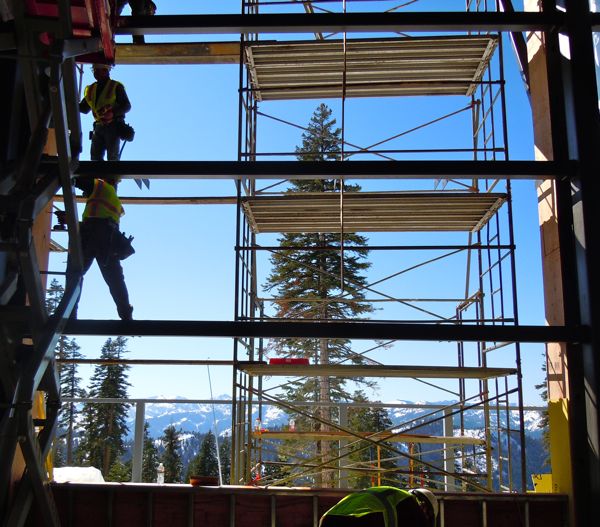
Riding the Zephyr Express from the mid-mountain lodge it looks more like a construction zone at the top than a ski resort. At the top to the left is a structure that will be for the ski patrol. Their yurt to the skiers’ right was dismantled to make way for the Zephyr Lodge.

Glass panels will provide views to the Pacific Crest from the Zephyr Lodge. Photos/Kathryn Reed

Glass panels will provide views to the Pacific Crest from the Zephyr Lodge. Photos/Kathryn Reed

While it’s modeled after the Tamarack Lodge at Heavenly Mountain Resort (also owned by Vail Resorts), this is built out of steel instead of wood. SMC Contracting is also putting this facility in the ground.

The signature difference is the deck.

“As you can see, there are spectacular views of the whole Pacific Crest,” Rock said as the pounding of nails and other construction equipment reverberated through the partially completed lodge.

Trudging through snow even in October to get to the lodge – it was a winter scene in early fall with the distant peaks covered in white. Bear prints are visible from the deck so critters are having fun in the snow. Glass is still needed to prevent people from falling over the edge.

Besides incredible views, the location was picked because it’s accessible for most skier abilities.

Kelly Rodriguez, director of food and beverage at Northstar, is tasked with ensuring people’s stomachs are full and satisfied while dining anywhere on the mountain – but the Zephyr Lodge allows for the chefs to be a bit more creative. Yes, the Vail Resorts’ signature Epic Burger will be on the menu, but so, too, will be a burger unique to Northstar, and a veggie burger made from scratch – not cardboard.

“We have the ability to serve healthy items to consumers in a food court setting,” Rodriguez said.

Gourmet pizzas (using their own dough), a grill, Asian station and salad bar are all planned.

Whenever possible the resort will buy local products – which is defined by a 100-mile radius.

It won’t all be healthy – French fries and homemade onion rings will be available. Breakfast won’t be served, unless a bloody Mary counts. It will be Northstar’s first on-mountain sit-down bar.

In keeping with Vail Resorts’ Lunch for Less program, this will probably be offered this season at the Big Springs Lodge.

Besides the food, what resort officials hope people will notice is less congestion at the dining venues throughout the mountain. Zephyr adds 500 indoor seats and about 250 outdoor to the mountain.

Sampling some of what will be offered this season at Zephyr, the gourmet grilled cheese with its three types of cheese and side of tomato soup is yummy. Chef Steve Anderson came up with this combo.

Chef Deb Finn designed the s’mores that come with a variety of choices – such as coconut covered marshmallows, chocolate filled with caramel or mint, and graham crackers beyond the normal variety. The gas fire pits in the village toast up the marshmallows just as plump as any wood fire.

And a Dirty Snowman goes good with everything – just ask the bartender.

More information about Northstar California is available online.

ngg_shortcode_0_placeholder (Click on photos to enlarge.)


Dollar Creek trail subject of open house

Placer County, working in partnership with the California Tahoe Conservancy and North Tahoe Public Utility District, is hosting an informational open house regarding the proposed Dollar Creek Shared-Use Trail.

Residents and others interested are encouraged to attend, receive information, and share their thoughts regarding the trail. The open house is Oct. 18 from 4-6pm at the North Tahoe Event Center, 8318 North Lake Blvd. in Kings Beach.

Staff will be on hand to answer questions and show maps of the proposed route.

The proposed trail would be located in Placer County, primarily within the Conservancy and NTPUD-owned properties, between the intersection of Dollar Drive and Highway 28 and the end of Fulton Crescent Road.

The separated trail would extend the existing North Shore bicycle trail network, and would link residential uses to jobs, schools, shopping and recreation and community areas. It would extend the exiting Tahoe City to Dollar Point trail through public lands commonly known as the Dollar and Firestone properties. The project would enhance recreation and transportation opportunities by extending existing paved trail network in the Tahoe City area, including TCPUD’s 10-mile Class 1 trail from Tahoe City to Sugar Pine Point State Park and the trail along the Truckee River. A trailhead parking facility near Dollar Point and Highway 28 may also be included for trail users.

The project schedule proposes to complete preliminary engineering and environmental permitting by June 2012, followed by construction in 2013, pending funding availability.


Outdoor education sparks enthusiasm for learning

By Jill Oberly, Reno Gazette-Journal

It’s a Tuesday morning, and for about 60 Sun Valley Elementary School fifth-graders, that typically means sitting in a classroom studying pictures of photosynthesis or some other scientific phenomenon in a textbook.

This day, however, is different. It is the start of a four-day, three-night excursion along the eastern shore of Lake Tahoe with the Great Basin Outdoor School.

It is the first time some have spent a night away from Sun Valley. And the wondrous looks on the faces of Stefanie Braun’s students when they first see Lake Tahoe is quickly replaced by shouts of excitement and the release of pent-up energy from a long bus ride.

While part of the goal of the Great Basin Outdoor School during the next few days is fun, the children still are in school, learning in a real-world environment that demonstrates practical ways to use life skills. Great Basin’s mission is to ignite children’s passion for learning in the outdoors.

The nonprofit organization is funded by grants and community contributions.

Teachers can contact the school if they are interested in enrolling their class in the program.

Read the whole story


Conservation nonprofits squeezed as economy shrinks budgets

By Matt Weiser, Sacramento Bee

Nonprofit conservation groups have preserved tens of thousands of acres of land in California – wild places where both hikers and animals roam. Now, some of them say the economic slump could force them to scale back.

Others say lean budgets make it harder for them to scrutinize land use proposals for environmental effects – a key role such groups play in the state’s push-pull development process.

Most groups don’t like to talk about their financial difficulties, but one, the American River Conservancy, recently took the unusual step of going public. In an email to members and supporters, the group confessed that “times are hard” and it needs to raise $250,000 by year-end or it will be forced to cut programs in 2012.

“What is happening to our organization is happening to a lot of organizations. We’re just being honest about it,” said Alan Ehrgott, the conservancy’s executive director.

Read the whole story


STPUD revives turf buy-back program

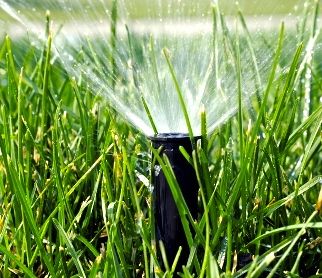
Turf is one of the most water intensive landscapes and requires substantial maintenance. Non-functional lawns – ones that are rarely used – waste water and represent an ongoing cost in time and resources for the home and business owner.

sprinklerFrom an environmental perspective, lawns tend to be overfertilized and overwatered. With porous Tahoe soils, this combination can push nutrients intended for the lawn into the watershed where they eventually make their way into Lake Tahoe. Once there, they provide nutrients for algal growth that can affect the clarity of the Lake.

The Turf Buy-Back Program has been very successful: in 2008-09 more than 120,000 square feet of turf was “bought back.” In 2009, the program was closed due to lack of funding. However, South Tahoe PUD was recently approved for grant funding to reinstate the turf program.

Starting in spring 2012 applications will be accepted. Replace existing irrigated lawn with Tahoe friendly landscaping and get paid $1.50 per square foot of turf removed. A minimum of 400 square feet of turf must be replaced and your healthy, irrigated lawn must be verified by South Tahoe PUD water conservation staff prior to turf removal. This program is available to all South Tahoe PUD water customers and is first come, first served, terms and conditions apply. Funds are limited.

To be placed on the waiting list or for more information, contact Sarah Jones at (530) 543.6268 or sjones@stpud.dst.ca.us.


Bodie balancing gold interests with wilderness enthusiasts

By Mike Anton, Los Angeles Times

BODIE — On a day when the price of gold soared above $1,700 an ounce, Jack Shipley drove past tourists strolling through this historic Eastern Sierra mining camp and up a rutted road to where a new breed of prospectors have set their sights.

The Bodie Hills hug the California-Nevada line in Mono County — thousands of acres of jagged volcanic summits, thick sagebrush, dry lakes and plunging canyons lined with aspens.

The hills are a paradox: Empty and wild yet shot through with hundreds of untapped mining claims dating to the 19th century.

“I fell in love with this place the first time I saw it,” said Shipley, 66, who lived in Bodie, a ghost town turned state park, for a dozen years as its resident ranger. “But some of the most beautiful places here happen to be in the most concentrated mining zones.”

A bumpy 10 miles west of Bodie, Shipley stops at such a place — one he wishes would be left to heal. The Paramount Mine yielded mercury for two decades, the last big haul in the Bodie Hills.

Left behind are rusted oil drums and pipes, piles of wood and a spooky open pit — signs of abandonment that belie the vast gold deposits some believe remain underground.

With gold prices up more than 600% in the last decade, corporate prospectors are revisiting dormant mines worldwide: a South Carolina mine that funded the Confederacy; abandoned mines in the hills of Transylvania; Roman mines that haven’t been active for 2,000 years.

Among the seekers is Thomas Kaplan, a New York billionaire who’s a paradox himself, a shrewd commodities investor with gold mining ventures on five continents and co-founder of a conservation group that seeks to preserve big cat habitat in China and India, among other countries.

“If I’m given a choice between conservation and business, conservation wins, always,” Kaplan, an Oxford-educated historian, told Bloomberg BusinessWeek last year. He once spent $12 million to relocate a Bolivian village — its people, buildings, church, cemetery — to make way for a silver mine.

One of Kaplan’s companies, Cougar Gold, is eyeing the Paramount claims in the Bodie Hills, a mix of private and federal land. The interest has reignited a debate in Mono County over whether this raw swath of high desert is more valuable as protected wilderness than as a source of mineral wealth.

The split can be seen in the county seat of Bridgeport, whose fortunes have been tied to the area’s mining camps for 150 years.

Some in town see today’s gold rush as a lifeline to good-paying jobs. Others sense a rerun of the past when the boom times were relatively brief, the bad times drawn out and the environmental damage lasting.

“There’s a reason Bodie is a ghost town. Mining is a boom-and-bust industry,” said Stacy Corless, executive director of the conservation group Friends of the Inyo. “There’s still pollution up there left behind from mining 100 years ago. I’m worried about the legacy that’s left to future generations when this boom goes bust.”

Read the whole story


Washoe Meadows golf course drives wedge between users

By Kathryn Reed

A river runs through it – and that’s one of the problems as well as one of the things that make this area on the outskirts of South Lake Tahoe so beautiful.

Washoe Meadows State Park and Lake Valley Recreation Area are places even residents of the South Shore can’t locate on a map. This is one of the few state parks that is undeveloped – no signs, no trail markers – definitely no camping or concessionaire. The recreation area is better known as home of Lake Tahoe Golf Course in Meyers.
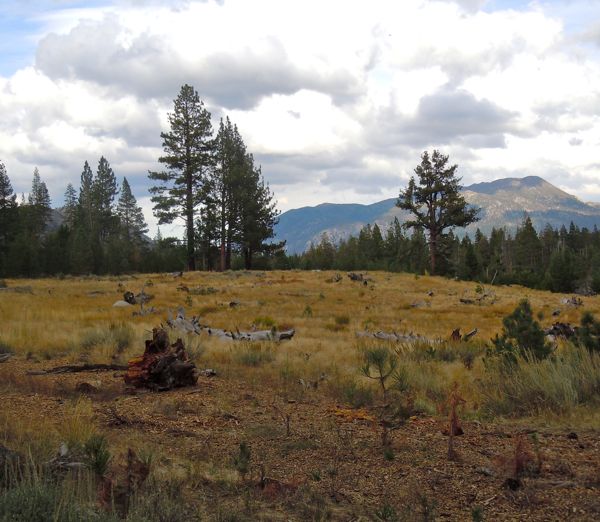
Part of Washoe Meadows State Park may be turned into a golf course. Photos/Kathryn Reed

Part of Washoe Meadows State Park may be turned into a golf course. Photos/Kathryn Reed

The areas are side-by-side, with no true indication of any property line. They share the Upper Truckee River running through the landscape. Therein lies the problem.

Various sections of the river have been or are slated to be reconfigured to restore the Upper Truckee to its natural meander. The goal is to reduce sediment reaching Lake Tahoe and to create a natural flowing river that floods its bank, which in turns restores meadows and provides appropriate habitat.

It’s the 1.5 miles of river belonging to the State Parks system that is taking center stage this month.

State Parks commissioners are slated to vote on the final environmental impact report Oct. 21. Alternative 2 is the preferred course of action. This would likely mean moving nine of the existing holes of the 18-hole course onto what is now State Parks property from the Recreation Area.

The original 1984 statute that came out of the lawsuit that resulted in State Parks owning the land says 777 acres were acquired by the state – which includes the state park and recreation area. The final EIR says the existing acreage in Lake Valley Recreation Area is 173 acres and would go to 211 if alternative 2 were approved; and Washoe Meadows has 608 acres and would become 570 in alternative 2. That’s from Volume V Page 5-3. However, Appendix K contradicts those numbers, saying what exists in the recreation area are 155 acres and it would go to 195; while the state park acreage is 628 and would go to 588.

An economic study indicates keeping the golf course a full 18-holes is preferable than reducing it to nine holes or making it an 18-hole executive course like Tahoe Paradise, which is on the other side of Highway 50.

It would be the concessionaire who would pay to essentially rebuild the golf course, but in turn it would be less income for State Parks at the get-go because the contract would be for less per year. State Parks contends in the long run it would be a financial gain for the state agency.

(A year-to-year lease is in place now until a decision about the river and golf course’s futures are decided.)

There are disagreements about whether river restoration is needed. There is no argument the river has been changed by man – mostly to accommodate logging and grazing needs from decades ago. But with the runoff from urban areas being the primary cause of the decline of lake clarity, some question why millions of dollars in taxpayer money is continuing to be spent on restoring Upper Truckee River.

Cyndie Walck, State Parks hydrologist, said that no one is mandating her agency restore the river, but at some point her agency must comply with Lahontan Regional Water Quality Control Board’s total maximum daily load standards. That unfunded mandate is being passed from the federal EPA to the state board to landowners in the Lake Tahoe Basin to reduce fine sediment from their respective properties that reach Lake Tahoe.

Walck told Lake Tahoe News that without funding to restore the river and to rebuild the golf course, neither would happen. Money does not exist at this point, but often becomes available once environmental documents are in place.

“The EIR lays out what we think the conceptual design of the river and golf course would be,” Walck said. “If approved, then we [get a] design contract to get grades right and river meander right.”

But there is a vocal group that believes the conceptual aspects of the preferred alternative are all out of whack.

Two members of the Washoe Meadows Community, a group dedicated to not altering the state park, this month gave this reporter a tour of what would be changed if alternative 2 were approved. On their website is a map that may printed to walk the route where changes are likely to occur.

This was a much different tour compared to what Walck led reporters on a year ago. That tour is the one parks commissioners will be given next week.

A notable difference is the State Parks tour enters from the golf course, shows the deteriorating banks of the river, goes into what looks like disturbed area and convincingly makes the point – why not make this area look better with a golf course?

The private tour that starts from a trail off Grizzly Mountain Road is equally convincing of their point-of-view – that this land should remain untouched.

“Where is the holistic view of the ecosystem?” asked Krissi Russell, who lives near the park.

“This provides a wildlife corridor,” Russell said as she walked near a fen.

The EPA defines a fen as, “… peat-forming wetlands that receive nutrients from sources other than precipitation: usually from upslope sources through drainage from surrounding mineral soils and from groundwater movement. Fens differ from bogs because they are less acidic and have higher nutrient levels. They are therefore able to support a much more diverse plant and animal community. These systems are often covered by grasses, sedges, rushes, and wildflowers. Some fens are characterized by parallel ridges of vegetation separated by less productive hollows.”

Walck says two studies have been done that say the fen will not be disturbed.

Lynne Paulson with the Washoe Meadows Community is enlisting the aid of a UNR professor to dispute the State Parks view.

Paulson’s group says the proposed changes will reduce public access to the Upper Truckee River in this area, while Walck says the opposite.

“It’s not fair for them to say we are trying to keep it for ourselves when they keep (the park) a secret,” Paulson said. “It is unusual to downgrade a state park.”

She believes if State Parks had put money into Washoe Meadows in the last 27 years then maybe it would be better known, used more and others would not want it to go from a natural environment to pristine grass for golfers.

They are not against the river restoration, but against a golf course on what is now State Parks land. Their preference is alternative 3 – making the course a nine-hole or executive course.

Moving the course will bring it to within 200-feet of some homes which now boarder a state park.

It would not go into the meadow where the Celio barn is, but it would bring it closer to that icon.

The Washoe Meadows Community is concerned other relics of Tahoe’s past will be disturbed as well, like the grinding rocks used by the Washoe Indians (which are part of their tour) and the old spring house (outside the tour) area.

Walck points to the two projects restoring Angora Creek on State Parks land as evidence of improvements to the property and her agency’s ability to do successful waterway upgrades.

In a week the State Parks commissioners will be asked to:

• Adjust the classification of certain land areas at Washoe Meadows State Park and Lake Valley State Recreation Area by modifying the boundary of the two units.

• Amend the General Plan for Lake Valley SRA.

• Certify the Upper Truckee River Restoration and Golf Course Reconfiguration Project environmental impact report.

The final EIR is in volumes four and five, which are downloadable, and are each about 1½ inches thick.

Dates to know:

• Oct. 20 at 1:30pm at the clubhouse of the Lake Tahoe Golf Course state parks commissioners will tour the proposed changes. Members of the public are requested to contact Louis Nastro at lnastro@parks.ca.gov prior to Oct. 17 if planning to attend.

• Oct. 21 9am at the clubhouse of the Lake Tahoe Golf Course state parks commissioners will vote on the environmental documents regarding swapping Washoe Meadows State Park and Lake Valley Recreation Area land. Here is the meeting agenda.

• Dec. 7 9:30am, Tahoe Regional Planning Agency APC votes on the EIR at the Stateline office.

• Dec. 15 9am TRPA Governing Board vote on certification of final EIR at Stateline office.

ngg_shortcode_1_placeholder (Click on photos to enlarge.)


Experts: Exercise may reduce odds of getting breast cancer

By Laura Martin, Gannett

Exercise doesn’t just lower the number on the scale: Studies now show that it can also reduce breast cancer risk.

The American Cancer Society predicts that in 2011, 288,000 American women will be diagnosed with breast cancer and that 39,520 women will die of the disease. These numbers could decrease significantly if more women were active, said Dr. Alvaro Carrascal, the American Cancer Society senior vice president of cancer control for New York and New Jersey.

“The relationship between physical activity and breast cancer has been studied widely, and several studies have shown that active women have a lower risk of getting breast cancer than sedentary women,” Alvaro said.

The National Cancer Institute has funded studies exploring the role of physical activity and cancer risk, and they have found that, across 50 studies, the risk of developing breast cancer was 20 percent lower among the most active women than among the least active.

These studies found that exercise lowered breast cancer risk for both pre- and post-menopausal women, but risk reduction was slightly greater for women who had already gone through menopause.

Read the whole story