Wind chill makes freezing temps feel even colder

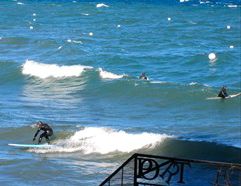
Winds were blowing so hard for most of Thursday that Lake Tahoe looked more like the ocean. That was good news for surfers.

For most people, though, it was all about being inside on this freezing day. The high on Thursday was 36 in South Lake Tahoe. It was not a record, though.

Surfers near the West Shore Cafe in Homewood on Dec. 1. Photo/Tim Rantz

“The wind chill made it feel like it was 15 or 20 degrees,” Jim Wallmann, meteorologist with the National Weather Service in Reno, said.

More of the same is expected for the next couple days. Winds from the northeast will pick up Friday night into Saturday.

A remote chance of moisture is in the forecast for late next week. No telling when a powder day will be in the forecast.

— Lake Tahoe News staff report


PG&E turning thousands of acres over to public agencies

By Matt Weiser, Sacramento Bee

More than 1,500 acres of mountain land in Nevada and Placer counties will be handed over to public agencies as part of Pacific Gas and Electric Co. bankruptcy proceedings begun in 2004.

A part of that total – 64 acres – will go to the Auburn Recreation and Parks District for a new community park. The University of California Center for Forestry, based at UC Berkeley, will take over the remainder: 1,484 acres near Lake Spaulding in Nevada County.

The UC center will also take title to 3,100 acres in Shasta County’s Pit River watershed. An adjacent 5,200 acres will go to the California Department of Forestry and Fire Protection, along with 1,800 acres in Shasta County’s Tunnel Reservoir area.

The actions, which are preliminary, were approved Nov. 16 by the Pacific Forest and Watershed Lands Stewardship Council, a nonprofit created to conserve 140,000 acres of PG&E watershed lands as part of the utility’s bankruptcy settlement. The process of distributing those lands is about halfway complete.

The transfers, totaling more than 11,000 acres, come at no cost to the recipients. But they must commit to manage the land for public benefits such as recreation, water quality, wildlife habitat and research.

Read the whole story


Recreation projects will increase hiking, fishing, biking opportunities

By Susan Voyles, Reno Gazette-Journal

Three projects key to providing more hiking, fishing and biking along the Truckee River in the Verdi area are gaining traction: the first leg of a bikeway in the Truckee Canyon, more parkland along the river and a new pond for fishing at Crystal Peak.

All of the projects involve obtaining grants or using voter-approved funds for park projects and should be ready for use by next summer. None of the projects involve funding that support local government services such as fire and police, officials said.

In the Truckee Canyon west of Verdi, a three-mile stretch of the Tahoe-Pyramid Bikeway is expected to open next summer after work is completed to strengthen the Fleish footbridge west of Verdi in California.

Renovating the 200-foot-long suspension bridge over the Truckee River is prerequisite for the Truckee Meadows Water Authority to open its maintenance road to hikers and bikers at the start of the Truckee Canyon.

“Getting this bridge in is a big deal for us,” said Janet Phillips, leader of the Pyramid-Tahoe Bikeway project. “We have a deal with TMWA. We help fix up their bridge and they will allow it to be used by the public.

“By late next summer, we will be able to ride mountain bikes from Verdi up into California,” she said.

The bikeway project is concentrating on filling in missing links so someday people can ride a bike along the Truckee River from Lake Tahoe to Pyramid Lake.

Of the 116-mile bikeway, about 55 percent is now open, Phillips said. With a new footbridge installed this week at the McCarran Ranch, that raises the mileage to 58 percent completed when it opens to the public this spring. The new section to Fleish will raises the percentage to 64 percent.

“The paradox is the easy sections were done first, meaning the remaining sections are harder,” Phillips said.

A new anchor for the Fleish bridge was poured a few weeks ago. Next year, a thicker cable will be installed to hold up the bridge and safer side railings and other features will be added, she said.

With all that, she said, the bridge won’t sway as much.

Read the whole story


Learn to ski-board weekend features 7 resorts

The 12th annual Learn to Ski and Board Weekend is Dec. 10-11. It is geared for beginners, costs $30 and includes an all-day beginner lift ticket, group lesson and gear rental.

First-timers have their choice of seven resorts to learn at including Alpine Meadows, Boreal Mountain Resort, Granlibakken Resort, Homewood Mountain Resort, Northstar, Squaw Valley and Sugar Bowl.

Reservations are not required, but participants should arrive early. Lesson packages can be purchased at each resort the day of lessons.

Some restrictions apply.


Sierra tree farmers boasting about this year’s crop

By Debbie Arrington, Sacramento Bee

No complaints from these farmers; this should be a Christmas season to remember.

“It’s the best crop we’ve had in years – truly tremendous,” said Geri Hyder of Indian Rock Tree Farm in Camino. “The mild weather we had this year made a beautiful crop of trees.”

At tree farms dotting the Sierra foothills, evergreens benefited from unusually cool summer temperatures and lots of moisture.

“We had a cold snap at just the right time to set the needles,” said Dee Kobervig, president of the El Dorado County Christmas Tree Growers Association. “In our business, weather can make or break it. And this year has been just about perfect.”

Tree farms within a two-hour drive of Sacramento expect a flood of shoppers, eager to bring home the perfect tree for their holidays.

“We’ll get several thousand people just at our place,” said Hyder, who sells cut-your-own and pre-cut trees in 10 varieties. “We’ve only got four weekends to make our business for the whole year.”

Read the whole story


Boat shuttle takes skiers from S. Tahoe to Incline and back

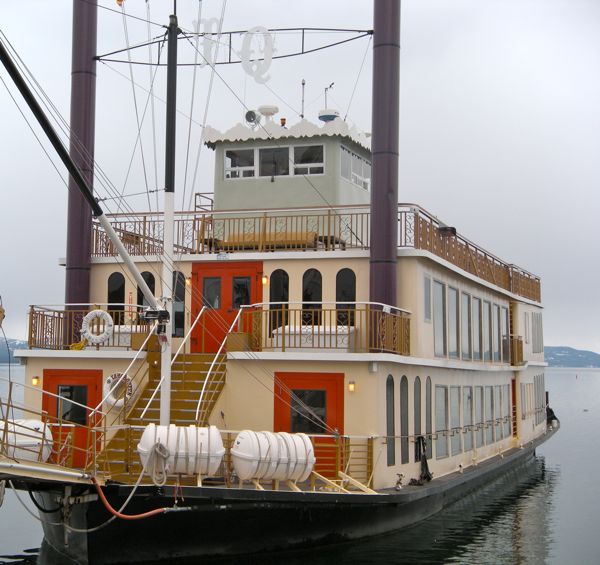
The Tahoe Queen paddle-wheeler is resuming its ski shuttle between the South and North shores.

queenIn years past the shuttle went from Ski Run Marina to Tahoe City. Starting in January it will go from South Lake Tahoe to the pier at the Hyatt in Incline Village. The idea is skiers could spend a half day at Northstar before going back to the South Shore.

Roundtrip tickets start at $59 for adults and $30 for children. That’s just for the boat ride.

Advanced reservations are required by going online.


Lawsuit filed to stop Washoe Meadows State Park from becoming golf course

By Kathryn Reed

A month after the California State Park and Recreation Commission voted unanimously to move Lake Tahoe Golf Course into Washoe Meadows State Park, a group has filed a lawsuit to prohibit that from happening.

“I would like people to know this has consequences for the entire state,” Lynne Paulson, who is part of Washoe Meadows Community, told Lake Tahoe News. “The Parks and Recreation Commission has done something that is unprecedented. They downgraded a property where they want to move the golf course. Usually they upgrade classifications to give more protection to land.”

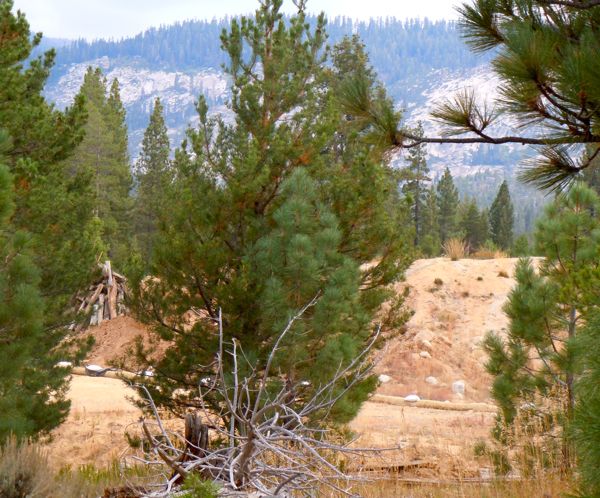
Some cycling and hiking trails would become a golf course if the project continues. Photo/LTN file

Besides reclassifying state land, the Washoe Meadows Community – the group that filed the lawsuit Nov. 23 in Alameda County Superior Court – believes the California Environmental Quality Act has been violated.

Lake Tahoe News was notified of the lawsuit Sunday and therefore unable to immediately speak with State Parks officials.

The state acquired the 777 acres in Meyers in 1984 for $5 million following a lawsuit between developers and the Tahoe Regional Planning Agency.

Part of that decision says, “The unique subject property is scientifically valuable, environmentally sensitive, vital to the maintenance of riparian habitat and to the maintenance of water quality in Lake Tahoe, and is, therefore, highly suitable for public acquisition in order to preserve and maintain these natural resource values ….”

Reclassification came about because water quality experts believe the Upper Truckee River must be reconfigured to near its original meander to best prevent sediment from reaching Lake Tahoe, as well as to restore meadows along the banks, and to create a more robust ecosystem.

In order to change the segment owned by State Parks the golf course on Lake Valley Recreation Area land must be touched. What the state commission approved in October was moving nine holes to what is now state park land and reclassifying it to a recreation area because a golf course cannot be built on park land.

Opponents, including those behind the lawsuit, don’t advocate for the golf course to go away. Instead, they support Alternative 3 – which would take the 18-hole course down to nine holes or convert it to an 18-hole executive course.

“We hope a better solution is brought up,” Paulson said. “We are in favor of Alternative 3. It’s the best balance of the extremes.”

Paulson and her group would welcome new ideas that have not been brought up or consideration of ones not part of the environmental documents.

This is not the first time the state has tried to reclassify land it owns. In 2010 part of Tolowa Dunes State Park near Crescent City was slated to become a state recreation area to accommodate waterfowl hunting. After several public workshops, the commission voted to keep all of the property a state park.

Washoe Park proponents believe if this South Shore park is downgraded, that it’s possible it will happen up and down the state.

The December hearings before the Tahoe Regional Planning Agency on the river restoration/state park/golf course project have been moved to 2012, though specific dates have not been set.

More information about the Upper Truckee River restoration project is online.


Mancuso takes third in GS at Aspen

By USSA

ASPEN — Olympic champion Julia Mancuso of Squaw Valley broke a seven-year jinx Nov. 26, taking the No. 3 podium spot with two brilliant GS runs at the Nature Valley Aspen Winternational.

Lindsey Vonn of Vail battled back from a tough first run (21st) to finish 12th. It was the first U.S. podium in Aspen since Kristina Koznick was third in slalom in November 2004 and the first U.S. women’s GS podium since Tamara McKinney’s win in 1981.

Defending World Cup GS champ Viktoria Rebensburg of Germany survived a near crash on the first run to comeback for the win. Action continues with slalom Sunday.

“I’ve been wanting to ski really fast in GS and I had a couple of unlucky second runs last year so this is just a great way to start. I know now that with any start position, I can find my way onto the podium,” Mancuso said. “I think every time I’ve raced here I’ve been in the top 10 or have been really close to the top 10. I’ve always loved this hill because it’s always moving, it’s really steep and it’s a lot of fun.”

With Mancuso’s third in Aspen and Vonn’s win in Soelden, the U.S. women have been on both Audi FIS World Cup GS podiums.

Mancuso’s Spyder racing suit for Aspen featured a trail map of her home mountain of Squaw Valley.

“It’s so special to get back on the podium here in Aspen, my family is here, my Squaw Valley Fan Club is here and my Spyder speed suit from today has the Squaw Valley map on it,” Mancuso said. “Plus, my friend Tamara McKinney, who was the last U.S. woman to take a GS podium here was in the crowd. It’s just cool to celebrate with my family and friends.”


Competitors locked in for U.S. Grand Prix ski-snowboard events

By USSA

PARK CITY — One of the longest-standing and celebrated tours in action sports history, the Sprint U.S. Grand Prix series, is back, and bigger for its 16th season. This year snowboarding and freeskiing events will be front and center at three of North America’s premier winter resorts.

For the fourth year running, Colorado’s Copper Mountain will play host to the kickoff to the action sports winter competition season as the Sprint U.S. Grand Prix touches down Dec. 7-10.

Copper will give the world its first glimpse at new tricks and progression the athletes have made in their riding over the summer months as they boost their freshest moves in a 22-foot halfpipe.

It all starts with halfpipe skiing in the Visa U.S. Halfpipe Grand Prix on Dec. 9. with U.S. champs Devin Logan (West Dover, Vt.) and David Wise (Reno). Pros like X Games champion Jen Hudak (Salt Lake City) also bring their brand of halfpipe stylings to Colorado.

Then, on Dec. 10, laying out the best of their best will be top riders like Olympic bronze medalist Kelly Clark (Mt. Snow, Vt.) who crushed the women’s field last season as the only woman landing 1080s in competition. Also watch for Olympic bronze medalist Scotty Lago (Seabrook, N.H.), Olympic silver medalist Hannah Teter (South Lake Tahoe), and many more.

Known for being the first superpipe open for riding each season in North America, Copper’s Olympic-regulation U-tube is one of the best conditioned spots to ride halfpipe in the world, not to mention completely visible from the Village at Copper and Burning Stones Plaza, making it easy for spectators to catch all of the weekend’s competitions.

Immediately following the halfpipe snowboarding competition will be the North Face Junior Jam, an event for local groms to come out and display their riding prowess to the world. Adding to the excitement of the event for the 2012 season is Woodward at Copper’s involvement in the development of the Paul Mitchell Progression Session venue, an event that will feature innovative riding on a unique course setup under the lights on Dec. 10.

Marking the halfway point of the Sprint U.S. Grand Prix series for the second year in a row is Canyons Resort in Utah where snowboardcross and, new to the tour in 2012, skicross will be front-and-center for action packed, first man to the finish, racing Feb. 11-12.

After a successful snowboardcross debut at the resort in 2011, Canyons is gearing up to make things bigger and better this season as they make operational changes to the hill that include cutting trees, moving snowmaking and widening trails that will ensure a world-class cross sport venue.

It kicks off with SBX on Feb. 11 featuring world-class athletes like Lindsey Jacobellis (Stratton, Vt.), Nate Holland (Squaw Valley), Seth Wescott (Sugarloaf, Maine) and Canyons Resort rider Jonathan Cheever (Saugus, Mass.).

Then, on Feb. 12, athletes like World Cup winner John Teller (Mammoth Lakes) will help kick off skicross’ inaugural appearance on the Sprint U.S. Grand Prix series.

Also adding to the excitement at Canyons is The North Face Junior Jam, a competition that will showcase young talent from the Park City area in a slopestyle infused competition layout.

Rounding out the Sprint U.S. Grand Prix is Mammoth Mountain hosting for its third consecutive year. The resort is once again taking things to the next level with the addition of halfpipe and slopestyle skiing to its competition agenda, which already includes the 22-foot halfpipe and slopestyle snowboarding events.

The action gets underway March 2 when athletes compete at the second stop of the Visa U.S. Grand Prix halfpipe. The day’s action will continue as slopestyle snowboarding takes over in the afternoon. After being voted as the riders as the best slopestyle event of the year in 2011, Mammoth’s slopestyle course will feature all things bigger and better in 2012, challenging snowboarders and skiers alike to nail their best runs.

On March 3, the halfpipe opens again where reigning U.S. Grand Prix tour champ Kelly Clark will be looking to reclaim her title, going head-to-head with the likes of Teter, Gretchen Bleiler (Breckenridge) and Kaitlyn Farrington (Sun Valley). Things aren’t any less competitive on the men’s side with Lago riding it out against competitors like Mammoth native Greg Bretz (Mammoth Lakes) and Matt Ladley (Steamboat Springs).

The halfpipe competition will be followed up with the inaugural slopestyle competition, where freeskiing athletes look to make a splash in the sport’s Grand Prix debut.


Athletic supporters eager to improve South Shore fields

By Linda Conaboy

With voters deciding Measure R is a worthwhile piece of legislation, local playing fields will now have more discretionary dollars needed for field maintenance and renovation.

Although the fields are on public land, including the Lake Tahoe Unified School District, Lake Tahoe Community College and Tahoe Paradise Park, a private group incorporated since 1989 as a 501(c)3 nonprofit in California is responsible for coordinating field usage among various organizations within the South Shore area. That group is the Community Athletic Coordinating Council.

Steve Morales, director of facilities for the LTUSD, was a founding member of the CACC and has served on the council since then.
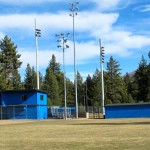
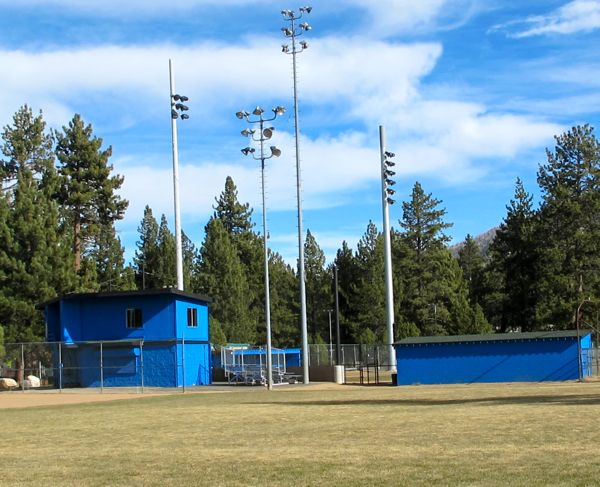
Upgrades to South Shore ball fields will happen sooner with the passage of Measure R. Photo/Linda Conaboy

“It was formed by a core of city and school district staff and several individuals involved in community youth athletics,” Morales said. “Reductions at the city and district affecting the field maintenance budgets and growing youth sports programs resulted in a lack of fields and funds to maintain those available. The efforts of the CACC helped reduce those effects.”

At its formation, the first major objective of the CACC was to design an annual facility use schedule. Now, with a board consisting of the president, vice president, secretary/treasurer and the at-large members — two representatives from the member organizations (see list below) — the group’s role has changed to include fundraising duties as well.

“All proceeds generated by the CACC are designated for the improvement and expansion of the athletic fields in the community,” Morales said. He added that LTUSD currently pays for nearly all of the district’s infrastructure costs, although the construction of the two softball fields at South Tahoe High School were primarily funded through the efforts of the CACC through fee collection, the original community Food Fest events and community donations of labor and materials.

Because of the growing interest in field sports among not only boys and girls, but also adults, play on these fields has the potential to become big business, bringing many dollars to South Lake Tahoe. And in the middle of this burgeoning activity is CACC.

With this in mind and because of the importance of their function in the community, Lake Tahoe News decided to examine the CACC’s role and how the group interacts with the city and the school district.

Because of the recent lay-off of Dede Lehnhardt, a city parks and recreation employee and former CACC treasurer/secretary, Lake Tahoe News was unable to obtain specific financial data.

CACC background

According to Chuck Leonard, the group’s president, CACC came into existence specifically to build the Field of Dreams fields at South Tahoe High School — it raised funds to build fields and now is an entity where all different sports negotiate field use.

“The school district gets games on the calendar first, and then youth sports such as Pop Warner, soccer and Lake Tahoe Babe Ruth are scheduled. They are followed by adult recreation leagues like adult soccer and softball,” Leonard said. “Then come club sports like club soccer. After everything else is scheduled, then you can start renting fields for tournaments.”

Leonard said several tournaments including the Come Up for Air soccer tournament brings hundreds of players to the area, many hailing from neighboring states. He also said there were semi-pro football teams here last year playing at the middle school.

“We take in around $30,000 annually,” he said. “The money comes from youth groups — boys and girls — all who pay for field usage. In fact, the only money that comes to CACC is from what each player pays each year to play.”

The CACC is charged with organizing a long list of activities, including field maintenance, collection of funds, playing schedules and coordinating various tournaments. Besides his duties within the CACC, Leonard is also president of South Tahoe Pop Warner Football Association Inc. and was co-chair of the Committee for Community Recreation – Measure R.

Leonard explained the playing fields are located in an area that encompasses Lake Tahoe Environmental Science Magnet School on the west and the Kingsbury Grade area on the east.

“(The CACC) maintain a central calendar in conjunction with the South Tahoe Parks and Recreation and the Douglas County Parks and Recreation departments and the Lake Tahoe Unified School District,” Leonard said. “Organizations that are members of the CACC have the first rights to the fields for their sports organizations.”

Although the number of CACC members varies as sports organizations are created or disbanded, the group currently consists of:

• South Lake Tahoe Parks and Recreation

• Lake Tahoe Unified School District

• Douglas County Parks and Recreation

• Lake Tahoe Community College

• South Tahoe Pop Warner Football Association Inc.

• South Tahoe National Little League

• South Tahoe Soccer Association

• South Tahoe AYSO

• Bijou Youth Soccer

• Bijou Adult Soccer

• ASA Girls Softball

• South Tahoe Babe Ruth

“Each of these groups pays $10 per player per season for field usage,” Leonard said. “These funds are then utilized to maintain and repair the various fields within the service area. In addition to the main group, there is also a subsidiary group named TR4CK that raises funds for the middle school track and helps to pay for repairs for that complex.”

Money raised to play is deposited into the general CACC fund Leonard said. The money is then utilized by the CACC to maintain or repair fields. “Annually, the CACC puts anywhere from $5,000 to $50,000 into field repairs and maintenance depending on the need.”

With the passage of Measure R, additional money, more than $200,000 initially, will be plowed back into fields as well from money collected from the original Measure S. (The recreation measure is paid by property owner on the California side of the South Shore.) The question of who will decide when and where that additional money will be spent is yet to be determined.

Leonard says he would like his group to have a seat on the yet-to-be-formed steering committee, which will oversee dispersal of the funds; however, the CACC is not guaranteed a seat.

(The three-member board overseeing Measure R has not set a date for the next meeting. They will  determine who is on the committee and how it will be structured.)

What about the future?

Leonard is not the only one who would like to see more outside tournaments come to South Lake Tahoe.

Jim Tarwater, superintendent of LTUSD, envisions lots and lots of tournaments.

“Although we have a shortage of active field space, my dream is to have a tournament each week in the summer,” he said. “Now is the time to take a look at the long and short term needs. Eventually, I’d like to raise enough money to offset costs. It costs a lot of money to get a field back into shape after winter.”

Stan Sherer, who oversees South Tahoe parks and rec division, also wants more tournaments in town.

“Yes, we’re hoping outside groups will come from other areas to compete,” he said. “For example, the big soccer tournament that comes here annually. We hope to continue that with other sports to enhance our tourism economy. Any way we can improve our facilities or add to them will make us more competitive and attract more athletic tournaments.”

He added all money that comes because of outside tournaments would pay tournament costs. If the city produces the event, the money comes to the city for facility rental and other costs involved in the production of the tournament.

Increased tournament activity underscores the need for such things as permanent toilets and concession stands. Although Babe Ruth, Little League (and the high school’s Viking Stadium) run their own concession stands and take in the profits from them, there is always a need for concession stands and the necessity for permanent toilets goes without question.

Morales said new concession stands are under construction at the Viking Stadium and the Field of Dreams softball fields. He added the district intends to construct a concession and restroom facility for the track/soccer complex at South Tahoe Middle School in the near future.

Permanent restrooms will be built at Viking Stadium in the spring, while the current construction of the student union at STHS will provide permanent restroom facilities for the softball fields.

According to Tarwater, the district has been working to get these improvements beyond the talking stages for years.

While the CACC remains an all-volunteer organization, Leonard said there has been talk of hiring a paid staff member.

“There’s not enough money now, but that could change,” he said.