Precautions urged to deal with ongoing cold temps

The California Emergency Management Agency is urging residents throughout the state to accelerate their winter weather preparedness efforts in response to a forecast by the National Weather Service for temperatures in the 20s to low 30s and possibly lower later this week.

It’s not just the Lake Tahoe area that is feeling the big chill. Freezing temperatures striking throughout much of Northern California.
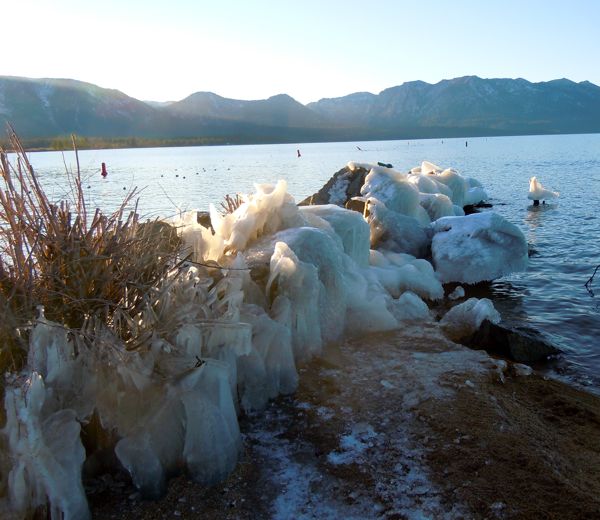
After last week's high waves, ice now covers the rocks leading to the Tahoe Keys Marina. Photo/Kathryn Reed

“According to the National Weather Service, residents in much of Northern California can expect extremely cold temperatures during the next several days,” Cal EMA Acting Secretary Mike Dayton said in a press release. “As this weather tends to be the norm throughout the winter months, it is critical that Californians recognize the risks associated with freezing temperatures and take necessary steps to prepare if they have yet to do so.”

Prolonged exposure to cold temperatures can cause hypothermia and other serious health problems, particularly for seniors, infants and people with chronic conditions such as asthma and other respiratory conditions. Cold temperatures also threaten pets that are left unprotected.

Residents of areas with expectations for freezing temperatures should be aware of the following:

  • Learn the signs of hypothermia, frostbite, dehydration and carbon monoxide poisoning.
  • Review and update emergency plans, including out-of-town contact information.
  • Store plenty of drinking water, food and medications.
  • Obtain and maintain a sufficient supply of heating oil.
  • Make sure portable radios and flashlights are operable and there’s an adequate supply of extra batteries.
  • Listen to the radio or watch television for the latest information on the weather as well as instructions from local officials.
  • Eat regularly.
  • Drink plenty of fluids.
  • Avoid caffeine and alcohol.
  • Regularly charge devices and have back up options available if someone is dependent on equipment needing power.
  • Teach relatives, co-workers, classmates or neighbors to operate life-safety equipment, including fire extinguishers, breathing machines, oxygen, suction or home dialysis equipment.
  • Disabled or elderly may need assistance establishing support teams of people who can assist them at home, work or school
  • Pre-identify options (e.g., paratransit, dial-a-ride, taxi, friend, neighbor) for transport to warming centers if assistance with transportation is needed.
  • Protect pets from the weather. Move pets indoors or into an enclosed structure.
  • Do not use barbecues and other cooking equipment designed for outdoor use for cooking indoors.
  • Wear several layers of clothing that is loose, lightweight, warm and water repellent.
  • Weather mittens, rather than gloves.
  • Wear a hat if outdoors.
  • Stretch before going outside.
  • Move plants indoors or cover with plastic to protect them.
  • Avoid overexerting if shoveling snow or doing other outdoor activity; overexertion is a major cause of winter deaths.
  • Protect your lungs from extremely cold air by covering your mouth while outdoors and avoid speaking unless it’s absolutely necessary.
  • Prevent your body from losing heat by changing from wet clothing to dry clothing as frequently as possible.
  • Watch for symptoms of frostbite, including the loss of feeling, white or pale appearance in the fingers, toes, ear lobes and other extremities. Get medical attention immediately if symptoms are noted.
  • Watch for signs of hypothermia, including uncontrollable shivering, memory loss, disorientation, incoherence, slurred speech, drowsiness and apparent exhaustion.
  • Travel by car during the day only and ensure the car is fueled with sufficient gas.
  • Don’t travel alone.
  • Let others know your schedule.
  • Stay on main roads.

Additional safety tips and information about state response activities are available online.


Registration under way for annual Nature Bowl

By Cathy Locke, Sacramento Bee

The California Department of Fish and Game is accepting registration for the 28th annual Nature Bowl, an activity-based competition for elementary school students in third through sixth grade.

The event, held each spring, is open to students from any school, group or organized youth club in the Sacramento Valley and foothills. Participants employ teamwork, creativity and critical thinking in group-learning activities centered on local and regional natural environments, according to a Department of Fish and Game news release.

The initial daylong event is held in Sacramento, Placer, El Dorado and Yolo counties in March and April. Teams consist of three to seven children each. Several groups will advance to the finals, scheduled for May 5.

Teachers, youth group leaders and parents can sign up to coach a team. The entry fee is $20 per team and includes materials.

Read the whole story


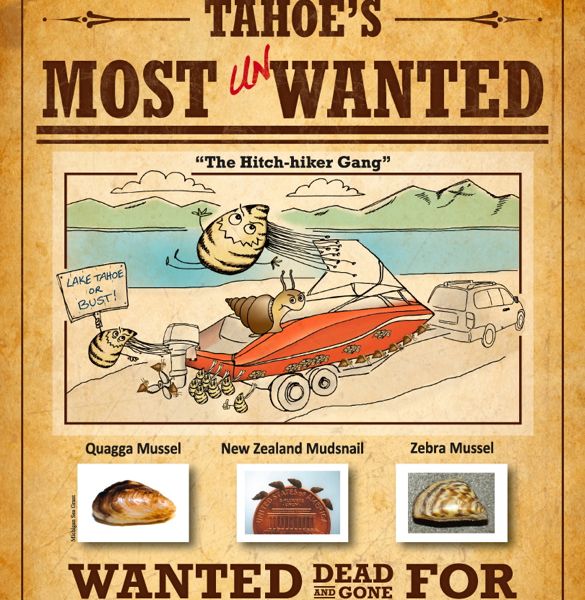
Tahoe RCD on mission to educate public about unwelcome species in Tahoe

Tahoe Resource Conservation District has released a series of educational posters which identify some of the biggest threats to Lake Tahoe Basin, as well as what visitors, residents and even kids can do to help. Titled “Tahoe’s Most un-Wanted,” the first three posters feature aquatic invasive species, fine sediments from runoff and invasive weeds, and are free to pick up or request for local schools, businesses and other organizations who would like to display them publicly.

Tahoe RCD is also having a contest through New Year’s Eve on its Facebook page where people may submit their ideas regarding threats to Lake Tahoe for a chance to win prizes, including an Emerald Bay Cruise for two on the Rum Runner, free bowling at Tahoe Bowl, a free bike or ski tune from Wattabike/Vertical Sports, a pass to High Altitude Fitness and a free cake from Cakes on the Lake.

Details and rules are online.


Sports are the transcendent moments that bring us together

By Terry McDonell, Sports Illustrated

In the fall of 1980, when SI senior writer Lars Anderson was nine years old and living in Lincoln, his father took him to the Florida State–Nebraska game. With less than a minute left in the fourth quarter, the highly favored Cornhuskers had the ball on the Seminoles’ three-yard line, trailing 18–14. That’s when heartbreak visited Nebraska: Quarterback Jeff Quinn fumbled. Florida State recovered. Game over. Then, as Seminoles coach Bobby Bowden and his team walked off the field, the crowd rose to its feet in appreciation of the underdogs’ hard-fought victory. At first it was just polite clapping, the kind you hear at a golf tournament, but then fans started cheering for Bowden and his players, building to one of the loudest roars of the day. Tears of disappointment ran down Lars’s cheeks as his father put his arm around him, pointed to the red-clad fans in full throat and said, “Lars, this is as good as sports gets.”

Sportsmanship can be a naive word, especially in the shadow of the failure and shame of Penn State. But if we are who we say we are, if we believe in courage and integrity and fair play, then we define ourselves in our sports. New ways of thinking about race, about media, about celebrity have always played out on our fields and courts. This is where we learned to tell each other who we are.

Along the way we also built businesses and refined what has come to be taught as Sports Marketing, using the excitement of our games to sell each other everything from fast food to estate planning. Our major leagues describe themselves with shrewd marketing nuance: Where amazing happens (NBA); There are no words (NHL); This is what it’s all about (NFL); This is beyond baseball (MLB). All operate chains of stores. The cynical view is that our drive to commercialize even our play trumped our innocence long ago, and we sold ourselves out. That like a parody of that brilliant Nike campaign, we just did it, turned our media into a colossal Breakfast of Champions.

But I’m not buying it.

I believe our hard, beautiful games shaped us for the better. The marketing lifts because it feels good to just do it or to protect this house, and then the reality makes us feel even better. And sometimes that commercialization we complain about gets it just right.

Thanks, Mean Joe.

It’s not about scores and stats, it’s about the stories. The players’ skill and athleticism can be mind-blowing, but without the backstories there is no connection. The excitement comes from knowing enough about the athletes to care who makes the shot and who misses. Would Jazz guard Derek Fisher’s hitting a key three-pointer in the 2007 playoffs have mattered as much if you didn’t know that he had just flown round-trip to New York from Salt Lake City to see to his ailing 10-month-old daughter? This is why SI puts rooting interest (mostly) aside. There are no home teams for us. We root for the story.

But that’s running out ahead.

As I write this, I have 325 colleagues at SI. Only a few have been the kind of athlete we cover, but they all have stories. I spend more time with these people than with anyone else in my life. Working with them has become tribal. We don’t tell each other stories around campfires, but we might as well. Who was the greatest athlete you ever saw? What was the greatest moment? The greatest comeback? Greatest rivalry? Which team had the most heart? Did you ever see something that wasn’t fair?

There are no wrong answers. Senior writer Richard Hoffer wrote in SI’s 50th Anniversary Issue, in 2003, that sports “evolved from a local flavor to a national appetite … and suddenly, all sorts of people could talk to one another, volatile debates defused by a shared passion for sports.” Tribes within tribes.

Big-city teams like the Yankees became civic metaphors, and so did small-market teams like the Packers. Journeymen such as Bucky Dent and Steve Kerr created myths, and the superlative athletes—Ali, Aaron, Jordan—became transcendent brands. The games themselves (Super Bowl, Final Four, World Series) are now national imperatives. Almost everything of importance can be expressed in sports terms—sometimes in strange ways. Here’s a headline from the NEW YORK POST on Oct. 21, after Muammar Gaddafi was killed: GUNMAN HAD MORE HITS THAN A-ROD.

Hoffer again: “Strange isn’t it, that the very themes of achievement and disgrace that animate our history would be expressed in something so universal (and benign) as a box score, an improbable athletic feat, a magazine cover. Who could have guessed that, henceforth, anything worthwhile could be demonstrated on, say, a basketball court—racial harmony, affluence, cooperation, style, commerce? (High-five!) Who could have possibly known that?”

And if we break it down, what we are left with is the game or the team or the athlete as a bridge between generations, the adhesive that binds relationships, the spit that holds families together.

When SI.com senior producer Andrew Perloff was a little boy in the 1970s, his father was not very available. He worked long hours running a small wholesale grocery company in South Philadelphia, and when he came home he was not much of a talker. The only thing that Andrew knew they could connect on was Philadelphia sports, and the only uninterrupted time they had to be close were eight Sundays every fall because his father had season tickets to the Eagles.

The Eagles were not good then and always got beaten up by the hated Cowboys. Andrew was so emotionally invested in the team that he wrote letters to NFL commissioner Pete Rozelle complaining about the officiating. Then suddenly, in the late ’70s, the Eagles became very good. They reached the NFC Championship Game in 1980 against Dallas, and Perloff and his dad were there on a frigid Sunday afternoon at Veterans Stadium when the Eagles won 20–7 thanks to a 42-yard touchdown run by the shifty Wilbert Montgomery. You still see highlights of that game on TV because NFL Films loved capturing Eagles coach Dick Vermeil running the sidelines like a wild man. Vermeil was known for breaking down and crying at press conferences. That day everyone in the stadium cried. And fans back then didn’t look anything like the corporate crowd today. Philly had hit a bad patch economically in the 1970s, and the Eagles’ run carried a lot of symbolic weight. That was a hard place, and tough men were openly weeping.

Years later, when Perloff started working at SI.com, he happened upon an old photo of Vermeil being carried off the field that afternoon, and a storm of emotions came back. To this day when he calls home, he and his dad start without much to say, but after a minute or two they fall easily into conversation about the Eagles or the Phillies or the 76ers. And they still talk about that 1980 NFC Championship Game.

On the other side of the country, senior writer Damon Hack was a consumed Lakers fan, and Magic Johnson was his world. If the Lakers were on, Hack was in front of the TV with a notepad, charting Magic’s points, rebounds and assists. On the schoolyard Hack was no-look passing his way through phys-ed class. In the NBA there was Magic and there was everybody else, and that’s the way it was even when Hack was almost grown and starting as a 6’3″ point guard at Van Nuys High.

Read the whole story


Vonn, Mancuso share podium in super G

By USSA

LAKE LOUISE, Alberta — Lindsey Vonn of Vail completed a historic clean sweep in Lake Louise, topping the Audi FIS Alpine World Cup super G podium with Julia Mancuso of Squaw Valley third.

It was Vonn’s 45th career World Cup win and 11th in Lake Louise. Following a season opening giant slalom victory in Soelden, Austria, a pair of downhill victories and Sunday’s super G win in Lake Louise, Vonn now has four victories in the five races she’s started this season.

It was the second podium finish for Mancuso, who was also third in the Nature Valley Aspen Winternational giant slalom last weekend.

The women’s alpine tour now moves to Beaver Creek, site of the 2015 FIS Alpine World Championships, for a Dec. 7 super G. It will be the first women’s World Cup race to be held in Beaver Creek.


Sheriff’s office honors West Slope man as SAR volunteer of the year

Each fall El Dorado County Sheriff’s Office recognizes the achievements of search and rescue volunteers.

There are approximately 200 registered SAR volunteers throughout El Dorado County who are organized into teams and respond to searches countywide and to mutual aid requests. In any given year, volunteers in El Dorado County respond to more than incidents involving more than 80 missing-lost or injured persons.

Search and rescue is made up of several teams which are necessary to bring a search or rescue to a successful conclusion.

David McCracken is this year’s volunteer of the year. The Cameron Park area resident joined the SAR in 1993.

He has increased his training. Some accomplishments include:

Emergency Medical Technician

Basic Wildland Firefighting

Incident Command Systems

Numerous FEMA courses

Emergency Response to Terrorism

Confined Space Rescue

River and Flood Rescue

First responder Hazardous Materials

Low Angle rescue

Community Emergency Response Team (CERT) Trainer.

In 2004, McCracken traveled to Alabama in response to Hurricane Ivan with FEMA as a team leader assisting the citizens of Covington County.


Squaw-Alpine assessing possibility of putting in backcountry gates

Backcountry gates linking Squaw Valley and Alpine Meadows are getting closer to being a reality.

This season the two resorts, operated by the same company since earlier this fall, are working with the U.S. Forest Service to study the practically of opening the area.

A press release says, “If successful, the pilot study would result in a policy which could permit skiers and riders with specialized backcountry training and equipment to access the wilderness land connecting Squaw Valley and Alpine Meadows.”

It goes on to say, “The goal of the pilot study will be to determine whether or not feasible locations for backcountry access gates exist – and if so, where the best locations would be in terms of topography and exposure. The pilot study will be launched when adequate snow conditions have been reached.”


River’s ‘wild and scenic’ designation may impact Yosemite

By Joshua Emerson Smith, Merced Sun-Star

A well-intentioned plan to preserve the natural beauty of the Merced River may wind up limiting the number of visitors U.S. national parks can have at any one time.

A 1987 federal law designated the river as a “wild and scenic” location that needed to be preserved. To do that today, however, it seems that restrictions could be imposed on the number of visitors allowed into Yosemite and, ultimately, all other national parks.

Under a federal court order, Yosemite National Park officials will have to limit the number of people allowed in park locations at any one time. The ruling is aimed at protecting the Merced River under its “wild and scenic” designation.

Once approved, the plan probably will set a precedent for how all national parks regulate protected lands and waters around the country.

Public comments on the plan can be made until Dec. 14.

Based on a decision by the 9th U.S. Circuit Court of Appeals in 2009, the Merced River Plan must include specific numbers for how many people can be in areas of the park at one time. This will be the third proposed plan by park officials after more than a decade of legal wrangling, plus $50 million in court costs and other expenditures.

Read the whole story


5 U.S. women in top 30 in downhill; Vonn dominates

By USSA

LAKE LOUISE, Alberta — Lindsey Vonn of Vail rocketed to her second Audi FIS Alpine World Cup downhill win in as many days Saturday to notch the 44th victory of her career and 10th in Lake Louise.

Vonn has now stood on the top of the podium in three of the four World Cup races she’s started this season including a giant slalom victory on the opening World Cup event in Soelden, Austria. The decisive 1.68 second victory was the second largest margin of victory in her career following the blistering 1.95 gap she put on the rest of the World Cup field Friday in the opening Winterstart race.

“It would be great to ski well again (Sunda) and go into the super G at Beaver Creek with a lot of momentum. I’m really excited to get back home to Vail and race in front of my hometown fans,” Vonn, who has been having back issues, said.

French racer Marie Marchand-Arvier was second with 2011 downhill World Champion Elisabeth Goergl of Austria in third. Stacey Cook of Mammoth was ninth, Leanne Smith of North Conway, N.H., 11th, Julia Mancuso of Squaw Valley 23rd and Chelsea Marshall of Pittsfield, Vt., 26th as five Americans landed in the top 30 for the second straight day.


Fish & Game fleet reduction may have unintended consequences

By Matt Weiser, Sacramento Bee

Conservation groups are warning that Gov. Jerry Brown’s plan to slash the state’s vehicle fleet could have consequences for California wildlife and their habitats.

The Department of Fish and Game is slated to lose 527 vehicles in the fleet-reduction program, according to preliminary data obtained by the Bee. Unlike the take-home or rarely used vehicles primarily targeted by the program, most of the Fish and Game vehicles are special equipment used to conduct research, maintain duck habitat and catch poachers.

According to a spreadsheet identifying the targeted vehicles, state wildlife refuge areas would lose 14 bulldozers, 10 tractors, six graders and three backhoes. These vehicles, though often used only on a seasonal basis, are essential to prepare wetlands for migratory waterfowl, said John Carlson, president of the California Waterfowl Association.

Also slated for elimination are 124 boats statewide that are used for wildlife law enforcement, habitat management, research and oil spill prevention.

Under the program, the vehicles would be auctioned off to generate revenue for the state, which is struggling to balance its budget.

Read the whole story