California makes plans for return of wolves

By Matt Weiser, Sacramento Bee

A lone gray wolf in the prime of his life roams 730 miles to seek a mate and a new home, crossing nearly the entire state of Oregon in two months.

He skirts small towns, crosses numerous highways, surmounts the Cascade mountain range and pauses just 30 miles from California.

It sounds like the stuff of legend.

But this journey is very real, and it holds huge implications for California. If the wolf, known to Oregon officials as OR7, resumes its southbound trek it will make history as the first wild wolf confirmed in California in nearly 90 years.

The wanderings of OR7 are already stirring excitement, not to mention controversy.

“It’s actually a reason to celebrate,” said Suzanne Asha Stone, Northern Rockies representative for the group Defenders of Wildlife, which led the charge to reintroduce wolves to the West. “I didn’t think I’d see it in my lifetime.”

Cattle and sheep ranchers in the state’s northern counties are not among the celebrants. Some are watching OR7’s travels with dread.

“We definitely have concerns,” said Jack Hanson, a cattle rancher near Susanville and treasurer of the California Cattlemen’s Association. “I’m hesitant to say I see a clear road and things will go well.”

The California Department of Fish and Game, for more than a year, has quietly worked on a plan to prepare for the eventual return of wolves. It expects to release the plan in January.

Read the whole story


USFS prescribed burn this week near Tahoe City

U.S. Forest Service fuels management crews are scheduled to begin prescribed fire operations in the Tahoe City area Dec. 13. Operations may continue through the week.

Residents and visitors can expect to see smoke from the prescribed fire project area. The Forest Service strives to minimize the impacts of smoke on local communities. Smoke-sensitive residents should consider staying indoors and keeping doors, windows and outside vents closed.

To directly receive prescribed fire updates, send an email to pa_ltbmu@fs.fed.us.

Forest Service staff will post road signs around areas affected by prescribed fire, and update the local fire information line at (530) 543.2600, No. 6.

Other federal, state and local fire management agencies may also be conducting prescribed fire work during this period.


Members needed for Measure R committees

With the passage of Measure R – the rewriting of the South Shore’s Measure S recreation legislation – comes the need to create committees that will recommend to the board how the money for ball fields and bike trails should be spent.

Seven people will be on each of the two advisory committees. All meetings will be open to the public and subject to California’s open meeting law.

The deadline to apply is Jan. 13 at 5pm.

Applications are available at:

• South Lake Tahoe City Clerk’s office, 1901 Airport Road, (530) 542.6004 or email eapalazzo@cityofslt.us

• John Upton at (530) 541.0525 or e mail rkupton@aol.com

• El Dorado County Supervisor Norma Santiago’s office at (530) 621.6577, or bosfive@edcgov.us.

Members are expected to be chosen at the Jan. 20 JPA board meeting. It starts at 9am at Lake Tahoe Airport. Applicants are encouraged to attend the meeting. If unable to attend, applicants should advise Upton.


Opinion: New law will better help athletes who sustain concussions

By Jonathan Finnoff

In October 2006, a 13-year-old Washington football player named Zack Lystedt hit his head on the ground at the end of the second quarter of a football game. He grabbed his head and was in obvious distress. An injury timeout was called and Zach’s coaches helped him off the field. After resting during halftime, Zack’s coaches allowed him to return to the game. No medical personnel were on site to evaluate Zack and help decide whether he should or shouldn’t return to the game.

During the remainder of the game, Zack’s headache increased and he had difficulty remembering plays. At the end of the game, he collapsed and was airlifted to a trauma center where emergency surgery was performed on his brain. Although Zack survived, he was left with significant physical and cognitive disabilities that will severely limit him for the rest of his life.

Jonathan Finnoff

Thankfully, when managed appropriately, a majority of concussions resolve without significant medical complications. But, when mismanaged, the results can be devastating.

The Centers for Disease Control and Prevention estimates that 1.4 million to 3.8 million concussions occur each year in the United States. Concussions are more common in younger athletes, females, those who are physically fatigued (ie: later in the game), and those who have sustained a prior concussion. The most frequent symptom of a concussion is a headache, but other symptoms can occur such as dizziness, confusion, memory difficulties, sleep disturbance, emotional changes, and difficulty concentrating. A common assumption is that an athlete doesn’t have a concussion unless they are knocked out, but concussions are rarely associated with a loss of consciousness.

Any concussed athlete should immediately be removed from the game and evaluated by a healthcare provider. The primary treatment for concussions is physical and cognitive rest until the athlete’s concussion symptoms resolve. Physical rest involves avoiding any activity that might increase the athlete’s heart rate or blood pressure. Cognitive rest means avoiding activities that require a lot of concentration such as schoolwork or video games. After the athlete’s symptoms have resolved, they should gradually increase their physical and cognitive activities over a period of approximately five days under the direction of a healthcare provider.

Most athletes who sustain a concussion feel better within a week. However, some athletes take far longer to heal and experience persistent concussion symptoms referred to as post-concussion syndrome. Other concussion complications include an increased risk of future concussions, chronic traumatic encephalopathy, or a catastrophic injury such as second impact syndrome that may cause persistent disability or death.

Chronic traumatic encephalopathy is seen in athletes with a history of concussions and usually begins around 43 years of age. It is characterized by emotional problems such as depression and violence, memory difficulties similar to Alzheimer’s disease, and movement disorders similar to Parkinson’s disease.

Second impact syndrome occurs when an athlete returns to activity before their symptoms resolve and subsequently sustain another concussion. This second injury can result in diffuse swelling within the brain, which results in severe disability or death.

Getting back to Zack, his tragic injury led the Brain Injury Association of Washington to team up with the CDC to launch a “Heads Up” concussion awareness program for youth athletes in the state. This program focused on educating athletes, parents, coaches, and health care providers about concussions. Despite their efforts, the program had limited success for a variety of reasons, the primary one being the lack of standardized and required concussion education and management. With this in mind, a youth sports concussion bill was drafted, unanimously approved by the Washington State House of Representatives and Senate, and subsequently signed into law by Gov. Christine Gregoire on May 14, 2009. The Zackery Lystedt Law was the first of its kind and required all athletes and their parents or guardians to sign a concussion information sheet prior to initiating practice at the start of each season. Any athlete with a suspected concussion was required to be removed from play and a written medical clearance was required prior to returning to sports. After this bill was enacted, for the first time in five years, there were no deaths or operable brain hemorrhages in Washington state during the high school football season.

Shortly after the Zackery Lystedt Law was enacted, the American College of Sports Medicine, the largest sports science and sports medicine professional organization in the world, issued a national call for similar bills to be passed in all 50 states and the District of Columbia. Roger Goodell, the commissioner of the National Football League, also declared their support for the law and made it a primary objective of the NFL to assist in the passage of similar legislation throughout the United States. Every state-based chapter of the Brain Injury Association of America also endorsed the principles of the Zackery Lystedt Law. To date, 27 states and the District of Columbia have passed Lystedt-like laws, and several more states are working to introduce similar legislation.

In California, Assembly Bill 25 takes effect in January 2012. It mandates similar rules to those of the Zackery Lystedt Law, including yearly concussion education, immediate removal from athletic activity of any individual suspected of sustaining a concussion, and requiring that the athlete be evaluated by a licensed health care provider and receive written clearance prior to returning to athletic activity. These requirements improve concussion awareness and safety for our youth athletes.

In our region, Tahoe Center for Orthopedics has already instituted a multi-faceted program to address sports concussions including pre-season baseline concussion testing in athletes who participate in high risk sports, providing medical coverage for high risk high school sporting events, establishing a multi-disciplinary team of concussion experts to evaluate and treat concussed athletes, and educating the local sports and medical community about the sports concussions through lectures, live interviews, and articles.

While sports are an incredibly important part of social, cognitive, and physical development and provide a variety of long-term health benefits, it is important to be aware of the risks associated with sports, and to identify and treat sports related injuries appropriately. As previously described, sports concussions are common in the United States and the potential complications associated with concussions are severe. Therefore, a better understanding of concussion identification and management among the public and health care providers is important, and standardization of concussion treatment is imperative to minimize the risks associated with this injury. I believe this bill is a major step in the right direction.

Tahoe Orthopedics and Sports Medicine is developing a comprehensive sports concussion program with the assistance of physician Jonathan Finnoff, an internationally recognized concussion expert and former co-director of the Mayo Clinic Sports Medicine Center Concussion Program. He recently joined the team of sports medicine clinicians at Tahoe Center for Orthopedics. To learn more about Tahoe Center for Orthopedics concussion program, go online.


Winter businesses need snow so season can go full throttle

By Kathryn Reed

When visitors come to the South Shore, especially for activities that involve snow, there will be plenty of things for them to do. A rundown on all things winter was the topic of this month’s South Lake Tahoe Lodging Association meeting.

Lodging guests can often take advantage of discounted rates for lift tickets, snowmobiling, rentals and boat cruises. Sometimes it comes part of a package deal with a night’s stay, other times the front desk sells the lower priced tickets.

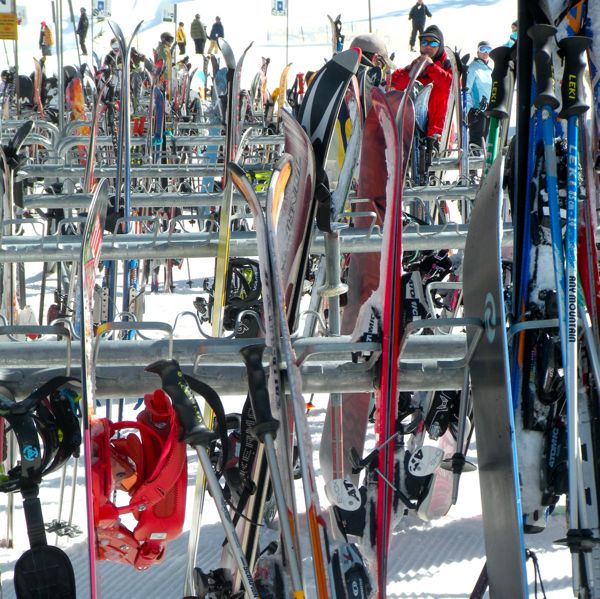
Lake Tahoe is ready for winter business. All that's missing is snow. Photo/LTN file

These incentives are nothing new in the hospitality business. It’s all about providing the guest with the best experience, the most fun and ideally at an affordable rate.

Deals are also given to frontline staff so they may experience the different activities in the area. The rationale is the best salesperson is someone who actually knows the product. If someone hasn’t skied one of the resorts, how can they authentically answer a guest’s question?

Representatives from the three South Shore resorts gave a spiel about what’s new and the same for this season, as did other outdoor vendors.

Kirkwood’s Powder Express bus starts service Dec. 26; taking people to the resort for $15/day. If booked online in advance, the price drops to $10.

The resort will keep operating on a limited basis on weekends until enough snow accumulates to open more terrain on more days.

Heavenly’s rep said lower Stagecoach should open soon. Ante Up terrain park reopened last week with 25 features.

A shuttle between Heavenly and Northstar costs $15.

Starting Dec. 17 the Tamarack Lodge will have an après ski party from 3:30-6pm with music and happy hour specials.

Sierra-at-Tahoe is waiting for Mother Nature to start doing her snow dance. With temps hitting 59 degrees at the resort last week, it’s still hiking season many places in the mountains.

The shuttle taking skiers and boarders to Sierra is free.

Heavenly Village is celebrating 13 days of holiday fun staring Dec. 19 and culminating Dec. 31 with a lighted (more so than last year) gondola drop at 9pm (the New York New Year) and what is being touted as a substantially better fireworks display compared to 2010.

Tony Lyle with Aramark talked about Santa being on board the Tahoe Queen between now and Christmas Eve.

The Queen will cruise New Year’s Eve to celebrate the West Coast New Year, while the M.S. Dixie II will party on East Coast time.

The Queen’s ski shuttle between Ski Run Marina and the pier at the Hyatt starts Jan. 17 and will run Tuesdays and Thursdays through April 5. While the Queen is in Incline, a 90-minute cruise will be offered that goes by the CalNeva, Thunderbird Lodge and other locales.

The Queen will also have après ski cruises every Wednesday starting at 6pm from Jan. 4-April 4 for $19.

Dwight and Diana Borges have added an hour sleigh ride to their offerings. In the past a 30-minute tour was all that was available from the open field near MontBleu.

Two new sleighs allow groups of about 50 people to go out at once.

Before the snow falls the sleigh with wheels is taking people on excursions and the horse carriages are at Stateline.

While the emphasis of the meeting was for winter businesses to let lodging entities know what’s going on, all of these things are available to locals, too.

In other action:

• Some lodging board officer positions changed. The full board includes: president, Jim Blossey, Motel 6; vice president, Rich Bodine, Inn by the Lake; treasurer/secretary, Jerry Bindel, Aston Lakeland Village, representative 1-80 units, Douglas Williams, Cedar Pines; representative 80-plus units, Dell Dellinger, Forest Suites; property management/time share, Tom Davis, Tahoe Keys; at-large rep, Pat Ronan, Tahoe Lakeshore Lodge; associate rep, Darcy Nealis, Vail/Heavenly. The redevelopment seat is open, though Mike de Laet, resort sales manager for Kirkwood, wants it.

• The board agreed to give $1,000 to Christmas Cheer – which is feeding 780 families a month instead of the “usual” 300.


Derby Dames looking for new teammates

Lake Tahoe Derby Dames is having an open recruitment night Jan. 3 at 7:30pm at Kahle Community Center in Stateline.

Information about joining the roller derby team will be available as well as an opportunity to skate.

Energetic men and women interested in learning the sport of flat track roller derby as a skater or referee are encouraged to attend.

Derby Dames home bouts are at Bijou Community Park in South Lake Tahoe. Photo/LTN file

The Dames offer general training for the new-on-your-skates to the well seasoned derby girl. Practices are co-ed (offering everyone the chance to skate) while bouts follow the Women’s Flat Track Derby Association guidelines.

Equipment borrowing is on a first come/first served. Bring a mouth guard. Must be 18.

For more detailed information, go online.


Control of invasive species in Lake Tahoe remains a struggle

By Geoff Schladow, Heather Segale, Allison Gamble and Andrea Wilkins

Research efforts to control invasive aquatic species from around the world continue to threaten the Lake Tahoe Basin. Work to identify the most effective mechanisms for controlling the populations of Asian clams continues. Current projects are focused on controlling the spread of the Asian clam population in Emerald Bay. Researchers are working collaboratively to experiment with different methods of eradication.

Research is also being done in the southern part of the lake on Curlyleaf pondweed. Curlyleaf pondweed is an invasive aquatic weed that is increasing in density in Lake Tahoe. It reproduces via vegetative shoots called turions, which are extremely resilient and hard to kill. Researchers are working on identifying possible means for controlling the spread and reproduction of this invasive species using bottom barriers of several materials (jute, rubber, and polyethylene). Three sets of these barriers are currently out in Lake Tahoe.

Scientists continue to discover new things about Lake Tahoe. Photo/LTN

Post-doctoral researcher Allison Gamble is also studying the effects of Mysis shrimp on Tahoe’s food web. Mysis were deliberately introduced into Lake Tahoe in the 1960s. Mysis are a big predator on smaller zooplankton, and also an important food source for fish. They undertake a diel (within 24-hours) vertical migration every night, where they migrate from the bottom of the lake to close to the surface, one of the longest vertical migrations in nature. If we scaled the Mysis to the size of a human, it would be equivalent to moving 50 miles (or 1,700 laps of a pool) vertically up and back down in a single night.

Gamble is comparing the historical densities of Mysis shrimp to current densities in Lake Tahoe, Emerald Bay, Fallen Leaf Lake, and Donner Lake, and addressing how ecosystem characteristics influence food web dynamics. Her research will provide new insights into the evolving Tahoe food web.

PARASOL

The lake was buzzing with scientists from around the world at Tahoe for a weeklong research project called “PARASOL” (PARticulates And SOlutes in Lakes). Scientists and students from TERC, the EPA National Health and Environmental Effects Research Laboratory in Duluth, and the University of Kyoto completed a circumnavigation of the lake, taking measurements of all the physical properties and the suspended particles and organisms that comprise the lake’s ecosystems. These measurements will allow us to know how the near shore water quality changes around the lake.

In addition, the team devoted extra effort to studying conditions in Marla Bay and Emerald Bay. The work was exhausting, often starting before 6am, and usually ending well after dark. TERC supporters allowed research vessels to be moored at their private docks around the lake, saving valuable time and gas.

Hundreds of samples went from lake to the lab all week.

The data from this project is still being analyzed at Tahoe, Davis, DRI, Duluth and Kyoto.

Microbial plankton survey

Three weeks following PARASOL, a new group of collaborators filled TERC’s laboratories to conduct a preliminary survey of the microbial plankton of Lake Tahoe. This time the visitors were from Laval University in Quebec, and UC Santa Cruz. Most of what lives in Lake Tahoe is invisible, and it has only been in the last few years that tools such as flow cytometry and DNA sequencing have allowed us to see this hidden world and learn about how it is impacting the features of the lake that we do see. The results of this experiment are being used as the basis of new proposals to the National Science Foundation.

Input of sediment

TERC post-doctoral researcher Alexander Forrest and graduate student Paul Stumpner deployed a current-measuring instrument in Lake Ohau in New Zealand in November 2011. This collaborative project with Richard Levy of GNS Science will provide information on the input of sediment to this glacial lake. What we have learned at Lake Tahoe is being applied in many parts of the world. Conversely, what we learn in New Zealand will help us to better understand Lake Tahoe.

Geoff Schladow, Heather Segale, Allison Gamble and Andrea Wilkins are with the UC Davis Tahoe Environmental Research Center.


Tahoe’s Kashima on podium in freestyle World Cup

By USSA

RUKA, Finland — Olympic champion Hannah Kearney of Vermont opened defense of her FIS Freestyle World Cup title with a strong win in Ruka as three Americans made it to the podium. Eliza Outtrim was second behind Kearney while Sho Kashima of Stateline finished runnerup to Canada’s Michael Kingsbury for his first career podium.

“It was kind of a surprise, but a really nice finish. I didn’t go to Zermatt camp and competing from the C team and the way I skied last year, the confidence wasn’t there,” Kashima said. “But starting off this season healthy and being able to train this summer full on – hopefully this will be a great season.”


Alpine, telemark skiing demos on North Shore

Alpenglow Sports has partnered with Alpine Meadows Ski Resort to put on the 5th annual Alpine Touring and Telemark Demo on Jan. 7 form 9am-3pm.

The event provides a forum to perpetuate the enthusiasm for all aspects of in-area and backcountry skiing. Free to all, the event will showcase the latest and greatest in telemark and Alpine touring equipment.

Participating vendors include Black Diamond, Dynafit, G3, Scarpa, Garmont, Rossignol, Volkl, Marker, Moment, Ski Logic, and DPS. Valid lift ticket or season pass purchased from Alpine Meadows/Squaw Valley required, along with a driver’s license and credit card for deposit.

For more information, call Alpenglow Sports at (530) 583.6917 or email brendan@alpenglowsports.com.


USFS looking for environmental education volunteers

The U.S. Forest Service Lake Tahoe Basin Management Unit is looking for volunteers to assist with the Winter Trek Express environmental education program for fifth-graders from Jan. 9-March 30.

This three-hour environmental education program takes place at 9,000 feet at Heavenly Mountain Resort via the gondola. U.S. Forest Service rangers lead the class through the wilderness to learn snowshoe skills and discover winter-adapting animals.

This is an opportunity for individuals who wish to gain experience in the environmental education field and have a strong desire to work outdoors and give back to their community. The ideal applicant should have experience working with children, good communication skills, an outgoing friendly personality and the ability to commit to a minimum of one day a week for 12 weeks.

The Forest Service will provide a uniform, training and snowshoes if needed. Volunteers must provide their own winterized boots.

Prospective volunteers should submit their resume electronically by Dec. 11. Interviews will take place beginning the week of Dec. 12. For more information, contact Jean Norman at (530) 543.2673.